Mahbubah, QassiMareMagnum
Al-Sanusi
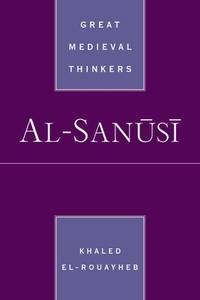
2026x-0197835643Oxford University Press Inc 2026. Paperback. New. 320 pages. 5.59x0.89x8.28 inches. Oxford University Press Inc paperback
Revaluation Books · Royaume-Uni51,66 £GB≈ 58,99 €
3 889 résultats
Black octavo; 487 p ; 25 cm. In Arabic. Uncommon || Politics. Macht. Politik. Politische F¸hrung. Politische Wissenschaft.
Paperback teal quarto. 80 pages : facsimiles ; 24 cm In Arabic || Criticism, interpretation, etc. Early works. Quran -- Readings -- Early works to 1800.
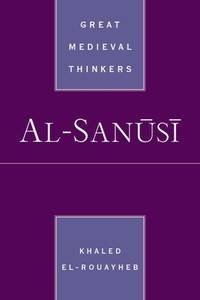
2026x-0197835643Oxford University Press Inc 2026. Paperback. New. 320 pages. 5.59x0.89x8.28 inches. Oxford University Press Inc paperback
2026x-0197835635Oxford University Press Inc 2026. Hardcover. New. 320 pages. 5.50x0.75x8.25 inches. Oxford University Press Inc hardcover
52108117like new. unknown
52108117-nnew. unknown
52108118-nnew. unknown
361pp., 24cm., hardback (black cloth, spine in black leather with engilded title), VG, [text fully in arabic], [OCLC 46128554]
1968C59783Al-Qahirah [Cairo], Dar al-Katib al-Arabi 1968 361pp., 24cm., hardback (black cloth, spine in black leather with engilded title), VG, [text fully in arabic], [OCLC 46128554]
1966C59782Caire, 1966 472pp.avec illustrations, reliure toile rouge (dos en cuir rouge avec titre doré), 28cm., bel état, [texte en arabe, arabic text]
472pp.avec illustrations, reliure toile rouge (dos en cuir rouge avec titre doré), 28cm., bel état, [texte en arabe, arabic text]
Octavo in brown illus paper wraps; 192 p. In Arabic. Scarce. // Political purges -- Russia (Federation) Responsibility: tarjamat `A. al-Ba`labakki.
Octavo in pale red cloth ; 199 pages. In Arabic. Uncommon. Not the 1988 edition, but earlier, perhaps 1960s - 1970s. Place published, publisher and edition illegible to us.
Large octavo custom bound in blue boards with original wrappers bound in; 178 p. ; bib. refs. 25 cm. In Arabic // Arabic literature -- History and criticism -- Theory, etc. Named Person: Zayyat, Ahmad Hasan, 1885-1968 -- Views on criticism. // Includes bibliographical references (p. 167-175).
- Alger s.d. (circa 1870), Album : 13x17cm / photographies : 6,3x10,4cm, 28 portraits sur cartes de visite consignés dans un album. - Photographic album containing 28 portraits of Algerians finely enhanced with watercolour Algiers [ca 1870] | Album: 13 x 17 cm / photographs: 6.3 x 10.4 cm | 28 carte de visite portraits in an album Photographic album comprising 28 photograph portraits, in contemporary albumen print, pasted on card in carte-de-visite format. These photographs, well contrasted and finely enhanced with watercolour at the time, are of great intensity: the models stare at the photographer's lens with pride and nobility. Binding in full black grained leather, metal clasp, all edges gilt. Rubbing. Superb photographic testimony by one of the first European photographers established in Algeria. A Swiss expatriate in Algeria, Jean Geiser (1848-1923) was immersed in photography from childhood. In 1852, his mother joined forces with Antoine Alary, one of the pioneers of Algerian photography; together they founded a studio which lasted until 1867, when Jean Geiser took charge. Initially specialising in portraits of the city's European bourgeois, the photographer quickly understood the city's interest for folk images. These rare and magnificent "typical" portraits, depicting all the layers of the indigenous populations - from street children to caïd - are today sought after for their ethnographic value, testimony of an Algeria at the dawn of colonisation. [FRENCH VERSION FOLLOWS] Album photographique constitué de 28 portraits photographiques, en tirage albuminé d'époque, contrecollés sur des cartons au format carte de visite. Ces photographies, bien contrastées et finement rehaussées à l'aquarelle, sont d'une grande intensité : les modèles y fixent avec fierté et noblesse l'objectif du photographe. Reliure en plein cuir noir grainé, fermoir de métal, toutes tranches dorées. Frottements. Superbe témoignage photographique par l'un des premiers photographes européens établis en Algérie. Suisse expatrié en Algérie, Jean Geiser (1848-1923) a baigné dans la photographie depuis son enfance. En 1852, sa mère s'associe à Antoine Alary, l'un des pionniers de la photographie algérienne ; ensemble ils fondent un studio qui perdurera jusqu'en 1867 date à laquelle Jean Geiser prendra sa direction. D'abord spécialisé dans les portraits de bourgeois européens de la ville, le photographe comprend bien vite l'intérêt de la métropole pour les images folkloriques. Ces rares et magnifiques portraits « types », dépeignant toutes les couches de la population indigène - de l'enfant des rues au caïd - sont aujourd'hui recherchés pour leur valeur ethnographique, témoignage d'une Algérie à l'aube de la colonisation.
- Alger s.d. (circa 1870), Album : 13x17cm / photographies : 6,3x10,4cm, 28 portraits sur cartes de visite consignés dans un album. - Photographic album containing 28 portraits of Algerians finely enhanced with watercolour Algiers [ca 1870] | Album: 13 x 17 cm / photographs: 6.3 x 10.4 cm | 28 carte de visite portraits in an album Photographic album comprising 28 photograph portraits, in contemporary albumen print, pasted on card in carte-de-visite format. These photographs, well contrasted and finely enhanced with watercolour at the time, are of great intensity: the models stare at the photographer's lens with pride and nobility. Binding in full black grained leather, metal clasp, all edges gilt. Rubbing. Superb photographic testimony by one of the first European photographers established in Algeria. A Swiss expatriate in Algeria, Jean Geiser (1848-1923) was immersed in photography from childhood. In 1852, his mother joined forces with Antoine Alary, one of the pioneers of Algerian photography; together they founded a studio which lasted until 1867, when Jean Geiser took charge. Initially specialising in portraits of the city's European bourgeois, the photographer quickly understood the city's interest for folk images. These rare and magnificent "typical" portraits, depicting all the layers of the indigenous populations - from street children to caïd - are today sought after for their ethnographic value, testimony of an Algeria at the dawn of colonisation. [FRENCH VERSION FOLLOWS] Album photographique constitué de 28 portraits photographiques, en tirage albuminé d'époque, contrecollés sur des cartons au format carte de visite. Ces photographies, bien contrastées et finement rehaussées à l'aquarelle, sont d'une grande intensité : les modèles y fixent avec fierté et noblesse l'objectif du photographe. Reliure en plein cuir noir grainé, fermoir de métal, toutes tranches dorées. Frottements. Superbe témoignage par l'un des premiers photographes européens établis en Algérie. Suisse expatrié en Algérie, Jean Geiser (1848-1923) a baigné dans la photographie depuis son enfance. En 1852, sa mère s'associe à Antoine Alary, l'un des pionniers de la photographie algérienne ; ensemble ils fondent un studio qui perdurera jusqu'en 1867 date à laquelle Jean Geiser prendra sa direction. D'abord spécialisé dans les portraits de bourgeois européens de la ville, le photographe comprend bien vite l'intérêt de la métropole pour les images folkloriques. Ces rares et magnifiques portraits « types », dépeignant toutes les couches de la population indigène - de l'enfant des rues au caïd - sont aujourd'hui recherchés pour leur valeur ethnographique, témoignage d'une Algérie à l'aube de la colonisation.
187073160Alger s. d. [circa 1870] | 13 x 17 cm | 28 portraits sur cartes de visite consignés dans un album
187073485Alger s. d. [circa 1870] | 13 x 17 cm | 28 portraits sur cartes de visite consignés dans un album
français In-8 de 74 pp.; broché de l'éditeur. Texte arabe traduit et commenté en français par le Cheikh Hamza Boubakeur, Recteur de l'Institut Musulman de la Mosquée de Paris.
72808Paris, éd. Maisonneuve et Larose, juin 1973, EDITION ORIGINALE, expl. n° 3/50 sur vergé teinté des Papeteries Arjomari-Prioux, in-8, cartonnage souple à rabat avec photo en noir de l'auteur, non paginé, papier crème, nb. dessins en brun dans la partie en arabe, traduit de l'arabe par Abed Azrié, texte bilingue français-arabe, Très beau recueil de poésie par l'écrivain syrien Fayez Makdessi. RARE exemplaire en grand papier. Très bon état, très légères pliures sur la couverture
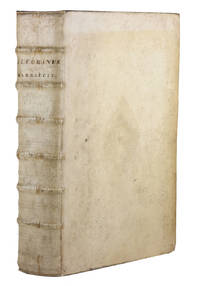
1698H4GD9LIIY5STPadova: Typographia Seminaria 1698. Blind-tooled vellum ca. 1800 reusing and retooling vellum from a slightly earlier blind-tooled binding sewn on 6 double cords each board with a large scrollwork centrepiece over traces of the old one in a panel design made of fillets and corner pieces with the title finely lettered in pen and ink in the 2nd of 7 compartments the old title still faintly visible underneath it and the old volume number VIII faintly visible in the 3rd compartment. Folio 35.5 x 25 cm. With 2 title pages 1 primary and 4 secondary divisional titles in volume 1 more than a dozen woodcut head- and tailpieces plus numerous repeats and dozens of woodcut decorated initials about 9 series plus numerous repeats. Set in roman italic and Arabic types 3 sizes of Arabic with incidental Greek and Hebrew. 2 volumes bound as 1. The first scholarly printed Quran prepared by the anti-Islamic Catholic Ludovico Marracci with a much more accurate Arabic text than any previously printed and the first accurate Latin translation also including extensive notes based on the Islamic commentaries as well as the editor's extensive "refutations" of each sutra. Each sura is given first in Arabic then in Latin translation followed by notes and then the refutation. The entire first volume of about 430 pages is taken up with preliminary matter including a 24-page life of Muhammad one of the first detailed biographies ever printed and again more accurate than its predecessors an 8-page profession of faith with the Arabic and Latin in parallel columns and additional commentaries and introductory matter. The fact that this edition was produced explicitly as an attempt to refute the views of Islam has naturally led Islamic scholars to dismiss it but both the Arabic text and the Latin translation were far better than any previously printed and had no serious rival until the Leipzig edition of 1834. The commentaries also made a great deal of Islamic scholarship available to a European audience for the first time and both the Arabic and the Latin text influenced nearly every edition for the next 150 years.With two bookplates and an occasional early manuscript note and a few letters or numbers inscribed in the foot margin of one leaf. With a tear running into the text of one leaf repaired but otherwise in very good condition. With generous margins. The boards are slightly bowed and there is a small tear repaired at the foot of the spine. A ground-breaking work of Quranic scholarship a valuable source for the study of the Quran and an essential source for European views of Islam.l Cat. Bibl. A.-R. Courbonne dont la vent . 1er février 1842 30 this copy; A. Hamilton Europe and the Arab world 34; Schnurrer 377; O. A. Sheikh Al-Shabab The place of Marraccis Latin translation of the Holy Quran: . in: Journal of King Saud University: language & tanslation 13 2001 pp. 57-74; USTC 1736471/1737617/1748538; not in Atabey; Blackmer; Philologia orientalis but cited in 225g 360a 380b 381c. Typographia Seminaria, hardcover
Mm 150x210 Piccoli Saggi. Brossura editoriale di pagine 150. nuovo. SPEDIZIONE IN 24 ORE DALLA CONFERMA DELL'ORDINE.
IX pp. (introduction in German) + 208 pp. (Arabic text) + 5 plates out of text, 1st edition, 27cm., original softcover, in the series "Veröffentlichungen aus der Hamburger Stadtbibliothek" Band 3, copy from the belgian orientalist Arnold Van Lantschoot O.Praem (with his signature and 1 stamp on blanco endpaper), text clean and bright, good condition, R103707
Spine browned. Tears and chipping to wraps with a bit of loss. Some pages corner creased. ; The Arabic text here presented is of importance for an adequate understanding of Alfarabi's thought and his technical terminology and for a better appreciation between Greek and Arabic philosophy. The grasp of the real significance of Greek terms in their Arabic context is indispensable for the study of the "Second Teacher's" subsequent commentaries on the Stagirite. Arabic Text. ; Recherches De L'Institut De Lettres Orientales De Beyrouth Tome XIII; 263 pages
- A. Jourdan, Alger 1891, 16,5x25,5cm, broché. - Edition originale. Deuxième plat recollé, sinon rare et agréable exemplaire bien complet de sa carte dépliante du réseau trançaharien in-fine. [ENGLISH DESCRIPTION ON DEMAND]