AdonisLivre Rare Book
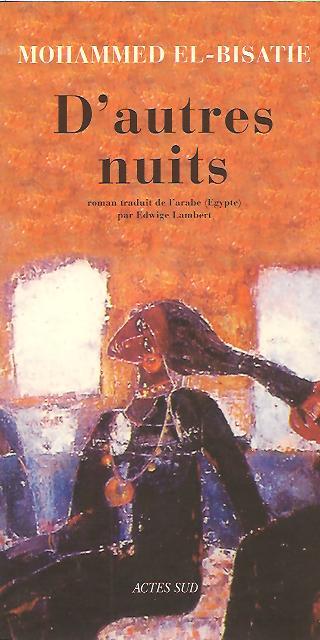
EL-BISATIE Mohammed,Livre Rare Book
D'autres nuits,
33373Actes Sud, 2006, 173 pp., broché, très bon état.
L'odeur du book - Negri-Meary S.A.R.L. · Paris, France10,00 €
3 889 résultats
1991114988La Difference, coll. « Fleueve et l’écho » 1991 Livre en français, arabe. In-12 broché 19,6 cm sur 13. 289 pages. Bon état d’occasion.
41705Paris, Gallimard, 2009. 15 x 21, 554 pp., broché + jaquette, très bon état.
Actes Sud, 2006, 173 pp., broché, très bon état.
33373Actes Sud, 2006, 173 pp., broché, très bon état.
New Arabic Original bdg. HC. Roy. 8vo. (24 x 17 cm). Edition in Arabic. [xLii], 619 p., ills. Dalil al-arshif al-'Uthmani: Fihris jami' li-watha'iq al-dawlah al-'Uthmaniyah fi? arshif ri'asat al-wuzara' al-Turkiyah. Translated into Arabic by Salih Sadawi. Preface by Halit Eren. The archival materials inherited from the Ottoman State constitute a unique fund of references as regards the history of all the regions and present nation states which were once part of the Ottoman world: Arab countries, the Balkans, the Mediterranean, North Africa, etc. The collections preserved at the Department of Ottoman Archives attached to the Directorate General of State Archives, Prime Ministry of the Republic of Turkey, are the State archives of the Ottoman Empire. This is the Arabic translation of the guidebook that was published by the Prime Ministry's Directorate General of State Archives in 2000. The Introduction gives information on the Ottoman state archive system, the evolution of the archive, the classifications of the collections. The book gives information on the contents of the collections of the Imperial Council, the Imperial Registry, the Sublime Porte, Yildiz Palace, the different departments of the State, the provincial archives; the third section describes the collections of maps, albums and photographs, collections transferred from personal archives and catalogues of documents contained in archives within and outside Turkey. The fourth section describes the administrative structure of the Directorate General of State Archives and the rules to be followed while doing research index is added to the guidebook.
84429Paris, Presses du CNRS, 1989. 15 x 24, 311 pp., quelques illustrations en N/B, broché, très bon état (sauf 1 cachet et signature ex-particulier sur la page de faux-titre).
49582Paris, Grasset, 1946. "14 x 19, 314 pp., nombreuses illustrations en N/B, broché, état moyen (couverture défraîchie; papier légèrement jauni)."
1974052337Istanbul: Publication of the Mathematical Research Institute 1974. Leather. Fine. 8vo - over 7¾ - 9¾" tall. Original decorative full red leather bound. Gilt traditional style on boards. Large demy 8vo. 22 x 15 cm. Bilingual preface in German and Turkish. 12 2 p. 49 p. facsimile in Arabic. ills. Das Achte Buch zu den Conica des Apollonios von Perge. Rekonstruiert von Ibn al-Haysam. Herausgegeben und eingeleitet von Nazim Terzioglu. Ibn al-Haytham Alhazen was born c. 965 to an Arab family in Basra Iraq which was at the time part of the Buyid emirate. He held a position with the title vizier in his native Basra and made a name for himself for his knowledge of applied mathematics. As he claimed to be able to regulate the flooding of the Nile he was invited to by Fatimid Caliph al-Hakim in order to realise a hydraulic project at Aswan. However Ibn al-Haytham was forced to concede the impracticability of his project. Upon his return to Cairo he was given an administrative post. After he proved unable to fulfill this task as well he contracted the ire of the caliph Al-Hakim bi-Amr Allah and is said to have been forced into hiding until the caliph's death in 1021 after which his confiscated possessions were returned to him. Legend has it that Alhazen feigned madness and was kept under house arrest during this period. During this time he wrote his influential Book of Optics. Alhazen continued to live in Cairo in the neighborhood of the famous University of al-Azhar and lived from the proceeds of his literary production until his death in c. 1040. Among his students were Sorkhab Sohrab a Persian from Semnan and Abu al-Wafa Mubashir ibn Fatek an Egyptian prince. Signed and inscribed by Nazim Terzioglu 1912-1976 was one of the first mathematicians in Turkish academia. One of the contributions of Terzioglu as the director of the Mathematics Research Institute to Turkey's mathematical culture and the history of science was the systematic scan of the Islamic literature relevant to mathematics and the presentation of the information related to conic sections in ancient mathematics to the scientific community. As a result of these efforts the facsimile of two ancient texts of mathematics originally written in Arabic were realized. The first one is the preface of Mecmuatu'r-risail the Arabic translation by Beni Musa b. Sakir died in 873 of Conica which is the work of Apollonius of Perga BC 262-190 on the conic sections. This preface published with the title Das Vorwort des Astronomen Bani Musa b. Sakir describes how the Apollonius' Conica was acquired by the Islamic world. After that Terzioglu published the facsimile of the copy of the lost 8th book of Apollonius' Conica which was rewritten by Ibnu'l-Heysem 965-1039 with the help from other sources. In the introduction part of this book with the title Das Achte Buch zu den Conica des Apollonios von Perge the following information is provided in summary: In ancient mathematics the interest for conics starts with Menaechmus BC IV. Century and reaches the summit with Apollonius of Perga. Apollonius wrote his famous work Conica by processing previous information and adding up his own inventions. The first 7 volumes of this work consisting of 8 volumes in total are known whereas the 8th volume is missing. The Islamic and Western mathematicians working in this field took place in the reconstruction of the 8th volume. The most successful one of these works is that of Edmund Halley's 1656-1742 Apollonii Per-gaei conicorum Oxoniae 1710. The 8th book of Conica reconstructed by Ibn el-Heysem is the 4th manuscript with the name Makalatu'l-Hasan b.el-Hasan b.el Heysem fi el-kitabu'l-mahrutat in the Mecmu'atu'r-risail which is recorded under no. 1796 in Manisa Library. The fact that Ibn el-Heysem completed this work nearly 700 years before Halley is interesting. <br/> <br/> Publication of the Mathematical Research Institute hardcover
Fine Arabic Original decorative full red leather bound. Gilt traditional style on boards. Large demy 8vo. (22 x 15 cm). Bilingual preface in German and Turkish. [12], [2], p., [49] p. facsimile in Arabic., ills. Das Achte Buch zu den Conica des Apollonios von Perge. Rekonstruiert von Ibn al-Haysam. Herausgegeben und eingeleitet von Nazim Terzioglu. Ibn al-Haytham (Alhazen) was born c. 965 to an Arab family in Basra, Iraq, which was at the time part of the Buyid emirate. He held a position with the title vizier in his native Basra, and made a name for himself for his knowledge of applied mathematics. As he claimed to be able to regulate the flooding of the Nile, he was invited to by Fatimid Caliph al-Hakim in order to realise a hydraulic project at Aswan. However, Ibn al-Haytham was forced to concede the impracticability of his project. Upon his return to Cairo, he was given an administrative post. After he proved unable to fulfill this task as well, he contracted the ire of the caliph Al-Hakim bi-Amr Allah, and is said to have been forced into hiding until the caliph's death in 1021, after which his confiscated possessions were returned to him. Legend has it that Alhazen feigned madness and was kept under house arrest during this period. During this time, he wrote his influential Book of Optics. Alhazen continued to live in Cairo, in the neighborhood of the famous University of al-Azhar, and lived from the proceeds of his literary production until his death in c. 1040. Among his students were Sorkhab (Sohrab), a Persian from Semnan, and Abu al-Wafa Mubashir ibn Fatek, an Egyptian prince. Signed and inscribed by Nazim Terzioglu, (1912-1976), was one of the first mathematicians in Turkish academia. One of the contributions of Terzioglu as the director of the Mathematics Research Institute to Turkey's mathematical culture and the history of science was the systematic scan of the Islamic literature relevant to mathematics and the presentation of the information related to conic sections in ancient mathematics to the scientific community. As a result of these efforts, the facsimile of two ancient texts of mathematics originally written in Arabic were realized. The first one is the preface of Mecmuatu'r-risail, the Arabic translation by Beni Musa b. Sakir (died in 873) of Conica, which is the work of Apollonius of Perga (BC 262-190) on the conic sections. This preface, published with the title Das Vorwort des Astronomen Bani Musa b. Sakir, describes how the Apollonius' Conica was acquired by the Islamic world. After that, Terzioglu published the facsimile of the copy of the lost 8th book of Apollonius' Conica which was rewritten by Ibnu'l-Heysem (965-1039) with the help from other sources. In the introduction part of this book with the title Das Achte Buch zu den Conica des Apollonios von Perge, the following information is provided in summary: In ancient mathematics, the interest for conics starts with Menaechmus (BC IV. Century) and reaches the summit with Apollonius of Perga. Apollonius wrote his famous work Conica by processing previous information and adding up his own inventions. The first 7 volumes of this work consisting of 8 volumes in total are known whereas the 8th volume is missing. The Islamic and Western mathematicians working in this field took place in the reconstruction of the 8th volume. The most successful one of these works is that of Edmund Halley's (1656-1742) Apollonii Per-gaei conicorum (Oxoniae, 1710). The 8th book of Conica reconstructed by Ibn el-Heysem is the 4th manuscript with the name Makalatu'l-Hasan b.el-Hasan b.el Heysem fi el-kitabu'l-mahrutat in the Mecmu'atu'r-risail, which is recorded under no. 1796 in Manisa Library. The fact that Ibn el-Heysem completed this work nearly 700 years before Halley is interesting.
1966X109932Bonn, 1966 141pp., 21cm., softcover, text in German, Doctoral dissertation (Inaugural-Dissertation zur Erlangung der Doktorwürde der Philosophischen Fakultät der Rheinischen Friedrich-Wilhelms-Universität zu Bonn), stamp at verso of title page, text is clean and bright, good condition, [Contains the German translation, with an introduction], X109932
141pp., 21cm., softcover, text in German, Doctoral dissertation (Inaugural-Dissertation zur Erlangung der Doktorwürde der Philosophischen Fakultät der Rheinischen Friedrich-Wilhelms-Universität zu Bonn), stamp at verso of title page, text is clean and bright, good condition, [Contains the German translation, with an introduction], X109932
Very Good German Paperback. Roy. 8vo. (24 x 16 cm). In German. 28 p. Das geschichtsbild der arabischen Historiker des Mittelalters. The historical picture of the Arab historians of the Middle Ages.
2012100150811Harrassowitz Verlag 2012 197 pages 17 7x24 5x2cm. 2012. Cartonné. 197 pages.
6340Buchet - Chastel 1967
- Challamel ainé, Paris 1887, 17x25,5cm, broché. - Edition originale de cette conférence faite le 16 novembre 1886 par l'ancien chef de l'exploitation du chemin de fer de dakar à Saint-Louis. Un mors légèrement fendu en pied, une pâle mouillure en pied de tout le corps de l'ouvrage, petites rousseurs éparses. Rare. [ENGLISH DESCRIPTION ON DEMAND]
1st edition. Later boards. 8vo. 543 pages, 21 cm. In French. Title translates to From the Urban and Rural Economy of the Arabs and Jews. A monumental history of Arabian economy drawn from Greco-Roman sources. Reynier (1762-1824) was an notable Swiss-French scholar of ancient and modern economic history who accompanied Napoleon on his expedition to Egypt, where he served as High Superintendent of Revenues and Finances. SUBJECTS: Arabs. Jews -- Politics and government. Jews -- Social conditions. Jews -- Agriculture. OCLC lists 10 copies worldwide, but only 2 copies in North America (Penn and Harvard) (OCLC: 698357953) . A colleague offers a copy for sale for USD 2500. Ex-library with usual markings. Pages are ridged and wavy, but Very Good Condition. (YID-41-9-PE)
183532923Firmin Didot | Paris 1835 | 14 x 21 cm | 2 volumes reliés
- Arthur Rousseau, Paris 1898, 16x25cm, relié. - Edition originale de cette thèse soutenue le 19 Décembre 1898 en vue de l'obtention du doctorat. Reliure en demi chagrin chocolat, dos à cinq nerfs sertis de filets dorés orné de motifs floraux dorés, initiales dorées en queue, plats de papier marbré comportant des manques angulaires de papier, reliure de l'époque. Envoi autographe signé de Charles Apchie. Une pâle mouillure marginale affecte marginalement tout le corps de l'ouvrage et a endommagé les plats de reliure qui sont gondolés en têtes. Rare mais en l'état. [ENGLISH DESCRIPTION ON DEMAND]
- Béthune & Arthus Bertrand 1840, 302pp., relié. - Edition originale, très rare, on la confond souvent avec la réédition chez le même éditeur de 1860, plus courante. Une grande carte dépliante du nord-ouest de l'Afrique avec les stations de pêche et les pêcheries projetées ; un plan. Reliure en demi chagrin noir grainé d'époque. Dos à caissons à froid et filets dorés. Une partie de la coiffe de tête arrachée. Légeres traces de frottements. Ensemble très frais imprimé sur beau papier avec quelques rares rousseurs. Découpe au coin droit du faux-titre et à de la page de titre, sans atteinte au texte. Bon exemplaire. Etude sur la pêche en Afrique occidentale, avec les migrations des poissons, les espèces, le type de pêche en Afrique, les sécheries, l'économie de la pêche. NB : Cet ouvrage est disponible à la librairie sur demande sous 48 heures. [ENGLISH DESCRIPTION ON DEMAND]
Paris, Au Secrétariat de l'Association, 1880, in-8, brossura editoriale (ma privo della copertina anteriore), pp. 35.
30057Paris, Editions O.D.I.L., 1979. 16 x 24, 337 pp., broché, bon état.
199529766Paris Institut Du Monde Arabe / Flammarion 1995 GRAND In-8 239 pp, nombreuses reproductions couleurs
- P. Palmquists, Stockholm 1910, 25x32cm, broché. - Edition originale. Brochure illustrée de 8 figures dans le texte. Quelques manques marginaux. [ENGLISH DESCRIPTION ON DEMAND]
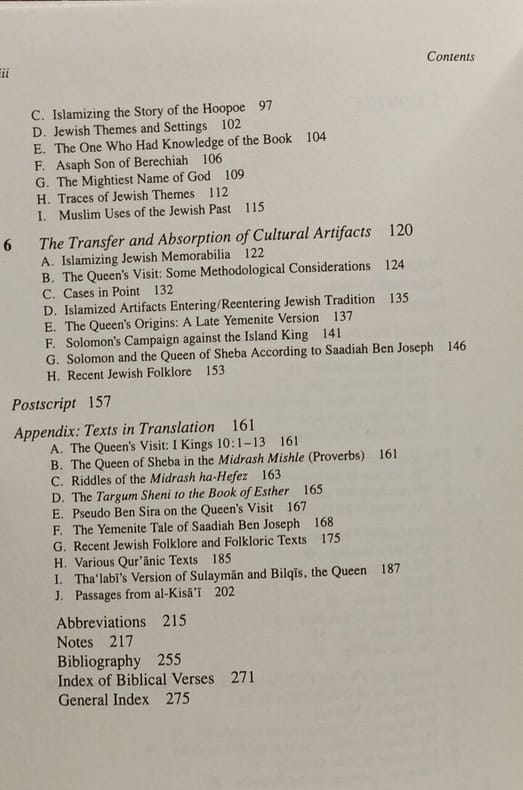
1993100145125UNIV OF CHICAGO PR 1993 308 pages 16 21x2 79x23 8cm. 1993. Cartonné. 308 pages. Cet ouvrage de Jacob Lassner spécialiste de l'islam classique analyse comment les traditions juives et musulmanes postbibliques et médiévales ont progressivement transformé la figure biblique de la Reine de Saba. D'une souveraine intelligente et politiquement avisée elle devient une force démoniaque incarnant les anxiétés liées aux frontières du genre et de la culture révélant ainsi les processus de transmission culturelle
Very Good Danish Original leather bdg. Large roy. 8vo. (25 x 18 cm). In Danish. 159 p., color and b/w plates. Den Arabiske bog. [= The Arabic book]. First Edition.