SPANISH CIVIL WAR; CONDOR LEGIONBiblio.com
194 résultats
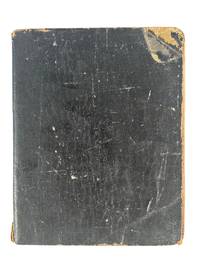
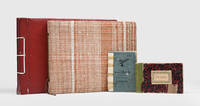
1936142062Spain & northern Europe: 1936-41. Auf-zum! so ging es tagtäglich" "Off we go! That's how it went every day" An exceptional and unusually complete archive documenting the career of Leutnant Konrad Ellermann a decorated airman who served with the Condor Legion in Spain and later in flying-boat operations on the Eismeer Front. Centred on two meticulously compiled photograph albums and augmented by scarce supporting documents it offers a rare coherent visual record of theatres where comprehensive personal archives seldom survive. The first album charts his Condor Legion service beginning with 43 tourist views of Spain and 25 informal images of squadron life followed by sequences showing Heinkel 59 flying boats in preparation and in flight with aerial views of enemy positions and bomb damage. Ellermann dedicates a page to comrades killed in March 1938 almost certainly the crew of the HE 59 downed near Cambrils and records their funerals and repatriation. Additional images include Condor Legion fighters He 51 He 112 Bf 109 long-range raids from Portbou to Oropesa and bombed railway lines. A section headed "Einiges von den Taten!" depicts two merchant vessels sunk by his unit - the British SS Jean Weems and the Danish SS Edith - alongside further action shots. The album closes with off-duty scenes and high-quality aerial photographs of Pollença Tangier and Portbou. The second album covers northern service. It opens with trials of the Dornier Do 26 flying boat in late 1938 with fine airborne views images of the second prototype and photographs of Dornier staff at work. Other aircraft represented include the Blohm & Voss Ha 139 the Latécoère 521 and the Dornier Do 18. Around 20 aerial views of Norway follow including encounters with He 111s and Ellermann's aircraft moored in Rombaken fjord culminating in a medal ceremony featuring Oberleutnant Karl Otto Max Barth. A final section documents his posting with Flussklärungsfliegerstaffel 1/125 in Finland with portraits of his Heinkel HD 114 scenes in Helsinki and Turku maintenance shots and a concluding portrait of Ellermann. Born in Geisingen in 1915 Ellermann began as a funkmeister before becoming an observer in 1938. He received the Iron Cross First and Second Class the Narvikschild the Frontflugspange für Kampfflieger in gold and silver the Luftwaffe Honour Cup and the Deutsches Kreuz in Gold. His service included AS-88 in Spain 1937-38 Sonderstaffel Tr. O 1939-41 Küstenflieger-Staffel 1/406 in Norway 1942-43 and Seeaufklärungsgruppe 131 1943-45. His surviving logbook records 484 flights between October 1937 and March 1944 378 of them operational including 62 Condor Legion sorties on ships and towns such as Barcelona Sagunto and Alicante. Later missions encompassed reconnaissance and anti-submarine patrols over the North Sea and Norwegian coast one section countersigned by Captain Martin Harlinghausen later the Luftwaffe's leading ship-killer of the Second World War. 4 items. Album 1: 245 x 320 mm original pale red and white rough-weave cloth punch holes at spine golden brown fastening cord bookseller's ticket of Otto Memmert Kiel; 222 original photographs on 24 black card leaves mainly deckle-edged snapshot images most 60 x 90 mm some larger up to 110 x 170 mm manuscript "title page" in coloured chalks with crossed Spanish and Nazi flags. Album 2: 250 x 330 mm original dark red faux leather punch holes to spine white coated-wire fastening tape bookseller's ticket of Bohrer & Co Kiel; 171 original photographs 50 x 60 mm to 240 x 180 mm on 24 tan card leaves glassine guards; manuscript "title page" with illustration of Nazi eagle above legend; 2 divisional pages first with watercolour drawing of unit insignia ram's skull above title; second with watercolour drawing of unit insignia penguin wearing clogs and flying over sea above title. Soldbuch: 28 pp 145 x 100 mm original blue card printed wrappers Ellerman's photograph mounted on inside front cover punch holes with metal eyelets to front cover. Log book: 100 x 155 mm pp. 114. Original marbled sides green cloth spine paper label on front cover. Album 1 in very good condition; Album 2 with a little wear to binding shallow indentations to covers leaf loose; Soldbuch: general signs of handling paper sometime taped around spine; Log book with some loss of marbled paper from front cover a little finger soiling. A well-preserved group. Sebastian Cox & Peter Gray eds Air Power History: Turning Points from Kitty Hawk to Kosovo 2002. hardcover
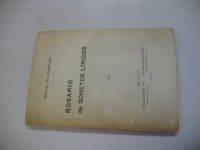
1911030666Madrid: Imprenta Espanola / Fernando Fe / Victoriano Suarez 1911. 1st Edition 1st Printing. Soft cover. Near Fine. 291 Pp 1 Pp Advertisement For The Author's Works. Original Beige Wrappers Printed In Black Priced 3 Pesetas On Spine. Inscribed By Unamuno To The Cervantes Scholar Rudolph Rodolfo Schevill And Dated In Salamanca Vi/11 June 1911 The Year Of Publication. Covers With Slight Browning More Browning To Spine Water-Staining At Upper Right Corner Edges Of Rear Cover To 1/4" Deep But No Traces Elsewhere On Covers Or Pages. Contents Fine Pages Unopened Still Attached At Top. A Book Of Poetry Noted By Some As Containing The Finest Sonnets In The Spanish Language. <br/> <br/> Imprenta Espanola / Fernando Fe / Victoriano Suarez paperback
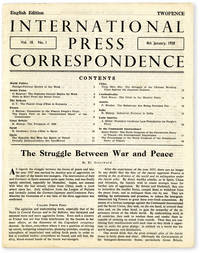
193452881London: H.R.G. Jefferson et al 1934-1939. NOTE: Other identified publishers all London include: Unthanks Bookshop; R. Bishop; William Massey. Beginning in July 1938 title changes to "World News and Views." <br /> <br /> Collection of two hundred forty-nine quarto issues in original staple-bound self-wrappers. Each issue 27cm x 21cm; most issues ca 20pp numbered sequentially. General wear occasional creasing or small losses; some copies marked as "File Copies;" some with red pencil annotations presumably for publication; a few issues with ink pressure stamp of the Los Angeles Workers Library. With the exception of a few issues in 1934 the journal was printed on high-quality newsprint; the run is well-preserved Very Good overall and fully readable.<br /> <br /> The periodical was issued irregularly from one to as many as three issues per week; our run collates as follows: <br /> <br /> Vol. 14 1934: 28-14161719-232629-3234-3638-4043-455760-63 32 issues<br /> Vol. 15 1935: 1-58-3136383944474850555658596163646668-72 49 issues<br /> Vol. 16 1936: 1246-3032-384042-58 53 issues<br /> Vol. 17 1937: 248-242642444547-5355-57 47 issues<br /> Vol. 18 1938: 1-35-81012-2325273031333436-4044-47525456-60 38 issues <br /> Vol. 19 1939: 2-91415181920-2628-3235-4155 30 issues. Beginning in 1918 immediately following the Russian Revolution International Press Correspondence usually called by its acronym INPRECOR became the Communist International's principal international organ for distributing "official" news of the global spread of Marxist ideology. The paper was issued in four languages English French Spanish and German and at its height no fewer than one and as many as three issues per week appeared. The chief audience was the editorial staffs of COMINTERN-aligned newspapers where many of INPRECOR's articles would be republished verbatim. Thus INPRECOR served as a de facto press service for the left-wing media in Europe North and Latin America.<br /> <br /> In our experience cohesive runs of INPRECOR in any size are unusual; this collection represents a veritable treasure-trove of official COMINTERN policy during the Popular Front period especially valuable for its day-by-day coverage and interpretation of events in Spain before during and after the Civil War and for documenting the rise of fascism across the European continent. Our run ends in August 1939 on the eve of Germany's invasion of Poland and the outbreak of the Second World War. Between that date and 1934 despite occasional lacunae the issues offered here provide a clear and compelling narrative of the sweep of world events leading to the World War and an intimate view of the communist left's response to those events. <br /> <br /> Even individual issues are somewhat scarce in commerce. Earlier issues of INPRECOR have been digitized by the Marxist Internet Archive ending in 1934. Much of the run is available in microfiche produced by the Communist Party of Great Britain but the imaging is of legendarily poor quality basically illegible in many places. Holdings for physical issues are spotty per WorldCat with many institutions holding small samples or partial runs. H.R.G. Jefferson [et al] unknown
1970022883New York: Harper & Row Publishers 1970 Stated first edition American first printing without the number line on bottom back page in the second issue dust jacket lacking the exclamation mark at the end of the first paragraph on the front flap. A tiny bump to bottom back corner and light rubbing to spine ends and corners else book in fine condition; dust jacket with a short closed tear/crease to bottom back edge near the flap-fold a short closed tear/crease to foot of back spine fold a tiny closed tear to upper front flap and minor rubbing to extremities. Harper & Row, Publishers hardcover
1937SPANISHC002314Left Review London. 1937. First edition. Royal octavo. 24 pages. Wrappers. A publication arising from a letter signed by twelve European writers prominent in Europe including Aragon W.H. Auden Nancy Cunard Heinrich Mann Pablo Neruda Ramon Sender Tristan Tzara etc. The letter was addressed to the writers of England Scotland Ireland and Wales and asked whether they were for or against the government of Republican Spain. Somehow Ezra Pound got involved he was neutral in a combative kind of way: ''Spain is an emotional luxury to a gang of sap-headed dilettantes''. The majority of responses were in favour and these include messages from Samuel Beckett ''�Up the Republic!'' - almost the shortest contribution Kay Boyle Thomas Burke Cyril Connolly Aleister Crowley C. Day Lewis Liam O'Flaherty Ford Madox Ford David Gascoyne Victor Gollancz Laurence Housman Aldous Huxley C.L.R. James Arthur Koestler John Lehmann Rose Macaulay ''AGAINST FRANCO'' - the shortest contribution Hugh Macdiarmid Louis MacNeice John Middleton Murry Sylvia Pankhurst V.S. Pritchett Herbert Read Olaf Stapledon Sylvia Townsend Warner Clough Williams-Ellis etc etc. In the neutral camp were Vera Brittain Robert Byron T.S. Eliot H.G. Wells V. Sackville-West etc. Only five messages are in the ''Against'' section including ones from Edmund Blunden Arthur Machen and Evelyn Waugh. The following year a similar exercise was carried out in America where 418 writers gave their opinions. This pamphlet has also been the inspiration for questionnaires on the Vietnam War and even the Falklands War.Foxing mostly light on almost every page. Covers lightly stained. Spine starting to split. Good. Left Review, London. unknown
197151506As New. 1971. Hardcover. FREE UPGRADE to Courier/Priority Shipping Upon Request IN STOCK AND IMMEDIATELY AVAILABLE FOR SHIPMENT - TEXT PRISTINE COMPLETE FOUR 4 VOLUME SET -Corresponds to ASIN: B0000DW6Q9 -- with a bonus offer-- . hardcover
195733570Meridian Books Inc. As New. 1957. FREE UPGRADE to Courier/Priority Shipping Upon Request - IN STOCK AND IMMEDIATELY AVAILABLE FOR SHIPMENT - Rebound in library gray-green hardcover binding; else Very Good condition Tight to the spine. This edition marked: "GREENWICH EDITIONS Original first published September 1957 by Meridian Books Inc. " and then "First Printing August 1957". -- Three pages with improperly shaped corners from the original printer paper cut. -several pages have small brown discolored spots on fore-edge or in page margins near fore-edge -- with a bonus offer-- . Meridian Books, Inc hardcover
195757006Meridian Books Inc. As New. 1957. Paperback. FREE UPGRADE to Courier/Priority Shipping Upon Request IN STOCK AND IMMEDIATELY AVAILABLE FOR SHIPMENT - Tight to the spine - 190 pages. -- with a bonus offer-- . Meridian Books, Inc paperback
198774409Museum. New. 1987. Paperback. FREE UPGRADE to Courier/Priority Shipping Upon Request - IN STOCK AND IMMEDIATELY AVAILABLE FOR SHIPMENT - Flawless copy brand new pristine never opened -- Text in English. 48 pp. With 15 ills. 3 col. . 26 x 18 cm. -- with a bonus offer-- . Museum paperback
198366181Luis Gonzalez-Robles and Jose M. Losada. As New. 1983. Paperback. FREE UPGRADE to Courier/Priority Shipping Upon Request IN STOCK AND IMMEDIATELY AVAILABLE FOR SHIPMENT - AS NEW THE TEXT BLOCK IS PRISTINE CLEAN UNMARKED AND IN EXCELLENT CONDITION - - Text in English. 72 pp. With 98 ills. 16 col. . 29 x 23 cm. -- with a bonus offer-- . Luis Gonzalez-Robles and Jose M. Losada paperback
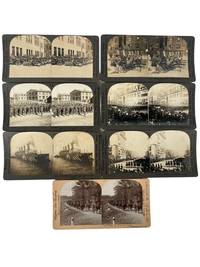
1918205021918. Buffalo Soldier regiments depicted in stereoview photographs from the World War I era document African American cavalrymen and infantry units serving in segregated formations of the United States Army during the early twentieth century. These images record soldiers from several historically significant Black military units including the 9th U.S. Cavalry the 10th Cavalry and the 369th Infantry Regiment. African American soldiers served in large numbers during World War I despite segregation in the armed forces and the war marked a turning point in public recognition of Black military service. The photographs capture cavalry movement machine gun training and celebratory returns from the European front preserving visual evidence of the military presence and public visibility of Buffalo Soldiers during the conflict.<br /> <br /> Archive consists of seven stereoview photographs published by the Keystone View Company during the World War I period. The views depict soldiers from the 9th U.S. Cavalry the 8th Regiment of Colored Troops the 10th Cavalry the Chicago Regiment of Colored Troops and the 15th Regiment of the 369th Infantry. Two stereoviews show Black machine gun companies operating Lewis guns one of the principal light machine guns used on the Western Front during the war. Another view shows Troop K of the 10th Cavalry moving on horseback at Camp Chickamauga in Georgia. Additional stereoviews depict African American soldiers returning from European service and marching in public celebrations including scenes of troops parading along major boulevards such as Fifth Avenue in New York.<br /> <br /> The Buffalo Soldier regiments had already established a long military record before the First World War. Units such as the 10th Cavalry formed part of the segregated Regular Army created after the Civil War and served in campaigns across the western United States during the Indian Wars later participating in the Spanish American War the Philippine American War and operations during the Mexican Revolution. World War I marked one of the final periods in which cavalry units remained visible in American military organization as mechanized armor and motorized vehicles soon replaced mounted troops. At the same time Black soldiers who returned from service were celebrated in wartime parades yet continued to face segregation and racial discrimination within American society. Stereoview cards remain well preserved with light age wear typical of early twentieth century photographic prints. Very good condition overall and a visually compelling record of Buffalo Soldiers during the World War I era. unknown
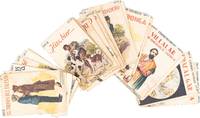
1920RF1178<p><b>History and Stories for Children and Teenagers by One of the Most Important Spanish Publishers of All Times</b></p><p>12vo; 4 series 20 issues each: <i>"Cuentos" "Vida de hombres celebres" "Cuentos" "Episodios historicos"</i>; original illustrated wrappers; fine condition.</p><p>Ramón Sopena 1867-1932 was a Spanish editor who founded the publishing house that bears his name in 1894 in Barcelona. He was a multifaceted editor that published essentially dictionaries and encyclopedias but also journals. For some time he also edited erotic works and then opted for popular literature.</p><p>In the children's genre he published small works in series such as the ones we offer here: the CHILDREN COLLECTION or the LIBRARY FOR CHILDREN. The printing house had a long life since it closed only in 2004.</p><p>The purpose of the CHILDREN'S COLLECTION "<i>Episodios historicos</i>" "<i>Historical episodes</i>" was to make relevant topics of Spain's history available to children. "<i>Vida de hombres celebres</i>" "<i>Life of famous men</i>" are brief biographies of characters from Spanish and universal history. Finally the two series of "<i>Cuentos</i>" "<i>Tales</i>" are small stories without specifying their authors.</p><p># WorldCat: no copies of this series in US Libraries. <b><br /></b></p>
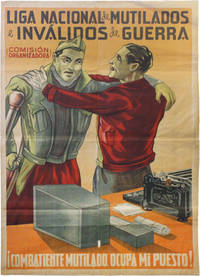
193852890Madrid: Gráficas Reunidas U.H.P. 1938. Original illustrated poser offset printed in colors on beige stock measuring 68.5cm x 100cm 27" x 39.25". Light wear and toning to extremities a few old folds smoothed-out with several tiny nicks and small edge tears a few tiny splits at intersection of folds and a small loss toward lower margin just above the lettering; an unrestored Very Good example unbacked. <br /> <br /> The first in a series of four propaganda posters produced by Gráficas Reunidas for the Liga Nacional de Mutilados e Inválidos de Guerra LNMIG the National League of War Wounded and Invalids founded in Madrid in 1937. "The creation of this association was the first tangible outcome of the organizational efforts made by wounded Republican veterans. According to their provisional programme their key concern was to remain 'useful' útiles to the war effort and provide 'unconditional help to the government'. It was stated that the association should 'educate and re-educate the disabled veterans in physical and cultural terms. As a consequence of the efforts made by the LNMIG on behalf of disabled veterans the government gave preference to the war wounded to fill vacant menial jobs such as janitors messengers and the like" cf.Matthews James. Spain at War: Society Culture and Mobilization 1936-44. The poster created by an anonymous artist depicts a wounded soldier supporting himself with a crutch being embraced by a typist above text reading "Wounded soldier take my place!" translation mine. OCLC notes a single holding at the Biblioteca Universitat de Barcelona. CARULLA 1.268. Gráficas Reunidas U.H.P. unknown
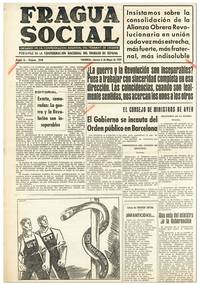
193726237Valencia: CNT 1937. 49 tabloid issues ca.48cm with publication seqence as follows: Año II Nos. 219 224-225 227-228 233-234 241-243 245 327-329 331-332 334-340 342 347-349 351-352 356 358-363 365-378. Printed offset on newsprint ca.8pp per issue; illus. Issues show light overall wear and toning creases and small tears with underlining and marginalia in red and blue colored-pencil to most issues; overall Very Good. Substantial run of this Spanish Civil War newspaper the official organ of the anarcho-syndicalist group Confederación Nacional del Trabajo. Published in Valencia between 1936-1939 the paper provided daily coverage of the Republican struggle with articles by Jesus Muro Felix Paredes Enrique Lopez Alarcon Gaston Leval and Juan Lopez et al. Illustrated with political cartoons and caricatures throughout. Large runs extremely uncommon in the trade; OCLC shows just 5 American institutions holding any issues. [CNT] unknown
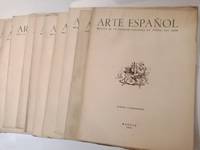
194928545Madrid: Sociedad Española de Amigos del Arte1949-1967.- 36 fascículos de unas 45 p. cada uno ilustraciones; 4º 26 cm.- SE OFRECEN los siguientes Nos.: 1949 3er. cuatrimestre 1950 1er. cuatrimestre 1951 completo los tres cuatrimestres 1952 1er. cuatrimestre 1953 a 1962 completos los tres cuatrimestres de cada año además de los tres fascículos que se publicaron para los años 1963-1967 conjuntamente. Es decir faltan el 2º y el 3er. cuatrimestres de los años 1950 y 1952 4 números salvo esto la revista SE OFRECE SEGUIDA desde 1949 3er. cuatrimestre hasta 1967 final por lo que se vende como conjunto. ARTE ESPAÑOL EN GENERAL E HISTORIA DEL ARTE ESPAÑOL Libro en español [Sociedad Española de Amigos del Arte] paperback
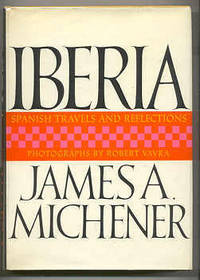
1968100334NY: Random House 1968. First edition first prnt. Photographs by Robert Vavra. Inscribed by Michener on the front free endpage to Random House editior Bert Krantz. "Random House 1968 To Bert Kranz Who helped so much to put this beautiful book together even though she was damn near dead at the time. Affectionately Jim Michener." Tiny tear at spine top edge very light shelfwear; dustjacket with minimal edgewear mostly at the spine top edge. Near Fine condition in a Near Fine dustjacket with an archival cover. A bright association copy and unique with Michener's sentiments to editor Krantz. Inscribed by Author. First Edition. Hardcovers. Near Fine/Near Fine. 8vo - over 7¾" - 9¾" tall. Association Copy. Random House Hardcover
197282762Ediciones Poligrafa S. A 1972-01-01. Hardcover. Very Good. Large format hardcover in jacket with text in Spanish light chip to head of spine of the jacket. All 11 original lithographs are intact. Tight binding no marks. oversized and overweight. Please email for photos. Ediciones Poligrafa, S. A hardcover
1970023359New York: Harper & Row Publishers 1970 First printing of the stated first edition in second state dust jacket. Book with light wear to covers and spine ends else in fine condition; price-clipped dust jacket with moderate wear to spine ends/corners a short closed tear to upper front cover and light toning to margins else fine. Harper & Row, Publishers hardcover
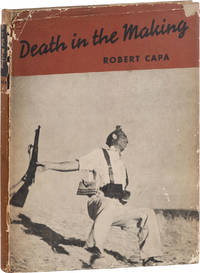
193881496New York: Covici-Friede 1938. First Edition. First Printing. Quarto 28cm; taupe cloth blocked and titled in black on spine and front cover; dustjacket; unpaginated 96pp; photographically illustrated. Gently spine-sunned lightly shelfworn with foxing to spine joints board edges and upper edge of textblock; pronounced offsetting to gutters at endpapers from binder's glue though text and illustrations are mostly clean; triangular loss to upper right corner of p.50-51 3.5" x 3.25" x 1 5/8" with the torn corner loosely laid in; just Very Good. Dustjacket is unclipped priced $2.50 spine-sunned showing moderate wear several chips tears and attendant creases with a half-dozen or so tears archivally reinforced on verso; Good or better. <br /> <br /> One of the definitive photobooks of the 20th century and an essential title in any collection of books on the Spanish Civil War. The untitled jacket image capturing the moment of death of a militiaman on the Cordoba front established Capa's reputation as one of the great battlefield photographers of all time and remains one of the most recognizable photographs of the Twentieth Century. PARR-BADGER I:139. 81496. Covici-Friede unknown
1927055900Ankara: Adliye Vekâleti Istatistik ve Nesriyât Müdüriyeti Türk Ocaklari Matbaasi 1927. 1st Edition . Soft cover. Very Good. 4to - over 9¾ - 12" tall. Original trichrome wrappers. 4to. 27 x 20 cm. In Ottoman script Old Turkish in Arabic letters. 4 56 72 92 32 92 41 31 8 25 p. two full paged b/w plates. First and only edition of detailed account of the Lotus case an international legal case involving France and Turkey in front of the Permanent Court of International Justice compiled by Spanish judge Altavira y Crevea and translated by Turkish Distinguished Professor of International Law Menemenlizâde Edhem 1878-1965. The case is known for establishing the so-called "Lotus principle" in international law says that sovereign states may act in any way they wish so long as they do not contravene an explicit prohibition. The Bozkurt-Lotus case decided by the Permanent Court of International Justice PCIJ in 1927 became a landmark in international law especially regarding issues of jurisdiction and the extent of a state's rights to assert criminal jurisdiction over foreign nationals. The case arose from the collision between the S.S. Lotus a French vessel and the S.S. Bozkurt a Turkish ship near the Greek island of Mytilene on 2 August 1926. After the collision eight Turkish nationals aboard the Bozkurt drowned. In response Turkey arrested and charged the captain of the Lotus Captain Demons for causing the deaths and damages to the Turkish vessel. The Turkish courts condemned him asserting their right to try him for the incident even though the collision occurred in international waters and involved a French ship. France contested the jurisdiction of Turkish courts over the captain arguing that Turkey could not claim the right to prosecute a foreign national for actions committed on a foreign vessel in international waters. France brought the case before the PCIJ to challenge Turkey's legal authority. The court ruled in favour of Turkey emphasizing that under international law there was no general prohibition against a state asserting jurisdiction over crimes involving foreign nationals even when the incident occurred outside its territorial waters. The PCIJ's decision established the principle that absent an explicit prohibition in international law states are free to exercise jurisdiction in cases where they have a legitimate interest even if the matter involves foreign nationals and occurred in international waters. This judgment reinforced the notion of state sovereignty in determining jurisdiction and highlighted the extent to which international law permits states to assert legal authority over incidents involving foreign nationals under certain conditions. However it also raised important questions about extraterritorial jurisdiction and the balance between state sovereignty and international cooperation in legal matters. "The Lotus principle or Lotus approach usually considered a foundation of international law says that sovereign states may act in any way they wish so long as they do not contravene an explicit prohibition. The application of this principle - an outgrowth of the Lotus case - to future incidents raising the issue of jurisdiction over people on the high seas was changed by article 11 of the Convention on the High Seas. The convention held in Geneva in 1958 laid emphasis on the fact that only the flag state or the state of which the alleged offender was a national had jurisdiction over sailors regarding incidents occurring on the high seas." Wikipedia. It is the first legal Turkish success achieved in the international arena after the proclamation of the Republic. Karakus. In court the Turkish side was represented by Mahmut Esat Bozkurt who was the Minister of Justice at the time. When Turkey adopted the formal surname system in 1934 Mahmut Esat chose the surname "Bozkurt" as a reminder of the landmark case. Sources: Karakus H.Burak. 2013. Atatürk Özel Sayisi: "Genç Türkiye'nin Ilk Hukuk Zaferi: Bozkurt-Lotus Davasi". Ankara: Hukuk Gündemi Dergisi. Wikipedia. Bulut Hüseyin. 2018. Atatürk <br/> <br/> Adliye Vekâleti Istatistik ve Nesriyât Müdüriyeti, Türk Ocaklari Matbaasi paperback
1937369023London : Press Department of the Spanish Embassy 1937. First Edition. Softcover. Good copy in original stiff card wrappers with some wear and tear as with age. Remains well-preserved overall; bright and clean. Physical description; 15 pages 128 pages plates ; 31 cm. Notes; Preface and captions in Spanish English and French. In Spanish English and French. Subjects; Spain History Civil War 1936-1939 ; Pictorial works. Spain Pictorial works History Civil War 1936-1939. Genres; History. Illustrated. Pictorial works. London : Press Department of the Spanish Embassy paperback
1939369001Madrid: Spanish Press Services Ltd 1939. First Edition. Softcover. Good set in the original stiff-card wrappers; edges slightly nicked and dust-dulled as with age. Physical description; 9 issues. Contents; No. 88: 8th June 1939 ; No. 89: 15th June 1939 ; No. 107: 7th March 1940 ; No. 108: 4th April 1940 ; 109: 2nd May 1940 ; No. 11: 4th July 1940 ; No. 112: 1st August 1940 ; No. 113: 5th September 1940 ; No. 115: 7th November 1940. Subjects; Spain. Spanish Culture. Spanish History. Madrid: Spanish Press Services Ltd paperback
1906218101906. Manuscript medical remedy book from Devonport England compiled between 1903 and 1915 and preserving a striking record of everyday therapeutic practice in the years immediately preceding the global influenza pandemic that would soon devastate Europe. Written in ink in a clear and highly legible hand across 36 pages of a ruled notebook measuring 7.75" x 6.5" the volume gathers dozens of medicinal formulas for ailments ranging from bronchitis neuralgia rheumatism and digestive complaints to deep ulcers eye conditions sore throats winter coughs and childhood illnesses. Particularly notable are repeated entries for "influenza" appearing years before the outbreak retrospectively termed the Spanish Flu revealing how influenza already existed as a familiar and recurring medical threat within Edwardian Britain long before the catastrophic pandemic wave of 1918-1920 transformed it into one of the deadliest public health disasters of the modern era.<br /> <br /> The notebook therefore captures an important transitional moment in the history of epidemic disease: a period when influenza was treated as a common but serious seasonal illness through localized mixtures tonics expectorants and domestic pharmaceutical preparations rather than through coordinated state medicine or modern antiviral therapies. These entries provide unusually direct evidence of how ordinary practitioners dispensers or caretakers approached influenza treatment in the years immediately before the Spanish Flu pandemic altered both public consciousness and medical infrastructure surrounding contagious respiratory disease. The remedies themselves demonstrate the hybrid world of early twentieth-century medicine where domestic caregiving folk therapeutics and increasingly professionalized pharmacy overlapped. Familiar household substances such as witch hazel and paregoric appear beside pharmaceutical compounds later restricted or abandoned by mid-century medicine. Several preparations include age-specific dosages for children while others focus on strengthening mixtures cough remedies liniments lotions and wound treatments. A handful of entries are dated including one reading "June 29 1903" and another attributed to an individual identified as "A. Wilson."<br /> <br /> Accompanied by three inserted paper ephemera pieces including an index of herbs and chemicals and two additional recipe slips one bearing a postage stamp from the "Plymouth . Society Dispensing Dept. Fore St. Devonport." The overall character strongly suggests compilation by someone with regular access to a dispensary or chemist environment though not necessarily a formally licensed pharmacist operating instead within the fluid boundary between domestic medical care and industrialized pharmaceutical practice in prewar England. Well rubbed with losses to spine and extremities; interior remains clear and legible with minor foxing. Good overall condition. unknown
1937SPANISHC016421Madrid. 1937-1938. Thirty-six issues - most comprising two folded sheets one inserted within the other. A daily tabloid size newspaper. This batch consists of fifteen issues from November 1937 twenty issues from December 1937 including those for 25th and 31st December and one issue from January 1938. Numerous photographs. Several issues contain as a supplement a full-page photograph or portrait issued in a series entitled ''Figuras de la Democracia Mundial'' - the ''figuras'' include Gandhi and Paderewski.Together with: ABC - Diario Illustrado. 1937. Seville. Eight issues from November and December. Falangist daily tabloid size newspaper though each issue is much more substantial than those of the Madrid ABC each consisting of twenty to thirty pages. Several black and white photographs including one of members of the Hitler Youth visiting the ruins of Toledo.This daily founded in 1903 remains one of the three newspapers of record in Spain. In July 1936 the Madrid version was seized by the Republican government with a consequent change in its political outlook while that of Seville supported the Nationalists. In 1939 the government of Franco returned the Madrid ABC to its original owners.Generally very good. Madrid. unknown
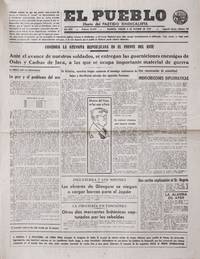
193730146Valencia: S.i. 1937. Six tabloid issues 58cm; newsprint wrappers; 4pp per issue; occasional illus; text entirely in Spanish. Publication sequence as follows: Año XLIV Nos.15.394 15.409 15.411 15.413 15.424 15.435 October 8272931; November 1326 1937. All six issues horizontally folded at center occasional creasing to extremities with a few scattered passages underlined in red and blue colored pencil; one with mild toning along folds else paper is still supple and quite fresh; Very Good overall. Nicely-preserved selection of issues of this Republican daily newspaper the official organ of the Partido Sindicalista one of the smaller Spanish left-wing workers' parties that would eventually become affiliated with the United Front. The paper was founded in 1896 by the popular Spanish novelist and journalist Vicente Blasco Ibañez. During the Second Republic under the management of Ibañez's nephew Sigfrido the paper became more politically aligned eventually becoming the organ of the Syndicalists in 1932; it ceased publication with the end of the Republic in 1939. Rare; OCLC finds 2 locations holding any issues Biblioteca Universitat de Barcelona Universidad de Valencia none in the U.S. S.i. unknown