SPANISH CIVIL WAR; CONDOR LEGIONBiblio.com
880 résultats
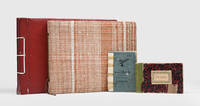
1936142062Spain & northern Europe: 1936-41. Auf-zum! so ging es tagtäglich" "Off we go! That's how it went every day" An exceptional and unusually complete archive documenting the career of Leutnant Konrad Ellermann a decorated airman who served with the Condor Legion in Spain and later in flying-boat operations on the Eismeer Front. Centred on two meticulously compiled photograph albums and augmented by scarce supporting documents it offers a rare coherent visual record of theatres where comprehensive personal archives seldom survive. The first album charts his Condor Legion service beginning with 43 tourist views of Spain and 25 informal images of squadron life followed by sequences showing Heinkel 59 flying boats in preparation and in flight with aerial views of enemy positions and bomb damage. Ellermann dedicates a page to comrades killed in March 1938 almost certainly the crew of the HE 59 downed near Cambrils and records their funerals and repatriation. Additional images include Condor Legion fighters He 51 He 112 Bf 109 long-range raids from Portbou to Oropesa and bombed railway lines. A section headed "Einiges von den Taten!" depicts two merchant vessels sunk by his unit - the British SS Jean Weems and the Danish SS Edith - alongside further action shots. The album closes with off-duty scenes and high-quality aerial photographs of Pollença Tangier and Portbou. The second album covers northern service. It opens with trials of the Dornier Do 26 flying boat in late 1938 with fine airborne views images of the second prototype and photographs of Dornier staff at work. Other aircraft represented include the Blohm & Voss Ha 139 the Latécoère 521 and the Dornier Do 18. Around 20 aerial views of Norway follow including encounters with He 111s and Ellermann's aircraft moored in Rombaken fjord culminating in a medal ceremony featuring Oberleutnant Karl Otto Max Barth. A final section documents his posting with Flussklärungsfliegerstaffel 1/125 in Finland with portraits of his Heinkel HD 114 scenes in Helsinki and Turku maintenance shots and a concluding portrait of Ellermann. Born in Geisingen in 1915 Ellermann began as a funkmeister before becoming an observer in 1938. He received the Iron Cross First and Second Class the Narvikschild the Frontflugspange für Kampfflieger in gold and silver the Luftwaffe Honour Cup and the Deutsches Kreuz in Gold. His service included AS-88 in Spain 1937-38 Sonderstaffel Tr. O 1939-41 Küstenflieger-Staffel 1/406 in Norway 1942-43 and Seeaufklärungsgruppe 131 1943-45. His surviving logbook records 484 flights between October 1937 and March 1944 378 of them operational including 62 Condor Legion sorties on ships and towns such as Barcelona Sagunto and Alicante. Later missions encompassed reconnaissance and anti-submarine patrols over the North Sea and Norwegian coast one section countersigned by Captain Martin Harlinghausen later the Luftwaffe's leading ship-killer of the Second World War. 4 items. Album 1: 245 x 320 mm original pale red and white rough-weave cloth punch holes at spine golden brown fastening cord bookseller's ticket of Otto Memmert Kiel; 222 original photographs on 24 black card leaves mainly deckle-edged snapshot images most 60 x 90 mm some larger up to 110 x 170 mm manuscript "title page" in coloured chalks with crossed Spanish and Nazi flags. Album 2: 250 x 330 mm original dark red faux leather punch holes to spine white coated-wire fastening tape bookseller's ticket of Bohrer & Co Kiel; 171 original photographs 50 x 60 mm to 240 x 180 mm on 24 tan card leaves glassine guards; manuscript "title page" with illustration of Nazi eagle above legend; 2 divisional pages first with watercolour drawing of unit insignia ram's skull above title; second with watercolour drawing of unit insignia penguin wearing clogs and flying over sea above title. Soldbuch: 28 pp 145 x 100 mm original blue card printed wrappers Ellerman's photograph mounted on inside front cover punch holes with metal eyelets to front cover. Log book: 100 x 155 mm pp. 114. Original marbled sides green cloth spine paper label on front cover. Album 1 in very good condition; Album 2 with a little wear to binding shallow indentations to covers leaf loose; Soldbuch: general signs of handling paper sometime taped around spine; Log book with some loss of marbled paper from front cover a little finger soiling. A well-preserved group. Sebastian Cox & Peter Gray eds Air Power History: Turning Points from Kitty Hawk to Kosovo 2002. hardcover
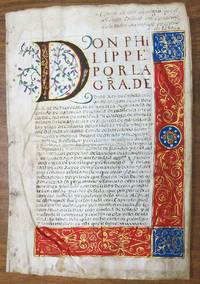
1572RF 1076<p><strong>Royal Provision of Phillip II Confirming and Ratifying the Privileges Granted by the Masters of the Order of Santiago to the Village of Corral de Almaguer Toledo 1572</strong></p><p>Manuscript. Small folio. 12 1/4 x 8 1/4". 8 double-sided vellum manuscript leaves originally bound together now unbound hand painted and decorated in blue red and gilt at various points throughout the text. The first page is hand-painted and decorated along the edge and includes a large decorative initial in multiple colors. Manuscript text in gothic style. Signed "Yo el Rey" on the back of the final leaf by King Phillip II of Spain in 1572.</p><p>ATTRACTIVELY ILLUMINATED EARLY MANUSCRIPT. JUDAICA INTEREST. Our manuscript contains the 4 confirmed provisions originally drafted by Infante Henry Duke of Aragon 1421 and 1440 Alonso de Cárdenas here listed as "Alfoso" sic in 1480 and then "The Catholic Kings" in 1494 all of whom at various times served as "Grand Masters of the Order of Santiago". The provisions were instigated against the Jewish communities of the villages of Corral de Almaguer and Ocana in Toledo province. Residents of the towns affiliated with the Order of Santiago repeately complained throughout the 15th and 16th centuries to the the authorities of that order of that the Jews and later conversos had bought land from Christians and had not paid any taxes on their purchases. Ultimately the Jews of Corral de Almaguer were ordered to pay comparable taxes to the Christians for said property but the Jews of Ocana were excepted because of their previous payments of other taxes. Given the fact that this manuscript copy dates from 1572 and was signed and reconfirmed by King Phillip II so long after the expulsion of 1492 shows there were still clearly tensions and persecution of local conversos even long after the communities had converted to Catholicism.</p><p>The top left margin on the front of the first leaf contains a handwritten note in ink stating in Spanish "It consists of this-privilege that Juan Collado was a secretary of the Order of Santiago in the year 1480". There are a few additional scant marginal notes in ink throughout and additional handwritten notes and signatures some indecipherable on the verso of the final leaf under the King's signature.</p><p>This document provide a fascinating and invaluable resource to those studying the history of Jews in Spain during the 15th and 16th centuries.</p><p>Text in Spanish.</p> hardcover
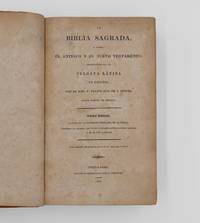
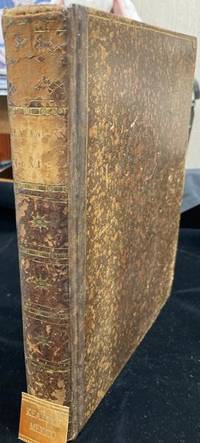
1824373835New York: Edicion Estereotipica por A. Chandler 1824. First American Edition of the Bible in Spanish. 928; 251pp. 4to. Contemporary panelled calf usual wear front hinge neatly repaired. Foxing. Provenance: Essex Institute label on front pastedown. In half red morocco slipcase and chemise. First American Edition of the Bible in Spanish. 928; 251pp. 4to. First American edition of the Bible in Spanish printed by the American Bible Society for the use of missionaries in South America. It is among the earliest Catholic bibles printed in the United States noted on the verso of the titlepage as "Edicion 1". The text was taken from the Madrid edition of 1797 translated from the Latin by Felipe Scio de San Miguel Bishop of Segovia.<br /> <br /> Scarce on the market with no examples in the auction records for the last half century. Shaw & Shoemaker 15340; O'Callaghan 1824; Parsons 813 Edicion Estereotipica por A. Chandler unknown
371476Amsterdam: Joseph Jacob and Abraham the sons of Solomon Proops 5522. Titled printed in red and black. 2 178 2 179-332 10 Introduction etc. 2 160 2 161-350pp. Publisher's introduction and other preliminaries misbound preceding the later Prophets. Folio 15-7/8x10 inches. Nineteenth or early 20th century half morocco and marbled paper boards rear joint splitting worn at joints and head and tail of spine. Foxing principally to the title tear to the final text leaf. Provenance: General Theological Seminary bookplate. Titled printed in red and black. 2 178 2 179-332 10 Introduction etc. 2 160 2 161-350pp. Publisher's introduction and other preliminaries misbound preceding the later Prophets. Folio 15-7/8x10 inches. Besides being the first bi-lingual edition in Hebrew and Spanish this edition is the first Hebrew book whose publication was financed by an American - Abraham Mendes de Castro 1689-1762 of Curaçao - intended for use in the West Indies with the sale proceeds to benefit the Jewish communities of Jerusalem and Hebron. Cowley 102; Darlow & Moule 5156; Zedner 102; not in Steinschneider or Roest Joseph, Jacob and Abraham, the sons of Solomon Proops unknown
155067900En Leon i.e. Strassburg: en Casa de Sebastian Grypho i.e. Augustin Fries 1550. BIBLE IN SPANISH; ENZINAS Francisco de. First Edition in Spanish of Ecclesiasticus<br> <br> BIBLE IN SPANISH. ENZINAS Francisco de translator. Ecclesiastics. Libro de Jesus Hiio de Syrach qu'es llamado el Ecclesiastico. traduzido de Griego en lengua Castellana En Leon i.e. Strassburg: en Casa de Sebastian Grypho i.e. Augustin Fries 1550.<br> <br> First edition in Spanish of Ecclesiasticus. Small octavo 6 x 3 5/8 inches; 151 x 91 mm. 3 109 leaves. With numerous woodcut initials. With an imitation Gryphius woodcut device printed in reverse on title. We could only locate 3 copies at libraries Cambridge Madrid and Copenhagen. No other copy besides this present copy has been at auction in the past 50 years.<br> <br> Early 19th-century mottled sheep. Boards tooled in gilt. Spine stamped in gilt. With red morocco spine label lettered in gilt. Board edges tooled in gilt. Marbled endpapers. Some minor dampstaining mainly to lower blank margin of preliminaries. Signature G is toned. Leaves O3 and O4 with marginal paper repair not affecting text. Final leaf is toned and has a near invisible paper repair not affecting text. Overall a very good copy.<br> <br> "A native of Burgos educated at Louvain and Wittenberg Francisco de Enzinas 1518-52 was a humanist scholar and Protestant convert who produced the first Spanish version of the New Testament printed in 1543 in Antwerp. He formed a partnership with the Strassburg printer Augustin Fries to publish Spanish translations of Greek classics and the remainder of the Bible of which he was only able to complete Psalms Ecclesiasticus Job and Proverbs before his death. Baudrier VIII 241 not having seen or located a copy citing Brunet supplement II 712"<br> <br> "Even before the complete edition of Castellio's Latin Bible appeared Enzinas who had already produced a Spanish Bible New Testament in Antewerp in 1543 had translated the Psalter the Wisdom of Solomon Jesus Sirach present copy and the book of Job into Spanish. All of these appeared with the false address 'En Leon en casa de Sebastian Grypho' though they were in fact his translations from manuscript versions of Castellio's edition. Enzinas continued to work on his translations until his death on 30 December 1552. He had planned to have his Spanish Bible printed in Geneva but this fortunately for Calvin never came to pass." Gilly Spanien und der Basler Buchdruck pp. 342-9 510-11. Found in Sebastian Castellio 1515-1563: Humanist and Defender of Religious .By Hans R. Guggisberg Bruce Gordon.<br> <br> "FRIES Augustine: printer in Zurich and Strasburg began to print at the former place about 1540. In 1547 he printed two books in English by John Hooper Heitz p. 39. Soon after this he moved to Strasburg and there printed among other things several works in Spanish by Franzisco de Enzinas in 1550 and 1551 Wiffen I pp 179 etc." A Century of the English Book Trade: Short Notices of All Printers. By Edward Gordon Duff.<br> <br> HBS 67900.<br> <br> $8500. en Casa de Sebastian Grypho [i.e. Augustin Fries] unknown
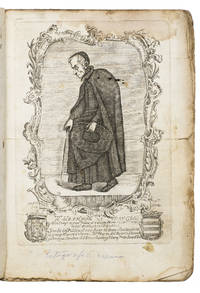
1770ABC_47902Córdoba 1770. 8vo. Contemporary limp parchment. With a large engraving of Juan de Santiago on the second leaf and a pen drawing on page 102. 4 "159" = 162 pp. Manuscript version of the only contemporary source on the life and death of the Córdoban Jesuit Juan de Santiago 1689-1762. It follows a work by the same name by Vincent Morales 1708-1765 which was probably published for the first time in 1763 in Córdoba. The copper engraving in the present manuscript likely comes from this edition. Judging from the ownership annotation the present manuscript was also made in Córdoba probably for a local university or convent. It contains an extra paragraph at the end about a feast held in honour of Juan de Santiago including six epigrams written for him. This part is not present in the printed versions of this work.Juan de Santiago was born in Écija. He became known as the "niño de la razón" because of his love for studying. He entered the Jesuit College at Sevilla at a young age. After he was ordained he moved to Córdoba College where he stayed for 40 years. He was seen as a model of holiness and many miracles were attributed to him. One of these occurred when he put out his hand to a blind woman who tried to enter the church and said to her: "Come in and take a good look." Upon which the woman cried "I see it I have recovered my sight." Throughout his life he was much loved in Córdoba because he helped and advised a great number of inhabitants. When he died there was an enormous grieving crowd in town and the City Council ordered that one of the three keys of his coffin should be kept in the city archive. The work by Morales was written at the request of the grieving Córdobans.With a crossed out ownership annotation on the verso of the title page. The parchment is stained and wrinkled with a few small holes and is somewhat smaller than the paper leaves. The borders of the first two leaves are frayed the manuscript is somewhat stained throughout. Otherwise in good condition.l Cf. De Backer-Sommervogel 1894 V 1284 printed ed. unknown
RGW19164AEtching and burnished aquatint TRIAL PROOF ON THIN JAPAN PAPER before all letters This is a posthumous printing but before the edition printed in 'L'Art' in 1877. Harris considers the quality of these impressions almost identical to the working proofs. unknown
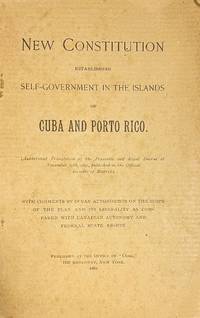
18983455New York: Published at the Office of "Cuba" 1123 Broadway 1898. First edition. In original printed wrappers. Wrappers creased and dented; spine missing at bottom. Corners dog-eared. A few pages with wormholes not affecting text. Otherwise in very good condition. First edition. In original printed wrappers. 74 2 pp. <p><br /> Rare first edition of Spain's 1897 grant of autonomy to Cuba and Puerto Rico-its last failed attempt to retain the islands through reform and the first constitutional success for the Cuban and Puerto Rican autonomist movements.<br /> <p><p><br /> Issued by Cuban autonomist exiles in New York this publication presents the full English translation of the Royal Decree of November 25 1897 signed by Queen Regent María Cristina which established broad local self-government for Cuba and Puerto Rico. It is accompanied by political commentary from Eliseo Giberga a leader of the Cuban Autonomist Party and editorials from El País the party's principal newspaper in Havana. The decree promised legislative authority to elected insular parliaments universal male suffrage civil and political equality with mainland Spaniards and control over finance commerce education public works and internal justice while reserving military naval and foreign affairs to the Spanish central government. A unique provision among colonial constitutions preserved the islands' representation in the Spanish Cortes.<br /> <p><p><br /> Although hailed at the time as realizing "the dream of three generations of Cubans" the new constitutional system was overtaken by events. After the sinking of the USS Maine and the outbreak of the Spanish-American War in 1898 Spain was forced to cede Puerto Rico to the United States and withdraw from Cuba rendering the newly granted autonomy largely theoretical. The political structure outlined in this decree was never fully implemented.<br /> <p><p><br /> The publication also offers comparative analysis asserting that the rights granted exceeded those enjoyed by Canadian provinces under the British North America Act of 1867 and in some respects by U.S. states. It preserves the vision of peaceful constitutional reform promoted by the Cuban Autonomist Party soon eclipsed by military occupation and the shift toward independence under American influence. <br /> <p><p><br /> This volume captures Spain's last liberal attempt to modernize its empire-a transitional political vision for Cuba and Puerto Rico that was quickly overtaken by war U.S. intervention and the collapse of Spanish colonial rule in the Americas and Pacific. It is also a key document in the history of Cuban constitutionalism and Puerto Rican political status.<br /> <p><p><br /> Rare particularly in original wrappers; only a handful of institutional holdings recorded. RBH lists only one copy sold in the past fifty years Sotheby's 2021.<br /> <p>. Published at the Office of "Cuba," 1123 Broadway unknown
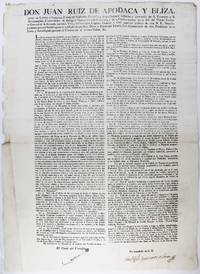
18203330Mexico City: July 11 1820. About very good. Large double-sheet broadside approximately 23.5 x 17 inches. Two sheets joined at central horizontal fold. Five chips at left edge not affecting text and some additional minor edge wear; otherwise light toning and dust soiling. Two contemporary manuscript signatures at foot; contemporary duty stamps on blank verso. Fascinating and otherwise unrecorded broadside that dictates the organization and process for the 1820 election of Mexican deputies to the Spanish Cortes during the second and last period of constitutional monarchy in Mexico. Colonial Mexico first achieved some representation in the Spanish government under the liberal Constitution of 1812 which lasted for two years before being revoked by Ferdinand VII upon his return to power in 1814. The reinstatement of the liberal constitution and the Cortes of Cadiz in 1820 however was not enough to prevent Mexico from obtaining full independence one year later. This broadside promulgated in Mexico on July 11 1820 by the colonial Viceroy Juan Ruiz de Apodaca y Eliza announces the renewed representation via regional elections to select Provincial Deputies for the Cortes and contains eight articles delineating the process by which these elections are to be held. In brief these articles order representation be apportioned according to the population as approximated from the 1792 census; divides Mexico into provinces for the purposes of the election; and places parameters on representation for each province. In all a very interesting window onto the formation of the brief final period of Spanish colonial rule in Mexico. July 11 unknown
1701ABC_48243Amsterdam 1701. Small 4to ca. 20 x 15 cm. Nicolas Chevalier Contemporary limp vellum with the manuscript title on the spine and a paper shelf mark label at the foot. With a general title and 2 divisional titles for ad 6 and ad 11 all with a woodcut vignette further with 2 hand-coloured engraved maps 1 folding engraved plate and several woodcut initials. 12 parts in 1 volume. 134 pp. Collection of very rare pamphlets and printed letters published under a collective title on the actual political circumstances of Northern Europe in the years 1699-1701 especially in connection with the death of the Spanish King Charles II born in 1661 in 1700 leading to the War of the Spanish Succession 1701-1714. The work includes 2 maps of Flanders and a folding plate of the Battle of Narva which took place on 30 November 1700. Although the pamphlets and letters were printed separately the present collection appears to be very rare as we have not been able to find any other copies with the same contents.Charles died childless. His possessions would go to one of his brothers-in-law: the French King Louis XIV 1638-1715 or the German Emperor Leopold I 1640-1705. Both had agreed already beforehand that they would divide Charles heritage to avoid disturbance of the European balance of power. In his last will however Charles had appointed the grandson of Louis XIV as his successor named from now on Philip V of Spain 1683-1746. The Treaty of The Hague affirmed this in 1701. With the deaccession stamp of the "Bibliothèque municipale de Nîmes" on the title page and its shelf mark label at the foot of the spine. The vellum at the foot of the spine with a tear the boards are somewhat stained. The leaves are occasionally browned and foxed. Otherwise in good condition.l Cf. Knuttel no. 14.510 ad 1 14.543 ad 6 14.588-14.589 ad 9 14.538 ad 10 and 14.538 a comparable collective title page with the imprint "Amsterdam Daniel de la Feuille 1701" with various texts ca. 78 pp.; STCN 317179241 1 copy the same general title page but with only 3 letters all different from ours. hardcover
1911030666Madrid: Imprenta Espanola / Fernando Fe / Victoriano Suarez 1911. 1st Edition 1st Printing. Soft cover. Near Fine. 291 Pp 1 Pp Advertisement For The Author's Works. Original Beige Wrappers Printed In Black Priced 3 Pesetas On Spine. Inscribed By Unamuno To The Cervantes Scholar Rudolph Rodolfo Schevill And Dated In Salamanca Vi/11 June 1911 The Year Of Publication. Covers With Slight Browning More Browning To Spine Water-Staining At Upper Right Corner Edges Of Rear Cover To 1/4" Deep But No Traces Elsewhere On Covers Or Pages. Contents Fine Pages Unopened Still Attached At Top. A Book Of Poetry Noted By Some As Containing The Finest Sonnets In The Spanish Language. <br/> <br/> Imprenta Espanola / Fernando Fe / Victoriano Suarez paperback
1787135132Madrid: En la Imprenta Real 1787. First nationwide Spanish census First edition of Spain's first nationwide census the census of 1787. The first census in Spain was undertaken in Castile as early as 1594 and there was a census of the Spanish Empire in 1776 but this was the first which embraced the whole country. It is sometimes known as the Census of Floridablanca after the reformist prime minister Count Floridablanca under whom it was undertaken from 1785 to 1787. The 43 tables list the regions of Spain alphabetically from Andalucia to Valencia but also include the Balearic and Canary Islands. The data accounts for the number of persons their ages religious affiliation and social status. The final population count is 10409879. Although the census did display modern demographic techniques the attempts to classify the population on class and occupation proved too rudimentary - servants were not classified in any consistent way and the scope of the hidalgo class varied considerably from region to region. Even so the census was a considerable demographic achievement and remains studied in modern Spanish demography; it is considered more accurate than the subsequent Spanish census of 1797. Quarto 301 x 225 mm. With 43 printed tables and large printed folding table at rear. Contemporary quarter sheep smooth spine ruled in gilt with green calf label marbled paper sides edges speckled red. Inked number "153" to title page. Scuffing and wear around extremities contents clean leaf a4 creased minor paper faults to tables XVIII and XXVIII 6 cm closed tear to map. A nice unrestored example. Goldsmiths' 13352; Palgrave I 242. unknown
1760WB19204Spain 1760s. Hardcover. Very Good. 4to. Contempoary vellum. Wonderful manuscript on paper consisting of several sections each illustrated with hand-drawn folding diagrams many of which quite intricate. This work can be assuredly connected to Jesuit professor Cristiano Riegen of the Reial Academia de Ciencies Exactes in Madrid as there are several mentions of his name in each work. The manuscript is one that clearly took great effort and the drawings are finely executed. <br/><br/> hardcover
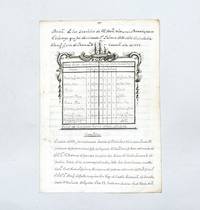
1779154781Spain: 1779. Visually appealing manuscript offering a valuable insight into the Spanish naval empire in the Caribbean Fascinating official service record of don Francisco Ximenez Parrado an officer of the Spanish Navy who served during the War of Jenkin's Ear 1739-48. This detailed account signed by Parrado enumerates his services from 1721 to 1779 listing naval campaigns many of them in the Americas. During his career Parrado participated in a range of operations; coastal patrols surveys and some significant naval engagements particularly against the British. In 1729 Parrado joined the Fuerte 60 under don Domingo Justiniani which sailed from Cadiz on 19 December in company with the two-decker frigate Nuestra Señora del Carmen 54. En route to Cartagena the two ships passed Tobago the coasts of Trinidad Margarita Cumana and Caracas. Once at Cartagena they commenced cruising the coasts of Terra Firme Spain's mainland possessions from the Caribbean to the Gulf of Mexico in search of illicit traders. In less than a year they had captured some six frigates and seven sloops carrying contraband off the coast of Venezuela. During the Summer of 1736 Parrado was in the Conquistador under don Blas de Lezo which was under repair in Spain before its embarkation for Cartagena early in 1737 with 1891 tons of cargo and brigadier don Jose Ambrosio the new governor of Chile aboard. The Conquistador remained at Cartagena on coast guard duties until she was scuttled by de Lezo during the battle of Cartagena in 1741 as part of the blockade of Vice-Admiral Edward Vernon's massive invasion assault. British failure here was to prove one of the pivotal moments of the War of Jenkins's Ear. Parrado is shown as having stayed in Cartagena until 1744 after which it seems he joined don Benito Antonio de Espinola in Havana taking part in the 1745 commissioning voyage of the Santa Teresa de Jesus 64 better known as the Dragon. The manuscript details an engagement in that year with an unnamed British vessel of 60 guns "quese avisto diferentes vezes frente del Puerto" "had been seen several times outside the port ". The Dragon's main mast was split and she was forced the quit the battle. The document also notes Parrado's presence in Tortuga Cabo de San Antonio Puerto Rico and Havana during 1746. The record details Parrada's career under four headings: Empleos "Employments" Campañas "Campaigns" outlined in chronological order Comiciones en que fue Empleado "Commissions in which he was employed" and Funciones en la America "Dutiess in America". Parrado seems to have occupied seven different positions during his career showing a clear ascent through the ranks ; Marinero Agregado a los Pilotos "Sailor attached to the pilots" Arnillero "Gunsmith" with a note that he continued in his role with the pilots Pilotín "Pilot's Assistant" Segundo Piloto "Second pilot" Primer Piloto "First pilot" Alférez de Navío "Frigate lieutenant" a junior watch officer and Teniente de Fragata "First lieutenant" a full lieutenant. Parrado later became the principal teacher at the School of Navigation in Cartagena. This fascinating document offers some welcome insight into a single career during a time of considerable conflict taking place on a world-wide stage. 4 pp. manuscript in neat clearly legible hand on a single bifolium elaborately engraved cartouche to the first page incorporating a three-master atop and enclosing a tabulated manuscript summary of Parrado's postings and positions. Light toning and minor staining. A very good example. Clowes The Royal Navy vol. 3. unknown
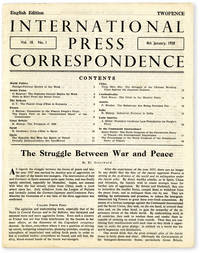
193452881London: H.R.G. Jefferson et al 1934-1939. NOTE: Other identified publishers all London include: Unthanks Bookshop; R. Bishop; William Massey. Beginning in July 1938 title changes to "World News and Views." <br /> <br /> Collection of two hundred forty-nine quarto issues in original staple-bound self-wrappers. Each issue 27cm x 21cm; most issues ca 20pp numbered sequentially. General wear occasional creasing or small losses; some copies marked as "File Copies;" some with red pencil annotations presumably for publication; a few issues with ink pressure stamp of the Los Angeles Workers Library. With the exception of a few issues in 1934 the journal was printed on high-quality newsprint; the run is well-preserved Very Good overall and fully readable.<br /> <br /> The periodical was issued irregularly from one to as many as three issues per week; our run collates as follows: <br /> <br /> Vol. 14 1934: 28-14161719-232629-3234-3638-4043-455760-63 32 issues<br /> Vol. 15 1935: 1-58-3136383944474850555658596163646668-72 49 issues<br /> Vol. 16 1936: 1246-3032-384042-58 53 issues<br /> Vol. 17 1937: 248-242642444547-5355-57 47 issues<br /> Vol. 18 1938: 1-35-81012-2325273031333436-4044-47525456-60 38 issues <br /> Vol. 19 1939: 2-91415181920-2628-3235-4155 30 issues. Beginning in 1918 immediately following the Russian Revolution International Press Correspondence usually called by its acronym INPRECOR became the Communist International's principal international organ for distributing "official" news of the global spread of Marxist ideology. The paper was issued in four languages English French Spanish and German and at its height no fewer than one and as many as three issues per week appeared. The chief audience was the editorial staffs of COMINTERN-aligned newspapers where many of INPRECOR's articles would be republished verbatim. Thus INPRECOR served as a de facto press service for the left-wing media in Europe North and Latin America.<br /> <br /> In our experience cohesive runs of INPRECOR in any size are unusual; this collection represents a veritable treasure-trove of official COMINTERN policy during the Popular Front period especially valuable for its day-by-day coverage and interpretation of events in Spain before during and after the Civil War and for documenting the rise of fascism across the European continent. Our run ends in August 1939 on the eve of Germany's invasion of Poland and the outbreak of the Second World War. Between that date and 1934 despite occasional lacunae the issues offered here provide a clear and compelling narrative of the sweep of world events leading to the World War and an intimate view of the communist left's response to those events. <br /> <br /> Even individual issues are somewhat scarce in commerce. Earlier issues of INPRECOR have been digitized by the Marxist Internet Archive ending in 1934. Much of the run is available in microfiche produced by the Communist Party of Great Britain but the imaging is of legendarily poor quality basically illegible in many places. Holdings for physical issues are spotty per WorldCat with many institutions holding small samples or partial runs. H.R.G. Jefferson [et al] unknown
18122890London: Carpenter & Son 1812 Book. Very Good. Hardcover. 5 volumes. First English edition translated from the Spanish by G. A. Thompson. Quarto. Approx. 550pp. per volume. Collated complete. Early 20th century three-quarter polished tan calf marbled boards. Small contemporary engraved bookplate. Corners show light wear. Ex-library copy withdrawn with bookplate to front and rear endpapers perforated library stamp to title pages and a few unobtrusive ink library stamps. Light foxing to preliminary and end leaves. Overall a very good set generally very clean. Originally published at Madrid 1786-89 this great work is a valuable and comprehensive geographical historical and commercial gazetteer of the Americas. It covers the entire history of the Americas and is particularly rich in data relating to the Spanish possessions with particularly extensive sections on Chili Mexico Peru Venezuela etc. It also includes numerous entries dealing with Canada and the United States. The general section on "Nueva España New Spain is very well covered and begins with "A spacious kingdom of North America the limits of which toward the north are unknown.". California is covered giving a great deal of statistical information and includes a list of the missions of "New California" founded up to 1803. Appended is a vocabulary of provincial terms largely Spanish forming a catalogue of American plants birds and animals. A supplement provides the text of the Treaty of Peace between the United Kingdom and the United States War of 1812. "Thompson's edition for its additions etc. is infinitely superior to the original." Sabin. Sabin: 683. Carpenter & Son hardcover
1811905505London: Printed For Lackington Allen And Co; F.C. & J Rivington; Longman Hurst And Co Cadell And Davies; J. Mawman; Vernon Hood & Sharpe; E Jeffery R.H. Evans ; And Gale And Curtis. 1811 Four Full Leather Bound Volumes In Very Good Condition. Each Volume Has An Unobtrusive Previous Owner's Stamp Front And Rear The Stamp Is Very Faint Watered Down Ink And Sometimes Is Hard To See. The Are No Other Marks Than These. Volume One Shows A Little Foxing On The Title Page As A Result Of The Frontispiece Which Does Not Appear To Have Been Tissue Protected. Each Volume Is Tight And Solid Original Bindings Vol 1 & 2 Have The Pace Ribbon Still Intact Volume 3'S Ribbon Is Missing And Vol 4 Has The Ribbon But No Longer Attached. Each Volume Has Decorative Watermarked Eps. Solid Brown Leather Boards With Some Age Marks On All And A Small Scuff To The Vol 1 Rear Board. Some Rubbing To Board Edges . Fine Line Gilt Border Still Bright On All Volumes. 4 Banded Spines Still Solid However The Gilt Though Still Visible Is Faded And The Stamped Titles Have No Remaining Gilt. Hardly Any Wear To Spine Ends. Watermarked Block Edges With Gilt Decorative Design On All Board Edges Still Present. A Delightful Collectors Set Printed For Lackington, Allen And Co; F.C. & J Rivington; Longman Hurst And Co, Cadell And Davies; J. Mawman; Vernon, H hardcover
1970022883New York: Harper & Row Publishers 1970 Stated first edition American first printing without the number line on bottom back page in the second issue dust jacket lacking the exclamation mark at the end of the first paragraph on the front flap. A tiny bump to bottom back corner and light rubbing to spine ends and corners else book in fine condition; dust jacket with a short closed tear/crease to bottom back edge near the flap-fold a short closed tear/crease to foot of back spine fold a tiny closed tear to upper front flap and minor rubbing to extremities. Harper & Row, Publishers hardcover
180054439London:: Printed For J. Wright Piccadilly By John Dean 1800. 1800. First edition in English. 4to. Translated from the original Spanish by Maurice Keatinge. Leather and boards viii 514 1 pp. frontispiece map preface. One of the most important firsthand accounts of the Spanish conquest of Mexico. Written by Bernardo Diaz del Castillo a foot soldier who served under Hernan Cortes during the expedition that led to the fall of the Aztec Empire. The book covers the expedition from Cuba to Mexico in 1519; first encounters with Indigenous peoples along the Gulf Coast; the alliance with the Tlaxcalans; the march to Tenochtitlan; meetings between Cortes and Moctezuma II; the uprising in Tenochtitlan and the retreat known as the La Noche Triste; the siege and fall of Tenochtitlan in 1521; etc. The book provides detailed descriptions of Indigenous cities markets and customs; military operations and logistics; relationships among Spanish commanders; daily life of common soldiers; the cultural shock experienced by Europeans encountering Mesoamerican civilization; etc. Encyclopedia Britannica: "Bernal Diaz del Castillo 1495 – 1584 was a Spanish soldier and author who took part in the conquest of the Aztec nation. Diaz's account is written in an unassuming colloquial style and has both historical and artistic value." A.S.W. Rosenstock 19 #193: "All the later histories of America have acknowledged their debt to Bernal Diaz and his work has been acclaimed one of the most valuable source books of the period." The author was an original member of Cortez’s expedition to conquer the Aztec nation. He was involved in the initial planning stages all the way to its culmination. One of the most important sources on the conquest of the Aztec Empire and Mexico. The original leather spine label is missing but a new leather label approximating the original has been placed inside this copy. Retains the original leather boards which exhibit perimeter wear. Internally there are repairs to the hinges with some toning of the text but remarkably free of foxing. In all a very good copy. Printed For J. Wright, Piccadilly, By John Dean, 1800. hardcover
a-now-infamous-photo-afte<p>Harman B/W Digital Fibre. Limitation of only 20 of each size.<br>First ever printing. Hand numbered.<br>Spanish Tony Media estate stamp to verso.<br>Spanish Tony Sanchez facsimile signature to bottom right recto.<br>Taken 1972 printed 2024.<br></p><p><span>All prices are unframed. If you would like your print to be framed do get in touch.</span></p> unknown
1937SPANISHC002314Left Review London. 1937. First edition. Royal octavo. 24 pages. Wrappers. A publication arising from a letter signed by twelve European writers prominent in Europe including Aragon W.H. Auden Nancy Cunard Heinrich Mann Pablo Neruda Ramon Sender Tristan Tzara etc. The letter was addressed to the writers of England Scotland Ireland and Wales and asked whether they were for or against the government of Republican Spain. Somehow Ezra Pound got involved he was neutral in a combative kind of way: ''Spain is an emotional luxury to a gang of sap-headed dilettantes''. The majority of responses were in favour and these include messages from Samuel Beckett ''�Up the Republic!'' - almost the shortest contribution Kay Boyle Thomas Burke Cyril Connolly Aleister Crowley C. Day Lewis Liam O'Flaherty Ford Madox Ford David Gascoyne Victor Gollancz Laurence Housman Aldous Huxley C.L.R. James Arthur Koestler John Lehmann Rose Macaulay ''AGAINST FRANCO'' - the shortest contribution Hugh Macdiarmid Louis MacNeice John Middleton Murry Sylvia Pankhurst V.S. Pritchett Herbert Read Olaf Stapledon Sylvia Townsend Warner Clough Williams-Ellis etc etc. In the neutral camp were Vera Brittain Robert Byron T.S. Eliot H.G. Wells V. Sackville-West etc. Only five messages are in the ''Against'' section including ones from Edmund Blunden Arthur Machen and Evelyn Waugh. The following year a similar exercise was carried out in America where 418 writers gave their opinions. This pamphlet has also been the inspiration for questionnaires on the Vietnam War and even the Falklands War.Foxing mostly light on almost every page. Covers lightly stained. Spine starting to split. Good. Left Review, London. unknown
197151506As New. 1971. Hardcover. FREE UPGRADE to Courier/Priority Shipping Upon Request IN STOCK AND IMMEDIATELY AVAILABLE FOR SHIPMENT - TEXT PRISTINE COMPLETE FOUR 4 VOLUME SET -Corresponds to ASIN: B0000DW6Q9 -- with a bonus offer-- . hardcover
195733570Meridian Books Inc. As New. 1957. FREE UPGRADE to Courier/Priority Shipping Upon Request - IN STOCK AND IMMEDIATELY AVAILABLE FOR SHIPMENT - Rebound in library gray-green hardcover binding; else Very Good condition Tight to the spine. This edition marked: "GREENWICH EDITIONS Original first published September 1957 by Meridian Books Inc. " and then "First Printing August 1957". -- Three pages with improperly shaped corners from the original printer paper cut. -several pages have small brown discolored spots on fore-edge or in page margins near fore-edge -- with a bonus offer-- . Meridian Books, Inc hardcover
195757006Meridian Books Inc. As New. 1957. Paperback. FREE UPGRADE to Courier/Priority Shipping Upon Request IN STOCK AND IMMEDIATELY AVAILABLE FOR SHIPMENT - Tight to the spine - 190 pages. -- with a bonus offer-- . Meridian Books, Inc paperback
198774409Museum. New. 1987. Paperback. FREE UPGRADE to Courier/Priority Shipping Upon Request - IN STOCK AND IMMEDIATELY AVAILABLE FOR SHIPMENT - Flawless copy brand new pristine never opened -- Text in English. 48 pp. With 15 ills. 3 col. . 26 x 18 cm. -- with a bonus offer-- . Museum paperback