SPANISH CIVIL WAR; CONDOR LEGIONBiblio.com
6 296 résultats
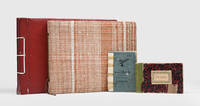
1936142062Spain & northern Europe: 1936-41. Auf-zum! so ging es tagtäglich" "Off we go! That's how it went every day" An exceptional and unusually complete archive documenting the career of Leutnant Konrad Ellermann a decorated airman who served with the Condor Legion in Spain and later in flying-boat operations on the Eismeer Front. Centred on two meticulously compiled photograph albums and augmented by scarce supporting documents it offers a rare coherent visual record of theatres where comprehensive personal archives seldom survive. The first album charts his Condor Legion service beginning with 43 tourist views of Spain and 25 informal images of squadron life followed by sequences showing Heinkel 59 flying boats in preparation and in flight with aerial views of enemy positions and bomb damage. Ellermann dedicates a page to comrades killed in March 1938 almost certainly the crew of the HE 59 downed near Cambrils and records their funerals and repatriation. Additional images include Condor Legion fighters He 51 He 112 Bf 109 long-range raids from Portbou to Oropesa and bombed railway lines. A section headed "Einiges von den Taten!" depicts two merchant vessels sunk by his unit - the British SS Jean Weems and the Danish SS Edith - alongside further action shots. The album closes with off-duty scenes and high-quality aerial photographs of Pollença Tangier and Portbou. The second album covers northern service. It opens with trials of the Dornier Do 26 flying boat in late 1938 with fine airborne views images of the second prototype and photographs of Dornier staff at work. Other aircraft represented include the Blohm & Voss Ha 139 the Latécoère 521 and the Dornier Do 18. Around 20 aerial views of Norway follow including encounters with He 111s and Ellermann's aircraft moored in Rombaken fjord culminating in a medal ceremony featuring Oberleutnant Karl Otto Max Barth. A final section documents his posting with Flussklärungsfliegerstaffel 1/125 in Finland with portraits of his Heinkel HD 114 scenes in Helsinki and Turku maintenance shots and a concluding portrait of Ellermann. Born in Geisingen in 1915 Ellermann began as a funkmeister before becoming an observer in 1938. He received the Iron Cross First and Second Class the Narvikschild the Frontflugspange für Kampfflieger in gold and silver the Luftwaffe Honour Cup and the Deutsches Kreuz in Gold. His service included AS-88 in Spain 1937-38 Sonderstaffel Tr. O 1939-41 Küstenflieger-Staffel 1/406 in Norway 1942-43 and Seeaufklärungsgruppe 131 1943-45. His surviving logbook records 484 flights between October 1937 and March 1944 378 of them operational including 62 Condor Legion sorties on ships and towns such as Barcelona Sagunto and Alicante. Later missions encompassed reconnaissance and anti-submarine patrols over the North Sea and Norwegian coast one section countersigned by Captain Martin Harlinghausen later the Luftwaffe's leading ship-killer of the Second World War. 4 items. Album 1: 245 x 320 mm original pale red and white rough-weave cloth punch holes at spine golden brown fastening cord bookseller's ticket of Otto Memmert Kiel; 222 original photographs on 24 black card leaves mainly deckle-edged snapshot images most 60 x 90 mm some larger up to 110 x 170 mm manuscript "title page" in coloured chalks with crossed Spanish and Nazi flags. Album 2: 250 x 330 mm original dark red faux leather punch holes to spine white coated-wire fastening tape bookseller's ticket of Bohrer & Co Kiel; 171 original photographs 50 x 60 mm to 240 x 180 mm on 24 tan card leaves glassine guards; manuscript "title page" with illustration of Nazi eagle above legend; 2 divisional pages first with watercolour drawing of unit insignia ram's skull above title; second with watercolour drawing of unit insignia penguin wearing clogs and flying over sea above title. Soldbuch: 28 pp 145 x 100 mm original blue card printed wrappers Ellerman's photograph mounted on inside front cover punch holes with metal eyelets to front cover. Log book: 100 x 155 mm pp. 114. Original marbled sides green cloth spine paper label on front cover. Album 1 in very good condition; Album 2 with a little wear to binding shallow indentations to covers leaf loose; Soldbuch: general signs of handling paper sometime taped around spine; Log book with some loss of marbled paper from front cover a little finger soiling. A well-preserved group. Sebastian Cox & Peter Gray eds Air Power History: Turning Points from Kitty Hawk to Kosovo 2002. hardcover
LCS-18309Somptueux manuscrit sur peau de vélin, soigneusement calligraphié à l'encre brune, ligné en rouge, et orné de 21 superbes lettrines enluminées et peintes, dorées ou argentées. Grenade, août 1602. Manuscrit enluminé sur peau de vélin. Petit in-folio de 56 ff.n.ch., le dernier blanc, complet. 34 lignes écrites à l’encre noire sur des lignes rouges horizontales. Justification : 260 x 160 mm. 4 peintures à pleine page, 4 grandes initiales historiées et enluminées en tête de chapitres, 17 initiales ornées et enluminées, 1 portrait du roi. Chaque page est encadrée d’un large filet doré. Relié en velours rouge sur ais de bois, dos à nerfs muet, gardes de peau de vélin. Reliure du XVIIIe siècle. 310 x 208 mm.
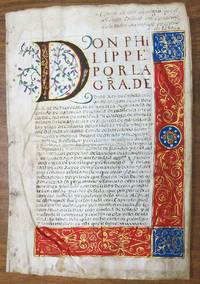
1572RF 1076<p><strong>Royal Provision of Phillip II Confirming and Ratifying the Privileges Granted by the Masters of the Order of Santiago to the Village of Corral de Almaguer Toledo 1572</strong></p><p>Manuscript. Small folio. 12 1/4 x 8 1/4". 8 double-sided vellum manuscript leaves originally bound together now unbound hand painted and decorated in blue red and gilt at various points throughout the text. The first page is hand-painted and decorated along the edge and includes a large decorative initial in multiple colors. Manuscript text in gothic style. Signed "Yo el Rey" on the back of the final leaf by King Phillip II of Spain in 1572.</p><p>ATTRACTIVELY ILLUMINATED EARLY MANUSCRIPT. JUDAICA INTEREST. Our manuscript contains the 4 confirmed provisions originally drafted by Infante Henry Duke of Aragon 1421 and 1440 Alonso de Cárdenas here listed as "Alfoso" sic in 1480 and then "The Catholic Kings" in 1494 all of whom at various times served as "Grand Masters of the Order of Santiago". The provisions were instigated against the Jewish communities of the villages of Corral de Almaguer and Ocana in Toledo province. Residents of the towns affiliated with the Order of Santiago repeately complained throughout the 15th and 16th centuries to the the authorities of that order of that the Jews and later conversos had bought land from Christians and had not paid any taxes on their purchases. Ultimately the Jews of Corral de Almaguer were ordered to pay comparable taxes to the Christians for said property but the Jews of Ocana were excepted because of their previous payments of other taxes. Given the fact that this manuscript copy dates from 1572 and was signed and reconfirmed by King Phillip II so long after the expulsion of 1492 shows there were still clearly tensions and persecution of local conversos even long after the communities had converted to Catholicism.</p><p>The top left margin on the front of the first leaf contains a handwritten note in ink stating in Spanish "It consists of this-privilege that Juan Collado was a secretary of the Order of Santiago in the year 1480". There are a few additional scant marginal notes in ink throughout and additional handwritten notes and signatures some indecipherable on the verso of the final leaf under the King's signature.</p><p>This document provide a fascinating and invaluable resource to those studying the history of Jews in Spain during the 15th and 16th centuries.</p><p>Text in Spanish.</p> hardcover
15400031701540 Portefeuille grand in-quarto (230 X 337 mm) vélin ivoire recouvert de satin bleu (en partie décousu avec petits manques en marge) et bordé d’un fin galon doré, cordons de fermeture brodés de fils couleurs et or (en partie manquants) ; 28 feuillets (dont deux réglés sans inscription et deux autres vierges) sur peau de vélin reliés au portefeuille par un cordon de soie à brins jaune, vert et rouge (Reliure de l'époque).
Folio (320 x 215mm). (16) ll, including frontispiece, 618 pp, (14) ll. Engraved frontispiece, title in red and black with large engraved vignette, numerous engraved illustrations including large-format ones, and numerous woodcut illustrations, headpieces and initials, with final blank. Contemporary vellum, manuscript title on spine. Somewhat browned and with a small defect in the engraved title-page, but still in good condition, binding slightly bowed.
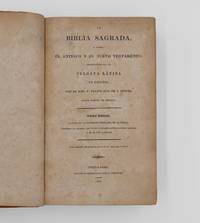
1824373835New York: Edicion Estereotipica por A. Chandler 1824. First American Edition of the Bible in Spanish. 928; 251pp. 4to. Contemporary panelled calf usual wear front hinge neatly repaired. Foxing. Provenance: Essex Institute label on front pastedown. In half red morocco slipcase and chemise. First American Edition of the Bible in Spanish. 928; 251pp. 4to. First American edition of the Bible in Spanish printed by the American Bible Society for the use of missionaries in South America. It is among the earliest Catholic bibles printed in the United States noted on the verso of the titlepage as "Edicion 1". The text was taken from the Madrid edition of 1797 translated from the Latin by Felipe Scio de San Miguel Bishop of Segovia.<br /> <br /> Scarce on the market with no examples in the auction records for the last half century. Shaw & Shoemaker 15340; O'Callaghan 1824; Parsons 813 Edicion Estereotipica por A. Chandler unknown
371476Amsterdam: Joseph Jacob and Abraham the sons of Solomon Proops 5522. Titled printed in red and black. 2 178 2 179-332 10 Introduction etc. 2 160 2 161-350pp. Publisher's introduction and other preliminaries misbound preceding the later Prophets. Folio 15-7/8x10 inches. Nineteenth or early 20th century half morocco and marbled paper boards rear joint splitting worn at joints and head and tail of spine. Foxing principally to the title tear to the final text leaf. Provenance: General Theological Seminary bookplate. Titled printed in red and black. 2 178 2 179-332 10 Introduction etc. 2 160 2 161-350pp. Publisher's introduction and other preliminaries misbound preceding the later Prophets. Folio 15-7/8x10 inches. Besides being the first bi-lingual edition in Hebrew and Spanish this edition is the first Hebrew book whose publication was financed by an American - Abraham Mendes de Castro 1689-1762 of Curaçao - intended for use in the West Indies with the sale proceeds to benefit the Jewish communities of Jerusalem and Hebron. Cowley 102; Darlow & Moule 5156; Zedner 102; not in Steinschneider or Roest Joseph, Jacob and Abraham, the sons of Solomon Proops unknown
155067900En Leon i.e. Strassburg: en Casa de Sebastian Grypho i.e. Augustin Fries 1550. BIBLE IN SPANISH; ENZINAS Francisco de. First Edition in Spanish of Ecclesiasticus<br> <br> BIBLE IN SPANISH. ENZINAS Francisco de translator. Ecclesiastics. Libro de Jesus Hiio de Syrach qu'es llamado el Ecclesiastico. traduzido de Griego en lengua Castellana En Leon i.e. Strassburg: en Casa de Sebastian Grypho i.e. Augustin Fries 1550.<br> <br> First edition in Spanish of Ecclesiasticus. Small octavo 6 x 3 5/8 inches; 151 x 91 mm. 3 109 leaves. With numerous woodcut initials. With an imitation Gryphius woodcut device printed in reverse on title. We could only locate 3 copies at libraries Cambridge Madrid and Copenhagen. No other copy besides this present copy has been at auction in the past 50 years.<br> <br> Early 19th-century mottled sheep. Boards tooled in gilt. Spine stamped in gilt. With red morocco spine label lettered in gilt. Board edges tooled in gilt. Marbled endpapers. Some minor dampstaining mainly to lower blank margin of preliminaries. Signature G is toned. Leaves O3 and O4 with marginal paper repair not affecting text. Final leaf is toned and has a near invisible paper repair not affecting text. Overall a very good copy.<br> <br> "A native of Burgos educated at Louvain and Wittenberg Francisco de Enzinas 1518-52 was a humanist scholar and Protestant convert who produced the first Spanish version of the New Testament printed in 1543 in Antwerp. He formed a partnership with the Strassburg printer Augustin Fries to publish Spanish translations of Greek classics and the remainder of the Bible of which he was only able to complete Psalms Ecclesiasticus Job and Proverbs before his death. Baudrier VIII 241 not having seen or located a copy citing Brunet supplement II 712"<br> <br> "Even before the complete edition of Castellio's Latin Bible appeared Enzinas who had already produced a Spanish Bible New Testament in Antewerp in 1543 had translated the Psalter the Wisdom of Solomon Jesus Sirach present copy and the book of Job into Spanish. All of these appeared with the false address 'En Leon en casa de Sebastian Grypho' though they were in fact his translations from manuscript versions of Castellio's edition. Enzinas continued to work on his translations until his death on 30 December 1552. He had planned to have his Spanish Bible printed in Geneva but this fortunately for Calvin never came to pass." Gilly Spanien und der Basler Buchdruck pp. 342-9 510-11. Found in Sebastian Castellio 1515-1563: Humanist and Defender of Religious .By Hans R. Guggisberg Bruce Gordon.<br> <br> "FRIES Augustine: printer in Zurich and Strasburg began to print at the former place about 1540. In 1547 he printed two books in English by John Hooper Heitz p. 39. Soon after this he moved to Strasburg and there printed among other things several works in Spanish by Franzisco de Enzinas in 1550 and 1551 Wiffen I pp 179 etc." A Century of the English Book Trade: Short Notices of All Printers. By Edward Gordon Duff.<br> <br> HBS 67900.<br> <br> $8500. en Casa de Sebastian Grypho [i.e. Augustin Fries] unknown
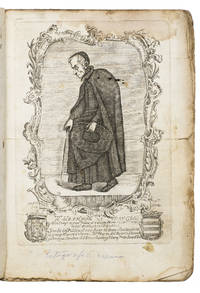
1770ABC_47902Córdoba 1770. 8vo. Contemporary limp parchment. With a large engraving of Juan de Santiago on the second leaf and a pen drawing on page 102. 4 "159" = 162 pp. Manuscript version of the only contemporary source on the life and death of the Córdoban Jesuit Juan de Santiago 1689-1762. It follows a work by the same name by Vincent Morales 1708-1765 which was probably published for the first time in 1763 in Córdoba. The copper engraving in the present manuscript likely comes from this edition. Judging from the ownership annotation the present manuscript was also made in Córdoba probably for a local university or convent. It contains an extra paragraph at the end about a feast held in honour of Juan de Santiago including six epigrams written for him. This part is not present in the printed versions of this work.Juan de Santiago was born in Écija. He became known as the "niño de la razón" because of his love for studying. He entered the Jesuit College at Sevilla at a young age. After he was ordained he moved to Córdoba College where he stayed for 40 years. He was seen as a model of holiness and many miracles were attributed to him. One of these occurred when he put out his hand to a blind woman who tried to enter the church and said to her: "Come in and take a good look." Upon which the woman cried "I see it I have recovered my sight." Throughout his life he was much loved in Córdoba because he helped and advised a great number of inhabitants. When he died there was an enormous grieving crowd in town and the City Council ordered that one of the three keys of his coffin should be kept in the city archive. The work by Morales was written at the request of the grieving Córdobans.With a crossed out ownership annotation on the verso of the title page. The parchment is stained and wrinkled with a few small holes and is somewhat smaller than the paper leaves. The borders of the first two leaves are frayed the manuscript is somewhat stained throughout. Otherwise in good condition.l Cf. De Backer-Sommervogel 1894 V 1284 printed ed. unknown
RGW19164AEtching and burnished aquatint TRIAL PROOF ON THIN JAPAN PAPER before all letters This is a posthumous printing but before the edition printed in 'L'Art' in 1877. Harris considers the quality of these impressions almost identical to the working proofs. unknown
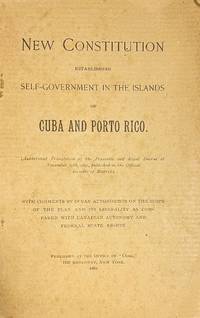
18983455New York: Published at the Office of "Cuba" 1123 Broadway 1898. First edition. In original printed wrappers. Wrappers creased and dented; spine missing at bottom. Corners dog-eared. A few pages with wormholes not affecting text. Otherwise in very good condition. First edition. In original printed wrappers. 74 2 pp. <p><br /> Rare first edition of Spain's 1897 grant of autonomy to Cuba and Puerto Rico-its last failed attempt to retain the islands through reform and the first constitutional success for the Cuban and Puerto Rican autonomist movements.<br /> <p><p><br /> Issued by Cuban autonomist exiles in New York this publication presents the full English translation of the Royal Decree of November 25 1897 signed by Queen Regent María Cristina which established broad local self-government for Cuba and Puerto Rico. It is accompanied by political commentary from Eliseo Giberga a leader of the Cuban Autonomist Party and editorials from El País the party's principal newspaper in Havana. The decree promised legislative authority to elected insular parliaments universal male suffrage civil and political equality with mainland Spaniards and control over finance commerce education public works and internal justice while reserving military naval and foreign affairs to the Spanish central government. A unique provision among colonial constitutions preserved the islands' representation in the Spanish Cortes.<br /> <p><p><br /> Although hailed at the time as realizing "the dream of three generations of Cubans" the new constitutional system was overtaken by events. After the sinking of the USS Maine and the outbreak of the Spanish-American War in 1898 Spain was forced to cede Puerto Rico to the United States and withdraw from Cuba rendering the newly granted autonomy largely theoretical. The political structure outlined in this decree was never fully implemented.<br /> <p><p><br /> The publication also offers comparative analysis asserting that the rights granted exceeded those enjoyed by Canadian provinces under the British North America Act of 1867 and in some respects by U.S. states. It preserves the vision of peaceful constitutional reform promoted by the Cuban Autonomist Party soon eclipsed by military occupation and the shift toward independence under American influence. <br /> <p><p><br /> This volume captures Spain's last liberal attempt to modernize its empire-a transitional political vision for Cuba and Puerto Rico that was quickly overtaken by war U.S. intervention and the collapse of Spanish colonial rule in the Americas and Pacific. It is also a key document in the history of Cuban constitutionalism and Puerto Rican political status.<br /> <p><p><br /> Rare particularly in original wrappers; only a handful of institutional holdings recorded. RBH lists only one copy sold in the past fifty years Sotheby's 2021.<br /> <p>. Published at the Office of "Cuba," 1123 Broadway unknown
In -4°, pp. (22), 289 (i.e. 379), (9); frontespizio inciso (al fr. la data è 1633) e un ritratto calcografico dell’autore che precede il testo. Carta Yy con prova di penna, con testo ancora leggibile. Saavedra, nato e vissuto a Cordoba fra il XVI e il XVII secolo fu un poeta spagnolo, lontano parente di Cervantes. Fumagalli 428. Il volume è rilegato con la raccolta poetica del figlio di Saavedra, “Ocios de Aganipe divididos en differentes poesias” - pp. (6), 260, frontespizio inciso -, pubblicato anch’esso a Trani nello stesso anno. Due rarissime opere spagnole appartenenti al Siglo de oro. In -4 °, pp. (22), 289 (i.e. 379), (9); engraved title page (the title page date is 1633) and a chalchographic portrait of the author preceding the text. Yy leaf with spoiled with ink, yet the text is still readable. Saavedra, was born and lived in Cordoba between the 16th and 17th centuries, was a Spanish poet, distant relative of Cervantes. Fumagalli 428. The volume is bound with the poetic collection of Saavedra’s son, “Ocios de Aganipe divididos en differentes poesias” - pp. (6), 260, engraved title page -, also published in Trani in the same year. Two very rare Spanish works belonging to the Siglo de oro.
Four volumes. A COMPLETE SET, ON SPECIAL PAPER, OF THE MOST IMPORTANT PUBLICATION OF SPANISH MEDIEVAL TEXTS. Comprises, IN FIRST EDITION, (I) the Poema del Cid, (II) the complete works of Berceo, (III) the Poem of Alejandro Magno, and (IV) the Arcipreste de Hita's Libro de buen amor (this fourth volume is almost always missing.) This is A SPECIAL SET, PRINTED ON THICK PAPER. This is furthermore AN ASSOCIATION COPY, from the library of DANIEL DEVOTO AND MARIA BEATRIZ DEL VALLE-INCLAN (their stamp on rear endpapers). Devoto (1916-2001) was an important intellectual figure who counted among his close friends many of the great literary figures of 20th-century Spain, France, and Latin America. He wrote many books and articles, some of which concern the texts which appear in the present publication. COMPLETE WITH ALL HALF-TITLES. 8vos. ATTRACTIVELY BOUND IN SPANISH CALF. Tiny traces of wear to bindings, else an EXCELLENT SET. In the introduction to his edition of El poema del Cid, Colin Smith emphasizes the great importance of this publication, pointing out that Sanchez was way ahead of his time as a textual editor. AN OUTSTANDING SET OF AN EXTREMELY RARE AND IMPORTANT PUBLICATION, WITH A FINE PROVENANCE.
4 vols., 8vo., First Edition, with 4 portrait frontispieces, and numerous plates, facsimiles, maps and plans; handsomely bound in half navy crushed and polished morocco BY SOTHERAN, blue cloth sides ruled in gilt, backs with raised bands with gilt fillets, second and third compartments with red leather labels framed and lettered in gilt, all other compartments framed in gilt, gilt tops, marbled endpapers, an elegant set ideal as a gift or presentation. THE BINDINGS ARE SIGNED ON FRONT FREE ENDPAPER VERSOS. AN ELEGANT SET OF THE ORIGINAL EDITION AND SCARCE IN THIS CONDITION. Cohen A97.2(I-IV).a, Woods/ICS A40(aa).
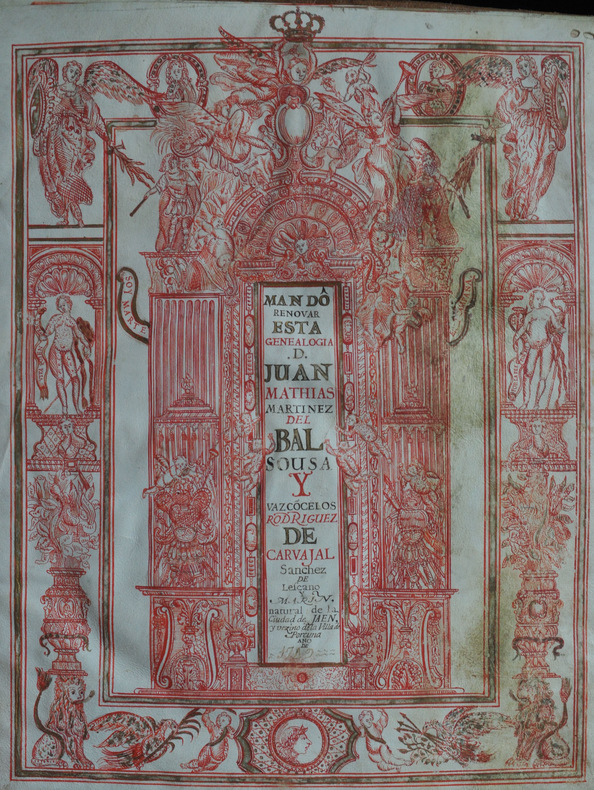
174846400880, 1748-1749 ; in-4°, basane fauve de l'époque (lacets) - Beau manuscrit calligraphe espagnol du XVIII° siècle. 10 grandes feuillets de vélin. Le premier orné d'une grande composition (titre - frontispice), dessinée à la plume à l'encre rouge avec rehauts d'or : large architecture rococo avec portique, colonnes, médaillons, angelots, statues, emblèmes et portraits. Le second feuillet est une composition dédicace à la Vierge, également dessinée en rouge et or ; large encadrement de rocailles et d'emblèmes ; au centre la Vierge en assomption entourée d'anges ; en dessous, le personnage pour lequel a été exécuté ce manuscrit représenté à cheval ; suivent 15 pages de manuscrit d'une belle calligraphie, avec double encadrement de filets d'argent ; 2 lettres ornées, grotesques calligraphiés sur l'avant dernière page, la dernière page donne l'arbre généalogique des Martinez Rodriguez de Carvajal. L'illustration de ce manuscrit est d'une belle facture populaire rococo. La planche de la Vierge est préservée par un feuillet de soie rose."
Two decorated wooden panels, painted in polychrome tempera, gold gilt, and gesso, with a leather spine. 330 x 250 mm. Elaborately decorated on one board with four armorial shields, surrounded by incised stamps on gilt fields and gilt floral sprays on a blue field. The text below the shields reads: "INVENTARIO DELLE COSE DEL LA SAGRESTIA DEL DUOMO EDE LALTRE COSE MOBILI DELU OPARA RIFATTO LASICO DA VOLTA AL TENPO DEL UENE RABILE UOMO FRANCESCHO DI PAOLO TADDEI ANNO D. 1475." [Roughly translated: Inventory of the things in the sacristy of the Duomo Ede. Taken from the last by the incomparable Frances Taddei in the year 1475. The front board has a lovely Rennaisance Madonna and Child, with "Samis de Petris" below. This de may have been an attempt to attribute the painting to the artist Sano di Pietro. Beveled edges. Brass bosses at each corner. Very good. RARE. A contemporary of the famed "Spanish Forger", Icilio Federico Joni (1866-1946) was born in Siena. As a young man he worked in the shop of a gilder and art restorer. He began, as a sideline, to produce imitations of fifteenth century Sienese painted wooden panel book covers. He based these tempera painted wooden panels on the Tavolette in the Archivio di Stato, which he probably never saw in person. It is quite clear from his autobiography (1932) that he was proud of his skill and his brilliant imitations of the ancient art of Siena. He considered them original art rather than 'forgeries'. There are probably no more than twenty examples of his work extant today. From the Bridwell Library, SMU: "A skilled producer of imitation "Gothic" altarpieces, he received a commission c. 1890 to create a book cover in imitation of those found on Siena's Tavole di Biccherna, the elaborately gilt and painted fourteenth-century tax registers. Without ever seeing a real Biccherna, he established a lucrative business of faking Biccherna covers. Joni later boasted of incidents in which the local police were alerted to books purportedly stolen from Siena Cathedral or the state archives, only to discover that they were by Joni. A number of book collectors were deceived by Joni's creations, and several of his works were published as Gothic originals. Today, Joni's forgeries are highly valued in their own right. In his autobiography Joni discussed his methods for antiquing the covers by mixing soot, turmeric, chrome yellow, and gilding gesso with gum arabic to produce the patina on the gold. The bosses were bathed in ammonia and the clasp plates were dipped in iodine, "which rusted them in just the right way." Note that Joni's boards are simply glued onto a rough leather spine; he apparently did not know how to replicate a fifteenth-century sewing structure." Research in America has clarified Joni's role as a restorer in such works as Piermatteo d'Amelia's Annunciation (Gardner Museum) and the half-length figures in Fra Angelico's Annunciation (Mrs E. Ford Collection). **PRICE JUST REDUCED! Front Case 1/R
Acquaforte, acquatinta brunita e bulino, 1799. Dalla rara prima edizione di dodici della serie detta Los Caprichos, tavola 15. Magnifica prova, particolarmente nitida, impressa su carta vergata coeva, con usuali ampli margini, piccoli strappi di carta alle estremità dei margini, per il resto in perfetto stato di conservazione. La serie chiamata Los Caprichos, è composta da ottanta incisioni. Questa prima edizione del 1799, l’unica a non essere pubblicata postuma, è impressa su soffice carta vergata di gran qualità ed è stampata usando un delicato inchiostro seppia. Curata in fase d’edizione dallo stesso artista, la serie fu commercializzata e dopo poco tempo ritirata dal mercato. Infatti, a causa dei numerosi soggetti che ironizzavano sulla società spagnola di fine secolo, il Goya subì una censura. Per questo ne sono stimati solo circa 300 esemplari. L’interpretazione dei soggetti rappresentati su queste lastre, sempre enigmatiche, è spesso controversa - First edition -Etching, burnished aquatint and engraving, 1799. From the rare first edition (of twelve) of Los Caprichos, plate 15. A very fine impression, showing a good contrast, on contemporary paper, with usual wide margins, small tears at left white margin, otherwise in perfect condition. The series called Los Caprichos, consists of eighty etchings. This first edition of 1799, the only one not to be published posthumously, is imprinted on soft laid paper of great quality and is printed using a delicate sepia ink. Cured in phase edition by the same artist, the series was marketed and before long withdrawn from the market. In fact, because of the many subjects that mocked the Spanish society of the century, Goya suffered censorship. For this it is estimated only about 300 copies. The interpretation of the subjects represented on these plates, always enigmatic, is often controversial. The title can be translated into: Pretty teachings. Harris 50, Delteil 52.
Acquaforte, acquatinta brunita e bulino, 1799.Dalla rara prima edizione di dodici della serie detta Los Caprichos, tavola 54.Magnifica prova, particolarmente nitida, impressa su carta vergata coeva, con usuali ampli margini, in perfetto stato di conservazione.La serie chiamata Los Caprichos, è composta da ottanta incisioni. Questa prima edizione del 1799, l’unica a non essere pubblicata postuma, è impressa su soffice carta vergata di gran qualità ed è stampata usando un delicato inchiostro seppia. Curata in fase d’edizione dallo stesso artista, la serie fu commercializzata e dopo poco tempo ritirata dal mercato. Infatti, a causa dei numerosi soggetti che ironizzavano sulla società spagnola di fine secolo, il Goya subì una censura. Per questo ne sono stimati solo circa 300 esemplari. L’interpretazione dei soggetti rappresentati su queste lastre, sempre enigmatiche, è spesso controversa In questo soggetto Goya affronta il tema del mondo alla rovescia. Nella scena ci sono tre personaggi, il centro dell'attenzione è l'uomo che sta mangiando, e che cerca di evitare tutti gli sguardi, vergognandosi dei tratti osceni del suo viso. L'artista ha chiaramente indicato il suo pensiero disegnando la cintura di un paio di pantaloni sopra la testa del personaggio. I nasi sono una presenza notevole sul viso, e nel linguaggio popolare "nasi" è un chiaro eufemismo sessuale. Il modo in cui il viso è costruito, in modo che sopracciglia, occhi e naso evochino l'apparato genitale maschile, rafforzerebbe lo stesso senso. Altri commenti insinuano che la figura, nel piano superiore, con i suoi grandi pugni serrati, stia commettendo sodomia con la figura che tiene il vaso da cui mangia l'uomo vergognoso. L'anno 1799 è uno dei momenti chiave nella vita e nel lavoro di Francisco de Goya. Oltre ad essere nominato primo pittore da camera di Goya, a godere di un crescente prestigio come ritrattista e ad inaugurare la cappella di San Antonio de la Florida, che aveva decorato, il 6 febbraio il Diario de Madrid pubblicò un annuncio in cui venivano messe in vendita le ottanta stampe che compongono la serie dei Caprichos. Bellissimo esemplare. Al verso timbro di collezione HENRI MARIE PETIET (Saint-Prix, Seine-et-Oise, 1894-1980), editore, libraio e mercante di stampe a Parigi (Lugt 5031). - The rare first edition -Etching, burnished aquatint and engraving, 1799.From the rare first edition (of twelve) of Los Caprichos, plate 54.A very fine impression, showing a good contrast, on contemporary paper, with usual wide margins, perfect condition.The series called Los Caprichos, consists of eighty etchings. This first edition of 1799, the only one not to be published posthumously, is imprinted on soft laid paper of great quality and is printed using a delicate sepia ink. Cured in phase edition by the same artist, the series was marketed and before long withdrawn from the market. In fact, because of the many subjects that mocked the Spanish society of the century, Goya suffered censorship. For this it is estimated only about 300 copies. The interpretation of the subjects represented on these plates, always enigmatic, is often controversial. In this print Goya approaches the theme of the world upside down. In the scene there are three characters, being the focus of attention the man who is eating, and tries to avoid all eyes, ashamed of the obscene features of his face. The artist has clearly indicated his thinking by drawing above the character's head the waistband of a pair of pants. The noses take on a notable presence on the face, and in popular language "noses" is a clear sexual euphemism. The way the face is constructed, so that eyebrows, eyes and nose evoke the male genital apparatus, would reinforce the same sense. Other comments insinuate that the figure, in the upper plane, with his large clenched fists, is committing sodomy with the figure holding the vessel from which the shameful man eats. The year 1799 is one of the key moments in the life and work of Francisco de Goya. In addition to being named first chamber painter, enjoying a growing prestige as a portrait painter and the inauguration of the chapel of San Antonio de la Florida, which he had decorated, on February 6 the announcement of the sale of the eighty prints that form the series of the Caprichos was published in the Diario de Madrid. Here, Goya focuses his social criticism on the bestiality of a deformed man whose head emerges from his breeches. Among the slight variations between the print and the preparatory drawing, the most striking is that, in the former, he wears his trousers, but in the latter, he does not. As a result, the latter came to be known as The satire of man’s lechery. Moreover, this is the only drawing in the series to mix red-ink wash with pen. Valentín Carderera’s handwritten commentaries on the Caprichos, which are in both the Biblioteca Nacional and the Museo del Prado, further clarify this subject. The first reads: Men with large noses also tend to have large arrows [here, “arrow” is a euphemism for penis] and fat gandumbas [testicles]. As they are often sodomites, this one is depicted with his breeches on his head, with his pudenda hanging out as he lies on top of a poor devil and pulls up his skirts. The second commentary completes the information: There are men whose face is the most indecent part of their body, and it would be good if those whose face is that disgraceful and ridiculous would stick it in their breeches. Example from the HENRI MARIE PETIET (Saint-Prix, Seine-et-Oise, 1894-1980) collection (Lugt 5031). Harris 1964, 89.
Unread. As new. Number 216 of limited edition of 350 copies. Signed by co-author R.E. Gosnell. "Few publications, if any, of similar size and excellence have been produced in Canada." - From Editor's Foreword. Part I includes 210 pages and eighteen chapters which constitute "a survey of events from the earliest times down to the Union of the Crown Colony of British Columbia with the Dominion of Canada." Part II is "a history, mainly political and economic, of the Province since Confederation up to the present time." Part I is preceded and followed by dozens of tissue-protected black and white portraits of individuals influential in the early history of the province, complete with their brief biographies upon the tissue. Part II comprises eighteen chapters over 226 pages plus 5 pages of addenda followed by dozens of tissue protected portraits of "some of the men conspicuous as present day factors in development." Top edge gilt. Gilt lettering upon backstrip. Marbled endpapers. Exceptionally clean, bright, and unmarked with zero wear. Brown suede exterior appears as fresh as the day it was applied over 100 years ago. This majestic fourteen pound tome measures 13" x 10.5" x 4". A magnificent acquisition for any serious collector of British Columbia history. A better copy will not be found. [Lowther 1607, Hale 2523, Edwards & Lort 3177, Strathern 495] Book
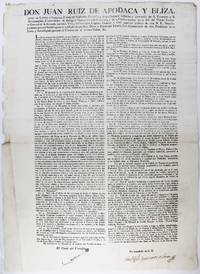
18203330Mexico City: July 11 1820. About very good. Large double-sheet broadside approximately 23.5 x 17 inches. Two sheets joined at central horizontal fold. Five chips at left edge not affecting text and some additional minor edge wear; otherwise light toning and dust soiling. Two contemporary manuscript signatures at foot; contemporary duty stamps on blank verso. Fascinating and otherwise unrecorded broadside that dictates the organization and process for the 1820 election of Mexican deputies to the Spanish Cortes during the second and last period of constitutional monarchy in Mexico. Colonial Mexico first achieved some representation in the Spanish government under the liberal Constitution of 1812 which lasted for two years before being revoked by Ferdinand VII upon his return to power in 1814. The reinstatement of the liberal constitution and the Cortes of Cadiz in 1820 however was not enough to prevent Mexico from obtaining full independence one year later. This broadside promulgated in Mexico on July 11 1820 by the colonial Viceroy Juan Ruiz de Apodaca y Eliza announces the renewed representation via regional elections to select Provincial Deputies for the Cortes and contains eight articles delineating the process by which these elections are to be held. In brief these articles order representation be apportioned according to the population as approximated from the 1792 census; divides Mexico into provinces for the purposes of the election; and places parameters on representation for each province. In all a very interesting window onto the formation of the brief final period of Spanish colonial rule in Mexico. July 11 unknown
In -4°, pp. (16), 557, (9) - errore di numerazione alle pp. 120-23; antiporta incisa in rame; legatura in pelle con fregi in oro alle armi di Benedetto XIV. Tagli dorati. Calf binding with golden ornaments, gilt edges.
In-4°, prima edizione, copertina morbida, pp. 191, con due disegni a colori e due in b/n, esemplare perfetto. Poesie scritte tra il 1929-1930, inedite fino a quel momento, pubblicate durante l’esilio forzato in Messico, accompagnate dal poema ‘El crimen fue en Granada’ di Antonio Machado e dello scritto in prosa ‘Federico Garcia Lorca. La muerte vencida’ di José Bergamin. Presenti quattro disegni del poeta. First edition, 191pages, with four drawings (2bw and 2 colours), fine edition, soft cover.Poetries written between 1929 and 1930, published during Garcia Lorca’s exile in Mexico; additional poems ‘El crimen fue en Granada’ by Antonio Machado and ‘Federico Garcia Lorca. La muerte vencida’ by José Bergamin
In -4°, pp. (28), 156, (26), all’antiporta ritratto inciso da Blondeau; pergamena coeva con titolo manoscritto al dorso. Prima e unica edizione di questa singolare biografia: Sebastian de Aparicio, nato in Spagna nel 1502 e morto in Messico nel 1600, fu beatificato nel 1789 da Pio VI: al di là dell’interesse di retaggio religioso Aparicio, che partì per il nuovo mondo nel 1530, è considerato il primo allevatore di bestiame e il primo “charro” (per estensione il primo “cowboy”) nella storia d’America. Diventato ricco (grazie all’attività di colono, agricoltore, e all’estrazione di metalli, soprattutto argento), e due volte vedovo, si dedicò alla vita ascetica fino a essere ammesso all’ordine francescano, col patto che i suoi beni venissero donati al primo monastero delle Clarisse in Messico (dove sarebbe stato ospitato prima di venir ordinato frate e unirsi alla comunità francescana di Puebla). First and only edition of this unique biography: Sebastian de Aparicio, born in Spain in 1502 and dead in Mexico in 1600, was canonized in 1789 by Pius VI. Beyond the religious interest, Aparicio is considered the first “cowboy” of America (or “charro”, in spanish): he became rich thanks to his agricultural activity (and also for his activity in mines, especially silver ones) he was the first to raise livestock on ground, in America: between his dowries the one to tame savage animals. He left his large fortune to a claires monastry in order to be received in the franciscan order.
1701ABC_48243Amsterdam 1701. Small 4to ca. 20 x 15 cm. Nicolas Chevalier Contemporary limp vellum with the manuscript title on the spine and a paper shelf mark label at the foot. With a general title and 2 divisional titles for ad 6 and ad 11 all with a woodcut vignette further with 2 hand-coloured engraved maps 1 folding engraved plate and several woodcut initials. 12 parts in 1 volume. 134 pp. Collection of very rare pamphlets and printed letters published under a collective title on the actual political circumstances of Northern Europe in the years 1699-1701 especially in connection with the death of the Spanish King Charles II born in 1661 in 1700 leading to the War of the Spanish Succession 1701-1714. The work includes 2 maps of Flanders and a folding plate of the Battle of Narva which took place on 30 November 1700. Although the pamphlets and letters were printed separately the present collection appears to be very rare as we have not been able to find any other copies with the same contents.Charles died childless. His possessions would go to one of his brothers-in-law: the French King Louis XIV 1638-1715 or the German Emperor Leopold I 1640-1705. Both had agreed already beforehand that they would divide Charles heritage to avoid disturbance of the European balance of power. In his last will however Charles had appointed the grandson of Louis XIV as his successor named from now on Philip V of Spain 1683-1746. The Treaty of The Hague affirmed this in 1701. With the deaccession stamp of the "Bibliothèque municipale de Nîmes" on the title page and its shelf mark label at the foot of the spine. The vellum at the foot of the spine with a tear the boards are somewhat stained. The leaves are occasionally browned and foxed. Otherwise in good condition.l Cf. Knuttel no. 14.510 ad 1 14.543 ad 6 14.588-14.589 ad 9 14.538 ad 10 and 14.538 a comparable collective title page with the imprint "Amsterdam Daniel de la Feuille 1701" with various texts ca. 78 pp.; STCN 317179241 1 copy the same general title page but with only 3 letters all different from ours. hardcover
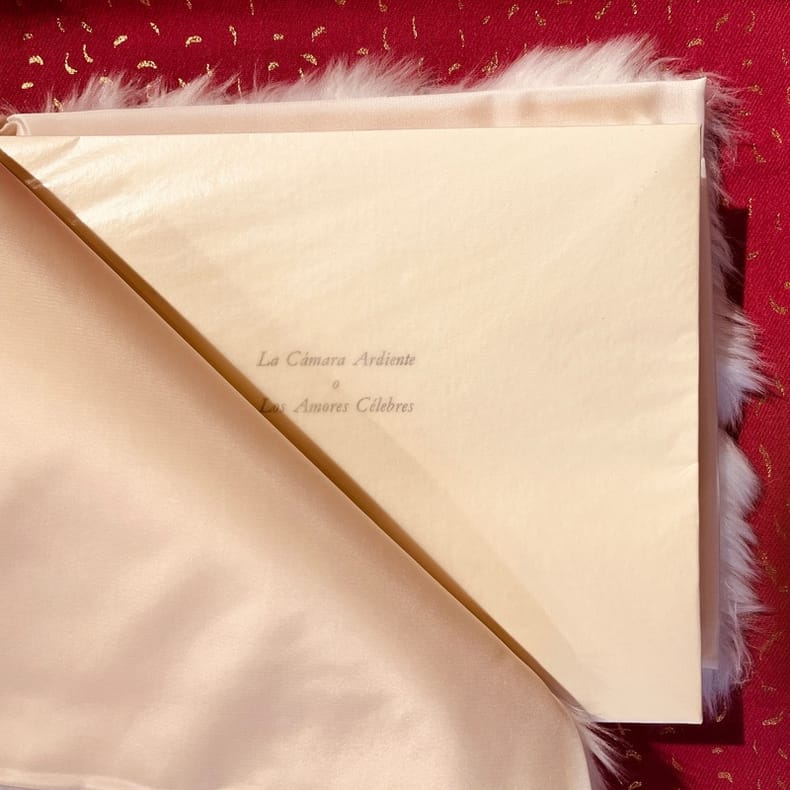
20185Barcelone, Editorial Gustavo Gili, 1977. Grand in-8 oblong, en feuilles sous couverture rempliée, couverture en fourrure blanche, sous emboîtage en Plexiglas.