20th Century Spanish ArtistBiblio.com
880 résultats
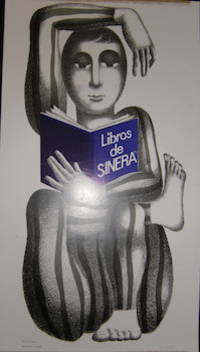
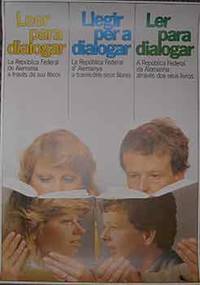
19-9751Madrid: 20th Century Spanish ca. 1970s. Large format folded color print poster 18†x 24†for “Read to discuss. The Federal Republic of Germany through its booksâ€. Very Good. Text in Spanish/Catalan. [Madrid?]: 20th Century Spanish, [ca. 1970s?] unknown
17-6337Capellades Spain: Romaya Valls S.A. 1968. 49 x 27 cm. Exhibition Poster. Offset color lithograph. Very Good. Scarce. Text in Spanish. Some soiling along top and bottom sheet edges. Capellades, Spain: Romaya Valls S.A., 1968. unknown
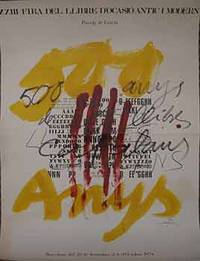
19-9733Barcelona: 20th Century Spanish Publisher ca. 1974. Large format folded color print poster 30†x 22â€. Good. Half inch tear at bottom edge along fold. Text in Spanish. Barcelona: 20th Century Spanish Publisher, [ca. 1974] unknown
18-9405Martinez Spain: 20th Century Spanish Artist 1900-1940. . 8 x 10 inches. Near Fine. Spanish Citrus Crate Label. Scarce. Martinez, Spain: [20th Century Spanish Artist], [1900-1940?]. unknown
18-9404Valencia Spain: Jose Fita 1900-1940. . 7 x 10 inches including border. Very Good. Spanish Crate Label. Scarce. Valencia, Spain: [Jose Fita], [1900-1940?]. unknown
68-3875Madrid Spain: ca. 1905. Stationery. 19.5 x 14.5 cm. Folded sheet 4 pp. Very Good. Madrid, Spain: [ca. 1905?]. unknown
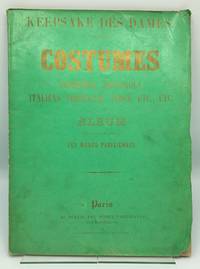
18601467Paris: Au Bureau des Modes Parisiennes. c.1860. Folio 33.5 x 25cm. Publisher's original bright green wrappers with titles in gilt to the upper cover. The contents comprising 20 finely hand-coloured engraved plates on thick paper depicting various regional costumes with printed titles above and beneath with blank protective leaf between each plate. The plates irregularly numbered as they were originally issued as part of the 'Modes Parisiennes' periodical. A very good copy the binding firm with a 2cm tear to the head of the lower cover creasing to the corners and a little chipping to the spine ends and corners. The contents with the occasional minor finger-mark to the edges of the blank margins are otherwise in very good order the plates remaining clean and vivid. A selection of beautifully hand-coloured engravings illustrating regional costumes of Algeria Spain Italy Portugal Greece and Eastern Europe issued by the French fashion periodical 'Modes Parisiennes'. Most appealing in the original green and gilt wrappers. Paris: Au Bureau des Modes Parisiennes. unknown
1927055900Ankara: Adliye Vekâleti Istatistik ve Nesriyât Müdüriyeti Türk Ocaklari Matbaasi 1927. 1st Edition . Soft cover. Very Good. 4to - over 9¾ - 12" tall. Original trichrome wrappers. 4to. 27 x 20 cm. In Ottoman script Old Turkish in Arabic letters. 4 56 72 92 32 92 41 31 8 25 p. two full paged b/w plates. First and only edition of detailed account of the Lotus case an international legal case involving France and Turkey in front of the Permanent Court of International Justice compiled by Spanish judge Altavira y Crevea and translated by Turkish Distinguished Professor of International Law Menemenlizâde Edhem 1878-1965. The case is known for establishing the so-called "Lotus principle" in international law says that sovereign states may act in any way they wish so long as they do not contravene an explicit prohibition. The Bozkurt-Lotus case decided by the Permanent Court of International Justice PCIJ in 1927 became a landmark in international law especially regarding issues of jurisdiction and the extent of a state's rights to assert criminal jurisdiction over foreign nationals. The case arose from the collision between the S.S. Lotus a French vessel and the S.S. Bozkurt a Turkish ship near the Greek island of Mytilene on 2 August 1926. After the collision eight Turkish nationals aboard the Bozkurt drowned. In response Turkey arrested and charged the captain of the Lotus Captain Demons for causing the deaths and damages to the Turkish vessel. The Turkish courts condemned him asserting their right to try him for the incident even though the collision occurred in international waters and involved a French ship. France contested the jurisdiction of Turkish courts over the captain arguing that Turkey could not claim the right to prosecute a foreign national for actions committed on a foreign vessel in international waters. France brought the case before the PCIJ to challenge Turkey's legal authority. The court ruled in favour of Turkey emphasizing that under international law there was no general prohibition against a state asserting jurisdiction over crimes involving foreign nationals even when the incident occurred outside its territorial waters. The PCIJ's decision established the principle that absent an explicit prohibition in international law states are free to exercise jurisdiction in cases where they have a legitimate interest even if the matter involves foreign nationals and occurred in international waters. This judgment reinforced the notion of state sovereignty in determining jurisdiction and highlighted the extent to which international law permits states to assert legal authority over incidents involving foreign nationals under certain conditions. However it also raised important questions about extraterritorial jurisdiction and the balance between state sovereignty and international cooperation in legal matters. "The Lotus principle or Lotus approach usually considered a foundation of international law says that sovereign states may act in any way they wish so long as they do not contravene an explicit prohibition. The application of this principle - an outgrowth of the Lotus case - to future incidents raising the issue of jurisdiction over people on the high seas was changed by article 11 of the Convention on the High Seas. The convention held in Geneva in 1958 laid emphasis on the fact that only the flag state or the state of which the alleged offender was a national had jurisdiction over sailors regarding incidents occurring on the high seas." Wikipedia. It is the first legal Turkish success achieved in the international arena after the proclamation of the Republic. Karakus. In court the Turkish side was represented by Mahmut Esat Bozkurt who was the Minister of Justice at the time. When Turkey adopted the formal surname system in 1934 Mahmut Esat chose the surname "Bozkurt" as a reminder of the landmark case. Sources: Karakus H.Burak. 2013. Atatürk Özel Sayisi: "Genç Türkiye'nin Ilk Hukuk Zaferi: Bozkurt-Lotus Davasi". Ankara: Hukuk Gündemi Dergisi. Wikipedia. Bulut Hüseyin. 2018. Atatürk <br/> <br/> Adliye Vekâleti Istatistik ve Nesriyât Müdüriyeti, Türk Ocaklari Matbaasi paperback
141328 Leigh St Burton Crescent London1 Dec. no year. Two pages 12mo bifolium tipped on to larger piece of paper substantial good condition. "My dear Sir.- I have alled on you twice . Mr Roscoe tells me that it is decided by you Mr Campbell & Mr Colburn that Mr Galiano see Note 2 below should write an Article for the New Monthly - on the subject of Spanish romance - taking as a text my romances - Of course this is highly desirable & I have no doubt Mr Galiano would do justice to the subject which I think will be interesting - But as I have already spoken to Mr Galiano about the other article - I think the communication would come with a better grace from you & Mr Roscoe - as I was unsuccessful in the first negotiation & besides as my 'Castilian' a work of his is to be noticed in the same article that the propposal should come from a third person. Will you write me a word or appoint a meeting - Is the article to be for this or for the next month - because if it is the first case there's no time to be lost."WITH: two copies of the cartoon of Trueba y Cosio that appeared in Maclise's "Gallery of Literary Characters" in "Fraser's Magazine" as "The Author of 'The Exquisites' a farce published in 1832 by Bentley with a copy of the accompanying letterpress in which it is claimed he is English not Spanish and his work e.g. "The Exquisites or a new portraiture of exclusive society" slated.Notes:1. He contributed to the autobiographical collection "Our Exile in England: autobiographical sketches of Spanish Refugees" in the "New Monthly Magazine" vol.44.44-49 May 1835 and "The Spanish Novelists" in the "Foreign Quarterly Review" vol.2:486-511 June 1828; 2. Antonio Galiano "Born June 22 1789 in Cadiz; died Apr. 11 1865 in Madrid. Spanish political figure; participant in the military uprising of R. Riego y Núñez which led to the reestablishment of the constitutional structure in Spain 1820. During the revolution of 1820–23 Alcalá Galiano was one of the prominent leaders of the Exaltados. Between 1822 and 1823 he served as deputy in the Cortes. He opposed the Comuneros—the leftmost wing in the Spanish revolution. After the defeat of the revolution Alcalá Galiano emigrated to England returning after the amnesty of 1834. He joined the moderate party the Moderados. In 1834 he served as minister of the navy and in 1865 as minister of the economy." In fact in collaboration with Sir John Bowring he wrote an article on "Spanish Novels" published in the "Westminster Review" vol. 6.278-303 October 1826 - does this suggest an approximate date for this letter. 8 Leigh St, Burton Crescent, [London]1 Dec. (no year) unknown
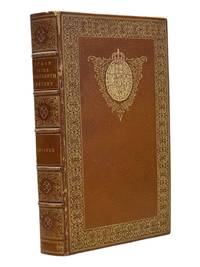
18978946Chicago: A.C. McClurg and Company 1897. First edition. 8vo 442pp. Illustrated with 23 plates. Pages unopened. Finely bound in full brown crushed morocco elaborately gilt decorated borders with red accents and gilt dentelles with the Spanish royal coat-of-arms in gilt and red on both covers t.e.g. Rubbed along upper joint else a near fine copy. Bookplate of A.J. Cox to front pastedown. <br /> <br /> Really a nicely executed and elaborate binding of this text which relates some of the events leading up to the Spanish American War of 1898. Alfred J. Cox was a Chicago master book binder and collector and we would guess this book from a Chicago publisher was perhaps bound by Cox himself. It is listed in Catalogue of the Sumptuous 'Attic' Library of the late Alfred J.Cox which was sold at auction by the American Art Association in New York 1918. This title along with several others from the series by Latimer are listed as bound in full levant morocco in various colors #608. A nice example of American fine binding at the turn of the century. A.C. McClurg and Company unknown
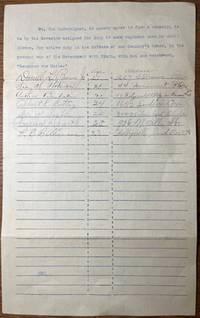
189836028Indiana: n.p. 1898. Paper. Good. Document with 7 names ages and addresses of volunteers forming a company to fight in the 1898 Spanish American War. Paper measures approximately 13' x 8." <br /> <br /> Contents include signed names ages and addresses. Typed at the top:<br /> <br /> "We the Undersigned do herby agree to form a company to be by the Governor assigned for duty to some regiment that he shall choose for active duty in defense of our Country's honor in the present war of the Government of Spain with one watchword "Remember the Maine. n.p. unknown
1895AQ31138París: Librería A. Aimond 1895. 4 180pp. Contemporary tessellated mother-of-pearl two metal clasps incorporating a cruciform design. Housed in custom dark green cloth clamshell case. Green cloth joints starting. Leaves lightly browned modern book-label of Robin de Beaumont to verso of FFEP. A late nineteenth-century Parisian edition of the Catholic Liturgy of Hours in Spanish housed in an exceedingly elaborate and frustratingly unsigned contemporary nacre binding. . 12mo. Librería A. Aimond hardcover
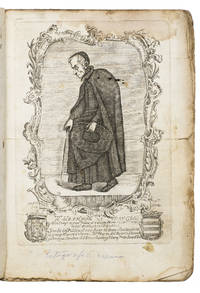
1770ABC_47902Córdoba 1770. 8vo. Contemporary limp parchment. With a large engraving of Juan de Santiago on the second leaf and a pen drawing on page 102. 4 "159" = 162 pp. Manuscript version of the only contemporary source on the life and death of the Córdoban Jesuit Juan de Santiago 1689-1762. It follows a work by the same name by Vincent Morales 1708-1765 which was probably published for the first time in 1763 in Córdoba. The copper engraving in the present manuscript likely comes from this edition. Judging from the ownership annotation the present manuscript was also made in Córdoba probably for a local university or convent. It contains an extra paragraph at the end about a feast held in honour of Juan de Santiago including six epigrams written for him. This part is not present in the printed versions of this work.Juan de Santiago was born in Écija. He became known as the "niño de la razón" because of his love for studying. He entered the Jesuit College at Sevilla at a young age. After he was ordained he moved to Córdoba College where he stayed for 40 years. He was seen as a model of holiness and many miracles were attributed to him. One of these occurred when he put out his hand to a blind woman who tried to enter the church and said to her: "Come in and take a good look." Upon which the woman cried "I see it I have recovered my sight." Throughout his life he was much loved in Córdoba because he helped and advised a great number of inhabitants. When he died there was an enormous grieving crowd in town and the City Council ordered that one of the three keys of his coffin should be kept in the city archive. The work by Morales was written at the request of the grieving Córdobans.With a crossed out ownership annotation on the verso of the title page. The parchment is stained and wrinkled with a few small holes and is somewhat smaller than the paper leaves. The borders of the first two leaves are frayed the manuscript is somewhat stained throughout. Otherwise in good condition.l Cf. De Backer-Sommervogel 1894 V 1284 printed ed. unknown
1760WB19204Spain 1760s. Hardcover. Very Good. 4to. Contempoary vellum. Wonderful manuscript on paper consisting of several sections each illustrated with hand-drawn folding diagrams many of which quite intricate. This work can be assuredly connected to Jesuit professor Cristiano Riegen of the Reial Academia de Ciencies Exactes in Madrid as there are several mentions of his name in each work. The manuscript is one that clearly took great effort and the drawings are finely executed. <br/><br/> hardcover
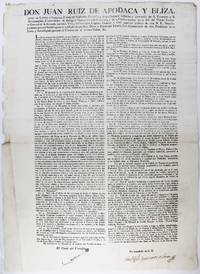
18203330Mexico City: July 11 1820. About very good. Large double-sheet broadside approximately 23.5 x 17 inches. Two sheets joined at central horizontal fold. Five chips at left edge not affecting text and some additional minor edge wear; otherwise light toning and dust soiling. Two contemporary manuscript signatures at foot; contemporary duty stamps on blank verso. Fascinating and otherwise unrecorded broadside that dictates the organization and process for the 1820 election of Mexican deputies to the Spanish Cortes during the second and last period of constitutional monarchy in Mexico. Colonial Mexico first achieved some representation in the Spanish government under the liberal Constitution of 1812 which lasted for two years before being revoked by Ferdinand VII upon his return to power in 1814. The reinstatement of the liberal constitution and the Cortes of Cadiz in 1820 however was not enough to prevent Mexico from obtaining full independence one year later. This broadside promulgated in Mexico on July 11 1820 by the colonial Viceroy Juan Ruiz de Apodaca y Eliza announces the renewed representation via regional elections to select Provincial Deputies for the Cortes and contains eight articles delineating the process by which these elections are to be held. In brief these articles order representation be apportioned according to the population as approximated from the 1792 census; divides Mexico into provinces for the purposes of the election; and places parameters on representation for each province. In all a very interesting window onto the formation of the brief final period of Spanish colonial rule in Mexico. July 11 unknown
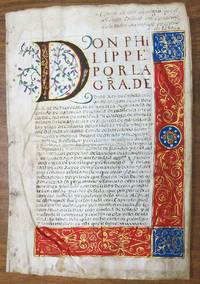
1572RF 1076<p><strong>Royal Provision of Phillip II Confirming and Ratifying the Privileges Granted by the Masters of the Order of Santiago to the Village of Corral de Almaguer Toledo 1572</strong></p><p>Manuscript. Small folio. 12 1/4 x 8 1/4". 8 double-sided vellum manuscript leaves originally bound together now unbound hand painted and decorated in blue red and gilt at various points throughout the text. The first page is hand-painted and decorated along the edge and includes a large decorative initial in multiple colors. Manuscript text in gothic style. Signed "Yo el Rey" on the back of the final leaf by King Phillip II of Spain in 1572.</p><p>ATTRACTIVELY ILLUMINATED EARLY MANUSCRIPT. JUDAICA INTEREST. Our manuscript contains the 4 confirmed provisions originally drafted by Infante Henry Duke of Aragon 1421 and 1440 Alonso de Cárdenas here listed as "Alfoso" sic in 1480 and then "The Catholic Kings" in 1494 all of whom at various times served as "Grand Masters of the Order of Santiago". The provisions were instigated against the Jewish communities of the villages of Corral de Almaguer and Ocana in Toledo province. Residents of the towns affiliated with the Order of Santiago repeately complained throughout the 15th and 16th centuries to the the authorities of that order of that the Jews and later conversos had bought land from Christians and had not paid any taxes on their purchases. Ultimately the Jews of Corral de Almaguer were ordered to pay comparable taxes to the Christians for said property but the Jews of Ocana were excepted because of their previous payments of other taxes. Given the fact that this manuscript copy dates from 1572 and was signed and reconfirmed by King Phillip II so long after the expulsion of 1492 shows there were still clearly tensions and persecution of local conversos even long after the communities had converted to Catholicism.</p><p>The top left margin on the front of the first leaf contains a handwritten note in ink stating in Spanish "It consists of this-privilege that Juan Collado was a secretary of the Order of Santiago in the year 1480". There are a few additional scant marginal notes in ink throughout and additional handwritten notes and signatures some indecipherable on the verso of the final leaf under the King's signature.</p><p>This document provide a fascinating and invaluable resource to those studying the history of Jews in Spain during the 15th and 16th centuries.</p><p>Text in Spanish.</p> hardcover
1639ABC_50152Madrid 1639. Folio c. 29 x 20.1 cm. Diego Diaz Unbound housed in a plastic folder. 2 ll. Rare 17th-century Spanish pamphlet documenting the maritime activities of the Royal Armada of Dunkirk and privateers along the coasts of France England and other territories from 1 May to 31 December 1638. This detailed account lists 118 captured vessels including warships frigates and small craft many laden with highly valuable cargoes such as silk spices wine sugar salt precious metals and pearls.Printed in Madrid it served both as a record of naval prizes and a public announcement of military success during the turbulent years of the Eighty Years War 1568-1648 and concurrent Franco-Spanish conflicts. Dunkirk then a major Spanish port in the Low Countries was a base for state-authorised privateers corsarios whose daring raids on enemy shipping are vividly detailed here including the disposition of artillery captured crews and the fate of vessels either incorporated into the Spanish fleet or destroyed.The present work emphasizes the skill and bravery of the Dunkirkers noting that despite repeated attempts by Dutch fleets to block them only one Spanish warship was lost over thirty months of operations while over 800 enemy ships were captured. It is an exceptional example of early modern naval reporting illustrating not only the logistics and spoils of naval warfare but also the political and economic role of privateering in Spanish maritime strategy.The leaves are slightly browned and foxed the gutter of the second leaf has been reinforced with a manuscript page number "124" and "125" at the recto of the first leaf and the verso of the last leaf. Otherwise in good condition.l Catálogo y Biblioteca Digital de Relaciones de Sucesos CBDRS 0001964; WorldCat 1025513992 224450878 7 copies. unknown
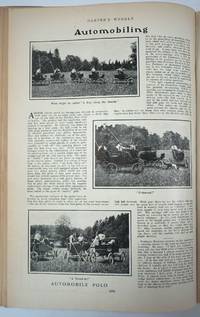
190228399New York: Harper's 1902. First printing. Hardcover. Good overall. Content on the Russo-Japanese & Spanish American War; Automobiling early cars playing polo!; Teddy Roosevelt Chinese rugby cartoon Blackwell Island Bridge Thomas Nast cartoon Henley regatta. Half year bound volume of Harper's Weekly with woodblock illustrations throughout.<br /> <br /> Color supplements were included in the Christmas issue. Chinese playing rugby cartoon p1582; US Naval Academy p1498; Blackwell Island Bridge p1308; Wall Street p1180; Thomas Nast p1972. <br /> <br /> Folio 1155pp. Weekly issues bound up into a large single volume with 3/4 leather and marbled boards. Leather spine chipped cracked at hinge binding firm internally very clean. Harper's hardcover
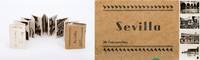
193729733AB1937. Sevilla L. Roisin Fotografo 1937 10 cm x 7.5 cm. 20 photographic cards connected as Leporello. Original Softcover. Excellent condition with some minor signs of wear only. Signed by the member of Na-Fianna Eireann from Graignamanagh Captain Padraig Quinn in 1937. paperback
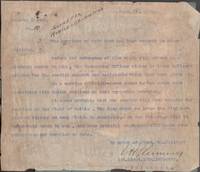
189835195Fort Sill: U.S. Army 1898. Document. Fair. Document. Original manuscript. Approx. 6.75" x 7.75". Document is very fragile with toning. The green paper backing is separated from the thin paper. <br /> <br /> This order was given by Lieut. Col. Kellogg and signed by Lieut. Col. Plummer. General Order No. 10 reads The garrison of this post has been ordered to other stations. Before the severance of ties which will always be a pleasing memory to him. The commanding Officer wishes to thank officers and men for the cordial support and assistance which they have given him. In thirty-seven years he has never been associated with better soldiers or more agreeable comrades. It seems probable that our country will soon require our services on the field of battle. The flag which we love - the flag carried to victory on many fields by Americans - by our fathers - will be as bravely borne by you and your grateful countrymen will honor your patriotism and devotion to duty. By order of Lieut. Col. Kellogg Signed E. H. Plummer 1st. Lieut. 10th. Infantry Adjutant." <br /> <br /> On a historical note the Commanding Officer General Nelson Miles sent a telegram to Lt. Col. Kellogg now at Rush Springs. Kellogg sent Capt. W. CF. Brown & his troop of the first Cavalry back to Fort Sill to quell a suspected uprising by Geronimo & the Apaches. Geronimo is recorded saying "I am a U.S. soldier. I wear the uniform and it makes my heart sore to be thus suspected." All was calm in a week. Testimony of Capt. Edward Hinkley Plummer. Investigation of Conduct of War with Spain New York November 19 1898 Plummer retired a Brigadier General in 1918 after 40 years service. U.S. Army unknown
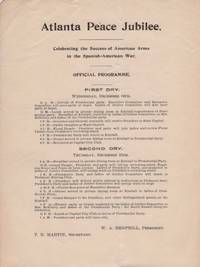
189834216Atlanta: Atlanta Peace Jubilee 1898. First Edition. Broadside. Very good. Broadside. Approx. 8" x 6". Vertical fold to the paper. This broadside provides the schedule for Wednesday December 14th and Thursday December 15th. President William McKinley and his party attended this celebration having lunch before attending a public reception at the State Capitol on Wednesday. Later that day there was a floral parade and an evening reception at the Capital City Club. Thursday they had breakfast at the Kimball House followed by a Grand Parade and a Grand Banquet at 7:00 p.m. At 8:00 p.m. a theater party at the Grand tendered by the ladies of Jubilee Committee to Mrs. McKinley and the ladies of the Presidential Party: Sol Smith Russell being the attraction. Either the President kept late hours or the programme was inaccurate: following the theater performance the next agenda item was 11 p.m. lunch at Capitol City Club with the President and his party departing at 1:00 a.m. From Franklin Garrett's history "Atlanta Environs" vol. II pages 357-359 summarizes the celebration. Garrett states "An outstanding event in the local annals for 1898 was the Atlanta Peace Jubilee held on December 14th and December 15th celebrating the success of American arms in the late war." General Wheeler was one of the President's party. Atlanta Peace Jubilee unknown
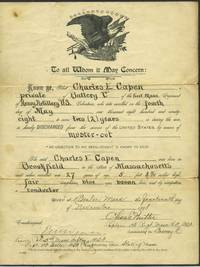
189828421Boston 1898. Otherwise very good condition. A Spanish American War veteran's discharge papers. Capen was part of the First Massachusetts Regiment of Heavy Artillery Volunteers Battery C. He was mustered out after 7 months at age 27. His occupation is listed as 'conductor.'<br /> <br /> 8 1/2 x 11" original folds hand written additions to form uniformly toned. unknown
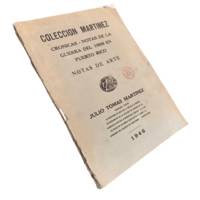
19466958San Juan / Arecibo: Imprimio en los Talleres Tipográficos de la Imprenta Venezuela / Coleccion Martinez 1946. First edition. Folio 15x11" 84pp. Presented to Kenneth McKlintock former Secretary of State and President of the Senate of Puerto Rico by the Colección Alvaraz Martinez Cadilla with inscription and signature on title page. Illustrations facsimiles. Original printed paper wraps spine chipped split and partially perished. Colección Alvaraz Martinez Cadilla stamps throughout else clean internally. A good copy. <br /> <br /> Very uncommon memoir from the innovative 20th century Puerto Rican artist Julio Tomás Martínez 1878-1954. Martinez studied art architecture and engineering working in all three fields in Arecibo. Martinez set himself apart from most Puerto Rican artists of the time with his interest modern idioms incorporating symbolism surrealism and futurism into his works. He was married to writer and artist Maria Cadilla and the two established an art academy in Santurce San Juan.<br /> <br /> This book includes sections on the Spanish American War and represents one of the few published memoirs of a Puerto Rican civilian on that topic. Martinez describes the role his hometown of Utuado played in the 1898 conflict and describes the American military campaign against Spanish forces on the island. <br /> <br /> This book has a significant association being presented to then Senator and later President of the Senate and Secretary of State of Puerto Rico Kenneth McKlintock b. 1957. We can't identify the signature but it is likely a child or grandchild of Martinez and Cadilla one of their daughters having married into the Alvarez family. <br /> <br /> OCLC cites just 6 holdings of this important text from an influential figure in early 20th century Puerto Rican history and culture. <br /> <br /> <br /> . Imprimio en los Talleres Tipográficos de la Imprenta Venezuela / Coleccion Martinez unknown
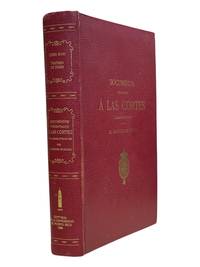
19889070San Juan: Universidad de Puerto Rico 1988. Facsimile. 11x8.5" 321 1pp. in facsimile Spanish with tables indices. Publisher's faux leather over boards stamped in gilt. Upper joint with splitting to red paper covering few scuffs to rear board. Prelims toned else clean internally and very good. <br /> <br /> Scarce facsimile edition of the documents of the Paris Treaty of 1898 originally published in Madrid 1898-1899. Universidad de Puerto Rico unknown
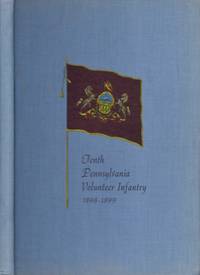
196334963n.p.: Chas. M. Henry Printing Company 1963. Hardcover. Good. Quarto. x 163 pages 1. Illustrated. Blue cloth hardcover with title and regimental flag illustration on the front cover. Light shelf wear and rubs to the blue cloth binding. End papers toned. Chas. M. Henry Printing Company hardcover