Spanish and Press, Associated CubanBiblio.com

6 567 résultats
1020359099.Ghardcover. Good. Access codes and supplements are not guaranteed with used items. May be an ex-library book. hardcover
1390323552.Gpaperback. Good. Access codes and supplements are not guaranteed with used items. May be an ex-library book. paperback
1898WRCAM54953Puerto Principe Cuba 1898. Broadside 16 1/4 x 12 1/4 inches. Toned old folds and creases minor edge chipping short closed tear slight fold separations. Very good. A very rare possibly unique surviving example of a Cuban broadside dating from the month after the conclusion of the Spanish- American War. The war ceased with a truce between the United States and Spain on August 12 1898; the official end of the war came a few months later on December 10 when the two parties signed the historic Treaty of Paris. Here on September 10 in the interim between truce and treaty the outgoing Spanish colonial governor of the south- central Cuban city of Puerto Principe present-day Camagüey Emilio March y Garcia calls for reinforcement of the truce agreement that would ensure free and open commercial trade in the region in the face of continuing interference by Cuban insurgents. March y Garcia claims that the Cuban revolutionaries are illegally detaining people interrupting the cattle trade trampling property rights carrying arms in flagrant disregard for the law and more. The ARIZONA REPUBLICAN published an English translation of this proclamation in its September 26 1898 issue. The translation reads: <br> <br> "I hereby inform the commanders of insurgent bands who are pillaging in the neighborhood of this city; who not observing the agreement between the Spanish and American governments with regard to the freedom of commercial relations are illegally detaining the country people; who are obliging the land owners to procure special passes and permits in order to put in order their plantations and will not allow them either to sell their cattle under the absurd pretext that the estates are the property of the nominal Cuban state and that its government alone can distribute and sell them and turn their products to what uses it sees fit thus trampling under foot the rights of property whereas on the part of this government the most absolute liberty in making contracts has been allowed and will be allowed in the future thus demonstrating the respect it has for the rights of all persons within its jurisdiction. I must call to notice with real sorrow that if these towns are suffering almost the horrors of starvation it is the result of the measures adopted by the chiefs of the insurgent bands who are impeding free traffic by forbidding the entry of all kinds of provisions especially cattle into the towns. In view of what I have already explained I consider it necessary to publish the following warnings: Article 1. I repeat my order of August 23 last permitting free entry and exit to all towns of this province subject to my authority and the most absolute freedom of trade between all the inhabitants of the province. Article 2. The prohibition to enter towns with arms remains in force and whoever is found with arms in his possession will be punished in accordance with the laws." <br> <br> Don Emilio Augusto March y Garcia Mesa was a career Spanish military commander who spent at least three stretches of time in Cuba the last as military governor of Puerto Principe during the Spanish defeat in the Spanish- American War. He also served as the colonial governor of Puerto Rico and general captain of Arago the Balearic Islands and the Canary Islands. <br> <br> The present broadside is exceedingly rare and quite possibly unique with no copies listed in OCLC and no records at auction. unknown books
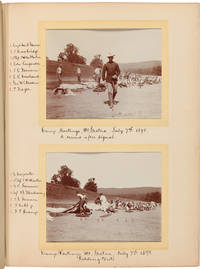
1898WRCAM54683Various places including Pennsylvania Virginia at sea New Jersey and Puerto Rico 1898. 171pp. with 342 photographs. Four large quarto photograph albums. Matching contemporary three-quarter crimson morocco and cloth front covers gilt. Minor shelf wear and some rubbing. Images in overall very good condition. An amazing assemblage of photographs documenting the Spanish-American War experiences of the First Troop Philadelphia City Cavalry which was at that time the oldest volunteer military unit in continuous service to the United States. The photographs are arranged chronologically in four contemporary photo albums with the images occasionally annotated in a contemporary hand and including the identification of numerous members of the Troop. <br> <br> The first volume opens with images of Mt. Gretna Pennsylvania "where troops were sworn into U.S. service May 7th 1898 by Maj. Thompson U.S.A." The photographs record field exercises camp building and tent organization at Camp Hastings cavalry drills an image of "Capt. Groome reading the Articles of War to Troop June 1898" a "first arrival of government horses" several shots of men training and "throwing" their horses shooting practice "Capt. Groome assigning Government horses to Troopers" and various shots of the men at work and even some play. Over the course of the album the names of numerous soldiers are recorded below several of the photographs. <br> <br> The second album opens with several photographs of the Troop striking their tents in preparation for leaving Camp Hastings at Mt. Gretna headed for Camp Alger at Dunn Loring Virginia. Here the Troop was ordered to increase their enlistment numbers. At Camp Alger the Troop was also fitted out with federal supplies and assigned to the Second Army Corps commanded by Maj. Gen. William Graham who is pictured here. Other photographs capture the camp scene at Alger "the First Troop picket line" the Troop receiving their federal-issue khaki uniforms the Troop at roll call and some shots featuring African-American helpers. <br> <br> In late July the Troop was sent to Newport News and several photographs record their brief time there with about a dozen shots of their temporary camp. On July 28 1898 the Troop left Virginia on the transport ship MASSACHUSETTS bound for Puerto Rico. Several images here capture the frenetic loading of the troops and their horses onto the ship with the remaining half dozen or so shots recording the Troop's time on board. <br> <br> The third album picks up where the second left off with the First City Troop embarked on the transport ship MASSACHUSETTS headed for Guanica Puerto Rico. Shipboard activities captured here include a few shots of groups of men being showered with water hoses. Several shots record the arrival of the men in the port of Guanica where they encounter the hospital ship NUECES which reports of the news of the "surrender of Ponce." After the men disembark they pitch their camp around Cathedral Virgin del Carmen on August 5. The next day several photographs record the unloading of horses and stores in the harbor at Ponce. The remaining thirty-eight photographs in this volume record scenes in the interior of Puerto Rico and are the most heavily annotated of the four albums. The images record scenes from the "road from Port of Ponce to Ponce" several scenes capturing a market day in Ponce and recording numerous native islanders the Troop's "temporary camp about 2 miles beyond Ponce" the "Troop wagon leaving camp beyond Ponce to join wagon train for Guayama" on August 8 a shot of the Troop's wagon "on road to Guayama in a Porto Rico mudhole" images of the wagon train to Guayama with the H Troop 6th U.S. Cavalry the "Point of Advance Guard entering Guayama within the lines" the Troop itself "entering Guayama passing General Brooke's Headquarters" a "View of First Troop Phila. City Cavalry U.S.V. Camp at Arroyo August 10th to 6A.M. Aug. 13th 1898" with the last ten images recording the camp or the streets at Arroyo. <br> <br> The fourth album documents the Troop's voyage home to Philadelphia. This time they take passage on the transport ship MISSISSIPPI and about half of the images record their voyage on board. On Sept. 10 1898 they reach Jersey City in New York harbor where they camp for a short time before returning to camp in Pennsylvania where the album ends. A couple of months later all three officers and the ninety- eight enlisted men of the First City Troop were mustered out of federal service for the Spanish-American War. <br> <br> Originally founded in 1774 by twenty-eight Philadelphia patriots as the "Light Horse of the City of Philadelphia" the First Troop of Philadelphia Cavalry is the oldest mounted military unit operating in continuous service to the American republic being the first volunteer cavalry troop organized in defense of the colonies. Among the Troop's original founders was John Dunlap printer to Congress from 1778 to 1789 publisher of the first American daily newspaper and the first printer of the Declaration of Independence. Most of the earliest members were similarly notable professional men of Philadelphia. The Troop served with valor in the American Revolution the War of 1812 the Mexican- American War the Civil War the Spanish- American War and every major American war through the Korean War. <br> <br> The present albums present a unique and important visual record of the First City Troop's activities before during and on the way home from the Spanish-American War. hardcover books
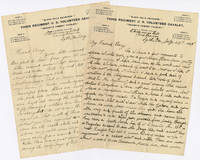
1898WRCAM46791Chickamauga Park Ga 1898. 5pp. Quarto written on "Black Hills Squadron" stationery. Old fold lines. Minor wear. Very good plus. A pair of letters written by Leighton H. Baxter to a friend back home. In his first letter he states that he is "not an enlisted soldier but has a regulation suit.a horse to ride and am fixed up very nicely. He works for the commander of the squadron Major Leigh H. French presumably as a teenage civilian clerk. His duties include "a good deal of writing to do telegrams to send take notes of cases tried in the regiment and a great many other minor duties." He sleeps in the same tent as the Major and takes his meals with the officers. He is well fed but is very glad not to be a private as they "fare badly." It is however "a regular circus to see the boys ride and shoot they beat Buffalo Bill all to pieces." Baxter reports that there are some 40000 to 50000 troops at Camp Thomas with more due to arrive. Some have already departed for "Porto Rico" and he expects his squadron to be going there at any time. In his second letter he notes that the men in his regiment are all "crack shots and fine riders" and all from around Deadwood and the Black Hills. He has been drilling with the men and has learned to handle a sword fairly well. He also mentions practicing "rough riding.such as leaping from a horse while he is running then back again picking up a hat while at full speed etc." <br> <br> The Third U.S. Volunteer Cavalry was mustered into service in May 1898 and commanded by Melvin Grigsby attorney general for the state of South Dakota. The unit was known both as the "Black Hills Squadron" and as "Grigsby's Cowboy Cavalry." Its commander Maj. Leigh H. French was trained as a medical doctor and surgeon and had a practice in Washington D.C. when the war broke out. One of his captains Seth Bullock was the first sheriff of Deadwood. The squadron never saw active duty outside the continental United States spending most of its brief career at Camp Thomas in Georgia. In the crowded camp in the heat of a southern summer typhus measles and other illnesses were rampant and Grigsby's Cavalry lost twenty-seven men to disease. unknown books
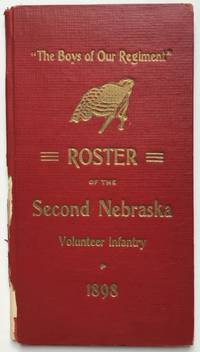
18981081Chattanooga: Times Print 1898. Very good. 29pp. Narrow 12mo. Original red cloth cover gilt. Spine heavily chipped corners worn. Contemporary ownership inscription on front pastedown contemporary notations to several leaves. Regimental roster for the Second Nebraska Volunteers mustered into service for the Spanish American War at Lincoln in May 1898. The regiment consisted of forty-six officers and 975 enlisted men each detailed herein by company. The regiment never saw active duty spending time training at Chickamauga before being transferred to Omaha and then mustered out in October of the same year. This copy with the ownership inscription of Irene G. Courtnay dated September 2 1898. Irene has made notations about several of the men -- presumably friends or acquaintances -- in the Remarks section of some pages. On the page for Company B she has written "Ernest G. Briggs drowned in Chickamauga Creek. 1st death in 2nd Neb. Regiment." Rare and likely produced in limited numbers for friends and family. Only a single photocopy reproduction located in OCLC. An interesting piece of Western Americana from this mostly-forgotten episode in American history. Times Print unknown books
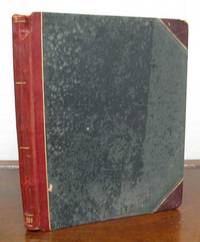
190237237v. p. 1902. Maroon half-leather binding with black cloth boards. General wear with spotting to boards which are bowed. A VG copy. 201 numbered pages of lined paper. 9-7/8" x 7-5/8" <br/><br/>The 'Kilpatrick' began life as the SS Michigan beginning service in September 1891 as a cargo vessel with limited passenger accomodation. In 1898 she was sold to the US government to act as a military transport during the war. She was capable of hauling 840 men and 800 horses. While not an active participant in the Spanish American war she did subsequent duty in transport service to the PI as this log documents. Capt Rogers begins his entries Saturday Dec. 31st 1898 noting relief of Cap. Jeffreys taking command of U.S.A.F. Michigan departing for Havana at 9 pm. The final entry is Sept. 2nd 02 noting position/course details of a "Manila to Frisco" run. This log a first-hand account of the ship's life recording location etc. Details of the Captain's or crew's life are for the most part absent. That being said it is a unique historical document that provides daily facts of the ship it's activities & its location. hardcover books
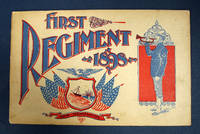
189840039Mexico Mo: Head Bros 1898. 1st printing. White paper wrappers printed in red & blue stapled. Age toning to paper. Staples a bit rusted. A VG copy. Unpaginated though 40 pp. Roster last 4 pages. Profusely illustrated with 65 b&w captioned photographic images. Oblong format: 5-7/8" x 9-1/4" <br/><br/>From the rear cover: "To the Officers and Members of this Regiment. . this book is presented to you as a souvenir of your camp life in the Spanish-American War. The idea is to show by photographs a practical army life ." Head Bros unknown books
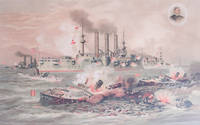
189840301Philadelphia: J. Hoover & Sons 1898. Image 27 x 17 1/2 inches. Framed and glazed. Image 27 x 17 1/2 inches. Schley was selected "at the opening of the Spanish-American War to command the Flying Squadron at Hampton Roads.when Cevera's ships reached Martinique the Flying Squadron.at 9:35 July3 1898 the Spanish ships emerged from the harbor of Santiago and turned westward Schley's flagship the Brooklyn westernmost of the blockading line."<br/><br/>Xanthus Russell Smith 1839-1929 comes from a Family of Philadelphia Artists. He was the som of Russell Smith. J. Hoover & Sons unknown books
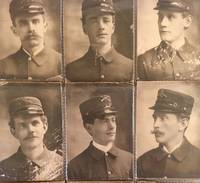
1898List319Massachusetts 1898. The 2nd Massachusetts Volunteers mustered into service in May 1898 and within a month saw significant action in Cuba at the Battle of El Caney. They were one of three volunteer units from Massachusetts to see action on the Santiago Campaign. The regiment was inexperienced - 55% were untrained recruits. The lack of experience combined with their rifles giving off a very visible black smoke led to a heavy casualties in the Battle of El Caney. After an encampment near Santiago de Cuba in which a large number of the soldiers became ill with disease - estimates are as high as 65% - the regiment returned home in August. Historians have noted that soldier demographics changed considerably from the Civil War to the Spanish American war as the smaller number of troops and the lack of a draft led to a more enthusiastic army with higher morale. <br /> <br /> The photographs in this group are interesting as a typological grouping of images of untrained soldiers and also for their historical value as most contain identifications to versos. The highlight of the group is forty-four uniformly mounted portraits of soldiers nearly all identified measuring 3 ¾ x 2 ½ inches each. Other photographs include a large portrait of Captain Frederick E. Pierce with the blindstamp of Goldsmith Studio Springfield Massachusetts and a 3 ¼ x 3 ¼ inch square card of Capt. Pierce in Camp Turner. Also included are two slightly larger photographs on similar mounts. <br /> <br /> Overall an interesting group. Good condition overall with assorted chips and wear. unknown books
1898WRCAM5606Washington 1898. 293pp. plus photos and two folding charts. Printed wrappers. Slightly dampstained. Good. The full testimony heard before the court of inquiry is included with nineteen photos of the wreckage and two charts of the keel of the Maine. The court found that the damage "could have been produced only by the explosion of a mine situated under the bottom of the ship" and that no officers or crew members were negligent in their duties. unknown books
190020112Washington: Government Printing Office 1900. Folding maps. 8vo. Half burgundy morocco with original maroon spine laid down. Tightly bound else a very good copy. Folding maps. 8vo. Contains among the various reports "Government reports on the Battles and Capitulation of Santiago de Cuba" "Comments of Rear-Admiral Plüddemann on the Main features of the War with Spain" and "Sketches from the Spanish American War."¶ Senate Document 388 with the yellow slip preceeding title regarding the contents. Government Printing Office unknown books
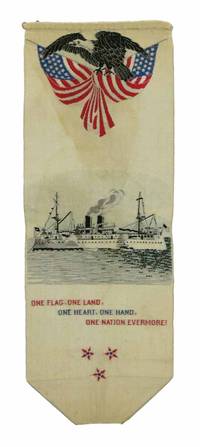
43212Paterson N.J.: The Paterson Ribbon Co n. d. Ca 1898. Aging to silk with signs of light wear & very faint stain under the flag. Overall Very Good. Woven silk ribbon with eagle & flag over the battleship Maine with the nationalistic slogan underneath with 3 red & blue stars at bottom. 8-1/8" x 3" <br/><br/> The Paterson Ribbon Co unknown books
1899613371899. SPANISH AMERICAN WAR. PROCLAMATIONS AND DECREES DURING THE WAR WITH SPAIN. Dept. of State Unites States of America. Washington: Government Printing Office 1899. 8vo. original wrappered pamphlet bound in black cloth-backed marbled paper-covered boards paper labels to spine; 99 pp. Ex-library. Very good. unknown books
93318First Edition. pamphlet. 36 pages. Slim 8vo printed wrappers; chipped ex- lib. Paris: R. Chapelot 1899.<br/><br/> unknown books
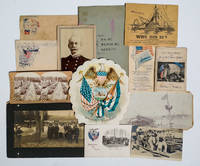
21688On February 15 1898 a mysterious explosion destroyed the battleship USS Maine while it was anchored in Havana Harbor killing 260 men and helping to propel the United States into war with Spain. Although the cause of the explosion was unclear American newspapers were quick to allege that the ship had been brought down by a Spanish bomb. Led by William Randolph Hearst in the New York Journal and Joseph Pulitzer in the New York World the press demanded action. Hearst's headline "Remember the Maine!" became a rallying cry that helped turn American public opinion strongly in favor of war with Spain. By April President McKinley had given into to additional pressure from hawkish senators and his own vice-president Theodore Roosevelt and war was declared. Although brief the Spanish-American War had important consequences. It ended Spain's colonial empire in the Western Hemisphere and secured the position of the United States as a Pacific power. "U.S. victory in the war produced a peace treaty that compelled the Spanish to relinquish claims on Cuba and to cede sovereignty over Guam Puerto Rico and the Philippines to the United States. The United States also annexed the independent state of Hawaii during the conflict. Thus the war enabled the United States to establish its predominance in the Caribbean region and to pursue its strategic and economic interests in Asia" Office of the Historian U.S. State Department.<br/><br/>This collection consists of approximately 120 items including original photographs printed and real photo postcards stereoviews commemorative programs patriotic covers postal stamps calling cards song sheets lithographs and other ephemera showing the Maine as she appeared before the disaster the wreckage and salvage efforts the funeral service and burials of the victims first at Cristobal Colon Cemetery in Havana later at Arlington National Cemetery and some of the myriad ways in which the Maine was memorialized and mythologized in American popular culture. Original photographs and real photo postcards capture the ship and crew prior to the disaster crowds of sailors lined up to pay their respects to the victims the coffins being transported the cemetery dotted with freshly dug graves elaborate floral wreaths and memorials and salvage efforts in the immediate aftermath of the disaster and in 1911 when the ship was raised before being towed out to sea to its final resting place at the bottom of the ocean. The wide reach of the patriotic feelings aroused by the disaster can be seen in two cabinet cards of young children wearing U.S.S. Maine hats as well as on items that have no military or national connection e.g. a high school commencement program a blotter advertising corsets yet bear images of the Maine or the "Remember the Maine" slogan. On envelopes and stationery we see images of Uncle Sam punching a Spainiard an eagle dubbed "the New Bird in Havana Harbor" and troops walking toward a ship under the heading "On to Cuba." A mendicant uses the Maine as his theme on a card handed out to solicit alms; a song by a writer of sensational crime broadsides is reported to have been "composed and written during the indecision of the U.S. Government" and urges "Let's show all foreign powers Aye the haughty sons of Spain they will brook no insult like the Sinking of the Maine." A particularly unusual item is an envelope illustrated with an image of the remains of the ship captioned "WHO DID IT" containing illustrated sheets of tissue with instructions to blow them up via a small "fuse" on the back. In all an illuminating collection that helps demonstrate the impact of both the incident and how it captured the popular imagination -- such that many Americans still recognize the "Remeber the Maine!" rallying cry today even if they no longer know what it represents. unknown books
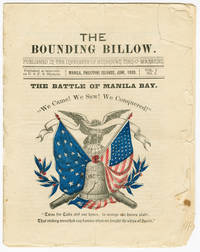
1898WRCAM56306Manila Philippines 1898. 16pp. printed in double columns. Color illustration on front wrapper uncolored map on rear wrapper. Original pictorial self-wrappers. Rear wrapper detached but present. Central vertical fold wrappers with chips and tears in edges upper outer corner of front wrapper repaired with tape on verso. Good. One of three issues of this scarce Spanish- American War periodical published on board Dewey's flagship Olympia in Manila Bay. There was a total of seven numbers of this naval periodical the first two published in Nagasaki the third in Yokohama the fourth in Hong Kong and numbers five to seven in Manila. The present issue entirely devoted to the Battle of Manila Bay is among the most desirable and contains American accounts and a translated Spanish account of the battle several poems and a map of the scene of action made by a sailor "with a couple of sail needles." The magazine was written and edited by Apprentice First Class Louis Stanley Young and printed by Harry B. Glover on paper captured from the "Commandancia General del Arsenal de Cavite." Young a former printer himself improvised a print shop in a torpedo room on board the Olympia. An illustration of the Liberty Bell two flags an American eagle etc. is printed on the front wrapper in black red and blue. "A historic piece one of major proportions" - Moebs. MOEBS AMERICA'S NAVAL HERITAGE 136. unknown books
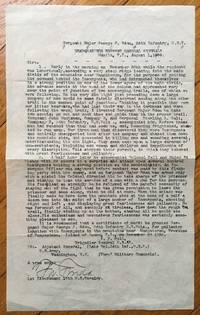
1900208Manila 1900. Very good. Typed letter signed 1p. Typed on thin paper. Folded. A true copy of a typed letter by Gen. J.F. Bell that recommends Sgt. Maj. George J. Oden of the 36th Volunteer Infantry for a Certificate of Merit for gallantry during an engagement with Insurgents native Filipinos who rebelled against American rule after Spain ceded the islands to the United States in the mountains near Mangaterem on November 28 1899 during the Spanish-American War. According to the text of the letter "When the attack was finally made he tore down the mountain side at the head of a half dozen men into the midst of a large number of Insurgents shooting right and left and displaying great fearlessness and gallantry. He was foremost of all and seemingly tireless flew down the rough trail finally winding up at the bottom chasing all he could see alone. His enthusiasm and unconscious fearlessness was something pleasant to see." Certified as a true copy of the letter by a Buffalo Soldier a First Lieutenant in the 10th U.S. Cavalry. unknown books
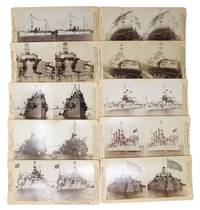
189947820New York / Washington DC: Strohmeyer & Wyman Publishers / J. F. Jarvis Publisher 1899. Peach-colored mounts concave. Versos blank. Images generally clear & sharp with mounts showing just minor wear & soiling. Two Jarvis views with 5 language captions to verso. Old prices penciled to verso upper corner. Withal a Very Good set. Individual domed b/w albumen images mounted side by side. Captioned underneath with publisher & distributer imprints to the view sides. 3-3/8" x 7" <br/><br/>A nice cache of views depicting 8 different vessels from the last turn-of-the-century conflicts: Cruiser Minneapolis Battleship Texas Cruiser New York Massachusetts Battleship Iowa Cruiser Brooklyn Oregon 3 & the Raleigh. Strohmeyer & Wyman, Publishers / J. F. Jarvis, Publisher unknown books
0656479183.Ghardcover. Good. Access codes and supplements are not guaranteed with used items. May be an ex-library book. hardcover
1333285965.Gpaperback. Good. Access codes and supplements are not guaranteed with used items. May be an ex-library book. paperback
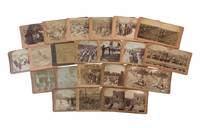
1898231301898. Spanish-American War stereoview archive circa 1898-1899 documenting how the war was pictured through mass-produced photographic views that followed U.S. mobilization battlefield action occupation and military life across both Cuba and the Philippines. These stereoviews preserves the visual system by which the war was circulated to American audiences showcasing camp organization troop movement burial hospital care naval power and overseas deployment. Particularly notable is the archive's coverage of the Rough Riders the Santiago campaign in Cuba and U.S. presence in Manila and Malate showing how stereoview photography helped normalize the war's expansion from anti-Spanish conflict into a broader American imperial presence.<br /> <br /> Archive of 21 stereoviews Various publishers. Spanish-American War stereoview archive. Cuba the Philippines and the United States circa 1898-1899. each measuring 3" x 7". The views are drawn from multiple phases and theaters of the war including camp and drill scenes in the United States embarkation and troop arrivals at Tampa battlefield and occupation imagery from Cuba and extensive and some grisly scenes from Manila and surrounding areas in the Philippines. Captions and images show soldiers in formation cavalry drill military reviews naval artillery hospital interiors encampments burial grounds and troops in active position. Cuban views include Morro Castle after bombardment dead and wounded on the battlefield of Santiago U.S. soldiers preparing to invade Cuba and troops dining near Cabañas Fortress. Philippine views include a departure for Manila American pickets routing a Filipino reconnoitering party the 18th Infantry engaged by Filipino outposts volunteers awaiting orders under the tropical sun Army Hospital Manila and "Our Boys in Camp at Malate P.I." One stereoview identifies Roosevelt's Rough Riders in the mobilization phase linking the archive to one of the war's most publicly mythologized units.<br /> <br /> As a group the stereoviews demonstrate the process by which the Spanish-American War was framed not simply as a short military victory over Spain but as a sustained structure of U.S. troop deployment and occupation extending from Cuba into the Philippines. The Manila and Malate scenes are especially important in this regard since they place American soldiers within the opening phase of the Philippine conflict where U.S. military presence quickly moved beyond liberation rhetoric into imperial control. The archive's mixture of battlefield casualties camp routine naval spectacle and celebratory review scenes shows how stereoscopic publishing converted war into a domestic viewing experience while reinforcing the legitimacy of American expansion abroad. Wear to mounts some toning; overall very good condition. A strong cross-theater visual archive of the Spanish-American War and the emergence of U.S. imperial power in Cuba and the Philippines. unknown
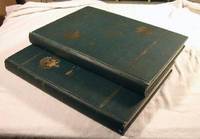
1904010844Washington DC: General Marcus J. Wright War Records Office 1904. First edition 1904. Massive two volume set in fair to good condition describing American history and expansion beginning with a brief history of the thirteen colonies but focusing on most recent expansion mainly from the Spanish-American War. Includes sections on: Cuba; Porto Rico; Philippines; Samoa; Hawaii; Alaska; Panama Canal. Includes fifteen hundred illustrations plus photographs color maps of the newest acquisitions and color plates of the flags of all nations medals insignia etc. A quite lavish publication full of turn-of-the-last-century American bravado. Greenish blue cloth lettered and decorated in gilt 320 642 pages plus addenda fully indexed. The books measure approximately 17" x 12" and weigh nearly twenty pounds. Some external wear and rubbing mainly at the corners and spine ends very short vertical tear to the lower spine edge of volume II front hinge of volume I lightly cracked cosmetic rather than structural other hinges good bindings sound two pages in volume I detached but present pages clean and free from names or other markings maps and plates very good. A clean and sound set. First Edition. Hard Cover. Fair. Elephant Folio - over 15" - 23" tall. General Marcus J. Wright, War Records Office Hardcover
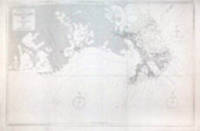
188015998Madrid: Published by the Spanish Admiralty 1880. Engraving. Printed on wove paper. In excellent condition. Image size: 24 x 37 1/4 inches. A wonderful sea chart of the Mississippi Delta produced by the Spanish Admiralty at the close of the nineteenth century.<br/> <br/>This is an impressive sea chart of the Mississippi Delta produced by the Spanish Admiralty in 1880. The coast line is clearly mapped out with little detailing except for the soundings around the Delta. There are two compasses and a number of lighthouses identified along the shoreline. The chart uses the surveys conducted by the U. S. Coast Survey which were carried out between 1853 and 1877. It is a wonderful chart of this important area and superb collector's piece for anyone interested in early maps of the Americas. Published by the Spanish Admiralty unknown books
188015998Madrid: Published by the Spanish Admiralty 1880. Engraving. Printed on wove paper. In excellent condition. Image size: 24 x 37 1/4 inches. A wonderful sea chart of the Mississippi Delta produced by the Spanish Admiralty at the close of the nineteenth century.<br/> <br/> This is an impressive sea chart of the Mississippi Delta produced by the Spanish Admiralty in 1880. The coast line is clearly mapped out with little detailing except for the soundings around the Delta. There are two compasses and a number of lighthouses identified along the shoreline. The chart uses the surveys conducted by the U. S. Coast Survey which were carried out between 1853 and 1877. It is a wonderful chart of this important area and superb collector's piece for anyone interested in early maps of the Americas. Published by the Spanish Admiralty unknown