459 résultats
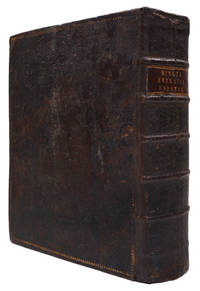
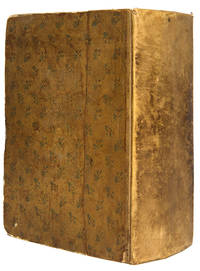
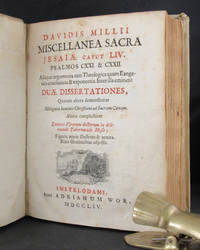
175430845Amstelodami Amsterdam: apud Adrianum Wor 1754. First and Only Edition. Very handsomely decorated and illustrated with title in red and black with engraved device and 6 very fine and large engraved folding plates showing the Tabernacle and other decorations and a portrait of the author. With some Hebrew and Greek text. Small 4to bound in contemporary blind-stamped vellum with manuscript title at the spine. 11 326 329-414; 2 329-402 xcviii 6 403-438 4 pp. A very pleasing and handsome copy with clean fresh text and fine plates a very faint and occasional sign of old damp at lower inner margin. VERY RARE FIRST EDITION IN EXEMPLARY CONDITION. This was the only edition of this scarce melange of theological commentary and philological criticism of the Hebrew Scriptures along with the author’s speculations on the construction of the Israelite tabernacle the latter accompanied by five large engraved illustrations. <br> Born at Königsberg Prussia the noted German Orientalist David Mill 1692-1756 was professor of theology at the University of Utrecht. His inaugural oration “De fatis theologiae exegetica†was delivered 10 October 1729 and is included in the present collection along with his “Oratio de erudita pietate†25 March 1743 a number of commentaries on various psalms and his "Dissertatio de Tabrnaculo Mosis to which five very large folding engraved plates are added. The volume comprises a tribute to professor Mill on the occasion of twenty-five years of service to the University and concludes with two verse encomia: “De erudita pietate peroranti†by Otto Arntzenius; and an “Elegia ad virum celeberrimum Davidem Millium†by Jacobus de Rhoer. In his later years Mill built a model of the Jerusalem Temple which eventually found its way to the attic of the University Library at Utrecht from whence it was rescued in the late nineteenth century by Leendert Schouten for his Biblical Museum Bijbels Museum in Amsterdam. With a fine engraved portrait of Mill.<br> Walch Bibliotheca theologica selecta 4: 834. Not in Horne.<br> apud Adrianum Wor hardcover
1872AQ21592London: Elliot Stock 1872. iv 204pp. Original publisher's maroon cloth stamped in gilt and blind. Extremities sunned and lightly rubbed. Very occasional light spotting. A complete run of the first 12 issues of a short-lived monthly periodical dedicated to contemporary English members of the Hebrew Christian movement comprised of Jews who had converted to Christianity but worshipped in congregations separate from denominational churches. . Quarto. Elliot Stock hardcover
99104Oxford Clarendon Press 1750. . First edition; two volumes in one; 4to 24 x 19.5 cm; text in Hebrew; contemporary calf boards with gilt borders spine with raised bands leather label joints and spine cracked.<br /> A non-vocalised edition of the Pentateuch based on E. van der Hooght's text Darlow & Moule 5141. It is the earliest edition of the Hebrew Bible apart from the London Polyglot to be printed in England.<br /><br />The editor Nathaniel Forster D. D. 17181757 was an English cleric and biblical scholar. Son of a minister he was educated at Eton and at the Corpus Christi College in Oxford. In 1750 he became domestic chaplain to Bishop Joseph Butler who died in his arms two years later in Bath Somerset.<br /> ESTC T147721; Darlow & Moule 5151. Oxford, Clarendon Press, 1750. hardcover
117964Mantua Eliezer Shlomo of Italy 1785. . 8vo; contemporary vellum engraved frontispiece depicting the Sacrifice of Isaac slightly stained hinges cracked but holding edges stained red; text in Hebrew; 248 124 iipp.<br /> Scarce Hebrew bible from Italy with Five Scrolls Haftarot at the end of the volume and calendars of Holidays and fasts for 120 years at the beginning. The frontispiece engraving depicts The Binding of Isaac with Abraham dressed in contemporary 18th-century Italian dress.<br /> Vinograd Mantua 545. Mantua, Eliezer Shlomo of Italy, 1785. hardcover
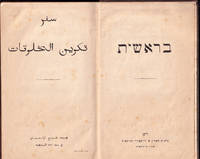
1872056106Vienna Wien: A.Riechert = A. Rikhard ve-Shutafot Beç 1872. 1st Edition . Hardcover. Very Good. 8vo - over 7¾ - 9¾" tall. Original cloth binding with a bilingual title in Hebrew and Ottoman Turkish in Arabic script on the front board and blind-tooled decorations on both boards. Demy 8vo 22 x 14 cm. Text in Ottoman Turkish and Hebrew. 4 176 pp. Cloth slightly faded; foxing to the first and last blank leaves and pastedowns as well as to some margins; hinges slightly split. Overall a good copy. Extremely rare early Viennese edition of this bilingual "Genesis" in Hebrew and Ottoman Turkish one of only three produced by the Adolf Holzhausen Printing House in Vienna a major centre for Hebrew book production in its time. According to the Özege catalogue it represents one of the few bilingual Holzhausen editions. Adolf Holzhausen 1868-1931 was an influential Austrian-Jewish publisher and bookseller notable for his contributions to the world of printing and publishing in Vienna. He was the son of Adolf Holzhausen the Elder 1827-1892 who led the Viennese court and the university's book printing company. Growing up in a family deeply rooted in the book trade Holzhausen received thorough training in the family business; his father had owned the prestigious Manzsche Buchdruckerei Manzsche Book Printing Company since 1858. Holzhausen developed specialized expertise in typesetting and printing of oriental scripts and he supplied his company with carefully crafted oriental typefaces which were highly valued in scholarly and literary circles. Building on this expertise he eventually established his own university book printing company as well as a private publishing house focusing primarily on art books historical works and scholarly publications. Following the upheavals of the First World War Holzhausen was appointed head of the Austrian Military Geography Institute reflecting both his organizational abilities and his intellectual reputation. Beyond his publishing and military contributions he was a strong advocate for collaboration among Austrian educational book publishers promoting greater unity and standards in the production of educational materials. Through his dual roles as a printer and publisher Holzhausen left a lasting impact on Viennese cultural and academic life bridging traditional craftsmanship with modern publishing practices and fostering scholarship in art and history. TBTK 12907. For later edition see Özege 19925. As of March 2026 OCLC lists no copies in a Western library see 236007780 but for the earlier edition 1860 it can be traced only in the Stanford University Cecil H. Green Library see 71019424. <br/> <br/> A.Riechert = A. Rikhard ve-Shutafot, Beç hardcover
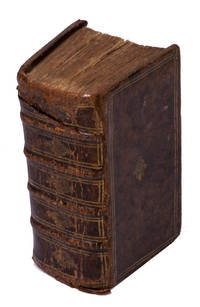
161018174Leiden 1610. 24mo in 8s 11 x 6 cm. Franciscus II Raphelengius Gold-tooled mottled calf ca. 1720 sewn on 4 cords each board with a small central flower ornament and a frame of double fillets the spine with a lozenge ornament in each of the 5 compartments a roll on each raised band and at the head and foot and further double fillets gold-tooled board edges mottled edges. With 4 letterpress title-pages for the Pentateuch early prophets major and minor prophets and Psalms etc. and decorations built up from arabesque typographic ornaments. Set in sephardic meruba Hebrew types unpointed with the imprints in semi-cursive rabbinical but the place of publication in meruba. 4 volumes bound as 1. 264; 227 1 blank; 238 2 blank; 287 1 blank pp. vols. 1-2 with arabic numerals 3-4 with Hebrew. A pocket-sized edition of the Hebrew Old Testament in four volumes volume 1 containing the Pentateuch or Torah volume 2 the early prophets Joshua Judges Samuel Kings volume 3 the later major Isaiah Jeremiah Ezekiel and minor prophets and volume 4 the Psalms Job Song of songs Ruth Lamentations Ecclesiastes Esther Daniel Ezra and Chronicles. It was produced by Franciscus II Raphelengius grandson of Christoffel Plantin and son of one of Europe's first great Hebrew scholars Plantin's son-in-law Franciscus I Raphelengius 1539-1597 who helped prepare Plantin's magnificent 1572 Polyglot Bible succeeded to the Leiden branch of Plantin's printing office and became professor of Hebrew at Leiden University. Plantin himself had produced the Dutch Republic's first Hebrew book there in 1585 and Raphelengius produced many more beginning in 1588.With occasional very minor foxing or faint discolouration but otherwise in very good condition. The spine and joints are worn with superficial cracks a repair at the head and a small tear at the foot and the sewing is slightly loose. A charming little Hebrew Bible from the first Dutch printing office to produce Hebrew books.l aleph.nli.org.il 001366023 4 copies; Darlow & Moule 5114; Fuks 25 2 copies; Steinschneider 386; WorldCat 8 or 9 copies. ABE CAT Bibles Sermons & Psalmbooks unknown
17686'No. 2. Bon-Accord Rhymes and Ballads. Aberdeen: George Middleton Skene Square. 1878. Smith's entry in the Oxford DNB explains the background to this pamphlet explaining that he was 'commissioned to write some articles on biblical subjects for the ninth edition of the Encyclopaedia Britannica and the first two of these appeared in 1875—‘Angel’ in volume 2 and ‘Bible’ in volume 3. These articles marked a turning point in his career. The Bible was regarded by the Free Church of Scotland as ‘the supreme rule of faith and life’ and so anything that might seem to undermine its authority was bound to arouse opposition. An investigation by the college committee of the Free Church found that Smith's opinions as expressed in the article ‘Bible’ were hardly compatible with his position as a teacher of candidates for the ministry of the church but provided insufficient grounds to support a process for heresy. Smith maintained that he accepted that the Bible was the one sufficient and authoritative record of divine revelation and that his critical views were the fruit of studies carried out under the guidance of his teachers at New College Edinburgh. He therefore demanded that he be given a formal trial by libel indictment for his alleged heresies and errors. In the subsequent protracted proceedings in the various church courts Smith by sheer dialectical skill was able to beat back the attack on all points except the authorship and purpose of Deuteronomy. The libel proceedings were eventually terminated but a vote of no confidence in Smith was passed by the general assembly of 1881 and was followed by his summary removal from his chair.' 8pp. 12mo. Disbound without covers. In fair condition on aged paper with first and last leaf separated. Comprises a poem 'To the Publisher' dated by 'THE AUTHOR' to 15 April 1878; a poem titled 'The Heresy Hunters'; and another titled 'The Heretic Hunter's Song'. All three are written in lowland Scots. 'The Heresy Hunters' features references to 'The College' and 'SELBIE' as well as the stanza: 'Let dabbler DAVIES spit their spite And CRAVENS croak and BINNIES bite And slippery SLOANS and all unite They've neither pith Nor can nor calibre to fight Professor Smith.' 'The Heretic Hunter's Song' features references to 'Professor Smith' 'a wily loon' and 'Lawyer Davie' as well as 'Doctor Broon'. Pencil comment on line of poem in margin of p.7: 'But faith <he's roastin>'. Scarce: the only two copies found on COPAC at the National Library of Scotland and British Library. 'No. 2. Bon-Accord Rhymes and Ballads. ] Aberdeen: George Middleton, Skene Square. 1878. unknown
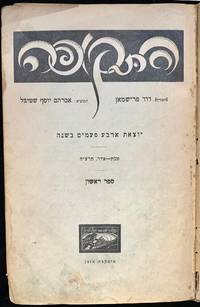
191843090Moskvah Moscow : A.Y. Shtibel 1918. First edition. Original boards 8vo 678 pages. 26 cm. In Hebrew. Title translates as “The Season.â€<br> Rare volume 1 published in the USSR of the quarterly literary magazine Ha-Tekufah. Includes essays by Simon Dubnow poetry short stories translations and articles.<br> Ha-Tekufah was a “Hebrew periodical devoted to literary scientific and social subjects which appeared first as a quarterly then as an annual intermittently between 1918 and 1950. Ha-Tekufah received the financial backing of Abraham Joseph Stybel a philanthropist who had placed David Frischmann in charge of launching Hebrew literary projects on an unprecedented large scale. Accordingly Frischmann established both the Stybel publishing house and launched Ha-Tekufah serving as the editor of both projects. The first volume of Ha-Tekufah appeared in Moscow early in 1918 before the Bolshevik regime had decided to suppress Hebrew literature. Frischmann published the works of the world's best authors and scholars. The literary standards of the periodical were high. Frischmann encouraged young authors for example Eliezer Steinman. In all respects and not least for its beautiful graphic work Ha-Tekufah was a rare phenomenon in Hebrew literature.†Jewish Virtual Library.<br> SUBJECTS: Hebrew literature Modern -- Periodicals. Hebrew literature Modern. OCLC: 25586768<br> Boards separated and pages edgeworn. Lacks backtrip spine covering. Good Condition internally. YID-46-7-’. Moskvah [Moscow] : A.Y. Shtibel unknown
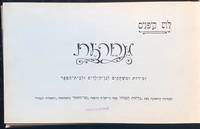
192343438Frankfurt am Main: Verlag "Omonuth" Omonut Omanut Omanuth 1923. 1st German-printed Edition. Original boards horizontal 8vo 1 score xv 177 pages. 13 x 21 cm. In Hebrew. Title translates as "Rhyme: Songs and Games for Kindergarten and School."<br> Book of songs for children written by Levin Kipnis. Includes musical settings unaccompanied for the poems by various composers. Hebrew text of each entire poem printed on page corresponding to strophic melody. Originally issued in Jerusalem and republished in this edition in Germany by the publishing house Omonuth.<br> "Kipnis was born in Ushomyr Volhynia.In 1913 he moved to Palestine to study at the Bezalel Academy of Art and Design. He later studied pedagogy for two years in Germany and thereafter became a teacher in Levinsky's Teacher's College in Tel Aviv 1923-1952. He debuted in print in 1911 with a poem in the children's magazine Heperaim The flowers and from that point published over one hundred Hebrew books for children and edited children's newspapers textbooks and the like. He is considered the founder of Hebrew-language children's literature in Israel. Leksikon fun der Nayer Yidisher Literatur<br> "A year after opening and before a single book had even been published Omanut closed its doors in Moscow and moved to Odessa a bustling port on the Black Sea located in the Ukraine and as yet untouched by the Revolution. Odessa was already a flourishing center of Jewish culture home to such luminaries of Modern Hebrew literature as Mendele Mocher Sforim and Chaim Nachman Bialik. But the events of 1917 sent even more Jewish writers and artists pouring in. With such a stable of local talent from which to draw Odessa was to prove fertile ground indeed for Omanut.<br> As the Bolsheviks advanced on the Ukraine Olamenu's female founder Shoshana Persitz relocated again this time to Frankfurt-am-Main in Germany. There she republished the beautiful picture books illustrated by the young art students in Odessa and also began publishing the polished Hebrew translations of world literature for children by which the press was to become famous. In 1925 Omanut left Europe altogether establishing itself once and for all in Tel-Aviv." LOC <br> SUBJECTS: Children's songs Hebrew. Singing games. Children's songs Hebrew. Singing games. OCLC: 18897325.<br> "Printed in Germany" stamp on title page. Some wear to spine and discoloration of cloth binding. Good Condition. GER-61-5-XX-'elggxcc. Frankfurt am Main: Verlag "Omonuth" [Omonut, Omanut, Omanuth] unknown
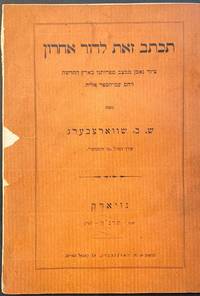
189842441Nuyork New York: Rozenberg 1898. paperback. 1st edition. Original orange printed wrappers 8vo 33 pages. 23 cm. In Hebrew. Title translates as: “Write This For The Last Generation: A Faithful Picture of the State of Our Literature in the New Land and the Attitude of the People of the Book To It.†<br> Extremely critical observations on the state of Hebrew literature and its readership in America by Schwarzberg 1865-1929 a Hebrew publisher and editor in Poland and the U.S. Singerman 5473. Goldman 1110. <br> "Schwartzberg published this pamphlet following the failure of Ner Hamerabi Goldman #908 a Hebrew periodical he edited." In it he “poured forth a bitter complaint against 'the people of the book' for their indifference to Hebrew and its literature . He draws a dark picture of the state of Hebrew culture and literature in this country" Waxman. Goldman notes that the work remains an important source on Ner Hamerabi. <br> “Schwarzberg who was born in Lipno Poland published Hebrew books at the close of the 19th century in Warsaw among them I. L. Peretz' Hebrew poems Ha-Ugav 1894. Arriving in the United States in 1897 he became editor of the Hebrew monthly Ner ha-Ma'aravi which appeared from 1895 to 1897. In 1898 he published a 33-page pamphlet Tikkatev Zot le-Dor Aharon "This Shall be Written for the Final Generation" a scathing attack on the attitude of the Jews toward the new Hebrew literature. <br> He fought Yiddishism and its standard-bearer Chaim Zhitlowsky. He also published a bibliography of the works of Senior Sachs†Eisig Silberschlag in EJ. Deinard 886; AJYB 1930-31 155; Not in Bibliography of the Hebrew Book 1470-1960. SUBJECTS: Hebrew literature Modern -- United States -- History and criticism. Litte´rature he´brai¨que moderne -- E´tats-Unis -- Histoire et critique. OCLC: 649820031. <br> OCLC: 649820031. OCLC lists 5 copies outside of Israel YIVO Am Jewish U Yale HUC YU. Spine rebacked touch of edgewear to orange wrapper which remains bright. About Very Good- Condition. Important. B AMR-67-38-DL-'b. Nuyork [New York]: Rozenberg unknown
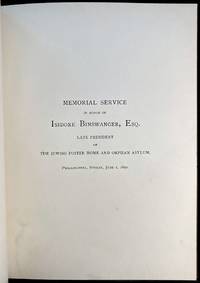
189042371New York: Press of Lehmaier & Bro 1890. paperback. 1st edition. Original publisher’s boards 8vo 39 unnumbered pages 1 photo plate portrait of Rabbi Binswanger. 22 cm. Prefatory poem signed in the print: F. B.i.e. Frances Binswanger. Singerman 4075. <br> Includes excerpts from obituaries that appeared in various periodicals. Isidore Binswanger 1820–1890 was a “U.S. businessman and communal leader. Binswanger was born in Wallerstein Bavaria. He immigrated to the United States in 1841 living first in Baltimore then in Philadelphia and finally in Richmond Virginia. In 1869 he became president of the Richmond Granite Company a position he held until shortly before his death. <br> Binswanger was chairman of the board and later president of the Hebrew Education Society in Philadelphia and president of the board of trustees of Maimonides College Hebrew Education Society. He was also active in various aid societies and helped organize relief measures in the early 1880s for Jewish immigrants from Russia. His three brothers Lewis Samuel and Harry S. settled in Richmond too where they also went into business and were active in local Jewish life†EJ.<br> SUBJECTS: Memorial service. Obituaries. Jews -- Pennsylvania -- Philadelphia -- Biography. Jewish businesspeople -- Service comme´moratif. Ne´crologies. Juifs -- Pennsylvanie -- Philadelphie -- Biographies. Gens d'affaires juifs -- Death and burial. <br> OCLC: 40128020. OCLC and Singerman together list 8 copies worldwide YU Wesleyan HUC HUC-LA Free Lib Phila Temple Penn AJHS only one at any Ivy League institution. <br> Jewish Institutional bookplate on front pastedown bookplate removed from rear pastedown edgewear to blank front endpaper no other marks inside some light wear to boards Very Good Condition B AMR-67-31-RBD!. New York: Press of Lehmaier & Bro unknown
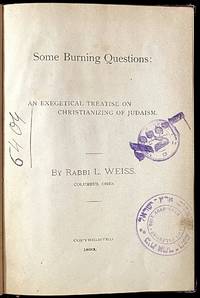
189342957Columbus Ohio: No Publisher The Author 1893. 1st edition. 8vo 87 pages 22 cm. Henry Marcus Leipziger's copy inscribed to him by the author. Singerman 4615. Errata slip tipped in. <br> Henry Marcus Leipziger 1854-1917 was an adult-education pioneer who "traveled to Europe and throughout the western United States examining educational systems. Upon his return to New York City Leipziger established the Hebrew Technical Institute. The Institute's objective was to educate Jewish boys in both intellectual and manual skills. Leipziger acted as director of the school from 1884 to 1891.<br> His papers are held in the NYPL archives. <br> From 1891-2896 he worked for the New York City Board of Education as Supervisor of Lecturers from 1890-1917. As such he organized an extremely popular series of free public lectures. Other positions he held were Assistant Superintendent of New York City Public Schools 1891-1896 Chairman of the Library Committee of Aguilar Free Library now part of the New York Public Library and vice president of the American Scenic and Historical Society.The National Institute of Social Science awarded Leipziger a gold medal for service to the community 1916" NYPL.<br> "Louis Weiss rabbi and scholar was born on February 17 1848 in Kotay Hungary. He received his rabbinical diploma from a school in Grosswardein Hungary. Weiss immigrated to the United States and in Chicago in 1876 he became a naturalized U.S. citizen. He served as rabbi for several congregations in the South and in Columbus Ohio 1894; Hamilton Ontario; Palestine Texas 1903-1905 and Braddock Pennsylvania 1905-1909" americanjewisharchives.org. <br> SUBJECTS: Judaism. <br> OCLC: 2082891. <br> Some wear to cover and spine some notes on second leaf and title page ex library with usual marks. Clean pages. Good condition. SBK AMR-68-4-B-'d. Columbus, Ohio: No Publisher [The Author] unknown
176542165Mets Metz Bi-defus Mosheh Mai 1765. Hardcover. 8vo; Hebrew Date 525. Period full leather with raised bands and interspersed gilt floral design and leather spine label 4to large 18 leaves i.e. 36 pages 152 leaves i.e. 304 pages 69 leaves i.e. 138 pages i.e. 478 pages total. 27 cm. In Hebrew and Judeo-German German in Hebrew script. Includes indexes. Vinograd Metz 10.<br> "In France Hebrew presses were established in Metz c. 1760 Strasbourg 1770 and later in Paris 1806" Jewish virtual library this being an early example of Hebrew printing in Metz. <br> SUBJECTS: Judaism -- Liturgy -- Texts. Repentance -- Prayers and devotions. Judai¨sme -- Liturgie -- Textes. <br> OCLC: 265896805. OCLC lists 6 copies worldwide British Library Loyola NYPL YIVO Stanford HUC. The British library holding lists an engraved frontis; however no other holdings nor auction records which we have seen ever list an engraved frontis so we assume that to either be a mistake or added later or a variant. <br> Some wear to leather boards as expected especially at corners but paper and binding remain clean and strong. About Very Good- Condition. A beautiful copy with attractive leather binding. BK5 Rab-66-33-'belccm. Mets [Metz] Bi-defus Mosheh Mai hardcover
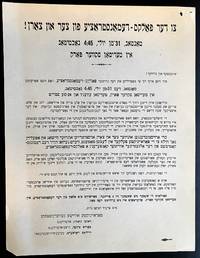
194443416No Place New York Fereynigte Yidishe Geverkshaftn United Hebrew Trades 1944. 1st edition broadside single-sided flyer 4to. In Yiddish. <br> <br> Translation: "ALL OUT TO THE PUBLIC DEMONSTRATION OF GRIEF AND RAGE!<br> Monday July 31st 4:45 PM<br> in Madison Square Park<br> <br> Sisters and brothers!<br> We invite you to participate in the great public demonstration that will take place<br> Monday July 31 4:45 p.m.<br> in Madison Square Park Madison Avenue and 24th Street<br> <br> Millions of Jews were murdered by the Nazis in all parts of Europe. Young and old women and men were driven into gas and death chambers and destroyed. In the current hour the greatest danger for those still alive in the Nazi countries.<br> The Hitlerian beast which conquered and humiliated countries and murdered millions of people is ready to strangle and murder the surviving remnants of the Jewish people. Hundreds of thousands of Jews from Hungary are now in danger of death the tens of thousands of Jews left alive in Poland in France in Belgium in the Czech Republic where they are under Hitler's rule.<br> <br> In order to express our grief and anger to cry out our grief and appeal for help to the United Nations at the last moment a public demonstration is called by the Rescue Committee of the General Jewish Conference.<br> <br> We cannot and must not remain silent. People must help save the survivors. Come express your feelings desires and demands! It is demanding that the United Nations do everything possible to stop the death march! It is demanded that all those who are guilty of the murders will be brought to justice!<br> The Nazi victims who are now struggling between death and life must know that we are with them.<br> At a conference of representatives of the trade union organizations called by the Jewish Labor Committee it was decided to actively participate in the great national demonstration. We must do everything we can so that the demonstration will be imposing and effective.<br> <br> Leave the store no later than 4 o'clock. Marched to the site of the demonstration in Madison Square Park. Overtime is not allowed on this day.<br> With Trade Union Regards<br> United Hebrew Trades<br> Reuven Guskin President<br> Maurice Tigel Vice-President<br> William Wolpert Executive Secretary"<br> <br> <br> The rally was covered by the Jewish Telegraphic Agency JTA the next day:<br> <br> "Tens of thousands of Jews and non-Jews crowded Madison Square Park today at an open-air mass-demonstration in behalf of the Jews of Hungary and other parts of Nazi Europe sponsored by the 64 affiliated agencies of the American Jewish Conference with the cooperation of the American Jewish Committee and other national organizations.<br> Speakers at the demonstration included Assistant U. S. Attorney General Norman M. Littell who is secretary of the National Committee Against Persecution of Jews; Dr. Stephen S.Wise president of the American Jewish Congress and co-chairman of the American Jewish Conference; Judge Joseph M. Proskauer president of the American Jewish Committee; Henry Monsky president of B'nai B'rith and co-chairman of the American Jewish Conference; Adolph Held president of the Jewish Labor Committee and many other noted Jewish and Christian leaders.<br> The huge mass-meeting in which Jews from all walks of life participated adopted a declaration stating that it is not yet too late 'to save thousands upon thousands' of Jews for the day of liberation. The meeting appealed in the first instance to President Roosevelt and the Government of the United States and through them to the United Nations and to the neutral states." <br> <br> The original JTA covers including a full list of the demands from the rally and other details can be viewed at www.jta.org/archive/huge-open-air-demonstration-in-new-york-demands-rescue-of-jews-from-europe<br> <br> Leading national Jewish organizations organized this July 31 1944 Madison Square Park mass rally to demand Allied action against the Nazi slaughter of European Jews. <br> New York had at the time the world's biggest Jewish population with a Jewish community of around 2 million. The city had hosted numerous similar rallies over the previous decade all focused on building opposition to Hitler and support for the struggling Jews of Europe. <br> <br> Beginning on March 4 1934 "One year after Hitler's ascension to power in Germany tens of thousands of New Yorkers gathered at Madison Square Garden to hear the words of Rabbi Stephen Wise. 'Despite the oceanic tragedy which has befallen us' Wise pronounced 'we Jews tonight joining in the chorus of civilization indict Hitlerism as humans as members of civilized society before the high court of human judgment.' <br> Wise's words resonated for audience members attending the rally that March night. Over the course of the evening they heard from a chorus of voices representing the American public self-identifying across different racial religious and ideological lines. Framed as a 'court' the speakers at the rally gathered to indict Hitler for his crimes against civilization an intentionally pointed term that would offend Nazi ideologues claiming to protect civilization through Aryan supremacy. This mock trial was part of a larger trend of American Jewish protest performances staged during the Third Reich that intended to garner support for the rescue of European Jews.<br> On March 27 the AJCongress American Jewish Congress successfully staged a rally titled Stop Hitler Now to an audience of twenty thousand Jews in Madison Square Garden. Outside of the Garden thirty-five thousand people stood protesting and ten thousand more marched through Brooklyn in solidarity. Simultaneous protests also occurred in major cities across the country. The United Press estimated that one million protesters participated in the nationwide demonstration that day. <br> In retaliation to the American uproar Hitler threatened a one-day boycott against German Jewish businesses to be resumed three days later if 'international protests' did not cease. Wise after speaking with Undersecretary William Phillips at the State Department agreed to a brief silence on the matter" Gonzalez Maya. Imagining the "Day of Reckoning": AmericanJewish Performance Activism during the Holocaust. Masters Thesis UMass-Amherst 2023. https://hdl.handle.net/20.500.14394/33069 <br> We could locate no recorded examples of this flyer anywhere using OCLC ArchiveGrid or a google search. <br> <br> Staple hole in upper right corner margin slight corner loss to lower left margin no text affected in either case light toning about Very Good Condition. Rare and displayable Holo2-163-30. No Place [New York], Fereynigte Yidishe Geverkshaftn [United Hebrew Trades] unknown
196617184Jerusalem: Israeli Law Review Association 1966. Hardcover. vg. 4 volumes in 1. Large 8vo. 674pp. Serial publication bound in blue cloth with silver lettering to spine. Minor age wear. Text in English. Very good condition. Israeli Law Review Association hardcover
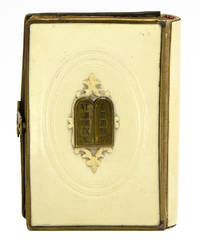
1857311893Vienna: Jos. Schlesinger Library 1857. Text in Hebrew and English. 875 3pp. Thick 12mo. Near contemporary binding of celluloid over cloth with bone and metal decorations and metal clasp. Light surface rubbing to covers text toned. Text in Hebrew and English. 875 3pp. Thick 12mo. Jos. Schlesinger Library unknown
170536556Amsterdam & Utrecht: H. Boom Joh. II van Waesberge Goethals Ger. Borstius Joh. Wolters Fr. Halma W. van de Water & W. Broedelet 1705. Third Edition . Hardcover - as published. Engraved title page in red & black plus four additional engraved title pages for each of the four parts into which the text is divided: 1 Genesis - Deuter.; 2 the Prophetae antiores; 3 the Prophetae posteriores; and 4 Hagiographa. Text is in Hebrew with the preliminaries and preface by van der Hooght & others as well as the printed marginalia in Latin. This is actually the third editon edited & revised by van der Hooght of the famous Hebrew Bible originally published by Joseph Athias in 1661. Thick octavo; a.e.g. Some light worming to end leaves pastedown & rear board; lacking rear front fly leaf & front rear fly leaf. Also first engraving detached. Spine is dry and rubbed along raised bands 5 panels with some light wear to edges & joints; head of spine is torn but without loss; rubbed label in 2nd panel present & readable; some worming at head of spine; small gouge on back board. A very nice internally clean tight copy of a scarce title. H. Boom, Joh. II van Waesberge, Goethals, Ger. Borstius, Joh. Wolters, Fr. Halma, W. van de Water, & W. Broedelet hardcover
179318880Leipzig: I. G. I. Breitkopf and Associates 1793. First edition. Hardcover. Good. Two volumes octavo 18.1 by 10.6 cm. xii 6 360 302; 352 404 pp. Title-pages and first-volume preface in Latin; half-titles for the Pentateuch Former Prophets Latter Prophets and Hagiographa. Main text in Hebrew. Contemporary green paper boards with title-labels edges stained red. Illustrated head pieces such as the heavens before Genesis and King David at prayer before Psalms. First volume covers slightly warped. Spines sunned. Library stamp on title and back pages. Minor worm tracing at first the 32 leaves vol. 2 resulting in the loss of a word or two along the line else a good or better ex-library copy.<br /> <br /> Complete Old Testament in Hebrew with traditional cantillation marks and scholarly footnotes indicating varying textual readings. Latin chapter headings summarize content. Preface in Latin by Johann Heinrich Meisner offers a history of the project. In the back is an appendix showing variant readings from the De Rossi Codex. There is also a chart giving the weekly readings from the Pentateuch and prophets. This Bible exemplifies early modern Protestant interest in being able to read the Old Testament in the original Hebrew. This was a product of their belief in sola scriptura that only the basis for religious authority was the Bible. <br /> <br /> Provenance: Stamps of the Franciscan monastery at Eggenfelden in Bavaria. References: Darlow & Moule 5163; Orme Bibl. Biblica pp. 238-9.<br /> <br /> Full title and imprint: Biblia Hebraica olim a B. Christiano Reineccio edita et ad optimorum codicum et editionum fidem recensita et expressa nunc denuo ad fidem recensionis Masoreticae cum variis lectionibus ex ingenti codicum copia a B. Kennicotto et I. B. de Rossi collatorum ediderunt D. Io. Christoph. Doederlein. et Joannes Henricus Meisner. Lipsiae: impensis I. G. I. Breitkopfii et Soc. MDCCXCIII. I. G. I. Breitkopf and Associates hardcover
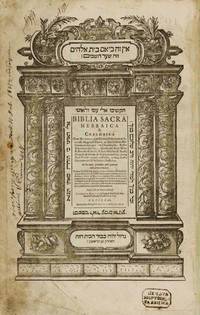
161948847Basel: Ludwig König 1619. First editions. Hardcover. Good. Seven parts in two volumes folio biblical texts and commentary in four parts continuously foliated; two supplemental sections each with separate foliation; Tiberias 1620 with separate pagination here bound after the second part - Vol. 1: 6 title and prelims 1-228 1 sect. title 234-441 1 blankff.; 6 sect. title and prelims 2 blank 114 2 blankpp. Vol. 2: 442-946; 8 Targum Yerushalmi; last leaf unfoliated; 67 Masora 1 blankff. Largely arranged in two columns of biblical texts in square font surrounded by commentaries in rabbinic Rashi font; text reads from right to left. This copy with collective Latin title surrounded by biblical quotations in Hebrew set within elaborate woodcut architectural borders. Hebrew sectional titles set within the same woodcut borders for the second and fourth parts with a plain letterpress half-title for the Five Megillot. The third sectional title for the Latter Prophets is lacking as are the Ashkenazi Haftarot readings not found in all copies. Apart from these lacks the Rabbinic Bible collates complete despite numerous errors in foliation throughout as per the detailed notes in Prijs Die Basler hebräischen Drucke. Opening word of each biblical book set in large one-third to one-half page cartouche vignettes with elaborate woodcut borders and surrounding letterpress Hebrew text. Main Latin title dated 1619 with the editor's Latin preface to the reader appearing at the verso. Jewish date chronogram for the second section Former Prophets dated 5378 1618/1619. Early twentieth-century black cloth boards worn at extremities gilt-lettered spine. Title moderately soiled re-inforced at gutter; neat old repairs to corners and fore-edge of title and next three leaves; old Russian stamp at bottom margin title manuscript entry in Russian along fore-edge dated 1837; intermittent mild to moderate marginal dampstains largely confined to corners and embrowning throughout both volumes somewhat more heavily in the first especially throughout Tiberias; top right corner of the opening leaf in vol. 2 repaired with loss of about 12 words surrounding title cartouche recto and some text in 9 lines of the commentary at the verso. Overall a good set with a notable chain of provenance. <br /> <br /> Sixth Rabbinic Bible in Hebrew: Mikra'ot Gedolot edited by Johann Buxtorf I 1565-1629 professor of Hebrew at the University of Basel and the foremost Christian Hebraist of his era with the assistance of the Jewish scholars Abraham Braunschweig who served as the principal corrector and Mordechai Gumplin of Posen. This was "a truly audacious undertaking for his time" Burnett From Christian Hebraism to Jewish Studies as no Christian scholar had yet attempted to edit the entire biblical corpus including the Aramaic versions Targumim and masoretic notes. Based mainly on the third Rabbinic Bible published by Daniel Bomberg at Venice in 1546-1548 the editor has carefully incorporated elements from two other Venetian editions. At the verso of the Latin title Buxtorf provides a detailed bibliographical excursus on the earlier Venetian editions and offers a tribute to Bomberg's industry by reprinting the colophon of the second Venetian Rabbinic Bible 1524-1525 at the conclusion of the masoretic appendix with text by the Hebrew grammarian and lexicographer Elijah Levita 1468 or 1469-1549 and a new introduction by Abraham Braunschweig. The design of the sectional titles and separate book title vignettes closely model those of the Venetian editions. "Buxtorf did not plan simply to reprint one of the existing Venice editions but rather to assemble the best features of them all into one work" and "to provide theologians with what he considered the most important tools for interpreting the Old Testament" Burnett. Buxtorf served in an official capacity as Basel's Hebrew censor charged with the oversight of all Jewish printing in the city and insuring that "no 'blasphemies' or slurs against Christians or Christianity appear in any book printed in Basel" Burnett. He carefully edited the Jewish commentaries in the Rabbinic Bible in accordance with this mandate "and removed many words and phrases which had escaped the attention of earlier censors" Burnett. <br /> <br /> The Rabbinic Bible contains the vocalized Masoretic text of the Hebrew Scriptures with accents and a vocalized Targum an Aramaic paraphrase of the biblical text: Onkelos for the Pentateuch; Jonathan b. Uzziel for the Prophets; and Targum Hagiographa for the Writings. The Hebrew and Aramaic versions are printed in square characters and presented in facing columns at the center of each page. The Jerusalem Targum of the Pentateuch appears as an appendix. In addition to the Aramaic paraphrases the Rabbinic Bible includes a massive scholarly apparatus of biblical commentaries by Rashi Ibn Ezra Baal ha-Turim Jacob b. Asher R. David Kimchi Radak R. Levi b. Gershon Ralbag Saadia Gaon and R. Isaiah along with the Masora a corpus of critical notes on the external form of the Biblical text compiled by Jewish scholars from late antiquity through the medieval era. As frequently occurs a copy of Buxtorf's work on the textual history of the Hebrew Bible Tiberias the 1620 first edition is bound-in. This work was made possible by the publication in 1538 of Elijah Levita's Masoret ha-Masoret a commentary on the Masora which Buxtorf translated into Latin for his own private use in 1593. "Buxtorf was concerned with the integrity of the consonantal text and the origin and integrity of the vowel points and accents of the Hebrew Bible from the very beginning of his scholarly career" and while he had earlier published a long excursus on the age of the vowel points and accents in his 1609 Thesaurus Grammaticus "Tiberias is Buxtorf's fullest and most impressive work on the history of the biblical text" Burnett. Intended as a reference work for Christian students and scholars interested in studying the Masora Buxtorf was also keen to refute the view advanced by Levita that the Hebrew vowel points were early medieval innovations. Our folio version of Tiberias was intended to accompany the Rabbinic Bible and has the same architectural borders at the title. König also published a quarto edition in the same year but only the folio version includes a critical commentary on the Masora in which Buxtorf proposes various corrections to the Masoretic notes. <br /> <br /> As noted at the title Buxtorf's faithful study and tireless labor studio fido et labore indefesso yielded notably long-lasting results: "The Basel rabbinical Bible became a standard tool for research among Christian scholars and would remain so. until the end of the nineteenth century" Burnett. A vast array of early modern scholars including Protestants like Johannes Drusius and John Selden as well as Roman Catholics like Robert Bellarmine and Andreas Masius owned a copy or two of the Rabbinic Bible. "Johannes Buxtorf's thoroughly censored "Christian" version of the Rabbinic Bible Basel 1618-19 only made it easier for Hebraists to own copies of their own" Burnett Christian Hebraism in the Reformation Era p.163.<br /> <br /> A note on the date of publication: "The actual printing began between the mid-August and mid-September of 1618. According to the colophon production ended on the 24 of Ab 5379 = August 4 1619 but since this date also appeared on the colophon of the Bomberg Biblia rabbinica edition of 1524-25 reprinted unchanged in the 1546-48 and 1568 editions it is suspect. Prijs suggested that the probable completion date was sometime during Ab of 5379 between July 12 and August 10 of 1619" Burnett. <br /> <br /> Provenance: from the library of acclaimed theologian and biblical scholar Brevard Childs with his entry at the free endpaper in the second volume. The earlier bookplate of judge Samuel Heller with his motto in Hebrew: Mi-kol melamdai hiskalti from all my teachers I have learned appears at the front paste-down. An old blue ink-stamp in Hebrew characters makes occasional appearances the text: Bet ha-Midrash ha-Gadol Minsk The Great Synagogue of Minsk. A Russian entry dated 1837 appears at the fore-margin of the main title along with an old ink stamp in Russian at the bottom margin the last word of which reads "Rabbina" References: Biblia Sacra: Burnett 7. Cowley 87. Darlow & Moule 5120 bound with the 1665 second edition of Tiberias cf. 5093. Davidson Otsar ha-shirah vol.1 p.406 no.8954. Prijs 219. Steinschneider 423 423b. VD17 23:675325G. S. Burnett Christian Hebraism in the Reformation Era Leiden: Brill 2012 p.163. Tiberias: Burnett 111. Prijs 222a. For detailed analyses of both works see: S. Burnett From Christian Hebraism to Jewish Studies Leiden: Brill 1996 pp.169-239 chaps. 6 & 7.<br /> <br /> Full Latin title: Biblia Sacra Hebraica & Chaldaica cum Masora quae critica Hebraeorum sacra est Magna & Parva ac selectissimis Hebraeorum interpretum commentariis Rabbi Salomonis Jarchi R. Abrahami Aben Esrae R. Davidis Kimchi R. Levi Gerson R. Saadie Gaon R. Jeschajae & Notis ex authore quem Baal Turim vocant collectis quibus textus grammaticè & historicè illustratur. In his nunc primum post quatuor editiones Venetas textus Chaldaicus qui Targum dicitur à deformitate punctationis & pravitate vocum innumeratum vindicatus; loca in Masora transposita deficientia pugnantia numeris depravata subsidio diversorum exemplarium & Concordantiarum Hebraicarum quantum fieri potuit reposita restituta & conciliata sunt ut in praefatione amplius declarabitur. Studio fido & labore indefesso Johannis BuxtofI linguae sanctae in Academia Basileensi Professoris Ord. Basileae: Sumptibus & typis Ludovici König 1619.<br /> <br /> Collation vol. 1 Rabbinic Bible: ital.a6 a-z8 A-E8 F4 G-Z8 Aa-Hh8 Ii9 Ii10 blank; 1 blank :3 1 blank A-N4 O5.<br /> <br /> Collation vol. 2 Rabbinic Bible: Kk-Rr8 Kk1 lacks Ss6 Tt10 Vv-Zz8 AA-PP8 QQ-TT6 VV9 VV10 blank XX-ZZ8 Aaa-Nnn8 Ooo3 Ooo4 blank PppTtt8 Vuu3 Vuu4 blank Xxx-Zzz8 AAaa-EEee8 8 A-G8 H6 I5 I6 blank. Ludwig König hardcover
161952679Basel: Ludwig König 1619. First edition in part. Hardcover. Good. Eight parts in three volumes folio biblical texts and commentary in four parts continuously foliated; three supplemental sections each with separate foliation; Tiberias 1655 with separate pagination here bound after the Haftarot - Vol. 1: 6 title and prelims 1-228 1 sect. title 234-441 1 blank ff. Vol. 2: 1 sect. title 442-705 3 blank 707 sect. title-837 1 blank ff. Vol. 3: 839 half-title-881 1 blank 883-946; 8 Targum Yerushalmi; last leaf unfoliated; 67 Masorah 1 blank; 1 title 2-36 Haftarot ff.; 8 title and prelims 108pp. Despite the gap in foliation between the first and second parts and numerous errors in foliation throughout the Rabbinic Bible collates complete with all blanks noted in Prijs Die Basler hebräischen Drucke and the Haftarot bound at the end. Largely arranged in two columns of biblical texts in square font surrounded by commentaries in rabbinic Rashi font; biblical texts read from right to left. This copy with collective Hebrew title surrounded by biblical quotations in Hebrew set within elaborate woodcut architectural borders; brief preface in Hebrew by Abraham Braunschweig at the verso. Hebrew sectional titles set within the same woodcut borders for the three other biblical sections and the Haftarot with a plain letterpress half-title for the Five Megillot. Opening word of each biblical book set in large one-third to one-half page cartouche vignettes with elaborate woodcut borders and surrounding letterpress Hebrew text. Main title Jewish date chronogram = 5378 1618-1619. Near-contemporary half calf over speckled boards worn and rubbed; spines with raised bands gilt morocco lettering pieces and old paper labels heavily faded. About two-thirds of the text embrowned ranging from minimal to moderately heavy; worm tracing in a 1- by 2-inch section at leaves 541-553 affecting text. A good complete set notably containing the Ashkenazi Haftarot readings not found in all copies.<br /> <br /> Sixth Rabbinic Bible in Hebrew: Mikra'ot Gedolot edited by Johann Buxtorf I 1565-1629 professor of Hebrew at the University of Basel and the foremost Christian Hebraist of his era with the assistance of the Jewish scholars Abraham Braunschweig who served as the principal corrector and Mordechai Gumplin of Posen. This was "a truly audacious undertaking for his time" Burnett as no Christian scholar had yet attempted to edit the entire biblical corpus including the Aramaic versions Targumim and masoretic notes. Based mainly on the third Rabbinic Bible published by Daniel Bomberg at Venice in 1546-1548 the editor has carefully incorporated elements from two other Venetian editions. At the verso of the Latin title Buxtorf provides a detailed bibliographical excursus on the earlier Venetian editions and offers a tribute to Bomberg's industry by reprinting the colophon of the second Venetian Rabbinic Bible 1524-1525 at the conclusion of the masoretic appendix with text by the Hebrew grammarian and lexicographer Elijah Levita 1468 or 1469-1549 and a new introduction by Abraham Braunschweig. The design of the sectional titles and separate book title vignettes closely model those of the Venetian editions. "Buxtorf did not plan simply to reprint one of the existing Venice editions but rather to assemble the best features of them all into one work" and "to provide theologians with what he considered the most important tools for interpreting the Old Testament" Burnett. Buxtorf served in an official capacity as Basel's Hebrew censor charged with the oversight of all Jewish printing in the city and insuring that "no 'blasphemies' or slurs against Christians or Christianity appear in any book printed in Basel" Burnett. He carefully edited the Jewish commentaries in the Rabbinic Bible in accordance with this mandate "and removed many words and phrases which had escaped the attention of earlier censors" Burnett. <br /> <br /> The Rabbinic Bible contains the vocalized Masoretic text of the Hebrew Scriptures with accents and a vocalized Targum an Aramaic paraphrase of the biblical text: Onkelos for the Pentateuch; Jonathan b. Uzziel for the Prophets; and Targum Hagiographa for the Writings. The Hebrew and Aramaic versions are printed in square characters and presented in facing columns at the center of each page. The Jerusalem Targum of the Pentateuch appears as an appendix. In addition to the Aramaic paraphrases the Rabbinic Bible includes a massive scholarly apparatus of biblical commentaries by Rashi Ibn Ezra Baal ha-Turim Jacob b. Asher R. David Kimchi Radak R. Levi b. Gershon Ralbag Saadia Gaon and R. Isaiah along with the Masora a corpus of critical notes on the external form of the Biblical text compiled by Jewish scholars from late antiquity through the medieval era. As frequently occurs a copy of Buxtorf's work on the textual history of the Hebrew Bible Tiberias the 1655 revised edition is bound-in. This work was made possible by the publication in 1538 of Elijah Levita's Masoret ha-Masoret a commentary on the Masora which Buxtorf translated into Latin for his own private use in 1593. While "Buxtorf was concerned with the integrity of the consonantal text and the origin and integrity of the vowel points and accents of the Hebrew Bible from the very beginning of his scholarly career." While he had earlier published a long excursus on the age of the vowel points and accents in his 1609 Thesaurus Grammaticus "Tiberias is Buxtorf's fullest and most impressive work on the history of the biblical text" Burnett. Intended as a reference work for Christian students and scholars interested in studying the Masora Buxtorf was also keen to refute the view advanced by Levita that the Hebrew vowel points were early medieval innovations. Our folio version of Tiberias was intended to accompany the Rabbinic Bible and has the same architectural borders at the title. König also published a quarto edition in the same year but only the folio version includes a critical commentary on the Masora in which Buxtorf proposes various corrections to the Masoretic notes. <br /> <br /> As noted at the title Buxtorf's faithful study and tireless labor studio fido et labore indefesso yielded notably long-lasting results: "The Basel rabbinical Bible became a standard tool for research among Christian scholars and would remain so. until the end of the nineteenth century" Burnett. A vast array of early modern scholars including Protestants like Johannes Drusius and John Selden as well as Roman Catholics like Robert Bellarmine and Andreas Masius owned a copy or two of the Rabbinic Bible. "Johannes Buxtorf's thoroughly censored "Christian" version of the Rabbinic Bible Basel 1618-19 only made it easier for Hebraists to own copies of their own" Burnett Christian Hebraism in the Reformation Era p.163.<br /> <br /> A note on the date of publication: "The actual printing began between the mid-August and mid-September of 1618. According to the colophon production ended on the 24 of Ab 379 = August 4 1619 but since this date also appeared on the colophon of the Bomberg Biblia rabbinica edition of 1524-25 reprinted unchanged in the 1546-48 and 1568 editions it is suspect. Prijs suggested that the probable completion date was sometime during Ab of 379 between July 12 and August 10 of 1619" Burnett. References: Biblia Sacra: Burnett 7. Cowley 87. Darlow & Moule 5120 like our copy bound with the 1665 second edition of Tiberias cf. 5093. Davidson Otsar ha-shirah vol.1 p.406 no.8954. Prijs 219. Steinschneider 423 423b. VD17 23:675325G. S. Burnett Christian Hebraism in the Reformation Era Leiden: Brill 2012 p.163. Tiberias: Burnett 114. Prijs 272a. For detailed analyses of both works see: S. Burnett From Christian Hebraism to Jewish Studies Leiden: Brill 1996 pp.169-239 chaps. 6 & 7. Ludwig König hardcover
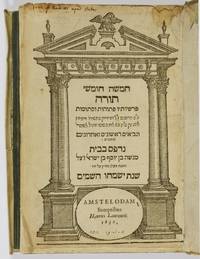
163155459Amsterdam: printed by Menasseh ben Israel for Henricus Laurentius 1631. First edition. Hardcover. Very good-. Octavo 16.8 by 11.4 cm. Collation: aleph-lamed-zayin8 = 296 leaves. 612 i.e. 592 pp: p. 464 erroneously numbered 484 465 as 485 and so on throughout. Two column text in unvocalized Hebrew; every fifth verse numbered in the margin. Title within architectural border; half titles with letterpress ornamentation for the Former and Latter Prophets. Contemporary vellumwith exposed thongs edges stained blue; yapp fore-edges; front joint cracked but holding strong. Intermittent light toning to text outmost leaves a bit more darkened; very occasional small stains. Title-page slighltly trimmed 4 mm at bottom edge; expert marginal repairs at bottom corners of 2 leaves; 1 leaf re-margined at fore-edge with no loss of text else a very good copy with crisp clean text.<br /> <br /> First Hebrew Bible published in Amsterdam printed by the rabbi diplomat publisher and religious thinker Menasseh ben Israel 1604-1657 one of the most distinguished members of the Portuguese Jewish community of Amsterdam and the first Jewish printer in the Northern Netherlands. The Amsterdam printer and publisher Hendrick Laurensz Lauretius provided the financing for this edition along with two other Bible editions and two editions of the Hebrew Psalms printed by Menasseh between 1631 and 1646. "These publications were not only made for the local market but mainly for international trade. Thanks to this financial help Menasseh was able to organize his printing office in a more professional way" Fuks hiring a Jewish compositor Judah Leb ben Mordecai Gimple from Posen and a gentile compositor Bartholomeus Laurensz. <br /> <br /> The printing activity of Menasseh was especially important in the steadily growing productions of the Hebrew press in the Northern Netherlands. Fulfilling the needs of the Sephardic community for Jewish ritual texts eliminated the need for expensive imports from Venice and Poland. Menasseh undersood that the relatively cheap paper and tools available in Amsterdam made it possible to compete in quality and prices with the Hebrew presses of Poland Italy and Basel. "Gentile publishers and booksellers in Amsterdam such as Jansonius and Laurentius were quick to see the opportunity of the opening Eastern European market and financed several of Menasseh's publications" Fuks. Menasseh was the first to introduce in the Netherlands waybertaytsch types for Yiddish publications along with illustrated Hebrew books. He was also the first Jewish printer to adopt the Dutch pocket-book format made famous by the Elzeviers.<br /> <br /> Notes on publication date and issue: The title is dated 1630 in Arabic numerals; the colophon notes the date of completion in Hebrew characters as 5 Adar 5391 = 7 February 1631 along with the printer's apology for being unable to provide the index of pericopes promised on the title-page due to lack of printing material. Darlow and Moule describe this issue as Variant A with a Latin imprint appearing in the cartouche beneath the Hebrew title.<br /> <br /> Provenance and annotations: early entry in brown ink at front paste-down with short Greek inscription Theos. dated 1700; old Latin inscription in black ink at top margin title in reference to Hebrew roots; date of 1812 beside Yiddish entry penned in black ink within imprint cartouche at title; old entry in German penned in black ink at verso title beneath which is an oval cartouche in imitation of the one at the title in which an owner has penned in black ink the Hebrew imprint information regarding Hendrick Laurensz as it would appear in the Varient B issue; old library shelf marks at rear paste-down; recent owner entry in blue ink in Hebrew at front paste-down. References: Darlow and Moule 5123a; Fuks/Fuks-Mansfeld no. 152; pp. 105; 111f.; Steinschneider no. 453; Vinograd Amsterdam 22.<br /> <br /> Full title and imprint: חמשה חומשי תורה פרשיותיו פתוחות וסתומות ×¢"פ ×”×¨×ž×‘× ×–"ל ומדוייק בחסירו' ויתרות להעתק ס"ת ×¢× ×œ×•×— בסופו מועיל לסופרי' ×•× ×‘×™××™× ×¨××©×•× ×™× ×•××—×¨×•× ×™× ×•×›×ª×•×‘×™×: × ×“×¤×¡ בבית ×ž× ×©×” בן ישר×ל ז׳׳צל והוגה בעיון × ×ž×¨×¥ על ידו ×©× ×ª ישמחו השמי×<br /> Amstelodami sumptibus Henrici Laurentii 1630. printed by Menasseh ben Israel for Henricus Laurentius hardcover
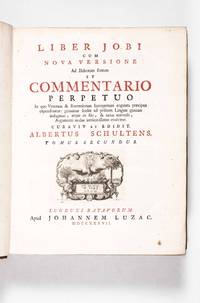
173749261Leiden: Jean Luzac 1737. First edition. Two volumes large quarto. 52 544; 2 545-1232 63 indices 1 corrigendapp. Text in two columns with Hebrew text and facing Latin translation interspersed with commentary. Titles in red and black with engraved vignettes. Contemporary speckled calf; gilt-tooled spine with raised bands and morocco lettering pieces; gilt dentelles; edges daubed in red and green. Light scuffing to boards and fading to spines. A very good set with crisp clean text throughout.<br /> <br /> First edition of this comprehensive commentary to the biblical Book of Job by the Dutch scholar of Semitic languages Albert Schultens 1686-1750 who maintained "that the true nature of the Hebrew language and the meaning of many of its words and idioms are to be found chiefly in the Arabic" Orme. Fifty-five pages of the indices constitute a brief lexicon and provide Latin as well as Arabic equivalents for more than 1000 Hebrew words. Schultens studied theology and eastern languages at Groningen where he received his degree in theology in 1709. After a brief career as a preacher in Wassenaar he was nominated professor of Hebrew and Jewish antiquities at Franeker in 1713. In 1729 he decamped for Leiden were he was first appointed reader in eastern languages and finally full professor in 1732.<br /> <br /> At this time a chief concern of Calvinist theologians was to liberate Old Testament exegesis from the Jewish Rabbinic as well as Catholic traditions. Schultens' influential and controversial solution was revealed as early as 1706 in his first public thesis Disputatio theologico philologica de utilitate linguae Arabicae in interpretanda S. Scriptura A Theologico-Philosophical Dissertation on the Utility of the Arabic Language for the Interpretation of the Holy Scriptures "a forceful attack" Brugman & Schröder on the Protestant sola scriptura methodology of Biblical exegesis. "With the help of Jacobus Golius' Arabic dictionary he perused with zeal and fervour the Old Testament and wrote prolifically. The lexical superiority of Arabic had led him to a reconsideration of the position of Hebrew: at first he had called Arabic 'the most splendid daughter of mother Hebrew' but in his oration of 1729 he proclaimed Hebrew and Arabic cognate twin sisters. This shocked conservative theologians as an outright profanation of God's Word" Brugman & Schröder. "In 1737 he applied his theories in his bilingual edition of the book of the prophet Job whom he regarded as an Arab. The Hebrew text and the Latin translation are all but totally submerged by the extensive commentary in which Schultens draws abundantly on Arabic texts such as the Hamasa an anthology of early Arabic poetry by the ninth-century poet Abu Tammam" Vrolijk & van Leeuwen. Schultens was not without his critics and by 1824 William Orme notes a turning of the tide: "Different opinions are entertained of the correctness of his views and also of his success in applying them; but it is now generally admitted that he carries his notions of the advantage of Arabic learning to the interpretation of the Scriptures too far." <br /> <br /> Jean Luzac 1728-1777 was a member of a well-known Huguenot family of printers; he published many works for the University of Leiden including three Hebrew books of Albert Schultens. Isaac van der Mijn is noted as the printer at the colophon of the second volume.<br /> <br /> Provenance: printed label of the Bibliotheca Seminarii Warmondani at the front endleaf of the first volume. Full title: Liber Jobi cum nova versione ad Hebraeum fontem et commentario perpetuo in quo Veterum et Recentiorum Interpretum cogitata præcipua expenduntur: genuinus sensus ad priscum Linguae genium indagatur atque ex filo et nexu universo Argumenti nodus intricatissimus evolvitur. Curavit et editit. Albertus Schultens. Tomus Primus. -Tomus Secundus<br /> <br /> References: J. Brugman & F. Schröder Arabic Studies in the Netherlands Leiden: E.J. Brill 1979 p.26f. Fuks/Fuks-Mansfeld 78. Orme Bibl. Biblica p. 390. A. Vrolijk & R. van Leeuwen Arabic Studies in the Netherlands a Short History in Portraits 1580-1950 Leiden: E.J. Brill 2014 pp. 73-79. Jean Luzac unknown
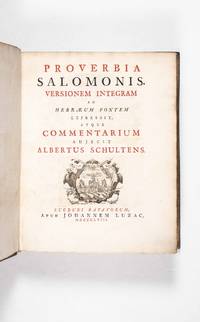
174849255Leiden: Jean Luzac 1748. First edition. Hardcover. Very Good. Quarto. 8 cviii 522 60 indices & corrigendapp. Text in two columns with Hebrew text and facing Latin translation interspersed with commentary. Title in red and black with engraved vignette; woodcut ornaments. Contemporary Dutch paneled vellum with blind-stamped vignettes and ruled borders; manuscript title at spine. Covers lightly soiled. Occasional touches of soiling and some leaves with mild embrowning. A very good copy generally crisp and clean.<br /> <br /> First edition of this comprehensive commentary to the biblical Book of Proverbs by the Dutch semitic language scholar Albert Schultens 1686-1750 who maintained "that the true nature of the Hebrew language and the meaning of many of its words and idioms are to be found chiefly in the Arabic" Orme. Forty-one pages of the indices constitute a brief lexicon and provide Latin as well as Arabic equivalents for more than 1000 Hebrew words. Schultens studied theology and eastern languages at Groningen where he received his degree in theology in 1709. After a brief career as a preacher in Wassenaar he was nominated professor of Hebrew and Jewish antiquities at Franeker in 1713. In 1729 he decamped for Leiden were he was first appointed reader in eastern languages and finally full professor in 1732.<br /> <br /> At this time a chief concern of Calvinist theologians was to liberate Old Testament exegesis from Jewish Rabbinic as well as Catholic traditions. Schultens' influential and controversial solution was revealed as early as 1706 in his first public thesis Disputatio theologico philologica de utilitate linguae Arabicae in interpretanda S. Scriptura A Theologico-Philosophical Dissertation on the Utility of the Arabic Language for the Interpretation of the Holy Scriptures "a forceful attack" Brugman & Schröder on the Protestant sola scriptura methodology of Biblical exegesis. "With the help of Jacobus Golius' Arabic dictionary he perused with zeal and fervour the Old Testament and wrote prolifically. The lexical superiority of Arabic had led him to a reconsideration of the position of Hebrew: at first he had called Arabic 'the most splendid daughter of mother Hebrew' but in his oration of 1729 he proclaimed Hebrew and Arabic cognate twin sisters. This shocked conservative theologians as an outright profanation of God's Word" Brugman & Schröder. <br /> <br /> Like his earlier commentary on the Biblical Book of Job one here finds that the "Hebrew text and the Latin translation are all but totally submerged by the extensive commentary in which Schultens draws abundantly on Arabic texts such as the Hamasa an anthology of early Arabic poetry by the ninth-century poet Abu Tammam" Vrolijk & van Leeuwen. Schultens was not without his critics and by 1824 William Orme notes a turning of the tide: "Different opinions are entertained of the correctness of his views and also of his success in applying them; but it is now generally admitted that he carries his notions of the advantage of Arabic learning to the interpretation of the Scriptures too far." <br /> <br /> Jean Luzac 1728-1777 was a member of a well-known Huguenot family of printers; he published many works for the University of Leiden including three Hebrew books of Albert Schultens. Isaac van der Mijn is noted as the printer at the colophon of the second volume.<br /> <br /> Provenance: bookplate of the Crozer Theological Seminary - Bucknell Library; bookseller's ticket of Librairie Ancienne et Moderne de Frederik Muller Amsterdam at the front paste-down. References: J. Brugman & F. Schröder Arabic Studies in the Netherlands Leiden: E.J. Brill 1979 p.26f. Fuks/Fuks-Mansfeld 78. Orme Bibl. Biblica p. 390. A. Vrolijk & R. van Leeuwen Arabic Studies in the Netherlands a Short History in Portraits 1580-1950 Leiden: E.J. Brill 2014 pp. 73-79. Jean Luzac hardcover
183952150Philadelphia: Bagster & Marshall 1839. First American edition. Hardcover. Good . Octavo. 6 10 778pp. Pointed Hebrew text in two columns the New Testament with only vocal marks. Continuous pagination in Arabic numerals; but separate Hebrew pagination for the Old and New Testaments. Contemporary three-quarter calf over pebbled cloth boards; spine with raised bands ruled and lettered in gilt. Decorative endleaves. Covers rubbed with wear at spine caps and corners. Library pressure stamp at title bookplate and pocket at paste-downs. A good ex-library copy with very clean fresh text throughout.<br /> <br /> First American edition of this Hebrew Bible earlier published by Samuel Bagster at London in 1835; it contains the first printing of the New Testament in Hebrew translation to appear in the United States. That translation was prepared by the philologist William Greenfield 1799-1831 the editorial superintendent of the British and Foreign Bible Society and first published by Samuel Bagster at London in 1831 D&M no. 5186. In preparing his revised Hebrew version Greenfield was allowed to utilise the London Jews' Society Hebrew New Testament published at London between 1813 and 1817 D&M no. 5170. Among the earliest publications of the society founded in 1809 this version was itself based upon Elias Hutter's Hebrew translation of the New Testament published at Nuremberg in 1599 D&M no. 5111. Prepared by a group of scholars under the supervision of Thomas Fry and William Bengo Collyer this London Jews’ Society edition employed only biblical words and translated Old Testament quotations from the Greek not citing them directly from the Hebrew Scriptures.<br /> <br /> The editor of the New Testament version in the present work appears to have had a notable gift for languages. William Greenfield began his Hebrew studies as a young man while apprenticed to a bookbinder taking lessons from one of his co-workers a Jew with some learning who had been described as "a reader of the law in the synagogue" ODNB. Greenfield subsequently left the business in 1824 in order to devote himself to languages and biblical criticism. His defence of the Serampore Mahratta version of the New Testament in response to an 1829 article in the Asiatic Journal brought him to the attention of the British and Foreign Bible Society who then hired him to superintend their editiorial department. "During his nineteen months in the society's service Greenfield wrote on twelve European five Asiatic one African and three American languages and acquired considerable knowledge of Peruvian African-English Chippeway and Berber" ODNB. His revision of the Hebrew New Testament earlier published by the London Jews' Society was among the last works he undertook for the British and Foreign Bible Society along with the revision of the Modern Greek Psalter as it went through the press.<br /> <br /> Provenance: Bookplate and other markings including withdrawal stamp of the Library of the Garrett Theological Seminary Evanston Illinois. Full title in Hebrew: ספר הקדש ×•×”×•× ×ª×•×¨×” × ×‘×™××™× ×•×›×ª×•×‘×™× ×’× ×›×ª×‘×™ ברית החדשה × ×¢×ª×§ מלשון ×™×•× ×™×ª ×ל לשון עברית <br /> Philadelphiae: Sumptibus Bagster et Marshall in via vulgo dicta Chestnut Street ad Repositorium Bibliorum Sacrorum etc. quae in linguis antiquis et hodiernis edita sunt. Anno erae Judaicae I rev. C; rev. C DXCIX.<br /> <br /> References: Goldman Hebrew Printing in America no. 6: "This was the first New Testament published in Hebrew in America." ODNB: "Greenfield William" Gordon Goodwin revised by H. C. G. Matthew. J. R. Marcus "Jewish Americana a Supplement to A. S. W. Rosenbach An American Jewish Bibliography" in: Monographs of the American Jewish Archives 1954 no. 1 no. 164. Cf. Darlow & Moule nos. 5111; 5170; 5186. Bagster & Marshall hardcover
177653321Oxford: The Clarendon Press 1776. First edition. Hardcover. Near fine. Two volumes folio published in 1776 and 1780. xxiii title and subscribers' list 1 blank VIII preface 684 1 catalogue of manuscripts 1 blank; 4 title and subscribers' list 732 129 1 blank 6 indicespp. Expertly rebound in modern quarter vellum over marbled boards spines titled in gilt. Titles darkened and dusty; very occasional light foxing or oxidation spots; dampstain at bottom quarter of the first twenty and final four leaves in the first volume else a nearly fine wide-margined set crisp and uncut.<br /> <br /> First edition and the "earliest attempt to provide a critical edition of the Hebrew Scriptures on a large scale†D&M and a notable early example of a large-scale scholarly project which attracted international financial and scholarly support. The biblical scholar Benjamin Kennicott 1718-1783 was educated at Oxford and "instructed in Hebrew by Professor Thomas Hunt and the greater part of his life was spent in the collation of Hebrew manuscripts with the object of producing a definitive original text of the Old Testament. Robert Lowth always his major patron first inspired him with a desire to test the accuracy of the Hebrew text of the Old Testament. With his formidable knowledge of Syriac early Latin the Septuagint and the Samaritan Pentateuch it was recognized that he was very well qualified for the task. His critical examination of manuscripts initially in the British Museum and the libraries of Oxford and Cambridge began in 1751 and when Thomas Secker then bishop of Oxford and also a member of Exeter College urged him in March 1758 to undertake their collation he agreed to the request. In return Secker when archbishop of Canterbury gave Kennicott his unstinting support and friendship when for a time he nurtured a project for producing a revised Authorized Version of the Bible. Meanwhile in 1753 Kennicott issued The State of the Printed Hebrew Text of the Old Testament Considered: a Dissertation and in 1759 he brought out a second dissertation on the same subject. He identified his object thus: to compare Scripture with itself to explain a difficult phrase or passage by a clear one that bears some relation to it to consider the natural force of the Original Words the tendency of the Context and the Design of the Writer; to compare the most ancient editions of the Original with one another and with the best copies of the most celebrated versions vol.1 p.12. These volumes were translated into Latin by W. A. Teller and published at Leipzig the first in 1756 the second with additions in 1765.<br /> <br /> Kennicott's scholarly endeavours attracted support in Britain and beyond. In England subscriptions amounted to £9119 7s. 6d.; in France the duc de Nivernois a former French ambassador to the court of St James patronized him and helped him to gain access to Parisian manuscript collections in 1767; the king of Denmark offered him the use of six ancient manuscripts; four quarto volumes of variant readings were sent to him on the king of Sardinia's orders; and the stadholder of the Netherlands made an annual donation of 30 guineas. His first report On the Collation of the Hebrew Manuscripts of the Old Testament was forwarded to the subscribers in December 1760 and a similar statement appeared each year until 1769. This annual summary afforded him an opportunity to defend the accuracy of his own collations the Hebraic scholarship of the staff assisting him and to print lists of subscribers. A copy of the entire work was personally presented by Kennicott to George III. Lowth called the 1776 variorum Old Testament 'a work the greatest and most important that has been undertaken and accomplished since the Revolution of Letters' B. Hepworth Robert Lowth p. 145" Nigel Aston ODNB. An early judgement on this seminal edition is provided by William Orme in his 1824 Bibliotheca Biblica: “This is beyond all comparison the most splendid edition of the Hebrew Scriptures ever published. It was patronized by most of the crowned heads of Europe. It occupied its learned editor in preparation or actual labour more than thirty years. More than six hundred MSS. and editions were collated for it in all parts of Europe. The text is that of Vander Hooght without the points. The Samaritan Pentateuch where it differs from the Hebrew text is printed in parallel columns in the Hebrew character. The various readings are almost innumerable and occupy in general the largest half of every page. The Dissertatio Generalis annexed to the second volume is invaluable for the information which it contains respecting the state of the original text and the sound principles of criticism which it exhibits." The final leaf lists 312 manuscripts and some printed editions which provided the various readings noted throughout the apparatus. The concluding Dissertatio Generalis was republished separately at Braunschweig in 1783 by professor Paul Jakob Bruns who assisted Kennicott in his collations.<br /> <br /> Provenance: Engraved bookplate of the Parochial Library of St Phillips Birmingham in the County of Warwick at front endleaf in both volumes. References: N. Aston "Benjamin Kennicott" in: ODNB. Darlow & Moule 5160. ESTC T147508. Orme Bibl. Biblica 238. For a notable recent discussion see J. Turner Philology: The Forgotten Origins of the Modern Humanities Princeton Univ. Press 2014 77f. An earlier assessment of the critical endeavors of Kennicott and De Rossi appears in N. P. Wiseman's 1836 Twelve Lectures on the Connexion between Science and Revealed Religion pp.368-371 ed. Dublin 1866. The Clarendon Press hardcover