92 résultats
19652221599<p>First edition. Small thin octavo. Preface by Felix B. Visillac. Original stiff tan wrappers stamped in black. Text browned due to paper quality. Very good. 54 pages.</p><p>Signed and inscribed by author to poet Alicia Ghiragossian on title page.</p> Direccion Lafuente paperback books
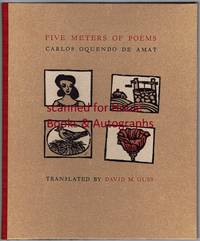
1986229746<p>First edition thus. 4to. Woodcuts by Antonio Frasconi. Original red cloth with large tan pictorial board for a front cover. Enclosed in the original publisher's red cloth drop box with tan board for a front cover. Fine fresh copy. No signatures or bookplates. Number 11 of 40 numbered copies on handmade paper signed by David M. Guss and Antonio Frasconi on the colophon page. Original publisher's prospectus laid in loose. Hardcover. Fine/No Jacket.</p> Turkey Press hardcover books
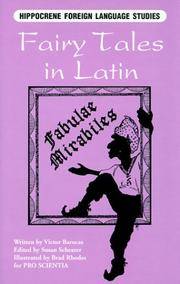
200190018NY:: Hippocrene Books. Fine in Fine dust jacket. 2001. Hardcover. 0781807875 . Text is in Latin. Edited by Susan Schearer. Second printing. Fine in a fine dust jacket. . Hippocrene Books, hardcover books
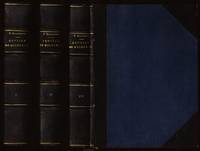
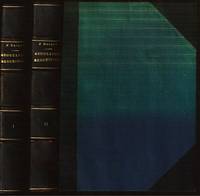
1932CA0246Description:<br /><br />3 volumes. xxix-574 pages with 4 folding maps; 466 pages with folding coats of arms 6 folding native illustrations and map; 469 pages with 2 coats of arms one folding and 6 folding native illustrations. Royal octavo 9 1/2" x 7" bound in three quarter blue leather with raised spine bands and gilt lettering to spine. Introduction by Rafael Lopez. From the library of George Foster. Publicaciones del Archivo General de la Nacion volume XVII XVIII and XIX.<br /><br />There are only meager biographical data about Pablo de la PurÃsima Concepción Beaumont whose work is a major source on Michoacán. Despite its title "Chronicle of the Holy Apostles St Peter and St Paul of Michoacán" Beaumont's work in fact spans a much greater area including much of western Mexico northward to New Mexico and tending toward a general history. It provides details to 1565. Beaumont divided his total work into tow major parts the firs or Aparato intended to be introductory to the second or the Crónica proper. the first seems complete but the second was never finished. The Aparato takes up fully a third of the extant Beaumont work although nominally introductory. It deals with the discovery of America and the conquest of Mexico to the year 1521. It was twice published before appearance of the total work. Far more valuable is the Crónica. It consists of two books and one chapter of book 3. Beaumont drew on a wide variety of sources. He tell us us that he gathered a large quantity of manuscripts from various Franciscan archives as well as listing 30 standard writers in printed sources. He gives full copies of some of his documents of which several have since disappeared. He speaks of obtaining a native painting possibly from which his illustrations came. These paintings show incidents of the first visits of Spaniards to Michoacán there reception by Tarascans labors of the Franciscans coats of arms of principal cities of Michoacán. It is usually through that Beaumont composed his work around 1777. That is the last date in the later copies of the original manuscript. Unfortunately his original manuscript is lost. It was copied in Mexico City around 1792 to for volumes 7-11 of a 32 volume Collection of Memories on New Spain ordered by Viceroy Conde de Revilla Gigedo and compiled by Manuel de la Vega. Three partially complete sets of these Vega Memorias are known; from one or another of them come other recopied manuscript copies as well as the printed versions. Editions of the work have a somewhat unfortunate publishing history. In 1826 Bustamante published an incomplete and useless edition of the Aparato attributing it to Vega who had owned the manuscript Bustamante used. In 1873-74 a five volume edition of both Aparato and Crónica appeared in Mexico; it lacks the Indian drawings and was based on a secondary manuscript copy made b y J F Ramirez that then belonged to Alfredo Chavero. A three volume version was published by the National Archives of Mexico in 1932 based on their copy of the 1792 collection of Memorias; it contains the Indian drawings and an introduction by Rafael Lopez. The text seems slightly corrupt but it may be near the original as Beaumont said his Spanish was defective owing to his Parisian rearing.<br /><br /> George McClelland Foster Jr born in Sioux Falls South Dakota on October 9 1913 died on May 18 2006 at his home in the hills above the campus of the University of California Berkeley where he served as a professor from 1953 to his retirement in 1979 when he became professor emeritus. His contributions to anthropological theory and practice still challenge us; in more than 300 publications his writings encompass a wide diversity of topics including acculturation long-term fieldwork peasant economies pottery making public health social structure symbolic systems technological change theories of illness and wellness humoral medicine in Latin America and worldview. The quantity quality and long-term value of his scholarly work led to his election to the National Academy of Sciences in 1976. Virtually all of his major publications have been reprinted and/or translated. Provenance from the executor of Foster's library laid in.<br /><br />Condition:<br /><br />Some underlining in pencil through out by Foster. Foster's date of acquire on front paste down early owner's name on front end paper. some light soiling and rubbing to extremities else a very good set. Talleres Graficos de la Nacion hardcover books
1604WRCLIT65625London: Excudebat Valentinus Simsius 1604. 48144149-7364 blank14pp. Blank A1 present Y1-2 not present but pagination continuous errors in numbering in signature 2S final blank not present. Small octavo. Contemporary calf ruled in gilt with gilt devices on each panel and initials 'I.O.' and "T.V.' on front and rear boards rebacked with remnants of original gilt backstrip and label laid down. Small ink spot on A6 occasional marginal discolorations faint tidemark in upper outer quadrant 2b and shallower scattered discolorations along some fore-margins toward end clean marginal tear without loss in 2T3 short repairs to marginal tears in A1 early ink name on A1 and ink identification of "Brydges" on title; title possibly supplied from a slightly smaller copy; yet a good sound copy. First edition of this Latin version of the New Testament translated/edited by John Bridges Bishop of Oxford 1535/6 - 1618. After a career of publications on Church government engagement in pamphlet exchanges and similar matters Bridges began work on this rendering of the text into Latin hexameters in 1599. In this copy leaves L8 M1 and T7 are in their canceled states. The sole edition reported in ESTC and an uncommon edition as well: ESTC locates only nine copies in North America. ESTC S106573. STC 3735. Excudebat Valentinus Simsius hardcover books
15192682Lyon: Jacques I Mareschal for Simon Vincent 1519. 8vo 180 x 126 mm. 30 500 54 pp. with pagination errors. Title and first table printed in red and black text in two columns with printed marginalia indices and summary in 3 columns. Colophon on fol. RR4v. Publisher's woodcut device Baudrier no. 2 on title and final verso full-page woodcut showing the six days of Creation within ornamental border historiated woodcut initials throughout; red paragraph marks to opening page and red highlighting to the facing woodcut. Mainly faint marginal dampstain in upper margins light discoloration to outer margins. Contemporary Flemish blind-tooled calf over wooden boards sides with leafy roll-tool border enclosing central panel with intersecting triple fillets forming a saltire design the compartments filled with a repeated foliate tool arranged symmetrically one of two fore-edge clasps two catches; many deckle edges preserved worn a few small chips to leather pastedown endpapers renewed. Provenance: early ownership inscriptions on title: Mrr Cornelius Adamus ter Borch; and Siba Lÿken; contemporary marginal notes and some text markings crosses in margins and underlinings in first few books Genesis-Deuteronomy; abundant 17th and/or 18th-century philological annotations in Genesis and Exodus and in the indices including full page of notes on blank page 2E5v.A complete portable Bible printed in very small types containing an ample scholarly apparatus and finding aids for the use of theology students and scholars; this copy with contemporary annotations and in a contemporary blind-tooled calf binding probably Flemish. This compact glossed Bible densely and economically printed with no break between the Old and New Testaments is enlivened by hundreds of historiated woodcut initials from woodcut alphabets designed by Guillaume Leroy who also designed the six-part full-page woodcut of the Creation. Mareschal's useful "pocket" Bibles were bestsellers this being the fourth of six octavo editions from his press. They were among the first Bible editions to include a rhyming mnemonic Biblical summary by the minorite friar Franciscus Gothi in which each four-line verse summarizes a Biblical chapter. Occupying here the final two quires and called for in the colophon it is not recorded by Baudrier or Gültlingen. Possibly buyers had the choice of including it or not in their copies. Otherwise the text of Mareschal's octavo Bibles follows that of the Bible printed in Basel in 1509 by Johann Petri and Froben using the text edited by the Dominican Alberto Castellano and supplying for the first time marginal notes citing canon law. The apparatus includes four tables and a glossary of Hebrew names. As in the Petri editions a six-line commendatory poem by Matthias Sambucellus is printed on the title here with the first word of the last line incorrectly given as "Omne" instead of "Omine."The publisher Simon Vincent belonged to Lyon's powerful booksellers' guild the Compagnie des Libraires whose members helped Mareschal during his early years impressed by his skill conscientiousness and sobriety "a rare trait among printers of this period" notes Baudrier qualities which contrasted markedly with those of the printer Michel Topie whose press Mareschal had acquired in 1512 Baudrier 11:383.USTC 145003; Adams B-997; Pettegree & Walsby French Vernacular Books III: 57271. Darlow & Moule II: 6093 note; Baudrier Bibliographie lyonnaise 11: 401 and pp. 380 397 & 448; Gültlingen Bibliographie des livres imprimés à Lyon 2:209 no. 56. Jacques I Mareschal [for Simon Vincent] unknown books
1609301886Venezia: Antonio Pinelli 1609. Engraved title pages in red and black; text in four columns 24-1102 2 ; 8-674-2 p. ; 8-326-34 p. 2 vols. Folio. Contemporary pigskin with ms. lettering on spine. Covers a bit soiled but binding is solid and text near immaculate. Handsome copy ex-library deaccessioned in 1873 from a library in Bologna with occasional stamps. Engraved title pages in red and black; text in four columns 24-1102 2 ; 8-674-2 p. ; 8-326-34 p. 2 vols. Folio. A gathering of Latin translations: The Vulgate printed after an edition printed in Antwerp in 1605; the translation from the Hebrew by St. Pagnini after the Lyon edition of 1528; and the Septuagint after the edition of Rome 1508.<br/><br/>Scarce in institutions: OCLC locates 3 copies in Italy 2 in France 1 in Switzerland and none in Great Britain or the United States. Not in Darlow and Moule; OCLC 800915086 Antonio Pinelli unknown books
1557254216Basilaea Basel: Nicolaum Bryling Nicolaus Brylinger 1557. Woodcut border and printer's device on title. INCOMPLETE. 8 479 of 500 8 leaves. Lacking ff. 46-56 & 61-70. 1 vols. 8vo. Bound in contemporary blind panel-stamped pigskin over bevelled wooden boards clasps removed binding worn exposing boards on rear cover title page detached contemporary marginalia by Johannes Weneken throughout. Woodcut border and printer's device on title. INCOMPLETE. 8 479 of 500 8 leaves. Lacking ff. 46-56 & 61-70. 1 vols. 8vo. Brylinger published the only 16th century edition of Luther's Bible in Switzerland published one of the earliest Greek and Latin diglot Bibles and published a series of 8vo editions of the Bible with diglot and Greek-only text which was popular with students. Darlow & Moule makes no mention of this or any other Latin-only edition by Brylinger.<br/>Front paste-down endpaper and front free endpaper display extensive annotations in Greek and Latin presumably by Johannes Weneken. The marginal annotations provide a fascinating insight into how this book was used. Not in Darlow & Moule but cf. 4621; Adams 1056; OCLC: 46973017 6 copies only 3 of which in U.S. Nicolaum Bryling [Nicolaus Brylinger] unknown books
1558303259Lugduni: Apud Haered. Seb. Gryphi 1558. 478 p.; 333 1 16 pp. 108 woodcut vignettes by repetition of 78 blocks by Jacques Le Fevre. Printer's griffin device on title-page. 2 vols. 16mo. 19th-century polished calf; joints starting spine of first volume chafed; vol. I title soiled worn and remargined at gutter some toning and soiling to text throughout. 478 p.; 333 1 16 pp. 108 woodcut vignettes by repetition of 78 blocks by Jacques Le Fevre. Printer's griffin device on title-page. 2 vols. 16mo. Published by Sebastian Gryphius a German bookseller and printer who settled in Lyon in the 1520s. Described by Febvre and Martin as the "Prince of the Lyon book trade" in the 1540s he supported local humanist culture and used the italic type developed by Aldus Manutius to print compact beautiful books.<br/><br/>A famous illustrated New Testament important "chiefly because of its influence on Bernard Salomon's New Testament cuts". Baudrier VIII 290; Mortimer French 16th Century Books 90 edition of 1560; OCLC: 551931968 locates one copy Apud Haered. Seb. Gryphi unknown books
152966850Beautiful French Woodcut Bible BIBLE IN LATIN. Textus Biblie. Lyons: Per Johanem Crespin 1529. Second Crespin edition reprinted from the 1527 edition. Folio 13 15/16 x 10 inches; 354 x 252 mm. 304 leaves 18 CCLXVIII 18 leaves. Complete with final blank leaf. Gothic type. Text in double columns within rule borders. Title printed in red and black with small woodcut of St. Jerome repeated three times in the text with JeromeÃs prefaces within a four-part woodcut border showing God the Father and two angels in a tympanum the six days of Creation and the Last Supper. Large six-part Creation woodcut at the beginning of Genesis half-page woodcut of King Solomon at the beginning of Proverbs full-page Nativity woodcut at the beginning of the New Testament and 121 small text woodcuts including twenty-three repetitions: ninety-one Old Testament woodcuts within strip borders including eight repetitions and thirty New Testament woodcuts without borders including fifteen repetitions. Decorative woodcut initials. The Eusebian canons leaves D1-D3 are printed in red and black in a red architectural framework. Contemporary pigskin over wooden boards roll-tooled in blind to a panel design. Lacking clasps. Original index tabs. Binding worn with some loss of pigskin on upper corner of front cover. Title soiled lower margin of first few leaves wormed and frayed with some loss to woodcut title border a few short marginal tears some mostly marginal dampstaining minor worming to lower inner margins a few inkstains slight discoloration throughout. Despite these minor flaws this is a beautiful example of a French woodcut Bible completely unsophisticated. Contemporary ink inscription on back pastedown dated 1534 contemporary ink inscription on the recto of D4 beneath the Nativity cut eighteenth- or nineteenth-century inscription on title: B.V. Maria in F¸rstenfeld. Some early underlining and coloring of woodcuts in red. A few early ink marginalia. Housed in a custom quarter brown morocco clamshell case. The illustrations follow the schema of the Sacon Bibles printed in Lyons in 1518 and 1521. CrespinÃs blocks with the exception of the Creation are close copies of those used in Jacques and Jean MareschalÃs Lyons Bibles of 1523-1541 as is the layout of the text within ruled columns. The borders for the Old Testament blocks include a strip with the initials ìPBA.î Fairfax Murray French 36. Harvard French 66. Not in Brunet Rothschild Darlow and Moule. HBS 66850. $9500 Per Johanem Crespin hardcover books
123233Paris: Boudet Desaint et Avignon Merande 1767-1773. 17 vols 4to 33 engraved plates some folding 6 letterpress tables some folding. Contemporary/original mottled calf spines gilt and gilt-lettered. A bit dry and worn but quite sound. § A lovely quarto edition of the Bible in Latin and French also issued in 8vo -- this is much the more preferable version. The plates and maps are outstanding and the physical feat of printing all seventeen volumes in 6 years is astonishing. Complete sets in commerce are surprisingly scarce though widely held by institutions. Brunet I 888: “Ce livre connu sous le nom de Bible de Vence mais qui devrait plutôt porter celui de Rondet son éditeur est fort estiméâ€. Not in Darlow and Moule under Latin or French. Boudet unknown books
159939429Heidelberg: Ex officina Commeliniana 1599. 8vo 19.9 cm 7.75". 14 827 1 pp. Lacks interior blank only. <br><br>One of the last 16th-century interlinear editions of the Greek New Testament and Vulgate Latin as first presented in Plantin's monumental Royal Antwerp Polyglot Bible of 156972. The text is printed in Greek with the Vulgate in roman type inter-linearly; additionally there are decorative letters and head and tailpieces. When the Vulgate differs from the Greek its text is printed in the margin as a shouldernote and a literal Latin rendering by the great Spanish theologian Benedictus Arias Montanus a.k.a. Benito Arias Montano is printed in italics in the text. The Commelin device appears on the title-page which describes this printing as "Editio postrema multò quàm antehac emendatior."<br>Â Â Â Â Evidence of Readership: Marginal notes or accents in at least two early hands have been added in ink in two dozenplus places with one page used for scribbling and content ranging from a squiggle to a word to real notes; two Latin words and the publication date in Arabic numerals under the publisher's roman have been inked to the title-page.<br>Â Â Â Â Provenance: Early calligraphic ownership note of "Dudley" dated 1843 on binder's blank; later ownership signature of E.F. Whitehouse with the shelfmark 354 and an acquisition note including the collectorly report "It was all to bits I had it bound and consider it a great curiosity. <br>Â Â Â Â <br>Â Â Â Â Adams B1716; Darlow & Moule 4656a; VD16 ZV 1904; USTC 440704. Recent half brown calf and mustard buckram cloth red leather spine label lettered in gilt all edges speckled brown new endpapers; very gently rubbed one short tear at bottom gutter of binder's blank. Light age-toning and waterstaining of various darknesses throughout most of the text with the occasional spot. The title leaf has been backed with a later paper with no loss of content; interior blank only lacking as above three leaves with small interior holes affecting letters two leaves with marginal sections torn away. Readership and provenance evidence as above with some inked notes trimmed or bled onto surrounding leaves. => Read and engaged with by multiple people and all the more intriguing because of it. Ex officina Commeliniana hardcover books
177410669Goettingae: Recudi fecit vidua b. Abr. Vandenhoeck 1774. 4to 23 cm. 2 494 pp. <br><br>Signed presentation copy from the Rev. Edward Bouverie Pusey Regius Professor of Hebrew Oxford University dated 1835. Edited by Simon de Magistris. Greek and Latin text printed in parallel columns. Illustrated with an engraving on p. 104 and engravings of Greek coins on p. 194. WorldCat locates only one copy of this edition in U.S. libraries. <br>Â Â Â Â <br>Â Â Â Â Not in Darlow & Moule but see 4760 for the 1773 edition and 4759 for the first edition. Contemporary plain wrappers paper over spine chipped and with lengthwise cracks; binding coming apart with final 14 pages separated. Gift inscription dated 1835 on verso of title-page. Bookplate of a theological seminary on inside of front cover. Some pages unopened. Foxed. Dog-eared. => Uncut mostly unopened copy. Recudi fecit vidua b. Abr. Vandenhoeck unknown books
1527318283Coloniae: Petrus Quentel excudebat 1527. First Protestant Bible printed in Latin. Title-page with large woodcut vignette of arms of Cologne lion and gryphon rampant with and three crowns; numerous illustrations by Anton Woensam and ornamental initials throughout. Ff. 8 CCCXXV 1 LXXXVII i.e. 85 5. 1 vols. Folio. Recent half calf and marbled boards. Title page soiled old remargining tissue repairs on verso; some marginal worming and soiling generally clean with generous margins. Stamps of Cambridge Public Library in ink or in blind on four leaves. First Protestant Bible printed in Latin. Title-page with large woodcut vignette of arms of Cologne lion and gryphon rampant with and three crowns; numerous illustrations by Anton Woensam and ornamental initials throughout. Ff. 8 CCCXXV 1 LXXXVII i.e. 85 5. 1 vols. Folio. Cologne 1527 : Quentel's Protestant Bible in Latin. The first Protestant Bible in Latin edited by Johan Rüdel Rudelius printed in Cologne by Peter Quentel or Quentell and notable for the wood engraved illustrations by Anton Woensam Anton von Worms particularly those at the head of each of the four gospels. Matthew faces an angle who is touching his stylus; a lion is seated beside Mark; a bull with Luke; and an eagle stands beside John.<br/><br/>Quentel was the printer of Tyndale's quarto Cologne English New Testament known from a single surviving fragment in the Grenville Collection where this same illustration to Matthew appears. It is a reasonable inference that each of the four gospels would have carried an illustration. The project which had "'got as far as the letter K' the signature that would have taken the work well into Mark" ODNB was unfinished at the time of Tyndale's flight from Cologne in 1525. Quentel's print shop was raided but sheets of the first gospel translated from the original Greek and printed in English soon began to circulate in England. Tyndale settled in Worms where Schöffer completed an octavo printing of the first complete English New Testament in 1526 a facsimile of the Grenville fragment and its illustration were published in 1871.<br/><br/>The blocks for the illustrations evidently survived the raid on the Quentel's shop and are used here at the head of each of the four gospels.<br/><br/>A notable edition in the history of the printing of the Bible. Adams 1007; not in Darlow & Moule but see note to 6107; VD16 B2589.OCLC: 22847218 Petrus Quentel excudebat unknown books
178540318Parisiis: Excudabat Fr. Amb. Didot natut maj. 1785. 8vo in 4s 19 cm 7.5". 8 vols. I: xvi 501 1 pp. II: 2 ff. 450 pp. III: 2 ff. 393 1 pp. IV: 2 ff. 428 pp. V: 2 ff. 400 pp. VI: 2 ff. 444 pp. VII: 2 ff. 407 1 pp. VIII: 2 ff. 373 1 pp. <br><br>Produced here in fine French bibliophilic style is the most extensive collection of => Old Latin versions which exist only in fragments compiled from manuscripts and the writings of the Fathers by Pierre Sabbathier and continued after his death under the care of Vincent de La Rue Darlow & Moule. This edition following the first Rheims 173949 was issued In the Didot series Collection des auteurs classiques françois et latins.<br>Â Â Â Â Binding: Full red crushed morocco gilt spine and boards; gilt rule on board edges; gilt rolls on turn-ins; marbled endpapers. All edges gilt. => Bindings signed Petit Succs. de Simier.<br>Â Â Â Â Provenance: Bookplates of Casimir L. Stralem Clarence E. Clark and Brian Douglas Stilwell.<br>Â Â Â Â WorldCat locates only six U.S. libraries reporting ownership of => all eight volumes as present here NYPL Cornell Seton Hall Holy Cross College New York Historical Society UC-Berkeley Law and two libraries reporting ownership of incomplete sets Harvard Divinity vols. 1 2 only University of Dayton vol. 3 only. . <br>Â Â Â Â <br>Â Â Â Â Darlow & Moule III 6263; Jammes Les Didot 25. Bound as above some joints outside showing cracking but all intact. All volumes housed in light marbled-paper open-back cases some with tape repairs. => Very good. Excudabat Fr. Amb. Didot natut maj. hardcover books
158837032Genevae: Henricus Stephanus 1588. Folio 33 cm; 13". 6 ff. 555 1 blank pp. 8 ff. lacks final blank leaf; lacks vol. II Epistles Revelation. <br><br>An interleaved and heavily annotated copy of the Gospels and Acts of "Beza's third major edition of the Greek New Testament. The text follows that of the second major edition 1582 with only five exceptions" Darlow and Moule. => One should note that the title-page proclaims this "quarta editio" and that this is Estienne's third folio printing of Beza's N.T.<br>Â Â Â Â Beza's New Testament Greek text is here accompanied by his Latin and the Vulgate i.e. Catholic Latin translations the trio appearing in parallel columns on each page with => extensive notes that often fill as much as one-third to one-half of a page and with parallel references additionally set in the margins. The volume's title-page is printed in red and black and bears Henri Estienne's printer's device; a different finely wrought woodcut headpiece opens each book with each column on those pages bearing a woodcut initial at its head and a few of the books of the N.T. end with woodcut tailpieces.<br>Â Â Â Â Evidence of readership: An interleaved copy with => the vast majority of the leaves bearing an early 19th-century reader's notes and annotations. The notes cite references published as late as 1809 and it is clear that the natively German-speaking scholar was comfortable in Greek Hebrew Latin and English.<br>Â Â Â Â Provenance: Ownership signature on title-page of Leon St. Vincent. Later in The Howell Bible Collection Pacific School of Religion properly released; no markings.<br>Â Â Â Â The paper stock used for the interleaving has the classic ProPatria watermark and that and its countermark match Churchill's 151 which has a starting date of 1799. <br>Â Â Â Â <br>Â Â Â Â Darlow & Moule 4650; Adams B1711. On the interleaves' watermarks see: Churchill Watermarks in paper in Holland England France etc. in the XVII and XVIII centuries. 19th-century half vellum with German pastepaper over boards spine with tinted and tooled label text recased and new endpapers; vol. I only of this production without the Epistles and Revelation. Title-page creased and dust-soiled all leaves before pp. 9/10 rodent-gnawed in lower outside corner with loss of paper but not of text or manuscript annotation and a bit of light waterstaining to rearmost leaves only. => An important edition and a singular copy. [Henricus Stephanus] hardcover books
156237346Lugduni Lyons: apud Theobaldum Paganum 1562. 16mo 11.5 cm; 4.5". 284 pp. <br><br>16th-century printers seem to have been fond of printing these particular books of the Bible as a unit in small format for personal use. The palm-sized "poetical books" or "wisdom literature" do not survive in the appreciable numbers that the octavo and larger format whole Bibles or Testaments do. => In fact of this edition in North American libraries we trace only this now deaccessioned copy and one other in a Canadian institution.<br>Â Â Â Â Pagan's variant of the famous Estienne printer's device appears on the title-page. Text is printed in roman type with occasional use of italic and Hebrew and a few nice historiated initials here and there. Early limp vellum dust-soiled and gently cocked. Exseminary library with rubber-stamp on bottom edge of closed volume others on front and rear pastedowns bookplate at front shadows of librarian's pencilling erased from title and verso. Light age-toning small chipping to first and last few leaves light inking on verso of front fly-leaf. apud Theobaldum Paganum hardcover books
1911CA0100a3 volumes. Volume 1. vi314 with frontispiece and plates; volume 2. 372 pages with frontispiece and plates. volume 3. 518 pages with frontispiece and one plate. Royal octavo 9 1/4" x6 1/4" Bound in quarter leather with gilt lettering to spine and raised spine bands; marbled boards. Preface par M. le Cte de MoüyFirst edition.<br /><br />Mémoires: L'Intervention Française au Mexique by Charles Blanchot. This very rare memoir by Charles Blanchot was aide-de-camp to General Bazaine Supreme Commander of French Forces in Mexico during Mexico's Second Empire. There is so much in here that has never seen light in either Spanish or English for instance: the powerful if behind-the-scenes role of Doña Juliana de Gómez Pedraza widow of Manuel Gómez Pedraza and the vicious if as Blanchot suggests unfounded rumors circulating in Mexico City about Bazaine in 1866-7. Blanchot who married an American of French origin in Mexico City also offers a detailed and lively portrait of Mexico City society at the time.<br /><br />Condition:<br /><br />First signature of volume one detached with some edge wear along the fore-edges title to volume two detached binding edges and hinges rubbed spines darkened. A good copy of a very rare and scarce work. Librairie Emile Nourry hardcover books
1670WRCLIT65539London: excudit Rogerus Nortonus regius in Latinis Græcis & Hebraicis typographus; væneuntque apud Sam. Mearne regium bibliopolam in vico vulgariter dicto Little-Britaine 1670. 382pp. plus preliminary blank leaf. Contemporary speckled calf raised bands spine gilt extra. Upper joint cracked at top and bottom; corners worn shallow loss at crown and toe of spine a few minor marginal smudges front free endsheet nearly loose contemporary ownership inscriptions on endsheets with ink name in margin of title- page but internally a very good copy. Second edition of this version of Book of Common Prayer in Latin for the Anglican Church edited by John Durel who signs the dedication "J.D. Editor." First printed in 1669 this is one of two variants of the 1670 printing noted by ESTC in this case with the imprint in five lines ending with 'Little- Britaine." The translation was initially undertaken by John Earle John Pearson and John Dolben but they withdrew before the work was complete and Durel later Dean of Windsor completed it. ESTC locates four copies of this variant in North America and nine of the four line variant. ESTC R17750. WING B3637B. GRIFFITHS 87.10. excudit Rogerus Nortonus, regius in Latinis, Græcis & Hebraicis typographus; væneuntque apud Sam. Mearne, regium bibliopolam i hardcover books
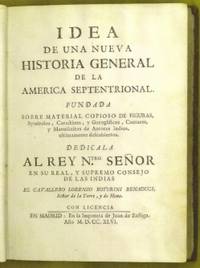
1746A0068xxxvi167viii96 pages. Octavo 8 1/4" x 6 1/4" bound in full leather with decorative gilt and lettering to spine. From the library of George M Foster. First edition.<br /><br />Lorenzo Boturini Benaducci born in Italy of noble parentage studied in Milan and lived in Trieste and Vienna. He was a knight of the Holy Roman Empire. Forced to flee Austria because of the war with Spain Boturini arrived in Spain via England and Portugal. In Madrid he met the Condesa de Santibáñez oldest daughter of the Condesa de Moctezuma. The mother authorized him to collect a pension due her as a descendant of the Aztec Emperor Moctezuma II from the royal treasury in New Spain. Boturini went to New Spain in 1736 where he remained eight years. During those years he assembled a vast collection of paintings maps manuscripts and native codices. He copied more than 500 pre-Columbian inscriptions and made his own drawings of monuments and sculptures and he investigated the history of the apparition of the Virgin of Guadalupe on the hill of Tepeyac. He traveled widely and on his travels brought together the largest collection of Mexican antiquities assembled to that time by a European. Not only did he intend to write the history of the Virgin of Guadalupe but he also had plans to crown her image with a gold crown. For that purpose he sought donations from the bishops and from the public. This brought him to the attention of the colonial government which was suspicious of the motives of a foreigner making this proposal. On June 2 1743 after an investigation the recently arrived viceroy Pedro Cebrián y AgustÃn had him imprisoned and impounded his collection. He was accused of entering New Spain without license from the Council of the Indies and of introducing papal documents without a royal permit. After eight months in prison Boturini was sent to Spain. He fell into the hands of pirates who eventually released him at Gibraltar. From there he traveled to Madrid in miserable conditions. In Madrid he met Mariano Fernández de EcheverrÃa y Veytia another passionate collector of Indian antiquities. Fernández de EcheverrÃa y Veytia offered Boturini a place to live and financial support and got the Council of the Indies to reconsider his case. Boturini was absolved. The king named him royal chronicler of the Indies ordered that his collection be returned to him and extended an invitation for him to return to New Spain. Boturini however declined to return to New Spain and his collection was never restored. It appears that he was granted recompense and a stipend to work on his projected history of the colony. In Madrid he wrote a history of ancient Mexico unpublished at the time of his death in 1753. The library at the BasÃlica de Nuestra Señora de Guadalupe is named for him. The Boturini Collection was formed between 1735 and 1743 to serve as the basis of a projected Historia de América Septentrional. It consisted of many valuable documents the majority of them of Indian provenance. Among these were hieroglyphic paintings that had belonged to Juan de Alva Ixtlilxochitl a descendant of the rulers of Texcoco. Ixtlilxotchitl bequeathed these documents to Carlos de Sigüenza y Góngora. The collection was confiscated by Viceroy Pedro Cebrián y AgustÃn at the time of Boturini's arrest in 1743. It was deposited in the office of the secretary of the viceroyalty. The documents were neglected there for years and suffered considerable pilferage. The subsequent viceroy Juan Francisco de Güemes 1st Count of Revillagigedo granted the historian and antiquary Fernández de EcheverrÃa y Veytia Boturini's friend from Madrid the paintings and documents he solicited for his own studies. On Fernández de EcheverrÃa y Veytia's death they passed to Antonio de León y Gama. He died in 1802 and the collection passed to his heirs. Shortly thereafter 16 paintings were obtained by Alexander von Humboldt during his visit to Mexico in 1802-03. He published them in Vues des cordillères et monuments des peuples indigènes d'Amérique. The originals of these are now in the Berlin State Library. Part of the remainder of the collection may have passed to Father José Pichardo an amateur antiquarian. Joseph Alexis Aubin beginning in 1827 or shortly thereafter obtained important parts of the collection from a variety of sources. He sold his collection to Eugène Goupil who was of French and Mexican descent. This part of the collection passed by donation or purchase to the National Library in Paris where it remains under the name Aubin-Goupil Collection.<br /><br />George McClelland Foster Jr born in Sioux Falls South Dakota on October 9 1913 died on May 18 2006 at his home in the hills above the campus of the University of California Berkeley where he served as a professor from 1953 to his retirement in 1979 when he became professor emeritus. His contributions to anthropological theory and practice still challenge us; in more than 300 publications his writings encompass a wide diversity of topics including acculturation long-term fieldwork peasant economies pottery making public health social structure symbolic systems technological change theories of illness and wellness humoral medicine in Latin America and worldview. The quantity quality and long-term value of his scholarly work led to his election to the National Academy of Sciences in 1976. Virtually all of his major publications have been reprinted and/or translated. Provenance from the executor of Foster's library laid in.<br /><br />Condition:<br /><br />Lacks frontispiece portrait. Lacks Foster's stamp or date of purchase. some damp stains to end papers neat old marginalia in Spanish to back end paper worm hole ant head and heal of spine going through spine extremities bumped and rubbed old owner's label to front paste down 1" chip at back head hinge and name to front end paper scuffed else a good copy of a rare item. En la Imprenta de Juan de Zuniga hardcover books
200028629NY: St. Martin's. Fine in Near Fine dust jacket. 2000. Hardcover. 031223144X . First printing. Fine in a very near fine hint of sun fading along spine dust jacket. . St. Martin's hardcover books
1934CA0247Description:<br />2 volumes: 427 pages with facsimile title and index; 513 pages with two facsimile pages appendix and index. Royal octavo 9 1/2" x 7" bound in three quarter blue leather with raised spine bands and gilt lettering to spine. From the library of George M Foster. Second edition.<br /><br />The two chronicles by Francisco de Burgoa easily hold first place for inflated style and bombastic phraseology especially the opening remarks to various chapters. Yet for the important area of Oaxaca and the numerous subjects he treats Burgoa's works are indispensable and irreplaceable sources. Burgoa born in Oaxaca was related to numerous local colonial families. He took his final vows in 1625 and by 1649 was provincial of his Order. In that post he made a special effort to visit various parts of Oaxaca especially seeking notices of Zapotecan antiquities with the aim of writing a history of Oaxaca. Before his death in 1681he did not complete it but left two prolix yet valuable published treatises. The two chronicles are the usually abbreviated Palestra historial and Geográfica descripción. Burgoa conceived of them as a single work but they differ in contents. The Palestra historial is a typical chronicle. It begins with the arrival in 1526 of Dominicans in Mexico City and shortly thereafter their appearance in Oaxaca. Burgoa rehearses the lives of many missionaries already biographized by Davila Padilla but Burgoa emphasizes their apostolate in the Oaxaca areas even before formal establishment of the Province of San Hipolito 1592. These lives are uniformly eulogistic but scattered through them are important bits of information on the numerous Indian groups of Oaxaca. The Geográfica descripción has 80 chapters. They detail the histories of the Monasteries and the work of their friars among the Indians with much less attention to biographical detail than in the Palestra historial. The data run to about mid-17th century in both. Handbook of Middle American Indians<br /><br /> George McClelland Foster Jr born in Sioux Falls South Dakota on October 9 1913 died on May 18 2006 at his home in the hills above the campus of the University of California Berkeley where he served as a professor from 1953 to his retirement in 1979 when he became professor emeritus. His contributions to anthropological theory and practice still challenge us; in more than 300 publications his writings encompass a wide diversity of topics including acculturation long-term fieldwork peasant economies pottery making public health social structure symbolic systems technological change theories of illness and wellness humoral medicine in Latin America and worldview. The quantity quality and long-term value of his scholarly work led to his election to the National Academy of Sciences in 1976. Virtually all of his major publications have been reprinted and/or translated. Provenance from the executor of Foster's library laid in.<br /><br />Condition:<br />Some occasional pencil marginalia by Foster. Foster's date of acquired on front paste down of volume one. Some rubbing to extremities else a very good set. Archivo General de la Nacion hardcover books
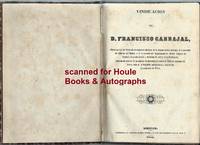
18452221653<p>Carbajal Francisco De - also sp. Carvajal Vindicacion de D. Francisco Carbajal. Mexico City Imprenta de Vicente Garcia Torres 1845. 53 pages.</p><p>Bound With:</p><p>Espinosa D. Francisco Carbajal. Atrocidades Cometidas Por El Malrado Gobierno De Ayutla Y Su Satelite Benito Quintana Y Otros. Mexico City. 1858. 60 pages.</p><p>Octavo. Period green morocco over marbled boards black morocco label. Very good some light foxing. 2 separate works in one volume.</p><p>With the MS pressmark and "MHC" inscription of famed English bibliophile Sir Thomas Phillips 1792-1872.</p> Imprenta de Vicente Garcia Torres hardcover books
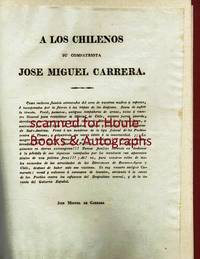
9756<p>Small 4to broadside tipped onto a stiff blank leaf. Spanish text. Bound in 1/2 gilt stamped red morocco over matching cloth spine with raised bands covers ruled in gilt. Fine. Later black cloth slipcase. Scarce. Rare broadside of the Latin American struggle for independence. Carrera 1785-1821 principal leader in the early fighting for Chilean independence where his experience in the Napoleonic Wars secured his place as head of the nationalist government; later his arrogance produced dissentions with other leaders and his rivalry with Bernardo O'Higgins led to the defeat of the nationalist forces at Rancagua in 1814.</p> [Santiago, n.p., ca. 1819] hardcover books
1709CA1100viii24412 pages with engraved map folding plan and four engraved illustrations in text and index. Quarto 9 ¾" x 7½" bound in period calf with modern rebacking original gilt spine leather laid down and ruled gilt edges to cover. Translated by Joh Stevens. First English Edition.<br /><br />This is a highly regarded chronicle of the conquest and colonization of Peru by Spaniards in the latter part of the 16th century and is lauded for its at the time objectivity. Cieza de Leon's Chronica was to appear in 4 sections this translation being the first part only all that was available of the history until the latter part of the 19th century.<br /><br />Pedro Cieza de León was a Spanish conquistador and chronicler of Peru. He is known primarily for his history and description of Peru Crónicas del Perú. He wrote this book in four parts but only the first was published during his lifetime; the remaining sections were not published until the 19th and 20th centuries. Cieza de León was born to a family of Jewish conversos1 around 1520 in Llerena a town in southeastern Extremadura less than 60 mi from Portugal. Although recently converted from Judaism to Catholicism the family enjoyed good social standing in the region because of their networks and business dealings. His father Lope de León was a shopkeeper in the town and his mother Leonor de Cazalla was a native of Llerena. There is scant documentary evidence of the young Cieza de León’s childhood and little is known of his early life before his voyage to the Americas. Given the fact that he left home at 13 it is unlikely that Cieza de León received more than a rudimentary education. In 1536 in Córdoba at 16 Cieza de León was greatly surprised to learn of the discovery of the land of the Incas and so decided to go to Seville to embark on his journey to South America to see for himself the artifacts of precious metals which had been brought to Spain from Cajamarca. In light of the prohibition of entry into the Spanish colonies for Jews and Jewish converts to Catholicism Alonso López and Luis de Torres attested for Cieza de León that he was not prohibited. Jewish converso Pedro López de Cazalla secretary of Spanish conquistador Francisco Pizarro conqueror of the Incan Empire was also his first cousin. He returned to Seville Spain in 1551 and married a woman named Isabel López de Abreu. Here he published in 1553 the first part of the chronicles of Peru Primera Parte. He died the following year leaving the rest of his work unpublished. His Second Part of Chronicles of Peru describing the Incas was translated by Clements Markham and published in 1871 for the Hakluyt Society. In 1909 the fourth part of his chronicle focusing on the civil wars among the Spanish conquerors was published under the title Third Book of the Peruvian Civil Wars. The third part of Cieza de León's Crónicas del Perú which examined the discovery and conquest of Peru by the Spaniards was considered by historians to be lost. The document eventually turned up in a Vatican library and historian Francesca Cantù published a Spanish version of the text in 1979. Though his works are historical and narrate the events of the Spanish conquest of Peru and the civil wars among the Spaniards much of their importance lies in his detailed descriptions of geography ethnography flora and fauna. He was the first European to describe some native Peruvian animal species and vegetables.<br /><br />Condition:<br /><br />Expertly rebacked some light rubbing to extremities foxing old book plate on front pastedown else very good. unknown hardcover books