19 315 résultats
190559392[Aphrodisias, 1904-1905]. 45,5 x 36 cm (albums) and various formats (photographs and plans).
190559391[Aphrodisias, 1904-1905]. 258 glass plate negatives (9 x 12 to 18 x 24 cm) and 8 panorama nitrate film negatives (31 x 9.5 cm).
in-folio, ff. (185, mancando l'ult. b.), legatura posteriore in mezza pelle con angoli, titoli e filetti oro al dorso, tagli rossi, camicia in tela e custodia in mezza pelle con titoli oro al dorso. Dedica del traduttore e curatore Marsilio Ficino al card. Giovanni de' Medici, futuro Papa Leone X; bel car. tondo, una iniziale ornata, spazi con lettera-guida per le iniziali. Prima edizione di questa raccolta di 13 opere dei maggiori esponenti di quella corrente del Neoplatonismo influenzata dal misticismo magico. Oltre il ''De mysteriis'' di Iamblichus contiene: "Proclus: In Platonicum Alcibiadem de anima, atque daemone; De sacrificio et magia. Porphyrius: De divinis et daemonibus. Synesius: De somniis. Psellus: De daemonibus. Priscianus et Ficinus: In Theophrastum De sensu... Alcinous (i.e. Albinus): De doctrina Platonis. Speusippus: De Platonis definitionibus. Pythagoras: Aurea verba et symbola. Xenocrates: De morte. Ficinus: De voluptate". Tutti questi testi (tranne quello di Alcinous, apparso nel 1472 a Norimberga tradotto da Petrus Balbus, e quello di Pitagora, già apparso in greco) appaiono per la prima volta in questa edizione aldina che, ampliata, sarà ristampata presso Aldo nel 1516. Ficino (1433-1499), tra le più straordinarie personalità del Quattrocento, fu celebre umanista e filosofo, detto "alter Plato" per il suo famoso commento a Platone. Il giovane Marsilio iniziò a tradurre Platone nel 1462 per volere di Cosimo de Medici, raccogliendo attorno a sé nella villa di Careggi una schiera di dotti e fondando di fatto quella che sarà il preludio all'Accademia fiorentina sviluppatasi sotto Lorenzo il Magnifico. La traduzione dei dialoghi, compiuta già nel 1477, contribuì in maniera determinante alla rivalutazione, anche in chiave cristiana, del pensiero platonico, ed è considerata tra le più alte produzioni speculative dell'Umanesimo. Esemplare fresco e marginoso (qualche macchietta al foglio di titolo e all'ultima carta), con alcune chiose manoscritte. Cerniere un po' fragili ma nel complesso ottimo esemplare.. Ahmanson-Murphy 17; BMC V, 557. Harvard/Walsh 2648-2653; IGI 5096; Renouard 13.6. Laurenziana 17. BMC V, 557. Goff J-216. HC 9358. IGI 5096. Klebs 529. Caillet 5489, note. Bibl. Magica Casanatense 626..
in-4 (204x150 mm), pp. 104 (privo del foglio d'errata aggiunto in alcuni esemplari), legatura coeva in pergamena rigida. Edizione originale di una delle più importanti opere nella storia del pensiero moderno, vera e propria pietra miliare nel campo della legislazione ed uno dei testi che influenzarono la ''Dichiarazione dei diritti dell'uomo''. Il trattato del filosofo e giurista milanese (1738-1794) ebbe uno straordinario successo nel secolo dei lumi, dovuto all'opportunità della maggior parte delle riforme auspicate, parecchie delle quali furono in effetti, e con successo, adottate. L'opera di Beccaria ebbe in edizioni successive il commento di Diderot e di Voltaire, e fu conosciuta ed ammirata da uomini come d'Alembert, Helvétius, Holbach, Hume e Hegel. La sua efficacia fu grande nel campo della pratica, poiché del suo influsso risentì più o meno profondamente la nuova legislazione penale di tutti i prìncipi riformatori. "Beccaria maintained that the gravity of the crime should be measured by its injury to society and that the penalties should be related to this. The prevention of the crime he held to be of greater importance than its punishment, and the certainty of punishment of greater effect than its severity. [His] ideas have now become so commonplace that it is difficult to appreciate their revolutionary impact at the time." (PMM). E' sicuramente una tra le opere più innovative e rivoluzionarie sulla riforma penale e la criminologia, in opposizione alla pena di morte, in perfetta sintonia con le idee umanitarie dell'Illuminismo europeo. Esemplare non pressato, a grandi margini e fresco (da due a cinque puntini di ossidazione su qualche foglio). 4to (204x150 mm), pp. 104 (without the leaf of errata which was added to some copies). First edition of the most significant Italian contribution to European Enlightenment, that at its appearance was immediately greeted with enthusiastic acclaim throughout Europe. In the essay, Beccaria harshly criticizes the current legislation and the prison treatment of detainees (in particular the aberrant, but widespread practice of torture), rejecting in block much of the previous legal tradition and placing at the center of his reflection the respect for the rights of the individual, in particular the so-called natural rights, such as the right to freedom and ownership. For prudential reasons, the author's name does not appear in the text, which soon after was included in the Index of Prohibited Books. Within eighteen months, the book passed through six editions, and later with false printing places (Munich, Lausanne, Harlem, etc.), in editions that were mostly incorrect and illegitimate counterfeits. The reforms he had advocated led to the abolition of the death penalty in the Grand Duchy of Tuscany, the first state in the world to take this measure. Thanks to the translation into all major languages of the time, "On Crimes and Punishments" came to influence, more or less directly, Catherine of Russia, Joseph II, Leopold II, Voltaire, J. Bentham, W. Blackstone, and Thomas Jefferson, and the legislators of the American and French Revolutions. It was translated into French in 1766 and published with an anonymous commentary by Voltaire. An English translation appeared in 1767, and it was translated into several other languages. John Adams invoked Beccaria's words in his defence of British soldiers following the Boston Massacre in 1770: "I am for the prisoners at the bar, and shall apologize for it only in the words of the Marquis Beccaria: 'If I can but be the instrument of preserving one life, his blessing and tears of transport, shall be a sufficient consolation to me, for the contempt of all mankind'." Thomas Jefferson in his Commonplace Book copied a passage from Beccaria related to the issue of gun control. A fine copy, with large margins, with very few small spots (two to five) on some of the leaves.. Printing and the Mind of Man 209. Firpo I, p. 539, 1. Cat. Einaudi 3362. Govi, Classici: ''rare copies have an extra leaf at the end containing an errata with 21 corrections''. A. Caso, America"s Italian Founding Fathers, Boston, 1975. Harcourt, Becarria"s On Crimes and Punishments. A Mirror on the History of the Foundations of Modern Criminal Law, Chicago, 2013. Hostettler, C.Beccaria. The Genius of "On Crimes and Punishments", 2011..
59393N. p. o. d. 13 x 18 to 24 x 30 cm. Glass plate negatives.
179954318Paris, Didot, 1799. Imperial folio (354 x 492 mm). 404 pp. With 12 engraved vignettes in the Neoclassical style by by Girardet, Beisson and Coiny after Charles Percier's drawings, illustrating Roman reliefs. Contemporary Neoclassical red morocco binding by Georg Friedrich Krauss in Vienna for Duke Albert von Sachsen-Teschen. Profusely gilt spine divided into 7 compartments featuring green morocco lettering pieces and the monogram AS surrounded by an aureole. Leading edges gilt; gilt inner dentelles, marbled endpapers. All edges gilt.
190159394Yortan, 1898-1901. 13 x 18 cm and smaller. Glass plate negatives.
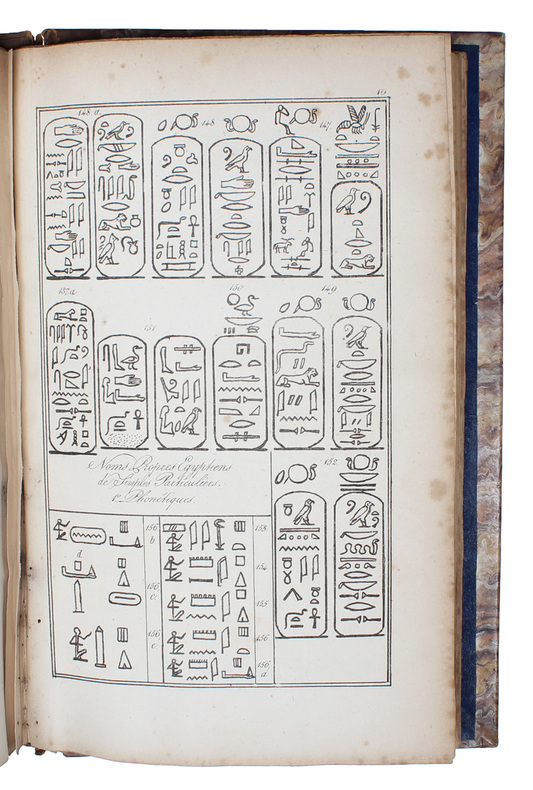
1760ABC_47143Various places 1760. 4to. various publishers Mid-19th-century half red goatskin morocco sewn on 4 supports gold-tooled spine blind-tooled fillets with the cypher monogram of a French count in compartments 1 3 & 5 crowned script L and reversed L like the Bourbon royal cypher but with a counts crown instead of a kings crown and labbéBarthelemy and Dissertations1760-1792 in mid-19th-century roman capitals across compartments 2 & 4 agathe chemical-marbled sides black on red Spanish-marbled endpapers light brown spots with white and dark brown veins red sprinkled edges green ribbon marker. 10 works in 1 volume. 16; 43 1 blank; 24; 28 XIV; 2 44; 12; 8; 12; 1 1 blank 45 1 blank; 9 1 blank pp. Very important collection of essays and other texts marking the establishment of archaeology and philology as serious scientific disciplines. While still drawing from the experience and works of "antiquarians" who studied antiquity in a more amateurish and occasional way the authors of the present works attempted to work more methodically towards greater discoveries. This renewed interest in antiquity and the move to studying it in a more scientific way came as a result of several major 18th-century discoveries like the Herculaneum 1709 Pompeii 1748 and the Rosetta Stone 1799 see ad 4.Naturally Egyptology is also a well-represented subject in the present work. It includes a fabulous depiction and detailed description and explanation of the Nile mosaic of Palestrina ad 5 a floor mosaic depicting the flow of the river Nile from the Blue Nile in Ethiopia to the Mediterranean Sea. Additionally the study of hieroglyphs and differing views on deciphering the Ancient Egyptian scripts can be found in ads 3 and 4.Philology in this case the study of language in written historical sources not in oral ones is a returning subject in many of the essays in the present work including the Christie's auction catalogue since it comprises a list of written historical sources in the form of oriental especially Ethiopic manuscripts collected by James Bruce. Four works by the abbot and scholar Jean-Jacques Barthélemy 1716-1795 are also included. He was the first to decipher two alphabets of ancient extinct languages: Palmyrene and Phoenician. His works also include descriptions depictions and explanations of Phoenician medals and the collection of texts in the present volume ends with an engraved example of the Phoenician alphabet.The monogram on the binding based on Louis XIVs but with a counts crown instead of the royal crown suggests that the collection was bound for a Bourbon Count Louis in the mid-19th century. Olivier Reliures armoriées Françaises records many examples with the royal crown but only one with a counts crown plate 1095 no. 3 and it does not resemble the present one and is much older: Ange-Laurent de la Live de Jully 1725-1779. Boards slightly worn mainly at the extremities occasional foxing and browning mainly to ad 3 and 4 fore-edge of ad 1 and foot of ad 3 and 4 slightly frayed upper headband broken but complete. Otherwise in good condition.l Ad 1: WorldCat 5 copies. Ad 2: VD18 15073807; WorldCat 15 copies. Ad 3: WorldCat 6 entries multiple copies. Ad 4: WorldCat 3 entries multiple copies. Ad 5: WorldCat 2 entries multiple copies. Ad 6: WorldCat 8 copies. Ad 7: WorldCat 3 copies. Ad 8: WorldCat 1 copy. Ad 9: WorldCat 3 entries multiple copies. Ad 10: WorldCat 3 copies. hardcover
Firenze, Néri Dorteláta, 1544. 8vo. Contemporary full vellum with handwritten title to spine. Binding with some soiling and inner front hinge opening. Binding worn, but still fine, intact, and completely unrestored. Internally very nice and clean, with only a bit of mild scattered brownspotting. Neat contemporary owner's inscription to title-page. Woodcut printer's device on title-page and verso of final leaf. (19), 1 (blank) ff., 251, (45) pp.
182456716Paris, Chez Treuttel et Würtz, 1824. Lex 8vo. Both volumes bound completely uncut in one near contemporary brown half calf with ornametal spine. A bit of wear to capitals, corners, and hinges. Occasional brownspotting. Overall a very nice copy. (Text-vol.:) (4), XVI, 410, (4, - 1 blank leaf + 1 leaf of book binder instructions) pp. + 16 plates, some folded" (2), 45 pp. + 32 plates (numbered 1-21 and A-K). Complete in two vols. w. all 38 lithographed plates.
Paris, Chez Treuttel et Würtz, 1824. Lex 8vo. Both volumes bound completely uncut in one near contemporary brown half calf with ornametal spine. A bit of wear to capitals, corners, and hinges. Occasional brownspotting. Overall a very nice copy. (Text-vol.:) (4), XVI, 410, (4, - 1 blank leaf + 1 leaf of book binder instructions) pp. + 16 plates, some folded " (2), 45 pp. + 32 plates (numbered 1-21 and A-K). Complete in two vols. w. all 38 lithographed plates.
61548Mesopotamien, Ur III (Ende 3. Jahrtausend v. Chr.). 63 x 44 mm. In maßgefertigter Halblederkassette.
63630Mesopotamia, early 2nd millennium BCE. Ca. 65 x 40 mm. In custom-made half morocco box.
155753970Paris, Andreas Wechel, 1557. 4to. 2 parts. (4 pp.), 5-16, 10 ff. Text in Greek and Latin. With woodcut printer's device as well as several floral headpieces and initials. Later full vellum with handwritten spine-title.
18134205A Paris, de l'Imprimerie impériale, 1813. 1813 1 vol. fort in-folio (490 x 310 mm.) de : [3] ff. (faux-titre, titre, "Traduction en langue européenne des caractères chinois") ; LVI (introduction, Tableau de l'orthographe et de la prononciation, Préface, Méthode pour trouver les caractères au moyen de la table des deux cent quatorze clefs, Table des deux cent quatorze clefs) ; 1112 pp. ; [1] f. (errata). Ex-libris manuscrit au dos du premier plat Benj Stillwell. (quelques tâches aux marges). Demi-vélin à coins ancien, dos lisse, pièce de titre de maroquin rouge, plats recouverts de papier marbré, exemplaire non rogné à très larges marges. (Défauts d'usage, couture fragile).
Collection of 120 complete years of this rare and highly important academic Armenian periodical published since 1887 (making it the second oldest Armenian journal still in print) and mainly related to Armenian philology and history, most texts are in Armenian (though some of them are in English, French, German and Italian), together ca. 35.000 pp., 30cm., The volumes up till 1989 are bound in modern hardcovers in full red cloth in very good condition (most of the 44 physical volumes contain two years each), volumes 1990-2013 are in original softcovers, some of the older illustrated frontcovers are preserved and bound in, text and interior are clean and bright, very good set, weight: 90kg., [This is a list of the "physical" volumes contained in this set: 1890, 1891-1892, 1893-1894, 1895-1896, 1897-1898, 1899-1900, 1901-1902, 1903-1904, 1905-1906, 1907-1908, 1909-1910, 1911-1912, 1913-1914, 1915-1916-1917-1918-1919-1920, 1921-1922, 1923-1924, 1925-1926, 1927, 1928-1929, 1930-1931, 1932-1933, 1934-1935, 1936-1937-1938, 1939-1940-1941-1942-1943-1944-1945, 1946-1947-1948, 1949-1950, 1951-1952, 1953-1954, 1955-1956, 1957-58, 1959-1960, 1961, 1962-1963, 1964-1965, 1966-1967, 1968-1969, 1972-1973, 1974-1975, 1976-1977-1978, 1979-1980-1981, 1982-1983-1984, 1985-1986, 1987, 1988-1989, 1990, 1991, 1992, 1993, 1994, 1995, 1996, 1997, 1998, 1999, 2000, 2001, 2002, 2003, 2004, 2005, 2006, 2007, 2008, 2009, 2010, 2011, 2012 and 2013], X111626
1890X111626Wien (Vienna), Mechitharisten-Kongregation (-Buchdruckerei) 1890-2013 Collection of 120 complete years of this rare and highly important academic Armenian periodical published since 1887 (making it the second oldest Armenian journal still in print) and mainly related to Armenian philology and history, most texts are in Armenian (though some of them are in English, French, German and Italian), together ca. 35.000 pp., 30cm., The volumes up till 1989 are bound in modern hardcovers in full red cloth in very good condition (most of the 44 physical volumes contain two years each), volumes 1990-2013 are in original softcovers, some of the older illustrated frontcovers are preserved and bound in, text and interior are clean and bright, very good set, weight: 90kg., [This is a list of the "physical" volumes contained in this set: 1890, 1891-1892, 1893-1894, 1895-1896, 1897-1898, 1899-1900, 1901-1902, 1903-1904, 1905-1906, 1907-1908, 1909-1910, 1911-1912, 1913-1914, 1915-1916-1917-1918-1919-1920, 1921-1922, 1923-1924, 1925-1926, 1927, 1928-1929, 1930-1931, 1932-1933, 1934-1935, 1936-1937-1938, 1939-1940-1941-1942-1943-1944-1945, 1946-1947-1948, 1949-1950, 1951-1952, 1953-1954, 1955-1956, 1957-58, 1959-1960, 1961, 1962-1963, 1964-1965, 1966-1967, 1968-1969, 1972-1973, 1974-1975, 1976-1977-1978, 1979-1980-1981, 1982-1983-1984, 1985-1986, 1987, 1988-1989, 1990, 1991, 1992, 1993, 1994, 1995, 1996, 1997, 1998, 1999, 2000, 2001, 2002, 2003, 2004, 2005, 2006, 2007, 2008, 2009, 2010, 2011, 2012 and 2013], X111626
in-folio, ( ), ff. 175 (numerati per errore 177), 1 nn., car. tondo, ancora aldina al primo e ultimo foglio. Leg. del XVIII sec.i n pergamena rigida, titolo in oro su tassello al dorso. Nel XX secolo il volume è stato inserito perfettamente in una rilegatura antica con dorso più spesso, quindi sono stati aggiunti circa 50 fogli bianchi per compensare lo spessore. Al verso del titolo dedica di Marsilio Ficino al Card. Giovanni de'Medici. Seconda edizione aldina, che amplia quella curata dal Ficino del 1497. Comprende gli scritti dei maggiori esponenti di quella corrente del Neoplatonismo influenzata dal misticismo magico: oltre ai "Misteri" di Giamblico, il "De anima atque demone" nonché "De sacrificio e Magia" di Proclo, "De somniis" di Sinesio, "De Daemonibus" di Psellus, l'"Aurea verba e i Symbola" di Pitagora. Rispetto alla prima edizione, contiene importanti aggiunte, quali "Il Pimandro" e l'"Asclepio" di Ermete Trismegisto, il "De triplici vita, De sole e lumine, e De Magis" di Marsilio Ficino stesso. Il "De Sole" si compone di 13 capitoli, tra i quali spiccano, per interesse scientifico il cap. IV "Conditiones Planetarum ad Solem", il V "Virtus Solis in generationibus atque temporibus", il VII "Dispositiones Signroum e planetarum circa Solem atque Lunam"; VIII "Planetae concordes cum Sole e Luna sunt foelices, discordes contra" etc. Ficino (1433-1499), tra le più straordinarie personalità del Quattrocento, fu celebre umanista e filosofo, detto "alter Plato" per il suo famoso commento a Platone. La traduzione dei Dialoghi, compiuta già nel 1477, contribuì in maniera determinante alla rivalutazione, anche in chiave cristiana, del pensiero platonico, ed è considerata tra le più alte produzioni speculative dell'Umanesimo. Edizione impressa con grande cura, e non meno rara dell'originale. In fine, interessante è il Catalogus Librorum M.Ficini, e commovente l'avviso ai lettori di Andrea d'Asola "perlegite hoc vos orat Andrea socer Aldi. Aldus vivus quo in dies magis..." Ottimo esempl. marginoso, malgrado la manimissione alla rilegatura.. Renouard 77.8. Caillet 5489. Bibl. Phil.Hermetica 127 e 128 (ed. 1497). UCLA 131. G.F.d'Asola 20..
161357587Naples, Lazzaro Scorriggio, 1613. Ca. 114 x 160 cm (map size; visible size ca. 131.5 x 177.5 cm). Engraved. Framed and glazed in broad burl wood veneer frame with insignificant damage (141 x 187.5 cm).
3 parti in un vol. in-folio, ff. (79, manca l'ult.bianco), col. 1436, (1 f. bianco con sola àncora al verso); leg. coeva uso monastico in cuoio su assicelle, i piatti ornati a secco da 4 tondi con l'Agnus Dei e 2 floreali, scomparto centrale con decoro romboidale, dorso a nervi, fermagli in bronzo (mancano le chiusure in cuoio, cerniera anteriore restaurata). Nei ff. preliminari, oltre l'ampio indice, si legge la prefazione di Aldo del 1513; la dedica di Pirro Perotti al Duca di Urbino Federico, una breve Vita di Valerio Marziale, la dedica del Bembo a Leone X (1513), nonché due privilegi concessi ad Aldo da Giulio II (1513) e Alessandro VI (1502). Ancora aldina al titolo e al verso dei ff. K8 e Y8; testo in car. corsivo su due colonne, qualche passaggio in greco, Indice disposto su 5 colonne. Terza edizione aldina, dopo quelle del 1499 e 1513, di quest'opera celebre e fortunata, eruditissimo commento filologico a 147 Epigrammi di Marziale (dei circa 1200 che l'autore latino compose); seguono estratti da Vitellio, Varrone e Nonnius Marcellus. Il Perotti (Sassoferrato 1429-1480) fu celebre umanista e grammatico, autore della più stimata grammatica latina dell'Umanesimo (''Rudimenta grammatices''), arcivescovo di Siponto e Manfredonia e dal 1474 governatore di Perugia. Esempl. assai bello e marginoso, su carta forte, e in affascinante legatura (due antiche note di possesso sul primo f., traccia di timbro al verso; lieve alone di polvere al primo e all'ultimo f.).. Renouard 81.10. UCLA 132. Cataldi Palau 26..
151746128Cologne, Heinrich Quentel (heirs), September 1517. 4to. XL, (1) ff. (several errors in foliation, but complete, lacking only final blank). Decorated initials. 19th century boards (spine repaired).
in-folio, ff. (6), CCVIII, leg. coeva in pergamena floscia. Impresa tipografica in fine, testo in car. rom. e qualche passo in greco, lettera-guida per le iniziali. Esemplare con varianti tipografiche: il primo e sesto f. preliminare furono ristampati da Ottaviano Scoto, il quale nella parte bassa del titolo appose la propria impresa tipografica; e dovette ristampare anche il foglio corrispondente; il resto del volume è invariato. E' probabile che lo Scoto abbia acquistato le rimanenze dell'edizione ed abbia voluto provvedere a dotarla di un frontespizio con la propria impresa; tale particolarità, non è evidenziata da alcun repertorio bibliografico. I fogli prelim. contengono il titolo, concessione papale dell'imprimatur al Mazzocchi dat. Roma, 10 aprile, 1519 con, al verso, dedica di Pico a Papa Leone X; segue la "tabula". Prima edizione di quest'opera e secondo ed ultimo libro impresso dal Mazzocchi a Mirandola (è noto che G. Mazzocchi aveva una stamperia a Ferrara, ma si trasferì a Mirandola nel 1519-1520 per stampare ivi solo due opere del conte Giov. Franc. Pico, e cioè il "Liber de veris calamitatum causis nostrorum temporum" nel 1519 e la presente l'anno successivo; queste sono anche le uniche due opere impresse a Mirandola nel corso di tutto il Cinquecento; cfr. Fumagalli, p. 233). L'opera è un trattato filosofico-teologico che confuta molta parte della filosofia antica, contrapponendole la "verità" del Cristianesimo; è anche assai importante perché, come avverte Olschki, "contiene quattro passaggi relativi all'America". Gianfrancesco Pico (1469-1533), signore di Mirandola, nipote del più celebre Giovanni (di cui scrisse la Vita), fu filosofo, teologo e letterato, autore di numerose opere. Esemplare assai marginoso e fresco in genuina legatura (lavoro di tarlo nell'angolo di pochi ff.).. STC 515. Adams P-1156. Olschki, Choix, VIII, 12557. European Americana n. 520/21. Fumagalli p. 223 e 233..
2 opere in un volume in-4 (mm.220x170), parte prima: pp. (12), 780. (4, due di ''elenco Libri stampati da M:Ginammi'', e 2 bianche); parte seconda: pp. 58, (2). Impresa tipografica della Speranza sui due titoli, capilettera silografici ornati e istoriati. Legatura coeva piena pergamena rigida, titolo oro al dorso. Prima traduzione integrale dei celebri ''Essays'' di Montaigne, completi della seconda parte. La prima edizione francese vide la luce nel 1580-1588, con ampliamenti nell'edizione postuma del 1595. L'unico precedente volgarizzamento (Ferrara, 1590) consisteva in una semplice cernita dell'opera; la presente versione, ancorché ascritta al Ginammi nel frontespizio, è in realtà parto della penna di Girolamo Naselli, che la dedica a Davide Spinelli. Fu uno dei capolavori della letteratura moralistica di ogni tempo, esposizione della filosofia scettica dell'autore. L'''Apologia'', dedicata a a Annibale Mariscotti, costituisce il 12° capitolo del secondo libro ed è una sorta di esposizione della filosofia scettica di Montaigne. Esemplare assai fresco e genuino. ''Seconda, rispetto alla prima parziale versione comparsa a Ferrara nel 1590 ad opera di Girolamo Naselli, quella di Girolamo Canini ha il pregio della completezza. Non è che il suo intervento risulti a prima vista evidente: chè i suoi Saggi... figurano ''trasportati dalla lingua francese nell'italiana per opera di Marco Ginammi''...; e così pure a proposito della versione, uscita separatamente l'anno dopo, dell'Apologie de Raymond Sebond. Ma in realtà il Ginammi non fu che il munifico tipografo, spinto più da esigenza di ''riputazione'' che dalla speranza di guadagno. Egli stesso avverte infatti che la traduzione si deve al Canini, ''soggetto di... straordinarie virtu'' (Dizionario Laterza).. Cfr. ''Bulletin du Bibliophile 1984, pp.535-538: Premières éditions Italiennes des Essays...'' Graesse, IV, 580. Diz. Biogr. Italiani, vol. 55, pp.1-3 (su Ginammi). Michel-Michel, V, 189 (solo la Parte prima)..
152142911(On colophon-leaf:) Haguenau, in aedibus Thomae Badensis, 1521). Small folio. Beautiful full calf binding over wooden boards. Recently rebacked. Beautiful blindstamped ornamental borders to boards and remains of clasps, ties missing. A few smaller wormhols to boards, and two drilled holes of ab. the same size to lower part of front board (for a chain?). Ornamented incunable-leaves with red and blue initials used as pasted-down end-papers. Front free end-paper soiled, with neat 19th century inscription (stating editions of the work), and with a beautiful large, engraved armorial book-plate (Collection of Bryan Hall). First leaf with a larger damp-spot to lower part (not affecting any text). Otherwise a very nice copy with only some minor light marginal soiling, a small dampstain to lower inner corner of last ab. 8 leaves, far from affecting text, and a bit of light spotting to a few leaves towards the end. Beautiful large woodcut printer's device to last leaf. (1) f., 776 columns (i.e. 388 pp/ 194 ff.), (1 - colophon) f.
(On colophon-leaf:) Haguenau, in aedibus Thomae Badensis, 1521). Small folio. Beautiful full calf binding over wooden boards. Recently rebacked. Beautiful blindstamped ornamental borders to boards and remains of clasps, ties missing. A few smaller wormhols to boards, and two drilled holes of ab. the same size to lower part of front board (for a chain?). Ornamented incunable-leaves with red and blue initials used as pasted-down end-papers. Front free end-paper soiled, with neat 19th century inscription (stating editions of the work), and with a beautiful large, engraved armorial book-plate (Collection of Bryan Hall). First leaf with a larger damp-spot to lower part (not affecting any text). Otherwise a very nice copy with only some minor light marginal soiling, a small dampstain to lower inner corner of last ab. 8 leaves, far from affecting text, and a bit of light spotting to a few leaves towards the end. Beautiful large woodcut printer's device to last leaf. (1) f., 776 columns (i.e. 388 pp/ 194 ff.), (1 - colophon) f.