42 311 résultats
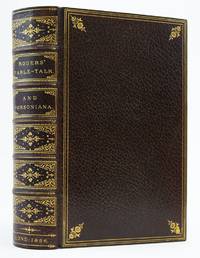
1856ST17640sLondon: Edward Moxon 1856. Apparently the FIRST EDITION. 200 x 130 mm. 7 7/8 x 5 1/8". viii 355 pp. bound with the half title and with an inserted plate as frontispiece.Edited by Alexander Dyce. <br/> VERY PLEASING SLIGHTLY LATER DARK BROWN CRUSHED MOROCCO ATTRACTIVELY GILT covers with French fillet border and elegant botanical cornerpieces raised bands heavily gilt spine in compartments featuring elaborate scrolling cornerpieces an intricate fleuron centerpiece and tiny circlets turn-ins with plain and stippled rules and filigree gilt decoration at corners and midpoints of two sides textured silk brown and cream millefleur-patterned endpapers all edges gilt. EXTRA-ILLUSTRATED WITH 55 PORTRAIT PLATES five in color all with tissue guards. Verso of the front free endpaper with the engraved bookplate of Robert B. Lawrence. A hint of browning to some of the inserted plates but A FINE AND HANDSOMELY BOUND COPY the text especially fresh clean and smooth and the binding bright and virtually unworn.<br/> <br/> This is a tastefully bound collection of anecdotes and witty banter recorded by poet Samuel Rogers whose private means made his gracious home in Westminster a gathering place for the poets and artists of the age. Scion of a wealthy banking family Rogers 1763-1855 achieved fame with the publication of "The Pleasures of Memory" in 1792. His friend Alexander Dyce who compiled the present work tells us in the preface that Rogers "was in the habit of writing down in all their minutiae the anecdotes &c. with which his conversation abounded." These records provide us with an intriguing glimpse of literary society in London in the first half of the 19th century. Our second work "Porsoniana" contains anecdotes about the "very eminent Greek scholar" Richard Porson 1759-1808 related to Dyce by that individual's close friend William Morby. This edition is one of at least three printings that were issued by Moxon in the initial publication year and it would seem to be the first appearance of the text. In any case our volume has the added feature of 55 inserted engravings of the persons discussed in the book. Although the binding is apparently unsigned the owner's bookplate on the front flyleaf is placed near enough to the top edge that it may be obscuring a stamped binder's signature. The work displayed here is certainly of high enough caliber to have been produced by Riviere or Zaehnsdorf. Edward Moxon unknown
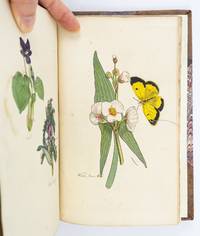
pp. [4], 61, [1] + Plus 28 beautiful plates printed in colours from wood blocks; and an added title page, with a colored vignette, lettered in gold gilt. Each leaf on heavy board-like paper. All edges gilt. Large 8vo. 260 mm. Some damp stain on the light fly leaves and plate tissues, but generally quite clean. Original full green morocco leather binding, handsomely decorated in gold gilt, designed by Albert Henry Warren. Pencil autograph ownership of H. Allen Anderson (who was the author of 'The Chief : Ernest Thompson Seton and the changing West.' Benjamin Fawcett (1808-1893) was one of the finest of English nineteenth century woodblock colour printers. The son of a ship's master, he was apprenticed at age 14 for seven years to William Forth, a Bridlington bookseller and printer. In 1831 he started his own business in Driffield, as music seller, bookbinder and printer, bookseller and stationer. He became a master of hand-coloured wood engraving. The process started with an accurate painting of the subject. (In this case the paintings were by F.A. Lydon, a local youth who served his apprenticeship with Fawcett and stayed with him until 1883). The picture was then carved, with meticulous attention to detail, on a wooden block of pear or boxwood (which he imported, matured, sawed and sliced and surfaced by his own hands). Placed in a printing press the block gave a black-and-white print, which was then hand-coloured with high-grade inks (often by Fawcett's 'clever' wife with his participation and direction). Many of his books were were published by Groombridge, of London. This work is usually found with that imprint. Indeed, we have been unable to locate any other copy anywhere with Bell and Daldy as publishers. This work is mentioned in many references including: Burch.'Colour Printing and Colour Printers'; McLean. 'Victorian Publishers' Book-bindings in Cloth and Leather'. **PRICE JUST REDUCED! W45 BINDINGS
183920768london Charles Tilt 1839 -in-folio pleine percale 1 volume, reliure pleine percaline bordeaux cartonnage romantique illustré à plaques spéciales monochromes pour le dos et le permier plat in-folio Editeur (editor hard-back percale with special covers editor for the spine and the front cover in-folio) (28,4 x 38 cm), RELIURE D'EPOQUE, dos long ornés du titre doré et d'un superbe décor romantique "or", décor romantique "or" au centre des plats dans un encadrement à double filet à froid (un filet fin et un filet large) avec rinceaux or aux angles (plaques spéciales Editeur), toutes tranches dorées, orné d'une gravure titre + 11 planches hors-texte en noir d'aprés les peintures de J. BROWNE, gravées sur acier par W. et E. FINDEN, 68 pages, 1839 London: Charles Tilt Editeur,
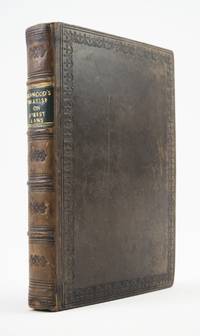
1598ST20689London: Printed by Thomas Wight and Bonham Norton 1598. FIRST PUBLISHED EDITION and First Edition under this Title. 192 x 139 mm. 7 5/8 x 5 1/2". 8 p.l. 154 162-65 159-67 1 blank 6 leaves. Errors in pagination but text complete. <br/> Late 19th century dark brown calf covers tooled in blind with plain rules and fleur-de-lys roll raised bands spine panels with small blind-stamped ornament black morocco label marbled endpapers neat repairs to ends of both joints. Front pastedown with engraved armorial bookplate of Godfrey Wentworth Woolley Park. Beale T-413; Mellon/Podeschi 15; Schwerdt II 7; STC 17291; ESTC S111993.<br /> Extremities slightly rubbed boards a little chafed in spots text lightly pressed but not washed a bit of browning to edges and occasional minor marginal foxing or traces of corner creases but quite an excellent copy the text clean and still fresh throughout and the perfectly suitable binding with no significant wear.<br/> <br/> This is a pleasing country gentleman's copy of the first published treatise on the laws governing English forests. Our author the fittingly named woodsman John Manwood d. 1610 served as gamekeeper of Waltham Forest as well as a justice of the New Forest. DNB tells us that he was possibly a barrister at Lincoln's Inn which would explain his interest in and knowledge of the law. Manwood tells us in the dedicatory epistle that he composed the present work in response to the precarious state of forest preservation stating that "so many do daily so contemptuously commit such heynous spoiles and trespasses" against the country's woodlands but "verie little or nothing as yet is extant concerning the Lawes of the Forrest" to help manage such behaviors. Our copy comes from the first published edition following only the 1592 pamphlet entitled "A Brefe Collection of the Lawes of the Forest" issued for private circulation and now extraordinarily rare. According to DNB the present treatise is "the only substantial work on the subject ever to reach the press" making it an enduringly useful source for those interested in the topics contained which include laws about hunting and perambulation in forests. It remained the standard work on the subject until the 19th century and Schwerdt writes that it has been "invaluable to students and lovers of ancient sport." Our copy is from the library of Yorkshire landowner Godfrey Wentworth 1773-1834 who served as High Sheriff of Yorkshire from 1796-97 and in the House of Commons from 1806-08. He probably had no need for a later printing of the work. Printed by Thomas Wight and Bonham Norton unknown
19942081402109301363Obunsha 1994. Soft Cover. Fine. Number of books: 1 textbook 1 cassette case C90 x 2 volumes Obunsha paperback
Oxford, Edit. Museum Modern Art, 1987. Numerosas ilustraciones en color y b/n. 75 p. 4º. Rústica editorial ilustrada. Etiqueta en lomo. Buen ejemplar. Book in English. Francis Bacon, Kossoff, Auerbach, Kitaj, Gilbert & George, Deacon, etc.
1820486374Paris, Le Normant, 1820. 100 S., 4 S. Verlagsanzeigen. - Angebunden: Charles COTTU. De l'administration de la justice criminelle en Angleterre et de l'esprit du gouvernement anglais. 2me édition, revue et corrigée. Paris, Gosselin 1822. XII, 312 S., 1 Bl. Leder d. Zeit (berieben, Rücken beschabt, Ecken etwas bestoßen). [2 Warenabbildungen]
1910315907New York: American Art Association Press of the Lent & Graff Co. 1910. Illustrated with photographs. 404 items. 435 pp. 1 vols. 8vo. Contemporary half leather. Some traces of rubbing short split at head of upper joint. Sound. Very good. Owner signature of Leigh Keno 1990. Illustrated with photographs. 404 items. 435 pp. 1 vols. 8vo. Substantial and well illustrated auction catalogue. Tiffany published a catalogue of the collection in 1907. <br/><br/> American Art Association [Press of the Lent & Graff Co.] hardcover
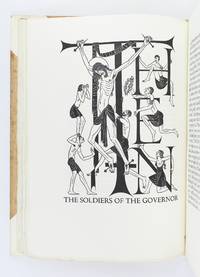
1931ST20201Waltham St. Lawrence: Golden Cockerel Press 1931. No. 352 OF 500 COPIES the first 12 on vellum. 343 x 241 mm. 13 1/2 x 9 1/2". 1 p.l. 268 2 pp 1 leaf colophon. <br/> Original white half pigskin and buckram sides by Sangorski & Sutcliffe stamp-signed on front pastedown raised bands top edge gilt other edges untrimmed. ILLUSTRATED THROUGHOUT with four large wood engravings on section titles and scores of striking large and small woodcut illustrations decorative elements and initials BY ERIC GILL. Printed on Batchelor handmade paper. The front pastedown with the engraved armorial bookplate of Albert and Constance Ramsay-Cohn the bookplate of Louis W. Black and the bookplate of "Downsland Court Ditchling Sussex." Chanticleer 78; A Century for the Century 26. Buckram boards somewhat freckled as usual very faint printer's smudges in one margin otherwise A VERY FINE COPY the pigskin--almost always found soiled and/or damaged--quite clean and pleasing and virtually pristine internally.<br/> <br/> This is an especially appealing copy of the chief work produced by one of the foremost English private presses. One of Eric Gill's outstanding achievements as an illustrator and one of the Golden Cockerel Press' great books the "Four Gospels" has been called by Franklin the finest of all private press books printed between the wars. The success of the work has much to do with Gill's ability to create a harmonious integration of woodcut illustration and typography his Golden Cockerel typeface one of the most important ever cut specifically for private use is introduced here. At the same time that the work achieves an aesthetic balance it also takes risks with the emotional nature of the woodcuts and with its unjustified page layout. As Franklin observes Gill's "pictures beautifully explain their letters as leaves spring from branches. This work is a wonderful extension of typography." Founded in 1920 with the intention to print fine editions of important well-known books as well as new literary works of merit from young authors the Golden Cockerel Press was purchased in 1924 by the illustrator and wood-engraver Robert Gibbings. "Under his direction" says Cave the Press was "transformed into the principal vehicle for the renaissance of wood-engraved book illustration" up until the beginning of World War II. In addition to doing wood engravings himself Gibbings employed a stable of eminent artists including among others Gill John Nash John Farleigh David Jones Eric Ravilious and Blair Hughes-Stanton. Our copy has been owned by two notable collectors and scholars of illustrated books. An early owner was British art historian Albert Mayer Cohn who wrote the catalogue raisonné of George Cruikshank's work. Later the volume passed into the hands of Boston collector Louis W. Black whose Aldine-related bookplate was designed by celebrated wood-engraver Leonard Baskin 1922-2000. Regarding the other bookplate here we have been unable to trace exactly who resided at Downsland Court in Ditchling but it is worth noting that Gill's Sussex artist's community was centered in Ditchling where he lived from 1907-24; it is certainly possible that our copy belonged to someone associated with this group. Golden Cockerel Press unknown
1933ST15997Montgomeryshire Wales: Gregynog Press 1933. No. 37 OF 250 COPIES one of 110 in this binding accompanied by three additional plates on Japon EACH ONE OF 12 SIGNED BY THE ARTIST. 390 x 255 mm. 15 1/4 x 10". 15 leaves. <br/> Fine original dark slate blue Oasis morocco device in blind on front cover blind titling on front cover and spine. In the original paper slipcase somewhat worn and browned but sound. Wood engraved title with device and 21 wood engravings in the text five of them full-page chapter openings by Blair Hughes-Stanton and WITH THREE ORIGINAL SIGNED WOOD ENGRAVINGS ON JAPANESE VELLUM--"The Man Mourns I" 5/12 "The Man Mourns II" 4/12 and "Destruction" 5/12--attractively matted. Printed in blue and black on Japanese vellum; with an additional half-page engraving from chapter I laid in. Harrop 29; De Zilverdistel Cat. II 29; Hughes-Stanton 21. ◆A breath of fading to the spine negligible signs of wear to the binding but a fine copy with only trivial condition issues and the additional engravings pristine.<br/> <br/> This is in Harrop's words "one of the most spectacular books to come from this or any other press" our copy with the bonus of three limited edition wood engravings from the work signed by the artist. "Lamentations" was designed and illustrated by Blair Hughes-Stanton 1902-81 who studied at the school of Leon Underwood at Hammersmith and had a long and productive career producing sophisticated woodcuts as an avant-garde artist. Although he was encouraged to make his expressive sometimes even savage images look more like those of Eric Gill he resisted and successfully established his unique personal style as an illustrator. The three extra engravings here are excellent examples of his dramatic emotional technique; "The Man Mourns I and II" effectively convey overwhelming grief while "Destruction" inspires a feeling of impending doom. From 1930 through 1933 Hughes-Stanton worked for the Gregynog Press in Wales helping to design text layout providing woodcut illustrations and designing bindings. The press was founded in 1922 by two spinster sisters Gwendoline 1882-1951 and Margaret 1884-1963 Davies using a substantial inheritance from their industrialist grandfather; it produced 42 works between 1923 and 1942 eight of them in Welsh. Cave says that the books printed by the Gregynog Press "more than bear comparison with the work of any other private press" and "in the design and execution of bindings the Gregynog Press was far superior to any the Doves Press included.". Gregynog Press unknown
380 p. Numerous penciled notations. Sm. 8vo. Worn original publisher's cloth binding. Used as a school book. Athenaeum Press Series. A book of English Ballads. Gummere was of Philadelphia Quaker stock. PA 31
192 p. Damp stain. Age stain. 12mo. 190 mm. Original cloth spine over paper covered boards. Boards damp stained with loss. Paper spine label perished. Hardbound. Fair. Haliburton was a Nova Scotian politician, judge, and author. Politically, he played a significant role in the history of Nova Scotia prior to its entry into Confederation. While Haliburton gained a reputation as a local businessman and as a judge, his greatest fame came from writing. He wrote a number of books on history, politics, and farm improvement. He rose to international fame with his Clockmaker serial, which first appeared in the Novascotian and later published as a book throughout the British Empire, becoming popular light reading. The work recounted the humorous adventures of the character Sam Slick. He was the first international best-selling author from what is now Canada. S&S/AI 56101. First edition of the second series. PAIMP 23
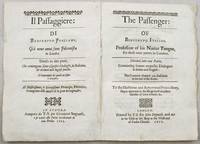
1612ST13801London: printed by Thomas. Snodham. for Iohn Stepneth and are to be sold at his shop at the west-end of Paules Church 1612. FIRST EDITION. 205 x 155 mm. 8 x 6". 18 p.l. 611 1 pp. 601-08 misnumbered 561-68 8 leaves. <br/> New unlettered limp vellum by Courtland Benson in imitation of the original binding. STC 1896; ESTC S124314. ◆Half a dozen gatherings a little browned occasional mild foxing or small rust spots additional trivial imperfections otherwise an excellent copy clean and very fresh in a pleasing new binding.<br/> <br/> This conversation manual by an Italian teacher based in London offers an intriguing glimpse into the lives and concerns of the wealthier classes in 17th century Europe. An early effort to teach language through dialogue the book is part cultural history part guide to better health and it is clear evidence of the importance of the study of Italian in Elizabethan and Jacobean England. The seven dialogues cover subjects from health to travel to servants with Italian and English text on facing pages. Many of the dialogues begin with phrases that will be familiar to all beginning language students: greeting others selecting items of clothing asking prices or directions ordering food. As the conversations progress they explore various topics that one might expect to encounter in polite society. An early morning exchange between master and servant evolves into a discussion of the importance of sleep the optimal amount of sleep for good health and the significance of dreams. A dialogue that begins with ordering meals leads to an involved colloquy about the benefits and disadvantages of fasting and abstinence; the virtues and defects of bread butter meat dairy and eggs; diet recommendations for the healthy and the sick; the best diet for each season; and the importance of a walk after dinner. Other dialogues include advice for travellers observations on the political situation and life at court and finally a discussion of that most eternally fascinating topic: love. This work is of continuing interest and value to linguists as it documents the Benevento Italian dialect which is in need of preservation. It's an extraordinarily rare book probably because it was the sort of volume subjected to hard use: in addition to ours we could trace only two copies in ABPC and RBH since 1948. printed by T[homas]. S[nodham]. for Iohn Stepneth, and are to be sold at his shop at the west-end of Paules Church unknown
196928770AUniversity Park, London: The Pennsylvania University Press, 1969. 8°. xiii, 138 pp. With facsimiles on 6 plates. Original-cloth with dust jacket / Original-Leinen mit Original-Umschlag. (Schutzumschlag etwas berieben u. fleckig, Kopfschnitt etwas stockfleckig / top edge foxed, dust jacket spotted and slightly rubbed).
London, Encounter, 1969. Ilustraciones en b/n. textos de L. Labedz, A. Kavan, E. Mishan, H. Miller, etc. 96p. 4º. Cubiertas originales. Algo deslucida. Book in English. Buen ejemplar. It contains Julia & the Bazooka (Kavan), New Doctors' Dilemma (Miller), Family History (Thomas), among other works.
1812ST19567-094Bungay: C. Brightly and Co. and T. Kinnersley 1812. Sixth Edition. 215 x 133 mm. 8 1/2 x 5 1/4". viii xl 376 pp. <br/> Sympathetic light speckled half calf over marbled paper boards raised bands red and black morocco labels. With 54 hand-colored plates including frontispiece illustrating plants discussed in the text. A couple of ink corrections in a contemporary hand. Johnston 760. Variable foxing with perhaps a fourth of the text noticeably foxed but the plates almost entirely unaffected a few stains to the gutter from pressed flowers now absent other trivial defects but a perfectly readable copy with quite attractive plates in a pleasing virtually unworn retrospective binding.<br/> <br/> First published as "The Useful Family Herbal" in 1764 this popular work provides a description of British plants helpful for at-home remedies. The highlight of the volume is the well-drawn and richly colored plates which Nissen tells us were drawn by the important natural history illustrator Sydenham Edwards 1769-1819 whose work DNB describes as "among the best scientific illustrations of the day." Hill 1716-75 was a perplexingly self-destructive personality who nevertheless managed to produce useful books. He was a surgeon an unsuccessful actor and an apothecary who made considerable money selling quack medicines; he published several books including some botanical works of substantial value like the present one and a steady series of usually abusive periodicals; he was constantly scheming to make money and to raise his reputation above its rightful altitude; and he was always embroiled in controversies because of his ungovernable proclivity toward impertinence and derision as well as his overweening vanity. This last quality together with Hill's direct attacks on Garrick and his friends prompted the latter's memorable epigram reflecting the doctor/actor's reputation among his detractors: "For physic and farces his equal there scarce is:/ His farces are physic his physic a farce is." After publishing some not insignificant scientific writings including a supplement to Chambers' "Dictionary" Hill tried to obtain admission to the Royal Society but his unprincipled character blocked any hope of membership. Despite his reputation "The Family Herbal" offered here in its sixth edition was obviously viewed as serious and significant enough to be reprinted a half century and later after its first appearance. C. Brightly and Co. and T. Kinnersley unknown
199729438AMunich, New York, Prestel, 1997. 4°. 254 (1) pp. With 162 illustrations, 142 in colour. Original-Hardcover with dust jacket / Original-Pappband mit Original-Umschlag. (Gutes Exemplar).
1693ST11540Paris: Chez Claude Barbin 1693-94. FIRST EDITION. 248 x 191 mm. 9 3/4 x 7 1/2". Three volumes. <br/> SPLENDID AND UNUSUAL EARLY 19TH CENTURY MARBLED CALF SUMPTUOUSLY GILT WITH RED MOROCCO SPINES covers with gilt borders of two decorative rules and an elegant undulating floral vine flat straight-grain morocco spines very handsomely gilt in compartments with pointillé ground and central circlet from which radiate four lilies and four leaves on twining stems turn-ins gilt with plain and decorative rolls marbled endpapers all edges gilt. With engraved head- and tailpieces and eight engraved portraits. Verso of front free endpaper with armorial bookplate of Baron de Mackau see below; title page with ink ownership inscription of Alexander Paul Ludwig Goupy in a contemporary hand. Brunet II 822; Graesse II 428; Lowndes I 1374. Isolated gatherings with variable browning a small handful rather browned one leaf in first volume with inexpert early repair of four-inch tear letters of four words partly obscured or displaced and the text and facing page somewhat discolored a few additional trivial imperfections internally but the text generally quite fresh and clean. One joint with five small wormholes a few hardly noticeable shallow scratches to covers a hint of wear to extremities but THE LOVELY BINDINGS IN FINE CONDITION with lustrous leather and gilt with only minor wear and with their very considerable original visual appeal entirely intact.<br/> <br/> This history of "England's Revolutions" begins with the invasion of the Saxons and covers the struggles for the throne of England through the Plantagenets Tudors and Stuarts up to the Restoration and the reign of James II. The learned Jesuit historian Pierre Joseph d'Orléans 1641-98 was described by Voltaire as the first historian to specialize in revolutions--he was also the author of a history of revolutions in Spain an account of the Tartar conquerors of China and a subsequent study of the English Civil War covering the years 1603-90 in depth. The present work was favorably received on both sides of the Channel: the Earl of Chatham commended it in his letters and du Fresnoy described it as a "history written with eloquence and judgment" and praised its equal treatment of Catholics and Protestants. When the present set appeared in a George Bayntun catalogue the bindings were described as "very handsome" and "almost identical to the set of Bertrand De Moleville's 'Histoire de la Révolution de France' 1801-1803 bound by Bozerian" and also from the library of Baron de Mackau 1832-1918 a member of the Chamber of Deputies for 42 years and a Chevalier of the Legion of Honor. The volumes are unusual in their combination of calf boards with contrasting morocco spines and their gilt decoration is particularly lovely. François Bozerian generally called "Bozerian le jeune" was active in Paris from the turn of the 19th century until 1818 and for much of that time he worked with his elder brother Jean-Claude. The Bozerian binderies produced many fine books praised today especially for their technical achievement and elegance of design. The first edition of this work is surprisingly rare in the marketplace: RBH and ABPC record only one other copy at auction since at least 1975. Chez Claude Barbin unknown
Two Volumes bound in one: pp. 323; 347. Engraved bookplate of Macaulay. 12mo. 185 mm. Later 19th century binding. Leather spine over marbled covered boards. Spine decorated and lettered in gold gilt, worn and repaired. Hardbound. Good. Hook was an English man of letters and composer, and briefly a civil servant in Mauritius. He is best known for his practical jokes, particularly the Berners Street hoax in 1810. The world's first postcard was received by Hook in 1840, which he probably posted to himself. While he was confined in a debtors sponging-house from (1823-1825), he wrote the nine volumes of stories afterwards collected under the title of Sayings and Doings. After various successes Hook returned to his old habits and a prolonged attempt to combine industry and dissipation resulted in the confession that he was done up in purse, in mind and in body. His estate was seized by the Treasury. He never married but lived with Mary Anne Doughty and they had six children. Hook was one of the most brilliant figures of Georgian times. He inspired the characters of Lucian Gay in Benjamin Disraeli's novel Coningsby and Mr Wagg in Thackeray's Vanity Fair. Coleridge praised him as being 'as true a genius as Dante'. First American edition. SCARCE. S&S/AI 16576. PAIMP 23
351460 1920 12.5 x 18 cm, 773 pp, Très bon état reliure d'éditeur en cuir vert, frappé en doré sur premier plat d'un monogramme de l'auteur, et d'un lettrage au dos. Doré sur tranche inscription de propriétaire sur page de garde assortie d'une date : "Xmas 1925"
1874H5539London 1874. Paperback. Good. Published 1874 self wraps 11 pp 9.5 inches tall 24 cm very good but for small stain on front cover some corner curling. Gives accounts of the large dinners not just this one but also of a dinner held for Toole at Great Western Hotel Birmingham George Dawson Presiding on July 6th. Toole was one of the most famous actors of his day known for his roles in farces and serio-comic dramas. In July 1874 he set out on an American tour and these banquets were fare-thee-wells from his friends and colleagues. Included among the list of attendees is Charles Dickens d. 1870 -- which makes no sense. In any case his American tour was a flop and he returned to England to resume his previous career. paperback
8vo; 79 pages; 23 cm. Fifth Edition. An early call to action to push for US government support for German Jews. Contents include: Precendents for Popular Protests; American Governmental Intercession on Behalf of the Jews; The Bernheim Upper Silesian Petition before the Council of the League of Nations [description & analysis]; Petition of Franz Bernheim to the Council of the League of Nations [exact text of the petition]. Very good Condition. (HOLO2-87-4)
Madrid, Edit. G&E, 2014. Numerosas ilustraciones en color y negro. 68p. 4ª. Rústica editorial ilustrada. Libro en castellano e inglés. Book in English. Muy buen ejemplar. Larga entrevista a Juliao Sarmento.
197831464ANew York, St. Martins Press, 1978. Gr. 8°. 339 pages. With photographs. Original-half-cloth with dust jacket / Original-Halbleinen mit Original-Umschlag. (Schutzumschlag etwas nachgedunkelt und mit kleiner Randläsion / dust jacket darkened and with a small tear on the edges).
pp. 48, xii [Illustrated advertisements]. Numerous color and monochrome photographs. Damp staining on top margin of last few pages and advertisements. Folio. Softcover. Original blue wraps decorated and lettered in gilt gold. Spine worn with some loss. Very good condition. Similar (if not identical) to the Strand Magazine edition. ENGLAND 6