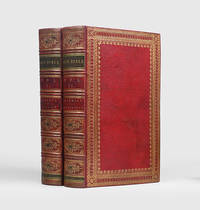
150 résultats
1721JMM9718London: E. Bell J. Darby A. Bettesworth F. Fayram J. Pemberton J. Hooke C. Rivington F. Clay J. Batley and E. Symon 1721. .According to the Stoick Philosophy. Exemplify'd in One Hundred and Three Copper -Plates done by the Celebrated Monsieur Daret Engraver to the Late French King. With an Explanation of each Plate: Written.for the Use of the said Prince.; Dual column text in French & English; Fresh 3/4 brown leather & matching marbled paper over boards by Jon Buller gilt spine title on black label raised bands with blind decoration Frontis engraving title page engraving 2 illustrated preliminary title pages part I & part II & 103 nearly full page engravings head & tail pieces; A good solid textblock with uneven foxing & toning to some margines & a perforated library stamp on the Dedication leaf; In a new binding; 212 pages. . Illus. by Daret. 8.75"X14". E. Bell, J. Darby, A. Bettesworth, F. Fayram, J. Pemberton, J. Hooke, C. Rivington, F. Clay, J. Batley, and E. Symon hardcover
17801278931780. ADULTERY. Collection of Adultery Trials. London: various circa 1780-1808. Octavo contemporary full tan calf gilt raised bands marbled endpaper and edges. $3500.A collection of reports of 11 adultery trials from the late 18th and early 19th centuries combined with 30 engravings of scandalous encounters.Published accounts of adultery trials were very popular in late-18th/early 19th-century England a way to indulge a taste for the erotic and the scandalous under the thin veil of condemnation. Included here are the trials of Robert Gordon for adultery with the wife of Joseph Seymour Biscoe Rev. Mr. Cooper with the wife of Lord Cadogan Sir John Bennett Piers with the wife of Lord Cloncurry ""Thomas Theaker Coachman for Adultery with Mrs. Gregson"" Thomas Sheridan with the wife of Peter Cambell Captain Elwin with the wife of Sir George Brograve J. Hacket with Mrs. Mansergh R. J. Fergusson with the Countess of Elgin Lord Borringdon and Sir A. Paget ""for criminal conversation with the plaintiff's wife"" Colonel T.R. Powlett and Lord Sackville with another plaintiff's wife and Ralph Benson with the wife of Thomas Parr The collection of 30 engravings bound at the back of this book are taken from Trials for Adultery: or a History of Divorces a multivolume work published beginning in 1779. First two trials without title pages; ink marks to a few early pages; expert repair to contemporary binding. hardcover
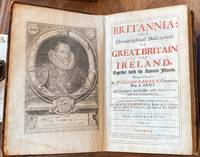
17229900002372London: James and John Knapton et al. 1722. Hardcover. Maps engravings. Folio. Two large volumes in original full leather bindings. Title pages are printed in red and black with an elegant full-page copper engraving of Camden as the frontispiece of the first volume. There are 50 double-page maps of the English counties Ireland Scotland and 'the Islands'; six of the maps are folding. There are also twelve large full-page engravings and numerous smaller engravings in the text. There is a comprehensive index and the errata page is present. A previous owner has reinforced the hinges with linen-like binding tape. The boards are quite worn and rubbed but a competent bookbinder could restore both bindings. The contents are remarkable clean with only occasional foxing and a few stained pages. The maps by the cartographer Robert Morden and which are usually removed and sold individually are all in excellent condition. Overall a good set. William Camden 1551-1623 was an English antiquary and historian who during the reign of Queen Elizabeth travelled throughout England collecting material for 'Britannia' which was first published in 1586. Initially written in Latin it is a survey of the British islands; its archaeology geography institutions monetary system and inhabitants 'chiefly intended for the instruction of foreigners' or so Gibson states in his Preface to this edition. It was first translated into English in 1610 probably under Camden's direction see Ency. Brit. 11th vol. V p. 101. Gibson's revision was first published in 1695. Our set is the undated 'Second Edition' but by comparing particulars with available bibliographical resources we believe it was published in 1722. Printing and the Mind of Man 101. James and John Knapton et al. hardcover
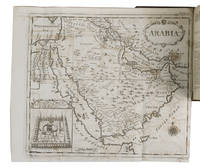
1795ABC_47525Bath: Printed by S. Hazard for J. Johnson Vernor and Hood Ogilvy and Speare J. Sewell H. Gardner and C. and G. Kearsley 1795. Near-contemporary gold- and blind-tooled calf with the title volume number and year of publishing lettered in gold on the spine. 8vo. With a folding engraved map of Arabia 3 genealogical tables including 2 folding 1 plate showing the Kaaba in Mecca all taken from the first editon of 1735. 2 volumes. Fourth edition of the First translation of the Koran into English.a landmark not only in efforts to bring an accurate version of the Quran to the English-speaking world but also in Western Quranic studies in general. Holt notes his "enlightened and objective attitude" in sharp contrast with most Western Arabists of his day or earlier: "His freedom from religious prejudice his obvious conviction that Arabic writers were the best source of Arab history and Muslim commentators the fittest to expound the Quran marks an enormous advance ". In addition to Arabic sources Sale consulted the best Latin translation of the Quran by Ludovico Marracci published in 1698.Rebacked some tears in the folding map repaired.l ESTC T146975; Fück Die Arabischen studien p. 104; P.M. Holt Studies in the history of the Near East 1973 pp. 57-60; McKenzie & Ross eds. A ledger of Charles Ackers p. 41; Schnurrer p. 429. Printed by S. Hazard for J. Johnson, Vernor and Hood, Ogilvy and Speare, J. Sewell, H. Gardner and C. and G. Kearsley, unknown
1736elala1162<p>Oxford: Printed by John Baskett 1736-35. 1736. 2 Volumes in 1. undated engraved title by J.Sturt with imprint of Richard Ware. with Apocrypha & index. contemporary dark red morocco wide gilt tooled borders on covers incorporating crown & sceptre ornaments gilt tooled spine with 5 raised bands centre covers with black morocco onlay incorporating letters JHS & winged angel head ornaments within gilt flame border bit rubbed with minor stain on upper cover joints & spine ends repaired short splits in lower joints occasional light spotting. Provenance: Capt. William Wilkie of Montrose d. 1761 his spouse Mrs. Ann Napier d. 1779 William Petrie d. 1834. BOUND WITH: CHURCH OF ENGLAND. BOOK OF COMMON PRAYER. The Book of Common Prayer. 4to. undated engraved title by J.Sturt with imprint of Richard Ware. some marginal dampstaining to first few leaves a few leaves browned. Oxford: Printed by John Baskett 1736. BOUND WITH: DOWNAME John. A Brief Concordance. 4to. London: Printed for R.Ware 1732. BOUND WITH: BIBLE. ENGLISH. The Historical Part of the Holy Bible Or The Old and New Testament Exactly and Compleatly Describ’d in above Two Hundred Historys Curiously Engrav’d by J.Cole From Designs of ye best Masters. 4to. 51 engraved plates containing 204 illustrations. London: Sold by Richard Ware nd. BOUND WITH: SACRED GEOGRAPHY Contained In Six Maps. 4to. title in red & black. 6 folding double-page engraved maps some short map fold tears – no loss. London: Printed for Richard Ware 1725. A handsome copy of an interesting composite bible and prayer book. All of the plates and maps are bound at various intervals throughout the text. The maps depict 1 the situation of Paradise and the country inhabited by the Patriarchs 2 the peopling of the world by the sons of Noah and the Israelites journeying in the wilderness 3 a plan of the city of Jerusalem with a view of Solomon’s Temple and all the sacred utensils therein 4 the Holy Land divided into the Twelve Tribes of Israel in which are exactly traced our Saviour’s travels 5 the land of Canaan and 6 the travels of St. Paul and the rest of the Apostles. Herbert 1032. See Herbert 965 970 974 992 993 & 1116 for similar variously dated combined texts with engraved titles bearing Ware’s imprint as here. Hardcover. Very Good.</p> Oxford: Printed by John Baskett, 1736-35. hardcover
17109200United Kingdom various 1710. Second Printing. Hardcover. Very Good. Second Printing. Hardcover. A collection of poetry tracts in the 18th century assembled and bound as a set showcasing typical and popular poetry writing and style in England. This was a common practice to gather political satire and literary tracts and bind them together generally at the discretion of the owner or in some cases the printer and/or bookseller. The majority of these works are poetry written as political satire towards the Tory government. This method of binding separate works 'sammelband' also speaks to contemporary collecting and publishing practices. <br /> The bound volume lists separate works as follows:<br /> attrib. Ward Edward. "The Pleasure of a Single Life or the Miseries of Matrimony. Occasionally Writ upon the many Divorces Lately Granted by Parliment. With the Choice or the Pleasures of a Country-Life." London: Printed and Sold by H. Hills in Black-fryars near the Water-fide 1709.<br /> <br /> Wilmot John. Earl of Rochester John Freke. "The History of Insipids a Lampoon By the Lord Roch---r. With his Farewell. 1680. Together with Marvil's Ghost. By Mr. Ayloff." London: Printed and Sold by H. Hills in Black-fryars near the Water-fide 1709.<br /> <br /> Blackmore Richard. "The Kit-Cats a Poem. To Which is Added the Picture in Imitation of Annacreon's Bathillus. Also also the Coquet Beauty by the Right Honorable the Marquis of Normanby." London: Printed and Sold by H. Hills in Black-fryars near the Water-fide 1709.<br /> <br /> Anon. "A Well-Timber'd Poem on Her Sacred Majesty; Her Marble Statue and Its Wooden Enclosure in Saint Paul's Church-Yard." Psalm XXII. 16. The Wicked have Enclosed Me. London: Printed and Sold by H. Hills in Black-fryars near the Water-fide 1712.<br /> <br /> Cavendish William. "The Charms of Liberty: A Poem. By the late Duke of D--. To Which is added Epigrams. Poems and Satyrs." Written by Several Hands. London: Printed in the Year 1709.<br /> <br /> Shippen William. "Faction Display'd. A Poem. From a Corrected Copy." London: Printed and Sold by H. Hills in Black-fryars near the Water-fide 1709.<br /> <br /> Dryden John. "Absalom and Achitophel. A Poem." London: Printed and Sold by H. Hills in Black-fryars near the Water-fide For the Benefit of the Poor1708.<br /> <br /> Wilmot Earl of Rochester John. "Poems on Several Occasions: with Valentinian; a Tragedy. To which is added Advice to a Painter. Written by the Right Honorable John late Early of Rochester." London: Printed and Sold by Booksellers of London and Westminster 1710.<br /> <br /> Milton's Sublimity Asserted: in a Poem. Occasion'd by a late Celebrated Piece Entituled Cyder a Poem; in Blank Verse by Philo-Milton. London: Printed for W. Hawes and Sold by J. Morphew near Stationer's Hall and Stephen Fletcher Bookseller in Oxford 1709. Nine sammelband pamphlets bound in blind stamped decorative calf overlay recased with brown cloth boards; apparent shelf wear and toning to leaves each pamphlet constitutes approximately 16 pp. 8vo. Scarce copies of all in disbound condition so this bound aggregate is a rare and singular entity. hardcover
1739151910Oxford: Printed by John Baskett Printer to the University 1739 & 1751. A large Bible and prayer book for the Georgian lectern An imposing early Georgian lectern bible together with the Prayer Book both preserved in matching contemporary reversed calf bindings and unusual thus. Baskett monopolized English bible production for decades with his folio editions the grandest and most imposing designed for use in churches. His great bible of 1717 was a truly impressive edition of which Harry Carter the historian of Oxford printing writes "only Baskerville's Bible Cambridge 1763 is its equal among English Bibles for beauty of type impression and paper" The History of the Oxford University Press 1975 I p. 171. Two works folio Bible: 464 x 288 mm; Prayer Book: 400 x 246. Engraved frontispiece in Prayer Book. Contemporary panelled reversed calf. Divisional title for New Testament with verso recording births and deaths in the Holgate Family in Whixley from 1809 to 1913. Both with minor repair at foot. Bible: front free endpaper affixed to pastedown light peripheral wear staining to fore margin some worming in gutter of sigs. B and C in the New Testament not affecting text. Prayer Book: slight rubbing and minor wormholes at head of spine. Handsome copies. ESTC T90374 & T216675; Bible: Darlow & Moule 1042. unknown
1791373037Worcester: Isaiah Thomas 1791. First Edition. 48 engraved plates complete. 1310 2 89 3pp. Separate OT and NT titles. The family register between the Apocrypha and NT unaccomplished. Royal quarto. Contemporary calf covers ruled in gilt spine gilt with raised bands red morocco lettering piece marbled endpapers joints cracked but cords holding worn at extremities spine a bit abraded with some loss at top. Foxing a few leaves with short tears or small voids. Provenance: Ebenezer Byles signature on verso of the OT title. Housed in a blue cloth clamshell box. First Edition. 48 engraved plates complete. 1310 2 89 3pp. Separate OT and NT titles. The family register between the Apocrypha and NT unaccomplished. Royal quarto. Thomas' quarto bible was published in three distinct issues: with 2 copperplates only i.e. frontispieces to the Old and New Testaments; with two copperplates and John Brown's 89-page concordance in the rear; and the rarest and most deluxe form as here with 48 copperplates and the concordance. Of this last issue according to Thomas's catalogue the work was published "in elegant binding." The explanation for the work being complete with 48 plates rather than the 50 plates of the folio Thomas bible of the same year is easily explained: the frontispieces used for the folio bible plates I and XXXIII were too large for the quarto edition and thus were omitted with plates XXIX and XLVIII used as frontispieces of the quarto bible instead.<br /> <br /> A very difficult edition to find in a contemporary unsophisticated binding. Evans 23185; Hills 30; ESTC W4496 Isaiah Thomas unknown
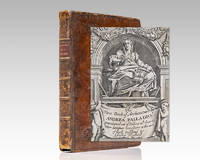
1733151582London: Printed for A. Bettesworth and C. Hitch and J. Osborn in Pater-noster-Row 1733. Finely bound eighteenth century example of Godfrey Richards' English translation of the first book in Palladio's monumental work. Octavo bound in full contemporary polished calf with a morocco spine label lettered in gilt front and rear panels decoratively stamped in blind title page printed in red and black additional engraved pictorial title page illustrated with 71 engraved plates and full-page illustrations 4 folding including a view of St. Paul's Cathedral woodcut illustrations advertisement leaf at end. Twelfth edition. Neat ownership inscriptions and small bookplate to the front free endpaper. Bookseller's ticket to the pastedown. In very good condition with the engravings very crisp and bright. One of the foremost architects of the Venetian Renaissance Andrea Palladio 1508–1580 based his designs on the principles of classical Greek architecture and the traditions of Roman building as described by Vitruvius. He is widely regarded as one of the most influential figures in the history of Western architecture particularly known for his villas in the Veneto as well as his palaces in Vicenza and churches in Venice all within the Venetian Republic. His architectural theories were codified in his treatise I Quattro Libri dell’Architettura The Four Books of Architecture which exerted a lasting influence on architectural practice across Europe and the United States. Palladio’s style later termed Palladianism combined elements of Greek Roman and Renaissance design emphasizing symmetry proportion and harmony in a manner inspired by classical temple architecture. Printed for A. Bettesworth and C. Hitch, and J. Osborn in Pater-noster-Row unknown
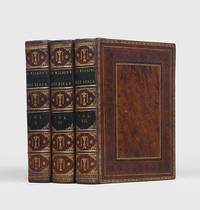
1800CJW1405London: T. Bensley for T. Macklin final volume Bensley for T. Cadell & W. Davies 1800. First Printing of this Edition. 484 x 390 mm. 19 x 15 1/4". Seven volumes. <br/> Once splendid contemporary black straight-grain morocco gilt covers framed by Greek key roll palmette roll and multiple gilt rules double raised bands spine compartments densely gilt with rows of alternating star and circlet tools gilt titling turn-ins with gilt chain roll purple endpapers all edges gilt some inexpert but not obvious repairs to joints and backstrips. With more than 100 allegorical headpieces and tailpieces and some 70 SPLENDID LARGE-FOLIO SIZE COPPER PLATES after Fuseli Reynolds West and others. Herbert 1442 and 1651. ◆Extremities rather rubbed boards a bit scuffed but the decorative contemporaneous bindings solid and not without appeal. Plates somewhat foxed mostly to margins mild to moderate offsetting from plates occasional mild offsetting in the text bed but still a fresh wide-margined copy.<br/> <br/> The most prodigious form of scripture in English ever published the Macklin Bible features very large and bold type fine Whatman paper and a series of engravings by some of the most celebrated artists of the period. Like the Boydell "Shakespeare Gallery" also printed by Bensley our Macklin Bible is a vast picture book with illustrations that are grand both in size and emotional impact. According to DNB Macklin 1752/3-1800 announced his intention to produce a lavishly illustrated luxuriously produced folio Bible in 1789 and he spent the next 11 years and £30000 making his dream a reality. His efforts paid off: "the subscription list for 703 copies at £46 1s. apiece was headed by the king the queen and the prince of Wales." Sadly Macklin died just five days after the last engraving was finished and did not live to see his masterpiece become one of the most acclaimed English Bibles. As DNB observes "The Macklin Bible endures as the most ambitious edition produced in Britain often pirated but never rivalled." Copies of the Macklin Bible were often put into ornate bindings as was the present set; despite the depradations of time the workmanship of a superior London binder remains apparent. T. Bensley for T. Macklin [final volume Bensley for T. Cadell & W. Davies] unknown
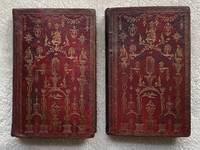
1787271Edinburgh: Assigns of Alexander Kincaid 1787. Very good. Two works in two volumes. Large Octavo 211 x 130 mm. Collation: BIBLE: A-4A8 complete. PSALMS: A-E8 complete. Contemporary Scottish bindings: red morocco elaborately tooled in gilt to a "Chippendale" motif smooth spines gilt; marbled endpapers a.e.g. in vol. 1 the front joint expertly repaired and tape removed from inner hinges. Preserved in a protective cloth case. INNOVATIVE AND HIGHLY UNUSUAL SCOTTISH CHIPPENDALE ROCOCO BINDINGS COMBINING CHINOISERIE AND NEOCLASSICAL ELEMENTS EXHIBITING THE INDEPENDENCE OF SCOTTISH WORK AT THIS TIME. <br /> <br /> The present example is a striking hybrid of late 18th-century decorative art in Britain the likes of which we have not encountered hitherto. Here "oriental" birds and peacocks are juxtaposed with patriotic depictions of Britannia uncharacteristically surmounted by a fleur-de-lis bold anchors columns sunbursts dripping garlands flowers sheaves of wheat and urns. Presented in the Chippendale style the present binder who is as yet unnamed introduces rococo ornaments while enclosing all of the above with an unmistakably neoclassical greek-key roll. <br /> <br /> EIGHTEENTH-CENTURY ROCOCO BINDINGS OF THIS QUALITY ARE RARE PARTICULARLY THOSE EXECUTED IN SCOTLAND. <br /> <br /> Rococo book arts in Scotland have been almost completely unexplored on account of the paltry number of examples with which we are able to study. Robert Adam's designs for the bindings of his "Ruins of Spalatro" 1764 is a bold statement of the neoclassical for he was justly celebrated. But we now know that Adam was not exclusively "Grecian." David Pullins' heroic archival research in Sir John Soane's Museum has shown that Adam received three previously unexamined commissions for a seemingly antithetical kind of decoration which he calls "neoclassical chinoiserie" specifically Adam's drawings for an unrealized chinoiserie looking-glass dated 1769 for Edwin Lascelles 1st Earl of Harewood. SOURCE: "Robert Adam's Neoclassical Chinoiserie" in: West 86th: A Journal of Decorative Arts Design History and Material Culture online. We would argue that the present bindings exhibit such a blend of Chippendale chinoiserie rococo and neoclassical. For a general note on English "Chippendale" and "Chinoiserie" bindings see G.D. Hobson "English Bindings of J.R. Abbey" p. 126.<br /> <br /> ¶ Our bindings may be linked to four others -- all greatly inferior -- which share the large "eagle" tool in common as noted by Mirjam Foot:<br /> <br /> 1. British Library Davis 253 Bible Edinburgh 1790 = Henry Davis Gift Vol. II No. 283; <br /> 2. National Library of Scotland F.4.e.9 Bible Psalms Edinburgh: Assigns of A. Kincaid 1789; <br /> 3. Washington Cathedral Library Bible Edinburgh 1789; <br /> 4. Glasgow University Library DXC 48-48A Bible Cambridge 1792 Psalms Glasgow 1793. <br /> <br /> PROVENANCE: red morocco bookplate of "MARION MALLOCH 1794" inside both volumes -- sold by us to a private collector in 2007 -- bought back by us in 2023. <br /> <br /> ¶ REFERENCES: ESTC 91765 Darlow & Moule 1319; ESTC 91766. Assigns of Alexander Kincaid unknown
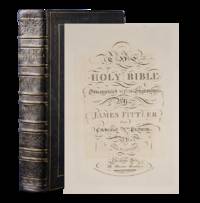
17956211London: R. Bowyer 1795. First thus. Near Fine. Two large quarto volumes 12 1/2 x 9 3/4 inches; 318 x 248 mm. Unpaginated. Text in double columns. With two copper-engraved title-pages with a separate title-page for the New Testament and sixty-two plates including two frontispieces from the works of Dürer Rembrandt Van Dyck Rubens and others. Lower corner of 3H3 possible paper-fault torn away with no loss of text. Some foxing to a few of the plates otherwise remarkably bright and fresh. Contemporary English full dark blue straight-grained morocco. Covers with two gilt borders surrounding blind-stamped Greek key design. Spines with five double raised bands ruled in gilt blind-stamped Greek key design and lettered in gilt in compartments. Board-edges decorated in blind elaborate gilt decorated turn-ins gray liners and endleaves all edges gilt. Gift signature to front flyleaf in volume one dated 1841 and a tipped-in square of paper with another nineteenth century gift inscription. Some light scuffing to the boards otherwise near fine.<br /> <br /> A spectacular example of the large paper edition this Bible sometimes called the "Killer Bible" for its typographical error in Mark 7 verse 27: "Let the children be killed" rather than "filled." It was richly illustrated by James Fittler 1758-1835 an esteemed British engraver of portraits and landscapes who served as marine engraver to King George III. He produced illustrations for the Boydell Shakespeare and Dibdin's Aedes Althorpinae. In this edition Fittler based his engravings on Old Master paintings befitting the gravity of the text. The printer Thomas Bentley produced large editions for Thomas Macklin Rudolph Ackermann and Paul Colnaghi all publishers of plate books; he also printed several of the earliest books for the Roxburghe Club.<br /> <br /> ESTC lists three editions of the Bowyer and Fittler Bible: this one which ESTC describes as the large paper edition; the regular two-volume quarto edition also 1795; and a: two-volume twelvemo edition 1796 which was issued in parts. ESTC T95050. Near Fine. R. Bowyer unknown
1791373866Worcester: Isaiah Thomas 1791. First Edition of Isaiah Thomas's Folio Bible. 50 engraved plates. 4 460; 2 461-1012pp. Text in two columns. 2 vols. Folio. Contemporary calf panelled in gilt and blind spine with raised bands in six compartments tooled in gilt on either side of each band red and black morocco labels expert repairs. Moderate to heavy foxing repaired tears to text leaves and plates. First Edition of Isaiah Thomas's Folio Bible. 50 engraved plates. 4 460; 2 461-1012pp. Text in two columns. 2 vols. Folio. "The two Thomas Bibles of 1791 were without doubt far in advance of any other publications of the same kind that had appeared in America in point of typography excellence of paper binding and general execution" Wright.<br /> <br /> Dubbed "the Baskerville of America" by Benjamin Franklin Isaiah Thomas issued a folio and a quarto Bible almost simultaneously. Published immediately after the ratification of the Bill of Rights the folio edition arguably his magnum opus opens with a note from Thomas situating it as an important accompaniment to this national development: "The civil authority hath set an example of moderation and candor to all Christians by securing equal privileges to all; and it must be their ardent and united wish independently of foreign aid to be supplied with copies of the sacred Scriptures the foundation of their Religion - a religion which furnishes motives to the faithful performance of every patriotic civil and social duty."<br /> <br /> In preparing the work Thomas compared the language of "not less than eight" significant English Bibles most but not all of which were printings of the King James translation and then had every page of the present edition examined by "the Clergymen of Worcester and . other capable persons." <br /> <br /> In keeping with his patriotism all the plates are by American engravers an expensive undertaking: the majority by Joseph Seymour with others by John Norman Samuel Hill and Amos Doolittle. It is unusual to find complete copies with all fifty plates. The plate list often lacking is present in this copy. The work was issued either in one volume or in two volumes as here the latter including an additional general title page for the second volume bound in as a cancel.<br /> <br /> A celebrated American Bible from one of the young country's most important printers. Evans 23186; Hills 29; ESTC W4497; Sabin 5172; Wright Early American Bibles pages 74-88 Isaiah Thomas unknown
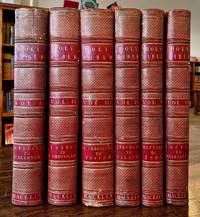
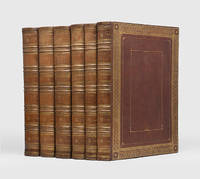
1800512129Thomas Bensley for Thomas Macklin 1800. First Edition. Hardcover. VERY GOOD. First edition of The Macklin Bible a masterpiece of book design that has been called 'the last of the great Bibles.' Complete in six volumes without the posthumously published Apocrypha. Elephant Folio 19' x 15.5' and . Full red morocco covers with gilt rolled Greek meander borders spines with double raised bands gilt in seven compartments all edges gilt gilt dentelle marbled endpapers. Sturdy bindings are remarkably solid despite the demands of these heavy textblocks. Very Good ex-libris from the John Wilson Collection of Multnomah County Library with small bookplates on paste downs a few penciled notes to versos of title pages but otherwise unmarked. Wide margins. Bindings scuffed and soiled rubbed along joints wear at heads and tails. Contents generally bright with typical offsetting from engravings; many tissue guards still present. Handwritten 2pp. 1889 note from London bookseller Henry Sotheran tipped-in to Vol. 1 wherein he apologizes for the lack of The Apocrypha which was published in 1816. Exhaustively illustrated throughout with engravings including 70 full-page copperplates after Benjamin West Angelica Kauffman Henry Fuseli William Artaud Joshua Reynolds Philip James de Loutherbourg and others. Weighing in at well over 100 lbs this Macklin Bible will ship in multiple boxes and will require additional fees for international delivery. Thomas Bensley for Thomas Macklin hardcover
179864008London: J. and A. Arch 1798. Small 8vo. 2 cancel title viii 1-69 2 70-210 2 errata pp. plus 2 pp. publisher’s advertisements for Joseph Cottle the original Bristol publisher. Full brown goatskin binding gilt ruling on covers gilt ruling lettering & rosette decorations on spine marbled endpapers occasional light creasing to corners thumbing & faint soiling to fore-edges of a few leaves occasional spotting still a VG copy. First edition second London issue and perhaps the earliest obtainable issue of this pioneering work of English Romanticism as well as the first major literary undertaking of these English poets. The first issue printed in Bristol by Biggs & Cottle to whom Wordsworth had sold the copyright for 30 guineas reached 500 copies and thereupon sold the entire edition to J. & A. Arch who inserted their own title bearing their imprint and this one features Coleridge’s poem “The Nightingale†after “Lewti†was dropped. This copy does bear the “Off†not handcorrected to “Oft†on p. 19 “woods†and “thought†complete on lines 14 & 16 of p. 204 rather than later corrected to wood and without final comma after thought. The two young poets and French Revolution sympathizers had parked themselves in the secluded village of Holfond Somerset avoiding scrutiny in London & Bristol of English authorities and along with Wordsworth’s sister Dorothy and John Thelwall developed a distinctive new artistic vision which influenced future generations. Their intent was to write poetry reflecting seriously on the lives of humble rustic people and in a style of language imitating everyday speech so the verse was less artificial and formulaic of traditional poetry. This first appearance of “The Rime of the Ancyent Marinere†explores faith guilt cruelty obsession and endurance of a mariner stranded alone upon a ghost ship afflicted with supernatural forces after killing an albatross and explores the sacredness of nature. See: Mark Reed A Bibliography of William Wordsworth 1787-1930 2013; Wise Bibliography of the Writings in Prose and Verse of William Wordsworth. J. and A. Arch, unknown
1791345231Worcester: Isaiah Thomas 1791. First Edition of Isaiah Thomas's Folio Bible. 50 engraved plates. Folio. Contemporary calf red morocco lettering piece. Expert repairs at top and bottom of spine. Housed in a morocco backed box. First Edition of Isaiah Thomas's Folio Bible. 50 engraved plates. Folio. "The two Thomas Bibles of 1791 were without doubt far in advance of any other publications of the same kind that had appeared in America in point of typography excellence of paper binding and general execution"--Wright Early American Bibles pages 74-88. Evans 23186; Hills 29; ESTC W4497 Isaiah Thomas unknown
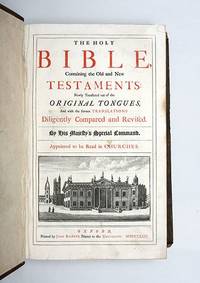
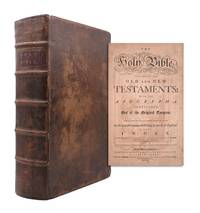
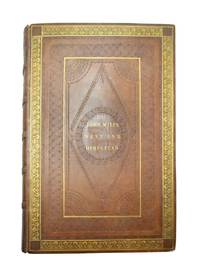
176369256Cambridge: Printed by John Baskerville 1763. BIBLE IN ENGLISH; BASKERVILLE John. BASKERVILLE John. The Holy Bible Containing the Old Testament and the New. Translated out of the Original Tongues and with the Former Translations Diligently Compared and Revised by His Majesty's Special Command. Appointed to be Read in Churches. Cambridge: Printed by John Baskerville 1763.<br> <br> Full Description:<br> <br> BIBLE IN ENGLISH. The Holy Bible Containing the Old Testament and the New: Translated out of the Original Tongues and with the Former Translations Diligently Compared and Revised by His Majesty's Special Command. Appointed to be Read in Churches. Cambridge: Printed by John Baskerville 1763.<br> <br> First edition with the list of subscribers in the third state ending with "The Hon. Charles York Esq; Attorney General." Two large folio volumes in one 19 1/8 x 12 1/4 inches; 480 x 311 mm. Complete with 573 leaves. Text ends on leaf 13E1 and is followed by an Index and Tables a-e f1. List of subscribers bound in after title-page and dedication. Text in double columns.<br> <br> Beautifully bound in early 19th-century full diced tan calf. Boards elaborately ruled and tooled in gilt and blind. Spine stamped and lettered in gilt. Front board lettered in gilt reading "John Miles/ West End/ Hampstead." Marbled endpapers. All edges marbled. Gilt dentelles. Back board with some very mild scuffing and a tiny bit of worming to head of board and at top and bottom of outer hinge. Some light foxing to first title-page and preliminary leaves but text is very clean. With the dates of births and deaths of the Miles family in old ink manuscript on the front free endpaper. Overall a very good clean copy.<br> <br> Originally priced four guineas in sheets for subscribers "the edition consisted of 1250 copies of which 556 were remaindered in 1768 and bought by the London bookseller R. Baldwin at 36s. each.Baldwin was offering copies at three guineas in sheets in 1771" Gaskell.<br> <br> "One of the most beautifully printed books in the world" Dibdin. This edition "has always been regarded as Baskerville's magnum opus and is his most magnificent as well as his most characteristic specimen" T.B. Reed A History of the Old English Letter Foundries p. 279. Gaskell declared that the title-page to the New Testament is "a perfect page of fine printing."<br> <br> Although the Baskerville Bible is now recognized as one of the greatest Bibles of all time it was initially a financial failure. Costing £2000 to print the remaining stock about half of the edition was remaindered five years after publication to a London bookseller. It was Baskerville's last great book.<br> <br> "Aesthetically the highest point in English Bible printing so far was John Baskerville's folio printed at Cambridge in 1763. To achieve his ambition to print a folio Bible Baskerville had to become University Printer on not very advantageous terms. The Bible uses his types paper and ink and shows his characteristic 'machine-made' finish: very smooth and even in colour and impression with glossy black ink on smooth paper. The design is traditional but the quality of material and workmanship is so high and the conventions are so delicately modified and consistently applied that the result is extremely impressive" The Cambridge History of the Bible: The West from the Reformation to the Present Day p. 464.<br> <br> Darlow & Moule 857. ESTC T93106. Gaskell Baskerville 26. Herbert 1146. Huntington Library Great Books in Great Editions 6.<br> <br> HBS 69256.<br> <br> $15000. Printed by John Baskerville unknown
1800173564London: printed for Thomas Macklin by Thomas Bensley 1800. The grandest Bible ever printed in Britain First Macklin edition of the Bible handsomely bound. "The most ambitious edition produced in Britain often pirated but never rivalled" ODNB this Bible is a masterpiece of book art published at the apogee of British copperplate engraving and involving some of the best artists of its day. The Bible dedicated to the king was published serially between 1791 and 1800 in 70 parts each at £1. 1s. Thomas Macklin 1752-1800 began work on the project in the year following the opening of his famous Poets' Gallery in Pall Mall. The prospectus issued in 1789 explained that he was planning to add scripture pictures to his exhibition to be then reproduced in a "magnificent Bible". The paintings were realised by several artists including Hamilton Fuseli and Loutherbourg and exhibited at the Poets' Gallery between 1790 and 1796. Initially promising 60 plates the project eventually included 71 some of which never appeared in Macklin's exhibitions. Most of the headpiece and tailpiece vignettes were designed by Loutherbourg the type was cut by Joseph Jackson and his apprentice Vincent Figgins and the paper made by Whatman. The Bible took 11 years to complete and the publication costs exceeding £30000 almost bankrupted Macklin. Though the final engraving was finished five days before his death the last of the vignettes was not completed for another six weeks and he consequently never saw the finished work. Some copies of the Bible were bound in a fine neoclassical style by contemporary London binders particularly Staggemeier and Welcher. This set is unsigned but the treatment of the spine appears closer to the work of Kalthoeber see Maggs Cat. 1212 II no. 164. This set is bound in six volumes as recommended in the instructions to the binder vol. I. However sets are sometimes found bound in seven. 6 vols large folio 458 x 370 mm. With 71 copper engraved plates after Fuseli and others 113 wood engraved vignette head- and tailpieces. Contemporary diced russia spines with raised bands compartments lettered and tooled in gilt elaborate gilt frames to covers incorporating foliate and flower tools board edges and turn-ins tooled in gilt leather inner hinges marbled endpapers edges gilt silk bookmarkers. Bound with half-titles. A few trivial marks and light scuffs to covers small cosmetic repair to rear cover of vol. I superficial splits to a couple of joints subsequently retouched and now firm occasional foxing to contents and offsetting from plates else clean and bright. A very good set. ESTC T123175; Herbert 1441; Lowndes I p. 192. Maggs Bros Ltd Bookbinding in the British Isles Sixteenth to the Twentieth Century Cat. 1212 Part II 1996. hardcover
1789101717Philadelphia: William Young 1790 i.e. 1789. First edition thus. 12mo. 816 pp. with separate New Testament title-page. Collation: A-2L¹². Contemporary sheep; covers worn with some loss to leather exposing boards front joint split and holding by one cord rear joint with old sewed repair contents toned and dust-soiled a few gatherings worn at fore-edge touching text U1 "Song of Solomon" torn and damaged with loss to text and old paper repairs FIRST EDITION OF THE SECOND ENGLISH BIBLE PRINTED IN THE UNITED STATES and the first English Bible printed after the adoption of the Constitution. It follows Robert Aitken's Bible published in Philadelphia 1781-2. Printing of Young's 12mo Bible which Hills states was advertised for use in schools was already underway when Aitken's 1789 application to Congress for an exclusive right to publish Bibles in America was rejected. Evans notes that "this edition was published in 1789 although dated 1790" and quotes from the publisher's advertisement: "this edition has two strong recommendations to preference it is cheaper than any imported edition; and it is composed entirely of American manufacture." Young followed with a 24mo edition with metrical psalms in 1790.Rare: ESTC locates three copiestwo at AAS NYPL. Complete and in its original binding.PROVENANCE: contemporary birth records on verso of New Testament title-page for Vannosdoll family; Catherine Pellar early ownership inscription on title-page REFERENCE: ESTC W4491; Evans 22345; Herbert 1348; Hills 25 24mo issue; Rumball-Petre America's First Bibles Appendix no. 13 "Second Protestant Bible in English"; Sabin 5168; not in Darlow and Moule William Young hardcover
1794302622Boston: Printed at Boston by Alexander Young and Thomas Minns For J. Boyle B. Larkin J. White Thomas and Andrews D. West E. Larkin W.P. Blake and J. West. Sold by them at their respective book-Stores 1794. A-U6 W6 X-Z6 Z6 verso blank. Text printed in two columns. 1 vols. 12mo. Recent half calf. Small hole in top of title page margin not affecting text title leaf with tissue repair at gutter and fore edge margin 4 other leaves with small repairs to margins. Very good. A-U6 W6 X-Z6 Z6 verso blank. Text printed in two columns. 1 vols. 12mo. This rare edition of the New Testament printed in 1794 at Boston for a consortium of booksellers aimed to provide a distinctly American printed Bible as an alternative to the British printings being imported and thus included the Great Seal of the United States prominently displayed on the title page. Thus suggesting that even at the dawn of the American republic certain clauses of the Bill of Rights were subject to fluid interpretation. This is an early appearance of the Great Seal of the United States and is the only instance where it was used in conjunction with a patently religious work. Copies are recorded at AAS and Duke. Evans 26664; Hills English Bible in America 48; ESTC W4683 AAS Duke Printed at Boston, by Alexander Young and Thomas Minns, For J. Boyle, B. Larkin, J. White, Thomas and Andrews, D. West, E. Larki unknown
1785173867Bath: printed by R. Cruttwell; and sold by Rivingtons' Dilly Robson & Robinsons' 1785. With three Biblical fore edge paintings An imposing Bible handsomely bound by Edwards of Halifax in their celebrated "Etruscan" style. The set is unusual in featuring motifs relevant to the contents on all three fore-edges - scenes from the Old and New Testaments - as opposed to the more typical landscapes. Edwards famously almost never signed their bindings and their style was very frequently reproduced by others. This set is cited by Weber in his Annotated Dictionary of Fore-Edge Paintings as "a notable Bible from the Edwards bindery" Weber 2010 p. 118-9 and it is used as an example in a chapter devoted to distinguishing genuine Edwards bindings and paintings from imitations. The technique of concealing a painting under the gilt fore edge of books was revived in England by William Edwards about 1780. "The Edwards family not only carried on the art but enlarged it from the mainly floral and heraldic early efforts with occasional religious scenes and royal portraits to embrace views of well-known country houses set in landscapes" Marks p. 194. They were the originators of the bucolic English fore-edge painting which became standard in the 19th century. Scholars believe that the paintings were made in Halifax rather than in London by artists both within and outside the family and under the supervision of Thomas Edwards. Inspiration for the images was taken from various sources often engravings appearing in other books; for landscapes the favourite artist was William Gilpin a pioneer of the "picturesque". Volume I features a moment from Genesis: Abraham welcoming three angels into his home an act of hospitality which moved the Lord to bless Abraham and his wife with a son despite she was far beyond childbearing age. On Volume II is an episode from Exodus: an Egyptian princess and her attendants discover the infant Moses in the bulrushes of the Nile. Volume III displays an animated scene from the life of St. Paul as he preaches in Rome. The "Etruscan" style binding with a border of palmettes and other classical ornaments stencilled in black on brown calf was one of the firm's most popular designs. The origin of this style is debated: some 19th-century writers attributed the invention to John Whitaker while others ascribe it to the Edwards firm. It is known that Edwards employed it from at least 1775. Provenance: a Herman Frasch Whiton probably the American sailor and Olympic champion 1904-1967 with his elaborately designed bookplate featuring his arms and a ship on the verso of an initial blank in each volume. b Randall J. Moskovitz MD American collector from Memphis Tennessee with his bookplates loosely inserted. 3 vols large quarto 306 x 238 mm. Contemporary "Etruscan" calf by Edwards of Halifax spines with raised bands compartments tooled in gilt with flower and urn centerpieces and pediment cornerpieces black morocco labels covers with gilt pentaglyph and metope border stencilled frame of palmettes central panel of tree calf enclosed by gilt Greek key roll board edges and turn-ins tooled in gilt marbled endpapers each vol. with a contemporary fore-edge painting depicting a Scriptural scene edges gilt green silk bookmarkers. Spines uniformly darkened binding judiciously refurbished joints and spine ends repaired gilt retouched on spine light rubbing to palmettes design in places intermittent foxing and slight toning else clean the fore-edge paintings beautifully preserved. A handsome set. P. J. M. Marks "The Edwards of Halifax Bindery" British Library Journal vol. 24 no. 2 1998; Jeff Weber Annotated Dictionary of Fore-Edge Painting Artists & Binders 2010. See also: G. E. Bentley The Edwardses of Halifax 2015; Carl J. Weber Fore-Edge Painting 1966. hardcover
1763306680Birmingham: John Baskerville Printer to the University 1763. The third variant of the Subscriber's list with the most names ending with that of the Hon. Charles York Esq Attorney General. 1146 pp. 1 vols. Folio. Bound in full dark blue straight-grained morocco covers tooled in gilt with wide Greek key and drawer handle border with floral cornerpieces narrow gilt filet-bordered rectangles tooled all over with drawer handle and sunburst tools and semé off small dots with central gilt-stamped L with crown spine with six double raised bands titled in one compartment stamped with owner's name "Frederic Powys" in another and the rest richly gilt a.e.g. pink endsheets by Staggemeier and Welcher with their circular pink paper label on front pastedown. Front joint and headcap with conservation repairs of the highest quality light foxing to text. The third variant of the Subscriber's list with the most names ending with that of the Hon. Charles York Esq Attorney General. 1146 pp. 1 vols. Folio. The 1763 edition of Baskerville's Bible has always been recognised as his masterpiece and is one of the high-points in the history of printing in Britain. This beautiful and monumental binding can be closely dated because Thomas Powys formerly MP for Northamptonshire was created Baron Lilford in 1797 and Staggemeier & Welcher are recorded in partnership on Villiers Street as of 1799. By 1810 Welcher was in business alone at that address. The Hon and Rev. Frederic Powys whose name appears on the spine was the third son of the first Lord Lilford; he married in 1807. Whether the binding was commissioned for his taking holy orders or on the occasion of his marriage can only be conjectured. A landmark of printing in a splendid binding. Nixon p. 184; Gaskell Bibliography of John Baskerville 26; Ramsden p. 135. Provenance: Frederic Powys his name tooled in gilt to spine Lilford Library booklabel John Baskerville, Printer to the University unknown
17631230541763. Cambridge: Printed by John Baskerville Printer to the University 1763. <br /> <br /> Royal folio 573 unnumbered leaves. A2 1 B-13D2 a-e2 f1. English binding of contemporary full blue-green morocco covers with elaborate gilt border backstrip richly gilt with red morocco lettering pieces stamped in gilt "HOLY BIBLE" and at the foot "BASKERVILLE" gilt edges marbled endpapers. Inevitable slight signs of wear on such a huge book but in all a very good unrestored copy internally flawless.<br /> <br /> § First edition of Baskerville's masterwork in a magnificent contemporary English binding. Third issue of the subscribers' list as usual. "John Baskerville was a monumental figure in the history of English bookbinding and printing with contemporary accounts of his work ethic revealing a man deeply engaged in virtually every aspect of book production. Yet for most of his life and indeed for many decades afterwards he was decried as a mere amateur. Still other sources show an individual with highly idiosyncratic and paradoxical habits -- he lived with Sarah Eaves for nearly two decades out of wedlock; a devout atheist who was buried in his own backyard without Christian ceremony; a man who 'had wit but always against religion and decency'" F.E. Pardoe in John Baskerville of Birmingham: Letter-Founder and Printer 1975. <br /> <br /> Paradoxically after taking the position of Printer to the University of Cambridge on 1 December 1758 Baskerville produced one of the few great Bibles. It is a true masterwork expertly printed with impeccable attention to ink type spacing paper quality and ease of use. Published on 4 July 1763 "the adjective that inevitably comes to mind is 'noble' and the volume warrants the word. It was conceived and executed on a grand scale. to show that he had now learnt his craft and was able to practice it in a masterly fashion. and the result shows again that Baskerville must be placed in the very top rank of book designers" Pardoe 87. Morison and Day The Typographic Book 1963 write that "Baskerville's folio English Bible printed for the University of Cambridge is the finest presentation of Holy Writ since Richelieu's Latin Vulgate printed at the Imprimerie Royal" 48. Gaskell 26. Herbert 1146. Morison & Day The Typographic Book 48. Huntington Library Great Books in Great Editions 7. Rothschild 2640. Rumball Petre 145. unknown
1763184488Cambridge: printed by John Baskerville 1763. An outstanding synthesis of fine printing illustration and binding First Baskerville edition: a spectacular copy of one of the greatest English Bibles and a crowning achievement of English printing in a magnificent Staggemeier and Welcher binding and abundantly extra-illustrated with 287 Old Master engravings. The copy adorned two of the greatest book collections of the last two centuries: the library of the Dukes of Marlborough at Blenheim Palace and of Estelle Doheny in California. Friedrich Leberecht Staggemeier 1759-1827 was esteemed for his elaborately decorated neoclassical bindings. He partnered with Samuel Welcher from 1799 to 1810 and the pair catered to the highest echelons of the market. Extra-illustration was a distinguishing feature of this market: here 171 of the illustrations are from Bernard Picart and Gerard Hoet's Figures de la Bible The Hague 1728 and 58 are from Pierre Mortier's Bible Amsterdam and Antwerp 1700 while others are from Jan Luyken's Icones Biblica Veteris et N. Testamenti Amsterdam 1729 and other sources. The extravagant binding and extra-illustration were commissioned by the first owner the collector and scholar Jacob Bryant. In 1804 he bequeathed the Bible to his patron George Spencer 4th Duke of Marlborough. It remained in the duke's collection at Blenheim Palace until 1881 when it passed to Fanny Octavia Louisa daughter of the 7th duke. Her descendants sold the book and it passed via Dawson's Book Shop to Estelle Doheny one of the greatest collectors of the 20th century where it joined her Gutenberg Bible and other landmarks of printing history. She bequeathed it to St. John's Seminary which sold it and the rest of Doheny's collection in 1988 where it realized $11000. Bound in 2 vols large folio 518 x 343 mm pp. 1146. Extra-illustrated with 287 Old Master engravings of which 198 are single page and 84 double each mounted mostly within a black ink and pale yellow wash frame. Late 18th- or early 19th-century red straight-grain morocco by L. Staggemeier & Welcher of London binder's ticket green morocco labels richly gilt in compartments wide gilt borders to covers gilt Greek-key turn-ins green watered-silk linings with gilt grapevine borders all edges gilt. Joints and extremities restored scattered light offsetting from plates and foxing else contents fresh very minor worming to front endpapers of first volume: a beautiful copy. ESTC T93106; Gaskell 26; Herbert 1146. unknown
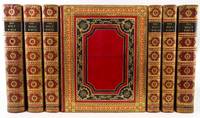
1800ST20221aLondon: T. Bensley for T. Macklin final volume Bensley for T. Cadell & W. Davies 1800 for the six volumes of the Bible 1816 for the Apocrypha. First Printing of this Edition. 480 x 385 mm. 19 x 15 1/8". One leaf in the Apocrypha 3P2 comprising two prologues of Ecclesiasticus invisibly inserted from another copy. Seven volumes comprising the regular Bible in six volumes and the Apocrypha usually not included as a seventh volume. <br/> ABSOLUTELY MAGNIFICENT CONTEMPORARY RED NEOCLASSICAL-STYLE STRAIGHT-GRAIN MOROCCO SUMPTUOUSLY GILT AND ONLAID WITH BLUE BY GEORG FRIEDRICH KRAUSS done for Prince Albert Casimir Duke of Saxe-Teschen with repeated "AST" monogram covers with very elaborate frames incorporating 11 plain and decorative gilt rules four onlaid borders of blue morocco and very elegant swirling foliate ornamentation around the central scalloped panel six pairs of raised bands each pair flanking a recessed gilt and blue metope and pentaglyph rule very handsome spine compartments with blue fan-shaped cornerpieces and central gilt-decorated blue medallions within sunburst gilt collars turn-ins with Greek key pattern in gilt striking endleaves of turquoise and green watered silk the Apochrypha endleaves slightly different. With more than 100 allegorical headpieces and tailpieces and some 70 SPLENDID LARGE-FOLIO-SIZE COPPER PLATES after Fuseli Reynolds West and others most plates printed before letters. Tissue guards perhaps later. Herbert 1442 and 1651. First volume with about 30 leaves noticeably foxed the majority of plates offset onto previous and following pages consistent inoffensive offsetting of text on facing pages other trivial imperfections but still a very impressive copy internally with the luxurious paper used for the text both fresh and clean and the engravings richly impressed and with very little foxing. Some unimportant scuffing and rubbing to the leather but all defects minor THE MAGNIFICENT BINDINGS REMARKABLY WELL PRESERVED the heavy volumes completely solid with only insignificant signs of use and THE MOROCCO AND LAVISHLY GILT DECORATION EXTREMELY BRIGHT. AN ALTOGETHER MEMORABLE COPY.<br/> <br/> The most prodigious form of Scripture in English ever published the Macklin Bible was often put into ornate bindings especially by London binders like Staggemeier and his contemporaries. But however much other sets may glisten the present magnificent example surely stands at or near the front of the line as one of the most lavishly decorated and arresting copies in existence. Its decorative extravagance also testifies to the fact that Macklin's publication was sufficiently admired outside of England to warrant the finest workmanship and the expenditure of great sums of money on artistic resources. The very large and bold type the fine Whatman paper and the series of engravings by some of the most celebrated artists of the period make this an item that is already very desirable. Like the Boydell "Shakespeare Gallery" also printed by Bensley our Macklin Bible is a vast picture book with illustrations that are grand both in size and emotional impact. But it is of course the bindings here that matter the most. Francesco Piranesi is generally given credit for inventing the Neoclassical style when he designed volumes presented to Gustavus III of Sweden during this monarch's visit to Rome in 1783-84. Quickly popular the Neoclassical style was imitated and developed by Staggemeier & Welcher in London by F. W. Standlander in Stockholm and by Georg Friedrich Krauss in Vienna. Krauss was the most prominent Continental binder working in this style of the day and Saxe-Teschen was perhaps his most important client. Products of the Krauss bindery have passed through some of the most distinguished collections over the years particularly those of Fürstenberg and Schäfer; and his bindings have consistently brought remarkable sums of money at auction. It is sufficient to say that the present group of bindings represents the most impressive collection of decorative volumes we have ever offered for sale. The collector for whom these bindings were originally executed Duke Albert of Saxe-Teschen 1738-1822 was the son of Friedrich August II of Saxony and the son-in-law of the empress Maria Theresa. After providing important military and civil service to the Habsburg empire he retired to Vienna in 1795 and afterward devoted himself to the fine arts. He founded the Albertina which now houses the greatest collection of prints in the world and he put together a great library distinguished by the highest taste and most exacting standards. The present copy has the additional distinction of containing what amounts to an extra volume: the Macklin Bible however it is bound most often appears in the marketplace without the Apocrypha appearing here as Volume VII which was not issued until 16 years after the others. It is also of some interest that the bindings of our seven volumes were decorated in an entirely uniform fashion as a close inspection shows something not typical of a set with volumes published so many years apart. The non-uniform endleaves in the final volume here may have resulted from the fact that given the physical size of the books the binder simply ran out of the cloth he had used for lining the first six volumes. The present set was offered though unsold at Sotheby's in 2003 with an estimate of £40-50000 approximately $64000-80000 and in 2005 for £30-40000 approximately $54000-72000. T. Bensley for T. Macklin [final volume Bensley for T. Cadell & W. Davies] unknown