HAYES, William C.Livre Rare Book
298 résultats
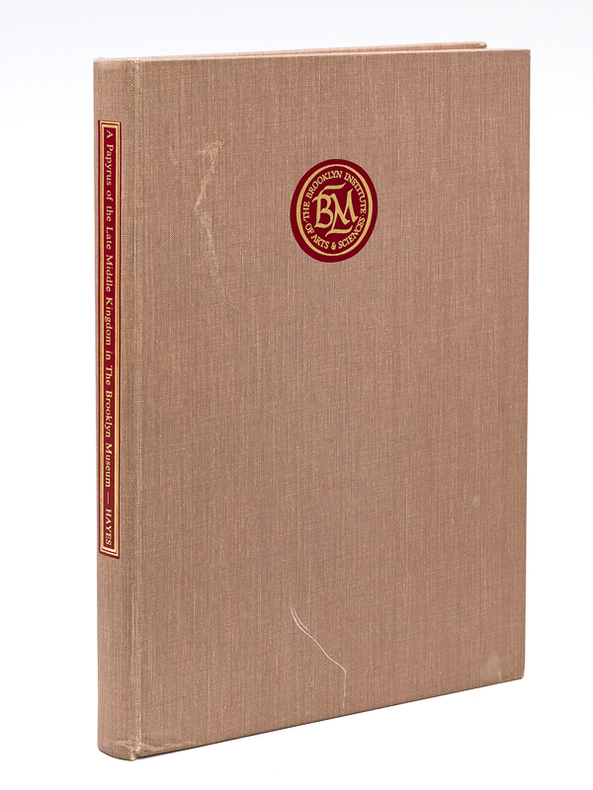
197259558Edited with Translation and Commentary by William C. Hayes, 4to, hardcover, The Brooklyn Museum, 1972, reprint of the 1955 edition, 165 pp. et XIV plates
1932625922 great 8vo, original éditor's cloth, Published by His Majesty's Stationery Office, London, 1932, III-527 pp. ; VII-608 pp.
1973508611 vol. 8vo., John Wikey & Sons, A Wiley Hamilton publication, 1973, VI-360 pp.
1922546London, Constable & company, 1922. First edition, second impression. In-8 hardcover, 13.5 x 21.5 cm, (xix) 308 pp. Bound in full crimson cloth, book title and author's name on the spine. Ex-library, trace of a removed label on the bottom of the spine, library stamp on the title page and right after. Preface and Contents at the beginning of the book. First published by Hilaire Belloc in 1922, "The Jews" is a controversial work of political and social analysis that addresses the complex and often antagonistic relationship between Jewish communities and their "host" European nations. Belloc argues that this friction is an inherent "Jewish problem," stemming from the Jewish people's status as a distinct, unassimilable nation within other societies. However, Belloc is keen to show tactfulness throughout the book and attacks "anti-Semites" as "extravagant" and "ill-balanced."
18936415981 volume 4to (79 quarter-leather, 1 paperback and 1 vol. - 51 - in 4 paperback issues), among which we can particularly point out : Vol. 4 (estampe en couleurs de Fernand Khnopff et estampe en couleur et relief) ; 5 (2 estampes en couleurs dont une par Boutet de Monvel) ; 7 (plusieurs estampes en couleurs dont le bourg de Perros-Guirec par Henri-Rivière, eau-forte par Charlton) ; 9 (plusieurs estampes en couleur dont Helleu et estampe en couleur et relief) ; 10 (dont dessin gaufré par Alexandre Charpentier) ; 11 (dont "Pierrot et Pierrette by Mrs Dearmer) ; 12 (dont bois gravé sur papier bleu par Lepère, et bois gravé en couleur par Nicholson) ; 13 (dont "Ombre chinoise" sur calque par Caran d'Ache, eou gravure en relief "Bath-Room by A Charpentier) ; 15 (dont portrait de Puvis de Chavannes par Valloton, estampes de Henri Rivière) ; 17 (contains "Beauty's awakening, a Masque of Winter and Spring) ; 18 (from october 1899, with Special winter-number 1899-1900 : Modern bookbinding and their designers et sa traduction française ) ; 20 (with "Modern British watercolour drawings) ; 21 (dont "The Queen of Hearts" by Percy Gossop) ; 23 (dont a Scene in Dido an Aeneas by Gordon Craig) ; 26 (1902 avec traduction française) ; 27 (dont eaux-fortes par Alphonse Legros) ; 29 (avec traduction française pour septembre) ; 30 (avec traduction française) ; 31 (avec traduction française, 1 planche et un cahier débrochés) ; 32 (avec traduction française) ; 33 (avec traduction française) ; 34 (avec traduction française) ; 39 : An exhibition of Portraits (avec traduction française) ; 44 (avec les couvertures portant "Revue mensuelle avec traduction française) ; 51 (paperback, spines used, in4 issues) ; 61 (Until Issue n° 254, May 1914) ; For the special numbers, we have 21 "bis" : 11 : Art supplements : The Salon Champs Elysées Paris 1897, The Salon Champ de Mars Paris 1897, Art at the New Gallery London 1897 ; 13 : A Record of Art in 1898 ; 21 : Modern pen drawings : European and american ; 23 : Modern British Domestic Architecture and Decoration, 1901 (avec traduction française) ; 24 : Modern design in Jewellery and Fans, 1902 ; 26 : Modern Etching and Engraving (avec traduction française) ; 27 : Corot and Millet with critical Essays by Gustave Geffroy and Arsène Alexandre ; 28 : Masters of English Landscape Paintings ; 30 : The Genius of J.M.W. Turner, R.A. ; 31 : The Royal Academy from Reynolds to Millais (avec traduction française) ; 33 : Daumier and Gavarni with critical and biographical notes by Henri Frantza and Octave Uzanne ; 35 : Art in Photography with selected examples of European and American Work (avec traduction française) 1905 ; 36 : The Mansions of England in the olden time, by Joseph Nash, 1906 (avec traduction française) ; 37 : The Royal Institute of Painters in Watercolours Spring 1906 ; 37 ter : Year-Book of decorative Art 1906 ; 40 : Royal Scottish Academy ; 40 ter : Year-Book of decorative Art 1907 ; 42 : The Gardens of England in the Southern & Western Counties (avec traduction française) ; 42 ter : Year-Book of decorative Art 1908 ; Paperback : Les Habitations Villageoises en Angleterre Numéro de Printemps 1912
1969LAN267MPaperback, 108 pages, very good condition: slight stains of moisture almost harmless, otherwise perfect condition. Black and white illustrated book.
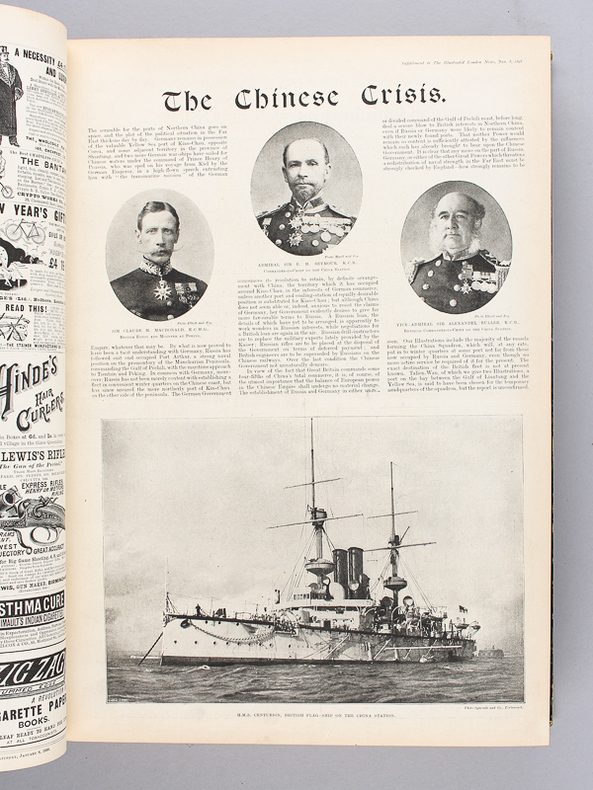
1898494241 vol. fort in-folio reliure de l'époque demi-basane, Ingram Brothers, London, The Illustrated London News, 1898, 958 pp.
1994512621 vol. 4to. softcover, col. cover, lots of col. illustr., Urban Council of Hong Kong, 1994, 126 pp. Text in both English and Chinese
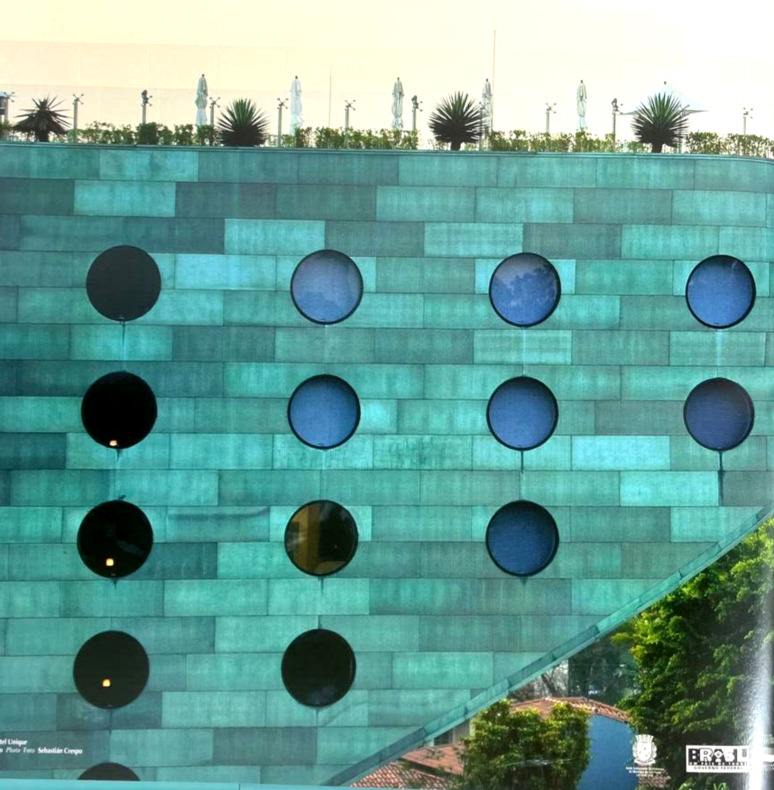
20090129São Paulo, Instituto Tomie Ohtake, 2009. Wide, oblong in-4 of 30 x 31 cm for 323 pp. Text written on three columns on Spanish, English and Portuguese. Hardcover with dust jacket, turquoise covers, black endpapers, printed on neat couché paper. Headband. Lavish art book dedicated to Ruy Ohtake's amazing architectural works. Throughout São Paulo and beyond, this master architect managed to remain ever-creative and lead the Brazilian contemporary architecture, or perhaps the paulista one. Texts by Agnaldo Farias, Paulo Herkenhoff, Rodrigo Queiroz, Roberto Segre, Julio Roberto Katinsky and others. Take a deep breath and immerse yourself in Ohtake's curvy, unmistakable creations such as the Hotel Unique, Condomínio Portal da Cidade, Edificio Tomie Ohtake, Duchamps Villon, Lagoa 1000, Maison de mouette, Montblanc, Anhangabaú building and many others!
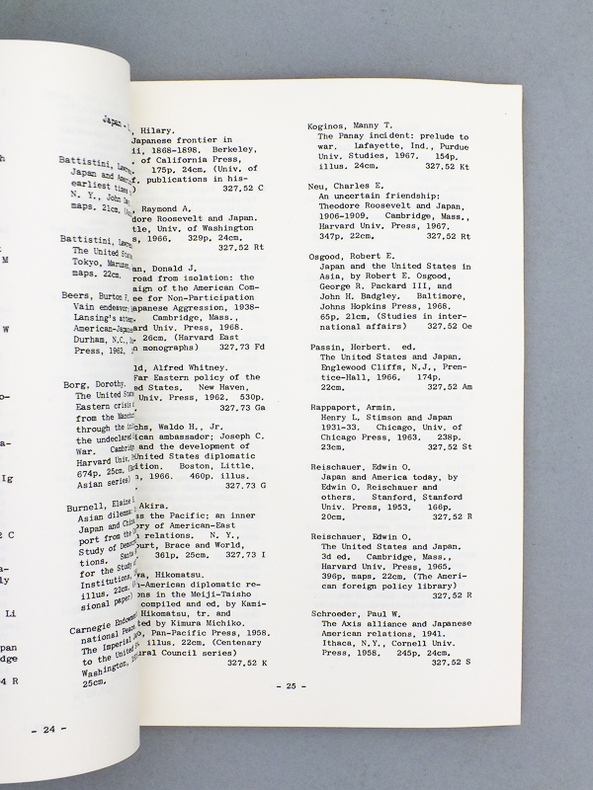
1971500651 vol. 12mo. softcover, International House of Japan Library, 1971, 151 pp.
1882653408 vol. 12mo., quarter leather with corner, all edges gilted, Knickerbocker edition, G.P. Putnam's Sons, New York, s.d. [ circa 1882-1884 ]
1836599461 vol. 8vo, contemporary binding, half leather, Published by A. and W. Galignani and Co., Paris, 1836, XVI-336 pp.
1969539881 vol. in-4 br., Printed in Japan, 1969, 252 pp.
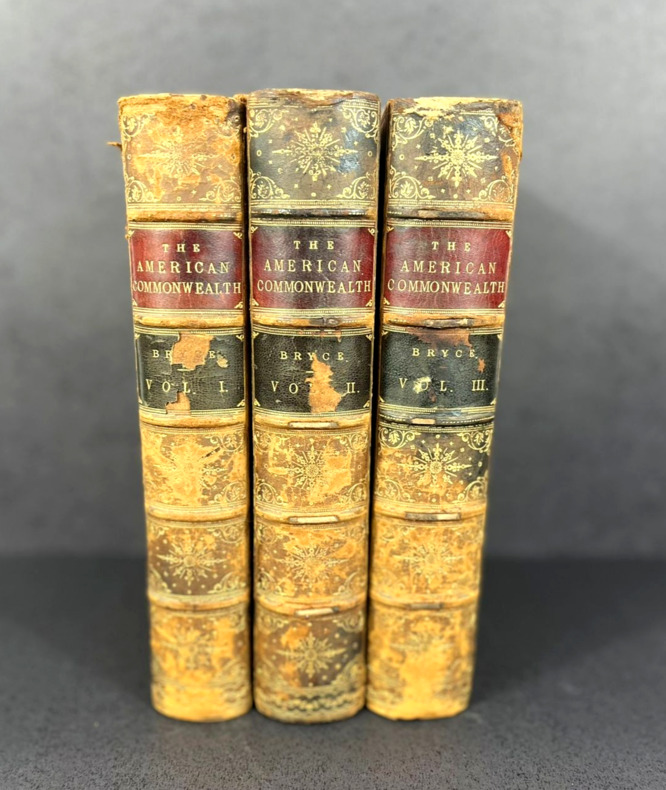
1888480London and New York, MacMillan, 1888. Three volumes bound in full vellum leather. First edition. Three delicately bound 155 x 220 mm (6" x 8.5") volumes of (xxxii) 592, 683 and 699 pp. Full caramel vellum leather, intricately ornated spines with 5 nerves, gilded frames and boxes containing lush greenery-inspired patterns and fleurons, all gilded, double titlepiece with the book title, author's name and volume Roman number on dark red and anthracite backgrounds, gilded floral frieze on the tails. Covers with double gilded frames and tiny corner flowers. All fore-edges colored in a mostly blue polychromia with marbled red veins. Gilded roulette work on the edges of the covers and pastedowns, colored endpapers. Unidentified ex-libris on the first pastedown bearing the motto "Ab Multis Ad Unum." With an unfolding map of "The Growth of the United States" at the beginning of the first volume. Table of contents at the beginning and index at the end of each volume. First volume: The National Government. Preface. Second volume: The State Government and the Party System. Third volume: Public Opinion, Illustrations and Reflections, Social Institutions. This book is not an encyclopaedia of the institutions of the American Republic, even though it may look like it is. Actually, James Bryce talks about the real workings of the institutions: parties, bosses, the spoil system and the public opinion. It shows an America already different from what the mere Constitution says. He compares the British monarchy with the American federal republic, the democratic versus lord elites and the centralization vs local power dynamics. By doing so, James Bryce predates the sociology of Robert Mitchels and Max Weber while maintaining the magnitude and depth of a true treatise. An analytical tour de force, worthy of a serious Americana collection.
1830485301 vol. in-12 reliure demi-chagrin noire, dos à 4 nerfs, tranches marbrées, Colburn and Bentley, 1830, XX-348 pp.
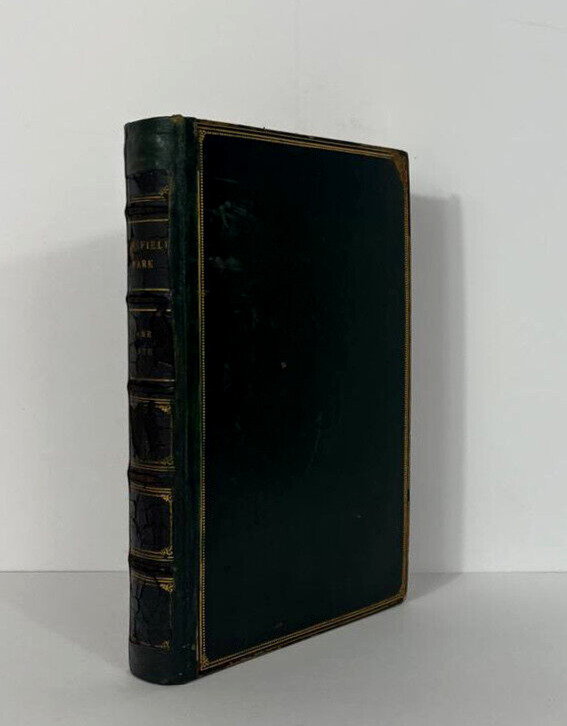
19080178Londres, Dent et New York, Dutton, 1907, coll. "The Series of English Idylls". In-8, 200 x 123 mm, 206 pp., avec 24 illustrations dont un frontispice de Charles E. Brock. Relié plein maroquin vert princier, dos à faux-nerfs, caissons et ornements dorés, titre et nom d'auteur en doré, filets dorés aux plats, double filets dorés sur les chasses, tranches de tête dorées, roulettes aux contreplats avec motif étoilé aux petits fers aux coins extérieur, gardes colorées aux motifs bleutés. Reliure signée Riviere & Son. Une image en frontispice, page de titre sur papier couché, table des matières et liste des illustrations en début d'ouvrages, illustrations colorées hors-texte tout au long du livre. Agréable exemplaire, élégamment relié et illustré avec un certain pittoresque. London, J. M. Dent & Co. and New York, Dutton & Co., 1907. A copy of Jane Austen's 'Emma' published by Dent in The Series of English Idylls in 1907. In-8, 206 pp., 73/4" - 93/4". Frontispiece, title page and 22 other plates (i.e. 24 plates in total) with delicate watercolour illustrations by Charles E. Brock. Full green leather hardcover. Gilded boards. Five raised bands on spine. First and last endpapers, those right on the other sides of the backings, show gilded roulettes signed "Bound by Riviere & Son."
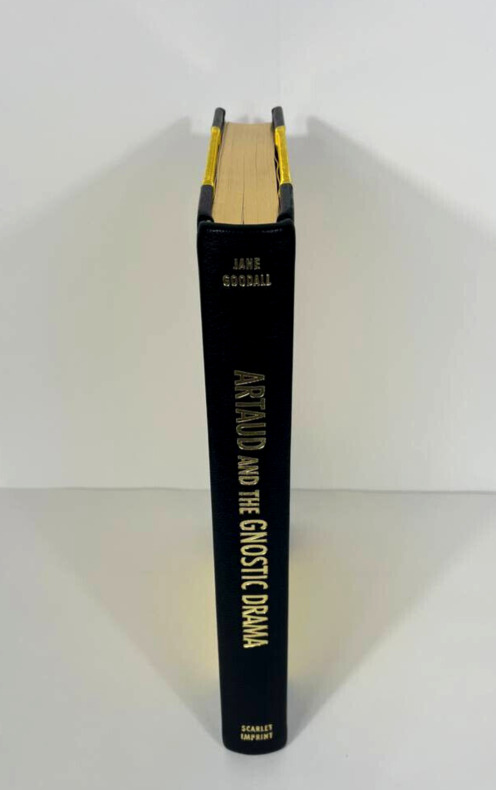
202001004United Kingdom, Scarlet Imprint, 2020. Limited to 51 copies of 278 x 192 mm, 261 pp. Half-bound in black goatskin, with yellow silk boards, black marbled endpapers, all edges gilt, finished with a silk ribbon and presented in a lined slip case, this copy being #50. "In Artaud and the Gnostic Drama, Jane Goodall offers a reappraisal of the importance of Antonin Artaud (18961948), mythologised as an icon of failure and madness, and examines the intricate parallels between his heretical dramaturgy and the heresies of ancient Gnosticism. The book situates Artaud, as the most extravagant of heretics, in company with the Gnostics whose speculations served to define heresy in the beginnings of the Christian tradition. Artaud subscribed to the Gnostic idea that the sensible world was created by a demiurge who was “imperfect, possibly evil and depraved.” His cosmology is inherently dramatic, setting creature against creator, force against form, matter against spirit, pious knowledge against heretical gnosis. Jane Goodall argues that major post-structuralist critics such as Derrida, Deleuze, and Foucault, who have enlisted Artaud in their own anti-orthodoxies, have refused to pay attention to the terms of his own heresy. In this refusal, they display an anxiety towards the gnostic drama and its heresies, which mount an assault that may be more powerful than their own upon the founding tenets of western thought." (Publisher's abstract) This work was first published by the Clarendon Press, Oxford in 1994. The text has been lightly revised for this second edition and is illustrated.
1992595494to, paperback, The Oriental Institute of the University of Chicago, Studies in Ancient Oriental Civilization, n°52, Chicago, Illinois, 1992, 217 pp. and plates
197050309By William David Jaymes, A.B. Franklin and Marshall College 1964, M. Phil. University of Kansas, 1970, 1 vol. in-4 cartonnage noir, Signed by Dissertation Committe John Erickson, and the 2 Cochairmen, iv-207 pp.
20090373Melbourne, Miegunyah Press, 2009. A very thick in-4 book of 276 x 194 mm for (6) vii, xvii, 1108 pp. Coal black hardbinding, title in bronze on the cover and spine, abstract in bronze on the back cover. Printed on couché paper, profusely illustrated with a majority color images. No dust jacket as issued. "Crossing Cultures: Conflict, Migration and Convergence is an in-depth examination of the effect of globalism on art and art history. Covering all aspects of art—including traditional media, painting, sculpture, architecture and the crafts, as well as design, film, visual performance and new media—it explores the themes of conflict, migration and convergence in the visual, symbolic and artistic exchanges between cultures throughout history. Crossing Cultures is a compilation of the conference papers from the 32nd International Congress in the History of Art organized by the International Committee of the History of Art (CIHA), edited by conference convenor Professor Jaynie Anderson. This volume contains more than 200 papers presented at the congress by art historians from twenty-five countries, including Homi K Bhabha (Harvard University), Michael Brand (Director of the John Paul Getty Museum, Los Angeles), Marcia Langton (Chair of Australian Indigenous Studies, University of Melbourne), Ronald de Leeuw (Director of the Rijksmuseum, Amsterdam), Neil McGregor (Director of the British Museum, London) and Ruth B. Phillips (Canada Research Chair in Modern Culture and Professor of Art History, Carleton University, Ottawa). Never before has the state of art history in our polycentric world been demonstrated so well. Crossing Cultures encourages fresh thinking about global art history." (Abstract)
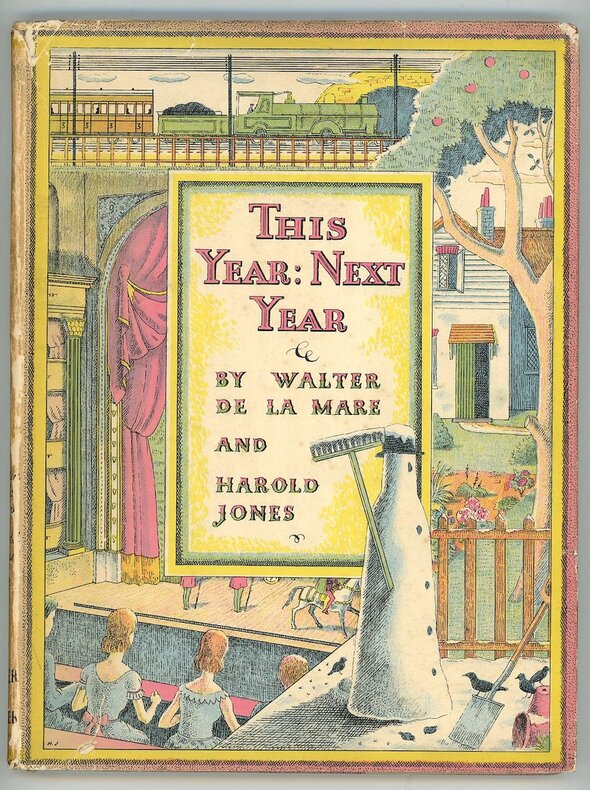
19371024Faber & Faber. London. [1937]. Album grand in-8 (26 x 20 cm). (64) pp., gardes illustrées : plats illustrés en couleurs, jaquette à l’identique.
1949QZI-25New York, Pantheon Books / Bollingen Foundation, 1949. First edition, first printing of this legendary book on heroes, their journey and the patterns which they show across cultures. Octavo, 16.5 x 23.5 cm, (xxiii) 416 pp. Hardcover, bound in original black cloth over green boards, bright gilt title to spine, Bradel-style hinges. No dust jacket. A small trace of a removed label at the bottom of the spine but no library markings inside. Illustrated in black and white throughout, list of illustrations (21) and list of plates (xxiv) at the beginning of the book. Most pages are bright and clean, some pages show light yellowing and marginal foxing without hindering the reading experience.
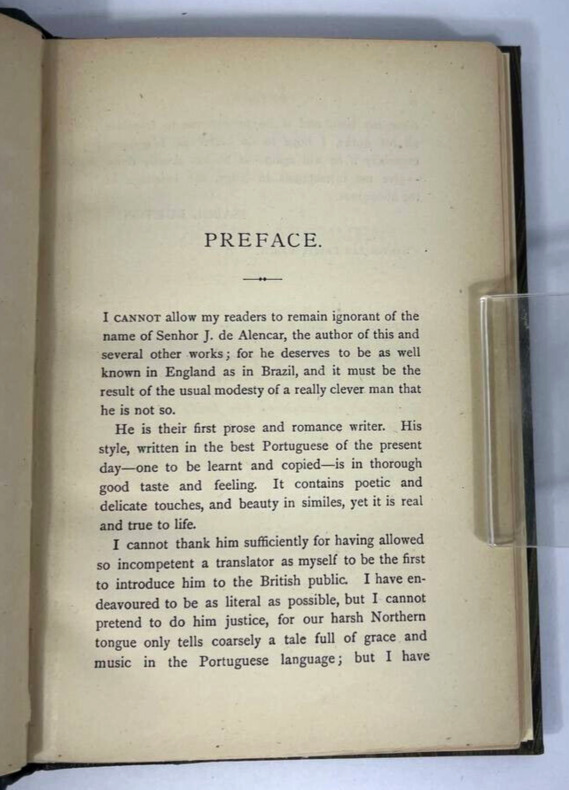
188601002London: Bickers & Son, 1886. First English edition of this acclaimed Brazilian romance. Translated by Isabel Burton. Slim in-12 volume. 179 x 125 mm, (vii) 101 pp. Bound in half algae green morocco, two raised bands, five gilded bands, name printed vertically in gilt print letters, date on the bottom. Marbled papers with a touch of bright copper on covers, multiple white pages on both ends. White and green headbands. Title page, Translator's preface, Historical argument by the author. Each chapter is merely "Chapter XX", no table of contents. "I cannot allow my readers to remain ignorant of the name of Senhor J. de Alencar, the author of this and several other works; for he deserves to be as well known in England as in Brazil, and it must be the result of the usual modesty of a really clever man that he is not so. He is their first prose and romance writer." (Translator's preface) "In 1603, Pero Coelho, a gentleman of Parahyba, then already belonging to the Portuguese, arrived at the mouth of the river Jaguaribe in Ceará, with a command of 80 colonists and 800 Indians. He there founded the first settlement in Ceará, and called it Nova Lisboa. He was abandoned by his comrades when a certain João Soromenho was sent to him with reinforcements... He did not respect even the Indians of the Jaguaribe river, who were friendly to the Portuguese. This proved the downfall of the growing settlement: the natives resented such tyranny. Pero Coelho, with his wife and young children, was compelled to fly by land to his own province." (Alencar's Historical argument)
1959684801 vol. 8vo. claret half leather binding, front and back cover kept inside, John Murray, London, 1959, XI-307 pp.
195968481with introduction, biographies, notes and explanations and Index of pseudonyms, 1 vol. 8vo. claret half leather binding, front and back cover kept inside, Heinemann, London, 1969, 297 pp.