SIRIGATTI, LORENZOBiblio.com

7 576 résultats
159652658Venice Girolamo Franceschi 1596. Folio 400x260 mm. Two parts bound in one later presumably 19th century sprinkled full calf with blindstamped geometrical ornamentations to boards. Leather on back board renewed. Engraved title-page neatly restored at inner margin far from affecting imprint; old owner's inscription ""Ex libris Ludovici A. la." crossed-out previous owner's name and traces after a stamp to title-page. With Medici arms at the top and those of Sirigatti at foot of title-page repeated on title-page of part two. As with all other copies we have been able to locate the title-page is trimmed affecting approximately 1 cm of the allegorical depictions in margin. Large woodcut printer's device at the end of the volume. Light occassional discolouring but overall in very fine condition. 1 f. allegorical frontispiece 3 ff. of dedication and index 43 plates numbered with parallel text 1 f. large woodcut printer's device 22 copper engraved plates including the title-page of the second part numbered 44-65. I.e. 65 plates in total - fully complete. <br/><br/><em>The rare first edition of this most important work on the art of perspective: "Questa e la più elegante delle edizioni di libri prospettici per i tipi pei caratteri per la carta" Cicognara 860. Sirigatti's work is famous for being one of the very earliest thorough works solely dedicated to the art of perspective. Combining the visual language of the German book tradition of Lencker and Jamnitzer with the Italian tradition of linear perspective treated previously by Serlio and Barbaro and earlier that of Leon Battista Alberti unillustrated as applied to stage design and architectural theory this is one of the seminal Italian works on the subject of perspective. Presumably this work functioned as basis for Galileo’s drawing technique. The book quickly became very popular and several Italian editions were reprinted in the 17th century; its reputation was so long-lived that an English translation was published no less than 160 years after the original. The work is divided in two parts: The first part is dedicated to the elementary rules of perspective to plane and solid geometric figures which also contain musical instruments like the lute plate 41 and 42. The second part depicts architectural elements facades of palaces and churches in polyhedrons of various forms and regular Platonic solids with several references to Luca Pacioli's "divina proportione". Furthermore Sirigatti famously contributed to the study of theatrical perspective: "He is the first to mention that the full effect of the perspective frame for instance in a stage set can be enjoyed only by those sitting along the main axis. This is a fundamental aspect of absolutist theater that no doubt had been noticed by designers of princely entertainments earlier but is first commented on in print by Sirigatti whose observations were taken up more extansively by Pietro Accolti." Millard.Two problems were endemic in perspective designs. First because perspective scenery exploits the difficulty of the eyes in judging the sizes and distances of objects it works best by assigning the spectator to a single point of vision and manipulating relative magnitudes to make small images represent objects that are larger and farther away. Second the apparent magnitude and distance of painted objects tended to clash with the fixed size of live actors when applied to the theater threatening to produce absurd combinations of scale when performers wandered upstage. Sirigatti was first to "acknowledge the problem of spectator position. Sirigatti proposed a way to combine a painted perspective backdrop with fixed three-dimensional scenery that diminished in size as it neared an upstage vanishing point". Camp The First Frame. Sirigatti was not only influential in the theory of architecture and stage design. "Galileo "most certainly studied" La pratica di prospettiva which was published in Venice while Galileo was teaching nearbyby in Padova and that when Galileo and Thomas Harriot simultaneously pioneered the use of the telescope to study the moon's surface it was Galileo's training in chiaroscuro that led him to see mountains and craters where Harriot only saw "strange spottedness"." The Partnership of Art and Science: The Moon of Cigoli and Galileo.Sirigatti was a member of the Academy of Drawing Accademia del Disegno a school for artists and engineers where Galileo studied as a young man. Any young artist or mathematician working his way through Sirigatti and learning to create the spikes on a ring diagram such as this would master perspective and the handling of light and shadow chiaroscuro. Each spike must cast an appropriate shadow not unlike the patches Galileo would later discern through his "perspective tube" and interpret as the shadows of mountains protruding up from the surface of the Moon.Adams S-1224Cicognara 860Fowler 336Graesse VI417 Macclesfield 1896Mortimer 479Millard 129 the 1625-edition </em> hardcover
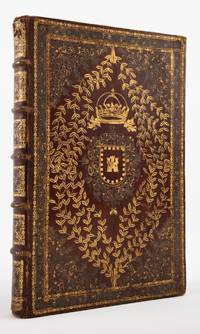
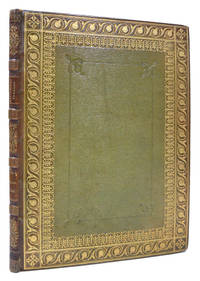
1714ST20995Naples: Bernardo-Michele Raillard 1714. 343 x 223 mm. 13 1/2 x 8 3/4". 6 p.l. CCLXIX 15 pp. <br/> IMPOSING CONTEMPORARY BROWN MOROCCO EXUBERANTLY GILT covers with painted and gilt frames of floral rolls central panel with elaborate volute cornerpieces large central lozenge formed by myriad leafy gilt vines enclosing a coat of arms containing a three-turreted castle topped by a crown held up by two putti raised bands spine compartments framed by floral roll painted and gilt daisy centerpiece tulip cornerpieces all edges gilt. The Academy's engraved device on title page and 75 ENGRAVED PLATES of scientific instruments and experiments. DSB 9:3; Dibner Herald of Science 82 first edition. Joints with modern wear one short crack at top of rear joint head of spine a bit wormed corners and extremities somewhat rubbed gilt a bit rubbed in spots difficult to tell if some of the decoration is dark because painted or is now missing gilt a couple of leaves slightly browned in the text bed occasional minor foxing more pronounced on a couple of quires other trivial imperfections but an excellent copy--quite clean and fresh internally--in a solid binding still bright with gilt.<br/> <br/> Given its binding and provenance this is a uniquely desirable copy of a significant scientific work: our stately Neapolitan edition of the "Essays on Natural Experiments" is offered here in very animated morocco bearing the arms of the man who paid for its printing and to whom the book is dedicated. That remarkable patron Caesare Michelangelo d'Avalos Marquis of Pescara and Vasto prince of Isernia and Francavilla 1667-1729 was a true Renaissance man who took Machiavelli's "The Prince" as inspiration. He was both a wily political conspirator and a generous patron of the arts and sciences. His palace at Vasto was renowned for the beauty of its furnishings for its splendid art gallery and for its impressive library overseen by the humanist scholar Alessandro Berti. The present volume was a worthy addition to that library with its glowing dedication and its regal binding extravagantly gilt but so tastefully composed that it never crosses the line into ostentatious. <br /> First printed in 1666 "Essays" was produced by the Accademia del Cimento the most significant expression of post-Galilean scientific progress in Italy. Founded in 1657 as the first organization formed for the sole purpose of making scientific experiments the Accademia occupies a singular position in the history of the development of science. Prince Leopold of Tuscany the last exceptional member of the Medici family and his brother Ferdinand who followed the Medici family tradition of patronizing the arts and sciences provided the support free-thinking direction and financial patronage for the Academy. A well-equipped laboratory and an apparently inexhaustible supply of apparatus and materials helped to make the work of the 10 scientists associated with the Academy more sustained and broader in scope than anything that had come before it. W. E. K. Middleton "The Experimenters" According to Thorndike among many other subjects the experiments described here "were concerned with air pressure and freezing; or they aimed to prove that water was incapable of compression and that there was no such thing as lightness or positive levity. Some experiments were magnetic and others electric the latter being chiefly performed with amber. Other subjects investigated were the change of colors in fluids the motion of sound and projectiles." Although no author is given by name the title page of the 1666 first edition indicated that this account was written by the secretary to the academy Lorenzo Magalotti 1637-1712. A pupil of Viviani and a friend of Boyle Magalotti was celebrated for his highly finished colorful almost dramatic descriptions of experiments. DSB notes "He has the distinction . . . of having written the best scientific prose in Italian after that of Galileo.". Bernardo-Michele Raillard unknown
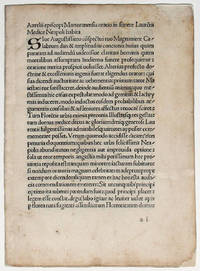
14922680<p>4to. 20.5 x 15 cm 4to. 20.5 x 15 cm 8 ff. rather dog-eared at edges and with some light soiling. Disbound in a cloth-covered box.<br /></p><p>Rare first edition of this funeral oration for Lorenzo de Medici read in Santa Maria Nuova on 16 April 1492 evidently the only contemporary printed oration of the many delivered and printed in his honor to survive.</p><p>"Lorenzo de' Medici… born January 1 1449 Florence Italy—died April 9 1492 Careggi near Florence Florentine statesman ruler and patron of arts and letters was the most brilliant of the Medici. He ruled Florence with his younger brother Giuliano 1453–78 from 1469 to 1478 and after the latter's assassination was sole ruler from 1478 to 1492." Brittanica.com</p><p>The present publication is the sole oration devoted to Lorenzo in the Short-Title List of Funeral Orations from the Italian Renaissance Ca. 1374-1534 compiled by John McManamon and the only printed example featured in the 1992 exhibition at the Bibliotheca Nazionale Centrale <i>Lorenzo dopo Lorenzo La Fortuna Storica di Lorenzo il Magnifico. </i>Notwithstanding the poor survival rate of ephemeral publications and the controversial character of the <i>laudandus</i> the statistic remains remarkable. The motive for the present oration was overwhelmingly political and meant to insure continuation of the traditionally strong alliance between Naples and Florence at a difficult time of dynastic transition. According to Miglio <i>DBI </i>X.369-70 the work was published before it was read.</p><p>A Naples edition was published the same year from the press of Cristannus Preller IGI VI.1722-A. The work was re-published in the 19th century by Vito Capialbi <i>in Memorie di R. Zeno e A. Bienato</i> Naples 1838 49-86. Milanese born Aurelio Bienato was Reader in Rhetoric at the University of Naples 1470-80 and later elected Bishop of Martirano modern Catanzaro in which sinecure he remained until his death. Miglio also lists an unpublished commentary on Quintilian <i>Iter Italicum</i> I.415-16 II.570 and a collection of Latin verses <i>Elegantiarum epithomata</i> an epitome of Lorenzo Valla's <i>Elegantiae linguae latinae</i> which went through a number of incunable editions 1479/80; 1488; 1491. </p><p>US copies ISTC: Huntington Newberry and Yale. </p><p>Provenance: Ritman copy.</p>Goff B-667; BMC vi.784; GW IV.1346; Paolo Pira ed. Lorenzo dopo Lorenzo. La Fortuna Storica di Lorenzo il Magnifico Florence Biblioteca Nazionale 1992 I.24; John M. McManamon Funeral Oratory and the Cultural Ideals of Italian Humanism 1989 p. 256 & 41-43. Phillipus de Mantegatiss
179640343PRIMERA EDICION De orden del Rey.- Madrid: En la Imprenta Real Año de 1796.- 1 h. 54 p.: Al final 2 h. con sendos modelos plegados de 42 x 473 cm. uno con el "Modelo del Pasaporte ó Patente de Mar que se concede á los Buques para navegar en Europa citado en el Artículo XVII" y el otro con el "Modelo del Pasaporte ó Patente de Mar que se concede á los Buques para navegar en América citado en el Artículo XVII"; 4º 23 x 173 cm.; Excelente impresión a dos columnas sobre magnífico papel verjurado; Edición bilingüe en español e inglés; Enc. moderna ca.1925 finamente ejecutada en Media Piel lomo dorado.- MUY RARO. El tratado de San Lorenzo de 1795 también conocido como tratado de amistad límites y navegación o tratado Pinckney en los Estados Unidos fue firmado por España y los Estados Unidos para definir las fronteras entre los Estados Unidos y las colonias españolas en Norteamérica y regular los derechos de navegación en el río Mississippi. El acuerdo fue firmado en San Lorenzo de El Escorial el 27 de octubre de 1795 por Manuel de Godoy en nombre de Carlos IV de España y por Thomas Pinckney en representación de Estados Unidos; sería ratificado por el presidente estadounidense George Washington el 7 de marzo de 1796 en Filadelfia y por el rey de España en Aranjuez el 25 de abril del mismo año. SIGLO XVIII ESPAÑOL Libro en español En la Imprenta Real hardcover
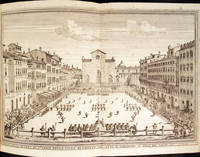
168829719Firenze: Stamperia di S.A.S. alia Condotta 1688. Rare First Edition of this very early work on football. Engraved armorial title-vignette featuring a figure with a football by Francesco Nacci two folding engraved plates one with players lined up for play in the Piazza Sante Croce by Alexander Cecchini and one a diagram of player's positions. 4to in nineteenth-century marbled boards backed in black morocco the spine gilt lettered and with multi-line gilt ruled flat bands additional gilt tooling at the foot bookplate of Franco Niccoli to front paste-down. xii 118 2 manuscript entries pp. A very handsome and proper copy of this rare book with a couple of contemporary marginal annotations and one contemporary manuscript leaf bound at the end a little scattered foxing throughout but not obtrusive. RARE FIRST EDITION OF PIETRO BINI'S ANTHOLOGY ON FLORENTINE FOOTBALL a forerunner to the modern games of soccer rugby and American football. THIS IS ONE OF THE EARLIEST TREATISES ON THAT PREDECESSOR TO OUR MODERN GAMES.<br> In the game of calcio two teams each consisting usually of 27 men are engaged on an enclosed ground of 172 x 82 braccie fiorentine just little smaller than a modern football field. The action consists of carrying and kicking a pumped ball of medium size with fists and feet hence the name calcio in order to make it pass beyond the terminal barriers of the adversaries' half. One such successful action is called caccia. The team making the most caccie is the winner. Games typically last one hour and are played 'for honour's sake'.<br> The wonderfully detailed description of the game is largely by Giovanni de' Bardi and though it was first published anonymously nearly a century earlier the text included here is greatly expanded and illustrated. It fully explains the rules and manners of the game and describes a number of games that had recently been played in and near Florence. The double-page plate depicts a match in the Piazza Santa Croce is very impressive and provides us with a lasting 17th century "instant replay" of the event. Stamperia di S.A.S., alia Condotta hardcover
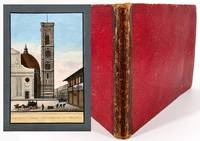
18401613Florence: Lorenzo Bardi 1840. Very good. Oblong quarto 7 3/4 11 inches 195 x 280 mm. 18 aquatint plates engraved by G. Carrocci and others image size 14 x 19 cm plate mark size 18 x 25 cm with superb hand coloring in heavy watercolor and gouache within black line and grey gouache borders. Preceded by a dedication page printed on blue paper; original upper wrapper with aquatint vignette also printed on blue paper bound in. Contemporary red sheep-backed boards rubbed with brown calf spine. <br /> Provenance: Library of Norman Bobins.<br /> Bobins vol. 5 1675. Exceptionally fine series of views of Florence landmarks with a few from Pisa being a new version of Zocchi's "Scelta di XXIV vedute delle principali contrade piazze chiese e palazzi della città di Firenze" first published in 1744. Lorenzo Bardi unknown
1827007797Napoli: Stamperia Real 1827. First Edition. Quarter Morocco. Very Good. A glorious memorial to the fun-loving Bourbon Neapolitan court of the day. Folio 33.5 by 23.5 cm. 19 1 pp. followed by 11 hand-colored plates and 220 cm long concertina or leporello depicting a procession of sorts or perhaps a frieze of the masqueraders 84 in all and all of whom are hand-colored figures. Below the line-up of dancers on the frieze are nine separate excerpts of musical notation. Eight of these are for various quadrilles with the title of the particular dances above the bars of music. The ninth music quotation is for a Persian march its participants the ones depicted in the eleven larger plates. The actual people at the masquerade and represented by the illustrations are listed and keyed in the text portion. The names are rich in the titled and the English are also well-represented with a few familiar names such as Acton among them. Contemporary binding both leather spine and paper pastedown on boards fairly heavily rubbed. Light foxing throughout. Repaired closed tear repair on frieze. The concertina is folded in an unusual manner and thus requires care when opening it up. Hand-colored figures are all bright. Stamperia Real unknown
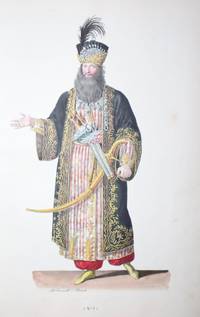
98472Milano Giovanni Silvestri 1811. . Second enlarged edition 4to 29 x 21.5 cm. 4 98 2pp. half-title errata explanation of plates III-V engraved vignette to title 5 maps and plans on 3 sheets 1 double-page 2 folding green straight-grained morocco gilt covers with broad gilt borders spine faded to olive all edges gilt a fine copy.<br /> A superb large copy in contemporary green morocco of the preferred enlarged second edition. <br /><br />Ferrer Maldonado's account of a spurious 1588 voyage through the Polar seas during which the Spanish navigator claimed to have discovered the fabled Northwest Passage here called the Strait of Anian depicted in the folding maps. A scarce item in any edition.<br /> Hill p103; Howes F95; Lada-Mocarski 66; Sabin 44109. Milano, Giovanni Silvestri, 1811. unknown
17466973Madrid: Imprenta de Juan de Zúñiga 1746. First Edition — Primera edición. Hardcover — Tapa dura. 190x145mm. 7½x5¾". Madrid Juan de Zúñiga 1746. En 4º 190 x 145mm. frontis y retrato dibujados y grabados por irala 40 167 8 96 pp. Encuadernación en pergamino de época autor rotulado de época en la cubierta delantera. Primera edición de esta obra importante. A partir de la página 167 comienza con portada propia: "<em>Catálogo del Museo Histórico Indiano</em>". Palau dice de este libro: "Obra estimada e indispensable a todo americanista". Lorenzo Boturini 1702-1755 nació en Sondrino obispado de Como en Italia. Pasó a las Indias en 1736 sin licencia permaneciendo en la Nueva España hasta 1743. Allà se dedicó a la búsqueda de testimonios sobre la Virgen de Guadalupe y a su gran afición de las antigüedades mexicanas prehispánicas reuniendo manuscritos y documentos y aprendiendo el idioma Nahuatl. Su fervor guadalupano le llevó a querer coronar a la Virgen consiguiendo un breve pontificio y recaudando dinero; todo ello y su condición de extranjero levantó sospechas del virrey quien le arrestó confiscó su colección y finalmente le expulsó a España sin sus papeles. Nunca más volverÃa a ver lo que él mismo llamó su "Museo histórico indiano". Ya en España fue nombrado Cronista de Indias pero murió en 1755 sin haber recuperado sus manuscritos. Parte de la Colección Boturini se perdió por desidia de sus custodios y el resto se dispersó; los documentos más valiosos son los que se conservan en la BN de ParÃs además de muchos otros depositados en la Real Academia de la Historia de Madrid. Para la redacción de la obra estableció tres grandes edades o perÃodos de evolución de las culturas novohispanas: la edad de los dioses la de los héroes y la de los hombres. En el texto continuamente hace gala de su erudición clásica justificable en un autor que quiso demostrar el parentesco de la historia de los pueblos americanos con la del resto del mundo. Eduardo Anglada "Testimonios cinco siglos del libro en Iberoamérica" 1992 nº 3 Buen ejemplar generalmente limpio. Primeras hojas de preliminares con ligera mancha en la esquina inferior pequeña restauración marginal al verso del frontis sin afectar por lo demás perfecto. Procedencia: Huating anotación manuscrita del siglo diecinueve Imprenta de Juan de Zúñiga hardcover
174312853Madrid: Juan de Zúñiga 1743. 193x135mm. 7½x5¼". Madrid Juan de Zúñiga 1743. 2 obras en un volumen. En 4º 193 x 135mm. -I: 8 504 pp.1 bl. -II: 4 42 pp. Encuadernación de la época en piel lomera cuajada de dorados. Segunda edición del "Arte o cartilla del nuevo beneficio de la Plata" publicado por primera vez en Lima en 1738 donde se describen las minas del Perú y se explica el nuevo beneficio que consiste en el empleo de la colpa o caparrosa en lugar del magistral consiguiendo no solo un ahorro de costo por el escaso precio y abundancia de la primera comparado con el del segundo sino también y principalmente por el consumo menor de azogue y un rendimiento mayor de plata o "aumento de ley". Explica como se ha de hacer el beneficio con el nuevo ingrediente en las diferentes clases de metales y termina doliéndose de la indiferencia con que se ha mirado este asunto en el pasado. Sus maestros según él mismo dice habÃan sido 25 años de trabajo y experiencia estudiando en casi todos los metales conocidos en el reino del Perú y empleando el servicio de muchas y diferentes minas entre ellas las famosas de Nuestra Señora de la Regla y la de San Juan de Lucanas donde habÃa sido minero azoguero beneficiador y al final dueño de la mina. La segunda obra del volumen el "Resumen del arte" impreso por Zúñiga el mismo año es un compendio del "Arte o cartilla" del mismo autor. "Este resumen es solamente dar a los dueños de minas de los reynos del Perú y Nueva España las reglas prácticas que deben observar en el nueo methodo de beneficio de la plata". MagnÃfico ejemplar de ambas obras en perfecto estado. Juan de Zúñiga unknown
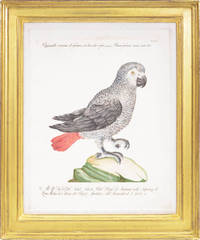
108299Giuseppe Vanni Florence 1776 . Two hand-coloured etchings with engraving. Original colour. Very good condition with strong fresh colour and full margins. Framed and glazed overall dimensions: 50 x 43 x 4cm.<br /> Storia naturale degli uccelli. was one of the finest bird books issued to that date and one of the most sumptuous publications of the eighteenth century in Italy" Christine Jackson Dictionary of Bird Artists of the World.<br /> Fine Bird Books 1990 p.92; Nissen "Zoologische Buchillustration" IVB 588; Zimmer p.241. [Giuseppe Vanni, Florence 1776] unknown
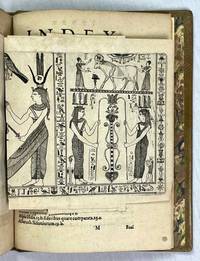
M10355Extremely rare. Typis Matthiae Beckeri impensis vero dictorum fratrum & viduae Theodori de Bry matris eorundem Francofurti 1608. First edition. In-8 43 pages 16 plates. Modern half-leather stain on title page otherwise a very nice copy. From the library of Egyptologist Charles Cornell Van Siclen III VSX. Language: Latin. This book ships from the USA shipping costs will be updated accordingly TXR. Relevant subjects: Egypt: Language Texts & Writing. unknown
16993149<p>Full vellum with titles inked to spines. 6 raised bands. Red speckled edges. Fissure in vellum at front hinges but quite firm. Wine colored stain to front cover of vol. II near spine. Many foldout plates. Late 17th century compilation of medical specialties. A nice clean copy without previous owners' names or other markings. ; Folio 13" - 23" tall; 1072; 1223 pages; All shipments through USPS insured Priority Mail.</p> Johan. Anthon. Chouet & Davidis Ritter hardcover
1681000434Barcelona Spain: Joseph Forcada. Very Good with no dust jacket. 1681. Original Vellum. AN EXCEEDING RARE SPIRITUAL TREATISE VIRTUALLY UNKNOWN IN SUCH AN EARLY SPANISH EDITION AND THE BOOK USED AS AN EARLY CONVERSION MANUAL IN THE NEW WORLD. Printed 1681 in Fine Original Vellum with gilt! COMBATTING OF THE DEVIL! The Book: Scupoli Lorenzo 1530-1610; Juan de Castaniza d. 1598 COMBATE ESPIRITUAL ESCRITO POR EL VENERALE SCUPOLIU. Barcelona Joseph Forcada 1681 64mo. Fine contemporary limp vellum with gilt blindstamping usual woodcut illustrated title of the devil firing an arrow into the breastplate of a Christian soldier. 452 pgs and tabla complete. A precious Spanish edition of this classic treatise on evangelical perfection through spiritual exercises including several chapters in partcular to the promotion of Christian faith and the combatting of the devil as evidenced particularly in the title and frontispiece illustration. This manual was among the often used in the New World for conversion of the native from their "vices and the snares of the devil." There are no traces of the first Spanish edition. The present volume is among the earliest surviving Spanish copies all of which are extremely rare and the next readily traceable one being from 1722. Scupoli Lorenzo 1530-1610; Juan de Castaniza d. 159. Combate espiritual o Tratado de la perfeccion Christiana. Traduxolo en la lengua Espanola de la Italiana y de la Latina; y lo consagra a la Emperatriz y Reina nuestra Senora Don Damian Gonzalez del Cueto doctor en ambos derechos. Vienna Johann Baptist Schilgen 1722. A precious illustrated Spanish edition of this classic treatise on evangelical perfection through spiritual exercises Combattimento spirituale The spiritual combat with engravings by Martin Engelbrecht. This work is commonly attributed to Juan de Castaniza who is here identified in the preface. Castaniza a Benedictine monk of Ona active in Italy was known for his chronicles of the life of P. Rivadeneyra and St. Romuald. The work was written by the Italian father Lorenzo Scupoli however and translated shortly after its appearance by Castaniza into Spanish. Combate espiritual in this pocket-sized and compact duodecimo format is a handbook of devotional exercises presented in sixty-six chapters modeled after Loyola's famous text. It aims at perfecting the soul through prayer meditation and examination of the conscience. It is thus a guide for the conquest of the spirit over unruly passions the senses and conscious acts offering a method for self-regulation leading to virtue and salvation. Indeed it prescribes the imitation of Christ's life through empathic contemplation on the Passion assisted by the text and images. The stirring devotional image of the Crucifixion engraved by Engelbrecht 1684-1756 depicts the cross as the fountain of life "apud me est fons vitae"; Christ's blood pours into the cups of his disciples who stand at his feet. The engraving is appropriate for the work a visual experience provoking empathy for Christ through inward meditation and complete sensitization through reflection on the image. The frontispiece also by Engelbrecht depicts Christ as the exemplar of complete virtue. An unsigned engraving of St. Francis de Sales 1567-1622 accompanies a short elegy by this great ascetic bishop of Geneva who endorsed in his spiritual teachings the mortification of the senses will and mind for the sake of perfection. The more simple depiction of St. Francis de Sales is likely produced by a different engraver as Engelbrecht's compositions are here characterized by fully-modeled figures and atmospheric effects through the use of fine linework. Engelbrecht was the brother of Christian Engelbrecht 1672-1735. These well-known printsellers and engravers were dominant figures in Augsburg at this time and are remembered for their portrait studies and their landscape religious and allegorical illustrations. Martin is also noted for his engravings used in perspective boxes or peepshows. Scupoli's work makes its first appearance in the Italian in Venice in 1589. By the mid- seventeenth century this very popular devotional work was frequently republished in German and Latin. There are no traces of the first Spanish edition which must have appeared shortly after the Italian edition. This present illustrated edition a late Spanish translation of this important work reproduces the text as it originally appeared in Castaniza's translation. All Spanish translations of this text remain very rare. This popular meditative manual produced in this small format for a large and pious public instructively suggests the ways in which its readers responded to the text and images. It is an early publication from the press of Schilgen printer to the university of Vienna. A nice copy of this very important and scarce devotional work in Spanish. Duodecimo: 12 26 A-R12 R1112 blank; xxxvi 396 12 pp. Engraved frontispiece and full-page engraving signed Martin Engelbrecht full-page engraved portrait of St. Francis de Sales signed I.A.P. woodcut historiated initial typographic and woodcut head- and tailpieces. Occasional text browning. Contemporary sprinkled calf backstrip divided into five compartments with naturalistic tool at center and corners in blind remains of morocco label title stamped in blind raised bands outer edges hatched in blind contemporary combed marbled endpapers all edges gilt worn at extremities. Very good. Not in OCLC or RLIN; not in German or Spanish union catalogues including Gesamtkatalog GBV and the Osterreicher Bibliothekverbund. For Engelbrecht see NDB 4.512; Thieme-Becker 10.534; F. Schott Der Augsburger Kupferstechner und Kunstverlager Martin Engelbrecht und sein Nachfolger Walluf 1972.; Spanish; 48mo - over 3" - 4" tall; OCCULT NECROMANCY SORCERY EXORCISM SATANISM ASTROLOGY DIVINATION RELIGION MAGIC SATAN DEVIL WORSHIP PENTACLE WICCA WICCAN . Joseph Forcada hardcover
1577LD6849Antwerp: Christoph Plantin 1577. Hardcover. Very Good. 4to 205 x 155mm. 194pp. 1. Engraved title after Bernadino Passeri with coats of arms of Alessandro Farnese cardinals hat surmounting escutcheon bearing six fleurs-de-lis and Antonio Perenotto cardinals hat over double headed eagle and seven bends emblems of Pope Gregory XIII papal tiara and crossed keys of Rome over medallion enclosing head of dragon two putti and heads of putti amid boughs of fruit hanging from architectural frame. All 55 copperplate engravings 54 in cartouche representing religious scenes mainly scenes of Christs life the Presentation Transfiguration Entry into Jerusalem Crucifixion Resurrection Ascension Pentecost various judgments visionary and moralistic scenes mainly for saints and a fight against the Turks all from drawings of Bernardino Passeri one repeated on p. 160 p. 191 and one The Raising of Lazarus p. 88 of a different style and signed I. H. W.-P. B. i. e. Hieronymus Wierix after Pierre van der Borcht of the Plantin stock. Early 19th-century half morocco over marbled boards marbled endpapers and edges; margins trimmed close title browned some toning throughout lightly worn otherwise complete and sound. Armorial bookplate of T. Graham three escallops joined with chevron charged with three crescents with motto Omne meum nihil meum tis all mine and none mine on front pastedown. Few annotations in margins mainly on poem for St. Anthony of Padua beginning p. 183. <br/><br/>Gambaras rare neo-Latin treatise discouraging Christian poets from using pagan symbols the Liber Rerum Sacrarum finely illustrated by Passeri and from the Plantin press in 1577. Rare original edition of Lorenzo Gambaras Liber Rerum Sacrarum a collection of Latin religious poems in which he dissuades Christian poets from using pagan mythology in their work. Gambara was born in Brescia in 1506 but spent most of his life in Rome in service to Cardinal Alessandro Farnese and Pope Gregory XIII where he had regular contact with many writers of the day. He himself was a prolific poet and translator of Greek lyric poetry perhaps better known for his work on the Navigation of Christopher Columbus 1581. Gambara died in 1596 at the age of 90. Each of Gambaras poems in the Liber Rerum Sacrarum feature saints or religious feasts which were dedicated to a prominent prelate starting with a brief argumentum or appeal and with an illustration adapted to the text. As pointed out in letters by Plantin the plates were made in Italy by an unknown engraver probably after the designs of the Roman painter Bernardino Passeri whose name figures on the title page and shipped to Antwerp. Rare copies located at Stanford Duke Newberry Library Brigham Young and the National Art Library in London and another on market. Christoph Plantin hardcover
2006102552Ugo Bozzi. New. 2006. Hardcover. 8870030423 . FREE UPGRADE to Courier/Priority Shipping Upon Request - IN STOCK AND IMMEDIATELY AVAILABLE FOR SHIPMENT - Flawless copy brand new pristine never opened -- Text in Italian. 496 pages; illustrated. Catalogue Raisonne Catalog Raisonné Complete Works Catalogo Ragionato Catalogo delle Opere L'Opera Completa Raisonnee -- with a bonus offer . Ugo Bozzi hardcover
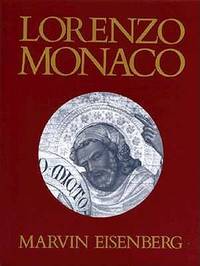
1989102431Princeton Univ Pr. New. 1989. Hardcover. 0691040427 . FREE UPGRADE to Courier/Priority Shipping Upon Request - IN STOCK AND IMMEDIATELY AVAILABLE FOR SHIPMENT - Flawless copy brand new pristine never opened -- 243 pages; well-illustrated including 16 plates in color. Catalogue Raisonne Catalog Raisonné Complete Works Life and Work Raisonnee Princeton Univ Pr hardcover
198193582Cornell Univ Pr. New. 1981. Hardcover. 080141430X . FREE UPGRADE to Courier/Priority Shipping Upon Request - IN STOCK AND IMMEDIATELY AVAILABLE FOR SHIPMENT - Flawless copy brand new pristine never opened -- 290 pages; well illustrated. Catalogue Raisonne Catalog Raisonné Complete Works Life and Work Raisonnee Cornell Univ Pr hardcover
199391199Stefano Patacconi Editore. New. 1993. Hardcover. FREE UPGRADE to Courier/Priority Shipping Upon Request - IN STOCK AND IMMEDIATELY AVAILABLE FOR SHIPMENT - Flawless copy brand new pristine never opened -- Text in Italian and English. 414 pages; 174 illustrations. Catalogue Raisonne Catalog Raisonné Complete Works Catalogo Ragionato Catalogo delle Opere L'Opera Completa Life and Work Raisonnee Stefano Patacconi Editore hardcover
198593583Rizzoli. New. 1985. Hardcover. 0847805093 . FREE UPGRADE to Courier/Priority Shipping Upon Request - IN STOCK AND IMMEDIATELY AVAILABLE FOR SHIPMENT - Flawless copy brand new pristine never opened -- Text in English. 378 pages; well-illustrated. Catalogue Raisonne Catalog Raisonné Complete Works Life and Work Raisonnee Rizzoli hardcover
200291157Edifir. New. 2002. Hardcover. 8879701509 . FREE UPGRADE to Courier/Priority Shipping Upon Request - IN STOCK AND IMMEDIATELY AVAILABLE FOR SHIPMENT - Flawless copy brand new pristine never opened -- 392 pages; well-illustrated in black and white and in color. Catalogue Raisonne Catalog Raisonné Complete Works Catalogo Ragionato Catalogo delle Opere L'Opera Completa Raisonnee Edifir hardcover
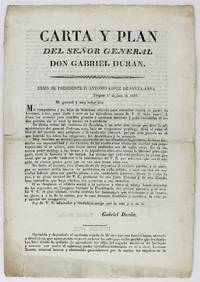
18333694Mexico City 1833. About very good. Broadsheet approximately 12 x 8.5 inches. Previously folded. Light wear at edges and along old fold. Moderate dust soiling. In a red cloth slipcase. An animated and rare 1833 broadsheet attack on the political beliefs and actions of Lorenzo de Zavala one of the foundational figures of the Texas Republic. Zavala was a prominent liberal Mexican politician who helped to draft the Constitution of 1824 and served as president of Congress and Secretary of Finance. In 1829 he began investing in Texan lands thus beginning his close involvement in Texas. When this document was issued Zavala was serving as Governor of the State of Mexico. <br /> <br /> The present address styled as an open letter to Mexican president Santa Anna and dated June 1 1833 from Tlalpan was authored by conservative General Gabriel Durán who makes a vehement attack on Zavala's patriotism and character urging Santa Anna to cut ties with Zavala completely. In translation Duran urges the Mexican president to defend "The State of Mexico oppressed and degraded by an impious audacious and insolent faction.that took by assault the sovereign executive powers enabling Lorenzo Zavala a famous criminal despised in general by the nation." In order to "Sustain the sovereignty of the nation in spite of the violent jolt and ill-fated attacks of the anarchy" Duran offers Santa Anna the military support needed to halt "A schism and the violation of our sacred religion and the restlessness of proprietors of being despoiled of their properties will be forever dissipated." He completes his address by offering an eight-point plan to "annul the elections where de Zavala was triumphant" and to regain power in the region surrounding Mexico City.<br /> <br /> Durán's message was not at first heeded by Santa Anna who appointed Zavala as Minister to France in October 1833. However in reaction to Santa Anna's dictatorial proclivities Zavala resigned his position in 1834 and never returned to Mexico. He settled in Texas in 1835 when it was on the cusp of revolution and helped to draft the Texas Constitution before serving as the Republic's first Vice President. We locate only two copies at the Sutro and British Libraries.<br /> Sutro Collection Pamphlets p.690. unknown
15897795Venetiis. Apud Aldum. 1589. 1589 12 211 1 p. Later 18th centurycontinental half vellum with marbled boards. The spine with four raised bands and two labels. A large armorial bookplate c. 1900 on the front pastedown of Harry Bertram McCaskie M.A.M.D. The title page is a little dusty with two pinholes of worm one penetrating only the title the other through the prelims to A1. Otherwise a clean crisp copy with good margins. "Anania believed in the existence of both arial and subterranean demons. He held that demons only pretend to shun certain constellations and regarded both astrological and necromantic images as operative only by demon aid. He believed that demons are terrified by relics of the saints but that they are cast out now less than formerly" Thorndike. Venetiis. Apud Aldum. hardcover
1647IMAGINI1647<p>4to approx. 23 cm later quarter calf over marbled boards gilt-tooled spine rubbed with small losses at head and foot corners worn. 16 ff. text complete with both large folding plates and numerous in-text woodcut illustrations of the pagan gods and related emblems. Title printed in red and black with large woodcut device; early ink ownership inscription "… Ruggero" at head of title.</p><p>Occasional light damp-staining notably to title and a few prelims scattered foxing and minor soiling but text and images generally crisp and well-inked; folds of plates with a few small handling creases and short closed tears no major losses.</p><p>Classic 17th-century Venetian edition of Cartari's influential illustrated handbook of classical mythology and iconography enlarged with Lorenzo Pignoria's antiquarian notes and Cesare Malfatti's allegories. A complete solid working copy with both folding plates present.</p> Presso il Tomasini
16751398897n.p.: n.p c. 1675. Hardcover. Octavo 324 pages. In Good condition. Bound in full contemporary vellum "boards" composed of multiple sheets of 17th-century sheets. Vellum is beginning to separate from composite-sheet boards along fore-edges. Boards have moderate plus staining overall with moderate plus chipping and wear to vellum along edges. Textblock shows moderate age toning and light wear to untrimmed edges with occasional light staining to pages not impacting legibility. Undated ink manuscript in an unidentified 17th-century Italian hand. Shelved Room A.<br> <br> An early handwritten manuscript of Lippi's Il Malmantile Racquistato which appears to predate the second printed edition in 1688 and possibly the first printed edition in 1676. The present manuscript differs from one or both of the 17th-century editions in multiple points please see notes for further analysis of contrast with the published manuscript tradition of the text. Title page includes a dedication to Cardinal Leopoldo de Medici lacking in the first printed edition and attributes the work to Lippi's pseudonym Perlone Zipoli - unlike both 17th-century editions. The title page is followed by the prefatory Disfatto here attributed to the anagrammatic pseudonym Amostante Latoni Antonio Malatesti. The work is then prefaced by an index revealing the "true identities" of all the figures appearing pseudonymously in the work. Contrary to both printed editions each book is here referred to as canto rather than cantare and each stanza is numbered similarly to the 1688 edition and unlike the 1676 edition. Shelved Room A. The mock-heroic epic Malmantile Racquistato was written by Florentine painter Lorenzo Lippi 1606–1665 during the 1640s. Writing under the anagrammatic pseudonym Perlone Zipoli Lippi composed the poem while serving Cardinal Leopoldo de’ Medici and his wife at Innsbruck. Il Malmantile is often read as a parodic response to contemporary literary conventions particularly the epic stylings of Tasso’s Gerusalemme Liberata. Yet beyond its burlesque tone the work serves as a celebration of the Tuscan—specifically Florentine—dialect and is still studied today as a rich repository of regional idioms and turns of phrase.<br /> <br> <br> While the core of the poem was composed in Innsbruck between 1643 and 1644 reports from Lippi’s contemporaries many of whom were members of the informal literary academy degli Apatisti suggest that substantial additions and refinements were made after his return to Florence in 1648. Lippi wary of scandal or public backlash resisted calls to publish the poem during his lifetime. Nonetheless it circulated widely among members of the Apatisti the Accademia degli Svogliati and even the Accademia della Crusca. <br /> <br /> <br> <br> It was not published until 1676 eleven years after Lippi’s death in a flawed and limited edition only 50 copies issued by Giovanni Rossi. That edition was viewed by Lippi’s admirers as a distorted presentation of the poem—possibly even an act of literary revenge. A more authoritative version was published in 1688 under the editorial guidance of Paolo Minucci and the posthumous patronage of Leopoldo de’ Medici.<br> <br> <br /> The present manuscript appears to have been produced prior to the 1688 edition but after the completion of the poem before Lippi’s death in 1665. Based on textual evidence it is unlikely to have been copied from either printed edition. Instead it likely reflects a version circulating independently—perhaps within Lippi’s literary circle or among manuscript readers close to the Medici court. Several features underscore the manuscript’s significance as a witness to the early textual transmission of Malmantile Racquistato. Please note that this list is not comprehensive or exhaustive.<br> <br> <br /> <br /> Dedication to Cardinal Leopoldo de’ Medici 1617-1675<br> The manuscript bears a dedication “al Serenissimo Princeps Cardinal Leopoldo de’ Mediciâ€â€”a form appropriate only during Leopoldo’s lifetime.<br /> The 1676 edition includes no dedication.<br /> The 1688 edition dedicates the work “alla gloriosa memoria†of the deceased cardinal.<br /> This places the present manuscript’s source text prior to Leopoldo’s death in 1675 supporting an early dating.<br /> <br /> <br /> Attribution of the “Malmantile Disfatto Enigmaâ€<br> The manuscript attributes the poem’s enigma to Latoni a fictional character in the narrative and anagram of Antonio Maltesti author of the argomentos.  The enigma in the present manuscript follows the 1688 edition’s title: “Malmantile Disfatto Enigma†as opposed to the 1676 edition which title it simply the “Malmantile Disfattoâ€.<br /> Unlike the present manuscript both printed editions attribute the Disfatto to Malatesti friend of Lippi and author of the the argomentos prefacing each canto/cantare.<br /> <br /> <br /> Lexical Variant in the Enigma’s First Line<br /> The manuscript and the 1676 edition share the rare form inospite inhospitable whereas the 1688 edition substitutes the more conventional indomite untamed.<br /> The retention of inospite aligns the manuscript with the earlier textual variants prior to normalization.<br /> <br /> <br /> Dialectal Verb Form: “dalli†vs. “dagliâ€<br /> The manuscript occasionally makes use of the form dalli a dialectal or colloquial variant of dagli.<br /> This reflects non-standard or pre-Cruscan orthography and suggests a version of the poem less filtered by formal editorial revision.<br /> <br /> <br />  “Canto†vs. “Cantareâ€<br> The manuscript titles the poem’s sections as “Cantos†contrasting with the “Cantare†found in both printed editions.<br /> While “Cantare†evokes the popular cantari tradition the manuscript’s use of “Canto†suggests either scribal normalization or an attempt to frame the work more in line with classical epic conventions.<br /> <br /> <br /> Book Seven Stanza 73<br /> The present manuscript lacks the seventy-third stanza of the seventh canto/cantare which appears in both the 1676 and 1688 editions.<br /> <br /> <br /> Various Textual Differences including:<br /> The Argomento of the eighth canto/cantare: Lines 2-5 of the present manuscript have elements that appear to be either hybrids of the two printed editions or are unique to the manuscript.<br /> Line 2 matches the second edition of 1688<br /> Line 3 matches the first edition of 1676<br /> Line 4 is a unique rendering more closely aligned with the 1676 edition<br /> Line 5 matches the first edition of 1676<br /> <br /> <br /> Book 7 Stanza 104 105 of the printed editions has in distinction to both print editions burlando for brillando.<br /> <br /> <br /> . 1398897. Special Collections. [n.p] hardcover