Fenelon, Francois de SalignacBiblio.com

1 066 résultats
1104262886.Gpaperback. Good. Access codes and supplements are not guaranteed with used items. May be an ex-library book. paperback
1104258153.Gpaperback. Good. Access codes and supplements are not guaranteed with used items. May be an ex-library book. paperback
116554749X.Gpaperback. Good. Access codes and supplements are not guaranteed with used items. May be an ex-library book. paperback
1385812214.Ghardcover. Good. Access codes and supplements are not guaranteed with used items. May be an ex-library book. hardcover
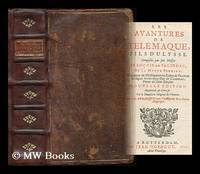
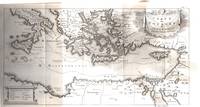
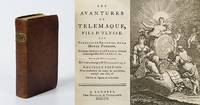
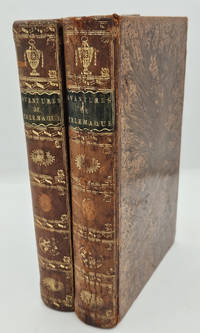
1717TS368Rotterdam: Jean Hofhout 1717. Nouvell Edition: Augmentee & Corrigee . Hardback. Fine. 12mo. Composees par feu Messire Francois de Salignac De la Motte Fenelon.THE RARE RE-ISSUE BY THE AUTHOR'S FAMILY. 2 volumes bound in one with two titles-pages printed in red and black. French text. lxvii xv folding map finely engraved showing Telemaques voyage around the Mediterranean. 525pp xxiii Odes and table i errata. 10 engraved plates all fine. MAINLY ENGRAVED BY D. COSTER. The 2 pp advertment is SIGNED at the foot by the publisher Jean Hofhout. Later nineteenth century full polished calf binding with gilt. dec. single borders to the boards and a fine spine with raised bands and gitl title and decoration. PLEASE EMAIL FOR PHOTOGRAPHS OF THE BINDING AND SIGNATURE.The title was first published in 1699. This rare edition is the corrected and increased post-humous edition was the second edition correctly published after several 'pirated' editions were sold after the first edition of 1699. The author's family led by his nephew published this edition in French at Rotterdam and Amsterdam in 1717. PLEASE EMAIL FOR PHOTOS. 165x95 mm <br/> <br/> Jean Hofhout hardcover
177175907BB1771 . 2 Bände in 1. Ulm: Heinrich Wagner 1771. 8°. 8 XVI 821 10 53 1 S. 1 Frontispiz. 22 Kupfer auf Taf. Ill. 1 Karte Halbleder mit umlaufendem Rotschnitt und Rückenschild mit Goldschrift und Goldfilletten Besitzervermerke von alter Hand auf Innendeckel und Vorsatz; erster Bogen gelockert; Blatt "Widmung an den König" lose und mit Fehlstelle; gebräunt und stockfleckig; Einband berieben; Ecken bestossen; Lederrücken verblasst; unteres Kapital 4 cm abgeplatzt; altersmässig trotzdem annehmbares Exemplar In Französisch Deutsch und Latein. Fénelons Télémaque war im Frankreich des 18. und des 19. Jahrhunderts ein vielgelesenes Jugendbuch und gilt als ein wichtiger Markstein der beginnenden Aufklärung. unknown
174553973No place Daniel Bartelemy & Fils 1745. Small 8vo. Contemp. full calf. Spine gilt and with gilt lettering. 2 engraved frontispieces. 8XXXIII750545 pp. 1 folded engraved maps and 23 engraved plates. Clean and fine printed on good paper. unknown
1725193687A Rotterdam : Chez Jean Hofhout 1725. New Edition. Hardback. Very good copy in the original full aniline calf. Professionally and period sympathetically re-backed with the original label laid back. Spine compartments uniformly tooled in gilt; very impressively finished. Remains particularly well-preserved overall; tight bright clean and strong.; 8vo 8"" - 9"" tall; 535 pages; Nouvelle edition. Augmentee & corrigee sur le manuscrit original de l'auteur avec des remarques pour l'intelligence de ce poeme allegorique. Physical description lix 3 535 27 p. engr. frontis. plate 10 plates : ill. plates map fold. ; 12mo. Notes ""Ode"": pp. 1-5 at end. Includes index.Ramsay's ""Discours de la poesie epique et de l'excellence du poeme de Telemaque"": pp. xviii-lix. Title page in red and black with woodcut device. Subjects; Education of princes. Telemachus Greek mythology - Early works to 1800. Voyages Imaginary. Other names; Ramsay Andrew Michael Chevalier 1686-1743. Language; French A Rotterdam : Chez Jean Hofhout hardcover
171720110Paris: Jacques Estienne 1717. leather_bound. Contemporary full mottled calf. Very good. 526 pages. 16 x 9.5 cm. Twenty-six engraved plates mostly after Giffart large folding map engraved head piece. A biting attack on absolute monarchy and one of the most popular works of the century. BRUNET Vol. II pp. 1212-1213 gives this edition praise: "De Toutes les anciennes editions du Telemaque imprimees a Paris celle-ci est la plus belle et celle qui merite le plus de conserver une place dans la bibilotheque d'un curioux." Text generally clean frontispiece slightly shaved at margin raised bands spine panels richly gilt half centimeter loss at spine head small creases lower backstrip marbled endpapers. Jacques Estienne unknown
1730BNEsFÉNE16Paris: the Widow Delaulne 1730. 1730. 2 Volumes in 1. 4to. pp. 2 p.l. ix-xxxiv 289; 2 p.l. 288 2. with half-titles. titles in red & black. folding engraved map. engraved frontis. & 24 plates drawn by Coypel Souville Cazes Favanne & Humblot engraved by Tardieu Cochin Scotin &c. 1 engraved headpiece & 1 engraved initial. woodcut ornaments & initials. 19th century roan gilt edges few leaves lightly browned. BRUNET II 1214. CFCOHEN-DE RICCI 380-81 JACQUES ESTIENNE IMPRINT. Hardcover. Paris: the Widow Delaulne, 1730. Hardcover
0332396487.Ghardcover. Good. Access codes and supplements are not guaranteed with used items. May be an ex-library book. hardcover
174079530Paris: Veuve Estienne 1740. Veuve Estienne unknown
1742031297Alondres: Chez B. Dod 1742. Leather. Good. Full calf. Folding map present. Raised bands. Spine label gone. Hinges split. First few pages clear taped inner hinges. Free end papers gone. xxxv 528pp. with a Table. No writing in the book. Full refund if not satisfied. Chez B. Dod hardcover
1719004146Amsterdam: Les Wetsteins 1719. Binding very worn front hinge cracked so that front board and 2 prelims are hanging on by thread. Text in good condition. 1857 gift inscription on flyleaf. LIX 234 pages. Leather. Folding map & 8 engraved plates no list. so cannot be sure the illustrations are complete. Contains the first 11 books. Text in French except Privilegie at front in Dutch A . Heinsius. New Edition Corrected and Enlarged . Hard Cover. Fair/No Jacket. 12mo - 4" x 7". Les Wetsteins Hardcover
1742861F3Londres London: J. Gray 1742 . Leather. Very Good Indeed. 7" by 4.5". Not Stated . A wonderful copy of this scarce illustrated edition of Francois Fenelon's 'Adventures of Telamachus'. In the original French.Illustrated with a frontispiece folding map and eleven plates. Collated complete.First published in 1699 Fenelon's work recounts the travels of Telemachus the son of Ulysses as he is accompanied by his mentor who is revealed to be Minerva goddess of wisdom.The folding map depicts the route taken by Telemachus.ESTC Citation No. T223001 Revised by Pierre Desmaizeaux.Two volumes in one with separate pagination but only a general title page to the start of the work.With the stamp of the Ipsley Bindery to the rear pastedown.An exceptionally lovely copy of this richly illustrated edition of Fenelon's work. Rebound in half calf with cloth covered boards and endpapers renewed. Externally excellent. Binder's stamp to rear pastedown. Ink marks to fore edge of text block. Internally firmly bound. Pages lightly age toned but generally clean and bright. The odd contemporary ink blot throughout. Very Good Indeed J. Gray hardcover
1391155599.Ghardcover. Good. Access codes and supplements are not guaranteed with used items. May be an ex-library book. hardcover
1390830004.Gpaperback. Good. Access codes and supplements are not guaranteed with used items. May be an ex-library book. paperback
959979Amsterdam D.J. Changuion 1775. Halfleather 12mo. 106 490 pp. Engraved frontispiece folded map of the voyages of Telemaque nine engraved plates. l Wear to spine split and edges. Previous owner's name on titlepage. hardcover
1740SKU1016068A Paris Rue S. Jacques Guillaume Desprez. LEATHER_BOUND. Les Avantures De Telmaque Fils D'Ulysse Tome Second - Quatrie-me Edition; by Francois De Salignac; De La Motte Fenelon; A Paris Rue S. Jacques Guillaume Desprez 1740; Leather Bound with 5 raised bands to spine and bright gilt titles; bright text; illustrated; fold-out map intact; marbled board and endpapers; VG; very scarce . Very Good. 1740. A Paris Rue S. Jacques, Guillaume Desprez hardcover
1790ST20479Paris: De l'imprimerie de Monsieur i.e. P. Didot jeune 1790. 243 x 154 mm. 9 1/2 x 6 1/4". Two volumes. <br/> LOVELY DARK BLUE STRAIGHT GRAIN MOROCCO BY BOZERIAN JEUNE stamp-signed at foot of Tome I spine covers with pretty gilt frame enclosed by double gilt rule raised bands spine gilt in panels with large millepoint ornament with floral tools emanating from a central circle gilt lettering turn-ins with Greek key roll marbled endpapers all edges gilt. With frontispiece and six engravings by Cochin and Moreau as called for all before letters and EXTRA-ILLUSTRATED with 24 engravings by Marillier here in proofs before the letter and with three versions of the portrait of Fénélon by Vivien engraved by Hubert Figuet and Savart. Cohen-de Ricci col. 386-87 noting the addition of the Marillier plates to some copies; Graesse II 565; Brunet II 1215-16. Spine evenly a little sunned Marillier plates with minor marginal foxing isolated small smudges to the very generous margins one quire a little yellowed a couple of leaves with small holes to a margin due to paper flaws but AN ESPECIALLY FINE COPY--clean fresh and bright in a most appealing binding with almost no signs of wear.<br/> <br/> Our copy of Fénélon's political allegory featuring the son of Odysseus is a very fine example of French Rococo book production with printing illustration and binding by leading practitioners of those arts. Scion of a printing dynasty Pierre-François Didot jeune 1732-95 sought to improve the family's productions by founding a factory to product the luxurious papers that characterize Didot editions as well as by making improvements in type-founding to refine their always-admired font. Ray considers illustrators Cochin and Moreau le jeune part of the Rococo pantheon of greats headed by Boucher Gravelot and Eisen. He praises Cochin’s "mastery of outline and firmness of composition" as well as his "acute observation and unpretentious humor." Ray was also impressed with Moreau's keen eye for detail and agreed with the Goncourt brothers that "the grace and charm of his drawing . . . brought about 'a renaissance in the rococo style.'" Forced by financial necessity to take up book illustration Pierre-Clémént Marillier 1740-1808 soon earned what Ray called "a position in the front rank of book artists" with his skill and energy. Ray deems Marillier "among the most accomplished" illustrators of the century and he says that "nearly all of his designs are characterized by grace liveliness and firmness of drawingâ€â€”a fitting description for the plates in our volumes. François Bozerian generally called Bozerian jeune was active in Paris from just after the turn of the century until 1818 and for much of that time he worked with his elder brother Jean-Claude 1762-1840. The Bozerian workshop produced many fine bindings for clients that included the emperor Napoleon I as well as leading bibliophiles of the day. Their works are valued today especially for their technical achievement and refinement of design. Our two volumes are especially elaborate--even for Bozerian work--and the precision of the faultless finishing here leaves a very strong impression of rigorous order. De l'imprimerie de Monsieur [i.e., P. Didot jeune] unknown
1734ST12855Amsterdam: Wetstein & G. Smith; Rotterdam: Jean Hofhout 1734. First Printing of this Edition. ONE OF 150 COPIES IN FOLIO FORMAT. 375 x 265 mm. 14 3/4 x 10 1/2". 4 p.l. including portrait and frontispiece x xxvi i.e. xvi 395 1 pp. Like most copies ours lacks the suppressed material designed to follow page 395. <br/> FINE CONTEMPORARY RED STRAIGHT-GRAIN MOROCCO covers with palmette roll border central panel with gilt-ruled frame and lozenge accented with bead and lozenge roll spine gilt and inlaid with olive morocco bands tooled with gilt chalice and leaves between the double raised bands spine compartments with central urn ornament surrounded by small tools calligraphic flourishes at corners gilt titling turn-ins with elaborate gilt roll featuring leaves and moths blue watered silk endleaves all edges gilt lower board with three older repaired patches. In a modern marbled paper slipcase. Ornamental headpieces and tailpieces title page decorated with vignette author portrait by Drevet after Vivien and 25 more plates illustrating the tale engraved by Folkéma and others predominantly in classical style three including the frontispiece designed by Picart 16 by Dubourg and six by Debrie with original tissue guards; 45 vignettes serving as headpieces 24 and tailpieces 21 designed by Dubourg and Shenk one engraved folding map and extra-illustrated with a portrait of Fenelon by Jean Coraboeuf dated 1920. Text with ornamental border throughout. Front pastedown with the bookplate of Arthur Meyer. Cohen-de Ricci 381-82; Ray 1; Brunet II 1214; Graesse II 564. ◆A few darkened patches on boards small chip to olive band at tail of spine corners gently bumped occasional minor foxing or light browning otherwise QUITE AN EXCELLENT COPY the binding altogether pleasing with only insignificant wear the text clean and fresh with rich impressions of the plates.<br/> <br/> This is a very well-preserved copy of the luxury version of one of the most impressive French illustrated books of the 18th century offered in a Neoclassical binding appropriate for its contents. Ray says that in our volume "all the formal elements of the mid-18th century French masterpieces are present." He describes the 25 plates as "stately and elaborate" and singles out Picart's frontispiece which he reproduces in one of the rare full-page illustrations in his book as being "developed with exceptional spirit and inventiveness." Not only the handsome plates but also the leafy frames of each text page the large type and the many charming headpieces and tailpieces make it an elegant object that provides for a visually memorable experience. Fénelon 1651-1715 wrote this utopian work for Louis XIV's grandson whom he was employed to tutor. The book was designed to give the future ruler more farsighted political social and economic ideas than he might otherwise have met with. Unfortunately the boy died before he could come to power and Fénelon fell into disgrace partly because "Telemaque" reflected badly on the government of Louis. According to Graesse our "beautiful" edition supervised by the marquis de Fénelon is much more correct than previous printings as a great many errors have been corrected and lacunae have been filled in. While the unsigned binding is not quite up to the level of émigré binders Kalthoeber and Staggemeier & Welcher it is in their style and is certainly impressive enough to look handsome on the shelf. Former owner Arthur Meyer 1844-1924 was a French press baron whose collection focused on fine bindings and beautiful illustrations. Wetstein & G. Smith; Rotterdam: Jean Hofhout unknown
175632426AB1756. A Londres London Chez Nourse & Vaillant 1756. Octavo 10.8 cm wide x 18 cm high. Pagination: Frontispiece XXXII 386 pages plus 22 unnumbered pages of a Dictionary for Mythology and Geography to the rear of the volume. With ten engravings plus one folded map throughout the Volume resulting in 11 engravings including Frontispiece plus Map. Hardcover / Original full leather with gilt lettering on spine-label. Edges of bookblock and binding slightly rubbed. Overall in very good and firm condition with only minor signs of wear. Few dogears. Front free endpaper partially torn name of pre-owner Reverend Richard Meade verso the frontispiece. From the library of Richard Meade Ballymartle with his Exlibris / Bookplate loosely inserted. "Les Aventures de Télémaque fils d'Ulysse" English: The Adventures of Telemachus son of Ulysses is a didactic novel by François Fénelon Archbishop of Cambrai who in 1689 became tutor to the seven-year-old Duc de Bourgogne grandson of Louis XIV and second in line to the French throne. It was published anonymously in 1699 and reissued in 1717 by his family. The slender plot fills out a gap in Homer's Odyssey recounting the educational travels of Telemachus son of Ulysses accompanied by his tutor Mentor who is revealed early on in the story to be Minerva goddess of wisdom in disguise. The tutor Mentor is arguably the true hero of the book much of which is given over to his speeches and advice on how to rule. Over and over Mentor denounces war luxury and selfishness and proclaims the brotherhood of man and the necessity of altruism though that term would only be coined in the 19th century by Auguste Comte. He recommends a complete overhaul of government and the abolition of the mercantile system and taxes on the peasantry and suggests a system of parliamentary government and a Federation of Nations to settle disputes between nations peacefully. As against luxury and imperialism represented by ancient Rome Fénelon holds up the ideal of the simplicity and relative equality of ancient Greece an ideal that would be taken up by in the Romantic era of the 19th century. The form of government he looks to is an aristocratic republic in the form of a constitutional monarchy in which the ruler-prince is advised by a council of patricians. Although set in a far off place and ancient time Télémaque was immediately recognized by contemporaries as a scathing rebuke to the autocratic reign of Louis XIV of France whose wars and taxes on the peasantry had reduced the country to famine. Louis XIV who had previously banished Fénelon from Versailles and confined him to his diocese because of a religious controversy was so angered by the book that he maintained those restrictions on Fénelon's movements even when the religious dispute was resolved. Yet a few years later royal panegyrists were hailing the young king Louis XV as a new Telemachus and flattering his tutors as new "Mentors". Later in the century royal tutors gave the book to their charges and King Louis XVI 175493 was strongly marked by it. The French literary historian Jean-Claude Bonnet calls Télémaque "the true key to the museum of the eighteenth-century imagination".2 One of the most popular works of the century it was an immediate best-seller both in France and abroad going through many editions and translated into every European language and even Latin verse first in Berlin in 1743 then in Paris by Étienne Viel 173787. It inspired numerous imitations such as the Abbé Jean Terrasson's novel Life of Sethos 1731; it also supplied the plot for Mozart's opera Idomeneo 1781. With its message of world peace simplicity and the brotherhood of man Télémaque was a favorite of Montesquieu and of Jean-Jacques Rousseau and through him of the French revolutionaries and of German Romantics such as Johann Gottfried Herder 17441803 who approvingly quotes Fénelon's remark "I love my family more than myself; more than my family my fatherland; more than my fatherland humankind". It was also a favorite of Thomas Jefferson who re-read it frequently. It was also widely read in the Ottoman Empire and in Iran. One critic explains the popularity of Télémaque this way: Fénelon's story stood as a powerful rebuke to the aristocratic court culture that dominated European societies with its perceived artificiality hypocrisy and monumental selfishness. The book did not simply express these feelings; it helped shape and popularize them. From its wellspring of sentimentality a river of tenderly shed tears would flow straight through the eighteenth century fed by Richardson Greuze and Rousseau among others finally to pour out into the broad sea of Romanticism. Influence on Rousseau In Rousseau's Émile 1762 a treatise on education the eponymous pupil is specifically given only two novels although as a young man he also reads poetry and other literature: as a child he is given Daniel Defoe's Robinson Crusoe to inculcate him in resourcefulness and self-reliance; and when he becomes a young man the political treatise Télémaque which is put into his hands by his intended Sophie who has read it and fallen in love with the fictional hero. The education of Émile is completed by a journey during which the institutions of various nations are to be studied. His tutor inculcates principles into him which sum up the essentials of the Social Contract. But it is with a Telemachus in hand that teacher and pupil establish a "scale of measurement" for judging various existing societies. Fénelon's story presents models and counter models of monarchs. The princes and governments of the real world will be compared with them. In Rousseau's novel Émile and his tutor travel to Salento which formerly included much of what is now Calabria and Apulia Italy to seek the "good Idomeneo" whom Fénelon's novel had relocated from his former kingdom in Crete to the kingship of a new and reformed government. Contrary to Louis XIV whom he resembles in many traits of character Idomeneus renounces conquest and is able to make peace with his neighbors. The prosperous fields and laborious capital are schools of virtue where law rules over the monarch himself. Everything here is brought down to a "noble and frugal simplicity" and in the harmony of a strictly hierarchical society everything combines in a common utility. Wikipedia _____________________________________________________ Telemachus Romanized: Telemakhos lit. 'far-fighter' is the son of Odysseus and Penelope in Greek mythology and a central character in Homer's Odyssey. When Telemachus reached manhood he visited Pylos and Sparta in search of his wandering father. On his return to Ithaca he found that Odysseus had reached home before him. Then father and son slayed the suitors who had gathered around to woo Penelope. According to later tradition Telemachus married Circe after Odysseus's death. The first four books of the Odyssey focus on Telemachus's journeys in search of news about his father who has yet to return home from the Trojan War and are traditionally given the title Telemachy. Telemachus's name in Greek means "far from battle" or perhaps "fighting from afar" as a bowman does. In Homer's Odyssey Telemachus under the instructions of Athena who accompanies him during the quest spends the first four books trying to gain knowledge of his father Odysseus who left for Troy when Telemachus was still an infant. At the outset of Telemachus's journey Odysseus had been absent from his home at Ithaca for twenty years due to the Trojan War and the intervention of Poseidon. During his absence Odysseus's house has been occupied by hordes of suitors seeking the hand of Penelope. Telemachus first visits Nestor and is well received by the old man who regales him with stories of his father's glory. Telemachus then departs with Nestor's son Peisistratus who accompanies him to the halls of Menelaus and his wife Helen. While there Telemachus is again treated as an honored guest as Menelaus and Helen tell complementary yet contradictory stories of his father's exploits at Troy. Telemachus also learns from Menelaus that his father was last seen stranded on Ogygia. Telemachus focuses on his father's return to Ithaca in Book XV. He visits Eumaeus the swineherd who happens to be hosting a disguised Odysseus. After Odysseus reveals himself to Telemachus due to Athena's advice the two men plan the downfall of the suitors. Telemachus then returns to the palace to keep an eye on the suitors and to await his father as the beggar. When Penelope challenges the suitors to string Odysseus's bow and shoot an arrow through the handle-holes of twelve axe heads Telemachus is the first to attempt the task. He would have completed the task nearly stringing the bow on his fourth attempt; however Odysseus subtly stops him before he can finish his attempt. Following the suitors' failure at this task Odysseus reveals himself and he and Telemachus bring swift and bloody death to the suitors. The Telegony was a short two-book epic poem recounting the life and death of Odysseus after the events of the Odyssey. In this mythological postscript Odysseus is accidentally killed by Telegonus his unknown son by the goddess Circe. After Odysseus's death Telemachus returns to Aeaea with Telegonus and Penelope and there marries Circe. Seemingly later tradition included the character of Cassiphonethe daughter of Odysseus and Circe and therefore half-sister of Telemachusin the narrative. In this account Telemachus still marries Circe but Odysseus is resurrected by Circe at some point. From the Dictionary of Greek and Roman Biography and Mythology: In the post-Homeric traditions we read that Palamedes when endeavouring to persuade Odysseus to join the Greeks against Troy and the latter feigned idiocy placed the infant Telemachus before the plough with which Odysseus was ploughing. In Contest of Homer and Hesiod it is alleged that the Roman Emperor Hadrian asked the Delphic Oracle about Homer's birthplace and parentage. The Oracle replied that Homer came from Ithaca and that Telemachus was his father by Epicasta daughter of Nestor. According to Aristotle and Dictys of Crete Telemachus married Nausicaa King Alcinous's daughter and fathered a son named Perseptolis or Ptoliporthus. Eustathius says that the mother was Polycaste the daughter of Nestor. Others relate that he became the father of Latinus by Circe. He is also said to have had a daughter called Roma who married Aeneas. Servius makes Telemachus the founder of the town of Clusium in Etruria. Wikipedia hardcover
632669Imprimerie De Monsieur Paris. 1st Edition. Hardcover. Good/No Jacket. 8vo. - 2 Volume Set - Full leather binding w/ title label and gilt design to spines - Covers and rubbed w/ chipping to edges and joints - Corners bumped w/ borads exposed - Edges of text block lightly toned - Endpapers foxed - Some very light internal foxing - Books ow/ solid clean and tight viii/834 pages No Jacket Imprimerie De Monsieur, Paris hardcover
2329199910.Gpaperback. Good. Access codes and supplements are not guaranteed with used items. May be an ex-library book. paperback
2329220057.Gpaperback. Good. Access codes and supplements are not guaranteed with used items. May be an ex-library book. paperback