PROUST, Marcel.Livre Rare Book
20 774 résultats
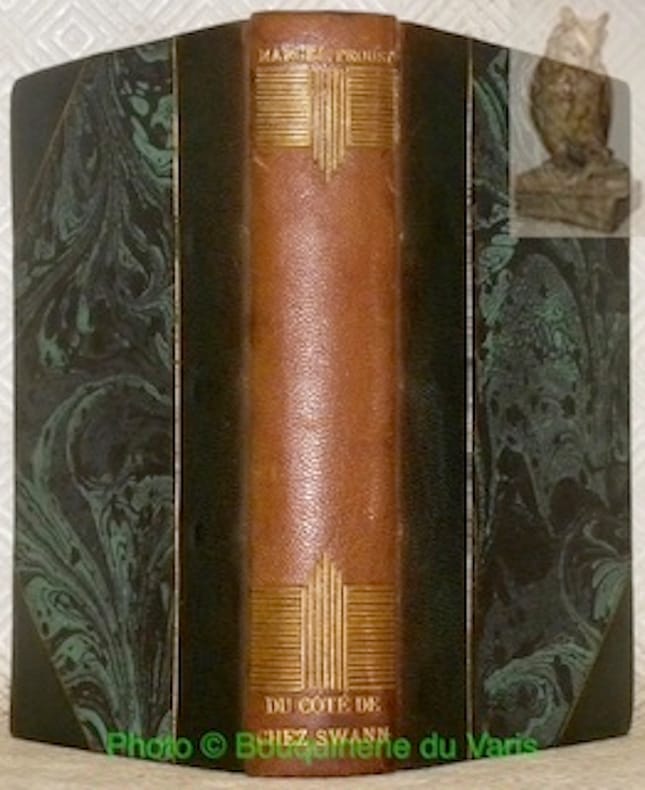
101754Paris, Bernard Grasset 1913, 190x120mm, 523pages, reliure demi-basane. Relié en demi-basane à coins. Auteur, titre et ornementations (filets entre-croisés) dorés au dos. Plats papier marbré avec trois filets dorés. Tranche supérieure dorée. Couvertures conservées (supérieure et inférieure). Reliure des années 30 avec dos légèrement insolé, autrement belle reliure. Exemplaire du second état qui est l’état définitive de l’édition originale. Mention fictive de troisième édition sur la couverture supérieure daté de 1913 en chiffres romains. Page de titre blanche avec date d’édition 1914 aussi en chiffres romains. Avec la table des matière. Achevé d’imprimer le huit novembre mil neuf cent treize par Ch. Colin à Mayenne. Bel exemplaire, intérieur propre.
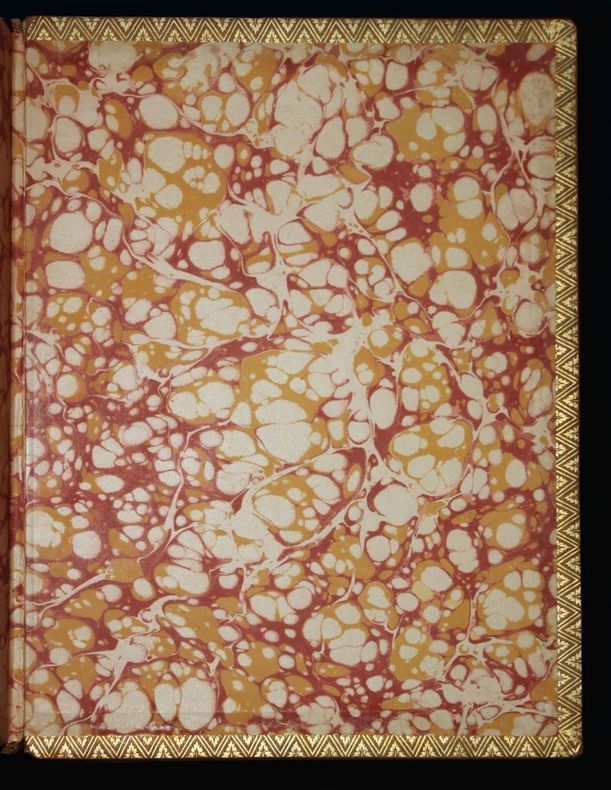
1928AMO-2166Félicia ou Mes fredaines par André de Nerciat, illustrée de 20 eaux-fortes coloriées à la main par l'artiste (André Collot). Belle reliure de l'époque en maroquin. Tirage à 300 exemplaires sur vélin blanc. ANDREA DE NERCIAT (André Robert) - [André COLLOT, illustrateur] FELICIA OU MES FREDAINES. Orné de vingt eaux-fortes coloriées à la main par l'artiste. Paris. 1928 1 volume in-4 (25,5 x 20 cm), de 238-(1) pages. 20 eaux-fortes dans le texte (à mi-page) coloriées à la main au crayon de couleurs par l'artiste. Reliure plein maroquin caramel, pastiche de reliure du XVIIIe siècle, dos à faux-nerfs richement orné aux petits fers dorés, triple-filet doré en encadrement extérieur des plats, roulette dorée en encadrement intérieur des plats, doublures et gardes de papier marbré, relié sur brochure, non rogné, couverture crème imprimée en bleu (titre). Superbe exemplaire dans une fine reliure (non signée). A noter des mors partiellement fendus, sans incidence sur la solidité de la reliure. Cuir des mors bruni. Le dos est légèrement plus foncé que les plats. Superbe condition malgré cela. TIRAGE A 331 EXEMPLAIRES SEULEMENT. CELUI-CI, 1 DES 300 EXEMPLAIRES SUR VÉLIN BLANC. Le détail du tirage est le suivant : 1 ex. sur Japon nacré blanc avec plusieurs suites ; 30 ex. sur Japon avec aquarelle et suite des remarques et 300 ex. sur vélin blanc. Ce roman libertin d'Andréa de Nerciat (un bourguignon salé ... de naissance) a été réimprimé de nombreuses fois au cours des dernières années du XVIIIe et des premières années du XIXe siècle, et ce, malgré une condamnation à la destruction. Dutel, dans sa bibliographie des ouvrages érotiques publiés clandestinement en français entre 1650 et 1880, n'en compte pas moins de 17 impressions entre 1775 et 1869. Dutel indique que ce roman aurait été publié vers 1775, et donne pour première édition, l'édition sans figures d'Amsterdam, sans date, en 221 et 256 pages, sans doute à cause des erreurs de pagination relevées. Ce roman libertin concentre l'essence du romanesque libertin en un dosage subtil d'humour, d'évasion et d'élan passionnel. Le tour de force de l'auteur est de se livrer à une parodie jubilatoire tout en écrivant un vrai roman d'aventure, avec ses mystères, ses épisodes palpitants, ses improbables coïncidences et hasards merveilleux... Avec Margot, Thérèse ou Juliette, Félicia est à coup sûr l'une des plus grandes courtisanes de la littérature du XVIIIe siècle. TRÈS BELLE ÉDITION CLANDESTINE DE LUXE ILLUSTRÉE PAR ANDRÉ COLLOT. Référence : Dutel, Bibliographie des ouvrages érotiques publiés clandestinement en français entre 1920 et 1970, n°1556 Photographies sur demande. Pics on request. TRÈS BEL EXEMPLAIRE FINEMENT RELIÉ EN MAROQUIN A L’ÉPOQUE.
1612953521Moguntiae [Mainz]: Anton Hierat. 1612. Quart, 33 x 20 cm. (Einband gebräunt und fleckig, die beiden Bindebänder erneuert, Titel mit handschriftlichem Besitzvermerk und an den Rändern mit Japanpapier verstärkt, innen teils stark gebräunt und feuchtigkeitsrandig) [16 Warenabbildungen] 6 Blatt, 596 Seiten, 14 Bl., 122 S., 1 weißes Blatt, 59, 20, 23 S. Ganzpergament der Zeit, vollständig restauriert und neu aufgezogen,
cartella pp. 12 in quartini sciolti 12 belle e grandi incisioni orig. tutte firmate, numer. a 220 esempl. e montate entro passepartout. Ediz. numer. di 220 esempl. complessivi Pregevole raccolta di artisti dell'incisione come Cernigoj, Diskay, Galli, Kalashnikov, Kalczynska, Leboroni, Patocchi, Pozzi, Tarquinio, Uboldi, Viganone e Wolf. Rara e ottima cartella di grafiche originali incise con varie tecniche. In perfette condizioni di conservaz.
191253674ABMünchen, Delphin Verlag 1912. 47,5x40 cm. 4 S. (Titel, Impressum, Inhalt und Vorwort) und 13 Originalgrafiken in losen Blättern. In Originhalbleinwandmappe mit braunem Japanpapierbezügen mit einem montierten zweifarbigen Deckelholzschnitt von Helen Dahm.
191253674ABMünchen, Delphin Verlag, 1912. 47,5x40 cm. 4 S. (Titel, Impressum, Inhalt und Vorwort) und 13 Originalgrafiken in losen Blättern. In Originhalbleinwandmappe mit braunem Japanpapierbezügen mit einem montierten zweifarbigen Deckelholzschnitt von Helen Dahm. [17 Warenabbildungen]
201404368S.l., s.e., s.d. ; in-8, 303 pp., cartonnage de l'éditeur. En très bon état reliure plein marocain tête doré exemplaire sur PAPIER JAPON (un des 1/20) ces quelques pges écrites à ses moments perdus par M. Édouard Ferry , ont été réunies en ce volume par Mme FERRY-SCHUTZENBERGER sa veuve, pour être offertes en sa mémoire à ses parents et à ses amis.
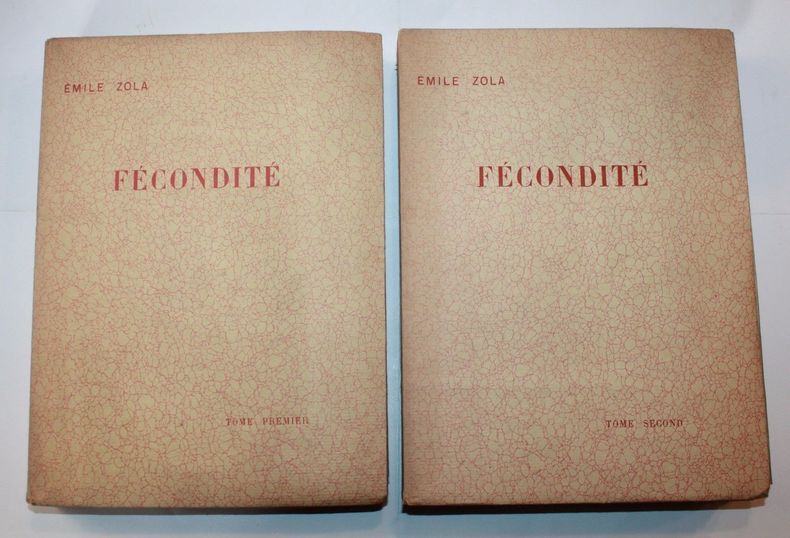
1899AMO-1614Paris, Librairie Charpentier et Fasquelle, 1899 2 volumes in-18 réimposés in-8 (24 x 17,5 cm), brochés, couverture papier décoré imprimée en rouge, exemplaire à l'état proche du neuf, entièrement non coupé (jamais lu). ÉDITION ORIGINALE. CELUI-CI, 1 DES 50 EXEMPLAIRES SUR JAPON.Il a été tiré en outre 250 exemplaires sur papier de Hollande. Les Quatre Évangiles est le dernier cycle romanesque conçu par Émile Zola de 1898 à sa mort en 1902. Il est inachevé puisque seuls les trois premiers romans de la série, Fécondité, Travail et Vérité ont été publiés. Justice, le dernier projet du romancier, n'a été qu'ébauché.
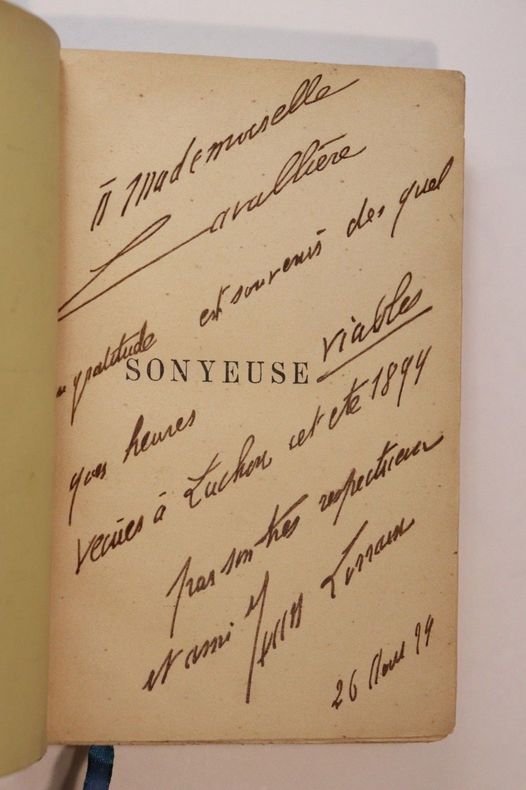
1891AMO-2398Paris, Bibliothèque Charpentier, 1891 1 volume 18,8 x 11,8 cm, 290-(1) pages. Reliure pleine percaline lie de vin, belle pièce de titre de maroquin avec auteur et titre doré, relié sur brochure avec les couvertures jaunes imprimées (les deux plats très bien conservés - sans le dos). Exemplaire relié par A. J. Gonon (avec son étiquette de relieur). Edition originale. Il n'est pas indiqué de grands papier. Cet exemplaire est imprimé sur beau papier vélin fort teinté. Absolument sans rousseur. A noter que cet exemplaire ne nous semble pas imprimé sur le papier courant (papier ordinaire) mais sur un papier de choix, papier encollé vélin fort teinté (tirage de luxe non mentionné ?). Exemplaire de toute fraîcheur et finement relié. Exemplaire de dédicace avec sur tout le faux-titre ce bel envoi autographe de Jean Lorrain : "à Mademoiselle Lavallière en gratitude et souvenir des quelques heures viables vécues à Luchon cet été 1899 par son très respectueux et ami Jean Lorrain 26 août 99" Ève Lavallière (1866-1929) fut comédienne puis religieuse franciscaine. En 1891, on la présente à Eugène Bertrand, le directeur du théâtre des Variétés, qui l'embauche dès ses premiers essais. Elle commence par tenir un rôle de figuration dans La Belle Hélène de Jacques Offenbach, mais Mlle Crouzet qui tenait le rôle d'Oreste meurt subitement et c'est Eve qui reprend le rôle. Elle n'a alors que 25 ans. La voix d'Eve Lavallière est d'une gamme très étendue, ce qui va en faire une comédienne de théâtre renommée à la Belle Époque (entre 1891 et 1917). Plusieurs grandes réalisations voient sa participation à l'époque dont Le Sire de Vergy au côté d'Albert Brasseur (1903). Sa renommée est semblable à celle de Sarah Bernhardt. Bel exemplaire
1999203370CBSchriesheim, Frank Albrecht, 1999. Fol. 125 S., 1 Bl. mit 18 Orig.-Radierungen von Inge Jastram. Rotbrauner Original-Halbleder, handgebunden von Thomas Zwang mit blindgeprägtem Einband (1. Seite des beigef. Briefes). (Neuwertig).
192187967Leipzig, Insel o.J. (1921). 1921. 4° (28,2 x 18,6 cm), (6), 105, (4) S., rote Wischpapiervorsätze, handumstochene Kapitalbänder, cremefarbener Originalkalblederband mit Rücken- und Deckelvergoldung und Kopfgoldschnitt (signiert: E. A. Enders. Leipzig) im Originalschuber.
1971402728Frankfurt und Berlin: Propyläen. 1971. Groß-Folio, 72,5 x 52 cm. (dieser minimal bestossen und zerkratzt, die Papierumschläge teils gering knickspurig, sonst und im Ganzen schön erhalten) 11 Blatt, die Radierungen montiert in festen, bedruckten Papierumschlägen. Lose in mit silberfarbenem Papier bezogenen Original-Schuber,
192729623ABParis, Plée 1927-33. 30 Bände. Gr.8°. Moderne Lwd mit schwarzem Rückenschild, OUmschläge beigebunden. Ein Kopfschnitt schräg beschnitten (etwas Rand-, kein Textverlust).
1965AMO-2190Aux dépens de deux cent cinquante disciples d’Hippocrate, s.d. (1942). 1 volume in-4 (28,5 x 22,5 cm), 71-(2) pages, 25 lithographies originales par Berthommé Saint-André dont 12 hors-texte en couleurs et 13 en-têtes en noir, en feuilles, sous couverture papier vert d’eau (refaite). Titre « VERLAINE » contrecollé sur le premier plat (issu de la couverture d’origine).Tirage à 275 exemplaires tous sur vélin de Rives. Celui-ci un des 100 premiers accompagnés d’une suite des 12 hors-texte en couleurs avec remarque en noir et tirés sur papier Japon. Edition publiée vers 1942 par Henri Pasquinelli. Dutel, Bibliographie des ouvrages érotiques publiés clandestinement en française entre 1920 et 1970, n°975 (qui annonce 24 lithographies comme l’indique le colophon, alors qu’il y en a en réalité 25). Ce volume est une réussite en tous points. Les illustrations de Berthommé Saint-André sont en accord parfait avec les poésies érotiques de Verlaine. La combinaison dans un même volume de la lithographie en noir et en couleurs est des plus agréables. Bel exemplaire du tirage de tête. Bel exemplaire de ce superbe livre érotique illustré.
118450Paris, Maeght Editeur 1971, 300x235mm, en feuille, sous couverture rempliée et cartonnage illustré. Edition originale achevée d’imprimer le 30 octobre 1971 sur les presses de l’imprimerie Union à Paris. Les presses d’Arte, Adrien Maeght, ont tiré les eaux-fortes et lithographies originales d’Antoni Tàpies. Un des 150 exemplaires sur papier d’Auvergne à la main du Moulin Richard de Bas, numéroté n.° 88 / 150, signés au colophon par l’artiste et l’auteur. Hommage et signature de l’artiste avec date (15 mai 1975) Antoni Tàpies sur la page de titre. Très bel exemplaire.
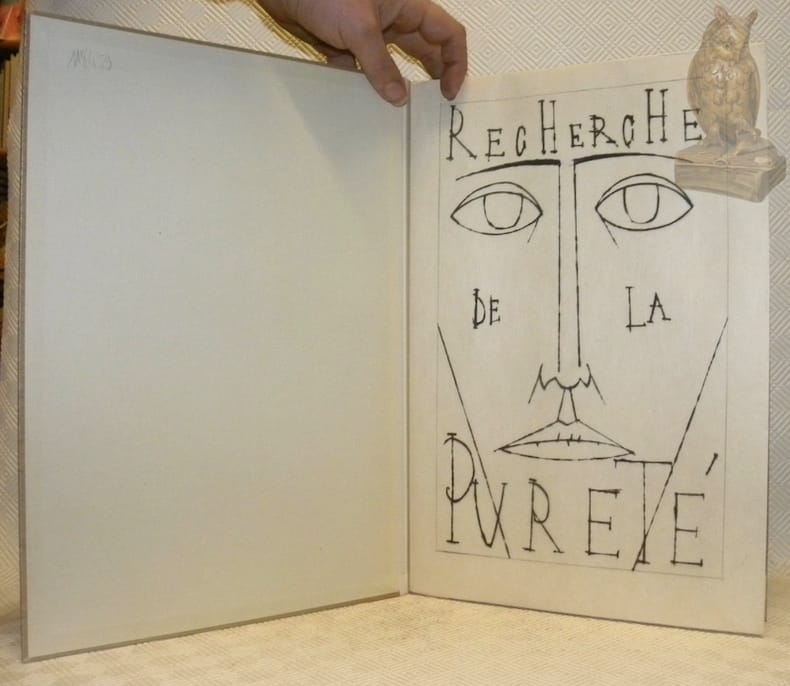
118459Paris, Henri Creuzevault Editions des Horizons de France 1953, 395x270mm, en feuille (25 feuillets chiffrés), couverture rempliée, sous chemise et emboitage cartonnés. Un des 140 exemplaires sur papier Rives, numéroté n.° 103 / 140. Composé à la main en plantin italique corps 24 et illustré par Bernard Buffet de 21 gravures originales réalisé sur les presses de Janine Daragnès pour la typographie et les gravures. Achevé d’imprimer à Paris le 11 mai 1953 pour Henri Creuzevault. Signés au justificatif de tirage par l’auteur et l’artiste. Bel exemplaire.
200057274BBErlangen, Keepsake, 2000. 45x33 cm. 4 n.n. Bl. Titel, Inhalt und Einleitung, 15 Bl. Graphiken und 15 S. Text. Lose in Kartonkassette.
200057274BBErlangen, Keepsake, 2000. 45x33 cm. 4 n.n. Bl. Titel, Inhalt und Einleitung, 15 Bl. Graphiken und 15 S. Text. Lose in Kartonkassette.
1974A1725Nice, À l'Enseigne du Chant des Sphères, 1974 ; in-4, environ 200 pp. chacun, reliures éditeur pleines basane brune estampé façon maroquin, dos orné à nerfs et estampés, plats ornés, estampés, filets, tête dorées, emboîtages. Les 12 volumes. Exemplaire numéroté. Illustrations de Jean Gradassi. Bon état.
Nice, À l'Enseigne du Chant des Sphères, 1974; in-4, environ 200 pp. chacun, reliures éditeur pleines basane brune estampé façon maroquin, dos orné à nerfs et estampés, plats ornés, estampés, filets, tête dorées, emboîtages. Les 12 volumes. Exemplaire numéroté. Illustrations de Jean Gradassi. Bon état.
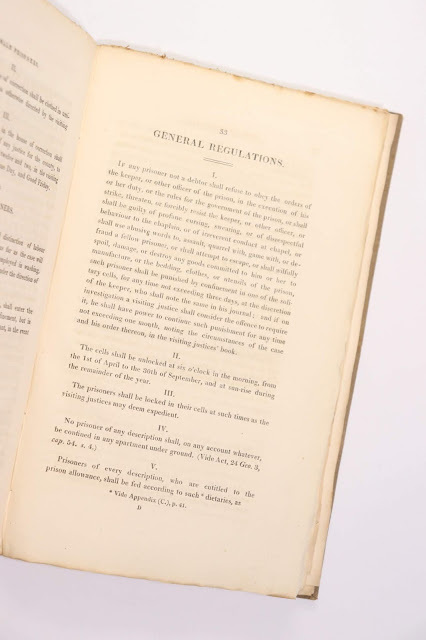
1820AMO-2714London, Printed by T. Bensley, 1820 1 vol. in-8 (23 x 14 cm) de VI-(1)-65 pages. 10 planches hors-texte (la plupart dépliantes). Voir le détail des sujets ci-après. Cartonnage de l'époque plein papier gris, relié sur brochure, non rogné, étiquette de titre imprimée au dos (d'origine). 1 planche détachée. Quelques rousseurs et feuillets jaunis, néanmoins excellent papier de qualité (papier vélin de cuve). légères usures au cartonnage néanmoins solide. First edition. "The society for the improvement of Prison Discipline, in submitting to the public the following suggestions respecting the proper regulations to be adopted in Prisons, deem it superfluous to detain their readers by endeavouring to prouve what is already obvious, that the judicious mangement of Gaols is a subject of the utmost importance. An intention has been imputed to this society, than which nothing can be more foreign from its real purpose, that of making the interior of a prison a more desirable residence than the habitations of the poor ; the motives which actuate the members of the society are allowed to be benevolent, but the consequences of carrying their views of reform or improvement into effect, are supposed by some persons to be mischievous ; it is presumed that offenders are intimidated, by the miseries and privations they have experienced or anticipate ; if prisons, it is said, are rendered places of comfort, where food and lodging are gratuitously provided, they become incentives to crime and a recompence for its commission. In this view of the subject, however, the society cannot coincide : it is true, they consider it desirable that prisons should be clean, and the food given to the prisoners, plain, wholesome, and sufficient ; but they are equally anxious that everything which borders on sensual gratification or unnecessary comfort should be entirely prohibited. They are of opinion that the punishment contemplated by the law should alone be inflicted, and that no collateral evils, the horrors of disease, and the corruption of principle, should be superadded ; but they are decidedly adverse to any permission of idleness, dissolute behaviour, or to any indulgencies, excepting those conferred as the reward of good conduct ; they are desirous that constant and imperative labour should occupy the prisoners, and prepare their minds for such instruction as may eradicate evil habits, and substitute good dispositions: a prison thus regulated offers no attraction to the vicious, and the society confidently appeal to the evidence of facts as confirming the deductions of reason, wherever this experiment has been fairly tried. It must be apparent to all who have directed their attention to this subject, that the system of Prison Discipline too. generally prevalent in England was confined to a single object, the safe custody of the prisoner ; and to one method of accomplishing that object, severe and sometimes unnecessary coercion : if the prisoner could be retained within the walls of a gaol by bars, by chains, or by subterraneous and unventilated dungeons, by the use of any rigour or privation ; this plan, aiming only at his personal security, was deemed sufficient: the possibility of reforming the criminal seems never to have been contemplated ; no rule was in force, no arrangement existed which could be referred to such a purpose: the attempt to disengage the culprit from long formed habits of vice, and to rekindle in his breast the latent sparks of virtue, were schemes known indeed by the writings of Howard, but generally regarded as the visionary efforts of an excessive philanthropy. Such has been the progress of public opinion, that it is not now requisite to dwell upon the expediency of making these attempts, or to contend against a system calculated to multiply offences, and to ripen indiscretion into crime; a new plan has been gradually developed, in which moral restraint removes the necessity of brutal violence ; in which the prisoner is justly considered as possessing rights which we must not v violate, and feelings which we must not wound, beyond what the sentence of the law demands: a system equally opposed to that dangerous indulgence which permits scenes of vice, drunkenness, or debauchery to be exhibited ; and to that useless cruelty, which, producing no beneficial effect in the way of example, tends to harden the character of those who are subjected to its operation ; a system, in short, which suppresses for a time at least many evil habits, and substitutes those of industry, decency, sobriety, and order. The strong interest taken by the public in this momentous question, the examples which have been adduced of the successful application of these principles to practice ; the zeal manifested by the magistrates in general throughout the country, and the appointment of committees in both houses of Parliament, furnish a well-grounded confidence that the improved system of Prison Discipline will now be fairly and fully tried. The society for the improvement of Prison Discipline have received so many applications for information respecting numerous particulars, that they apprehend they cannot more effectually consult the wishes or convenience of the public, than by an endeavour to collect and arrange those recommendations which the result of reflection and experience enables them to offer. Much consideration has been bestowed upon the plans which accompany this tract, and great assistance has been derived from the architectural skill of Mr. Ainslie, and Mr. Bullar, in the arrangement and illustration of these designs: these gentlemen have gratuitously afforded the Society most valuable aid, for which the Committee beg to express their sincere acknowledgments ; the object in view was to give such plans, as might best combine the advantages of inspection and classification, leaving it to the discretion of different districts to accommodate the same to their own local circumstances. With regard to the rules which are suggested, there is no pretension to originality ; the first aim of the society has been to obtain an accurate acquaintance with the actual management of the best regulated gaols ; to compare attentively the course pursued in each, with their practical consequences ; and then to select and combine, under one arrangement, those rules which appeared upon the whole most judicious and effective. The importance of providing employment for prisoners, and the difficulty of procuring it, have deeply engaged the attention of the society, but hitherto without enabling them to arrive at any conclusion which is universally applicable ; but there is one species of labour obtained by the introduction of mills, and especially of stepping mills, which may furnish constant occupation to a determinate proportion of the prisoners. The advantages derived from the use of mills in several prisons, have been very conspicuous, not so much perhaps in a pecuniary point of view, as in the moral benefits resulting to the prisoner. A stepping mill of a superior description, and which the Committee cannot too earnestly recommend for the employment of prisoners, has been lately constructed, on very ingenious principles, by Mr. Cubitt, Civil Engineer, of Ipswich. To the liberality and kind attention of this gentleman, the Committee are indebted for the annexed illustrations of the machinery, and explanation of its power and effects. . Should the recommendations here collected, be found useful in assisting those gentlemen, who unite the power with the inclination to promote the grand and progressive work of improvement in Prison Discipline, the object of the society will be fully attained. (Preface, London, 1st January, 1820, Samuel Hoare, Jun., Chairman of the Committee). Samuel Hoare Jr (9 August 1751 – 14 July 1825), chairman of the committee was a wealthy British Quaker banker and abolitionist born in Stoke Newington, then to the north of London. His London seat was Heath House on Hampstead Heath. He was one of the twelve founding members of the Society for the Abolition of the Slave Trade. The engravings are : 1. Plan of a County Gaols for 400 prisoners. Designed by George Ainslie. 2. Plan of a Gaol for on hundred and twenty prisoners. G.T. Bullar architect. 3. Plan of the Chapel and sleeping cells. 4. Plan of a house of correction for sixty prisoners. G.T. Bullar architect. 5. House of correction for twenty eight prisoners. G.T. Bullar architect. 6. Ground Plan of a design for a Prison Corn Mill. 7. Crofs section of design for Prison Mill shewing the elevation of Machinery. 8. Crofts sectiloln of design for Prison Mill, shewing the elevation of the tread wheels and method of working. 9. Longitudinal section of design for Prison Mill, shewing elevation of Machinery. 10. Plan and section for a Pump Mill. (complete). Very rare.
191054257ABEvreux, Imprimerie Charles Herissey, Paul Hérissey Sr, 1910. 4° (26x17), 369 p., avec 3 (+1) portraits, reliure d'editeur en maroquin bleu, plats ornes d'un encadrement de trois filets dores, au centre 3 fleurs de lile couronne de fleurs, une couronne dessus, dos a nerfs orne, soie moiree bleu doree interieure, tranches dorees sur tete, deux cotes non-rogne, [8 Warenabbildungen] tres bel exemplaire relie et signe par 'A. Günther, Wien',
177627977Liège [Lüttich]: J.F. Bassompierre. 1776. Folio, 38 x 25 cm. (bestoßen und beschabt, Kapitale mit kleinen Fehlstellen, Oberfläche des Einbandes stärker narbig, innen mehrfach alt gestempelt, auch auf den Illustrationsblättern, nur wenig fingerfleckig, insgesamt innen recht frisch) [16 Warenabbildungen] VIII, 356 Seiten. Ganzleder der Zeit mit Goldfileten und ornamentaler Rückenvergoldung, Steh- und Innenkantenvergoldung sowie dreiseitigem Goldschnitt und marmorierten Vorsätzen,
195728940Paris, Maeght Editeur, 1957. 177 S., 1 Bl. Orig.-Pappbd., Orig.-Schutzumschlag, Cellophan-Umleger, 4°
23820Paris NRF Gallimard 1950 in folio (38x30) 1 volume reliure plein maroquin bleu nuit nuit de l'époque, tête dorée, couverture conservée, étui bordé assorti, 255 pages, avec 45 gravures originales au burin de Pierre-Yves Trémois, dont 12 à pleine page. Les 45 gravures originales au burin de Pierre-Yves Trémois ont été tirées sur les presses de l'atelier de R. Lacourière à Paris. Edition tirée à 245 exemplaires numérotés, celui-ci un des 60 exemplaires numérotés sur velin du Marais à la forme (N°26 à 85), avec une suite des 45 gravures originales au burin de Pierre-Yves Trémois tirée sur vélin de Rives. Très bel exemplaire, très bien relié ( Photographies sur demande / We can send pictures of this book on simple request )