Niccolo MachiavelliBiblio.com

869 résultats
B9781169122802New. unknown
B9781168477446New. unknown
46496514like new. unknown
9389312264.Gpaperback. Good. Access codes and supplements are not guaranteed with used items. May be an ex-library book. paperback
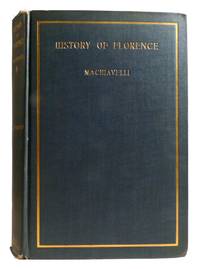
1901320280New York: Colonial Press 1901. Revised Edition. Hardcover. Very Good in boards. Shelfwear and light fraying on spine crown and heel and panel corners. Colonial Press hardcover
ria9783368437015_inpHardcover. New. New Book; Fast Shipping from UK; Not signed; Not First Edition; Reproduction of the original. hardcover
ria9783368437008_inpPaperback. New. New Book; Fast Shipping from UK; Not signed; Not First Edition; Reproduction of the original. paperback
18712103310045London : Bell & Daldy 1871. Hardcover. Good. Bound in publisher's cloth. Hardcover. Chip missing at head of spine. Clean unmarked pages. xx 522 pages 1 unnumbered leaf of plates : portrait ; 18 cm. Translation of: Le istorie fiorentine. Bohn's standard library. London : Bell & Daldy hardcover
1594629749.Gpaperback. Good. Access codes and supplements are not guaranteed with used items. May be an ex-library book. paperback
0366474588.Ghardcover. Good. Access codes and supplements are not guaranteed with used items. May be an ex-library book. hardcover
0366474553.Gpaperback. Good. Access codes and supplements are not guaranteed with used items. May be an ex-library book. paperback
0366951858.Ghardcover. Good. Access codes and supplements are not guaranteed with used items. May be an ex-library book. hardcover
0366951033.Gpaperback. Good. Access codes and supplements are not guaranteed with used items. May be an ex-library book. paperback
A9781166206796New. unknown
B9781166206796New. unknown
A9781166209377New. unknown
B9781166209377New. unknown
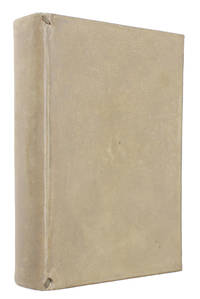
157760444Paris Guillaume de la Noue 1577. 8vo. In recent full limp vellum with yapp edges. Woodcut printer's device on title woodcut headpieces and initials. Small closed tear to upper inner margin of title-page. First 33 ff. with small worm tract in inner margin with minor loss of text. Light dampstaining to first and last leaves. A good copy. 36 294 6 pp. <br/><br/><em>The exceedingly rare first French and presumably very first overall translation of Machiavelli's Florentine Histories; his famous account of the political events and power struggles in Florence during the Renaissance. Essentially being a panegyric to the house of Medici Machiavelli's work offers valuable insights into the rise and fall of political factions the challenges faced by republican governments and the dynamics of power in a city-state. Although often overshadowed by his more famous 'The Prince' the present work is important in understanding Machiavelli's broader political philosophy and is an indispensable document in understanding renaissance politics in general. The Histories constitute an essential work for understanding the political development of the late Machiavelli and is “also an important item in modern historiography because for the first time the issue of conflict and more precisely of urban conflict finds itself at the heart of historical narrative ….Infact the Histories constitute the first attempt in modern historiography to analyze the totality of individual and collective agents and factors that allow a community to sustain itself or to founder. This analytical quality was certainly at the basis of the interest in the work outside Florence and the fact of its being translated. As Yves de Brinon explains in dedicating his ‘Histoire Florentine the present work to Cathrine de Medici the case of Florence is a model for the dangers that threaten the integrity of every state and the Kingdom of France in Particular.†Landi A re-reading of Machiavelli. Machiavelli visited France representing the Republic of Florence where he - and later his writings - exercised great influence. The Huguenot Innocent Gentillet whose work commonly referred to as 'Discourse against Machiavelli' or 'Anti Machiavel' accused Machiavelli of being an atheist and accused politicians of his time by saying that his works were the "Koran of the courtiers" that "he is of no reputation in the court of France which hath not Machiavel's writings at the fingers ends" Birely The Counter Reformation 1990. “Although Machiavelli became the embodiment of a real "devil theory of history" there was nothing supernatural or even suspicious about his journey across the Alps. As the French translator remarked to his customers in 1544 "This Florentine merchant has voluntarily left his own country to be received into yours. Do not be so ungracious as to refuse him citizenship. From all appearances he was welcomed with open arms or at least open minds. Within a few years one of his admirers declared that he was a prophet honored more in France than in his own country." Kelley Murd'rous Machiavel in France: A Post Mortem. Following the crisis of 1513 which involved arrests for conspiracy and torture Machiavelli's relationship with the Medici family gradually improved. Despite the dedication of his book "Il Principe" to Lorenzo II de' Medici having little effect Machiavelli found favor with a faction in Florence that was not opposed to him and was granted an appointment. In a letter Machiavelli expressed his dissatisfaction with his idle state and offered his valuable political experience to the new ruler. To further solidify his position Machiavelli adopting a somewhat courtier-like attitude arranged for the staging of his play "Mandragola" at the wedding of Lorenzino de' Medici in 1518. In 1520 he received an invitation to Lucca for a semi-private mission indicating that his ostracism was coming to an end. Later that year Giulio Cardinal de Medici commissioned him to write a history of Florence. Although this was not exactly the role he desired Machiavelli accepted it as the only way to regain the favor of the Medicis. The purpose of the work although unofficial was to restore the city's official historical standing. The salary for this appointment was not substantial starting at 57 florins per year and later increased to 100. In May 1526 Machiavelli formally presented the finished work to Giulio de' Medici who had become Pope Clement VII. The Pope appreciated the work and rewarded Machiavelli though only moderately and sought his support in creating a national army based on his theoretical work "The Art of War" in preparation for the War of the League of Cognac. However Machiavelli's hopes were shattered following the Sack of Rome in 1527 and the fall of the Medici government in Florence. Soon after Machiavelli passed away. This exceedingly scarce first French edition was issued with two variant title-pages the present referred to as variant-b. see Gerber Niccolo Machiavelli. Bibliopgraphia Machiavelliana p. 60 no. 160. Gerber dritter teil p. 37 D-b. Brunet 1279. </em> hardcover
2009DADAX1104865491Kessinger Publishing 2009-08-10. paperback. New. 6.00x1.27x9.00. Buy with confidence. Excellent Customer Service & Return policy. Kessinger Publishing paperback
116621155X.Gpaperback. Good. Access codes and supplements are not guaranteed with used items. May be an ex-library book. paperback
1166267105.Ghardcover. Good. Access codes and supplements are not guaranteed with used items. May be an ex-library book. hardcover
1169979998.Gpaperback. Good. Access codes and supplements are not guaranteed with used items. May be an ex-library book. paperback
1104982498.Ghardcover. Good. Access codes and supplements are not guaranteed with used items. May be an ex-library book. hardcover
1104865491.Gpaperback. Good. Access codes and supplements are not guaranteed with used items. May be an ex-library book. paperback
161523384Paris Daniel Guillemot 1615 In-12 12 ffnch - 295 ff ( l'exemplaire est folioté ) pas de ff 232 -233-234 - 8 ff nch , titre doublé avec texte manquant complété à l'encre ( restauration très ancienne un manque de texte à un ff de proême non chiffré , traduction du seigneur de Brinon , EX-libris de Mr A Houbigant, état d'usage mais correct, coiffes arrasées et petit manque en coins, provenance très intéressante extrait de la fiche Wikipédia : Historien érudit et fort d'une culture artistique, d'une pratique honorable du dessin, de l'aquarelle et de la gravure, Houbigant est connu pour avoir créé dans sa jeunesse un jeu de cartes des Dames de France (1816) - dont l'original est conservé à la Bibliothèque nationale de France - composé à la suite d'un pari avec des amis, pour les faire « jouer avec des cartes autres que celles usitées et que tout le monde trouvait hideuses ». Ses talents lui valent d'être mentionné dans la rubrique « amateurs » de l'Annuaire des artistes français de 1832. Héritier précoce de la fortune familiale, il s'établit à partir de 1812 à Nogent-sur-Oise dont il est le maire de 1831 à 1848. Il y épouse Céleste Hua, fille d'un conseiller à la cour de cassation de Paris. ( c'est le fils du parfumeur )