Mann, HoraceBiblio.com
9 970 résultats
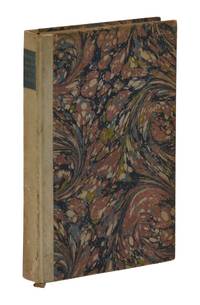
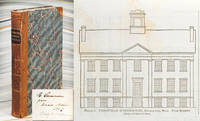
18421071951842. Boston: Fowle and Capen 1842. <br /> <br /> 8vo iv 390 pp. Old half calf marbled boards joints cracked text block sound but quite foxed especially at the front and back. Inscribed by the author and with the later signature of Mary C. Chapman on front pastedown. <br /> <br /> § Volume 4 of this series; this copy inscribed by Horace Mann: "C. Sumner from Horace Mann 1847." Horace Mann inscriptions are uncommon and this is a superb association. "Charles Sumner January 6 1811 - March 11 1874 was an American politician and senator from Massachusetts. As an academic lawyer and a powerful orator Sumner was the leader of the antislavery forces in Massachusetts and a leader of the Radical Republicans in the United States Senate during the American Civil War working to destroy the Confederacy free all the slaves and keep on good terms with Europe. During Reconstruction he fought to minimize the power of the ex-Confederates and guarantee equal rights to the freedmen." Mary Chapman was involved with the Boston Female Anti-Slavery Society and was a friend of poet Julia Ward Howe and close friend of Charles Sumner and Horace Mann. unknown
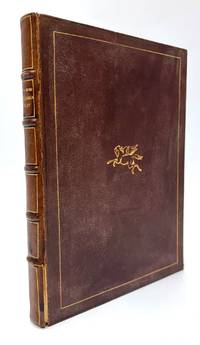
192114202München: Phantasus-Verlag 1921. Limited Edition. Hardcover. Good. First edition of this controversial novella. The present copy is number 25 of 30 numbered copies bound in Saffiano calfskin and SIGNED by Mann and illustrator Thomas Theodor Heine. Of a total edition of 530 copies issued in several bindings this is an example from the smallest limitation and it is a handsome binding indeed. The bottom spine compartment is flapping partly detached but holding precariously. The first and last few leaves are considerably foxed including the limitation page. Two ownership signatures to the first two leaves Ooherwise clean and sound internally. Altogether in good condition. Wälsungenblut The Blood of the Wälsungs was written in 1915 but withheld from publication owing to the similarities between the characters in the story and Mann's new in-laws. In 1905 Mann married Katja Pringsheim and it is believed based his story in part on Katja and her twin brother Klaus Pringsheim reinvented as Siegmund and Sieglinde Wagner's incestuous twins from Die Wälkure 1870 with echoes of the Volsunga Saga. <br /> <br /> The story was set for publication in the January 1906 issue of Die Neue Rundschau but after discovering the incestuous nature of the story Alfred Pringsheim Mann's father-in-law demanded that publication be withheld. Suppressed for fifteen years Wälsungenblut was finally published in 1921. It remains one of Mann's most controversial stories owing to its depiction of anti-Semitism and incest. The novella was adapted for the award-winning German film Wälsungenblut directed by Rolf Thiele in 1964. <br /> <br /> Though not in fine condition the book is genuinely rare in this deluxe binding and desirable thus. Phantasus-Verlag hardcover
ria9781856173490_inpPaperback. New. New Book; Fast Shipping from UK; Not signed; Not First Edition; A report that provides a global overview of the use of automotive plastics and composites in passenger vehicles with an analysis of markets and trends to the year 2007. It pays attention to vehicle weight reduction. paperback
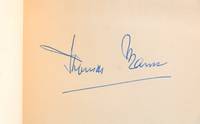
195091161Paris: Arthème Fayard 1950. Fine. Arthème Fayard Paris 1950 14 x 22.7 cm 2 volumes brochés New edition of the French translation.Spines slightly sunned with minor tears at the foot.Signed in manuscript by Thomas Mann on the endpapers of both volumes. Arthème Fayard unknown
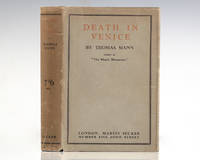
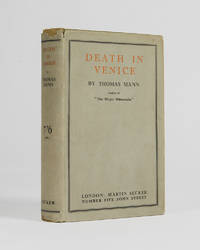
1928142045London: Martin Secker 1928. First British edition of Mann's classic novel. Octavo original cloth. Translated from the German by H.T. Lowe-Porter. Near fine in the rare original dust jacket with some light shelfwear and small repairs to the verso. First editions are rare especially in the original dust jacket and in this condition. "Thomas Mann is one of the greatest and most widely read authors of the 20th century… An innovative stylist and synthesizer of the intellectual trends of his time Mann exerted much influence on modern fiction not only in Germany but in Europe and in both Americas as well. His perceptiveness as an interpreter of Western cultural heritage and his skill as a cosmopolitan teacher of democratic and humanistic values earned him recognition as a 'mirror of his age' and a 'citizen of the world'… Among Mann's many well-written works of short fiction "Death in Venice" 1928 a novella based on Mann's impressions during his stay in Venice is the most famous… Typically for Mann the novella deals with the problem of the unhappy sick artist Gustav von Aschenbach who envies the healthy and 'normal' people of the bourgeois society" Pribic 262-3. Martin Secker hardcover
195434Frankfurt am Main: S. Fischer 1954. True first edition. In original orange paper. Spine somewhat worn author and title written in ink. True first edition. In original orange paper. 441 1 6 p. Thomas Mann’s last unfinished picaresque novel that he “wrote†throughout almost his entire life about Felix Krull the confidence man. A parody of Goethe’s autobiography “Dichtung und Wahrheit†Poetry and Truth embellished with Mann’s ironic autobiographical allusions. <br /> Mann started to plan the book in 1905 and finished the first chapters already in 1911 than he ceased writing it for about four decades to continue it in the early 50s between 1950 and 1954. The first part published first in the collection of short stories in 1920 titled “Das Wunderkind†The Infant Prodigy the first separate edition was published in 1922. <br /> This one is the very first edition of the entire but still unfinished work. “Leseexemplars†were printed in limited number not for the market handed to booksellers and journalist weeks before the date of the proper publication.<br /> We could not trace any copies in libraries found only one copy in Hans-Peter Haack’s collection.<br /> Haack Hans-Peter: Erstausgaben Thomas Mann; 91.3. S. Fischer unknown
123789London Secker & Warburg 1928. . First UK edition; 8vo 19.5 x 13 cm; translated by H.T. Lowe-Porter from the original German ink spots to margins of p152-3 small marginal loss to edge of p.157 not affecting text occasional spot or mark throughout else very good clean copy; publisher's green cloth boards gilt lettering to upper board and spine a little faded around edges of boards spine quite faded; publisher's grey dust-jacket with red and black lettering to upper panel and spine small printing smudge across the 'o' of 'Mountain' spine a little faded and soiled some general signs of age small losses to all fore-corners and upper and lower joints though none affecting text or decoration overall very good due to age and scarce to find in such good condition; 271pp 1pp.<br /> A very good first UK edition of Thomas Mann's Death in Venice alongside his other short stories Tristan and Tonio Kröger which were translated from German by H.T. Lowe-Porter for this edition. This story was based on Mann's own experience of Venice during the 1911 cholera epidemic and follows Gustav von Aschenbach and his infatuation with a young boy named Tadzio.<br /><br />Thomas Mann was a staunch social critic and Nazi opponent. He won the Nobel Prize for Literature in 1929 and Death in Venice was turned into a notable opera by Benjamin Britten and an Oscar-nominated 1971 film. Some of his other famous works include The Magic Mountain Buddenbrooks and Doctor Faustus.<br /> London, Secker & Warburg, 1928. hardcover
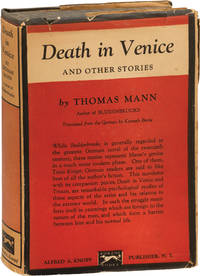
1925156516New York: Alfred A. Knopf 1925. First American Edition preceding the British edition by three years. The title story is the basis for the 1971 film directed by Luchino Visconti starring Dirk Bogarde and Marissa Berenson.<br /> <br /> Very Good plus in a Very Good or better example of the rare dust jacket. Light foxing affecting the page block and last few leaves. Jacket is lightly edgeworn along the top edge with the usual toning on the spine panel and a shallow chip at the crown.<br /> <br /> In a custom maroon quarter-leather clamshell box. Alfred A. Knopf unknown
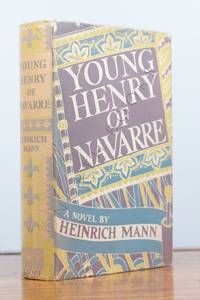
1937L685New York: Alfred A. Knopf 1937. Hardcover. Stated First Edition First Printing. 5.5 x 8in. ix. 585pp. Publisher's cloth boards. Signed and inscribed by the author on the half-title page: 'For W. Bryher with my best wishes and thanks Heinrich Mann. Nice Sept. 1937.' An association copy the inscription is to Annie Winifred Ellerman the poet novelist and editor who used the pen name Winnifred Bryher. She and Mann frequently corresponded during his time in Nice which was the first of his many sanctuaries from the Nazi regime in the years to come being one of the earliest to intimate Germany's future. In their letters several years prior to the publication of 'Young Henry of Navarre' they discuss the special importance of English publishers translating the work of modern German authors with strong anti-Nazi sentiment. Mann calls these publications a 'practical help.' Friedman S. 2002. 'Analyzing Freud: Letters of H.D. Bryher and Their Circle' p. 73 90 330 250 Signed books by Mann are scarce generally but especially so in English translation. VERY GOOD in Very Good dust jacket protected in a removable archival cover. The book itself shows shelf rubbing along the edges and corners boards with a hint of toning a small section ever so lightly discolored at the foot of the spine otherwise the binding is strong and tight the text is clean and completely unmarked and the boards remain bright and distinct. The dust jacket shows some light bouts of scuffing and several very small shallow chips from the edges spine somewhat tanned otherwise is not price-clipped remaining bright colorful and distinct. As pictured. Alfred A. Knopf hardcover
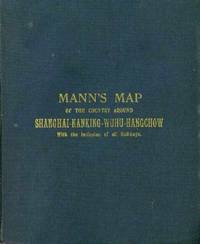
92099201Shanghai 1909. Green cloth covers map opens to 1 m. 20 x 76 cm. linen backed folds down to 16 x 20 cm. coloredkey very clean. Exceptionally RARE ! . . . . FIRST AND ONLY RARE EDITION OF THIS COLOR MAP . . A RARE MONOGRAPH ON FOREIGNERS HUNTING IN NORTH CHINA . SUBTITLE: Continued; . "Brought completely up to date with the inclusion of all Railways open and projected and the Names of Principal Towns are Romanized according to the revised regulations of the Imperial Chinese Post Office names in Chinese Characters in the Mandarin dialect by Helen E. Mann 1909." . With mileage chart railway lines creeks canals towns pagodas swamps provincial boundaries Shanghai tide table. . A grand and large articulating map shows the big areas includes: Nanjing at the upper left; Suzhou and the Yangtze at the top right; Wuhu at far left Taihu Lake in the center; Shanghai at far right; Hangzhou at and the Hangzhou Bay at the bottom; with a tiny village of Isen at the far left bottom. A good number of mountains hills and rice-land paddy shown as well as rivers and creeks. . The map was essentially designed by & for foreigners to locate the best shooting areas with railroad transportation lines noted. Game areas roads "conspicuous tree" villages are shown with landmarks. Nicely executed in color. . This map is also an excellent and most early area map showing Shanghai & Yangtze river estuary. Can be framed suitable for display. . RARE ! Complete with all maps and the matching cloth case exceptionally RARE ! . . unknown
1913140945995Berlin: S. Fischer Verlag 1913. First Trade Edition. Near Fine. First German trade edition first printing. 145 3 pp. Publisher's half vellum over marbled paper-covered boards spine label blocked in turquoise lettered in gilt. Text in the original German. Near Fine with slight rubbing and slight soiling to binding spine darkened. Owner name to front free endpaper; contents lightly tanned. Thomas Mann's best-known works with strong homoerotic themes. S. Fischer, Verlag unknown
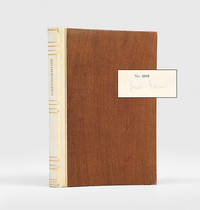
1930179023Paris: Harrison of Paris 1930. Inscribed by the book's designer First edition in English number 27 of 75 copies on Imperial Japan vellum signed by the author. This copy additionally inscribed on the front free endpaper by its designer Monroe Wheeler "For Francis at Christmas 1945 with affectionate greetings from Monroe". Mann's autobiographical sketch was originally published in German as "Lebensabriß" in Die Neue Rundschau June 1930 and is translated here by H. T. Lowe-Porter. Harrison of Paris was founded by the publisher and heiress Barbara Harrison Wescott 1904-1977 and the art patron and curator Monroe Wheeler 1899-1988 in the year of publication. Octavo. Original quarter vellum spine lettered and ruled in gilt brown paper-covered boards top edge gilt. Minor rubbing to corners. A fine copy. hardcover
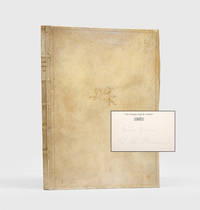
1921182752Munich: Phantasus-Verlag 1921. Signed by the author and illustrator First edition signed limited issue number 45 of 530 signed by the author and the illustrator; one of 69 bound in vellum. Mann wrote the story in 1906 but due to similarities between his new wife's family and the incestuous twins of his novella the book was suppressed until 1921. Given the novel's plot and Mann's use of antisemitic tropes the book remains among Mann's most controversial works. Large octavo. With 12 lithographs and drawings in the text by Thomas Theodor Heine. Original vellum by Carl Herkomer spine lettered and covers bordered in gilt front cover with gilt unicorn top edge gilt. Natural colour variation and bowing to vellum gently soiled superficial split to head of front joint small abrasion to upper outer corner of rear board mark to fore edge. A near-fine copy. hardcover
192429468AB1924. Two Volumes complete set. New York Knopf 1924. Octavo. 389 359 pages. Original Hardcover with the very rare original dustjackets in breathtaking condition now in protective collector's Mylar. Unusually Fine condition with the meaningful letter by Nobel Laureate Thomas Mann. The letter accompanying this amazing set of "Buddenbrooks" is of significance because it is reflecting Thomas Mann's willingness to already engage with serious admirers during his first year of Exile in the US. While exiled in Switzerland Mann must have been still able to feel a connection to his "Heimat"; by language and geography. Now in America one can only imagine the consolation of him knowing that his whole family had not only successfully sheltered from Nazi Germany but found a new home in which they were welcomed and were able to continue their very own pursuit of happiness through Literature continue their ability to work and find meaning in this new world. Especially Thomas Mann's earnest remark towards Brown Taylor mentioning of his daughter Erika Mann lecturing at Colby College must have given him a sense of peace and calm only a father can understand who has uprooted his family into the abyss of the unknown. Mann knew very well of fellow exiles and their struggles. Letters like these are not merely an autograph they are reflecion of states of mind and of great importance for our understanding the psychology of endurance. Holger Smyth Ireland April 2021 Almira Brown Taylor later Almira T. Campbell was born on 26 May 1920 in Hyde Park Massachusetts the daughter of Arthur Balcom and Mildred Victoria Fuller Taylor. She obtained her Associate of Arts degree from Colby Junior College in 1940 her Bachelor of Arts degree from Mount Holyoke College in 1942 and a Bachelor of Science in Library Science from Simmons College in 1943. She worked at the Yale Law School Mt. Holyoke College Mt. Hermon School Stoneleigh Prospect Hill School and the F. L. Boyden Library at Deerfield Academy. Taylor married Vincent Alexander Douglas Argyle Campbell in 1953. The couple had one daughter Faith. Taylor died on 12 October 2016. Source: Almira T. Campbell obituary on Legacydotcom The majority of Almira Brown Taylor's collection of autographs is now in the David M. Rubenstein Rare Book Manuscript Library Durham North Carolina. hardcover
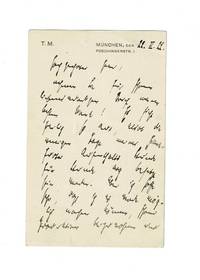
192275905Munich 1922. Fine. Munich 22 février 1922 8.70 x 13.70 cm une carte postale Signed autograph postcard from Thomas Mann addressed to Friedrich Karl Roedemeyer written on both sides in black ink. Professor Friedrich Karl Roedemeyer 1894-1947 taught linguistics at Frankfurt University where he invited Thomas Mann for the Goethe Festival. This is a letter of apology from the writer announcing that he will unfortunately not be able to give the lecture he was supposed to deliver. unknown
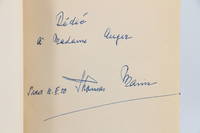
195066645Paris: Albin Michel 1950. Fine. Albin Michel Paris 1950 13.50 x 20 cm broché First edition on current paper of the French translation. Rare autograph dedication signed by Thomas Mann in French to Maurice Martin du Gard: ""Dedicated to Madame Auger Paris 12. V. 50. Thomas Mann"" Albin Michel unknown
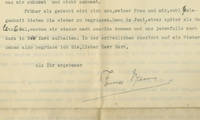
19352132622/04/1935. <blockquote><p>This letter was acquired from the family of the recipient and has never been offered for sale before</p></blockquote><p>In 1900 at the age of 25 Thomas Mann wrote and in 1901 published Buddenbrooks chronicling the decline of a wealthy north German merchant family over the course of four generations. Mann drew deeply from the history of his own family the Mann family of Lübeck and their times. It was Mann’s first novel and it made him a major literary figure. The work led to a Nobel Prize in Literature for Mann in 1929; although the Nobel award generally recognizes an author’s body of work the Swedish Academy’s citation for Mann identified “his great novel Buddenbrooks†as the principal reason for his prize. Mann began writing the book in October 1897 when he was twenty-two years old.</p><p>Henry Hart was an American publisher who worked mainly for Scribner’s in New York. He was working with Mann on the publication of English-language versions of his works including Nocturns.</p><p>The League of American Writers was established by the First American Writers Congress a gathering held from April 26–28 1935. It was an association of American novelists playwrights poets journalists and literary critics launched by the Communist Party USA in 1935. The group included Communist Party members and so-called ""fellow travelers"" who closely followed the Communist Party's political line without being formal party members as well as individuals sympathetic to specific policies being advocated by the parrty.</p><p>In 1933 after the takeover of the Nazi party while travelling in the South of France Mann heard from his eldest children Klaus and Erika in Munich that it would not be safe for him to return to Germany. The family except these two children emigrated to Küsnacht near Zürich Switzerland but received Czechoslovak citizenship and a passport in 1936.</p><p><strong>Typed letter signed</strong> April 22 1935 to Hart his publisher. <em>""It is not easy for me to answer your suggestion in regards to this business news. I have read very carefully the appeal of the American writer’s congress. However I have unsurmountable concerns about contributing a statement to the congress. In the second half of the appeal there is mention of ‘civil liberties’. It stands in logical contradiction to all previous statements which have a purely communist character. A telegram on my part as you have asked me to send would be a clear support of communism which I am not able to force myself to give. I have a true love of civil liberties as much as I am against fascism and war. I much prefer the communist revolution to that of the fascists. Nevertheless the wording of this appeal and the political orientation it lends to this congress does not allow me to follow your wishes to send a note of unrestricted sympathy to the congress. I beg you to understand and not interpret my position as a lack of courage. It is an act of good conscience of what is my duty and what is not.</em></p><p><em>""Earlier than planned my wife and I will have the opportunity to see you again. In June a little bit later than last time we will come to America and stay for a short while in New York.""</em></p><p>This letter was acquired from the family of the recipient and has never before been offered for sale.</p> unknown
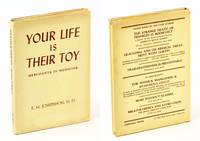
1948163j2677New York NY: Chedney Press. Good in Good dust jacket. 1948. Second Edition. Hardcover. "An account of the history of the medical organization in the United States. Relates the plain unvarnished truth a tale of the humbug chicanery and skullduggery that underlies the pretension of service to the public and to the profession of organized medicine as exemplified in the American Medical Association AMA the American College of Surgeons and many other organizations; and exposes how they exploit both the public and medical profession for the commercial advantage of the controlling gangs. Reveals how the rank and file of the medical profession however honest and sincere they may be are forced to become the serfs pawns and puppets of gigantic rackets which often endanger the livelihood of the profession and the health and lives of the public." - dust jacket. "Dr. Emanual Josephson b. 1895 is an example of one of the rarest phenomena in modern medicine a man who has resolutely maintained his independence of all institutions and cliques and is therefore free to tell the truth. He is the author of hundreds of papers on medical science and of several books including The "Federal" Reserve Conspiracy & Rockefellers". - dust jacket. 8 9-256 p. Tight and unmarked with moderate wear to original beige cloth. Average wear to unclipped dust jacket now in glossy new archival-grade protection. A well-preserved vintage example of this early conspiracy classic.; Sm 4to . Chedney Press hardcover
193483578New York: Alfred A. Knopf 1934. First American edition of Mann's first novel in his acclaimed tetralogy. Octavo original cloth pictorial endpapers. Lengthily inscribed in the year of publication by Thomas Mann. Near fine in a very good dust jacket with some rubbing and chipping to the extremities. Translated from the German by H. T. Lowe-Porter. Rare and desirable signed and inscribed. Joseph and His Brothers is a four-part novel by Thomas Mann written over the course of 16 years. Mann retells the familiar stories of Genesis from Jacob to Joseph chapters 27–50 setting it in the historical context of the Amarna Period. Mann considered it his greatest work. Alfred A. Knopf hardcover
1937218960New York 1937. Bust portrait of the author with building in background. Vintage gelatin silver print. Verso docketed with holograph notations in pencil giving the name of the sitter date of the photograph and Van Vechten's reference to negative and print "XXIV K". 1 vols. 13-7/8 x 10-7/8 inches. Matted and framed. Bust portrait of the author with building in background. Vintage gelatin silver print. Verso docketed with holograph notations in pencil giving the name of the sitter date of the photograph and Van Vechten's reference to negative and print "XXIV K". 1 vols. 13-7/8 x 10-7/8 inches. Published in Portraits: The Photography of Carl Van Vechten 1978 edited by Saul Mauriber. Provenance: The estate of Saul Mauriber Van Vechten's assistant and executor of Van Vechten's photography estate and the compiler of Portraits: The Photography of Carl Van Vechten 1978 unknown
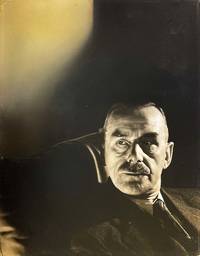
19342522New York: n.p. 1934. Very Good. POWERFUL STEICHEN PORTRAIT OF THOMAS MANN FROM CHANCE MEETING IN NEW YORK. Edward Steichen was one of the early pioneers of photographic art leading the movement of photography from its established position as a utilitarian medium to a mode of creative expression. As a major contributor to Alfred Stieglitz's Camera Work magazine in the first decades of the twentieth century Steichen had cemented his reputation as a new kind of photographer enjoying both artistic and commercial success-working as chief photographer for Condé Nast and later heading the Met's photography department.<br /> <br /> In 1959 having completed the first decade in his tenure as director of the Museum of Modern Art's photography division Steichen was approached by Tas Toth about curating a new display to serve as a counterpart to Steichen's astronomically successful The Family of Man-a MoMA exhibition that would become and remains to-date the most-viewed photographic exhibition. Toth's exhibition to be called Das menschliche Antlitz Europas The Human Face of Europe would mirror The Family of Man's thematic emphasis on shared humanity principally by showcasing images by distinguished figures including Cartier-Bresson Boubat Brassai and Doisneau alongside works by lesser-known artists. Initially the renowned artists were hesitant to contribute towards this unique concept and it was only after Steichen endorsed Toth by allowing him to exhibit his portrait of Thomas Mann that a large number of eminent photographers agreed to contribute to the group exhibition. Steichen's impactful photograph is the work present here.<br /> <br /> Steichen had taken the image in the United States where Mann would emigrate in 1939 to avoid mounting persecution in his native Germany and where Mann would remain until 1952. It was in 1934 that Mann to promote his Jospeh series made his first journey to America- embarking on RMS Volendam and arriving in New York to great fanfare-"scarcely dreaming" writes biographer Nigel Hamilton "he would one day become an American citizen" p. 283.<br /> <br /> The image of Mann follows in a line of portraits by Steichen of leading world figures from Churchill and FDR to Chaplin and Gershwin. Furthermore the present photograph preserves in addition to Mann's likeness the providential meeting of two of the most impactful twentieth century creatives who would both make their homes in the New World.<br /> <br /> Provenance: <br /> -Donated by Steichen to the original owner when he worked on the organization of the exhibition 'Das Menschliche Antlitz Europas'.<br /> -Christie's lot 218 Sale 7415 21 Nov. 1996<br /> <br /> Exhibited: 'Das Menschliche Antlitz Europas' Municipal Museum of Munich 1959.<br /> <br /> STEICHEN EDWARD. Thomas Mann New York 1934. Gelatin silver print before 1959. 23.8 x 18.8 cm 9 ⅜ x 7 ⅜ in. Mounted on paperboard signed on the reverse in what does not appear to be Steichen's hand: "Edward Steichen" and numbered in pencil. With a tiny amount of touch-up at extreme top corner almost entirely beneath the matte. Handsomely framed. <br /> <br /> References:<br /> <br /> Hamilton Nigel The Brothers Mann New Haven: Yale University Press 1979<br /> <br /> Steichen Edward A Life in Photography New York: Bonanza 1984. n.p. unknown
1920098814München: Phantasus-Verlag 1920. Zweiter Phantasusdruck herausgegeben von Georg Martin Richter; 4 Bl. 58 S. 3 Bl.; mit 11 Holzschnitten u. 4 kolorierten Initialen von Otto Nückel-Aibling; gesetzt u. gedruckt auf handgeschöpftem Büttenpapier bei C. Wolf & Sohn München; Kopfgoldschnitt; Expl. der 150 in Halbpergament gebundenen Exemplare von insgesamt 220 hier # 85 im Impressum jew. mit eigenhändiger Unterschrift von Thomas Mann und Otto Nückel; Rodenberg 4572 ; Ecken etwas gestaucht u. teils leicht angeplatzt innen tadellos. Vom Autor u. vom Künstler signiert. Erste Auflage dieser Ausgabe. Halbpergament. Befriedigend. 251 cm. Pressendruck. Phantasus-Verlag Hardcover
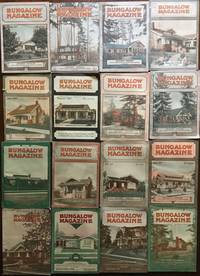
191358552Seattle WA: Bungalow Publishing Co. Inc.; Otis Publishing Co. Oct. 1913-March 1918. Sixteen vols. Tall 8vo. 7.5 x 10.5 in. 80; 4-A 747-812 5-A - 14-A w/ large folding “Supplement Bungalow†plan 24 x 36 in.; 4-A 67 6-A-14-A w/ Plan; 4-A 65-132 5-A - 12-A; 4-A 133-200 5-A-12-A w/ Plan; 4-A 201-266 5-A - 14-A w/ Plan; 4-A 207-332 5-A - 12-A w/ Plan; 4-A 333-398 5-A - 14-A w/ Plan; 4-A 399-451 6-A - 12-A; 4-A 451-506 9-A-12-A; 4-A 507-560 5-A - 10-A; 4-A 629-697 6-A - 12-A w/ Plan; 4-A 697-765 6-A - 12-A w/ Plan; 80 w/ Plan; 80 w/ Plan; 64 pp. With 100’s of photo illustrations diagrams floor plans 10 issues include the large Supplement folding working plans sized 24 x 36 in. Colour-illustrated softcovers all w/ colour photos of bungalows minor dustsoiling edgewear some occasional chipping at Head & foot of spine creasing a couple w/ folds at corners toning to plans occasional offset toning still a VG set of original periodicals from the library of Millard Armstrong 1874-1958 longtime Portland Oregon millwright carpenter home builder and later high school teacher and Albany OR dairy farmer. First editions of 16 original issues of this Craftsman bungalow promotional magazine issued by noted Seattle entrepreneur and real estate developer Jud Yoho 1882-1968 known as “The Bungalow Craftsman†in Seattle’s active market prior to World War I. Bungalow Magazine had been originally launched 1908-1912 by Henry Wilson in Los Angeles but Yoho took over the magazine moved the publishing to Seattle and during its 6 year run attracted a nationwide audience. With the slogan of “an illustrated monthly magazine devoted exclusively to artistic bungalow homes†modeled on Gustav Stickley’s Craftsman magazine this glossy periodical featured Seattle bungalows and articles about California residences Eastern Craftsman homes and occasionally lifted articles directly from the Craftsman. The Bungalow Magazine attracted a nationwide audience included feature articles on a variety of Craftsman style homes their technology and mechanical systems and amateur projects in furniture design and construction to enhance the prospective home owner’s bungalow. At the time Yoho and his firms were actively constructing speculative houses in Seattle’s northern neighborhoods served as new advertising for many of the Pacific Northwest’s builders small architects and real estate developers. The innovative inclusion of “Supplement Bungalow Plans†not only presented the potential reader and home owner with a sample home but Yoho and other connected “Craftsman†home builders pioneered a technique of easy home financing and extended home ownership to many who could not otherwise have purchased a home. As the Craftsman bungalow craze waned in Seattle during World War I Yoho divested his interest and began producing his “Colonial Homes†plan books and during the severe post-World War I recession moved to Arkon OH where he opened an architectural and building firm with D.E. Hooker former editor of The Bungalow Magazine. Original individual issues seldom appear in the market and almost never with the original large folding plan supplements and this archive includes nearly all of the last two years of magazines 14 of 15. No copies or runs located in Worldcat Seattle Public Lib. houses nearly a complete run. See: Lawrence Kreisman & Glenn Mason The Arts and Crafts Movement in the Pacific Northwest 2007 pp. 159-167; Jud Yoho “The Bungalow Craftsman†and the Development of the Seattle Suburbs Perspectives in Vernacular Architecture Vol. 6 1997 pp. 231-243; Erin Doherty Jud Yoho and the Craftsman Bungalow Company: Assessing the Value of the Common House 1997; Jud Yoho & Dennis Andersen Craftmsan Bungalows Edition de Luxe Book Club of Washington 2007. Bungalow Publishing Co., Inc.; Otis Publishing Co., paperback
181179039London: John Booth 1811. First Edition. hardcover. good. With fine folding colored map as frontispiece but lacking the other 4 color plates. Offsetting on the title page otherwise a nice clean copy. Rebound in the early 1900s in 3/4 leather over marbled boards; corners bumped spine worn Joints cracked but have been repaired. London: John Booth 1811. First Edition. A good copy of this scarce book.<br/> <br/> John Booth unknown
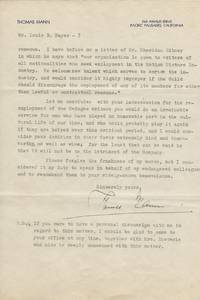
1941020957Pacific Palisades CA 5 October 1941. Letter. Light creases from mailing. Near Fine. A superb three-page TYPED LETTER SIGNED TLS on Mann's personal stationery to Louis B. Mayer president of MGM Studios commending Mayer for the Studios' contracting of 5 refugee writers in order to allow their immigration to the United States to escape death during World War II: Alfred Doeblin Alfred Polgar Hans Lustig Wilhelm Speyer and Walter Mehring. In part: "It is not my custom to interfere in matters which do not directly concern me; however I should like to take the liberty of presenting to you with confidence a matter which is close to my heart and which is a source of worry for me as well many other well-meaning people. It was one of the finest and most meritorious deeds during these turbulent years which destroyed so much life and happiness a deed which will certainly never be forgotten when the fantastic tale of the emigration of European culture is told that two great Motion Picture Companies in Hollywood decided to give emergency contracts to a number of German and Austrian writers which not only enabled these men to immigrate into the United States but also secured if only for a certain time a basis for their existence." Mann spends most of the letter arguing for the rehiring of these writers for another year not "for unproductive and merely humanitarian purposes" but because "the value of the agreement for the Company has already been demonstrated." An important letter revealing Mann's solidarity with refugee writers during the rise of Fascism in Europe. Mann himself emigrated to the United States in 1939 following the German occupation of Czechoslovakia. The outbreak of World War II on 1 September 1939 prompted Mann to offer anti-Nazi speeches in German to the German people via the BBC and in October 1940 Mann began monthly eight-minute broadcasts recorded in the U.S. and broadcast by the BBC to Germany condemning Hitler and the Nazis. In doing so he was one of the few publicly active opponents of Nazism among German expatriates in the United States. <br/><br/> unknown