Mansfield, ElizabethBiblio.com
3 805 résultats
0451217004.Gmass_market. Good. Access codes and supplements are not guaranteed with used items. May be an ex-library book. unknown
Q-0451217004Signet. Mass Market Paperback. New. New. In shrink wrap. Looks like an interesting title! Signet paperback
Q-0515105201Jove. Mass Market Paperback. New. New. In shrink wrap. Looks like an interesting title! Jove paperback
0947131094.Ghardcover. Good. Access codes and supplements are not guaranteed with used items. May be an ex-library book. hardcover
ria9783741186479_inpPaperback. New. New Book; Fast Shipping from UK; Not signed; Not First Edition; A Complete View Of The Shakespeare Controversy is an unchanged high-quality reprint of the original edition of 1861. Hansebooks is editor of the literature on different topic areas such as research and science travel and expeditions paperback
B9783741186479Paperback. New. paperback
1020778253.Ghardcover. Good. Access codes and supplements are not guaranteed with used items. May be an ex-library book. hardcover
1022207628.Gpaperback. Good. Access codes and supplements are not guaranteed with used items. May be an ex-library book. paperback
3741186473.Gpaperback. Good. Access codes and supplements are not guaranteed with used items. May be an ex-library book. paperback
1334334757.Gpaperback. Good. Access codes and supplements are not guaranteed with used items. May be an ex-library book. paperback
0265477336.Ghardcover. Good. Access codes and supplements are not guaranteed with used items. May be an ex-library book. hardcover
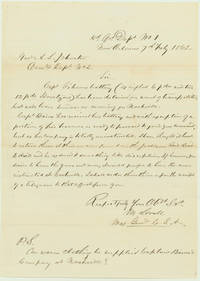
186221776<p>In February 1862 General Mansfield Lovell sends reinforcements to Albert Sidney Johnston the chief Confederate commander in the West so he can defend Nashville and Fort Donelson. The move was fruitless; Fort Donelson fell to Union troops a week after this letter was written.</p> <b>MANSFIELD LOVELL.</b>Autograph Letter Signed to Albert Sidney Johnston. New Orleans La. February 7 1862. 1 p. 8 x 11 in.<p>With: a carte-de-visite of Lovell in Confederate uniform. New York & Washington: Brady's National Photographic Portrait Gallery ca. 1862.</p><p><b>Partial Transcript </b></p><p><i>"Capt. Gibson's battery 21 rifled 6 pdrs. and two 12 pdr. Howitzers has been detained for want of transportation but will leave tomorrow morning for Nashville. Capt. Bains has received his battery and with the exception of a portion of his harness is ready to proceed to join your command; but as his company is totally uninstructed I have thought it best to retain them at their encampment in the Jackson Rail Road to drill and be reduced to something like discipline. If however you desire to have the guns and men I would prefer to have the men instructed at Nashville. I shall order them there upon the receipt of a telegram to that effect from you."</i></p><p><b>Historical Background</b></p><p>A day before Lovell wrote this letter Ulysses S. Grant had forced the surrender of Fort Henry Tennessee. The loss prompted Confederate Western Department commander General Albert Sidney Johnston to abandon his position at Bowling Green Kentucky and fall back towards Nashville. A week later on February 16 Fort Donelson Tennessee fell. The Cumberland and Tennessee Rivers had been opened and all of western Tennessee northern Mississippi and northern Alabama were exposed to Union invasion. Johnston adopted the strategic thinking of P.G.T. Beauregard his new second-in-command and concentrated most of the men in the western theater on a climactic battle against Ulysses S. Grant. In the resulting Battle of Shiloh April 6-7 1862 Johnson himself was killed. He was the highest-ranking officer to die in battle on either side in the Civil War.</p><p>In the aftermath of the Battle of Shiloh New Orleans lay exposed to Union attack from the north while to the south Admiral David G. Farragut's Mississippi River fleet broke the Confederate defenses on the Mississippi River at Forts Jackson and St. Philip. The two forts protected New Orleans but Farragut bypassed them in the dark early morning hours of April 24. He then prevailed over Confederate Captain John Stevenson's overmatched fleet. Lovell began to evacuate New Orleans over the next few days well before Union General Benjamin Butler's army was in a position to threaten its works. Lovell's evacuation order probably cost him his career; he was investigated by a court of inquiry and never again commanded troops in the field. Butler occupied the Crescent City on May 1.</p><p><b>Mansfield Lovell </b>1822-1884 was a West Point graduate from Washington D.C. who was seriously wounded at Belen Gate in the Mexican War. In October 1861 he was appointed major general in the Confederate Army and assigned to command in New Orleans. Under Lovell the Confederates lost New Orleans but he was hampered by deficiencies in men and materiel and was subsequently cleared of responsibility. However he never again obtained high command.</p><p><b>Albert S. Johnston</b> 1803-1862 of Kentucky graduated from West Point where he befriended Jefferson Davis in 1828. He went to Texas where he served as aide-de-camp to Sam Houston's revolutionary army and rose to command Texas forces briefly in 1837. He also served as Secretary of War for the short-lived Republic of Texas. Johnston fought under Zachary Taylor in the Mexican War was colonel of the 2nd U.S. Cavalry on the Texas frontier led troops in the Utah wars and commanded the Department of the Pacific before the Civil War. In 1861 he was appointed full general second after Samuel Cooper with command of all Confederate forces in the western theater. Under his overall direction the South lost Fort Henry and Fort Donelson. His plans for resurgence in the West resulted in the Battle of Shiloh during which he fell mortally wounded.</p><p><b>Condition</b></p><p>Very good. Small chips at top margin two minor tears at left margin ink identification on verso.</p>
186221776<p>In February 1862 General Mansfield Lovell sends reinforcements to Albert Sidney Johnston the chief Confederate commander in the West so he can defend Nashville and Fort Donelson. The move was fruitless; Fort Donelson fell to Union troops a week after this letter was written.</p> <b>MANSFIELD LOVELL.</b>Autograph Letter Signed to Albert Sidney Johnston. New Orleans La. February 7 1862. 1 p. 8 x 11 in.<p>With: a carte-de-visite of Lovell in Confederate uniform. New York & Washington: Brady's National Photographic Portrait Gallery ca. 1862.</p><p><b>Partial Transcript </b></p><p><i>"Capt. Gibson's battery 21 rifled 6 pdrs. and two 12 pdr. Howitzers has been detained for want of transportation but will leave tomorrow morning for Nashville. Capt. Bains has received his battery and with the exception of a portion of his harness is ready to proceed to join your command; but as his company is totally uninstructed I have thought it best to retain them at their encampment in the Jackson Rail Road to drill and be reduced to something like discipline. If however you desire to have the guns and men I would prefer to have the men instructed at Nashville. I shall order them there upon the receipt of a telegram to that effect from you."</i></p><p><b>Historical Background</b></p><p>A day before Lovell wrote this letter Ulysses S. Grant had forced the surrender of Fort Henry Tennessee. The loss prompted Confederate Western Department commander General Albert Sidney Johnston to abandon his position at Bowling Green Kentucky and fall back towards Nashville. A week later on February 16 Fort Donelson Tennessee fell. The Cumberland and Tennessee Rivers had been opened and all of western Tennessee northern Mississippi and northern Alabama were exposed to Union invasion. Johnston adopted the strategic thinking of P.G.T. Beauregard his new second-in-command and concentrated most of the men in the western theater on a climactic battle against Ulysses S. Grant. In the resulting Battle of Shiloh April 6-7 1862 Johnson himself was killed. He was the highest-ranking officer to die in battle on either side in the Civil War.</p><p>In the aftermath of the Battle of Shiloh New Orleans lay exposed to Union attack from the north while to the south Admiral David G. Farragut's Mississippi River fleet broke the Confederate defenses on the Mississippi River at Forts Jackson and St. Philip. The two forts protected New Orleans but Farragut bypassed them in the dark early morning hours of April 24. He then prevailed over Confederate Captain John Stevenson's overmatched fleet. Lovell began to evacuate New Orleans over the next few days well before Union General Benjamin Butler's army was in a position to threaten its works. Lovell's evacuation order probably cost him his career; he was investigated by a court of inquiry and never again commanded troops in the field. Butler occupied the Crescent City on May 1.</p><p><b>Mansfield Lovell </b>1822-1884 was a West Point graduate from Washington D.C. who was seriously wounded at Belen Gate in the Mexican War. In October 1861 he was appointed major general in the Confederate Army and assigned to command in New Orleans. Under Lovell the Confederates lost New Orleans but he was hampered by deficiencies in men and materiel and was subsequently cleared of responsibility. However he never again obtained high command.</p><p><b>Albert S. Johnston</b> 1803-1862 of Kentucky graduated from West Point where he befriended Jefferson Davis in 1828. He went to Texas where he served as aide-de-camp to Sam Houston's revolutionary army and rose to command Texas forces briefly in 1837. He also served as Secretary of War for the short-lived Republic of Texas. Johnston fought under Zachary Taylor in the Mexican War was colonel of the 2nd U.S. Cavalry on the Texas frontier led troops in the Utah wars and commanded the Department of the Pacific before the Civil War. In 1861 he was appointed full general second after Samuel Cooper with command of all Confederate forces in the western theater. Under his overall direction the South lost Fort Henry and Fort Donelson. His plans for resurgence in the West resulted in the Battle of Shiloh during which he fell mortally wounded.</p><p><b>Condition</b></p><p>Very good. Small chips at top margin two minor tears at left margin ink identification on verso.</p> books
0756586984.Glibrary. Good. Access codes and supplements are not guaranteed with used items. May be an ex-library book. unknown
0756586909.Glibrary. Good. Access codes and supplements are not guaranteed with used items. May be an ex-library book. unknown
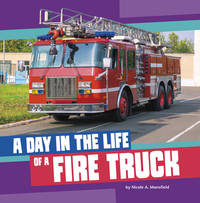
20251-0756586909Pebble Books 2025. LIB. New. 24 pages. 8.50x8.50x0.25 inches. Pebble Books unknown
0260965154.Ghardcover. Good. Access codes and supplements are not guaranteed with used items. May be an ex-library book. hardcover
1528163656.Gpaperback. Good. Access codes and supplements are not guaranteed with used items. May be an ex-library book. paperback
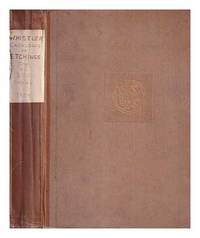
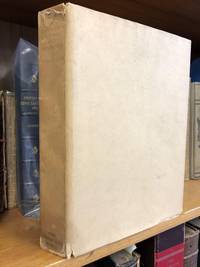
190951999Chicago: The Caxton Club 1909. Limited ed. Hardcover. Near Fine in Near Fine dust jacket. 26 x 20 cm. Small quarto. 467 pages. Brown cloth in dust jacket. Gilt to top foredge."This book is one of an edition of 300 copies on French paper and 300 on Imperial Japan paper". 2 cm closed tear to the top of the spine of the book and dust jacket. A beautfiul copy. The Caxton Club hardcover
1909197999Chicago: The Caxton Club 1909. 600 printed; this is one of 300 printed on French paper. Hardcover. VG Boards are edgeworn/bumped/scuffed; board corners are slightly bowed inward; spine strip is frayed at both edges; boards have scuffing/smudging; textblock edges are toned/scuffed/smudged; interior is toned lightly around the page peripheries; gutter is toned and foxed in the interior; binding appears solid. Light and dark brown boards with gilt design; top-edge gilt; ixvii 267 1 pp. untrimmed; frontispiece. The Caxton Club hardcover
1909406990Chicago : The Caxton Club 1909. 1st edition. Hardcover. Poor copy in the original paper-covered boards. Spine worn; spine bands and panel edges rubbed and bumped as with age. Handwritten paper title label to spine. Light foxing throughout. Text remains clear and without blemish. Physical description; 267 pp.: frontispiece portrait ; 27 cm. Subjects; Whistler James McNeill 1834-1903. Etching ; Catalogs. Dry-point. Art Etching. Chicago : The Caxton Club hardcover
19091346827Chicago Il: The Caxton Club 1909. First Edition First Printing; Limited Edition 1/303. Hardcover. Octavo 267 pages; VG-/VG-; spine brown with black lettering; book with two dust jackets; both jackets protected with a single mylar covering; mild shelf wear and soiling; age-toning and soiling to jacket spine; crowns and tails of spines missing; front joint starting; upper edge gilt; previous owner's bookplate at front free endpaper; some foxing throughout; pages clean; CX consignment; <br /> <br /> <p>NOTE: Shelved in Netdesk Office Case #3. 1346827. FP New Rockville Stock. The Caxton Club hardcover
1277106223.Gpaperback. Good. Access codes and supplements are not guaranteed with used items. May be an ex-library book. paperback
1277095086.Gpaperback. Good. Access codes and supplements are not guaranteed with used items. May be an ex-library book. paperback