Mansfield CominsABAA
233 résultats
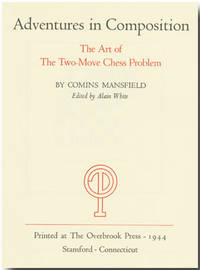
1944WRCLIT38999Stamford: Printed at the Overbrook Press 1944. Small quarto. Quarter gilt cloth and boards gilt label. Illustrations. Near fine. First edition. Edited by Alain White. From a total edition of four hundred copies printed in Centaur and Lutetia types with handset chess diagrams this is one of two hundred and fifty copies printed on laid paper. CAHOON p.42. Printed at the Overbrook Press hardcover books
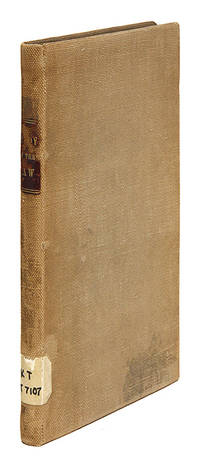
1797686831797. London 1797. Sole edition. Rare. London 1797. Sole edition. Rare. Advice on Legal Study from Mansfield Ashburton and Thurlow Murray William 1st Earl of Mansfield 1705-1793. Dunning John 1st Baron Ashburton 1731-1783. Thurlow Edward 1st Baron Thurlow 1731-1806. A Treatise on the Study of Law: Containing Directions to Students Written by Those Celebrated Lawyers Orators And Statesmen The Lords Mansfield Ashburton And Thurlow In a Series of Letters to Their Respective Young Friends; With Notes And Additions By the Editor. London: Harrison Cluse and Co. 1797. viii iii 1 147 1 pp. Octavo 7-3/4" x 4-3/4". Later library cloth lettering piece to spine endpapers renewed. Some shelfwear and soiling front joints just starting at ends upper section of lettering piece lacking along with front free endpaper. Light toning to text negligible faint spotting to a few leaves faint library stamp and illegible early owner signature to title page. $1000. Only edition. Sir William Murray or Lord Mansfield was born in Perth but came to England in 1718. He became Chief Justice of the King's Bench in 1756 and exerted a great influence on the common law. He suggested to Blackstone the notion of a series of lectures on English law at Oxford and would on occasion explicate principles in court for the benefit of students present. John Dunning or Lord Ashburton defended Wilkes against charges of seditious libel. Edward Thurlow or 1st Lord Thurlow made his reputation with his speech in the Douglas Cause and became Chancellor in 1778. English Short-Title Catalogue T102875. unknown books
48536Other: Other. Very Good. Hardcover. Cincinnati: R. W. Carroll & Co. 1868. 377 pages hardbound. Ex-library with usual markings o/w sound clean contents and repair to the brown cloth binding. A good reading copy. . Other hardcover books
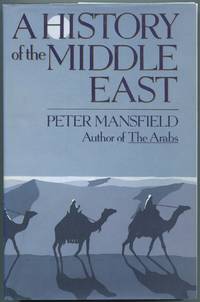
1991449211New York: Viking 1991. Hardcover. Near Fine/Fine. First American edition. 373pp. Remainder mark light foxing on page edges near fine in fine dustwrapper. Viking hardcover books
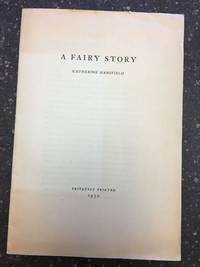
19321329055Privately Printed 1932. Limited Edition 1/25 Copies. Octavo 11 pages; VG; in beige paper black titling to front cover; mild wear to edges;. 1329055. Shelved Dupont Bookstore. Privately Printed unknown books
1980228011Auckland: Oxford University Press 1980. hardcover. near fine/near fine. With b/w illustrations throughout. vi 239pp. 8vo burgundy cloth a bit edgeworn d.w. Auckland: Oxford University Press 1980. A near fine copy in a near fine dust wrapper.<br/><br/> Oxford University Press unknown books
186772523Philadelphia: Mccalla & Stavely. Very Good. 1867. Softcover. A discourse on the state and tendency of society delivered before the literary societies of the College of New Jersey at Princeton June 25th 1867 Edward Deering Mansfield 1867English Book Book 42 p. 23.5 cm. Philadelphia McCalla & Stavely printers1867.Lacks front wrapper bright and complete Good. . Mccalla & Stavely paperback books
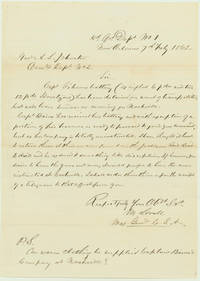
186221776<p>In February 1862 General Mansfield Lovell sends reinforcements to Albert Sidney Johnston the chief Confederate commander in the West so he can defend Nashville and Fort Donelson. The move was fruitless; Fort Donelson fell to Union troops a week after this letter was written.</p> <b>MANSFIELD LOVELL.</b>Autograph Letter Signed to Albert Sidney Johnston. New Orleans La. February 7 1862. 1 p. 8 x 11 in.<p>With: a carte-de-visite of Lovell in Confederate uniform. New York & Washington: Brady's National Photographic Portrait Gallery ca. 1862.</p><p><b>Partial Transcript </b></p><p><i>"Capt. Gibson's battery 21 rifled 6 pdrs. and two 12 pdr. Howitzers has been detained for want of transportation but will leave tomorrow morning for Nashville. Capt. Bains has received his battery and with the exception of a portion of his harness is ready to proceed to join your command; but as his company is totally uninstructed I have thought it best to retain them at their encampment in the Jackson Rail Road to drill and be reduced to something like discipline. If however you desire to have the guns and men I would prefer to have the men instructed at Nashville. I shall order them there upon the receipt of a telegram to that effect from you."</i></p><p><b>Historical Background</b></p><p>A day before Lovell wrote this letter Ulysses S. Grant had forced the surrender of Fort Henry Tennessee. The loss prompted Confederate Western Department commander General Albert Sidney Johnston to abandon his position at Bowling Green Kentucky and fall back towards Nashville. A week later on February 16 Fort Donelson Tennessee fell. The Cumberland and Tennessee Rivers had been opened and all of western Tennessee northern Mississippi and northern Alabama were exposed to Union invasion. Johnston adopted the strategic thinking of P.G.T. Beauregard his new second-in-command and concentrated most of the men in the western theater on a climactic battle against Ulysses S. Grant. In the resulting Battle of Shiloh April 6-7 1862 Johnson himself was killed. He was the highest-ranking officer to die in battle on either side in the Civil War.</p><p>In the aftermath of the Battle of Shiloh New Orleans lay exposed to Union attack from the north while to the south Admiral David G. Farragut's Mississippi River fleet broke the Confederate defenses on the Mississippi River at Forts Jackson and St. Philip. The two forts protected New Orleans but Farragut bypassed them in the dark early morning hours of April 24. He then prevailed over Confederate Captain John Stevenson's overmatched fleet. Lovell began to evacuate New Orleans over the next few days well before Union General Benjamin Butler's army was in a position to threaten its works. Lovell's evacuation order probably cost him his career; he was investigated by a court of inquiry and never again commanded troops in the field. Butler occupied the Crescent City on May 1.</p><p><b>Mansfield Lovell </b>1822-1884 was a West Point graduate from Washington D.C. who was seriously wounded at Belen Gate in the Mexican War. In October 1861 he was appointed major general in the Confederate Army and assigned to command in New Orleans. Under Lovell the Confederates lost New Orleans but he was hampered by deficiencies in men and materiel and was subsequently cleared of responsibility. However he never again obtained high command.</p><p><b>Albert S. Johnston</b> 1803-1862 of Kentucky graduated from West Point where he befriended Jefferson Davis in 1828. He went to Texas where he served as aide-de-camp to Sam Houston's revolutionary army and rose to command Texas forces briefly in 1837. He also served as Secretary of War for the short-lived Republic of Texas. Johnston fought under Zachary Taylor in the Mexican War was colonel of the 2nd U.S. Cavalry on the Texas frontier led troops in the Utah wars and commanded the Department of the Pacific before the Civil War. In 1861 he was appointed full general second after Samuel Cooper with command of all Confederate forces in the western theater. Under his overall direction the South lost Fort Henry and Fort Donelson. His plans for resurgence in the West resulted in the Battle of Shiloh during which he fell mortally wounded.</p><p><b>Condition</b></p><p>Very good. Small chips at top margin two minor tears at left margin ink identification on verso.</p> books