Mirbeau, OctaveBiblio.com

951 résultats
190411461904. Near fine. 3pp 4to. Holograph manuscript in pen in French writing on the rectos only the first two pages are filled with text the last page is trimmed with only 4 lines and Mirbeau’s signature. Creases stains smudges offsetting but cleanly written legible and very good. An article for the left-wing newspaper L’Humanité published 25/Sept/1904. The newspaper was founded only a few months earlier by SFIO leader Jean Jaures who also served as editor. In the article Mirbeau criticizes France for its refusal to intervene in the Russo-Japanese war. With biting irony he mimics the indifferent French attitude: "Let's wait two five ten twenty years if we have to. We'll keep on slaughtering each other over there. But what are we risking. Life is good our restaurants are still the best in the world. There are still the prettiest girls in the theaters of Paris." He exposes the hypocrisy of French foreign policy: "as allies not of the Russian people whose infinite sufferings like those of all peoples are of absolutely no concern to us but as allies of the czar whose glory alone is important to us let us be no less faithful czarists than the czar himself is." Drawing a powerful parallel Mirbeau connects the mounting casualties of the Russo-Japanese conflict with the Armenian massacres—which had already reached devastating proportions by 1904. A different but contemporary newspaper clipping is laid in seemingly part 2 by Mirbeau: it records a conversation with a merchant marine captain recently returned from the Far East who despite personally witnessing naval battles admits he comprehends little of the war's true nature beyond scattered disturbing details he finds too horrific to fully describe.<br /> <br /> The early 1900s particularly 1904-1905 marked a transformative period in the development of anti-imperialist critique within European leftist thought. The Russo-Japanese conflict illuminated the contradictions within Western powers' foreign policies particularly France's relationship with Tsarist Russia. The French left's growing disillusionment with the Franco-Russian alliance exemplified broader ideological shifts that would shape socialist internationalism for decades. As ordinary Russians died for imperial ambitions while French elites remained indifferent behind a facade of nationalist solidarity socialist thinkers increasingly recognized patterns linking capitalist interests to colonial violence. This period also witnessed the emergence of more sophisticated leftist analyses connecting imperial competition abroad with class exploitation at home. The juxtaposition of European indifference toward both the Russo-Japanese War casualties and the Armenian massacres demonstrated how Western powers selectively applied humanitarian concerns based on strategic interests—a critique that would become central to anti-colonial movements throughout the 20th century and presage the internationalist anti-war position that would later fracture the European left during World War I.<br /> <br /> Octave Mirbeau 1848-1917 emerged as one of France's most incisive social critics during the Belle Époque developing a literary voice defined by moral outrage and stylistic innovation that transcended conventional boundaries between journalism and literature. His artistic sensibilities were profoundly shaped by traumatic experiences—including abuse at a Jesuit school and service in the Franco-Prussian War—which fostered his lifelong commitments to anarchism pacifism and the defense of individual dignity against institutional power. Beyond his novels exposing societal hypocrisy including the controversial "Le Jardin des supplices" 1899 and "Le Journal d'une femme de chambre" 1900 Mirbeau distinguished himself as a prescient art critic who championed misunderstood avant-garde figures like Van Gogh Rodin and Monet recognizing artistic genius that his contemporaries often dismissed. His prolific output—spanning over twelve hundred works across multiple genres—consistently demonstrated his willingness to confront uncomfortable truths about violence sexuality and power that bourgeois society preferred to ignore establishing him as an intellectual forerunner to modernist aesthetic and political movements of the twentieth century. unknown
190146402639Paris, Charpentier et Fasquelle, 1901 ; in-12, broché. 35 pp.ÉDITION ORIGINALE de cette comédie acerbe : médiocrité bourgeoise, duperie de l’amour... du pur grand-guignol à la Mirbeau. UN DES 20 EXEMPLAIRES SUR HOLLANDE, seul grand papier.
0353742600.Ghardcover. Good. Access codes and supplements are not guaranteed with used items. May be an ex-library book. hardcover
0282184988.Gpaperback. Good. Access codes and supplements are not guaranteed with used items. May be an ex-library book. paperback
0666667411.Ghardcover. Good. Access codes and supplements are not guaranteed with used items. May be an ex-library book. hardcover
1993147276Couverture souple. Broché. 9 x 16.5 cm. 42 pages.
1993147275Couverture souple. Broché. 9 x 16.5 cm. 42 pages.
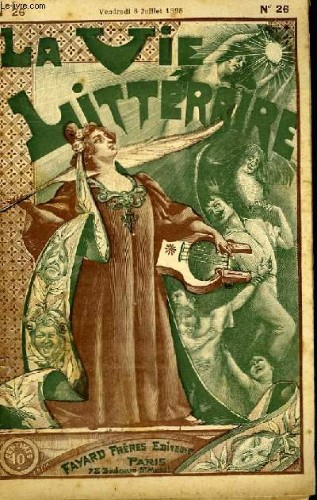
R150052219FAYARD.. 8 juillet 1898.. In-12. Broché. Bon état, Couv. légèrement passée, Dos satisfaisant, Intérieur acceptable. Paginée de la page 802 à la page 832. 1ère de couverture illustrée en couleurs. Quelques illustrations en noir et blanc, dans le texte .. . . . Classification Dewey : 848-Ecrits divers, citations, journaux intimes, souvenirs, mémoires
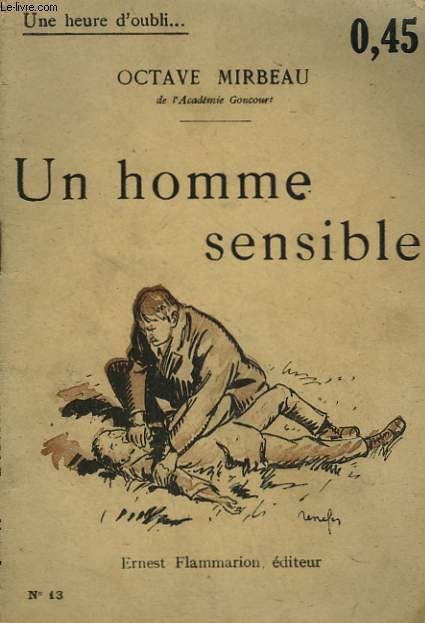
feb16314Adeverul. Used. ; Romanian Edition of Un om sensibil; For more details please contact me Adeverul unknown
R150072052FLAMMARION .. Non daté.. In-12. Broché. Bon état, Couv. légèrement passée, Dos satisfaisant, Intérieur acceptable. 61 pages. 1ère et 4 ème de couverture illustrée en noir et blanc.. . . . Classification Dewey : 840-Littératures des langues romanes. Littérature française
1919130961Couverture souple. Broché. 64 pages. 12 x 17 cm.
1919130960Couverture souple. Broché. 64 pages. 12 x 17 cm.
15293,Paris, Ernest Flammarion 1920, 249 pp., 1 vol. in 12 br. traces d'humidité anciennes marginales. Edition originale sur papier d'édition (après 200 Hollande et 40 Chine). Publication posthume de ce roman inachevé commencé en 1900.
ROD0110609ERNEST FLAMMARION. NON DATE. In-12. Relié demi-cuir. Etat d'usage, Coins frottés, Dos à nerfs, Intérieur acceptable. 247 pages. Tampon et une annotation sur la page de titre. Etiquette numérotée collée sur la coiffe en pied. Dos à 4 nerfs. Manque la moitié de la page de titre.. . . . Classification Dewey : 840-Littératures des langues romanes. Littérature française
1920R200121640Ernest Flammarion. 1920. In-12. Broché. Etat passable, Couv. convenable, Coiffe en pied abîmée, Papier jauni. 247 pages. Coiffes abimées. . . . Classification Dewey : 840.091-XX ème siècle
1920RO80173879FLAMMARION. 1920. In-12. Relié cuir dos-coins. Bon état, 1er plat abîmé, Dos satisfaisant, Intérieur frais. 247 Pages. 1 Annotation au stylo. Couverture déchiré sans conséquence.. . . . Classification Dewey : 840.091-XX ème siècle
192058406Flammarion | Paris 1920 | 13 x 19 cm | broché
0353774650.Ghardcover. Good. Access codes and supplements are not guaranteed with used items. May be an ex-library book. hardcover
065699584X.Ghardcover. Good. Access codes and supplements are not guaranteed with used items. May be an ex-library book. hardcover
192058406Paris: Flammarion 1920. Fine. Flammarion Paris 1920 13 x 19 cm broché First edition one of 40 numbered copies on Chine the tirage de tête. Usual foxing mostly in the margins of some leaves. Flammarion unknown
192086155Reliure demi-percaline cuivre à la bradel. Dos à pièce. Exemplaire à grands témoins. Couvertures conservées. Coins légèrement émoussés.
L15127L'ASSIETTE AU BEURRE, n° 61, 31 mai 1902. In-4 agrafé. Texte d'O. Mirbeau dessins de L. Braun. E.O.
15693L' Assiette au Beurre n° 61 du 31 mai. Paris. Schwarz. 1902. In-4 (32x24 cms). 18 pages. Broché, couvertures illustrées.
19113963Paris Mercure de France 1911 in-12 broché Paris, Mercure de France, 1911. 18,5 x 11,5 cm, in-12, 310 (5) pp., broché.
1895146391895 P., Léon Vanier, 1895, 1 plaquette in-18 (191 x 115 mm) reliée 1/2 Bradel toile violette, pièce de titre en cuir crème, auteur et titre en caractères noirs, date en pied (Paul VIE) couvertures vertes imprimées en noir conservées, de (2) ff. (faux-titre et titre) - X (Argument) - 56 pp. - (1) f. (table).Pièce de titre légèrement frottée, très bel exemplaire par ailleurs dans une solide reliure signée de Paul Vié.