40 487 résultats
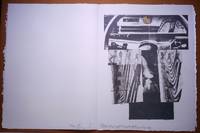
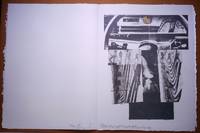
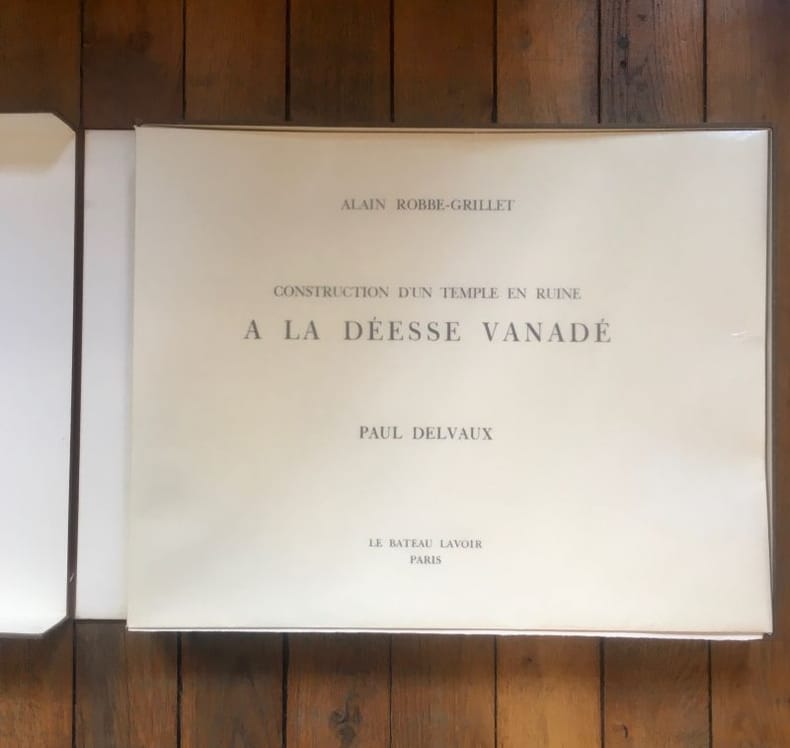
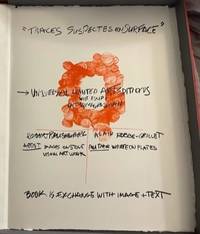
197813617West Islip NY: Universal Limited Art Editions 1978. Limited Edition. Boxed Loose Sheets. Fine. Limited Edition. Boxed Loose Sheets. This work is widely considered to be Rauschenberg's magnum opus of book illustration. <br /> "Long enamored of French literature and language publisher Tatyana Grosman attended a lecture by Alain Robbe-Grillet in April 1972. When the writer mentioned Robert Rauschenberg's work Mrs. Grosman already aware of stylistic similarities between the two felt that a collaboration was fated. Two days later it was underway. During the next four years Mrs. Grosman sent offset plates to Paris and proofed and translated Robbe-Grillet's text in West Islip; Rauschenberg added images one chapter at a time. The completed pages were sent back to Robbe-Grillet with plates for the next chapter. It soon became clear that Robbe-Grillet was not working in the spirit of sympathetic collaboration but providing a massive text that presented great problems in page design. Rauschenberg responded with images that are much more aloof than in previous books yet responsive to the elegance of the text." Esther Sparks Universal Limited Art Editions pp. 447-459<br /> Put another way:<br /> "Alain Robbe-Grillet the French author and filmmaker and Robert Rauschenberg have collaborated on an "image-text." The collaboration was difficult in part because of the procedure Rauschenberg blocked out where the text would be Robbe-Grillet wrote it in longhand on plates and Rauschenberg set the image down on stones and in part because of one-upsmanship the images all taken from French magazines referred to the text but had a visual logic that often intruded upon it and Robbe-Grillet would complain. Page by page this went on mostly by mail for six years. The tension of image and text and of the two artists is evident and the result is extraordinary." Foster Hal. ArtForum<br /> Portfolio with 36 lithographs by Rauschenberg with text by Robbe-Grillet. Printed on unique Twinrocker paper the work consists of 31 pages plus a title page and 4 colophon pages printed from 37 stones and 27 aluminum plates. <br /> Each of the 31 pages is signed and dated by Rauschenberg and signed and numbered by Robbe-Grillet with each carries the embossed folio number and publisher's seal. Box shows minor shelf/edge wear else bright and clean. Red cloth dropspine box loose prints laid in. fo. 52 x 69 cm. folded Illus. color plates. Numbered limited edition of 36 plus 7 AP copies. This is AP 5/7. Signed by artist and author. Universal Limited Art Editions unknown
197827765West Islip NY: Universal Limited Art Editions 1978. First edition. Rauschenberg Robert. Portfolio with 36 lithographs by Rauschenberg and text by Robbe-Grillet. Printed on specially made Twinrocker paper with the watermark of the artist's and author's signatures it comprises 31 pages plus the title page and 4 colophon pages printed from 37 stones and 27 aluminum plates numbered 11-31 I-IV. <br /> 20-1/2 x 26 3/16 inches 52 x 69 cm. folded. Copy 34 of a total edition of 36 plus 6 A.P. copies the colophon calls for six but they are numbered through 7. Signed and dated by Rauschenberg and signed and numbered by Robbe-Grillet on each of the 31 pages each carries the embossed folio number and publisher's seal. Fine condition in original red cloth clamshell box designed by the artist as issued. With two of the original aluminum offset plates on which Robbe-Grillet wrote the text a set of ten proof pages on Twinrocker paper for the text before illustrations and a sheet which Robbe-Grillet used for practice before writing out the manuscript on the plates. The plates were returned to ULAE by Robbe-Grillet and proofed before Rauschenberg responded to each group of text pages by creating his iluustrations. "Long enamored of French literature and language publisher Tatyana Grosman attended a lecture by Alain Robbe-Grillet in April 1972. When the writer mentioned Robert Rauschenberg's work Mrs. Grosman already aware of stylistic similarities between the two felt that a collaboration was fated. Two days later it was underway. During the next four years Mrs. Grosman sent offset plates to Paris and proofed and translated Robbe-Grillet's text in West Islip; Rauschenberg added images one chapter at a time. The completed pages were sent back to Robbe-Grillet with plates for the next chapter. It soon became clear that Robbe-Grillet was not working in the spirit of sympathetic collaboration but providing a massive text that presented great problems in page design. Rauschenberg responded with images that are much more aloof than in previous books yet responsive to the elegance of the text" Esther Sparks Universal Limited Art Editions pp. 447-459. "The title is police jargon loosely meaning that things are not as they seem.To Robbe-Grillet's mysterious story of lost romance and murder in the city Rauschenberg responded with a portrayal of everyday life with supermarkets underwear and bicycles. Mrs Grosman saw both contributions as equally nostalgic and sad. 'The effect was a Last Year at Marienbad quality' she said" Mary Lynn Kotz Rauschenberg / Art and Life 1990 p. 148. Universal Limited Art Editions unknown
197827765West Islip NY: Universal Limited Art Editions 1978. First edition. Rauschenberg Robert. Portfolio with 36 lithographs by Rauschenberg and text by Robbe-Grillet. Printed on specially made Twinrocker paper with the watermark of the artist's and author's signatures it comprises 31 pages plus the title page and 4 colophon pages printed from 37 stones and 27 aluminum plates numbered 11-31 I-IV. <br/>20-1/2 x 26 3/16 inches 52 x 69 cm. folded. Copy 34 of a total edition of 36 plus 6 A.P. copies the colophon calls for six but they are numbered through 7. Signed and dated by Rauschenberg and signed and numbered by Robbe-Grillet on each of the 31 pages each carries the embossed folio number and publisher's seal. Fine condition in original red cloth clamshell box designed by the artist as issued. With two of the original aluminum offset plates on which Robbe-Grillet wrote the text a set of ten proof pages on Twinrocker paper for the text before illustrations and a sheet which Robbe-Grillet used for practice before writing out the manuscript on the plates. The plates were returned to ULAE by Robbe-Grillet and proofed before Rauschenberg responded to each group of text pages by creating his iluustrations. "Long enamored of French literature and language publisher Tatyana Grosman attended a lecture by Alain Robbe-Grillet in April 1972. When the writer mentioned Robert Rauschenberg's work Mrs. Grosman already aware of stylistic similarities between the two felt that a collaboration was fated. Two days later it was underway. During the next four years Mrs. Grosman sent offset plates to Paris and proofed and translated Robbe-Grillet's text in West Islip; Rauschenberg added images one chapter at a time. The completed pages were sent back to Robbe-Grillet with plates for the next chapter. It soon became clear that Robbe-Grillet was not working in the spirit of sympathetic collaboration but providing a massive text that presented great problems in page design. Rauschenberg responded with images that are much more aloof than in previous books yet responsive to the elegance of the text" Esther Sparks Universal Limited Art Editions pp. 447-459. "The title is police jargon loosely meaning that things are not as they seem.To Robbe-Grillet's mysterious story of lost romance and murder in the city Rauschenberg responded with a portrayal of everyday life with supermarkets underwear and bicycles. Mrs Grosman saw both contributions as equally nostalgic and sad. 'The effect was a Last Year at Marienbad quality' she said" Mary Lynn Kotz Rauschenberg / Art and Life 1990 p. 148. <br/><br/> Universal Limited Art Editions hardcover books
197829227West Islip NY: ULAE 1978. First edition. Rauschenberg Robert. Portfolio with 36 lithographs by Rauschenberg and text by Robbe-Grillet. It comprises 31 pages plus the title page and 4 colophon pages printed from 37 stones for the images and 27 aluminum plates for the text numbered 11-31 I-IV. Pages measure 20-1/2 x 26-3/16 inches 52 x 69 cm. folded as issued. Printed on specially made Twinrocker paper with the watermark of the artist's and author's signatures. One of seven artist proof copies from the total edition of 42 copies. Each of the 31 pages is signed and dated by Rauschenberg and signed and numbered by Robbe-Grillet; each page also carries the embossed folio number and publisher's seal. Fine condition in original red cloth clamshell box designed by the artist as issued and the publisher's specially constructed wooden case. "Long enamored of French literature and language publisher Tatyana Grosman attended a lecture by Alain Robbe-Grillet in April 1972. When the writer mentioned Robert Rauschenberg's work Mrs. Grosman already aware of stylistic similarities between the two felt that a collaboration was fated. Two days later it was underway. During the next four years Mrs. Grosman sent aluminum offset plates to Paris and proofed and translated Robbe-Grillet's text in West Islip; Rauschenberg added images one chapter at a time. The completed pages were sent back to Robbe-Grillet with plates for the next chapter. It soon became clear that Robbe-Grillet was not working in the spirit of sympathetic collaboration but providing a massive text that presented great problems in page design. Rauschenberg responded with images that are much more aloof than in previous books yet responsive to the elegance of the text" Esther Sparks Universal Limited Art Editions pp. 447-459. "The title is police jargon loosely meaning that things are not as they seem.To Robbe-Grillet's mysterious story of lost romance and murder in the city Rauschenberg responded with a portrayal of everyday life with supermarkets underwear and bicycles. Mrs Grosman saw both contributions as equally nostalgic and sad. 'The effect was a Last Year at Marienbad quality' she said" Mary Lynn Kotz Rauschenberg / Art and Life 1990 p. 148. <br/><br/> ULAE hardcover books
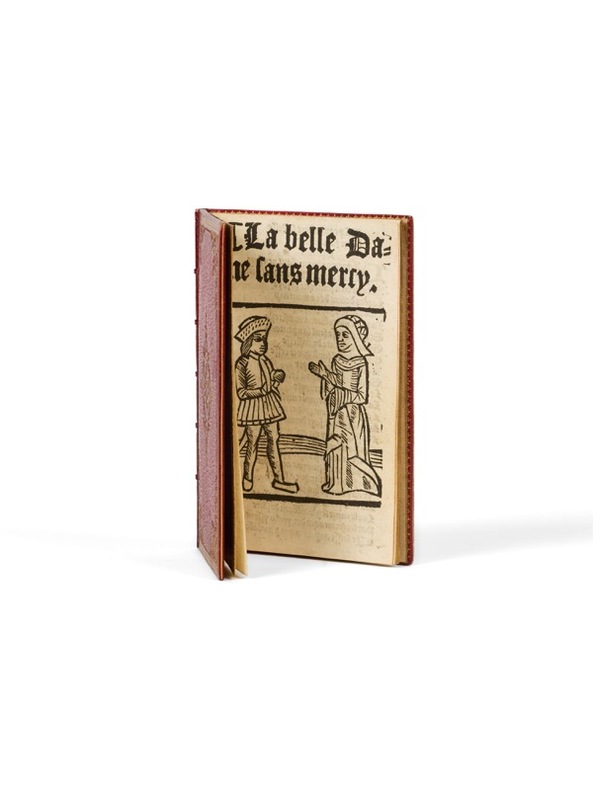
152930425Seul exemplaire connu [Paris, J. Hubert, c. 1529]. 1 vol. (80 x 120 mm) de [32] p. [A-B8]. Maroquin rouge, triple filet d'encadrement sur les plats, écoinçons aux petits fers et médaillon central orné d'une rose, dos à nerfs orné, titre doré, filet sur les coupes, tranches dorées, dentelle intérieure (reliure signée de Bauzonnet-Trautz). L’une des pièces les plus emblématiques de l’amour courtois. Le terme de rareté proverbiale n’est ici pas usurpé : il s’agit ni plus ni moins du seul exemplaire connu de cette rare édition - autrefois propriété de la collection Fairfax-Murray. Ce délice d’exemplaire a été soigneusement établi au XIXe siècle par Bauzonnet. C'est également l'exemplaire le plus ancien en main privée : les sept autres exemplaires connus, imprimés entre 1488 et 1515, sont tous en collections publiques, en France, aux Etats-Unis et en Angleterre. On ne connaît qu'un seul autre exemplaire en collection privée, celui de l'édition de l'édition de 1530.
30425Paris J. Hubert c. 1529. 1 vol. 80 x 120 mm de 32 p. A-B8. Maroquin rouge triple filet d'encadrement sur les plats écoinçons aux petits fers et médaillon central orné d'une rose dos à nerfs orné titre doré filet sur les coupes tranches dorées dentelle intérieure reliure signée de Bauzonnet-Trautz. . L’une des pièces les plus emblématiques de l’amour courtois. Le terme de rareté proverbiale n’est ici pas usurpé : il s’agit ni plus ni moins du seul exemplaire connu de cette rare édition - autrefois propriété de la collection Fairfax-Murray. Ce délice d’exemplaire a été soigneusement établi au XIXe siècle par Bauzonnet. C'est également l'exemplaire le plus ancien en main privée : les sept autres exemplaires connus imprimés entre 1488 et 1515 sont tous en collections publiques en France aux Etats-Unis et en Angleterre. On ne connaît qu'un seul autre exemplaire en collection privée celui de l'édition de l'édition de 1530. . Pourquoi alors qu'il traitait d'un sujet familier des poètes lyriques depuis le XIIIe siècle - une femme vertueuse belle mais inaccessible indifférente à celui qui se meurt pour elle le poème d'Alain Chartier eut un tel succès à la fois immédiat et durable « C'était tout simplement la première fois qu'on entendait parler si finement d'amour » nous dit Pierre Champion Histoire poétique du quinzième siècle Paris É. Champion 1923 t. I p. 69 sans allusion linguistique ou politique telle qu'on pouvait en découvrir dans les autres oeuvres du genre y compris chez Chaucer ou dans le Roman de la rose. L'exégèse autour de La Belle Dame sans mercy est bel et bien unanime : bien au-delà du simple badinage la pièce possède un style et une originalité unique « notamment les vers incisifs et concis que s'y renvoient l'Amant et sa Dame » n'ont d'égal que le sujet de ce long poème « où pour la première fois peut-être les droits de la femme en matière d'amour ont été vigoureusement défendus. » A. Pagès Romania 1936 p. 481. « Naguères chevauchant pensoye » : c'est par ces vers célèbres que débute le poème où se joue le drame de l'amant éconduit par une femme peu familière de l'amour courtois. Pour ces raisons et tout au long du XVe siècle le texte déclencha une vive polémique ; une jeune femme ne pouvait être libre de toute passion et devenir « sans Mercy ». Les femmes de la Cour qui furent ses premières lectrices ne semblèrent pas avoir été sensibles au sujet au vu de la Lettre des Dames qu'elles adressèrent au poète où elles lui promettent d'être « mort ou pris » : un scandale qui appela une réponse immédiate de sa part sous la forme de deux autres poèmes La Belle Dame qui eut mercy puis La Complainte contre la mort de sa dame. D'Alain Chartier l'on sait peu de choses. Né à Bayeux aux alentours de 1385 il partit à la capitale pour étudier à l'Université de Paris où il n'obtint qu'un titre Maître ès-Arts et non de Docteur ; quant à sa prêtrise elle eut peut-être lieu alors qu'il avait passé la quarantaine « pour des raisons où la vocation semble avoir eu peu de part . La précision a son importance car elle permet de voir dans les poésies amoureuses de notre auteur autre chose qu'un dévergondage de personne ecclésiastique. » R. Garapon in Annales de Normandie 1959. Il est admis que Chartier a composé son poème à la fin de l'année 1424. Constitué de cent huitains de vers octosyllabiques sur trois rimes il représente après Le Livre des quatre dames écrit au lendemain de la bataille d'Azincourt en 1416 le plus long des poèmes d'Alain Chartier et appartient à la quinzaine de pièces qu'il donne en français laissant à la langue latine ses productions plus politiques écrites lors- qu'il participait à d'importantes missions diplomatiques ou lorsqu'il était l'influent secrétaire du Dauphin le futur Charles VII. Sa Belle Dame sans mercy demeure sans conteste le poème courtois le plus célèbre du Moyen-Âge après l'incontournable Roman de la Rose ; et quelle qu'ait pu être la valeur de ses écrits latins et français en prose ce fut La Belle Dame qui assura à Alain Chartier sa postérité comme auteur et poète de l'amour courtois ; avec Jean de Meung et François Villon il reste l'un des rares auteurs médiévaux dont la renommée ait survécu jusqu'au milieu du XVIe siècle. La renommée du texte dépassa même les frontières puisque apparaissent vers 1450 des copies du texte traduit en anglais par Richard Ros l'un des plus proches courtisans du roi Henri VI d'Angleterre à la fois chevalier et poète : un sublime outrage la plaie d'Azincourt n'étant pas refermée. Copié et recopié tout au long des XVe et XVIe siècles le poème fut contredit désapprouvé condamné mais aussi parfois salué ou à tout le moins cité et débattu : on en connaît ainsi une cinquantaine de manuscrits qui ont permis sa transmission jusqu'à sa première impression en 1488. Dix ans plus tard elle est intégrée dans l'édition des Fais d'Alain Chartier imprimée pour Antoine Vérard en 1498. Individuellement la pièce connaîtra seulement cinq autres éditions au XVIe siècle. Devant leur rareté Tchemerzine ne peut même en décrire que quatre là où Bechtel et l'Universal Short Title Catalogue USTC en donnent six publiées entre 1489 et 1530. Les cinq éditions du XVIe siècle ne se distinguent que par le nombre de pages ou la gravure qui figure sur la page de titre. Le début d'un long cheminement et ce jusqu'à l'époque moderne : un peu moins de quatre siècles plus tard en plein romantisme cette traduction qui avait conservé son titre original en français inspira John Keats dans l'écriture de sa fameuse ballade de 1819 The Beautiful Lady without Mercy. «I saw pale kings and princes too Pale warriors death-pale were they all; They cried-La Belle Dame sans Merci Thee hath in thrall» Les rois les princes les guerriers tous pâles comme la mort lui crient : la belle dame sans merci te tient en esclavage. À ce titre La Belle Dame sans mercy inspira les peintres les plus célèbres de la confrérie préraphaélite les figures féminines fortes étant les sujets de presque toutes leurs oeuvres. Tout autant que les Salomé Judith Lilith et autres femmes castratrices lesquelles ont toujours été à la fois attirantes et monstrueuses pour nombre d'artistes. Lointaine parente des sirènes d'Homère elle se retrouve évidemment dans la Loreley de Heine 1824 inspirant celle d'Apollinaire « Loreley » dans Alcools en 1913. Jusqu'aux chanteurs modernes puisque le poème de Keats a été repris notamment par Marianne Faithfull et Sting et que Patti Smith a vu souvent son nom accolé au terme de Belle dame sans merci pour souligner son indépendance et sa liberté. Cinq siècles avant nous Chartier ose affirmer que le pouvoir et la liberté - sinon la peur - « changent de camp » ou tout le moins que ces attributs peuvent être légitimement assumés par les femmes. Cette édition n'est connue que par l'exemplaire que nous présentons. Renouard et Bechtel - les deux bibliographies de référence - ne citent l'édition que par cet exemplaire ; l'USTC ne peut en citer qu'un seul dont il avait perdu la trace et donné d'après Renouard : c'est probablement celui-ci. L'impression du bois des fleurons et du texte en caractères gothiques est celle de l'imprimeur parisien Julien Hubert : un délicieux bois gravé qui représente un homme et une femme dialoguant forme la page de titre. On ne connaît de ce bois et de ce livre que cette seule version avec un privilège daté du 27 août 1529. Les autres éditions recensées par l'USTC sont les suivantes : Lyon 1488 trois exemplaires BnF ; Bibliothèque Mazarine ; British Library ; Paris 1500 aucun exemplaire connu cité par Brunet I p. 751 ; Rouen 1505 deux exemplaires BnF ; Harvard : Houghton Library ; Lyon 1515 un seul exemplaire Yale University : Beinecke Library ; Paris 1530 un seul exemplaire collection privée. Des bibliothèques Fairfax-Murray Vente Early French Books Londres 1961 n° 633 et étiquette d'inventaire puis Jean Bourdel Vente I Paris 2024 et ex-libris. Bechtel Catalogue des gothiques français 1476-1560 C-263 ; H. W. Davies Catalogue of a collection of Early French Books in the Library of C. Fairfax Murray Londres 1961 t. II pp. 967-972 n° 633 cet exemplaire ; Renouard Brigitte Moreau Inventaire chronologique des éditions parisiennes du XVIe siècle 1697 ; Tchemerzine-Scheler II-314 ; USTC 73209 ; Piaget La belle dame sans merci et les poésies lyriques Droz 1949. L'USTC Universal Short Title Catalogue est une bibliographie de toutes les éditions imprimées publiées au cours du premier âge de l'imprimerie en Angleterre en France en Italie et dans toute autre partie du monde où l'impression à l'aide de caractères mobiles est connue. Développé au cours de plus de vingt-cinq années de recherche et d'analyse à l'université de St Andrews l'USTC contient aujourd'hui des informations sur l'emplacement de plus de 6 millions d'exemplaires imprimés entre 1450 et 1700 : des références puisées dans plus de 9 000 bibliothèques dans le monde mais aussi dans des musées des archives et des collections privées. Une grande partie de ce matériel est fabuleusement rare : près d'un tiers de tous les documents répertoriés dans l'USTC ne subsistent aujourd'hui qu'en un ou deux exemplaires. [Paris, J. Hubert, c. 1529]. 1 vol. (80 x 120 mm) de [32] p. [A-B8]. Maroquin rouge, triple filet d'encadrement sur les plats, Ã unknown
LCS-18588Superbe exemplaire à marges immenses. Paris, François Regnault, 1528. Petit in-folio gothique de LXXX feuillets à longues lignes, titre compris en rouge et noir. Plein maroquin rouge janséniste, dos à nerfs, double filet or sur les coupes, roulette intérieure dorée, tranches dorées sur marbrures. Reliure signée de Trautz-Bauzonnet. 256 x 188 mm.
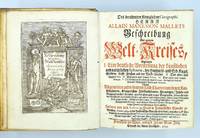
17192181<em><strong>Description of the world with 645 plates: a rare complete copy</strong></em><p>Alain Manesson Mallet 1630-1706.</p><p><strong>Beschreibung des gantzen Welt-Kreises darinnen I. … V.</strong></p><p>Frankfurt Anton Heinscheidt for Johann Adam Jung 1719.</p><p>5 volumes in 2. 8°. IX VIII IV 263 1; 276 24; 170 22; 519 1 blank XLV 1 blank; 418 LXXXIV pp. = complete with errata leaves.<br />With 645 plates 618 numbered 5 frontispieces 17 portraits 5 unnumbered or wrongly numbered plates. The main title in vol. 1 erroneously mentions 650 plates. See full index of plates below.</p><p>An exceptionally rare complete copy of Alain Manesson Mallet's "Description of the World". This remarkable work here in the second edition of the German translation provides the reader with a guide to countless places in the world divided in four parts: Africa America Asia and Europe. This is preceded by an introduction to cosmography and geography. The illustrations show maps cities people and particularities of the places that are described. Some interesting examples of illustrations are a portrait of Inca Emperor Atabalipa the culture of Japan and China three plates showing West Indies plantations the Native American Powhatan chief and village of Pomejok two Samogitians a map of the Davis Strait the Dalai lama several maps of India and Arabia the Nile with crocodiles and much much more.<br />The first edition appeared in Paris in 1683 as <em>Description de l'univers</em> and soon after the hundreds of copper plates for the illustrations were transferred to Jan David Zunner in Frankfurt who published the first edition of the German translation in 1684 with German text engraved in the plates. He then published the second French edition in 1685 with the German text still in the plates. The second German edition that we offer here was also printed in Frankfurt but 34 years later by Anton Heinscheidt for Johann Adam Jung. They used the same plates again and added portraits of the rulers of that time. By then the plates had become quite worn so they were re-engraved by at least three German artists: Vogel W.C. Drucker and Eggelhoff. Still the plates have visible wear and the printing was not done very well in some cases due to unclear strikes and plates that were not cleaned properly see pictures.<br />This edition has many more plates than the first German and second French editions printed at Frankfurt see VD17 39:129237P; 3:306499P. We traced no definitive reference for the total amount of plates this edition should have but we count 645 seemingly without any missing. Copies with the amount of plates as the one we offer here are very seldomly found. Of the multiple copies that are recorded at auction all have less than 645 plates. The nearest being a copy sold in 1991 by Sotheby's with 613 plates.</p><p><strong>Index of plates in this copy:</strong></p><p>Vol. 1: 112 numbered plates 1 frontispiece 1 portrait 1 87B = 115</p><p>Vol. 2: 133 numbered plates 1 frontispiece 3 portraits = 137</p><p>Vol. 3: 101 numbered plates 1 frontispiece 3 unnumbered plates = 105</p><p>Vol. 4: 130 numbered plates 1 frontispiece 8 portraits = 139</p><p>Vol. 5: 142 numbered plates 1 frontispiece 5 portraits 1 unnumbered plate = 149</p><p><strong>Condition: </strong>Volume 2: minor worming in blank corners of first few pages. Faded stain in the plate leaves only probably occurred before binding predominantly visible on verso. Otherwise the whole in remarkably fresh and clean condition.</p><p><strong>Literature:</strong></p><p>1st German: VD17 39:129237P</p><p>2nd French: VD17 3:306499P</p><p>2nd German : VD18 11031883</p><p>Alden-Landis 719/104 Vol. V; Phillips 4280; cf. Borba de Moraes II 511 and Sabin 44130 first French edition.</p><p>Mireille Pastoureau <em>Les atlas Français XVIe-XVIIe siècles</em> Manneson Mallet IA p. 309-322.</p> Anton Heinscheidt for Johann Adam Jung
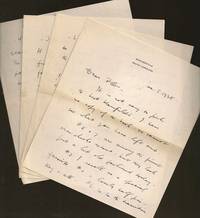
1935C1031Alain Campbell White letters to Frederick Gamage cover the years from April 4 1935 to September 15 1944. For this ten year period there are 364 dated letters and 28 incomplete letters lacking front date page. The letters are an ongoing correspondence between White and Gamage which covers all aspects of problem chess. The letters show a development of mentor White encouraging ad occasionally prodding his protégé Gamage in developing skills in problem construction. As the letters progress over this ten year period the reader can observe the relationship develop between the two men from a formal intercourse to a more comradely banter. White offered suggestions comments and themes for problems. White's vast and profound technical knowledge his artistic appreciation his ability in expressing himself and his enthusiastic and friendly encouragement were the great inspiration of many problems Gamage constructed and he was lucky enough to be among his host of correspondents. Some of the letters were multiple pages hand typed but often hand written some unsigned or just initialed usually with the location White was residing and the date written. Included with the letters are the limited edition work by Alain White on Gamage Frederick Gamage: An Artist in Chess Problems and Mike Prcic's book Frederick Gamage. The letters in the latter work have been reproduced from the original letters offered now.<br /><br />Newman Guttman was one of a few problemists to visit Frederick Gamage. After the passing of Gamage the letters from Alain White along with Gamage's other chess papers were given to Guttman. He in turn gave these papers to Edgar Holladay. Holladay came into the possession of what problemists would consider as "treasures" one-of-a-kind items from famous and well-known problemists. Robert Moore and Holladay were good friends and these were passed to him by Holladay's wife Rita.<br /><br />Serious buyers may inquire about more information regarding this collection.<br /><br />Condition:<br /><br />The letters have folds for postage some occasional stains and occasional edge wear else a very good collection. They are housed in individual archival holders held in a multiple three ring binders. Self Written books
1935C1031Alain Campbell White letters to Frederick Gamage cover the years from April 4 1935 to September 15 1944. For this ten year period there are 364 dated letters and 28 incomplete letters lacking front date page. The letters are an ongoing correspondence between White and Gamage which covers all aspects of problem chess. The letters show a development of mentor White encouraging ad occasionally prodding his protégé Gamage in developing skills in problem construction. As the letters progress over this ten year period the reader can observe the relationship develop between the two men from a formal intercourse to a more comradely banter. White offered suggestions comments and themes for problems. White's vast and profound technical knowledge his artistic appreciation his ability in expressing himself and his enthusiastic and friendly encouragement were the great inspiration of many problems Gamage constructed and he was lucky enough to be among his host of correspondents. Some of the letters were multiple pages hand typed but often hand written some unsigned or just initialed usually with the location White was residing and the date written. Included with the letters are the limited edition work by Alain White on Gamage Frederick Gamage: An Artist in Chess Problems and Mike Prcic's book Frederick Gamage. The letters in the latter work have been reproduced from the original letters offered now.<br /><br />Newman Guttman was one of a few problemists to visit Frederick Gamage. After the passing of Gamage the letters from Alain White along with Gamage's other chess papers were given to Guttman. He in turn gave these papers to Edgar Holladay. Holladay came into the possession of what problemists would consider as "treasures" one-of-a-kind items from famous and well-known problemists. Robert Moore and Holladay were good friends and these were passed to him by Holladay's wife Rita.<br /><br />Serious buyers may inquire about more information regarding this collection.<br /><br />Condition:<br /><br />The letters have folds for postage some occasional stains and occasional edge wear else a very good collection. They are housed in individual archival holders held in a multiple three ring binders. Self Written
202254393Albertville chez l'Artiste, La P 2022 In-4, reliure crneaux en polycarbonate, plats entirement ajours selon un important dcor voquant les pdaliers et les roues d'un vlo, constitu de trois plaques superposes, de couleurs diffrentes (lilas, bleue et verte), dcoupes diffremment afin de crer un effet de perspective et assembles par de petites vis; un grand-bi ressort en mordor au centre du dcor; dos portant le titre de louvrage en grandes capitales peintes en gris, rouge, jaune et vert ; les plaques vertes apparaissant en doublures ont t ornes de fines stries verticales jaunes, gardes de papier jaune, non rogn, couverture imprime. Bote-tui en polycarbonate blanc entirement recouverte dun dcor par la lettre multicolore rptant le titre de louvrage, avec au centre des plats un grand-bi rose cuivre (Edgard Claes, 2024).Edition originale, illustre par Alain Bar de 7 eaux-fortes originales hors texte, chacune prcde d'un feuillet portant au recto un petit texte diffrent de Jean Ramallo dispos en cercles concentriques et au verso un des sept textes de Danile Bello. L'ouvrage comporte aussi une composition tire en spia et 7 estampages froid conus par l'artiste, reprsentant des cyclistes, imprims sous les textes de Jean Ramallo et l'achev d'imprimer. Tirage unique limit 15 exemplaires numrots sur papier Vntie, tous volontairement dits sans page de titre. Il existe fort peu d'ouvrages consacrs au cyclisme, et celui-ci est particulirement russi. Etonnante et spectaculaire reliure dEdgard Claes, dont les dcors sur les plats de la reliure et sur ceux de la bote-tui ont t construits autour de la reprsentation dun grand-bi (vlo avec une trs grande roue lavant et une petite larrire).
202254394Albertville chez l'Artiste, La P 2022 In-4, reliure crneaux en polycarbonate, plats entirement ajours selon un important dcor voquant les pdaliers et les roues d'un vlo, constitu de trois plaques superposes, de couleurs mtallises diffrentes (argente, bleue et lilas), dcoupes diffremment afin de crer un effet de perspective et assembles par de petites vis; un grand-bi ressort en dor au centre du dcor; dos portant le titre de louvrage en grandes capitales peintes en bleu, lilas, jaune et vertt; les plaques lilas apparaissant en doublures ont t ornes de fines stries verticales rouges, gardes de papier bleu nuit, non rogn, couverture imprime. Bote-tui en polycarbonate blanc entirement recouverte dun dcor par la lettre multicolore rptant le titre de louvrage, avec au centre des plats un grand-bi mtallis lilas (Edgard Claes, 2024).Edition originale, illustre par Alain Bar de 7 eaux-fortes originales hors texte, chacune prcde d'un feuillet portant au recto un petit texte diffrent de Jean Ramallo dispos en cercles concentriques et au verso un des sept textes de Danile Bello. L'ouvrage comporte aussi une composition tire en spia et 7 estampages froid conus par l'artiste, reprsentant des cyclistes, imprims sous les textes de Jean Ramallo et l'achev d'imprimer. Tirage unique limit 15 exemplaires numrots sur papier Vntie, tous volontairement dits sans page de titre. Il existe fort peu d'ouvrages consacrs au cyclisme, et celui-ci est particulirement russi. Etonnante et spectaculaire reliure dEdgard Claes, dont les dcors sur les plats de la reliure et sur ceux de la bote-tui ont t construist autour de la reprsentation dun grand-bi (vlo avec une trs grande roue lavant et une petite larrire).
23617Paris, le Bateau lavoir, 1975. In-folio oblong, 105 pp., en feuilles, couverture originale imprimée, étui cartonné (petits frottements à l'étui).
51-3873Paris: L'Ymagier 9 rue de Varenne 1894-1896. . 2 vols. 278 244pp with hors texte plates. Complete with 8 issues. Original symbolist paper covered boards with later half goatskin spine and corners. 20 x 26cm. With 11 handcolored folding plates printed by Pellerin à Epinal several with repaired tears; original lithographs and woodcuts by Whistler Jarry Bernard et al. Lacking the print by Rousseau. See complete list below.________________________Vol 1: 1894. 278 pp….N°1 : comprising a leaf bearing a title and a miniature by Filiger printed in mauve a Head of a Martyr by R.G. Rémy de Gourmont a drawing by Émile Bernard printed in blue forty old images and vignettes; on large folio Épinal folding images printed in colors 620 x 380 mm and 615 x 395 mm: Jesus sur la Croix…. - - N°2 : with a woodcut in red by Armand Séguin 1869 – 1903 Les Bretonnes Breton women an original print by E. Forbes-Robertson Adam and Eve numerous woodcuts of which two from Indochina printed on 2 ll. of folded China paper lithograph “L’Annonciation†signed R.G. Rémy de Gourmont printed in black an original lithograph by Alfred Jarry Caesar-Antichrist “Bedouin†an unpublished drawing by Emile Bernard and two folding Épinal images: Le miroir du Pâ€echeur des Pyramides 400 x 580 mm and Bonne Bière de Mars 420 x 509 mm. Lacking: an original lithograph by Douanier Rousseau War ….-- - N° 3 :. Numerous illustrations in text and hors texte among them: La Madeleine after a woodcut printed in dark orange by Paul Gauguin “The Bishop†an original woodcut in dark green by Georges d'Espagnat an original woodcut in black by Alice Feurgard an original drawing printed in blue by Emile Bernard an original drawing printed in dark green by Jossot an original woodcut in bistre by M. Delcourt; an Épinal folding image printed in colors Saint Claude…. - - - N° 4 :. Numerous illustrations to text and hors texte including: an original sketch cut onto mahogany wood. “Sainte Gertrude†by Alain Jans Alfred Jarry;a woodcut “La Peur†in black by Georges d'Espagnat an original drawing printed in black by Roderie O'Conor; an original drawing printed in blue by Émile Bernard a folded woodcut very pale 455 x 198 mm two folding Épinal images printed in colors : Saint Nicolas and Notre-Dame des Sept Douleurs….Volume II. Issues 5-8. 224 pages….- N°5 : . Numerous illustrations to text and hors texte including: an unpublished original print and folding plate by Jean-Baptiste Auguste Clésinger of Two Bulls printed in black 281 x 430 mm an original unpublished lithograph by James Abbott McNeill Whistler on China paper between silk paper guards: “Girl With Bowl†Stratis & Tedeschi 118; Way 82; Levy 121; first bearing a title folding facsimile of a vernacular colored image entitled Le vrai portrait du Juif-Errant…A true portrait of the Wandering Jew… 485 x 304 mm folded fragment of an enormous former engraving 368 x 305 mm. Printed by Lefevre-Corbinière….- - N° 6 :. Numerous illustrations to text and hors texte including a folding Épinal image in colors Les 3 Chemins de l’Etnernité. ….- - - N° 7 : . Numerous illustrations to text and hors texte including an original woodcut of Jesus on the cross with Crying Woman by Émile Bernard printed in red on strong grey tinted paper; previous page with clean tear a folding Épinal image in colors showing St. Blaise et St. Guerinand and a color lithograph: L’Arche de Noé. Noah’s Ark from the 12cth Century…. - - - N° 8 : . Numerous illustrations to text and hors texte including: L’Annonciaiton by Emile Bernard; a color Epinal folding plate of Napoleon 1er; a vernacular image of a procession in colors in the form of a folding banner 280 x 475 mm; triangle; an original woodcut“Les Pendus†by Georges D’Espagnat and a red woodcut: Santo Cristo with Christ wearing a skirt….From the Van Gogh Museum:At the fin de siècle printmakers often turned to primitive art forms and popular visual culture for sources of inspiration.In this vein the French Symbolist writers Alfred Jarry and Remy de Gourmont founded L’Ymagier an ambitious art review. Here they presented the works of contemporary printmakers next to examples of medieval woodcuts and popular prints known as Épinal.L’Ymagier’s interest in religious Épinal and medieval woodcuts was rooted in a fervent desire to achieve a more authentic form of modern art. For Jarry archetypal Christian symbols such as the Passion and the Virgin Mary possessed universal meaning of continued importance to contemporary artists.This interest in the past was shared by the artists of the School of Pont-Aven who looked to the traditions and rituals of the Breton peasants for creative inspiration.L’Ymagier helped to revive contemporary interest in the woodcut technique for artists like Edvard Munch and Emil Nolde.Juliet Simpson:Remy de Gourmont's and Alfred Jarry's journal L’Ymagier published in eight issues between October 1894 and January 1896. In attempting to create a 'book of symbols' structured explicitly around the image notably the popular image the L’Ymagier project develops the verbal-visual problematic exemplified by the Symbolist 'illustration'. It also raises some very fundamental questions about artistic homologies in general which test Symbolist theories of synthesis to their limits. As I hope to show Gourmont's and Jarry's appropriation of the popular image as the inspiration ror L’Ymagier becomes a strategy for destabilizing hierarchies or images and texts including Symbolist ones which has both radical aesthetic and political implications.Bolliger Dokumentations-Bibliothek Zur Kunst Des 20. Jahrhunderts II 243; VI 829;Library of Congress Control Number41040620 Paris: L'Ymagier, 9 rue de Varenne, 1894-1896. hardcover
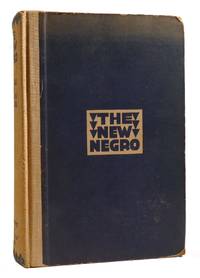
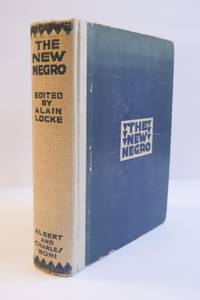
1925202261New York: Albert & Charles Boni 1925. First Edition; First Printing. Hardcover. Very Good bound in publisher's original blue paper-covered boards over buckram spine cloth lettered in blue. Rubbing along panel edges. Book decoration and illustrations by Winold Reiss. Albert & Charles Boni hardcover
195927452Paris Falaize 1959 In-4, mont sur onglets, maroquin rouge pigment de blanc, orn sur les plats d'empreintes pousses froid, dos sans nerfs; doublures et gardes de papier crme, non rogn, couverture illustre. Etui (Henri Mercher).Edition originale, illustre par Gianni Bertini de 4 lithographies originales en couleurs (dont 3 hors-texte) et de 6 compositions dont 2 reproduites sur la couverture (une en noir, une en couleurs) et 4 en in-texte. Tirage unique limit 100 exemplaires numrots sur vlin de Rives, signs par l'auteur et l'artiste. Exemplaire enrichi d'une composition originale l'encre de Chine, date et signe par l'artiste.
1925140945556New York: Albert and Charles Boni 1925. First Edition. Very Good. First edition. Bound in publisher's original blue paper-covered boards over buckram spine cloth lettered in blue. Very Good with with rubbing to boards especially at edges two indentations to rear cover at spine and a light crease the rear board at the top corner. Former owner bookplate to front free endpaper. Pages tanned with occasional soiling several preliminary hinges slightly over-opened. <p>The leading African American poets and writers of the early 20th century are featured in this important anthology which came to define the Harlem Renaissance movement: Langston Hughes Zora Neale Hurston James Weldon Johnson Countee Cullen Claude McKay Jean Toomer Georgia Douglas Johnson Jessie Fauset and more. Albert and Charles Boni unknown
1925140947068New York: Albert and Charles Boni 1925. First Edition. Very Good. First edition first printing of this Harlem Renaissance cornerstone. Bound in publisher's original blue paper-covered boards over buckram spine cloth lettered in blue. Very Good with rubbing through to edges with heavier wear to corners and spine ends covers worn. Contents tanned with several leaves roughly opened. <p>The leading African American poets and writers of the early 20th century are featured in this important anthology which came to define the Harlem Renaissance movement: Langston Hughes Zora Neale Hurston James Weldon Johnson Countee Cullen Claude McKay Jean Toomer Georgia Douglas Johnson Jessie Fauset and more. Albert and Charles Boni unknown
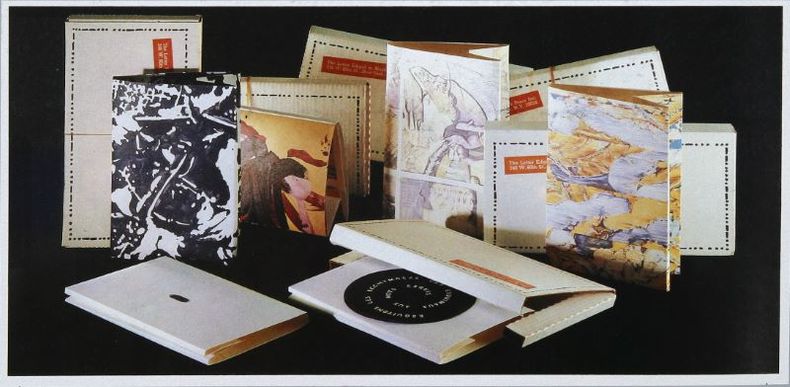
1968100144New York The Letter Edged in Black Press, 1968. 1968 6 17.8 x 27.9 cm. New York, The Letter Edged in Black Press, 1968. Six portefeuilles 178 x 279 mm, présentés dans leurs emballages postaux d’origine, contenant chacun un sommaire, pour un total de 73 multiples originaux.
19251405855New York: Albert and Charles Boni 1925. First Edition. Hardcover. Octavo xviii 446 pages. In Very Good condition. Bound in publisher's quarter tan cloth and navy blue paper boards with blue lettering to spine. General shelf wear with moderate to heavy rubbing along extremities. Some sunning and scratching to boards. Fading to red dye on top edge of textblock. With pink pictorial endpapers. Previous bookseller's sticker adhered to rear pastedown. Mild tearing to fore edges of pages xv-xviii. Light age toning with minor penciling scattered throughout. Shelved in Case 1. "The New Negro: An Interpretation" is an anthology of fiction poetry and essays on African-American and African art and literature. The title lent itself to The New Negro Movement a contemporary name for what is now commonly known as the Harlem Renaissance. Editor Alain LeRoy Locke was a leading figure in the Harlem Renaissance and a professor at HBCU Howard University in Washington DC. 1405855. Shelved Dupont Bookstore. Albert and Charles Boni hardcover
1961C86407<p>Le Point Cardinal. As New. 1961. Paperback. FREE UPGRADE to Courier/Priority Shipping Upon Request - IN STOCK AND IMMEDIATELY AVAILABLE FOR SHIPMENT - AS NEW THE TEXT BLOCK IS PRISTINE CLEAN UNMARKED AND IN EXCELLENT CONDITION - - Pages not numbered; illustrated. Catalogue Raisonné Catalogue Raisonne Catalog Raisonnee Œuvre Oeuvre -- with a bonus offer-- - May be EITHER: out of print OOP and extremely rare in this pristine condition; signed by author or contributor; or a first or special edition; inquire for details .</p> Le Point Cardinal paperback
197743553Paris Maeght 1977 In-8, box gris orn d'un dcor par la lettre compos du titre de l'ouvrage rparti sur le dos sans nerfs et le premier plat, parmi des dcoupes abstraites mosaques en relief de box gris; second plat portant les noms de l'auteur et de l'artiste pousss l'oeser rouge; doublures et gardes de daim rouge, tranches dores sur brochure, couverture imprime. Chemise, tui (Claude Honnelatre, 1992).Edition originale, illustre de 4 lithographies originales en couleurs hors texte signes de Jean Bazaine. Tirage limit 120 exemplaires numrots sur vlin d'Arches, signs par l'auteur et l'artiste. Un des 40 premiers exemplaires, seuls comporter une suite des lithographies tires sur japon nacr, chaque preuve numrote et signe par Bazaine.
183524626Paris Paulin 1835 2 volumes in-4, maroquin aubergine long grain, plats orns d'une grande plaque pousse froid dans un encadrement de filets dors, dos quatre larges nerfs orns en longueur de filets et fers romantiques pousss or, roulettes dores sur les coupes; encadrements intrieurs orns d'une roulette dore, doublures et gardes de papier moir lilas, tranches dores (Ysabeau).Ce livre marque la rnovation de la gravure sur bois par la technique du bois de bout. Premier tirage des 600 compositions graves sur bois d'aprs Jean Gigoux par les meilleurs graveurs de la jeune cole: Brvire, Lavoignat, Porret, Thompson, etc. Exemplaire exceptionnel, reli l'poque en deux volumes par Ysabeau qui tait tabli 5 rue du Pont-de-Lodi Paris durant la premire moiti du XIXe sicle et qui a sign les reliures au dos du premier volume.
197947239Paris Area Editeur 1979 In-4, box beige sur deux niveaux (en relief sur le tiers infrieur des plats et du dos sans nerfs) orn sur chaque plat d'un disque mosaqu en lige et recouvert d'un assemblage irrgulier de pierres brutes; doublures et gardes de daim beige, non rogn, couverture imprime. Chemise, tui (Colette et Jean-Paul Miguet, 1984).Edition originale, runissant 8 pomes, illustre par Pierre Fournel d'une composition originale estampe froid et d'une gravure originale en couleurs, toutes deux hors texte, justifies et signes par l'artiste. Tirage limit 560 exemplaires numrots sur vlin d'Arches. Un des 60 premiers exemplaires, seuls tre signs par l'auteur et l'artiste, et comporter 2 gravures originales supplmentaires hors texte en couleurs, galement justifies et signes par Pierre Fournel. Trs belle et dlicate reliure dcore de Colette et Jean-Paul Miguet.
1997C86635Claude Duthuit. As New. 1997. Hardcover. 2904852042 . FREE UPGRADE to Courier/Priority Shipping Upon Request - IN STOCK AND IMMEDIATELY AVAILABLE FOR SHIPMENT - Flawless copy brand new pristine never opened -- Text in French with portions also in English. 392 pages with many illustrations. Catalogue Raisonné Catalogue Raisonne Catalog Raisonnee Complete Works -- with a bonus offer-- - May be EITHER: out of print OOP and extremely rare in this pristine condition; signed by author or contributor; or a first or special edition; inquire for details . Claude Duthuit hardcover