SPINOZA, (Baruch de).Biblio.com
1 484 résultats
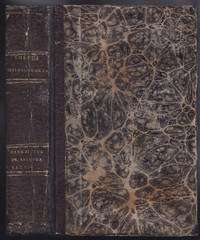
1633-14Stuttgart. Mezler 1830. gr.-8°. LXXVIII 664 S. Mit 2 Tafeln. Halbleder d. Zeit. Kanten berieben. - Corpus Philosophorum optimae notae qui ab restauratione litterarum ad Kantium usque floruerunt. Bd. 3 Enthält die erste Veröffentlichung Spinozas: "Principia philosophiae Cartesianae Pars I-III" weiters: "Cogitata metaphysica" und "Tractato theologico-politicus". Der zweite Teil enthält die posthum veröffentlichten Schriften Spinozas "Ethica ordine geometrico demonstrata" Tractatus politicus" "Tractatus de intellectus emendatione" und "Epistolae doctorum quorundam virorum".Teils mit Zwischentitelblättern auf dem Zwischentitelblatt für die posthumen Schriften ist das Datum der Erstausgabe von 1677 angegeben. Es entspricht auch textlich der Ausgabe von 1677 die von Jarig Jelles um 1620-1683 einem Amsterdamer Kaufmann unmittelbar nach dem Tod Spinozas herausgegeben und mit einem Vorwort versehen wurde. Stuttgart., Mezler 1830. unknown
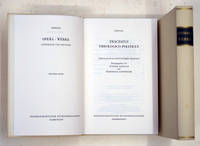
56188Wissenschaftliche buchgesellschaft Darmstadt 1989/67. 2nd/1st ed. 2 vols.of 4. XVII629;VII565p. Original off-white cloth. Spine with gilt-titled vignette. Upper edges a bit rust stained. Latin and German text. hardcover
89052-nnew. unknown
89052like new. unknown
19792080502107000715Iwanamishoten 1979. Soft Cover. Fine. Size: 15cm Number of books: 2 Iwanamishoten paperback
2026100124756Duckworth & co 2026. Bon état général couverture ternie rousseurs sur la tranche notes rares et peu marquées au crayon à papier dans les marges. in12. 2026. Cartonné. 62 pages. Duckworth & co unknown
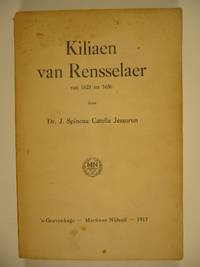
#[7125]'s Gravenhage Martinus Nijhoff 1917. Wrappers. 213XXII pp. Thesis. - Dealing with his set-up of his estate Rensselaerswyck near Albany. unknown
Spinoza Benedictus Etica : dimostrata secondo l'ordine geometrico di Bento de Spinoza. Torino, Bollati Boringhieri 2006 italian, 251 CR.25 Brossura editoriale, volume in discrete condizioni, copertina in buono stato, alcune sottolineature all'interno, legatura salda 251 pagine circaCopertina come da foto
In 8o, pp. 230, br. Parti I e II ed estratti delle parti III, IV e V con introduzione, commento e nota bibliografica a cura di Augusto Guzzo. Intonso. Ottimo (3439/SPINOZA - FILOSOFIA - ETICA)
In 8vo piccolo.Brossura editoriale. Intonso.Pp184
xviii + 448pp., Nouvelle édition revue et corrigée d'après l'édition de Heidelberg, 20cm., belle reliure demi-cuir
xix + 570pp., Nouvelle édition revue et corrigée d'après l'édition de Heidelberg, 20cm., très belle reliure demi-cuir avec titre doré aux dos, peu d'annotations sur qqs.pages, sinon en bel état
Mm 135x215 Brossura editoriale di pagine 303, a cura di P. Sensi. Timbro di rappresentanza editoriale alla prima carta, angolo del piatto posteriore tagliato. Opera in ottime condizioni. Spedizione in 24 ore dalla conferma dell'ordine.
pp.235 cm. 22x 14. Brossura. Nuovo
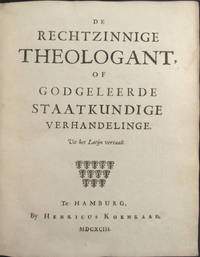
169329710Amsterdam: N.p.: Henricus Koenraad' i.e. Jan Rieuwiertsz jun. 1693. First edition in Dutch of TRACTATUS THEOLOGICO-POLITICUS the THEOLOGICAL-POLITICAL TREATISE. 8vo 16 x 20cm handsomely bound in full vellum with leather bands spine lettered in manuscript. xxviii 360 pp. A very fine and handsome copy of this very scarce first edition printing the text-block very fresh and clean a strong impression of the text the binding as pristine. FIRST ISSUE FIRST PRINTING OF THE VERY RARE DUTCH EDITION WHICH SPINOZA DID NOT WANT PUBLISHED OUT OF FEAR OF RETRIBUTION. QUITE ELUSIVE AND ONE OF THE MOST IMPORTANT PHILOSOPHICAL WORKS OF THE EARLY MODERN PERIOD. Baruch Spinoza is unquestionably one of the most important philosophers of all time -- and certainly perhaps the most radical of the early modern period. His thought combines a commitment to Cartesian metaphysical and epistemological principles with elements from ancient Stoicism and medieval Jewish rationalism into a nonetheless highly original system. His extremely naturalistic views on God the world the human being and knowledge serve to ground a moral philosophy centered on the control of the passions leading to virtue and happiness. They also lay the foundations for a strongly democratic political thought and a deep critique of the pretensions of Scripture and sectarian religion. Of all the philosophers of the seventeenth-century perhaps none have more relevance today than Spinoza.<br> Spinoza's aim in TRACTATUS THEOLOGICO-POLITICUS which he completed and published anonymously in 1670 was to prove that the stability and security of society is not undermined but rather enhanced by freedom of thought meaning primarily the freedom to philosophize. As is clear from the text he concluded that the primary threat to this freedom emanated from the clergy whom he accused of playing upon the fears and superstitions of people in order to maintain power. His solution was to divest the clergy of all political power even to placing authority over the practice of religion into the hands of the sovereign. The sovereign Spinoza argued should extend broad liberties within this domain requiring adherence to no more than a minimal creed that was neutral with respect to competing sects and the meaning of which was open to a variety of interpretations. This he hoped would allow philosophers the freedom to do their work unencumbered by the constraints of sectarianism. <br> As was to be expected the work was met with a firestorm of criticism. It was condemned as a work of evil and its author was accused of having nefarious intentions in writing it. Even some of Spinoza's closest friends were deeply unsettled by it. Though he had assiduously tried to avoid it Spinoza found himself embroiled in heated religious controversy and saddled with a reputation for atheism something he greatly resented. <br> Shortly after the publication Spinoza moved to the Hague where he was to live out his remaining years. Besides having to deal with fallout from this treatise he witnessed a political revolution that culminated in the murder by an angry Orangist-Calvinists mob of the Grand Pensionary of Holland Jan De Witt as well as his brother Cornelius. Spinoza admired De Witt for his liberal policies and was horrified by the murder. With the ascent of the Orangist-Calvinist faction he felt his own situation to be tenuous.<br> In the words of PRINTING AND THE MIND OF MAN ".The TRACTATUS THEOLOGICO-POLITICUS constituted an extension to political thought of his ethical views. Man is moved to the knowledge and love of God; the love of God involves the love of our fellow men. Man in order to obtain security surrenders part of his right of independent action to the State. But the State exists to give liberty not to enslave; justice wisdom and toleration are essential to the sovereign power. <br> Baruch Spinoza 1632-1677 scion of a leading Jewish family in Europe's most cosmopolitan city of the seventeenth century Amsterdam provided the intellectual architecture for a philosophic structure which would level current assumptions and conclusions. For his endeavors Spinoza was excommunicated by his own community and his name Baruch-Benedict which means blessed became anathema both in the community he left and the larger community he never entered. During his lifetime Spinoza's works were published anonymously and even his posthumously published Opera contains neither place nor date of publication. His rise to a central position in the drama of humankind's search for truth came slowly but inexorably as human reason came to be more and more relied upon over the ideas promulgated by an adherence to divine dogma. It is said that Thomas Jefferson would have been one of the first Americans to have accepted Spinoza as his spiritual kin. N.p.: Henricus Koenraad' (i.e. Jan Rieuwiertsz jun.) hardcover
16631005<p>First Edition of Spinoza's First Book – Explicating Descartes</p><p>SPINOZA Benedict. Renati Des Cartes Principiorum Philosophiæ Pars I & II More Geometrico demonstratæ per Benedictum de Spinoza per Amstelodamensem . Accesserunt Eiusdem Cogitata Metaphysica Rene Descartes' Principles of Philosophy Parts I & II Demonstrated According to the Geometric Method by Benedict de Spinoza of Amsterdam. the same followed by Metaphysical Thoughts Johannem Riewerts Amstelodami Amsterdam 1663. 1 blank leaf TP i-vii = Præfatio viii = Ad Librum ix-xiv = Index 1-90 91 = half-title 93-140 blank leaf; Small Quarto. First Edition in original paper wrappers Kingma-Offenberg 1.</p><p>This Spinoza's first work is the only one published during his lifetime that identified him as the author and had the correct information on the printer-publisher. Spinoza's next two works Tractatus Theologico-Politicus & Opera posthuma were very much his own radical thought rather than a reworking of Descartes ideas as here and so were necessarily published anonymously listing false information about the printer-publisher on the title page. The radical nature of Spinoza's thought and the dangers of publishing such materials in this time and place are brilliantly explained in Jonathan Israel's Radical Enlightenment Oxford 2001. Here Spinoza presents an exposition of Cartesian philosophy but he has recast it using his own geometrical method of reasoning and presentation. The origins of this work are interesting and clearly explained by the author himself in a letter to his friend Oldenburg written shortly after the book's publication: "Some of my friends asked me to make them a copy of a treatise containing a precise account of the Second Part of Descartes' Principia Philosophiæ 1644 demonstrated in the geometric style and of the main points treated in metaphysics. Previously I had dictated this to a certain young man to whom I did not want to teach my own opinions openly. They asked me to prepare the First Part also by the same method as soon as I could. Not to disappoint my friends I immediately undertook to do this and finished it in two weeks. I delivered it to my friends who in the end asked me to let them publish the whole work. They easily won my agreement on the condition that one of them Lodewijk Meyer in my presence would provide it with a more elegant Latin style and add a short preface warning readers that I did not acknowledge all the opinions contained in this treatise as my own since I had written many things in it which were the opposite of what I held and illustrating this by one or two examples. One of my friends to whose care the publishing of this little book has been entrusted has promised to do all this and that is why I stayed for a while in Amsterdam" Nadler Spinoza A Life 205. This rather straightforward – though completely reformatted – exposition of Descartes is followed by the Cogita Metaphysica 91-140 – with its own half-title page which is written from the Cartesian perspective defending for instance the freedom of the will but with some serious foreshadowing of Spinoza's later doctrines.</p><p>CONDITION: Very good in original brown paper wrappers most of backstrip lacking with wear to extremities. Woodcut illustr. to title-page and several woodcut mathematical and physical illustrations throughout. Annotations to both free end-paper. Some minor brownspotting and even light browning to leaves. A very nice and attractive copy of Spinoza's first book housed in a custom cloth archival box.</p> Johannem Riewerts paperback
200434511Focus Publishing/R. Pullins Co Incus. New. 2004. Hardcover. 1585101125 . FREE UPGRADE to Courier/Priority Shipping Upon Request - IN STOCK AND IMMEDIATELY AVAILABLE FOR SHIPMENT - FLAWLESS COPY PRISTINE NEVER OPENED -- 480 pages; clean and crisp tight and bright pages with no writing or markings to the text. -- TABLE OF CONTENTS: Translator's Remarks Acknowledgements Spinoza's Preface TEXT OF THEOLGOICO-POLITICAL TREATISE Spinoza's Annotations Glossary Interpretive Essay Selected Bibliography Indexes: Citations Names Terms. -- DESCRIPTION: A new and complete translation in English of this modern text with substantive apparatus to allow the student and serious reader to grapple in a meaningful way with this seminal text which Dr. Yaffe describes in his Translators Remarks: the philosophical founding-document of both modern biblical criticism and modern liberal democracy. As such it is also the philosophical founding-document of modern liberal religion. Tools in the text for the serious reader include the translation ample footnotes Spinozas annotations an interpretative essay glossary and other indices. REVIEW: "Professor Yaffe's learned study of the treatise and his interpretations of its significance are simply among the most intelligent studies that one may find - his devotion to researching the teachings of the treatise has encouraged the production of this new English translation of it which is unique and comprehensive.and is valuable to every reader of Spinoza at every level of ability. Indeed I have every confidence that his translated edition of the treatise together with the outstanding scholarly critical apparatus that it employs will be acknowledged universally as the best English translation and edition of the work available." -Paul J. Bagley President North American Spinoza Society. -- with a bonus offer-- . Focus Publishing/R. Pullins Co Inc,us hardcover
40609Darmstadt Wissenschaftl. Buchgesell. 1989. 8° XVII 629 u. 565 S. Kart. Exlibris u. Numm. a. Titelei. Bd. 1: Theologisch-politischer Traktat. Bd. 2: Abhandlung über die Berichtigung des Verstandes. Ethik. 010 Darmstadt, Wissenschaftl. Buchgesell., 1989 unknown
1977N2156Jerusalem: The Hebrew University 1977. Original Wrappers. Very Good. 8vo. 178pp22pp brochure attached. Occasional outside foxing A very good copy. <br/> <br/> The Hebrew University unknown
Paris, Vrin, 1968. Collection "Bibliothèque des Textes Philosophiques". Un volume broché de format in 8° de 116 pp. Bel état.
WELLER9780691193243New. New book. unknown books
1915023243Amsterdam: Cohen Zonen 1915. Vertaald door J. C. Logemann. 276p. original blue cloth. Cohen Zonen unknown books
1915023244Amsterdam: Wereld Bibliotheek 1915. Vertaald ingeleid en toegelicht door Nico Van Suchtelen. xiv 346p. 2 b/w illus. original tan cloth. Wereld Bibliotheek unknown books
1923023245Amsterdam: S. L. Van Looy 1923. 3e Druk. Uit het latijn door W. Meijer. liv 33p. b/w front. original half-cloth with printed boards. S. L. Van Looy unknown books
1966023248New York: Philosophical Library 1966. Edited and with a preface by Dagobert D. Runes. 109p. dj. Philosophical Library unknown books