58 résultats
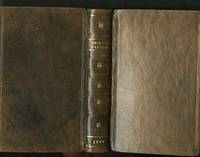
15265283(Am Ende): Venedig, de Sabio, 1526. 4 nn. Bll., 107 num. Bll. mit wdh. Druckermarke in Holzschnitt. Gr.-4°. HPgmt des 17. Jahrhunderts mit hs. Rückentitel (etw. bestoßen und fleckig).
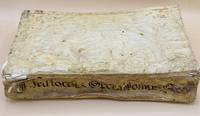
1514104082Venice: Gregorium de Gregorijs 1514. Rare 16th century printing of Aristotle's Posterior Analytics; bound together with Spanish Franciscan theologian Antonius Andreas's best known work Quaestiones super XII libros Metaphysicae Aristotelis. Quarto bound in contemporary parchment over handmade paper-covered boards woodcut initials text in two columns. In very good condition. A rare and desirable collection. The Posterior Analytics is a text from Aristotle's Organon that examines demonstration definition and scientific knowledge. In the work Aristotle distinguishes 'demonstration' as a syllogism productive of scientific knowledge and 'definition' as the statement of a thing's nature: the meaning of its name or of an equivalent nominal formula. In the Prior Analytics syllogistic logic is considered in its formal aspect; in the Posterior it is considered in respect of its matter. The "form" of a syllogism lies in the necessary connection between the premises and the conclusion. Aristotle concludes the book with the way the human mind comes to know the basic truths or first principles which are not innate because people may be ignorant of them for much of their lives. Of all types of thinking scientific knowing and intuition are considered as only universally true where the latter is the originative source of scientific knowledge. Gregorium de Gregorijs hardcover
1514104082Venice: Gregorium de Gregorijs 1514. Rare 16th century printing of Aristotle's Posterior Analytics; bound together with Spanish Franciscan theologian Antonius Andreas's best known work Quaestiones super XII libros Metaphysicae Aristotelis. Quarto bound in contemporary parchment over handmade paper-covered boards woodcut initials text in two columns. In very good condition. A rare and desirable collection. The Posterior Analytics is a text from Aristotle's Organon that examines demonstration definition and scientific knowledge. In the work Aristotle distinguishes 'demonstration' as a syllogism productive of scientific knowledge and 'definition' as the statement of a thing's nature: the meaning of its name or of an equivalent nominal formula. In the Prior Analytics syllogistic logic is considered in its formal aspect; in the Posterior it is considered in respect of its matter. The "form" of a syllogism lies in the necessary connection between the premises and the conclusion. Aristotle concludes the book with the way the human mind comes to know the basic truths or first principles which are not innate because people may be ignorant of them for much of their lives. Of all types of thinking scientific knowing and intuition are considered as only universally true where the latter is the originative source of scientific knowledge. Gregorium de Gregorijs hardcover books
1576A19332Ferrariae, Ex typis haeredum Francisci Rubei, 1576. 4°. 12 S., 475 S. Flexibler fragmentarischer Pergamentband, dessen (fehlender) Rücken mit einen Streifen (11 cm breit) aus einem zeitgenössischen Antiphonarblatt bezogen ist. Berieben und fleckig, ohne die Schlaufen. Titelblatt rechts unten mit 7 x 10,5 cm großem Ausschnitt sowie mit hs. Vermerk: »Libraria della Concettione di Capuccini di Napoli«. Hs. Signaturen auf Vorsatz. Erste Seiten teils stärker angerändert, sonst innen sauber. Ordentliches Exemplar.
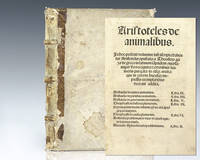
1525133419Venetiis: Octaviani Scoticiuis 1525. Rare early 16th century Venetian printing of Aristotle's pioneering work on zoology which had a powerful influence on zoology for over two thousand years. Folio bound in full vellum illustrated with woodcut initials. In very good condition. Deaccessioned from the Harvard College Library with their stamps and bookplate. Written in the fourth century B.C.E. Aristotle's History of Animals had a powerful influence on zoology for some two thousand years. Generally seen as a pioneering work of zoology Aristotle frames his text by explaining that he is investigating the what the existing facts about animals prior to establishing the why the causes of these characteristics. The book is thus an attempt to apply philosophy to part of the natural world. Throughout the work Aristotle seeks to identify differences both between individuals and between groups. The work contains many accurate eye-witness observations in particular of the marine biology around the island of Lesbos such as that the octopus had color-changing abilities and a sperm-transferring tentacle that the young of a dogfish grow inside their mother's body and that the male river catfish guards the eggs after the female has left. Some of these were long considered fanciful before being rediscovered in the nineteenth century. It continued to be a primary source of knowledge until in the sixteenth century zoologists including Conrad Gessner all influenced by Aristotle wrote their own studies of the subject. Octaviani Scoticiuis hardcover
152014721Augsburg: Grimm & Wirsung 1520. Printed throughout in Roman letter of various sizes and mostly in double columns. First title page in red and black; heraldic woodcuts on second and third titles devices initials and text diagrams throughout. Final leaf with large woodcut of Saint Catherine on colophon is in facsimile on contemporary paper. Old vellum new endpapers; occasional stains and a few wormholes. This edition of Aristotle’s scientific works on the motion of heavenly bodies his physics meteorology on the process of birth and generation and on the soul of man was brought together by Johann Eck 1486-1543 and here first printed in Augsburg by Grimm and Wirsung. This is also the first time the beautiful heraldic woodcuts were used. Research suggests that the artist could be Hans Burgkmair who worked in Augsburg at the time the book was printed. Another source indicates the woodcuts could be by the “Petrarca-Master†or that Books 2 and 3 were done by Hans Weiditz.<br /> <br /> See F. Edward Cranz A Bibliography of Aristotle Editions 1501-1600: 107.846 p. 17; 107. 853 p. 18; 107.864 p. 19; Proctor 10873 10900 10914; VD16 A 3563 33793334; Metzler Eck 16 22 34. Grimm & Wirsung unknown
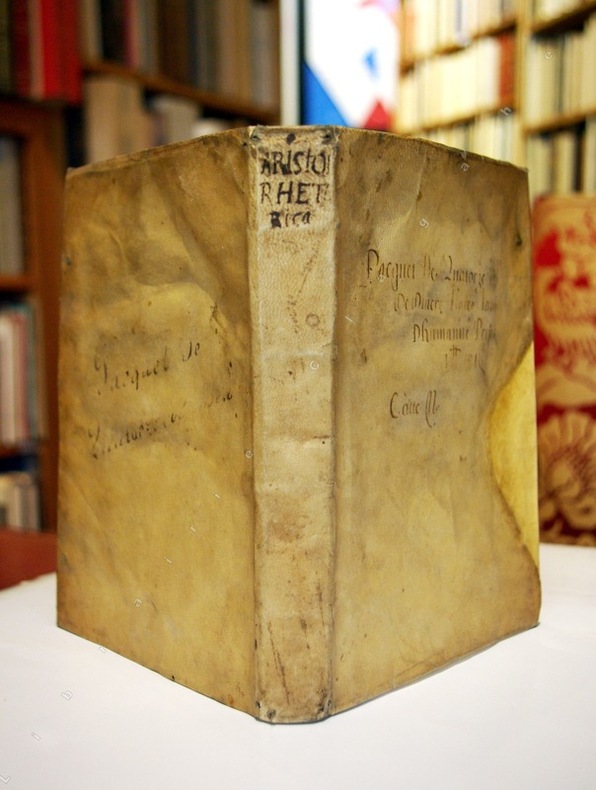
154866468Basileæ Basel: Ex Officina Joan. Oporini Joannes Oporinus 1548. Good. Second volume of a work in three volumes. 667pp. Quarto 33 cm Mid-17th-century vellum binding likely Spanish but possibly Italian. Bold manuscript title on the spine. Gauffered edges. With tanned skin sewing supports. Initial letters. Text block hanging on to wraps by a single leather cord. Missing title page and prefatory pages to Aristotle's work on auscultation. Text block cracked a couple of times at the rear. Light marginal tidemarks to the preliminary pages. Occasional manuscript notations. Pages exceptionally bright. Latin text.<br /> <br /> Contents:<br /> <br /> Aristotelis Stagiritae Physicae Auscultationis Io. Argyropylo Byzantio Interprete: Liber Primus; Liber Secundus; Liber Tertius; Liber IIII; Liber V; Liber VI; Liber VII; Liber VIII.<br /> <br /> Aristotelis Stagiritae De Coelo Io. Argyropylo Byzantio Interprete: Liber Primus; Liber Secundus; Liber Tertius; Liber Quartus.<br /> <br /> Epistola Nuncupatoria ad Leonem.<br /> <br /> Aristotelis Stagiritae Peripa Teticae Disciplinae Autoris: Liber De Generatione & Interitu Prior Latinus á Petro Alcyonio factus; Liber De Generatione et Interitu Posterior Latinus á Petro Alcyonio factus.<br /> <br /> Petrus Alcyonius Antonio Prato S. P. D.<br /> <br /> Aristotelis Stagiritae Meteoron Petro Alcyonio Interprete: Liber Primus; Liber Alter; Liber Tertius; Liber Quartus.<br /> <br /> Aristotelis Stagiritae De Anima Ioan Argyropylo Byzantio Interprete: Liber Primus; Liber Secundus; Liber Tertius.<br /> <br /> Petri Alcyonii In Libros Decem Aristotelis De Animalibus Se Autore Latinos Praefatio Ad Octavium Pregosium.<br /> <br /> Aristotelis Stagiritae De Sensu et Sensilibus Aut De Communibus Animae et Corporis Functionibus Liber Eodum Petro Alcyonio Interprete.<br /> <br /> Aristotelis Stagiritae De Memoria et Reminiscentia Liber Eodum Petro Alcyonio Interprete.<br /> <br /> Aristotelis Stagiritae De Somno Liber Eodum Petro Alcyonio Interprete.<br /> <br /> Aristotelis Stagiritae De Somniis et Imaginibus Liber Eodum Petro Alcyonio Interprete.<br /> <br /> Aristotelis Stagiritae De Communi Animalium Motione Liber Eodum Petro Alcyonio Interprete.<br /> <br /> Aristotelis Stagiritae De Communi Animalium Gressu Liber Eodum Petro Alcyonio Interprete.<br /> <br /> Aristotelis Stagiritae De Diuturnitate et Brevitate Vitae Liber Eodum Petro Alcyonio Interprete.<br /> <br /> Aristotelis Stagiritae De Spiratione Liber Eodum Petro Alcyonio Interprete.<br /> <br /> Theodori Gazae Thessalonicensis In Libros Aristotelis De Animalibus.<br /> <br /> Aristotelis Stagiritae De Historia Animalium Theodoro Gaza Interprete: Liber Primus; Liber Secundus; Liber Tertius; Liber Quartus; Liber Quintus; Liber Sextus; Liber Septimus; Liber Octavus; Liber Nonus.<br /> <br /> Aristotelis De Partibus Animalium et Earum Causis Theodoro Gaza Interprete: Liber Primus; Liber Secundus; Liber Tertius; Liber Quartus.<br /> <br /> Aristotelis Stagiritae De Generatione Animalium Theodoro Gaza Interprete: Liber Primus; Liber Secundus; Liber Tertius; Liber Quartus; Liber Quintus.<br /> <br /> Aristotelis Problematum Sectiones Duædequadraginta Theodoro Gaza Interprete. The second volume of Aristotle's works published by Joannes Oporinus containing the following works: On Auscultation; On the Heavens; On Coming-to Be and Passing Away; Meterology; On the Soul; On Sense and the Sensible; On Memory and Recollection; On Sleep; On Dreams and Images; On the Common Motion of Animals; On the Common Gait of Animals; On the Longness and Shortness of Life; On Breathing; On the History of Animals; On the Parts of Animals and Their Causes; On the Generation of Animals; Aristotle's Problems Section.<br /> <br /> Aristotle 384-322 B.C.E. was born in Stagira in northeastern Greece. He ranks among the greatest philosophers of all time. His works defined centuries of philosophy from Late Antiquity through the Renaissance and are still considered relevant today. A remarkable researcher and writer Aristotle produced nearly two-hundred treatises from which about thirty-one survive. His extant writings cover an extensive range of disciplines including logic metaphysics and philosophy of mind ethics political theory and aesthetics and rhetoric. In addition Aristotle's works explore non-philosophical realms as well such as empirical biology where he provided detailed animal and plant observation and description.<br /> <br /> A scholarly work in a striking vellum binding. Ex Officina Joan. Oporini (Joannes Oporinus) unknown
159439275Coloniae 1594. ad varias quaestiones et Philosophiam naturalem cognescendas in primis utilia Einband unter Verwendung einer mittalterlichen Handschrift.Lederbändel als Schliessen.Rara Officina Birckmann Arnold Mylij 16°. Ldr. d. Zt. Philosophie unknown
153632482Venetiis Venice: Aldus In aedibus haeredum Aldi et Andreae Asulani soceri 1536. First Edition. Hardcover. iiii i 6-28 numbered leaves 26 numbered leaves 1 2 unnumbered leaves including index errata colophon and printer's device. Aldus engraved printer's device to title page and and verso of last leaf. Later full calf tooled in gold on the sides spine with gilt decorations and red morocco label lettered in gold all edges gilt marbled endpapers gilt inner dentelles. This exceedingly scarce title is extremely important in the history of humanist literature and marks Aristotle's influence on literature from the time of the Renaissance through the period of Romanticism. The rediscovery of the Greek philosopher's Poetics in the early 1500s had a profound impact on literary theory especially in poetry. The volume includes the Greek text plus Alessandro Pazzi's influential Latin translation and two fascinating prefatory letters. With the neat bookplate of noted translator and folklore aficionado Charles James Billson on the front pastedown endpaper. Internally extremely clean except for a small stain on the front free endpaper and to the top edge of the first few leaves. There are some old very faint annotations to the margins on some of the leaves. An extremely charming copy. Graesse I.213. "Ce petite volume est fort rare." Renouard Annales de l'imprimerie des Alde p. 275. ; Small octavo. Aldus (In aedibus haeredum Aldi, et Andreae Asulani soceri) hardcover
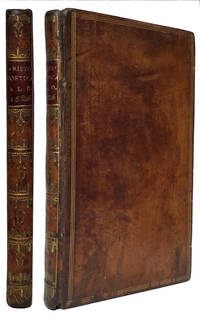
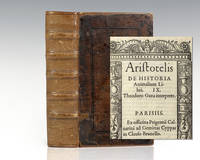
1542133014Parisiis: Ex officina Prigentii Caluarini ad Geminas Cyppas in Clauso Brunello 1542. Rare 16th century French printing of Aristotle's pioneering work on zoology which had a powerful influence on zoology for over two thousand years. Octavo bound in full polished calf engraved title pages. Rebacked. In very good condition. Written in the fourth century B.C.E. Aristotle's History of Animals had a powerful influence on zoology for some two thousand years. Generally seen as a pioneering work of zoology Aristotle frames his text by explaining that he is investigating the what the existing facts about animals prior to establishing the why the causes of these characteristics. The book is thus an attempt to apply philosophy to part of the natural world. Throughout the work Aristotle seeks to identify differences both between individuals and between groups. The work contains many accurate eye-witness observations in particular of the marine biology around the island of Lesbos such as that the octopus had color-changing abilities and a sperm-transferring tentacle that the young of a dogfish grow inside their mother's body and that the male river catfish guards the eggs after the female has left. Some of these were long considered fanciful before being rediscovered in the nineteenth century. It continued to be a primary source of knowledge until in the sixteenth century zoologists including Conrad Gessner all influenced by Aristotle wrote their own studies of the subject. Ex officina Prigentii Caluarini ad Geminas Cyppas in Clauso Brunello unknown
1530047158Paris: Simonem Colineum 1530. Early Edition. Hardcover Full Leather. Good Condition. Rebound in modern calf in an antique style scattered minor foxing dampstains generally clean internally. Notes and underlining in a contemporary hand scattered through. Lacking the final 6 leaves but a nice example of Parisian scholastic printing - most early Paris printings of Aristotle were in folio but Paris was becoming a center of scholasticism and turning out 8vo and 12mo editions of important works. 175 of 181 leaves.<br /> <br /> George of Trebizond 1395-1486 was a Byzantine humanist who moved to Italy during the Renaissance there and edited and translated a number of works of philosophy and of the Church fathers. Size: Octavo 8vo. Quantity Available: 1. Shipped Weight: Under 1 kilo. Category: Philosophy; Inventory No: 047158. Simonem Colineum hardcover
15551805240137Paris: Parisiis: Guil. Morelius apud Adrianum Turnebum typographicus Regium 1555. Hardcover. Good. Aristotle's Nicomachean Ethics in 10 books. Bound in 17th century morocco. 6 raised bands gilt ruled. Front hinge cracked. Gilt stamping to front board. All edges marbled. Marbled end pages. Small folio 29 cm. 4 253 1 pages. Text printed in parallel columns Greek and Latin. Pages generally unmarked. Minor toning. Some faded early marginalia. Adams A1810; BM STC French 1470-1600; p. 26. Colophon: Excudebat et cum graecis latina coniungebat Guil. Morelius M.D. LV. xii. Cal. Martias. <br> Book plate of Leon J Agourides "Knowledge is power." <br> Other titles: Aristotelis de moribvs ad Nicomachvm Lib. X. Aristotelis De moribus ad Nicomachum lib. XDe moribus ad Nicomachum lib. X Parisiis: Guil. Morelius, apud Adrianum Turnebum typographicus Regium hardcover
1585012628Francofurdi: Apud heredes Andreae Wecheli 1585. Book. Good- condition. Hardcover. Early edition. Quarto 4to. iv 318 pages of text. Rebound in circa 1920 cloth which is slightly worn and soiled. The entirety of the text is damp-stained and the first and final few pages are heavily discolored. Minor worming to final few pages of index repaired. Previous owner's name on the front pastedown endpaper and the occasional notation mark in the text. Title page is in Greek and Latin; text in Greek; annotations in Latin. Title continues ".Latinum & Graecum." Edited by Friedrich Sylburg 1536-1596. Apud heredes Andreae Wecheli Hardcover
15466888Lugduni: Apud Seb. Gryphium 1546. Octavo 18 x 11 cm. 67 1 pages. Signatures: aa-dd8 ee2. Text in Latin. Illustrated with woodcuts including a title vignette and initials. Cuts title vignettes initials. Some age-toning bounding full limp vellum; untitled. Near fine. Rare. OCLC locates seven copies; Baudrier Bibliographie des Livres imprimés à Lyon VIII 200; Cranz 108.117. Apud Seb. Gryphium hardcover books
1585012628Francofurdi: Apud heredes Andreae Wecheli 1585. Book. Good- condition. Hardcover. Early edition. Quarto 4to. iv 318 pages of text. Rebound in circa 1920 cloth which is slightly worn and soiled. The entirety of the text is damp-stained and the first and final few pages are heavily discolored. Minor worming to final few pages of index repaired. Previous owner's name on the front pastedown endpaper and the occasional notation mark in the text. Title page is in Greek and Latin; text in Greek; annotations in Latin. Title continues ".Latinum & Graecum." Edited by Friedrich Sylburg 1536-1596. Apud heredes Andreae Wecheli Hardcover books
1530047158Paris: Simonem Colineum 1530. Early Edition. Hardcover Full Leather. Good Condition. Rebound in modern calf in an antique style scattered minor foxing dampstains generally clean internally. Notes and underlining in a contemporary hand scattered through. Lacking the final 6 leaves but a nice example of Parisian scholastic printing - most early Paris printings of Aristotle were in folio but Paris was becoming a center of scholasticism and turning out 8vo and 12mo editions of important works. 175 of 181 leaves.<br/><br/>George of Trebizond 1395-1486 was a Byzantine humanist who moved to Italy during the Renaissance there and edited and translated a number of works of philosophy and of the Church fathers. Size: Octavo 8vo. Quantity Available: 1. Shipped Weight: Under 1 kilo. Category: Philosophy; Inventory No: 047158. Simonem Colineum hardcover books
15608656Lyon: Haeredes Jacobi Juntae 1560. Later printing. Vellum. Very good. 16mo. 8426pp. With the leaf of colophon following p. 842 and the 2 final blank leaves. Printer's device on title. Bound in 19th century vellum marbled paper on both covers. Spine label abraded. Aristotle's text on natural history. A separate issue of Vol. 4 of the works of Aristotle published by the same press in the same year. Translation from the Greek by T. Gaza J. B. Felicianus N. Leonicus Thomaeus and Georgius Valla. Haeredes Jacobi Juntae hardcover books
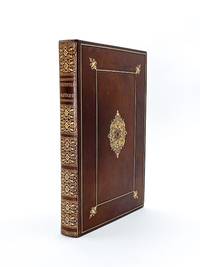
159854462London: Adam Islip 1598. Very good plus. First edition in English of one of the most influential political treatises in history. The works of Aristotle especially his ETHICS and companion POLITICS were considered foundational reading for any educated person from the Renaissance forward: all modern philosophers working in the Western tradition build upon or react against his work from Thomas Hobbes and John Locke to Karl Marx. According to Randolph Greenfield Adams "There are indeed few fields of thought in which it is so true that the would-be contributor finds that his 'contribution' has already been made by someone else and almost certainly by Aristotle as it is in the field of politics" 132. His POLITICS has had a direct impact on major historical turning points such as the American Revolution which was characterized by putting Aristotle's "theories and doctrines into practice" 134. <br /> <br /> Central to Aristotle's approach in this book is the idea that "man is by nature a political animal" Rackham translation. His conclusions rarely match today's views yet POLITICS "offers every reader entry into reflection on political life by raising fundamental questions: What is the aim of political community Why should some people govern others Who should count as a citizen" Deslauriers & Destrée 3. As the editors of PRINTING AND THE MIND OF MAN put it "his method still underlies all modern thinking." Folio 10.75'' x 7.25''. Modern period-style full brown goatskin gilt rules central gilt ornaments and cornerpieces elaborately gilt-stamped spine. Red speckled edges. Illustrated with woodcut initials and head- and tailpieces. Text collated complete lacking first and final blanks A1 NN6 as common. Table of chapters and errata at rear. 30 393 4 1 pages. A few early ink annotations in Latin. Two leaves T5 CC5 with corner folds before trimming. Some gatherings toned light spot of soil to title page a few leaves at beginning and end with archival paper repairs at margins. Adam Islip unknown
158414506Francfort, Héritiers de André Wechel, 1584 ; in-4 ; plein vélin ivoire de l'époque, titre manuscrit au dos ; 341 pp., (1) p. corrigenda, (1) f. blanc. Texte grec jusqu'à la page 258 puis Annotations en latin sur deux colonnes et Index.
155567038Venice:: I. Gryphius 1555. contemporary limp vellum. Marginal worming to Biii - Diiiii; vellum soiled and a little worn; fragments of leather ties present. . Folio. Engraved vignette on title page and a few text illustrations. A few old marginal annotations associated with underlined text. I. Gryphius, hardcover
1559D11175Venice: apud Hieronymus Scotum Scotus 1559. Hardcover. Very Good. Folio 315 x 215mm. 2 137pp. 1. Signatures: A-Q4 R6. Woodcut profile bust of Aristotle on title with dedication Peripateticae Disciplina Principis Vera Aristotelis Stagiritae Effigies. Final leaf with woodcut printers device of Scotus classical muse atop star sphere with motto Fiat pax in virtute tua Let there be peace in your walls. Latin translation by Girolamo Bagolino of Verona c. 1470-1535 professor of philosophy at Padua. Text in double column. Italic and Roman type. 18th-century marbled boards modeled to resemble tree-calf; hole through opening leaves causing some text loss title with minor stains hinges starting p. 135 folded corner repaired clean tear in blank portion of last leaf. The clipped booklabel of Seminarium Mutinense pasted on the title fittingly connects this copy to the Jesuit Seminary library in Modena in the Provincia Veneta which was also a center for study popularly called a Collegium. Sixteenth-century editions of Philoponuss Aristotelian explanations have a major place in the commentarial tradition and philosophy of the Renaissance. <br/><br/>1559 Scotus edition of Philoponuss commentary on the De Generatione et Corruptione of Aristotle; a beautifully produced Venetian work still in good form. John Philoponus also known as John the Grammarian was a Byzantine-era Aristotelian commentator and author of several philosophical treatises. The first Latin translation of Philoponuss commentary on Aristotles treatise De Generatione et Corruptione seems to be the one made by Hieronymus Bagolinus from the Aldine edition of 1527 first published in Venice by Hieronymus Scotus in 1540; the second made by Andrea Silviuis was published by Valgrisius in 1564. This is Scotuss fourth edition of 1559 in which he states errors of the first and the second edition are purged thus repeating the title found in the third. It precedes a fifth and final edition of 1568. Philoponus presents his commentary as notes taken from the seminars of Procluss student Ammonius c. 435-526 AD together with certain remarks of my own; Philoponuss is an elaborate exposition of Aristotelian theory followed by several criticisms which are answered with sophistication. To history this commentary has always been received as a school work but it was an interesting book to early scholars for it was supposed to have been written before 529 terminus post quem - hence before Philoponuss writings became entrenched in Christianity and creationist views. Like most ancient commentaries this one maintains certain importance for the constitution of the text on which it comments. Scotuss publications were widely regarded as elegant productions; wide-format and designed with attractive typeface this refined style was typical on the Venetian marketplace at this time. apud Hieronymus Scotum (Scotus) hardcover books
1569D11176Venice: Hieronymus Scotum Scotus 1569. Hardcover. Very Good. Folio 315 x 215mm. 2 150pp. 2. Signatures: A-I 8 K4. Io. Grammatici in cartouche at head of title page. Woodcut profile bust of Aristotle on title with dedication Peripateticae Disciplina Principis Vera Aristotelis Stagiritae Effigies. Final leaf with woodcut printers device of Scotus of griffin in animated cartouche head-pieces and initials throughout. Text printed in double columns. Italic and Roman type. Original limp vellum vertically ruled in brown ink to front cover; edges slightly curled minor marginal dampstaining at beginning and end otherwise clean. Near contemporary ownership inscriptions in Latin on front flyleaf mostly faded but name and order of at least two young men Salvatoris and Bartolomei are given. 19th century stamp of the Seminario Vescovile of Volterra on title. The Tuscan Jesuit Seminary dedicated to Saint Andrew employed student novices throughout its history and one would have likely used this copy. Interestingly the seminary is still active today and maintains lodgings for travelers. This copy is further enhanced by a full-page pencil doodle of a mythological composition muses putti and foliate boughs on the rear flyleaf probably completed in the seventeenth century. <br/><br/>The last 1569 Scotus edition of Philoponuss commentary on the Posterior Analytics of Aristotle; an example-laden investigatory explanation on the classification of scientific knowledge Byzantine-era Philoponuss comments on the Posterior Analytics of Aristotle are interesting especially for their metaphysical analysis of the universal idea his account revealed his beliefs in Platonic forms as inherently part of the Divine Intellect. In his further reading of the Posterior Analytics Philoponus aimed to share his understanding of the concept of subordinate sciences which are sciences that can be classified by genus and species. A notion he supported was the idea that some sciences depended on higher ones for some of their principles Philoponus even goes as far to suggest formulating a taxonomy of the sciences. He maintains that philosophy dialectic and all the sciences employ common axioms regarding philosophy in particular it discovers and demonstrates the very principles of every science. Importantly Philoponus decided to take on this work because he thought that Aristotles concepts were too difficult and needed explanation. It was not the first he was indebted to the earlier work of Theophrastus and Galen but Philoponuss work is the earliest to survive. Philoponuss train of thought is frequently obscure and much of the discussion being carried out chooses investigatory examples over blatant argument. He wished to expound the meaning of the Aristotelian text rather than raising objections. It is clear Philoponus engages vigorously with the earlier commentators on the Posterior Analytics thus like most ancient commentaries this one maintains certain importance for the constitution of the text on which it comments. Scotus a prominent Venetian printer and elegant producer of texts was actively publishing a line of these philosophical treatises which were frequently revised and reprinted. The first Latin translation by Theodosius was published in 1539 and was reprinted frequently until 1569. This work remains important to the evolving tradition of early sixteenth century Italian university logic. Rare in North America OCLC lists holdings for this edition only at University of Oklahoma as part of the History of Science Collection. Hieronymus Scotum (Scotus) hardcover books
156643521566 Ethique à Nicomaque d'Aristote suivie des Fragments de Pythagore. Edition bilingue Grec et Latin. Ioannem Oporinum, Eusebium Episco, Basileae (Bâle, Basel), 1566. In-4 reliure du XIXe siècle, demi veau glacé olive, quatre faux nerfs, filets dorés et à froid, titre et date, dentelles en tête et en queue, tranches jaspées, page de titre, [3ff.], 487 pages chiffrées mais manquent les pages 1 à 8, dont 4 pp. intercalées entre p.8 et p.9 [erreur numérotation], inversion de l'imprimeur entre les pages 217 et 224, [13ff.] d'index, manque la fin de l'index, léger travail de vers sur les 4 premières pages (sans atteinte au texte), mors fendus en queue.
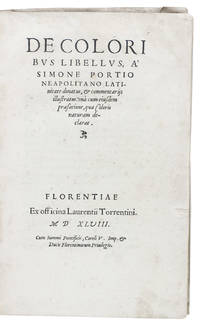
1548642CKI1RIA1QFlorence 1548. 4to. Lorenzo Torrentino Contemporary limp sheepskin parchment straight sewn on 3 wittawed thongs laced through the joints manuscript title down the spine with 4 fragments of a Latin manuscript in an upright humanistic hand on vellum used as spine lining. With 2 large woodcut historiated initials and a vine leaf ornament by Granjon Vervliet 178: 1st recorded in this year. Set in roman types with whole paragraphs in Greek 2 sizes and the dedication and some end matter in italic. 197 3 pp. First edition of one of the earliest printed books about colour translated from the Greek into Latin and with commentary by the Neapolitan physician and philosopher Simone Porzio 1497-1554. Usually attributed to Aristotle it is now thought to be the work of the peripatetic scholar and pupil of Aristotle Theophrastus.''As the author states at the end of the treatise it is intended rather to supply data for a detailed examination into the scientific theory of colour than to expound a complete thesis. He has realized that the development of colour in animals and plants depends to some extent on heat and he seems to suggest that heat and moisture are the controlling factors. It is of more value as a collection of observed facts than for any theory of the origin and development of colour in physical life'' Aristotle Minor Works Cambridge and London Loeb Classical Library 1936 p. 3.With some spotting on the title-page and some marginal tears not approaching the text but otherwise in very good condition and with large margins. Binding with the sewing supports broken a tear in the backstrip and some small stains. An important treatise on colour and one of the earliest.l Adams P1958; Caillet 8881; EDIT16 CNCE 16133; Hoffman I 289 "rare and very important"; Kemp The science of art p. 264; Schwab Bibliographie d'Aristotle 3503; USTC 803281. hardcover
1545D11150Venice: Hieronymus Scotus 1545. Hardcover. Very Good. 8vo 157 x 106mm. 8 307pp. 13 leaves including final blank. Woodcut printers device of Scotus with personification of globe and motto FIAT PAX IN VIRTUTE Peace be with thee. Latin translation by Theodore Gaza. 12-line woodcut historiated initials at beginning of first chapter and at beginning of the Universalis generationis partitio. p. 224 of heraldry. Few woodcut initials throughout. Contemporary vellum; worn; spine and covers darkened; scattered stains worming affecting title next leaf and last 3 leaves; edges stained brown and gauffered to floral pattern. Sound copy enhanced by Latin marginalia in an contemporary hand. The Renaissance public as a part of their reading system frequently engaged Aristotles natural writings. Even at the height of this period at a time when Theodore Gaza had already produced his celebrated versions of Aristotles zoological corpus these works obtained wide recognition. <br/><br/>Aristotles zoological works edited by Theodore Gaza with Italian Renaissance commentary sparked on by the availability of Gazas text. Gazas version of the treatises were paraphrases of Aristotles zoological works but also included personal observations and information drawn from the other authors. Gaza in fact held a virtual monopoly on the biological works of Aristotle his translation completely overshadowing those before him and especially of his rival George of Trebizond. Gazas text had been used mainly as a source of quotations and only in philological and medical works such as Castigationes plinianae by Ermolao Barbaro or Benedettis Historia corporis humani. By 1521 starting with a course on the De Partibus animalium held in Bologna did the official Renaissance tradition of interpretation on Aristotles zoology take form. The Latin text which contributed to this renewed interest was none other than the elegant translation by Gaza. University Aristotelianism specifically that concerning the zoology was approached by the various interpreters in the context of systematic exploration of the encyclopedic work as a whole. The ample annotations of this volume showcase precisely this type of interaction with the evolving conversation. Gazas work throws light on Renaissance Aristotelianism carried out through the grid of scholastic commentary. Hieronymus Scotus hardcover