4 536 résultats
152253365Mainz: J. Schöffer 1522. First Mainz edition. Octavo. 562 2: colophon blankpp. Collation: A-Z8 Mm8 chi2 O4/O5 reversed complete. Title within historiated woodcut border. Woodcut initials throughout. Text in italics. Printed side-glosses. Errata at final text leaf. Contemporary beveled wooden boards backed in tooled pigskin; spine with raised bands. Brass catch and clasp with expert restoration of leather thong. Contemporary manuscript musical scores used as pastedowns at front and back. Seven leather stubbs affixed at front edge as indexes. Occasional faint smudging mostly at margins else text crisp and fresh. A very good copy in a well-preserved sixteenth-century binding with a notable provenance.<br /> <br /> Scarce very early collective edition of the Latin "Paraphrases" of the Pauline Epistles prepared by the celebrated humanist scholar theologian and educational writer Desiderius Erasmus of Rotterdam 1466-1536. Preceded by the Froben collective editions of 1520 and 1521 this first and only edition of the Pauline Epistle Paraphrases to be printed at Mainz was issued by Schöffer in two parts each with full title and separate register and pagination; our volume contains the first part only: the Epistles to the Romans; Corinthians 2; Galatians; Ephesians; Philippians; Colossians; and Thessalonians 2.<br /> <br /> "In the vast and sustained labour he devoted to the New Testament Erasmus saw the culmination of his commitment to scholarship. and nothing else he wrote not even the Moriae encomium was to have so great an influence on posterity. The first edition of the New Testament appeared in 1516 and was followed in his lifetime by four more 1518/10 1522 1527 1535 each newly revised. Each consisted of the Greek text Erasmus' translation thereof and a copious apparatus of notes Annotations published as a separate volume. Beginning in 1517 he also published a Paraphrase of all parts of the New Testament save Revelation. Written in smooth and comprehensible Latin it was usually fuller than the original text. If offered his own interpretatiton but often avoided the provocative statements found in the Annotations. From the outset the translation the Annotations and to a lesser degree the Paraphrases drew criticism originally from conservative theologians who found heresies in his humanist philology but soon also from Lutherans and Catholics who denounced him for departures from their respective doctrines" Bietenholz. The Paraphrases were composed between May 1517 and January 1524. "Erasmus began with the Pauline Epistles. The paraphrase of Romans was published in quarto by Dirk Martens in Louvain in November 1517 and reprinted by Erasmus's friend Johann Froben in January of the following year; it sold well and was soon reprinted in octavo. Corinthians was published by Martens in February 1519 and reprinted in Basel by Froben in March; Galatians appeared later that year with editions from both publishers. The remaining Epistles followed in 1520 and 1521 the last to appear being Hebrews. In the autumn of 1521 Erasmus moved from Louvain to Basel and from that time Froben published the first editions of the remaining Paraphrases" Mynors. <br /> <br /> Our edition was printed by Johann Schöffer the son of Peter Schöffer who was the principal workman of Johannes Gutenberg. Apart from those of the Pauline Epistles the only other complete Paraphrase of Erasmus to be published by Schöffer was that on the Gospel of Matthew also in 1522. He did in 1521 however issue a series of four brief excerpts from the Paraphrases in German translation which appear to highlight provocative exegesis by the great scholar of Rotterdam concerning for example the hypocracy of the Pharisees Matthew 23 or the exhortation to "Take My yoke upon you and learn from Me" Matthew 11.29.<br /> <br /> Provenance and annotations: Contemporary manuscript entry at the title-page of the Benedictine monastery library at Amorbach; contemporary 50-word manuscript note in Latin at the free endleaf facing the title which discusses the present work. Early manuscript note in German at the final blank endleaf. Early leaves with light rubrication in red ink; about twenty leaves with contemporary annotations throughout. Later stamps of the Leiningen Palace Library at the bottom margin of the title and very faintly at the pigskin covers. Bookplate of United Theological Seminary Dayton Ohio noting the gift of Dr. Walter N. Roberts with their vertical entry stamp Mar 28 1963 at the dedication leaf lightly over the left-hand edge of the text but not impairing legibility. Full title and imprint: Paraphrases Eras. Rot. In omnes epistolas Pauli apostoli germanas : et in eam quae est ad Hebraeos incerti autoris cum ijs quae Canonicae uocantur diligenter recognitae excusaeque & ita binos in tomos digestae ut cuique secare in formam enchiridij siuelit liberum sit.<br /> <br /> References: P.G. Bietenholz Encounters with a Radical Erasmus Univ. Toronto 2009 p.13; R.A.B. Mynors "The Publication of the Latin Paraphrases" in: R.D. Sider ed. New Testament Scholarship: Paraphrases on Romans and Galatians University of Toronto Press 1984 pp. xx-xxix; USTC 682534; Vander Haeghen p.145: Paraphrases in omnes epistolas Pauli. Moguntiae Io. Schoeffer m. augusto 1522 octavo; VD16 E-3379 Berlin; Halle; Leipzig; Wittenberg; Wolfenbüttel. This first part not in Adams but cf. E-795 the second part 378pp. J. Schöffer unknown
154749141Lyon: Sebastian Gryphius 1547. Hardcover. Very Good-. 16mo in 8s: a-z8 A-Z8 aa8 bb8 =384 leaves; blank bb7-8. 763 5 blankpp. Printer’s device at title woodcut lettrines. Text in italic headlines and chapter headings in roman; printed marginalia. Later pigskin over bevelled boards tooled in blind brass clasps one of two and catches manuscript title at spine. Extensive old manuscript notes at front endleaf and four blank leaves at the end including the two integral blanks; occasional marginalia and underlining. Title soiled with some slight erosion at margin from oxidation of the clasps else a very good copy with clean fresh text throughout. Complete with the two final blank leaves.<br /> <br /> Second Gryphius edition and a rather uncommon early sixteenth-century printing of Erasmus’ Latin translation of the New Testament first published at Basel in 1516. According to Baudrier Ly. V. 804101/Cat. de Lignerolles Paris Porquet 1894 no. 48 Gryphius first published this translation in 1542 and 1543 as a 16mo of 847 pages; neither of these issues appear in Deleveau & Hillard. Like the present edition these early Gryphius printings of the Erasmus New Testament survive in only a handful of copies. The text opens with Erasmus' dedication to pope Leo X followed by his preface to the reader a general index of the New Testament corpus a listing of the chapters of the four Gospels and a brief passage from Jerome's catalogue of ecclesiastical writings. The editor's introductions precede each book. The text concludes with Erasmus' translation of a brief discussion of apocryphal literature partly from Athanasius though Erasmus questions the attribution: "De libris utriusque testamenti partim reiectus aut non sine contradictione admissis partim apocryphis ex Athanasio tametsi mihi suspectus est titulus." <br /> <br /> Provenance and annotations: Extensive early annotations in more than one hand appear throughout the book; many marginal notes have been added throughout the Gospel of Matthew. At the front of the book beginning with the free endleaf: "Poeta de Pythogora" several stanzas in Latin and Greek; facing the title: A morning prayer "Oro matutina lecturis oracula divina" 11 lines; an accounting of biblical eras 10 lines since Abraham David and the Babylonian Exile appears at the verso of the title leaf. The final blank page the two intergral blank leaves and two additional blanks added by the binder are filled with notes in several different hands including: a passage from Augustine's De doctrina christianae 14 lines; noted as book 2 chapters 11 and 12 along with four lines about Tertullian; four pages of notes on the twelve disciples numbered; a Greek text discussing the divine names in which the tetragrammaton is written in Hebrew letters; a passage from a letter of Basilius Magnus in Greek with Latin translation.<br /> <br /> Printed label of Edward Davis Hoblyn 1809-1881 and his manuscript entry dated 1831 at the free endleaf. Edward was likely related to the renowned book collector Robert Hoblyn 1710-1756 of Cornwall. A catalogue of Robert’s collection was printed in 1768 as Bibliotheca Hobliniana and reissued by Murray in 1769 with a new titlepage. The library remained with Robert’s widow and was sold in 1778. The present work is not listed in the Bibliotheca though no fewer than nineteen 16th-century Latin Bibles and Testaments appear in the catalogue. Gift inscription of D. N. Goodman of San Francisco California to Father J. L. Damas at front pastedown dated 1935. References: Baudrier 8 217. Baumgarten Nach. v. merkw. Büchern 8 1755 206 noting that this and the later Gryphius edition which Le Long assigns to the master printer’s workshop are in fact identical and notable examples of elegant typography. Deleveau & Hillard 4407 BNF. Le Long Leipzig 1709 1:751 & 2:478 Bibl. Colbertina - the earlier Gryphius edition of 1542/43 is not cited in either part. Le Long-Masch 2.3 p. 599 noted as the first New Testament ex. Erasmi to appear at Lyon. Sebastian Gryphius hardcover
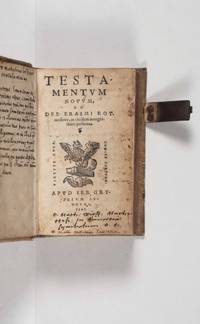
1643ST20492Lugduni Batavorum Leyden: Bonaventura Elzevier and Abraham Elzevier 1643. Second Elzevier Edition. 137 x 78 mm. 5 1/2 x 3". 12 p.l. 672 44 pp. 2 leaves. <br/> ELEGANT EARLY 19TH CENTURY RED STRAIGHT-GRAIN MOROCCO VERY ELABORATELY GILT BY BOZERIAN unsigned but see below covers framed by bead-and-star roll enclosed with double gilt fillets leaf tools at corners. smooth spine in compartments with large central fleuron of floral lancets emanating from central circlet in a richly stippled ground small circles at corners one compartment with gilt lettering cresting tulip and violet roll at foot of spine turn-ins with bead-and-star roll marbled endpapers vellum flyleaves all edges gilt. Woodcut initials headpieces and tailpieces numismatic portrait tondo fine engraved title page by C. C. Dusend showing Erasmus gazing through a telescope at the Godly orb seen through parted clouds. Willems 552; Rahir 546; USTC 1027918. For the binding: Culot "Jean Claude Bozerian" Roulette 9 Plate I and Palette 12 Plate X. Just barely perceptible rubbing to joints and extremities one leaf with tiny burn hole affecting a couple of words intermittent minor foxing negligible ink spots here and there other trivial imperfections but an extremely attractive copy the text fresh and clean and the very well-preserved binding with lustrous leather and bright gilt.<br/> <br/> This is a remarkably pretty copy of an extremely influential but generically elusive work printed by a legendary press and bound by the founder of a celebrated French binding dynasty. First published in 1524 the "Colloquia" comprise 63 conversations originally written for Erasmus' students on varied and overlapping topics but these urbane meditations soon became widely read as they covered subjects that intrigued the important thinkers of the day. Their influence was so profound that it is not saying too much to claim that they helped to speed the Reformation. Although they are difficult to classify precisely one could categorize them as including in general terms exposure of ritualistic fallacies invective against corruption within the church examination of popular imposture deploring of contemporary personal sins practical advice for laymen and miscellaneous discussion of amusing topics. In specific terms the text takes on such controversial topics as the value of pilgrimage celibacy and abstinence from meat on Fridays and other prescribed days. Erasmus' "Colloquia" was frequently published by the Elzeviers once in French and a total of nine times in Latin. The text was universally adopted for school use up through the 18th century. Although our lovely little binding is unsigned Culot firmly identifies its tools as those used by Jean-Claude Bozerian 1762-1840. He was the elder of the Bozerian brothers François is referred to as "le jeune" and was active in Paris from 1795 to about 1810. He began his career in Lyon as an apprentice bookseller printer and bookbinder eventually deciding to focus on the latter craft. Marriage to the widow of binder Pierre Boulier allowed him to establish a binding workshop in Paris where he was joined by his brother. His bindings were soon much in demand by French bibliophiles who appreciated their superior materials tasteful design and flawless execution--all characteristics that are plainly evident in the present case. Bonaventura Elzevier and Abraham Elzevier unknown
136308Leipzig 1880. Samt. shirtingbd. VI 236 s. Portrett. Xylografier. Oversettelse av den engelske utgaven. Tittelbl. litt gulplettet. Navn på portrett v. . <br/><br/><em>Boken befinner seg på et fjernlager og ekstra leveringstid må beregnes! </em> unknown
70051Leiden Elzeviriana 1643. 24 672 44 s. Kobberstukket tittelbl. Samt. helpergamentbd. Navn på forsatsbl. v. og tittebl. Noen få sider litt fuktskjoldet i margen. . unknown
2799A Paris Augustin Besoigne, au Palais dans la grande Salle, devant la Cour des Aydes. M. DC. LXX., page de titre, (17), 251pp In12 en plein veau brun, dos à cinq nerfs orné, coiffes abimées, belle patine.
1715mon0000160783Leide: Pierre Vander 1715. 1 vol. 6-1/2" x 4". xviii312pp. title page printed in red and black translated by Sir Gueudeville engraved half-title portrait plate depicting Erasme-Morus-Holbein 6 fold-out plates and 73 illustrations in text. Bound in full speckled calf over cords gilt lettered red morocco spine label hinges rubbed covers firmly attached clean and bright throughout. Leide: Pierre Vander unknown
195023.866México: Fondo de Cultura Económica 1950. 1ª ed. Tela con sobrecubierta. . 17.5x24. Ilustrado con portadas retratos etc. Fondo de Cultura Económica hardcover
195024.0452México: Fondo de Cultura Económica 1950. 1ª ed. Tela con sobrecubierta. . 17.5x24. Ilustrado con portadas retratos etc. Fondo de Cultura Económica hardcover
168849228Cologne disguised; Paris or the Netherlands: Adrian Le Jeune 1688. First edition. Hardcover. Very good . Duodecimo. Collation: aster.12 2aster.6 A-R12 S4 = 226 leaves. 36 415 1 blankpp. Engraved frontispiece and headpiece; woodcut lettrines head- and tailpieces; printed side notes. Contemporary calf mildly worn at extremities; gilt tooled spine with raised bands gilt lettering piece; edges sprinkled in red. Old inscription cropped from top edge title; one leaf with clean marginal tear just extending into text else fine and crisp throughout.<br /> <br /> First edition of this defense of Jansenism via the celebrated scholar of Rotterdam. Among the works reviewed by Locke for Jean Le Clerc the present title “indicated a new wave of interest in Erasmus†Mansfield. “Jean Richard 1615-1686 wanted to persuade the Roman Catholic Church that in persecuting the Jansenists it was as much in error as it had been when it denounced Erasmus. He also wanted to convince the English monarch that despite appearances to the contrary Erasmus had never adopted any stance outside the Catholic Church†van Herwaarden. The author surely intends the quotation from Cyprian at the verso of the title as a reference to both Erasmians and Jansenists: “This is always the devil’s work to destroy with lies the servants of God and defame their glorious name with false opinions†trans. Mansfield. Early modern reviews were mixed: Bayle considered it a “pity that the author. stopt at the first part of it†General Dictionary 5 1737 “Erasmus†85 note T. Burigny Vie d’Erasme Paris: 1758 judged it “. so badly done and so filled with invectives and declamations that it does not lead one to wish for the second†547; quoted in Mansfield 293n.<br /> <br /> In 1660 the French cleric Jean Richard was imprisoned by the archbishop of Rouen de Harlay a bitter opponent of Jansenism."During this personal crisis he published two works in defense of his Jansenist belief and behaviour. As we shall see there are grounds for believing that his Sentimens. was meant in part at least to achieve the same end. Nevertheless mysteries surround the work: it was published posthumously Richard died in 1686 having been prior of Beaulieu Saint-Avoie since 1673; what we have is the first part and we may only guess at how seriously the promise of a second part was intended. As it stands this is an ill-organized book repetitive with many digressions but filled with a naive enthusiasm and fascinating partly because of the evidences of a sound judgment about Erasmus partly because of the tantalizing but insoluble problem of the author’s aims. The avowed aim was proselytism. The book is dedicated -- on the eve of the Revolution of 1688 -- to James II of England a new Theodosius who is hazarding three kingdoms for the sake of the kingdom of heaven. May it help the English people to follow the king’s example in conversion to Catholicism by showing them the true character of Erasmus’ religion" Mansfield. References: Barbier 4:467. J. v. Herwaarden Between Saint James and Erasmus Studies in Late-Medieval Religious Life 598; Jöcher 3:2078; VD17 12:110664Q. For a thorough discussion see B. Mansfield Phoenix of His Age: Interpretations of Erasmus c. 1550–1750 Toronto 1979 163–174. Locke’s review appears in Bibliotheque universelle et historique VII 1688: 106-122. Adrian Le Jeune hardcover
76645Ulm Sumptibus Danielis Bartholomaei Litteris Christiani Ulrici Wagneri 1712. Ganzpergament gebunden; ehemals goldgeprägtes Rückenschild / Anz. Seiten: 12 unnummerierte 869 22 unnum. 88 / 12 x 183 cm / mit 1 Titelkupfer / Zustand: gut leichte bis mässige Alters-/Gebrauchsspuren; Einband berieben und fleckig oberes Kapital eingerissen unteres Aussengelenk auf 5 cm geplatzt Papier gebräunt und durchwegs stock- fleckig Ulm, Sumptibus Danielis Bartholomaei, Litteris Christiani Ulrici Wagneri, 1712 unknown
1752D157021752. Hardcover. Fair. 12mo. Contemporary calf; a.e.g. Binding crudely repaired with tape. 4 XXIV 222 pp. This book enchanced with 14 finely engraved plates plates in very good condition. Formerly in the collection of the College of New Rochelle Library with corresponding bookplate and stamps. House in a very handsome burgundy clamshell box with labels lettered in gilt. Sold as is. <br/><br/> hardcover
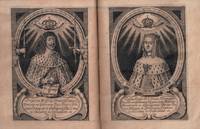
107057København 1650. 4to. Samt. rødt helfløyelsbd. 42 bl. Tittelbl. trykt i rødt og sort. Kobberstukne portretter av Fredrik III og dronning Sophia Amalia. Eksemplar på stort papir. Bindet litt slitt. Tittelbl. og noen bl. med svak fuktskjold i øvre høyre hjørne. . unknown
1993PHILOSOP5611560719Paris, Droz, "Travaux d'Humanisme et Renaissance" n° CCLXXII, 1993, 17,5 x 25, 308 pages sous reliure éditeur toilée.
1907372094Boston: The Merrymount Press 1907. First edition one of 303 copies. Volume II in the Humanists' Library edited by Lewis Einstein. Text printed in red and black. Types and decorations by Herbert P. Horne. xxxiv 64 2 pp. 1 vols. 8vo. Tan cloth and dark grey paper boards leather spine label gilt. Tiny paper flaw in flyleaf. Fine copy. First edition one of 303 copies. Volume II in the Humanists' Library edited by Lewis Einstein. Text printed in red and black. Types and decorations by Herbert P. Horne. xxxiv 64 2 pp. 1 vols. 8vo. Attractive copy of this excellent essay by Erasmus printed by Daniel Berkeley Updike edited by Lewis Einstein 1877-1967 Columbia grad class of 1898 who had a long and distinguished career as a diplomat and historian. Smith 282. Provenance: General Theological Seminary gift of Mrs. F. Ashton bookplate. Smith 282. Provenance: General Theological Seminary gift of Mrs. F. Ashton bookplate <br/><br/> The Merrymount Press hardcover
Geève, Libr. Droz, 1970, in-8, br. edit., pp. nuemrate da 447 a 466. Testo in inglese.
1757310656Frankfurt: J.A. Raspe 1757. Illustrated with 12 engraved portraits. 8 373; 2 448 pp. 8vo. Later vellum. Faint browning a nice copy. Illustrated with 12 engraved portraits. 8 373; 2 448 pp. 8vo. Later edition of this famous collection of humanist satirical letters illustrated with 12 full-page portraits of prominent humanists. A note in OCLC comments on the long running authorship debate: "Authorship of the Epistolae formerly attributed to Reuchlin Erasmus Hutten and others. More recent researches have made it almost certain that Crotus Rubeanus and Ulrich von Hutten were the main contributors. To Crotus are credited the first 41 letters: to Hutten the 7 letters added later to the original series and most of the 62 letters of the second series with the possible co-operation of a third person Hermann von dem Busche. The authorship of the rest remains doubtful J.A. Raspe unknown
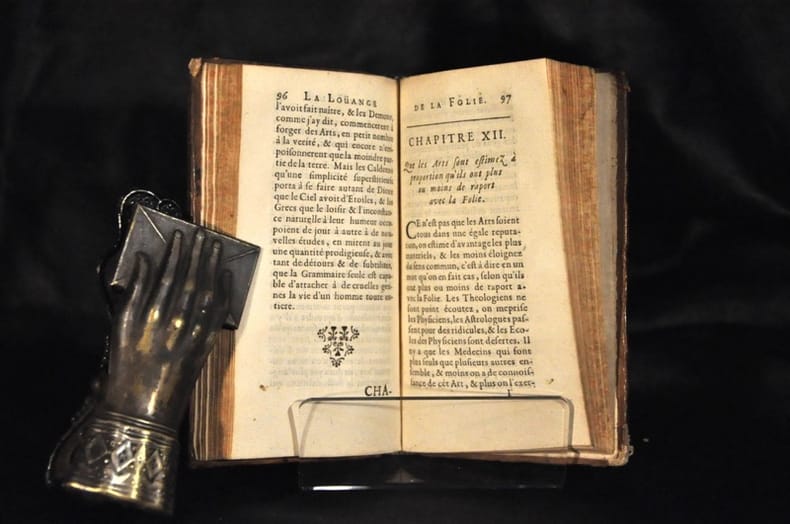
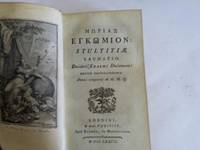
9a647Barbou London und Paris. 1777. XVI/169 S./XXVIII/204 S. mit einer Titelkupfertafel von H. Gravelot nach de Longueit original Ledereinband mit goldgeprägtem Rücken und Filetten etwas berieben und bestossen/Rücken mit kleiner Fehlstelle/oberes Kapital ausgebrochen. - Desiderii Erasmi & Thomae Mori Joco-Seria id est stultitiae Laudatio Utopia Insula - unknown
In 8, pp. 24 + (2b). Br. ed. Edizione fuori commercio di 150 esemplari. Pubblicazione curata da Leopoldo Chiappe con l'epitalamio di Pietro Gilles scritto da Erasmo da Rotterdam nella traduzione di Ettore Toci. Gilles (1468-1533) fu un umanista prima discepolo e poi amico di Erasmo da Rotterdam. Gilles e' uno dei tre protagonisti, insieme a Raffaele Itlodeo e allo stesso Tommaso Moro, dell'Utopia di Moro.
300017403Sans date.
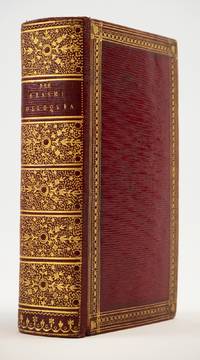
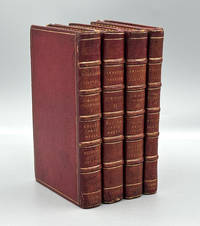
nov8<p> ANNOTATED COPY OF THE IMPORTANT COLLECTION OF GREEK TRAGEDIES PUBLISHED BY HENRI ESTIENNE IN 1567 </p><p> TRANSLATIONS BY ERASMUS - ELEGANT EARLY 19TH-CENTURY LONG-GRAIN MOROCCO BINDING </p><p><strong> GREEK TRAGEDIES ERASMUS </strong></p><p><strong>AESCHYLUS SOPHOCLES EURIPIDES</strong></p><p><strong><em>Tragoediæ selectæ Æschyli Sophoclis Euripidis cum duplici interpretatione Latina.</em></strong></p><p><strong>Geneva Estienne 1567.</strong></p><p>2 parts bound in 4 volumes 16mo: I 2 ff. 379 p. 2 blank leaves; II p. 1–383 p. 384 blank; III p. 385–735 p. 736 blank; IV p. 737–955. Bound in early 19th-century red long-grain morocco gilt fillet borders on the boards spines with raised bands and gilt decorations gilt dentelles all edges gilt blue endpapers and doublures spines sunned light rubbing to spines hinges corners and boards; minor stains on boards scattered light foxing slightly trimmed margins.Dimensions: 12.6 x 7.1 cm.</p><p><strong>Provenance</strong></p><p>Annotated by a contemporary reader shortly after the publication of the book.</p><p><strong>References: </strong>Renouard Estienne 130 no. 5. Schreiber The Estiennes 1982 no. 169.</p><p><strong>Languages of annotations:</strong> Latin; Greek a few words.</p><p><em>"A pocket edition for the 'common reader' of eight Greek tragedies"</em> Schreiber</p><p>This edition prepared by Henri Estienne and beautifully printed in small Greek Roman and Italic types includes: Prometheus by Aeschylus Three tragedies by Sophocles Ajax Electra Antigone Four tragedies by Euripides Hecuba Iphigenia at Aulis Medea Alcestis.</p><p><strong>Each tragedy is presented with the Greek text alongside two Latin translations: a prose "word-for-word" version opposite the Greek text and a versified translation following it.</strong> The versified translations are by Erasmus Melanchthon Joachim Camerarius Buchanan and Georg Rattaler. However no versified translation is included for Prometheus.</p><p><strong>The Euripides volume is particularly notable as it constitutes the only edition of Euripides published by Henri Estienne</strong> who never produced a standalone edition of this author. This gap was only filled by his son Paul in 1602.</p><p><strong>Annotations Focused on Euripides Especially Erasmus' Translation of Iphigenia</strong></p><p>The reader's annotations are concentrated in the Euripides volume particularly in Erasmus' Latin translation of Iphigenia which he has densely annotated. Additional notes follow in the general discussion of tragedy and comedy appended to the text. There are also a few notes on Medea in Buchanan's translation. The other volumes are unannotated or sparsely marked.</p><p><strong>The annotator extracts and reformulates striking or gnomic expressions from the text such as: </strong>"The condition of mortals is that nothing is happy on all sides" Mortalium conditio nihil ab omni parte beatum Vol. I p. 50. "The terrifying visions of the night" visa nocturna terrifica Vol. I p. 9. He notes realia such as the Greek custom of greeting by clasping hands salutandi mos apud Graecos Vol. I Iphigenia p. 71. The reader also comments on key mechanisms of tragedy such as:"The beauty of Helen was detrimental to her and her kin…" Forma Helet sibi et suis esse detrimentum… Vol. I p. 53. The annotator elucidates Greek terms for example: "Suffocating heat" gorgicôn toasthôn vehementes aestus p. 66. He also provides references to classical works such as: A note on the winged Fama alis fama p. 64 referring to Book IV of the Aeneid Forma alata/ Vide Aeneidos 4°.</p><p><strong>A Remarkable Annotated Copy Bound in Elegant Long-Grain Morocco</strong></p>
elala2775Amsterdam: ‘Aux Dépens De La Compagnie’ 1734. First Edition Illustrated by Bernard Picart. The first part of the work was written by reformer Erasmus Alberus who selected for critical assessment the most ‘blasphemous’ passages from the De Conformitate Vitae Beati Francisci ad Vitam Domini Jesu of Bartolomeo degli Albizzi. It was originally published anonymously as Der barfusser Monche Eulenspiegel und Alkoran in Wittenberg in 1542 with a preface by Martin Luther. The French translation by Calvinist printer Conrad Badius who erroneously attributed the whole work to Luther was published in Geneva in 1556. In his second edition 1560 Bade acknowledged his error and added a continuation. The present edition is distinguished by twenty-two fine copper engravings by Bernard Picart. The frontispiece to Volume I is composed of satirical emblems and the second folding plate depicts the mystical tree whose leaves contain the forty points of comparison between the lives of St. Francis and Jesus Christ. These two volumes are sometimes found with another work by Nicolas Vignier entitled Légende dorée ou Sommaire De L’Histoire des frères Mendians de l’Ordre de St. Dominique et de S. François Amsterdam: 1734. Brunet I 152. Cohen-de Ricci 5-6. Graesse I 64. Lewine p. 6. Rothschild II 2024 listed with another work. 2 Volumes. 12mo. pp. 9 p.l. 396; 1 p.l. 419. titles in red & black. 22 engraved plates by Bernard Picart 1 folding; incl. 2 frontis. 19th century half vellum gilt backs vellum slightly soiled outer edge of frontis. in Vol. I chipped outside plate mark few small library markings Amsterdam: ‘Aux Dépens De La Compagnie’, 1734 hardcover
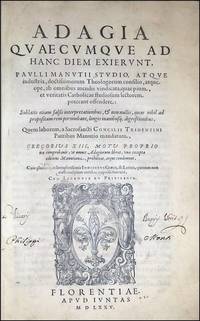
157572<p><b>FINE AND IMPORTANT ALDINE EDITION OF ERASMUS ADAGES</b>Erasmus Roterodamus. <b><i>Adagia</i></b><i> quaecumque ad hanc diem exierunt Paulli Manutii studio atque industria . ab omnibus mendis vindicata quae pium et veritatis Catholicae studiosum lectorem poterant offendere: sublatis etiam falsis interpretationibus & nonnullis . digressionibus. Quem laborem a sacrosanti Concilii Tridentini patribus Manutio mandatum Gregorius 13. motu proprio ita comprobauit vt omnes Adagiorum libros vna excepta editione Manutiana prohibeat atque condemnet. </i><i>Cum plurimis ac locupletissimis indicibus Graecis & Latinis quorum nonnulli nusquam antheac impressi fuerunt</i>. Florentiae apud Iuntas MDLXXV Florence Giunti for the Aldine Press <b>1575</b>.2° later limp <i>cartonnage</i> handwritten title and library label at spine ff. 4 columns 1454 i.e.1440 ff. 36.Giunti device at title and final leaves. Woodcut headletters. Text in Latin on two columns with some passages in Greek.Aldus Manutius' dedicatory to pope Gregory XIII.<b>Fine and important edition revised by Aldus Manutius the Younger of the renowned collection of Latin and Greek adages sayings proverbs mottos epygrams compiled by Erasmus</b>.Paul Manutius was commissioned by the Fathers of the Council of Trent to correct the work reorder purge by false interpretations and doctrinal errors in order to make this edition the only one approved by the Church the bull of Gregory XIII as stated in the title prohibits and condemns the other editions.<b>Desiderius Erasmus Roterodamus</b> 1466 – 1536 known as Erasmus of Rotterdam or simply Erasmus was a Dutch Renaissance humanist Catholic priest social critic teacher and theologian.Amongst humanists he enjoyed the sobriquet "Prince of the Humanists"; he has been called "the crowning glory of the Christian humanists". Using humanist techniques for working on texts he prepared important new Latin and Greek editions of the New Testament. These raised questions that would be influential in the Protestant Reformation and Catholic Counter-Reformation.<b>Provenance</b>: Ownership signature <i>Philippi Monti</i> at title-page beside the printer device.<b>References</b>: Renouard 220. 14. STC <i>Italian</i> 236; Adams E-443. BMC 236. CNCE 18245 & 18247.</p> Giunti for the Aldine Press paperback
190847475Leipzig, Otto Harrassowitz, 1908. Gr.-8°. 9 (inkl. farb. Titelbild) Tafeln. XI, 152 S., OKart. m. handschriftl. Rückentitel.
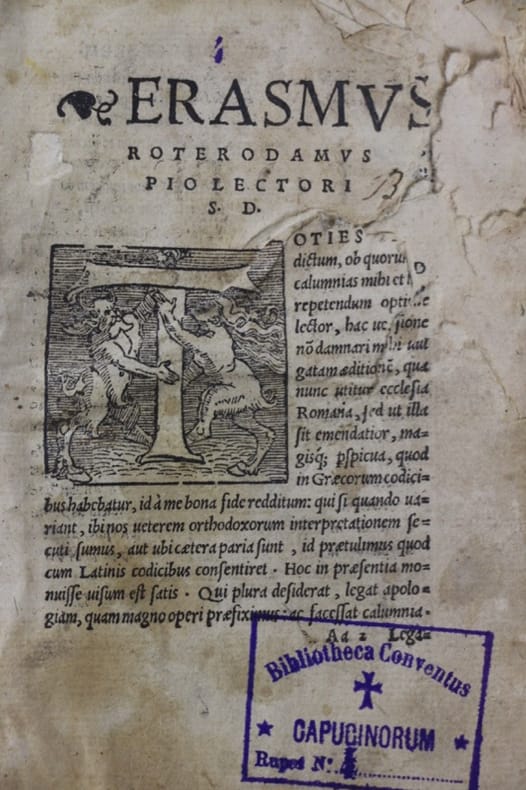
1523104094Argentorati [Strasbourg] apud Johannem Hervagium 1523 In-12, plein veau, dos à nerfs rel. XVIII, blanc déchiré, sans titre, 5 premiers ff. avec accrocs angulaires et atteintes du texte, 20 pp. pour le Paraclesis, avec léger accroc marginal, sans atteinte, 14 pp. de table sous colonnades gravées, 152 ff. ch.- 135 ff. ch.- 2 ff. Accrocs en marge sans atteinte. Lettrines gravées. Reliure post. un peu gauchie, coiffe usée en tête, titre à froid : “Novum testamentum secundum”. Etiquette de classement. Tampons bibliothèque capucine.