4 533 résultats
1973BL3264London:: The Scolar Press Limited 1973. 1973. Facsimile reprint of the 1803 edition. 29 cm. xiv 174 2 124 pp. Illus. Gilt-stamped tan cloth dust-jacket; jacket edges frayed. Very good. ISBN: 0859670686 / 0-85967-068-6 The Scolar Press Limited, 1973). hardcover books
31376Couverture rigide. Bon/1807. in-8. Gand Goesin-Verhaeghe 1807 in-8 84pp Document dé-relié et sans couvertures Document dé-relié et sans couvertures sinon bel exemplaire complet! unknown
180731376Gand, Goesin-Verhaeghe, 1807, in-8, 84pp, Document dé-relié et sans couvertures, Document dé-relié et sans couvertures sinon bel exemplaire complet! 84pp
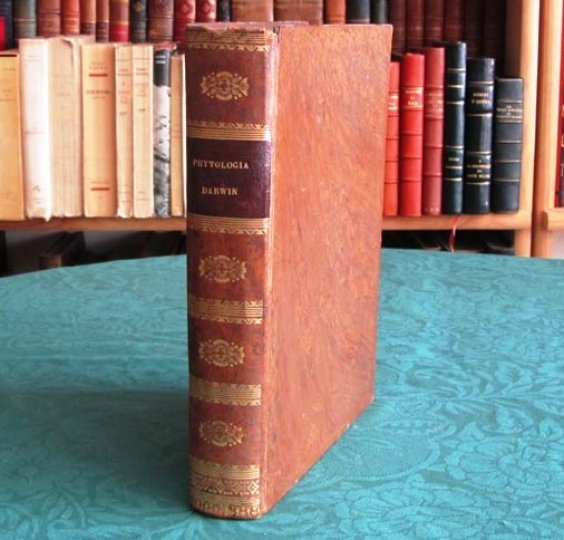
1539Dublin, Byne, 1800, un volume in 8 relié en pleine basane marbrée, dos orné de filets dorées (reliure de l'époque), (petit accroc à la coiffe, quelques rousseurs), 8pp., 556pp., (6), 12 PLANCHES dépliantes
18104956A Gand, chez P. F. de Goesin-Verhaeghe; rue Haute-porte, n°229, 1810-1811. 1810 4 vol. in-8° (212 x 138 mm.) de: I. [3] ff. (faux-titre, titre, épigraphe); 20 pp. (préface du traducteur); [1] f. (titre de la première partie); 23 pp. (reprise de la pagination à 19, préface de l'auteur); [1] p. (table); 614 pp.; [1] p. (errata); 3 planches aquarellées ; II. [2] ff. (titre, table); 659 pp.; [2] pp. (errata, avis au relieur); 4 planches (3 aquarellées, 1 gravée); III. XIV pp. (titre, titre de la deuxième partie, préface de l'auteur); 586 pp.; 3 planches gravées; IV. [1] f. (titre); 570 pp. (dont table); 1 planche dépliante gravée. Un total de 11 planches (dont 1 dépliante et 6 à l'aquarelle). (Corps douvrage très frais). Demi-basane d'époque, plats recouverts de papier marbré, dos lisses ornés, titre et tomaison de maroquin noir, tranches jaspées. (Quelques petites rousseurs).
ill., br. Questa biografia è un'importante testimonianza dell'interesse provato da Charles Darwin nei confronti della vita e delle opere di suo nonno Erasmus; i due non si conobbero mai, ma lo stesso Charles confessò, fra le pagine della sua "Autobiografia", come l'opera di suo nonno fosse riuscita a preparare il "terreno favorevole a quella dottrina che più tardi, in forma diversa, ho sviluppato nell''Origine delle specie'". Diversi contadini della cittadina di Lichfield credevano che il dott. Erasmus Darwin fosse un mago, altri pensavano si trattasse di un ateo, a giudizio di molti fu uno strabiliante poeta, per alcuni invece fu il primo grande teorico delle leggi della vita organica. Egli, infatti, già nel corso del XVIII secolo iniziò a porsi alcuni fondamentali interrogativi sulla natura e sulla storia della vita, cercando di rispondere alla più difficile delle domande: da dove veniamo e qual è la nostra storia? Con uno sguardo al contesto filosofico e scientifico in cui emersero le sue risposte trasformiste e tentando di porre nuovamente in rilevanza anche alcuni aspetti dell'opera e del pensiero del nipote, questo testo intende offrire un ampio quadro del trasformismo settecentesco attraverso lo sguardo di uno dei suoi più noti pensatori.
17911277661791. First Edition. BLAKE William engraver DARWIN Erasmus. The Botanic Garden; A Poem in Two Parts. London: J. Johnson 1791 1791. Two volumes in one. Quarto contemporary full brown mottled calf rebacked burgundy morocco spine label. $3300.First edition of Part I third edition of Part II of Erasmus Darwin's chief poetical work illustrated with two engraved frontispieces and 18 plates one from a painting by Henry Fuseli five engraved by William Blake.""The chief source of Erasmus Darwin's literary fame during his lifetime The Botanic Garden contains a great deal of important and frequently advanced scientific information in the nearly 300 footnotes and the 115 pages of appendices to its verses. Part I 'The Economy of Vegetation' involves a far-reaching survey of science and technology with significant sections on evolutionary theories and numerous footnotes on electrical phenomena. Part II 'The Love of the Plants' is a 'single-minded catalogue of vegetable sex-life"" Norman. Darwin describes plant reproduction according to the Linnaean system ""by means of a most ingenious and amusing personification of each plant and often even of the parts of the plant. It is significant that botanical notes are added to the poem and that its eulogies of scientific men are frequent"" Britannica. Darwin's Garden is also important for the five plates in Part I engraved by William Blake: ""The Fertilization of Egypt"" engraved after the painting by Henry Fuseli and four engravings of the Portland Vase. Darwin the grandfather of Charles is notable for his ""exposition of the form of evolutionism afterwards expounded by Lamarck"" DNB. Inexplicably Part II was published first in 1789 here present in the 1791 third edition; Part I followed in 1791 present in the first edition. Wilson 343. Hunt II lxvii. Nissen 451. Bentley 450A. Keynes 103. Bookplate; early ink shelf markings to front flyleaf.Occasional spotting or offsetting from plates to text. Some wear to corners and board edges. A very good copy. unknown
26963DUBLIN J. MOORE 1791. MIXED EDITION. VOLUME ONE IS 1793 AND VOLUME TWO IS 1796 FOURTH EDITION. VOLUME ONE CONTAINS THE ECONOMY OF VEGETATION AND VOLUME TWO THE LOVES OF THE PLANTS. BOUND IN FULL-TREE CALF HINGES STARTING SPINE GILT WITH MOROCCO SPINE LABELS PART MISSING IN VOLUME ONE INTERNALLY CLEAN AND TIGHTLY BOUND. DUBLIN, J. MOORE, 1791 unknown
180014595With the theory of draining morasses and with an improved construction of the drill plough. By Erasmus Darwin, M.D.F.R.S. author of Zoonomia, and of the Botanic Garden.Contents.Introduction.Part the firt. Physiology of vegetation.sect.I. Individuality of the Buds of Vegetables. II. Their Absorbent Vessels. III. Their Umbilical Vessel. IV. Their Pulmonary Arteries and Veins. V. Their Aortal Arteries and Veins. VI. Their Glands and Secretion. VII. Their Organs of Reproductions. VIII. Their Muscles, Nerves, and Brain.Part the second. Economy of Vegetation.IX. The Growth of Seeds, Buds, and Bulbs. X. Manures, or the Food of Plants. XI. Of draining and Watering Lands. XII. Aeration and Pulverisation of the Soil. XIII. Of Light, Heat, Electricity. XIV. Diseases of Plants.Part the third. Agriculture and Horticulture.XV. Production of Fruits. XVI. Production of Seeds. XVII. Production of Roots and Barks. XVIII. Production of Leaves and Wood. XIX. Production of Flowers. XX. Plan for disposing a Part of the System of Linneus into more Natural Classes and Orders.Appendix. Improved Construction of the Drill Plough.Édition originale rare. London, Johnson 1800. 612 pp + index + 12 planches (dont 2 repliées). Ex-libris aux Armes de la bibliothèque de Bellotti S.Reliure pleine basane marbrée de l'époque. Dos lisse orné et doré avec pièce de titre. Roulette dorée sur les coupes. Quelques pâles rousseurs sans gravité. Petit accident à la coiffe supérieure. Exemplaire exceptionnel pour ces planches. Bon état. Format in-4° (27x22).
19411Paris De l'imprimerie de Digeon, An VIII 1800 in 12 1 volume reliure demi basane rouge ancienne, dos lisse orné de filets et fleurons dorés, pièce de titre de cuir noir, faux-titre, titre, 412 pages, petite trace de mouillure dans la marge supérieure de quelques feuillets. Edition originale de la traduction française. Erasmus Darwin, Elston 1731-Nottingham 1802, Poète et naturaliste britannique. Bon exemplaire ( Photographies sur demande / We can send pictures of this book on simple request )
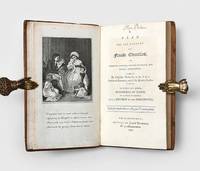
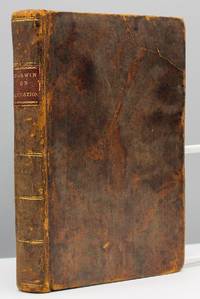
1798167893Philadelphia: Printed by John Ormrod 1798. A "determined stand against the nearly universal belief that women ought to be feather-brained and feeble-bodied" First US edition of Darwin's treatise on the education of women presented here in a well-preserved contemporary binding. This copy's title page is signed in a contemporary hand by one "Eliza Phelan". Although Darwin ultimately sought to educate women so as to make them useful companions for men his was a more equal "different but complementary" conception of the male-female relationship than was commonly held ODNB. The Plan advocated the creation of dedicated schools for girls where such subjects as botany and experimental philosophy would be taught. "In retrospect the most important feature of the book is his determined stand against the nearly universal belief that women ought to be feather-brained and feeble-bodied. He was taking the first crucial step along the path that has led to sexual equality and feminism" King-Hele p. 284. Darwin wrote from the start with practical applications in mind: the work originated as advice to his two illegitimate daughters for whom he had bought a converted inn to run as a school for girls. It is perhaps for this reason that the work has been described as "the most appealing of Darwin's prose publications" ibid. p. 282. The Plan was originally published in Derby in 1797: the US edition was published a year later with Darwin's slender tract bound with the unrelated Rudiments of Taste a work which had been published several times before in Philadelphia and London over the previous decade. Duodecimo 168 x 99 mm. Engraved frontispiece numerous engraved head and tailpieces in the text. Contemporary speckled sheep smooth spine ruled in gilt forming 5 compartments red morocco label to second. Late 19th-century book label of one "Jean Rouche" to front pastedown. Small hole to foot of spine very light bumping and wear to extremities small ink stain to p. 38 over text without affecting legibility slight separation within gatherings I-N: a very good copy. ESTC W27662. Desmond King-Hele Erasmus Darwin: a Life of Unequalled Achievement 1999. unknown
1854772333.Ghardcover. Good. Access codes and supplements are not guaranteed with used items. May be an ex-library book. hardcover
1797D19679DERBY: J. Drewry for J. Johnson 1797. First Edition. Paperback. Near Fine. 4to. 128 pp. including half-title. With engraved frontispiece of the grounds of Ashbourne School. ORIGINAL WRAPPERS. Housed in attractive custom box. Written for his two illegitimate daughters who were known as the Misses Parker Darwin covers a number of topics in this treatise on female education. "Education should draw the outline and teach the use of the pencil; but the exertions of the individual must afterwards introduce the various gradations of shade and colour must illuminate the landscape and fill it with the beautiful figures of the Graces and Virtues" preface. He recommends science subjects for girls as well as visits to factories and foundries. Also included is a fifteen-page list of recommended books for studying further one of the many subjects touched upon here. Darwin 1731-1802 grandfather of Charles Darwin was a poet naturalist as well as a prominent physician. He assisted in setting up the Ashbourne School and in furtherance of his belief in the importance of intellectual pursuit for all. He had this work published by Johnson an important radical bookseller of the period who was responsible for among many other works Wollstonecraft's Vindication of the Rights of Women. <br/><br/> J. Drewry for J. Johnson paperback
2001mon0002974221Woodstock Books 2001-03-01. Hardcover. Good. 0.7900 11.1000 8.4300. Woodstock Books hardcover
1379548640.Ghardcover. Good. Access codes and supplements are not guaranteed with used items. May be an ex-library book. hardcover
179817365<p>Philadelphia: Printed by John Omrod 1798 First American edition of this educational classic that shows the influence of Rousseau on the work of Erasmus Darwin 1731 – 1802. First published in London the previous year. Included in this edition is an American printing of Mrs. M. Peddle's Rudiments of Taste a popular conduct book was first published in London in 1789 and in the United States in 1790. Contemporary tree sheep with red morocco spine label. Gilt-ruled spine. Twelvemo. Separate title-page for Mrs. M. Peddle's The Rudiments of Taste. Some wear to binding and a couple cracks to sheep on upper board. Quite a fresh copy despite some foxing to first few leaves and some slight toning throughout. A very good tight copy of a fragile book. Darwin wrote the present work after helping his daughters Susan and Mary Parker establish a boarding school for young women in 1794. Here he draws on the theories of Rousseau Locke and Genlis to advocate for the education of women in schools in topics like philosophy the natural sciences history art manufacturing and language. Darwin believed that women should be educated for the purpose of becoming better wives and companions to men but promoted progressive notions that women's education would take place in well-resourced schools rather than in the home and that women should be educated in the concepts of finance industry and manufacturing. In Peddle's The Rudiments of Taste "Classical influence blends with Christian…Peddle recommends reading ancient and modern history travels biography science and good poetry not novels which leave their readers incapable of 'relishing anything superior'" Blain Grundy and Clements eds. The Feminist Companion to Literature in English p. 841.</p> Printed by John Omrod,
0548897425.Gpaperback. Good. Access codes and supplements are not guaranteed with used items. May be an ex-library book. paperback
1164180347.Gpaperback. Good. Access codes and supplements are not guaranteed with used items. May be an ex-library book. paperback
1340378531.Ghardcover. Good. Access codes and supplements are not guaranteed with used items. May be an ex-library book. hardcover
1436644879.Ghardcover. Good. Access codes and supplements are not guaranteed with used items. May be an ex-library book. hardcover
17971978Derby: J. Drewry 1797. First edition. Contemporary quarter calf over marbled boards; spine ruled in gilt with red morocco label; all edges dyed yellow. Boards and spine rubbed; some chipping along edges. Original stab holes visible in gutter margins. Previous owner's bookplate on front pastedown; ink signature of Mary Wolley to front free endpaper; light foxing. Quarto collates complete with half title and engraved frontispiece: viii 9-128. Bound with: Fosbrooke T.D. The Economy of Monastic Life. Glocester: Printed by R. Raikes 1792. First edition dedicated to Edward Jenner who is also listed as a subscriber. Internally a copy in excellent condition.<br /> <br /> The grandfather of the illustrious Charles Darwin Erasmus Darwin wrote this treatise on the education of young women to support his own daughters' school at Ashbourne. Darwin's treatise takes a comprehensive view of women's education suggesting that it should reach beyond social skills such as the "perpetual appearance of attention" polite dancing and flattering dress and into formal intellectual pursuits including literature history mathematics and the natural sciences. While he promoted women's education in part to improve the likelihood of companionate marriages Darwin's text tentatively acknowledges that a marital partnership can only function happily when both parties have an intelligent understanding of the world and the ability to participate in it. "A radical campaigner for equality he condemned slavery supported female education and opposed conventional Christian ideas on creation" Farra. With a bookplate from the library of the Wolley family this particular copy has the ownership signature of female reader Mary Wolley. J. Drewry unknown
2008DADAX1436644879Kessinger Publishing 2008-06-02. hardcover. New. 6.00x0.81x9.00. Buy with confidence. Excellent Customer Service & Return policy. Kessinger Publishing hardcover
1017428395.Ghardcover. Good. Access codes and supplements are not guaranteed with used items. May be an ex-library book. hardcover
101743333X.Gpaperback. Good. Access codes and supplements are not guaranteed with used items. May be an ex-library book. paperback
3337376509.Gpaperback. Good. Access codes and supplements are not guaranteed with used items. May be an ex-library book. paperback