194 résultats
17251907Den Haag, Hagae, 1725. 6 Bl. Titulatur u. Einleitung (Berengarius), 163 S., mit 49 (von 50) Portraits und zahlreichen Schmuckinitialen, Schmuckvignetten (u.a. auf Titel) u. weiterem Buchschmuck. Unschöner Halbleinenband der Zeit mit handgeschriebenem Rückenschildchen. 4°.
179133222London: J. Johnson. Near Fine with no dust jacket. 1791. Second Edition. Hardcover. 4to 11" - 13" tall; 214 126 & 202 pages; Contemporary mottled calf with cracked covers both repaired. Small bookplate on inside front cover and old catalog description tipped in. 2nd edition of both parts with all plates. . J. Johnson hardcover
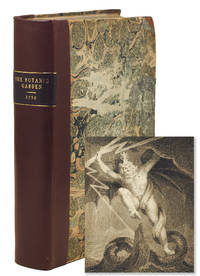
1791D18576London: J. Johnson 1791. First Edition. Hardcover. Very Good. 4to. Two parts bound as one. Early leather rebacked with modern spine. Complete with 18 plates five of which are attributed to William Blake. This copy with the early ownership signature of Louisa Ponsonby. The hope for the book a scientific poem in two parts Darwin wrote was to enlist Imagination under the banner of Science . . . to induce the ingenious to cultivate the knowledge of botany . . . and recommending to their attention the immortal works of the celebrated Swedish naturalist Linnaeus. Dictionary of Scientific Biography. <br/><br/> J. Johnson hardcover
179717295New York; Philadelphia: T. & J. Swords Volume 1; T. Dobson Volume 2 parts I and II 1797. FIRST AMERICAN EDITION. Complete with all half-titles and blanks. With 6 colored plates in Volume 1. Contemporary calf spine labels; text toned due to paper stock. Overall an excellent copy. First American editions of Erasmus Darwin’s important hypothesis on evolution which included discussion of how competition and sexual selection could cause change in species an idea on which his grandson Charles must certainly have drawn. Darwin’s focus here is the functioning of the body and he includes significant sections on anatomy and physiology as well as psychology. He was an early advocate of the inheritance of acquired characteristics similar to what Lamarck later developed. “The Zoonomia contains a system of pathology and a treatise on generation. Darwin believed that ‘one and the same kind of living filaments is and has been the cause of life’†Garrison & Morton.<br /> <br /> Darwin 1731-1802 grandfather of Charles Darwin was a remarkable polymath that worked as a physician naturalists medical botanist and inventor. T. & J. Swords (Volume 1); T. Dobson (Volume 2, parts I and II) unknown
1751WRCLIT45949Paris 1751. 6xxiv2222pp. Quarto. Full deep plum straight-grain morocco elaborately stamped in blind lettered and ruled in gilt gilt inner dentelles gilt borders on endsheets a.e.g. Title in red and black. Frontis and fourteen engraved plates engraved head- and tail- pieces. Extremities a bit worn narrow scrapes at fore-tips of lower board armorial bookplate on pastedown slight offset from plates to facing pages; a very good copy. First edition of this translation accompanied by notes by Meunier de Querlon. The frontis plates title-vignette and head- and tail-pieces are engraved by various hands after designs by Charles Eisen. This is a large-paper copy 23.8 x 17.4 cm with the fourteen plates inlaid into larger sheets and with the frontis framed and etched by P.F. Martenasie under the direction of "Mr. Le Bas." SALOMONS pp.98-9. COHEN-DE RICCI VI pp.348-9. unknown books
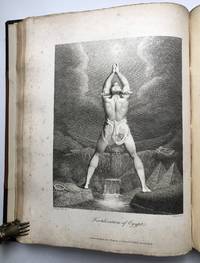
1790Flo261Very good copy of the Large Paper Copy of the Quarto edition of Erasmus Darwin's masterpiece with the William Blake engravings. <br /><br />With the first edition of <i>Part 1: containing the Economy of Vegetation</i> 1791 and the second edition of<i> Part 2: containing the Love of the Plants</i> 1790 bound in one volume. <br /><br />Large Paper Copy in 29 x 22.5cm Henrey gives 26 x 21cm for all 1791 editions. <br /><br />Part I has 10 plates by Henry Fuseli William Blake Henry Webber and others engraved by William Blake Anker Smith Thomas Holloway. Includes frontispiece "Flora attired by the Elements" by Henry Fuseli engraved by Anker Smith four plates of the Portland Vase attributed to Blake bound next to Note XXII page 53 to 59 fold-out botanical of a Cyprepedium orchid botanical plate of Erythrina and Sections of the Earth. <br /><br />The Directions to the Binder indicates only 8 plates but this copy includes two additional plates: the famous "Fertilization of Egypt" designed by Fuseli and engraved by Blake with the dog-headed god Anubis standing astride the River Nile at page 127 and Henry Webber's design of the Wedgwood cameo of "Hope with Peace Art and Labour" and the famous Wedgwood anti-slavery medallion with an enslaved man in chains and the caption "Am I Not a Man and a Brother" at page 87.<br /><br />Part II is complete with 10 plates by Emma Crewe Thomas Holloway and Frederick Polydore Nodder. The frontispiece "Flora at play with Cupid" by "gifted" amateur artist Emma Crewe 1780-1850 daughter of John Crewe 1st Baron Crewe was criticized by Richard Polwhele: "she has rather overstepped the modesty of nature by giving the portrait an air of voluptuousness too luxuriously melting." Other plates are studies of the Venus flytrap the Aztec lily tape grass etc. by botanical artist Frederick Polydore Nodder. Also includes the engraving of a cupid playing with fire by Thomas Holloway within the text on page xi. <br /><br />With several fascinating newspaper articles and manuscript note from 1845 tipped in behind the Portland Vase plates. The articles relate to the "Destruction of the Portland Vase" in the British Museum by a drunken delinquent on July 9 1845 his subsequent release from prison and the Duke of Portland's decision to commission the artists Doubleday and Baldock to repair the broken vase. <br /><br />In an unsophisticated but solid later half-leather binding of brown leather and tan cloth gilt title and blind-tooling on spine new endpapers slight toning to frontispiece and title pages but interior clean and bright with little foxing. Some offsetting from plates on to text pages and dust to page edges. J. Johnson hardcover
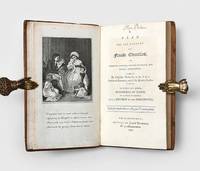
1798167893Philadelphia: Printed by John Ormrod 1798. A "determined stand against the nearly universal belief that women ought to be feather-brained and feeble-bodied" First US edition of Darwin's treatise on the education of women presented here in a well-preserved contemporary binding. This copy's title page is signed in a contemporary hand by one "Eliza Phelan". Although Darwin ultimately sought to educate women so as to make them useful companions for men his was a more equal "different but complementary" conception of the male-female relationship than was commonly held ODNB. The Plan advocated the creation of dedicated schools for girls where such subjects as botany and experimental philosophy would be taught. "In retrospect the most important feature of the book is his determined stand against the nearly universal belief that women ought to be feather-brained and feeble-bodied. He was taking the first crucial step along the path that has led to sexual equality and feminism" King-Hele p. 284. Darwin wrote from the start with practical applications in mind: the work originated as advice to his two illegitimate daughters for whom he had bought a converted inn to run as a school for girls. It is perhaps for this reason that the work has been described as "the most appealing of Darwin's prose publications" ibid. p. 282. The Plan was originally published in Derby in 1797: the US edition was published a year later with Darwin's slender tract bound with the unrelated Rudiments of Taste a work which had been published several times before in Philadelphia and London over the previous decade. Duodecimo 168 x 99 mm. Engraved frontispiece numerous engraved head and tailpieces in the text. Contemporary speckled sheep smooth spine ruled in gilt forming 5 compartments red morocco label to second. Late 19th-century book label of one "Jean Rouche" to front pastedown. Small hole to foot of spine very light bumping and wear to extremities small ink stain to p. 38 over text without affecting legibility slight separation within gatherings I-N: a very good copy. ESTC W27662. Desmond King-Hele Erasmus Darwin: a Life of Unequalled Achievement 1999. unknown
1800142097London: Printed for J. Johnson 1800. viii 612pp. Quarto 220 x 270mm. Contemporary calf with gold gilt decorations to the spine and gilt lettering stamped to a black moroccoo spine label. Illustrated with 12 engraved plates 2 folding 9 with an accompanying non-paginated text leaf. Some rubbing and wear to the boards with the top corners a bit bumped. Previous owner's inscription: "REVD. WILLIAM. RUSH. CHURCHILL 1775-1847 of Colliton Dorchester". Ex-libris of Darwin bibliographer Richard Freeman. Some offsetting and light foxing to the plates otherwise a tight and clean copy. A very good copy of this work by the grandfather of Charles Darwin with an interesting provenance. Erasmus Darwin was a well known English physician having turned down the opportunity to be a physician to the King at one point as well as a natural philosopher physiologist slave-trade abolitionist inventor and poet. 1800 Printed for J. Johnson hardcover
17971978Derby: J. Drewry 1797. First edition. Contemporary quarter calf over marbled boards; spine ruled in gilt with red morocco label; all edges dyed yellow. Boards and spine rubbed; some chipping along edges. Original stab holes visible in gutter margins. Previous owner's bookplate on front pastedown; ink signature of Mary Wolley to front free endpaper; light foxing. Quarto collates complete with half title and engraved frontispiece: viii 9-128. Bound with: Fosbrooke T.D. The Economy of Monastic Life. Glocester: Printed by R. Raikes 1792. First edition dedicated to Edward Jenner who is also listed as a subscriber. Internally a copy in excellent condition.<br /> <br /> The grandfather of the illustrious Charles Darwin Erasmus Darwin wrote this treatise on the education of young women to support his own daughters' school at Ashbourne. Darwin's treatise takes a comprehensive view of women's education suggesting that it should reach beyond social skills such as the "perpetual appearance of attention" polite dancing and flattering dress and into formal intellectual pursuits including literature history mathematics and the natural sciences. While he promoted women's education in part to improve the likelihood of companionate marriages Darwin's text tentatively acknowledges that a marital partnership can only function happily when both parties have an intelligent understanding of the world and the ability to participate in it. "A radical campaigner for equality he condemned slavery supported female education and opposed conventional Christian ideas on creation" Farra. With a bookplate from the library of the Wolley family this particular copy has the ownership signature of female reader Mary Wolley. J. Drewry unknown
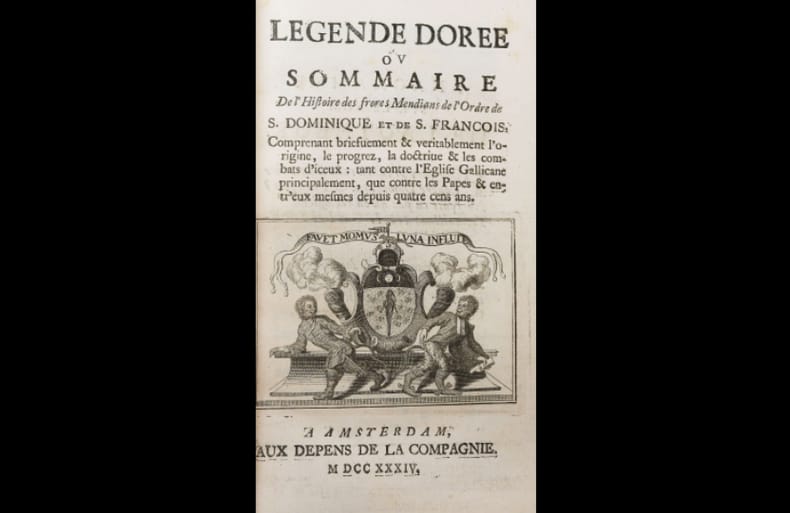
173423640Amstardam, Aux Dépens de la Compagnie, 1734. 2 volumes in-12 (10 x 18 cm) maroquin citron à long grain, dos à nerfs ornés de petits fers dorés, roulette dorée encadrant les plats et à l'intérieur des plats, gardes et doublures de papier rose, tranches dorées. (22)-396 et 419 pages. (Reliure signée Bozérain jeune).
179193718London, printed for J. Johnson, 1791, in-4, Front, XII-214-126-[2] pp, 9 pl. dont 1 depl.; front, [2]-IX-197 pp, 9 pl, Reliure ancienne, dos lisse, plats de veau brun rapportés, Célèbre poème scientifique du grand père de Charles Darwin, Erasmus Darwin (1731-1802). Cet exemplaire comprend la première édition de la première partie (The Economy of Vegetation) et la troisième édition de la deuxième partie (The Loves of the Plants), enrichie de deux planches supplémentaires par rapport à la première édition de 1789. Le Jardin botanique fut publié de manière inversée, selon le souhait de l'auteur, qui fit d'abord paraître la seconde partie de l'ouvrage (1789 et 1790), la jugeant plus apte à divertir et charmer. Comme dans les autres oeuvres d'Erasmus Darwin, ce poème contient un grand nombre d'informations scientifiques souvent avancées. La première partie, plus scientifique, couvre la philosophie naturelle et fait état de nombreuses recherches et inventions contemporaines, telle que l'histoire du cosmos. En seconde partie, l'auteur explique le système de la reproduction sexuée de Linné avec les propriétés remarquables de certaines plantes en particulier. L'aïeul de Charles postule que la reproduction sexuelle est au coeur des changements et des progrès de l'évolution, tant chez les humains que chez les plantes. Cette conception d'une transformation progressive des espèces appartient aux sciences de la reproduction et rejoint les théories pré-évolutionnistes qui sont apparues à l'aube du XIXe siècle (Laniel-Musitelli). Néanmoins, son petit-fils, Charles, déclara que la théorie d'Erasmus n'avait pas eu d'effet sur L'origine des espèces. Le Jardin botanique est également précieux pour son illustration, qui comporte deux frontispices, 18 planches et une vignette dans le texte : 5 des planches du volume I ont été gravées par William Blake, soit 4 gravures du vase de Portland et la planche de la Fertilisation de l'Égypte, d'après un dessin de Johann Heinrich Füssli (Henry Fuseli), célèbre peintre du Cauchemar. Ex-libris gravé de Marcus Jacobson. Coins et dos anciennement refaits. Épidemures sur les plats. Légères rousseurs et salissures sur les premiers feuillets. Garrison & Morton n° 8921. Sophie Laniel-Musitelli, "Erasmus Darwin : naissance du transformisme dans le texte poétique". In Bulletin d'histoire et d'épistémologie des sciences de la vie, 2011/1 (Volume 18), p. 25-40. Couverture rigide
1797D19679DERBY: J. Drewry for J. Johnson 1797. First Edition. Paperback. Near Fine. 4to. 128 pp. including half-title. With engraved frontispiece of the grounds of Ashbourne School. ORIGINAL WRAPPERS. Housed in attractive custom box. Written for his two illegitimate daughters who were known as the Misses Parker Darwin covers a number of topics in this treatise on female education. "Education should draw the outline and teach the use of the pencil; but the exertions of the individual must afterwards introduce the various gradations of shade and colour must illuminate the landscape and fill it with the beautiful figures of the Graces and Virtues" preface. He recommends science subjects for girls as well as visits to factories and foundries. Also included is a fifteen-page list of recommended books for studying further one of the many subjects touched upon here. Darwin 1731-1802 grandfather of Charles Darwin was a poet naturalist as well as a prominent physician. He assisted in setting up the Ashbourne School and in furtherance of his belief in the importance of intellectual pursuit for all. He had this work published by Johnson an important radical bookseller of the period who was responsible for among many other works Wollstonecraft's Vindication of the Rights of Women. <br/><br/> J. Drewry for J. Johnson paperback
17951262351795. London: Johnson 1795-94. <br /> <br /> 2 vols. in one 4to xx 218 124 2 directions to binder and advertisement; 2 viii 200 2 directions to the binder lacking the errata and ads pp. With a frontispiece to each volume ten plates in vol. I and 8 in vol. II. Early half calf marbled boards newly rebacked in calf with gilt-lettered label. A very good copy if a little aged -- early manuscript note loosely inserted about the Portland Vase copied from the Morning Chronicle c. 1796.<br /> <br /> § Best edition. 6 plates are engraved by Blake the best known being Fertilization of Egypt and Tornado both after Fuseli. The third edition of part one is the only edition to include the striking Tornado plate. At page 87 appears the enigmatic circular image of an African man in chains titled "Am I not a man and a brother." Bentley 450B and C. Essick William Blake's Commercial Book Illustrations XXI.<br /> The Morning Chronicle was a newspaper founded in 1769 in London. It was notable for having been the first steady employer of essayist William Hazlitt as a political reporter and the first steady employer of Charles Dickens as a journalist. unknown
17971978Derby: J. Drewry 1797. First edition. Contemporary quarter calf over marbled boards; spine ruled in gilt with red morocco label; all edges dyed yellow. Boards and spine rubbed; some chipping along edges. Original stab holes visible in gutter margins. Previous owner's bookplate on front pastedown; ink signature of Mary Wolley to front free endpaper; light foxing. Quarto collates complete with half title and engraved frontispiece: viii 9-128. Bound after Fosbrooke T.D. The Economy of Monastic Life. Glocester: Printed by R. Raikes 1792. First edition dedicated to Edward Jenner who is also listed as a subscriber. Internally a copy in excellent condition.<br/><br/>The grandfather of the illustrious Charles Darwin Erasmus Darwin wrote this treatise on the education of young women to support his own daughters' school at Ashbourne. Darwin's treatise takes a comprehensive view of women's education suggesting that it should reach beyond social skills such as the "perpetual appearance of attention" polite dancing and flattering dress and into formal intellectual pursuits including literature history mathematics and the natural sciences. While he promoted women's education in part to improve the likelihood of companionate marriages Darwin's text tentatively acknowledges that a marital partnership can only function happily when both parties have an intelligent understanding of the world and the ability to participate in it. "A radical campaigner for equality he condemned slavery supported female education and opposed conventional Christian ideas on creation" Farra. With a bookplate from the library of the Wolley family this particular copy has the ownership signature of female reader Mary Wolley. J. Drewry unknown books
17911277661791. First Edition. BLAKE William engraver DARWIN Erasmus. The Botanic Garden; A Poem in Two Parts. London: J. Johnson 1791 1791. Two volumes in one. Quarto contemporary full brown mottled calf rebacked burgundy morocco spine label. $3300.First edition of Part I third edition of Part II of Erasmus Darwin's chief poetical work illustrated with two engraved frontispieces and 18 plates one from a painting by Henry Fuseli five engraved by William Blake.""The chief source of Erasmus Darwin's literary fame during his lifetime The Botanic Garden contains a great deal of important and frequently advanced scientific information in the nearly 300 footnotes and the 115 pages of appendices to its verses. Part I 'The Economy of Vegetation' involves a far-reaching survey of science and technology with significant sections on evolutionary theories and numerous footnotes on electrical phenomena. Part II 'The Love of the Plants' is a 'single-minded catalogue of vegetable sex-life"" Norman. Darwin describes plant reproduction according to the Linnaean system ""by means of a most ingenious and amusing personification of each plant and often even of the parts of the plant. It is significant that botanical notes are added to the poem and that its eulogies of scientific men are frequent"" Britannica. Darwin's Garden is also important for the five plates in Part I engraved by William Blake: ""The Fertilization of Egypt"" engraved after the painting by Henry Fuseli and four engravings of the Portland Vase. Darwin the grandfather of Charles is notable for his ""exposition of the form of evolutionism afterwards expounded by Lamarck"" DNB. Inexplicably Part II was published first in 1789 here present in the 1791 third edition; Part I followed in 1791 present in the first edition. Wilson 343. Hunt II lxvii. Nissen 451. Bentley 450A. Keynes 103. Bookplate; early ink shelf markings to front flyleaf.Occasional spotting or offsetting from plates to text. Some wear to corners and board edges. A very good copy. unknown
172777991727 A Amsterdam: Chez François lHonoré, 1727. In-12: 10.5 x 17 cm, 2 ff. de front. grav., 13 ff. n. chiff. de titre, privilège, avertissement, préface du traducteur, préface dErasme, 340 pp. + 6 pl. grav. dép., 10 ff. n. chiff. de tables. Très belle édition de lEloge de la Folie dErasme illustrée de deux titres-frontispices, de 75 figures à mi-page inspirées des dessins dHolbein et de 6 pl. grav. dépliantes. Le titre que nous lui connaissons aujourdhui, dEloge de la Folie, apparaît pour la première fois dans la traduction de Gueudeville, dont la première édition remonte à 1713. Reliure de lépoque en veau brun. Dos à cinq nerfs marqués de filets avec pièce de titre en maroquin rouge. Tranches marbrées. Ex-libris: «E. C. de la Noue» de la famille du Valois, de Noüe. Ex-libris: "André Gutzwiller». Ex-libris manuscrit sur la page de titre «Ex librio Reuest». Reliure restaurée aux coiffes. Reliure solide et gravures très agréables.
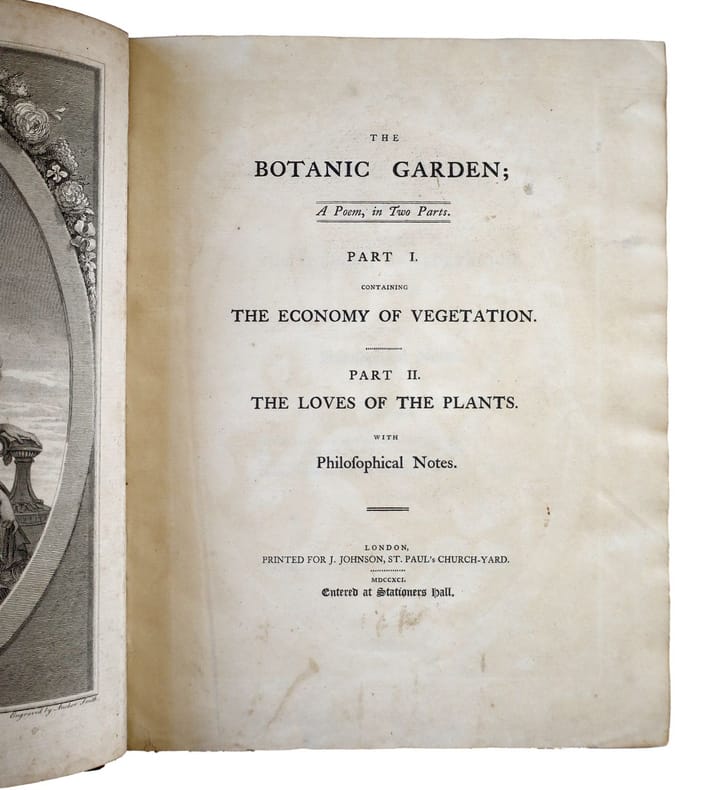
179143999London: J. Johnson 1791. <p>Darwin Erasmus 1731-1802. The botanic garden: A poem in two parts . . . 4to. xii 214 126 2; 2 ix 197 1pp. General title-leaf misbound before title-leaf to Part II. 20 engraved plates including 5 by William Blake 1757-1827; 2 of the plates are after drawings by John Henry Fuseli 1741-1825. London: J. Johnson 1791. 275 x 207 mm. Half calf gilt marbled boards in period style. Minor foxing and offsetting small marginal stains on two or three plates not affecting the images marginal tears in signature S and one plate repaired but very good. </p> <p> First Edition of Part I; third edition of Part II containing two more plates than the first edition of 1789. Darwin's first major literary work and the chief source of his fame during his lifetime. "The Botanic Garden an annotated scientific poem in Augustan couplets appeared in two parts of which the second The Loves of the Plants 1789 was published before the first The Economy of Vegetation 1791. Darwin decided to publish the second part of the work first because it was better suited ‘to entertain and charm.' The first part of the work is more ambitious than the second covering all natural philosophy and embodying many of the researches and inventions of Wedgwood Watt Boulton and others. The design of the totality was Darwin wrote ‘To enlist Imagination under the banner of Science . . . to induce the ingenious to cultivate the knowledge of botany . . . and recommending to their attention the immortal works of the celebrated Swedish naturalist—Linnaeus'" Dictionary of Scientific Biography. The Botanic Garden is also important for the five plates in Vol. I engraved by William Blake: four engravings of the Portland vase and the "Fertilization of Egypt" after a design by Fuseli. Keynes Blake 103. King-Hele Erasmus Darwin pp. 97-119. </p> . J. Johnson unknown books
179143999London: J. Johnson 1791. <p>Darwin Erasmus 1731-1802. The botanic garden: A poem in two parts . . . 4to. xii 214 126 2; 2 ix 197 1pp. General title-leaf misbound before title-leaf to Part II. 20 engraved plates including 5 by William Blake 1757-1827; 2 of the plates are after drawings by John Henry Fuseli 1741-1825. London: J. Johnson 1791. 275 x 207 mm. Half calf gilt marbled boards in period style. Minor foxing and offsetting small marginal stains on two or three plates not affecting the images marginal tears in signature S and one plate repaired but very good. </p> <p> First Edition of Part I; third edition of Part II containing two more plates than the first edition of 1789. Darwin's first major literary work and the chief source of his fame during his lifetime. "The Botanic Garden an annotated scientific poem in Augustan couplets appeared in two parts of which the second The Loves of the Plants 1789 was published before the first The Economy of Vegetation 1791. Darwin decided to publish the second part of the work first because it was better suited 'to entertain and charm.' The first part of the work is more ambitious than the second covering all natural philosophy and embodying many of the researches and inventions of Wedgwood Watt Boulton and others. The design of the totality was Darwin wrote 'To enlist Imagination under the banner of Science . . . to induce the ingenious to cultivate the knowledge of botany . . . and recommending to their attention the immortal works of the celebrated Swedish naturalist-Linnaeus'" Dictionary of Scientific Biography. The Botanic Garden is also important for the five plates in Vol. I engraved by William Blake: four engravings of the Portland vase and the "Fertilization of Egypt" after a design by Fuseli. Keynes Blake 103. King-Hele Erasmus Darwin pp. 97-119. </p> . J. Johnson unknown
17912091202133203778J. Johnson 1791. Soft Cover. Fine. Volume: 1 J. Johnson paperback