MAISON (Albert)MareMagnum
Medicinae Prof. Hafni. Engraved Portrait
41242Margin: 75x44 mm. All sides trimmed. unknown books

Jeremy Norman & Co., Inc. · États-Unis25,00 $US≈ 21,15 €
4 535 résultats
In-8, 252p.
Ex-library copy with usual stamps, call numbers and pocket. 1 small tear to DJ. Gift inscription from author to Sister Marie Therese. ; The last decade has seen a renewal of interest in the works of Erasmus. Much has been written on the educational and editorial writings of that great humanist of the northern Renaissance, but relatively little on his fictional work. This book deals with the fiction of Erasmus and what it contains of instruction and delight. The attention of the study is focused primarily on the four satiric works: The Praise of Folly, the Colloquies, Julius Secundus, exclusus, and Ciceronianus, although the author, in the process of analyzing and appraising, looked for analogues and explanations in the educational exegetical works. Three aspects of Erasmus' thought are considered. The first is his insistence on man's capacity for betterment through good teaching -- the formal teaching of a preceptor, or the incidental teaching of a good satirist or storyteller. The second is his notion of what man is and to what end he is to be educated. (Man is, of course, bent to knowledge and virtue, but one cannot afford to be too simple in one's appraisal of Erasmus' moral emphases -- the moral life involves both doer and spectator and is strongly dependent on the thinking process, although not divorced from the act of willing, and, activated by faith and the grace of God, is never far removed from creed and devotion. ) The third aspect is Erasmus' special use of irony -- an irony both dramatic and satiric --subtle and various, and doubly pronged so that it punctures what it praises but also questions the too obvious alternative, and leaves the reader pondering the whereabouts of the right and the perimeters of truth. To quote the author: 'It seems to me that the fictional works are the exempla that give life and specificity to the great theories of a great man, and a study of them should not be without interest.' ; Erasmus studies; 198 pages; Signed by Author
88683Amsterdam, Lettergieterij 'Amsterdam' voorheen N. Tetterode, 1923.
41242Margin: 75x44 mm. All sides trimmed. unknown books
1960221214New York Heritage Press ca. 1960. 1960. Small 4to. Translated from the Latin text by Harry Carter. Introduction by Hendrik Willem Van Loon. Illustrated with woodcuts by Franz Masereel. Original 1/2 brown cloth over decorated boards; matching board slipcase. Very good. Bookplates of Vincent Lloyd Russell and J. Lauraine Fields. Hardcover. New York, Heritage Press [ca. 1960]. hardcover books
Embry 89635Heritage Press N.d. Fine in fine faintly toned publisher's slipcase. Woodcuts by Franz Masereel. Cloth backed boards no dust jacket. Heritage Press, N.d. hardcover books
grand in-8°, 162-21 pages, -, index, reliure plein simili ornee de l'editeur. Bel exemplaire. [WE-CA]
30341Göttingen, Vandenhoeck & Ruprecht, (1969).
55014Amst., Amsterdam University Press, 1995.
103804Basel, Schwabe Verlag, Schwabe Verlagsgruppe 2022. 248 Seiten., 8°. ill. OKlappenbroschur.,
198823022München, UNI-Druck, 1988. 268, [20] S. : 60 s/w-Abb. 8°. OKart. mit OUmschl.
7443Maison d'Erasme, Anderlecht, 1964. In-4, broché sous couverture rempliée et illustrée, 46 pp. Préface, par Joseph Bracops, bourgmestre d'Anderlecht - Le passé d'Anderlecht - Le chapitre - A l'Emblème du Cygne - La maison d'Erasme - Erasme - Erasme à Anderlecht - Histoire de la maison d'Erasme - Une leçon d'humanisme dans un ...
br. Erasmo e Voltaire hanno attirato il nostro interesse in virtù del ruolo che hanno avuto nei momenti di svolta della cultura occidentale. Finora non era mai stato proposto uno studio esaustivo che delineasse un ampio confronto tra queste due importanti figure, alla luce delle diverse fasi delle loro carriere filosofiche, dei loro testi e della loro rilevanza storica. In questo saggio Ricardo Quinones dimostra che questi autori contribuirono in modo rilevante al cambiamento nelle loro epoche, e chiarisce perché essi possono essere considerati dei maestri del moderno liberalismo.
1992B78943Brussel, Paleis der Academiën 1992 156pp.+ 9 illustraties buiten tekst, 26cm., in de reeks "Mededelingen van de Koninklijke Academie voor Wetenschappen, Letteren en Schone Kunsten van België. Klasse der Letteren" Jg.54 Nr.1, [bevat o.m.: GERLO A.: De Erasmusbrief uit de Cranevelt-collectie 1520-1522. Context en overlevering (pp.1-23), STEEL C., De mens is meer dan de sekse. Joachim Eriugena over de differentie der seksen (pp.83-106), LYON B., The influence of Emile Durkheim on Marc Bloch and Jules Romains (pp.123-146), ], mooie staat, B78943
156pp.+ 9 illustraties buiten tekst, 26cm., in de reeks "Mededelingen van de Koninklijke Academie voor Wetenschappen, Letteren en Schone Kunsten van België. Klasse der Letteren" Jg.54 Nr.1, [bevat o.m.: GERLO A.: De Erasmusbrief uit de Cranevelt-collectie 1520-1522. Context en overlevering (pp.1-23), STEEL C., De mens is meer dan de sekse. Joachim Eriugena over de differentie der seksen (pp.83-106), LYON B., The influence of Emile Durkheim on Marc Bloch and Jules Romains (pp.123-146),… ], mooie staat, B78943
33009P., Ramsay, 1977, in 8° broché, XIX-111 pages.
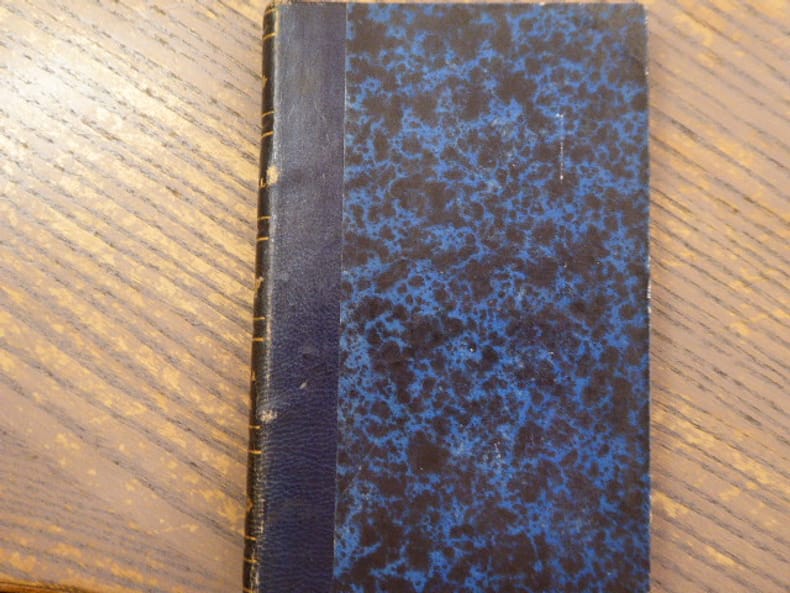
666527Aux Bureaux De La Publication Paris 1867 In-8 ( 140 X 9 mm ) de 148 pages, demi basane bleue, dos ornés de filets dorés. Coins frottés.
Collana " Gli Immortali". In 8° piccolo. Legatura editoriale tutta tela, fregi e titoli in oro impressi al piatto e al dorso.Prima serie. Senza data. Ottima copia. Pp. 203
198817379Basel: Schwabe, 1988. 248 S., Originalleinen mit Schutzumschlag.
1936F38751Rotterdam, 1936 66pp., 24x16cm.
B57091Anderlecht, l'Administration communale d'Anderlecht 64pp.avec ills.hors-texte, sur papier "Original mill", tirage limité à 250 exemplaires: no.21, cart., bon état