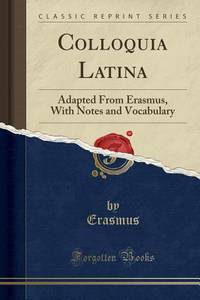
ERASMEBiblio.com
4 535 résultats
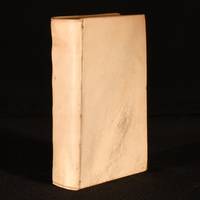
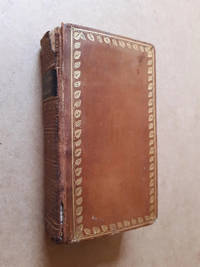
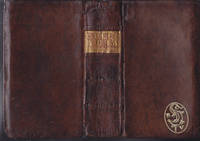
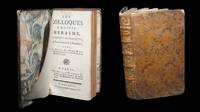
32222A Paris chez Brocas & Humblot 1763. Un vol. au format gd in-16 147 x 88 mm de 1 f. bl. 2 ff. n.fol. 233 pp. 1 f. n.fol. et 1 f. bl. Reliure de l'ÂŽpoque de pleine basane glacÂŽe et marbrÂŽe havane plats jansÂŽnistes dos ˆ nerfs ornÂŽ de filets gras ˆ froid caissons d'encadrement dorÂŽs filets verticaux dorÂŽs fleurons dorÂŽs titre dorÂŽ palette dorÂŽe en queue tranches rouges. Texte en latin avec traduction franÂaise en regard par Dumas. ''Par l'importance de leur auteur par leur genre et leur objectif les ÇÊColloquesÊÈ d'ƒrasme sont les textes les plus reprÂŽsentatifs de l'esprit des humanistes du XVIe siÂcle. ƒrasme n'est-il pas le plus connu de ces intellectuels chrÂŽtiens ˆ la fois critiques et idÂŽalistes qui croient en la force de l'ÂŽducation Ces dialogues prÂŽsentÂŽs sous une forme pseudo-thŽ‰trale et inspirÂŽs de l'AntiquitÂŽ sont destinÂŽs ˆ faire rÂŽflÂŽchir sans ennuyer. Savoureux ces textes ne sont pas non plus dÂŽnuÂŽs d'humour. Leur succÂs fut grand malgrÂŽ les rÂŽticences marquÂŽes de quelques esprits sourcilleux. QuÂŽrard III La France littÂŽraire p. 27 pour une ÂŽdition de 1762. DÂŽfaut affectant chacune des coiffes. Deux angles ÂŽlimÂŽs. DiscrÂtes altÂŽrations superficielles affectant par ailleurs la reliure. Quelques claires rousseurs ou t‰ches dans le corps d'ouvrage Cerne claire en marge supÂŽrieure des feuillets. Du reste bonne condition. b42961 unknown
1020529180.Ghardcover. Good. Access codes and supplements are not guaranteed with used items. May be an ex-library book. hardcover
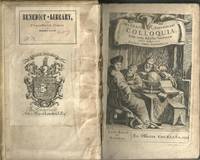
1693GT802Amsterdam: Blaviana 1693. Original issue . Hardback. Vg. 8vo. xii78420pp index. Original full pannelled calf. Apine lacking some copmpartment calf but a sound copy. The outer edges have been near a damp wall at some point affected the front edges but a complete copy. Attractive engraving as a frontis. with Erasmus seated with scolars at his table. A globe rests between them. <br/> <br/> Blaviana hardcover
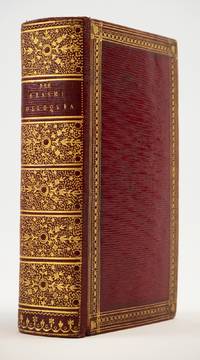
1643ST20492Lugduni Batavorum Leyden: Bonaventura Elzevier and Abraham Elzevier 1643. Second Elzevier Edition. 137 x 78 mm. 5 1/2 x 3". 12 p.l. 672 44 pp. 2 leaves. <br/> ELEGANT EARLY 19TH CENTURY RED STRAIGHT-GRAIN MOROCCO VERY ELABORATELY GILT BY BOZERIAN unsigned but see below covers framed by bead-and-star roll enclosed with double gilt fillets leaf tools at corners. smooth spine in compartments with large central fleuron of floral lancets emanating from central circlet in a richly stippled ground small circles at corners one compartment with gilt lettering cresting tulip and violet roll at foot of spine turn-ins with bead-and-star roll marbled endpapers vellum flyleaves all edges gilt. Woodcut initials headpieces and tailpieces numismatic portrait tondo fine engraved title page by C. C. Dusend showing Erasmus gazing through a telescope at the Godly orb seen through parted clouds. Willems 552; Rahir 546; USTC 1027918. For the binding: Culot "Jean Claude Bozerian" Roulette 9 Plate I and Palette 12 Plate X. Just barely perceptible rubbing to joints and extremities one leaf with tiny burn hole affecting a couple of words intermittent minor foxing negligible ink spots here and there other trivial imperfections but an extremely attractive copy the text fresh and clean and the very well-preserved binding with lustrous leather and bright gilt.<br/> <br/> This is a remarkably pretty copy of an extremely influential but generically elusive work printed by a legendary press and bound by the founder of a celebrated French binding dynasty. First published in 1524 the "Colloquia" comprise 63 conversations originally written for Erasmus' students on varied and overlapping topics but these urbane meditations soon became widely read as they covered subjects that intrigued the important thinkers of the day. Their influence was so profound that it is not saying too much to claim that they helped to speed the Reformation. Although they are difficult to classify precisely one could categorize them as including in general terms exposure of ritualistic fallacies invective against corruption within the church examination of popular imposture deploring of contemporary personal sins practical advice for laymen and miscellaneous discussion of amusing topics. In specific terms the text takes on such controversial topics as the value of pilgrimage celibacy and abstinence from meat on Fridays and other prescribed days. Erasmus' "Colloquia" was frequently published by the Elzeviers once in French and a total of nine times in Latin. The text was universally adopted for school use up through the 18th century. Although our lovely little binding is unsigned Culot firmly identifies its tools as those used by Jean-Claude Bozerian 1762-1840. He was the elder of the Bozerian brothers François is referred to as "le jeune" and was active in Paris from 1795 to about 1810. He began his career in Lyon as an apprentice bookseller printer and bookbinder eventually deciding to focus on the latter craft. Marriage to the widow of binder Pierre Boulier allowed him to establish a binding workshop in Paris where he was joined by his brother. His bindings were soon much in demand by French bibliophiles who appreciated their superior materials tasteful design and flawless execution--all characteristics that are plainly evident in the present case. Bonaventura Elzevier and Abraham Elzevier unknown
B9781019409206Hardback. New. hardcover
B9781021192837Paperback / softback. New. paperback
A9781165953110New. unknown
ria9781020221026_inpHardcover. New. New Book; Fast Shipping from UK; Not signed; Not First Edition; Una raccolta di dialoghi e satire dell'umanista olandese Erasmo da Rotterdam che ha fatto epoca nella letteratura europea del XVI secolo. Gli 'Colloquia Familiaria' e l''Encomium Moriae' sono opere fondamentali per la conoscenza dell'u hardcover
ria9781019409206_inpHardcover. New. New Book; Fast Shipping from UK; Not signed; Not First Edition; This book is a collection of dialogues and essays written by the Dutch humanist and philosopher Desiderius Erasmus. The text includes discussions on a wide range of topics including religion politics literature and philosophy. The b hardcover
ria9781018195490_inpHardcover. New. New Book; Fast Shipping from UK; Not signed; Not First Edition; This work has been selected by scholars as being culturally important and is part of the knowledge base of civilization as we know it.This work is in the "public domain in the United States of America and possibly other nations. Withi hardcover
B9781018195490Hardback. New. hardcover
A9781018195490Hardback. New. hardcover
B9781165953110New. unknown
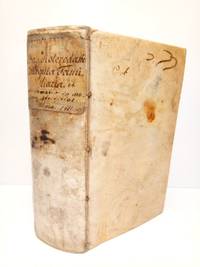
171248094Ulmae Ulm: Sumptibus Danielis Bartholomaei M DCC XII 1712.- 7 h. 869 p. 11 h. y 88 p. de la segunda obra con el mismo pie de imprenta y fecha: Grabado al cobre alegórico in frontis; 8º 173 x 115 cm; Portada a dos tintas; Sig. :7 A-Z8-Aa-Zz8-Aaa-Kkk8 / a-e8 f4; Texto en latín; Enc. de la época en Pergamino rígido a la romana lomo con título rotulado a mano cortes pintados y un ex-libris grabado al cobre de "Ex Bibliotheca Christiani Friederici Schnaussii" grabado por J. B. Gans al verso de la tapa anterior.- RARO. La encuadernación firme y fuerte aunque con diversas señales del tiempo. Al verso de la tapa anterior tienenunas notas manuscritas otra pequeña notita manuscrita en la portada. Por lo demás el interior del libro se encuentra limpio y sin ninguna mancha reseñable. El grabado del frontis tiene una pequeña reparación por detrás sin importancia. El título del libro va manuscrito sobre un tejuelo de pergamino en la cabecera del lomo. Dicho esto que es preceptivo se puede considerar el libro como en muy buen estado. Este libro contiene los Coloquios una especie de manual de cultura clásica para la vida renacentista así como el famoso Elogio de la Locura con un prefacio de Tomás Moro. LITERATURA Y ESTUDIOS LITERARIOS EXTRANJEROS DE LOS SIGLOS XVI-XXI Libro en latín Danielis Bartholomaei hardcover
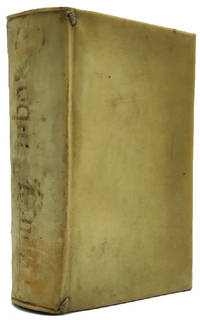
1693960Z11Amsterdam: Ex Typographia Blaviana 1693. Leather. Very Good Indeed. 8" by 5". None stated. A collection of Latin works from the historic humanist philosopher and theologian Desidarius Erasmus bound in full vellum. A collection of works from Erasmus first published as 'Colloquia Familiaria' in 1518. With a fantastic monochrome wood engraved title page. A collection of dialogues and works by the historic late fifteenth-early sixteenth century philosopher humanist Catholic theologian Desiderius Erasmus. This collection often referred to as the 'Colloquies' features discussions on a wide variety of topics and were first intended as Latin school dialogue exercises and includes notable works such as 'Naufragium' which describes a shipwreck 'Amicitia' which is a collection of folk stories involving animals and 'Epicureus' which discusses ancient Greek philosophical movements. The register runs continuously as -6 A-Z8 Aa-Zz8 Aaa-Eee2. Collated complete. Written in the original Latin. Bound in contemporary full vellum. Bound in full contemporary vellum. Original endpapers and blanks retained. Externally very smart with handling marks and slight fading to the text to the spine. Bookplate of 'Sir John Eliot Bart' to the front pastedown with closed tears to the pastedowns. Internally firmly bound with generally clean and bright pages with minimal age toning and the odd minor spot only. Very Good Indeed Ex Typographia Blaviana hardcover
1664020084Lugduni Batavorum et Roterodami: Ex Officina Hackiana 1664. Inteira de Pergaminho. Bom / Good / Bon. In-8º190x122. 1 vol. de 12-784-18 pp. Portada gravada a buril em chapa de cobre representando Erasmo sentado a uma mesa sobre a qual está um globo e alguns livros e à sua volta três personagens que ouvem e comentam entre si o que diz o mestre. Encadernação em inteira de pergaminho Ex-libris armoriado inglês. Humanista holandês Erasmo de Roterdão foi educado com os padres augustinianos estudou teologia na Holanda e em Paris e doutorou-se em Turim em 1506. Trabalhou como perceptor privado preparando para os seus alunos uns opúsculos pedagógicos que com o tempo se converteram em importantes livros da cultura europeia. Em Itália foi discípulo de Lorenzo Valla. Viajou para Inglaterra onde foi hospede de Tomás More onde escreveu o célebre Elogio da Loucura e estudou a língua grega. Em Veneza trabalhou com Aldo Manuccio numa composição de provérbios os Adagia. Preparou uma edição grega do Novo Testamento que causou escândalo. Realizou depois diversas edições comentadas de textos clássicos. Afastando-se das posições de Lutero saíu de Basileia entretanto adepta do protestantismo e foi viver para Friburgo durante alguns anos onde escreveu estes Colloquia. Brunet II 1041 <br/> <br/> Ex Officina Hackiana unknown
16516823Amsterdam: Jodocum Janssonium 1651. Hardcover — Tapa dura. 134x72mm. 5¼x2¾". Amsterdam Jodocum Janssonium 1651. En 12º 134 x 72mm. Frontispicio grabado 24 672 44 pp. 1 grabado a toda página. Encuadernación de la época en pergamino a la romana. Temprana edición de los <em>Coloquios</em> de Desiderio Erasmo que contienen un manual de enseñanza de latÃn incluyendo ejercicios y juegos de palabras con fines educativos y un documento sobre cómo la cultura clásica podrÃa servir como modelo en la vida renacentista; finalmente un folleto religioso de tintes reformistas. Buen ejemplar. Jodocum Janssonium hardcover
0366208489.Ghardcover. Good. Access codes and supplements are not guaranteed with used items. May be an ex-library book. hardcover
036595134X.Gpaperback. Good. Access codes and supplements are not guaranteed with used items. May be an ex-library book. paperback
1729S6981<p>In Latin. Hard cover 14x21 cm 1278424 pp.; net weight 950 gr.</p> Adrianum Beman & Samuelem Luchtmans hardcover
1636#BIBLIO-1180<p>Des. Erasmi Roterod. Colloquia nunc emendatiora; cum Coronis Apologetica Pro Colloquiis Erasmi ex ipsius scriptis quantum per otium licuit fideliter collecta a p. s. accedit ejusdem de colloquiorum vtilitate dissertatio</p><p><em>Desiderius Erasmus Roterodamus of Rotterdam - Colloquies now emendated/corrected; with an Apologia on the Usefulness of the Colloquies of Erasmus from his writings as far as leisure permitted faithfully collected by P. S. with the same dissertation on the usefulness of colloquia.<br /></em><br />Lvgd. Batavorvm: ex officina Elzeviriana <em>Leiden Netherlands: Elzevir Press</em>. Anno 1636. Believed to be first Elzevir printing. Hardback later full calf binding perhaps late 18th century or 19th century with black title label gilt-blocked title decoration and bands. Blue cloth ribbon bookmark sewn into binding. Duodecimo/12mo measures around 3" x 5 1/8" x 1 3/8". Pagination: 4 xxiv 672 44 8 pp. Title page contains woodcut of Erasmus using a telescope by Cornelius Claesz Dusend. An attractive volume.<br />Boards in good condition for age only minor scuffing and marking very clean and gilt detail vivid though a little bumping to corners and tearing to front outer corner. Spine torn at head and a little at tail extending onto hinges with some loss at head of spine a little darkening to torn areas possible signs of repair attempts. A little discolouration and a lot of rubbing to gilt detail on spine which has faded to some degree as a result. Binding firm. All page edges gilt some scuffing and dulling especially to upper edges which show some marking but mostly clean and still quite vivid to lower and fore-edges. Attractive marbled endpapers. A little writing to verso of front free endpaper. Minor light foxing and staining to preliminary and hindmost pages. A little scattered light foxing and to some pages and occasional other marking but otherwise very clean for age and very crisp with no apparent underlining marginalia etc. See pictures for further information. About the author/work: <em>Desiderius Erasmus Roterodamus; 28 October c. 1466 – 12 July 1536 commonly known in English as Erasmus of Rotterdam or simply Erasmus was a Dutch Christian humanist Catholic priest and theologian educationalist satirist and philosopher. Through his works he is considered one of the most influential thinkers of the Northern Renaissance and one of the major figures of Dutch and Western culture. </em> <em>Erasmus was an important figure in classical scholarship who wrote in a spontaneous copious and natural Latin style. As a Catholic priest developing humanist techniques for working on texts he prepared pioneering new Latin and Greek scholarly editions of the New Testament and of the Church Fathers with annotations and commentary that were immediately and vitally influential in both the Protestant Reformation and the Catholic Reformation. He also wrote On Free Will The Praise of Folly The Complaint of Peace Handbook of a Christian Knight On Civility in Children Copia: Foundations of the Abundant Style and many other popular and pedagogical works.</em> <em>Erasmus lived against the backdrop of the growing European religious reformations. He developed a biblical humanistic theology in which he advocated the religious and civil necessity both of peaceable concord and of pastoral tolerance on matters of indifference. He remained a member of the Catholic Church all his life remaining committed to reforming the church from within. He promoted what he understood as the traditional doctrine of synergism which some prominent reformers such as Martin Luther and John Calvin rejected in favour of the doctrine of monergism. His influential middle-road approach disappointed and even angered partisans in both camps.</em><br /><em>Colloquies Latin title Colloquia familiaria is one of the many works of the "Prince of Christian Humanists" Desiderius Erasmus. First published in 1518 as Latin dialogues for schoolboy exercises the work expanded over the following decades with witty but more serious and controversial content. Among other things the pages ".held up contemporary religious practices for examination in a more serious but still pervasively ironic tone" </em><em>Source: Wiki</em></p> Elzeviriana / Elzevir hardcover
1661647Paris: Apud Claudium Thiboust 1661. Third edition. Contemporary full speckled calf gilt-tooled spine in six compartments with raised bands and gilt title “Colloq. Erasmi.†Binding is complete but well worn with rubbing edge wear and chipping at head and tail of spine; corners rounded joints starting yet sound. <br /> <br /> A mid-17th-century Parisian edition of Erasmus of Rotterdam’s famous Colloquia FamiliarÃa one of the foundational works of Renaissance humanism and early modern pedagogy. Originally written as conversational exercises for students learning Latin Erasmus’s dialogues evolved into a brilliant and witty critique of contemporary morals superstition and scholastic excess. Through satirical exchanges on everyday subjects—friendship marriage travel religion and education—Erasmus offers insight into both Christian ethics and humanist reform. The Colloquia enjoyed immense popularity for two centuries as both a language text and a guide to civility and it remains a monument of Renaissance learning style and social commentary.<br /> <br /> This 1661 edition edited by Nicolas Mercier includes scholarly notes a Latin–French life of Erasmus and extensive commentary designed for academic study. The volume opens with an elaborate engraved frontispiece portrait of Erasmus at his desk beneath cherubs holding a banner the emblematic motto Nulli cedo “I yield to no one†above him. The typography and ornamentation typify Parisian classical printing of the reign of Louis XIV with woodcut initials and headpieces throughout. The book closes with Mercier’s biographical essay Vita Desiderii Erasmi Roterodami and an index of the numerous colloquies—each a mirror of Erasmus’s wit and moral philosophy.<br /> <br /> Condition: Text block solid pages evenly toned with occasional foxing and light damp staining. Small early ink inscriptions on endpapers and title some early marginal notes. Engraved frontispiece crisp and well preserved. Overall- good. Apud Claudium Thiboust unknown
171235884Ulm Dan. Bartholomaeus 1712. 8vo. Contemp. full vellum. Title written in ink on spine. Engraved frontispiece. 1486923 pp. 88 pp. hardcover
0342-13Amsterdam Wetstein 1754. 12°. 524 S. 2 Bll. Mit gest. ill. Titel. Ldr. d. Zt. mit goldgeprägt. Rückensch. Gut erhaltenes Expl. Bautz I 1524ff. - "Seine »Colloquia familiaria« Gespräche in vertrautem Kreis ursprünglich eine Sammlung lateinischer Phrasen zu Unterrichtszwecken sind eine geistreiche und scharfe Satire auf die Bräuche Lebensgewohnheiten und die religiösen Gepflogenheiten jener Zeit." Amsterdam, Wetstein 1754. unknown
168114642Genève 1681. Nunc emendatora quibus accedunt notae recognitae & auctae a Davide Constantino Namenseintrag auf Innenseite d. Vorderdeckels 16°. Pgt. Literatur unknown