4 535 résultats
1557097858Paris: Robert Estienne 1557. Vellum. pp. 112 8; 128 16; 192 36 of 40: 2 leaves missing. 12mo. Vellum with hand-lettered spine and yapped edges with the ties missing. Each title shows the famous Estienne olive tree vignette on the title page first and last titles include a colophon. Very good. In "de Magistratibus" Fiocci lists and explains the offices of Roman priests and magistrates. This work was reprinted many times in the 15th-17th centuries. The second title which translates to "The Beauties of the Latin Language" was written in 1431 to praise the Latin language and advocate for its proper usage. The third is a reprint of Erasmus' Biblical paraphrases. All three titles were popular in the 16th century and these reprints are published by famous Parisien printer Robert Estienne who inherited the press from his father Henri in 1526: Francis I later made him the King's Printer. Robert Estienne unknown
55112FOUR VOLUMES IN 1. Contemporary vellum book-label of REVD. RICHARD DAUTIER signature of FREDERICK PRITCHARD 1831 one leaf with a marginal tear without loss a very good copy. FOUR VOLUMES IN 1. hardcover
155pp., 24cm., tekst in het Nederlands, Academisch proefschrift (Dissertatio historico-doctrinalis ad lauream in theologia consequendam, Pontificia Universitas Lateranensis, Academia Alfonsiana), stempeltje, label op omslag, verder in goede staat, R110229
1963R110229Roma, Biblioteca Alfonsiana 1963 155pp., 24cm., tekst in het Nederlands, Academisch proefschrift (Dissertatio historico-doctrinalis ad lauream in theologia consequendam, Pontificia Universitas Lateranensis, Academia Alfonsiana), stempeltje, label op omslag, verder in goede staat, R110229
5431, Gent, Erasmus,1962., Softcover, 16x24cm,119pp.
17773006455London and Paris: Barbou 1777. Joints chafed and head of spine slightly chipped. Duodecimo with a frontispiece to the first work; contemporary dark green morocco sides bordered and spine panelled in gilt all edges gilt. <p><p>The beautifully-printed Barbou edition of Utopia bound as often with the matching edition of Erasmus' Praise of Folly. </p> <p>The friendship between Sir Thomas More 1478-1535 and Erasmus 1469-1536 was one of the great scholarly alliances. More's Utopia 1516 was a revolutionary work of philosophy which inaugurated the entire tradition of the modern imaginary voyage but it was also a book to which a small coterie of his greatest friends contributed particularly including Erasmus. More also played an important part in turn in the writing of Erasmus' Moriae Enkomion - the 'praise of folly' but also a pun on the 'praise of More' - which is said to have been written whilst they were staying at More's London house. It was first published in 1511. </p> <p>This Barbou edition of both works is particularly attractive. The Barbou family was in business from the early sixteenth-century through to the beginning of the twentieth and was known in the later 1700s for their superb editions of the Latin and Greek classics not unlike a French Baskerville.</p> </p> . Barbou unknown
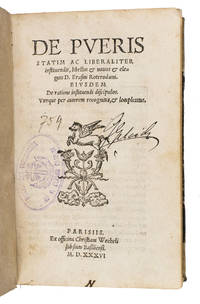
1536ABC_49637Paris: Chrétien Wechel 1536. Half vellum and brown sprinkled paper sides with the faded manuscript title on the spine red edges. 8vo. Ad 1 with Wechels woodcut device on the title page and 3 woodcut decorated initials. Ad 2 with Wechels woodcut device on the title page and the verso of the blank last leaf and 1 woodcut decorated initial. Ad 3 with a woodcut architectural frame on the title page and 2 woodcut decorated initials. Ad 4 with Frobens woodcut device on the title page and the verso of the last blank leaf. 4 works in 1 volume. With:2 IDEM. Responsio ad Petri Cursii defensionem nullo adversario bellacem.Paris Chrétien Wechel 1535.3 IDEM. Responsio ad epistolam paraeneticam clarissimi doctissimicque viri. Alberti Pii carporum principis. Paris Pierre Vidoux April 1529.4 IDEM. Purgatio adversus epistolam non sobriam Martini Luteri.Basel colophon: Hieronymus Froben and Nikolaus Episcopius April 1534. Together these four works capture the remarkable breadth of Erasmuss influence from his visionary humanist pedagogy to his forceful engagement in the theological controversies of the Reformation. Brought together in this volume they reflect both the moral urgency and intellectual sharpness that defined his contribution to early modern thought.Ad 1: First published in September 1529 De pueris statim ac liberaliter instituendis and De ratione instituendi discipulos represent Erasmus principal contribution to Renaissance pedagogy. He argues for the early and liberal education of children stressing mildness rather than severity moral formation alongside learning and the formative power of classical texts. Ad 2: An exceptionally rare edition of a polemic against the Louvain theologian Petrus Curtius in which Erasmus defends his humanist theology whilst ridiculing Curtius as a fighter without an adversary. First issued by Froben and Episcopius earlier that year with only that edition and the present Wechel edition extant; the text was not reprinted until the Opera omnia.Ad 3: A spirited reply to the accusations of Alberto Pio Prince of Carpi coupled with sharp extemporaneous notes against Edward Lee Beda. This double defence displays Erasmus wit and sharpness at the height of the Reformation debates. A very scarce edition; the editio princeps had appeared from Froben in March of the same year.Ad 4: An early witness to the high demand in 1534. Erasmus rejoinder to Luthers intemperate letter written in the wake of De servo arbitrio. Here Erasmus defends himself against charges of paganism whilst censuring Luthers furious and mendacious tone. After 1534 the text was no longer issued separately.With a manuscript owners inscription and a later purple stamp of the library of the Franciscan church and convent of Saint Clare in Kotor Montenegro on the title page of the ad 1. Further with a few manuscript annotations in the margins and some of the text underlined and crossed out throughout the work. The binding shows signs of wear the boards have been rubbed with some loss of material some occasional slight browning. Otherwise in good condition.l Ad 1: Adams 338; Inventaire chronologique des editions Parisiennes du XVIe siecle V no. 144; USTC 185690 1 copy; Vander Haeghen I 164; not in BM STC German; Ad 2: Inventaire chronologique des editions Parisiennes du XVIe siecle IV no. 1299; USTC 185562 1 copy lost; Vander Haeghen I 174; WorldCat 492052585 1 copy; cf. for the 1535 Froben edition see: Bezzel 1782; USTC 635442; VD16E3622; not in Adams; BM STC German; Ad 3: Adams 828; Inventaire chronologique des editions Parisiennes du XVIe siecle III no. 1758; USTC 181160; not in Vander Haeghen; BM ST C German; Ad 4: Vander Haeghen I 164; cf. Adams 809 later edition; USTC 635432 6 copies; VD 16 E 3481; not in BM STC German. Chrétien Wechel, hardcover
1850RO40199885Chaumas-Gayet, Bordeaux - Ach. Chairou, Agen. 1850. In-12. Broché. Bon état, Couv. légèrement passée, Dos satisfaisant, Intérieur frais. 72 pages. Petite annotation en page de faux-titre.. . . . Classification Dewey : 944.07-IIe République et Second Empire, 1848-1870
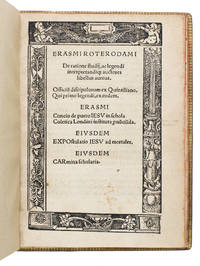
1516ABC_49694Colophon Strasbourg: Matthias Schürer 1516. Modern brown pigskin with a blind-tooled single fillet frame on both boards gold-tooled turn-ins red edges in a beige paperboard slipcase. 4to. With a woodcut decorated title frame and 3 woodcut decorated initials. Early edition of Erasmus seminal educational treatise De ratione studii here presented alongside several other influential pedagogical and devotional texts. It further includes: Officium discipulorum ex Quintiliano The duties of students according to Quintilian including a section on the first stages of learning to read also derived from Quintilian a sermon on the child Jesus by Erasmus intended for delivery at the Colet School in London a lament of Jesus addressed to mankind and a collection of school poems.The opening dedication addressed to Peter Viterius a professor of liberal arts sets the tone for this work: Erasmus praises his friends discernment and judgment in matters of education using vivid comparisons drawn from military strategy and classical mythology to underscore the importance of order and method in learning. Without it he argues even the most gifted minds may falter. Of particular note is Erasmus endorsement of an instructional technique that became central to Renaissance humanist pedagogy: the use of structured annotation. In De ratione studii he recommends that students classify selected passages under thematic headings a mnemonic device that aids both retention and retrieval. This principle would go on to shape the methods of early modern teaching and note-taking. It also reflects Erasmus' broader educational reforms where rhetoric and moral philosophy intersect. His engagement with progymnasmata preliminary rhetorical exercises especially those of Aphthonius favoured for their clear organisation into theory and examples demonstrates his commitment to practical and accessible instruction for young learners.With some contemporary and later underlining and annotations in red and brown ink mainly consisting of corrections additions to the text and markings of significant passages. Two minor worm holes througout barely affecting the text. The gutters between leaves V-VI; VII-VIII; XX-XXI; and after leaf XXIII have been reinforced in the gutter with linen tape slightly browned throughout. Otherwise in good condition.l Adams E 346; Bezzel 1709; USTC 653250 9 copies; Vander Haeghen I 169; VD16 E 3534; not in BM STC German; De Reuck; Kossmann. Matthias Schürer, hardcover
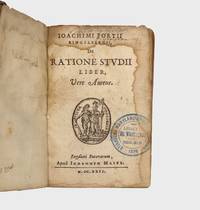
1622373794Leiden: Joannes Maire 1622. 8 198 pp. 1 vols. 12mo. Contemporary vellum. Worn and soiled some staining to textblock. Good. Owner signature of Thos. Fletcher 1693; H Wragham 1815; Henry D. Gilpin bookplate partly covered; "ex libris G.R.W. 1879" William R. Whittingham. 8 198 pp. 1 vols. 12mo. At the back of this book is the essay by Erasmus De ratione studii pp. 161-198.<br /> <br /> William R. Whittingham 1805-1879 graduated the General Theological Seminary in 1825 and was named librarian of the newly founded school. He later accepted a position on the faculty in 1836. Whittingham was consecrated the fourth Bishop of Maryland in 1840 and served in that capacity until his death. Bishop Whittingham's important theological library became the core of the Maryland Diocese library which was in turn transferred to the General Theological Seminary. The ownership signature of Bishop Whittingham is dated 1879 a very late acquisition for him. Provenance: William R. Whittingham; Maryland Diocesan Library; General Theological Seminary bookplates and inkstamps Joannes Maire unknown
1104726904.Gpaperback. Good. Access codes and supplements are not guaranteed with used items. May be an ex-library book. paperback
1166038572.Gpaperback. Good. Access codes and supplements are not guaranteed with used items. May be an ex-library book. paperback
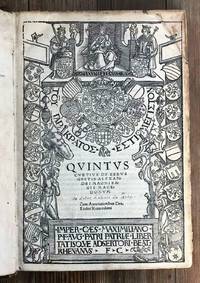
1518curtius<b>Erasmus Finds His Vacation Reading Deficient So He Prepares a New Critical Edition</b><b> <br /></b><br />Folio. 4 LXXXIX leaves; 10 124 pages. Late sixteenth century leather; light scuffing hinges cracked but cords holding tightly; insect damage to text block with loss of text throughout; margins in Orosius trimmed close affecting title image. First printing of Erasmus' critical edition of Quintus Curtius. This first century Roman biography of Alexander the Great was an early Renaissance bestseller with editions from at least a dozen printers throughout Europe by 1517. Erasmus brought it as reading material on a voyage to England in 1517 and finding the text incomplete and corrupt he prepared his own critical edition. This was first published by his friend Strasbourg printer Matthias Schürer in 1518. Erasmus' version proved so popular that five more printers had issued their own editions of his text by 1541; these in turn were reprinted a total of five more times by 1575. This first edition is scarce on the market with Rare Book Hub locating only one sale at auction since 1971 at PBA in 2008 for $2400. <br /><br /><b>Bound with</b>: Paulus Orosius <i>Adversvs paganos historiarvm libri septem</i>. Cologne: Eucharius Cervicornus 1526. An attractive copy of this first universal history by a Christian writer Paulus Orosius c 375-c 418 a Hispanic student of St Augustine who traveled widely throughout the Mediterranean. Elaborate title page border depicting the labors of Hercules signed "AW" Anton Woensam 1493-1541 a prolific painter and woodcut artist whose work was favored by the booming publishing industry in Cologne. Other page borders and initials are also by Woensam as described by Merlo 1864.<br /><br /><br /><br /> Schürer hardcover books
20242602040037DROZ 2024-10-30. paperback. Very Good. 6x0x9. Softcover. Good binding and cover. Clean unmarked pages. Creased. DROZ paperback
0332668029.Ghardcover. Good. Access codes and supplements are not guaranteed with used items. May be an ex-library book. hardcover
20202-6200510571GlobeEdit 2020. Paperback. New. 216 pages. 8.66x5.91x0.49 inches. GlobeEdit paperback
1937F36007Brussel, 1937 pp.193-340 geïll.+ enkele buitentekstills., themanummer van "De Brabantsche Folklore" 16e jr. nrs.93-94, stempel, goed, F36007
1104727390.Gpaperback. Good. Access codes and supplements are not guaranteed with used items. May be an ex-library book. paperback
1166033775.Gpaperback. Good. Access codes and supplements are not guaranteed with used items. May be an ex-library book. paperback
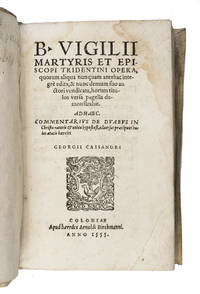
1535ABC_49895Cologne: printed by Jaspar von Gennep for Peter Quentel 1535. Limp overlapping vellum with ties. 8vo. With an elaborate woodcut border on the title page of ad 1 several decorated woodcut initials and Quentels woodcut device at the end. 2 works in 1 volume ad 2 in 2 parts. With bound before ad 1:2 VIGILIUS. Opera .Including: CASSANDER Georg. Commentarius de duabus in Christo naturis .Cologne Arnold Birckman 1555. A rare and significant edition of De veritate corporis et sanguinis Domini by Alger of Liège Algerus ca. 1060-ca. 1131 Benedictine monk of Cluny and one of the most influential medieval theologians on the Eucharist. This major treatise composed during the so-called second Eucharistic controversy defends the doctrine of the real presence of Christ in the Eucharist against the teachings of Berengarius of Tours. Admired by both medieval scholars and later by Erasmus Algers work remained central to Catholic theology well into the sixteenth century.This copy represents the Erasmian edition prepared under Erasmuss supervision with his corrections and editorial guidance. His involvement gave the text a new humanist form and authority making Algers theology newly relevant at a time when Eucharistic doctrine was again fiercely debated during the Reformation. Erasmuss careful attention to clarity and Latinity situates this edition within his broader humanist programme of restoring theological texts to philological precision and doctrinal coherence.Only a handful of copies of this edition are known and no record of it appears in recent sales databases underlining its rarity on the market. It is the second edition overall following the first printing in Freiburg im Breisgau 1530 and the first to be issued by Peter Quentel in Cologne.Bound together with the Opera of Vigilius 1555 and a Commentarius opposing the Christological views of Georg Cassander 1555 this important Sammelband reflects the continuing Catholic polemic against Reformation-era innovations in both Eucharistic theology and Christology.The vellum is slightly dampstained lacking part of the bottom closing tie on the front. Some stains and browning throughout. Otherwise in good condition.l Ad 1: BM STC German p. 20; USTC 626331; Vander Haeghen II 6; VD 16 A 1871; cf. Adams 173 1530 ed.; Ad 2: Adams V 748; BM STC German p. 893; USTC 615055; VD 16 V 1184. [printed by Jaspar von Gennep for] Peter Quentel, hardcover
153592971535 Basileae, in officina Frobeniana [per Hieronymum Frobenium et Nicolaum Episcopium], 1535. Un volume in-8° (122 x 181 mm) de [16]+864+[56] pages, marques dimprimeur au titre et en dernière page. Reliure de lépoque en plein en plein veau glacé marron estampé à froid et portant sur le plat supérieur le nom de son propriétaire, Hupert Heymer, fermoirs de laiton, dos à nerfs orné à froid. Charnières fendues, mais les doubles ficelles des nerfs sont intactes! Ex-libris manuscrit au haut de la page de titre: «Colleg[ii] Soc[i eta]tis Jesu, Silvae Duc[is] (biffé et remplacé par ) Alosti, 1621» (Hertogenbosch, Pays-Bas, et Alost, Belgique).
654465875I.B. Tauris & Company Limited pp. 192 . Papeback. New. I.B. Tauris & Company, Limited unknown
2019__1848855567I B Tauris 2019. Hardcover. New. 192 pages. 5.75x8.75x0.75 inches. I B Tauris hardcover
2012DADAX0195380975Oxford University Press 2012-05-01. 1. hardcover. New. 8.60x0.90x5.60. Buy with confidence. Excellent Customer Service & Return policy. Oxford University Press hardcover
14213422like new. unknown