von Dryander, KonstantinBiblio.com

48 résultats
3640443632.Gpaperback. Good. Access codes and supplements are not guaranteed with used items. May be an ex-library book. paperback
1404JC122<p>/ wiens Inwoonders / Wildt / Naekt / seer Godloos / ende wreede Menschen-Eeters zijn; hoe hy selve onder de Brasilianen lange gevangen geseten heft / die hem dagelijcks dreyghden doodt te slaen en t'eeten: Oock hoe wonderbaerlijck hy door de handt des Heeren verlost is. Item / hoe de wilden Wayganna geheeten / hun daer / als onder 't gebergte de Bay de Todos los Sanctos onthouden ende geneeren / voorts waer mede sy omgaen ende Oorloge voeren. Alles Figuerlijck naer't leven af gebeelt is seer dienstig voor de gene die naer Brasilien of Farnambucque varen. tAmsterdam Gedruckt hn Jan Jacobfz Bouman opt Water tegen ober de Roozen Marcht Anno 1660.</p>_x000d_<p>In 4º de 18x145 cm com viii 72 págs. Encadernação recente inteira de pele com gravação a ouro na lombada.</p>_x000d_<p>Ilustrado com gravuras no texto abertas a talhe-doce.</p>_x000d_<p>Edição holandesa extremamente rara de um importante e muito popular relato de uma testemunha ocular sobre o Brasil do século XVI por Hans Staden ca. 1520/25-ca. 1557 ou ca. 1576 artilheiro de Hesse que serviu os portugueses no Brasil nos anos 1547-1548 e 1549-1555. Durante a maior parte de sua segunda viagem ao Brasil foi mantido prisioneiro perto do Rio de Janeiro pelos índios Tupinambá. Já fluente na língua tupi terá provavelmente adquirido um conhecimento mais íntimo dos índios do que qualquer outro escritor de sua época. A primeira parte descreve suas viagens e captura pelos índios enquanto a segunda parte a cultura e costumes destes. Conseguiu sobreviver e voltar são e salvo à Europa resgatado pelo navio corsário francês Catherine de Vatteville comandado por Guillaume Moner.</p>_x000d_<p>Os contos sensacionais de Staden sobre os 'canibais selvagens nus muito ímpios e cruéis' do Brasil publicados quando os europeus quase nada conheciam do Novo Mundo imediatamente fizeram do livro um best-seller. Embora sua visão tendenciosa dos selvagens brasileiros tenha sido a progenitora de muitas crenças europeias amplamente aceites no século XVI sobre o Novo Mundo ela também contém muitas informações provenientes das observações diretas de um observador participante familiarizado com a língua nativa. Portanto constitui uma das fontes mais importantes de factos e observações sobre os indígenas locais.</p>_x000d_<p>Andres Kolben em Marburg publicou pela primeira vez o livro de Staden em alemão em 1557 mas Christoffel Plantin em Antuérpia publicou uma tradução holandesa ilustrada com 22 xilogravuras em 1558 e o livro tornou-se ainda mais popular em holandês do que em alemão existindo cerca de vinte edições holandesas quase todas muito raras. A presente edição segue as edições de Broer Jansz de 1627 e posteriores provavelmente também sua edição de 1625 que não vimos página por página e quase linha por linha tem o mesmo agrupamento A-K4 = 40 ll. e usa as mesmas xilogravuras às vezes com danos nítidos. As 17 ilustrações em xilogravura no texto estão tão próximas mesmo nas letras de 17 das 22 da edição de 1558 de Plantin que suspeitamos que elas tenham sido impressas com os seus blocos. Plantin incluiu mais cinco não nesta ou nas edições Broer Jansz mas as duas xilogravuras maiores nas duas páginas de rosto não têm imagem correspondente na edição de Plantin e provavelmente foram cortadas para Broer Jansz embora o texto esteja dividido em duas partes e a parte dois tenha a sua própria página de título essa página de título fica no meio de um caderno H3 e as assinaturas e paginação dos cadernos continuam por todo o livro portanto as duas 'partes' não podem ter sido emitidas separadamente. O STCN registra nove edições holandesas a maioria em apenas uma ou duas cópias cada mas nenhuma entre 1638 e 1685. Localizamos apenas outras três cópias da presente edição em todo o mundo.</p>_x000d_<p>Existe uma versão portuguesa do texto de Marburgo de 1557 por Alberto Löfgren revista e anotada por Theodoro Sampaio e publicada no Rio de Janeiro em 1930 com as xilogravuras inseridas nos locais correspondentes do texto que celebrizaram a obra ilustrando os relatos sobre antropofagia.</p>_x000d_<p>Sabin Borba de Moraes ou J. C. B. não referem esta edição.</p>_x000d_<p>EN In 4º 18x145 cm. viii 72 pps.</p>_x000d_<p>Binding: Recent full calf with gilt tools on spine.</p>_x000d_<p>Illustrated with engravings from intaglio printing plates.</p>_x000d_<p>Extremely rare Dutch edition of an important and very popular eye-witness account of mid-16th-century Brazil by Hans Staden ca. 1520/25-ca. 1557 or ca. 1576 a Hessian artilleryman who served the Portuguese in Brazil in the years 1547-1548 and 1549-1555. During most of his second trip to Brazil he was held prisoner near Rio de Janeiro by the Tupinambá Indians. Already fluent in the Tupi language he probably gained a more intimate knowledge of the Indians than any other writer of his day. The first part describes his voyages and his capture by the Indians while the second part describes their culture and customs. He managed to survive and return safely to Europe rescued by the French privateer Catherine Vatteville commanded by Guillaume Moner.</p>_x000d_<p>Stadens sensational tales of the savage naked very godless and cruel cannibals of Brazil published when Europeans knew almost nothing of the New World immediately made the book a best-seller. While its biased view of the Brazilian savages was the progenitor of many widely accepted 16th-century European beliefs about the New World it also contains a wealth of information from the direct observations of a participant observer familiar with the native language. It therefore forms one of the most important sources of both facts and misperceptions about indigenous Americans.</p>_x000d_<p>Andres Kolben at Marburg first published Stadens book in German in 1557 but Christoffel Plantin in Antwerp published a Dutch translation illustrated with 22 woodcuts in 1558 and the book became even more popular in Dutch than in German going through about twenty Dutch editions nearly all very rare. The present edition follows the 1627 and later Broer Jansz. editions probably also his 1625 edition which we have not seen page for page and nearly line for line has the same collation A-K4 = 40 ll. and uses the same woodcuts sometimes with clear matching damage. The 17 woodcut illustrations in the text are so close even in their lettering to 17 of the 22 in Plantins 1558 edition that we suspect they were printed from Plantins blocks. Plantin included 5 more not in this or the Broer Jansz editions but the two larger woodcuts on the two title-pages have no corresponding image in Plantins edition and were probably cut for Broer Jansz. Although the text is divided into two parts and part two has its own title-page that title-page falls in the middle of a quire H3 and the quire signatures and pagination continue through the whole book so the two parts could not be separately issued. The STCN records nine Dutch editions mostly in only one or two copies each but none between 1638 and 1685. We have located only three other copies of the present edition worldwide./p></p>_x000d_<p>There is a Portuguese version of the 1557 Marburg text by Alberto Löfgren revised and annotated by Theodoro Sampaio and published in Rio de Janeiro in 1930 with the inserted woodcuts in the corresponding places in the text illustrating the reports of anthropophagy.</p>_x000d_<p>Unknown edition not mentioned in Sabin Borba de Moraes or J. C. B.</p> M-18-D-6 hardcover
0366451308.Ghardcover. Good. Access codes and supplements are not guaranteed with used items. May be an ex-library book. hardcover
ria9781108069526_inpPaperback. New. New Book; Fast Shipping from UK; Not signed; Not First Edition; Between 1796 and 1800 librarian and botanist Jonas Dryander 1748–1810 published this five-volume work recording the contents of the huge scientific library belonging to the distinguished naturalist Sir Joseph Banks 1743–1820. T paperback
ria9781108069519_inpPaperback. New. New Book; Fast Shipping from UK; Not signed; Not First Edition; Between 1796 and 1800 librarian and botanist Jonas Dryander 1748–1810 published this five-volume work recording the contents of the huge scientific library belonging to the distinguished naturalist Sir Joseph Banks 1743–1820. T paperback
ria9781108069533_inpPaperback. New. New Book; Fast Shipping from UK; Not signed; Not First Edition; Between 1796 and 1800 librarian and botanist Jonas Dryander 1748–1810 published this five-volume work recording the contents of the huge scientific library belonging to the distinguished naturalist Sir Joseph Banks 1743–1820. T paperback
ria9781108069540_inpPaperback. New. New Book; Fast Shipping from UK; Not signed; Not First Edition; Between 1796 and 1800 librarian and botanist Jonas Dryander 1748–1810 published this five-volume work recording the contents of the huge scientific library belonging to the distinguished naturalist Sir Joseph Banks 1743–1820. T paperback
ria9781108069502_inpPaperback. New. New Book; Fast Shipping from UK; Not signed; Not First Edition; Between 1796 and 1800 librarian and botanist Jonas Dryander 1748–1810 published this five-volume work recording the contents of the huge scientific library belonging to the distinguished naturalist Sir Joseph Banks 1743–1820. T paperback
A9781165950249New. unknown
B9781165950249New. unknown
15377239<p><strong><em>Johannes Dryander. Annulorum trium diversi generis instrumentorum.<br /></em></strong><br />Illustrated with large woodcut of an armillary sphere on title-page and the divisional title to Regiomontanus; verso of title-page with a large woodcut of "Dryander's astronomical rings" suspended from a hand in the clouds; numerous woodcut illustrations and diagrams in text; woodcut printer's device on pi4v and verso of final leaf; several large historiated woodcut initials. Text in Latin a few passages in Greek. Slim 4to. Modern ¼-vellum using old material over marbled boards; printed paper title-label in gothic script pasted on front cover. Printed in Marburg by Eucharius Cervicornus 1537. First Edition of this important assembly of texts on a popular Renaissance astronomical instrument: the astronomical ring-dial a precursor of the equatorial. Adams D940; BM STC German p 255; Houzeau and Lancaster 2459; Honeyman Collection 930; Zinner 1661<br /><br /><br />The ring-dial was intended as a navigational aid and could be adjusted for different latitudes including according to the author the Moluccas and Hispaniola. The second part of the first treatise is entitled <em>De metiendis rebus</em> and is illustrated by various cuts showing geodetic performances. Around two thirds of Dryander's work is devoted to describing the parts of his new version of the instrument and its marking and calibration as well as its use including a lengthy section on measuring the heights of objects. <br /><br /><br />The main subject of this book the so-called annuli astronomici i.e. astronomical rings was an early astronomical instrument consisting of 3 rings each representing the celestial equator declination and the meridian. The instrument may be considered a simplified portable armillary sphere or a more complex form of astrolabe. These ring instruments can be employed for both terrestrial and celestial calculations; they can also be used as a sun dial to tell time if the approximate latitude and season is known or to tell latitude if the time is known. It also had applications in surveying. Parts of the instrument go back to devices made and used by ancient Greek astronomers. <br /><br />Title page with 2 small repaired ink-burn holes causing a loss of a few words of the imprint but the date is clearly legible and slightly affecting the woodcut on verso. Occasional light soiling; several leaves with very light and unobtrusive water-staining at bottom mainly marginal; o/w a clean wide-margined example of this interesting and scarce book. </p> Eucharius Cervicornus
024390567X.Gpaperback. Good. Access codes and supplements are not guaranteed with used items. May be an ex-library book. paperback
0666601674.Ghardcover. Good. Access codes and supplements are not guaranteed with used items. May be an ex-library book. hardcover
139171153X.Gpaperback. Good. Access codes and supplements are not guaranteed with used items. May be an ex-library book. paperback
1396608915.Ghardcover. Good. Access codes and supplements are not guaranteed with used items. May be an ex-library book. hardcover
0366671340.Ghardcover. Good. Access codes and supplements are not guaranteed with used items. May be an ex-library book. hardcover
0428179630.Gpaperback. Good. Access codes and supplements are not guaranteed with used items. May be an ex-library book. paperback
0428784739.Ghardcover. Good. Access codes and supplements are not guaranteed with used items. May be an ex-library book. hardcover
0428765696.Gpaperback. Good. Access codes and supplements are not guaranteed with used items. May be an ex-library book. paperback
ria9783112365212_inpHardcover. New. New Book; Fast Shipping from UK; Not signed; Not First Edition; N/A hardcover
B9781168462770New. unknown
19812098886Marburg an der Lahn: Basilisken-Presse 1981. 35, (30) Seiten. 8° (21 x 16 cm). Schlichter, fadengehefteter Orig.-Pappband mit silbernem Rückentitel und Steinmarmor-Vorsätzen. [Hardcover / fest gebunden].
109830aafMarburg an der Lahn, 1981, in-8vo, 35 + 28 S., avec envoi ms. de l’auteur, Original-Pappband.
0526918918.Ghardcover. Good. Access codes and supplements are not guaranteed with used items. May be an ex-library book. hardcover
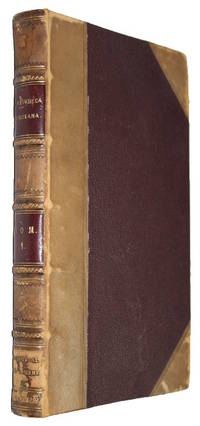
1798A60471London: Typis Gul. Bulmer et Soc. 1798. vii 1 309 14-index . . HB. 8vo later half calf rubbed/scuffed raised bands and leather title pieces to spine gilt. Occasional foxing. Good. Withdrawn from an institutional library with a few neat ink stamps. First edition. Scarce. This catalogue by the Swedish botanist and librarian Jonas Dryander 1748�1810 lists the personal library of Sir Joseph Banks 1743-1820 one of the most prominent figures in the scientific community during the late 18th and early 19th centuries. The catalogue was praised by many contemporaries including the botanist Sir James Edward Smith who wrote that 'a work so ingenious in design and so perfect in execution can scarcely be produced in any science'. Volume one covers the general scientific works included in Banks' library including some natural history and materia medica also includes an Addenda and Index. First volume of five published only.Soulsby 3639. Typis Gul. Bulmer et Soc. hardcover