Berkeley, GeorgeBiblio.com
3 415 résultats
1016105975.Ghardcover. Good. Access codes and supplements are not guaranteed with used items. May be an ex-library book. hardcover
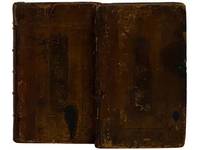
17322329641London: Printed for J. Tonson in the Strand 1732. Second Edition. Full-Leather. Good/No Jacket. Second edition. Neatly rebacked with new gilt titles original boards and endsheets retained. Discolored 2 inch declivity on front board boards rubbed with corners exposed first volume lacks leaf A4 ink owner stamps on front endpapers William Harris Mar 1944 light stain to marginal edges of first gathering in volume two front and end matter lightly foxed rear free endpaper of first volume loosening. 1732 Full-Leather. 356; 351 pp. Alciphron is a Christian apologetic in answer to the 'minute philosophers' of Berkeley's day who sought to minimize the the dignity of man. Berkeley is known as an advocate of subjective idealism which he called immaterialism which states that objects do not exist unless they are perceived. "A Treatise Concerning the Principles of Human Knowledge 1710 is the classic exposition of his philosophy of immaterialism as an antidote to infidelity prefaced with an influential essay in the philosophy of language; part two was later lost in manuscript with other papers in Italy." - Oxford Dictionary of National Biography Perhaps his most well-known work is Three Dialogues between Hylas and Philonous in which two characters representing himself and John Locke discuss various philosophical questions. Berkeley was a fellow at Trinity College and in the 1720s turned his attention to the project of opening St. Paul's College in Bermuda though skepticism about the chances of success in this endeavor caused the funding to come into question. "To prevent a threatening decline in private support Berkeley sailed for Newport Rhode Island with a small advance party on 6 September 1728; this included Smibert who painted several well-known portraits of Berkeley and of his party before settling for life in Boston. The journey was hazardous and protracted. They made an unscheduled landfall on the Virginia coast about the turn of the year and were officially received at Williamsburg before reaching Rhode Island on 23 January 1729. By the spring Berkeley had bought a farm of 96 acres at Middletown 'with two fine groves and winding rivulet upon it' Works 8.194 whose produce would support the college. He employed slaves and was apparently indifferent to the institution of slavery provided that it was humane seeing the moral need rather as one of conversion and baptism. He built a new house Whitehall which is now maintained as a historic site although the adjoining farmland has given way to urban development. Berkeley often preached at Newport Rhode Island in the winter and in remoter outposts in the summer. The strongest and longest friendship he established among New England churchmen was with Samuel Johnson 1696 - 1772 of Stratford Connecticut a refugee from Calvinism who later became first president of King's College New York later Columbia University and lent support to Berkeley's philosophy through his Elementa philosophica 1752 and other writings. Throughout his career Berkeley had little time for dissenters although he abhorred the use of violence against them. The religious tolerance characteristic of Rhode Island induced a degree of ecumenicism in his social practice that was not always maintained in the pulpit. Reports of growing infidelity in English society to which he was always liable to give credence were fuelled by the continuing bad faith of the government in failing to lodge the funds he considered legally his. This was a factor in his writing Alciphron a set of dialogues located notionally in England but drawing much of the landscape description from Rhode Island which was to sell well and stimulate controversy after his return. In this theist and immaterialist combine their defences against a medley of intellectual trends derived primarily but not exclusively from Locke Bernard Mandeville and the third earl of Shaftesbury that Berkeley regarded as obstructive to religion. The work includes Berkeley's second foray into moral philosophy." - Oxford Dictionary of National Biography Printed for J. Tonson in the Strand hardcover
3787313079.Ghardcover. Good. Access codes and supplements are not guaranteed with used items. May be an ex-library book. hardcover
5698798like new. unknown
5698798-nnew. unknown
2010DADAX1164404709Kessinger Publishing 2010-09-10. hardcover. New. 6.00x1.06x9.00. Buy with confidence. Excellent Customer Service & Return policy. Kessinger Publishing hardcover
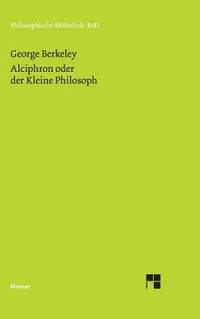
STP063-0301Hamburg Felix Meiner 1996. Oktav Org.-Ganzleinen mit illustr. Org.-SU XXX 447 1 S. 1 Bl. wohlerhaltenes Exemplar. Philosophische Bibliothek. - ISBN 3787313079. Philosophische Bibliothek. - ISBN 3787313079. Philosophische Bibliothek. - ISBN 3787313079. Hamburg, Felix Meiner, 1996. unknown
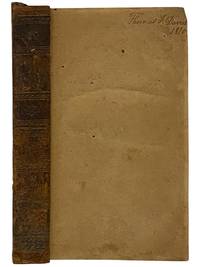
18032353260New-Haven Connecticut: For Increase Cooke & Co 1803. First American Edition. Full-Leather. Fair/No Jacket. First American edition from the fourth London edition. Lacks front board spine and rear board rubbed and drying two light spots on fore edge ink name and date on front endpaper brief pencil notes on rear endpaper. 1803 Full-Leather. xiii 2 16-388 2 pp. Complete in one volume. Alciphron is a Christian apologetic in answer to the 'minute philosophers' of Berkeley's day who sought to minimize the the dignity of man. Berkeley is known as an advocate of subjective idealism which he called immaterialism which states that objects do not exist unless they are perceived. "A Treatise Concerning the Principles of Human Knowledge 1710 is the classic exposition of his philosophy of immaterialism as an antidote to infidelity prefaced with an influential essay in the philosophy of language; part two was later lost in manuscript with other papers in Italy." - Oxford Dictionary of National Biography Perhaps his most well-known work is Three Dialogues between Hylas and Philonous in which two characters representing himself and John Locke discuss various philosophical questions. Berkeley was a fellow at Trinity College and in the 1720s turned his attention to the project of opening St. Paul's College in Bermuda though skepticism about the chances of success in this endeavor caused the funding to come into question. "To prevent a threatening decline in private support Berkeley sailed for Newport Rhode Island with a small advance party on 6 September 1728; this included Smibert who painted several well-known portraits of Berkeley and of his party before settling for life in Boston. The journey was hazardous and protracted. They made an unscheduled landfall on the Virginia coast about the turn of the year and were officially received at Williamsburg before reaching Rhode Island on 23 January 1729. By the spring Berkeley had bought a farm of 96 acres at Middletown 'with two fine groves and winding rivulet upon it' Works 8.194 whose produce would support the college. He employed slaves and was apparently indifferent to the institution of slavery provided that it was humane seeing the moral need rather as one of conversion and baptism. He built a new house Whitehall which is now maintained as a historic site although the adjoining farmland has given way to urban development. Berkeley often preached at Newport Rhode Island in the winter and in remoter outposts in the summer. The strongest and longest friendship he established among New England churchmen was with Samuel Johnson 1696 - 1772 of Stratford Connecticut a refugee from Calvinism who later became first president of King's College New York later Columbia University and lent support to Berkeley's philosophy through his Elementa philosophica 1752 and other writings. Throughout his career Berkeley had little time for dissenters although he abhorred the use of violence against them. The religious tolerance characteristic of Rhode Island induced a degree of ecumenicism in his social practice that was not always maintained in the pulpit. Reports of growing infidelity in English society to which he was always liable to give credence were fuelled by the continuing bad faith of the government in failing to lodge the funds he considered legally his. This was a factor in his writing Alciphron a set of dialogues located notionally in England but drawing much of the landscape description from Rhode Island which was to sell well and stimulate controversy after his return. In this theist and immaterialist combine their defences against a medley of intellectual trends derived primarily but not exclusively from Locke Bernard Mandeville and the third earl of Shaftesbury that Berkeley regarded as obstructive to religion. The work includes Berkeley's second foray into moral philosophy." - Oxford Dictionary of National Biography For Increase Cooke & Co hardcover
0548856656.Gpaperback. Good. Access codes and supplements are not guaranteed with used items. May be an ex-library book. paperback
1164196626.Gpaperback. Good. Access codes and supplements are not guaranteed with used items. May be an ex-library book. paperback
1164404709.Ghardcover. Good. Access codes and supplements are not guaranteed with used items. May be an ex-library book. hardcover
1341180859.Ghardcover. Good. Access codes and supplements are not guaranteed with used items. May be an ex-library book. hardcover
1436660939.Ghardcover. Good. Access codes and supplements are not guaranteed with used items. May be an ex-library book. hardcover
2329429584.Gpaperback. Good. Access codes and supplements are not guaranteed with used items. May be an ex-library book. paperback
1993B39047London: Routledge 1993. First edition. Hardcover. Near Fine. First edition 1993 hardcover with black cloth boards octavo 234pp. not illustrated. Book near fine with mild rubbing to boards binding tight one pen scribble to top of one page otherwise clean and unmarked. No DJ. Routledge hardcover
2010NF3401Alciphron or The Minute Philosopher. In Seven Dialogues. Containing an Apology for the Christian Religion against those who are called Free-thinkers From Sidney's Press for Increase Cooke & Co. 1803 first American edition both covers detached spine starting to join them staining to the text block but with all contents still easily readable else there in what most certainly looks like the original leather binding speaking of which a new one here vouldn't hurt. An important book in the Philosophy Canon by this author from which came the name of a certain city in Northern California not to mention an university of some renown as well. From the library of the former premier Walt Whitman collector bibliophile and philanthropist Charles Feinberg. From Sidney's Press, for Increase Cooke & Co. hardcover
0331592096.Ghardcover. Good. Access codes and supplements are not guaranteed with used items. May be an ex-library book. hardcover
0428552323.Ghardcover. Good. Access codes and supplements are not guaranteed with used items. May be an ex-library book. hardcover
048312804X.Ghardcover. Good. Access codes and supplements are not guaranteed with used items. May be an ex-library book. hardcover
0483080578.Ghardcover. Good. Access codes and supplements are not guaranteed with used items. May be an ex-library book. hardcover
1333078420.Gpaperback. Good. Access codes and supplements are not guaranteed with used items. May be an ex-library book. paperback
1332991114.Gpaperback. Good. Access codes and supplements are not guaranteed with used items. May be an ex-library book. paperback
1333425619.Gpaperback. Good. Access codes and supplements are not guaranteed with used items. May be an ex-library book. paperback
1527705218.Gpaperback. Good. Access codes and supplements are not guaranteed with used items. May be an ex-library book. paperback
A9781164196624New. unknown