62 résultats
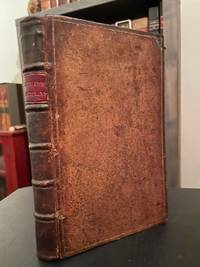
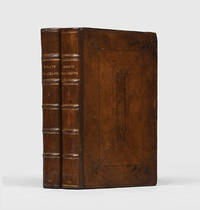
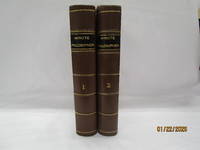
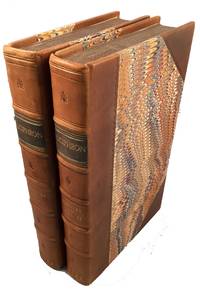
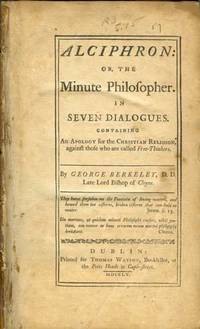
1732BTETM0001889London: J. Tonson 1732. 2nd Edition. Hardcover. Very Good/No Jacket. Octavo Standard 8vo 6 נ9 in 152 נ229 mm . Please email for Photographs or further information. Very Good - Boards rubbed and bumped; text block and binding firm and strong. A lovely copy. Collation: pp. 707 Please see Photos as part of condition report. 1732 2nd Edition With Provenance ALCIPHRON Or The Minute Philosopher in Seven Dialogues By George Berkeley Author Bio: George Berkeley 12 March 1685 14 January 1753 known as Bishop Berkeley Bishop of Cloyne of the Anglican Church of Ireland was an Anglo-Irish philosopher whose primary achievement was the advancement of a theory he called "immaterialism" later referred to as "subjective idealism" by others. This theory denies the existence of material substance and instead contends that familiar objects like tables and chairs are ideas perceived by the mind and as a result cannot exist without being perceived. Berkeley is also known for his critique of abstraction an important premise in his argument for immaterialism. Synopsis: 1732 ALICIPHRON: OR THE MINUTE PHILOSOPHER in Seven Dialogues containing an Apology for the Christian Religion against those who are called free-thinkers Two volumes - complete set 356 pp & 351 pp - Title pages with engravings various ornamental engravings at end of chapters and end of volume. Printed for J. Tonson in the strand 1732 By George Berkeley Book plate for The Right Honourable The Earl of Portsmouth in FEP Earl of Portsmouth is a title in the Peerage of Great Britain. It was created in 1743 for John Wallop 1st Viscount Lymington who had previously represented Hampshire in the House of Commons.Previous owner inscription on FEP. Format: Hardcover Octavo Standard 8vo 6 × 9 in 152 × 229 mm Note: Binding/size selection follows standard bibliographic conventions and is approximate; exact measurements may vary. Language: English Published By: J. Tonson London Condition Report: Dust Jacket: No Jacket Dust Jacket Condition: No Jacket Very Good - Boards rubbed and bumped; text block and binding firm and strong. A lovely copy. Collation: pp. 707 Please see Photos as part of condition report. SKU: BTETM0001889 Shipping Info: Approximate Package Dimensions H: 12.5 L: 30 W: 25 Units: cm W: 2Kg Tracked Shipping Insurance Coverage as per Customer Request J. Tonson hardcover
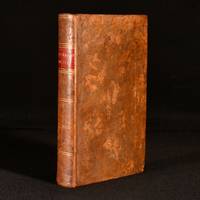
1750175832London: for J. and R. Tonson and S. Draper 1750. Presented to and initialled by the Enlightenment thinker George Berkeley First edition presentation copy to the idealist philosopher George Berkeley inscribed by the Countess of Burlington on the initial binder's blank "To the Bishop of Cloyne from his most humble servant D. Burlington" and with Berkeley's ownership initials George Cloyne to the title page. Dorothy Countess of Burlington 1699-1758 was the granddaughter of Halifax a leading statesman of Charles II's time. She owned several manuscripts from Halifax which were edited here for publication by Alexander Pope. She was one of Queen Caroline's Ladies of the Bedchamber a patron of artists including David Garrick and Handel and a portrait painter. Berkeley was first introduced to her husband by Alexander Pope and he became close friends with them. Berkeley wrote to the Countess to thank her for the volume: "Madam Permit me to thank your Ladyship for a present very valuable in it self and much more so on account of the giver who is so good as to remember an humble servant in this remote corner; where to my sorrow I am haunted with a taste for good company and fine arts that I got at Burlington house the worst preparative in the world for a retreat at Cloyne" 2 April 1750. The volume came into the possession of the bookseller and bibliographer John Stephens 1948-2006 and has his bookplate. Stephens identified the letter and sourced a photocopy from Chatsworth House which had the original the photocopy is included as is a letter from Chatsworth sending it. He published an article on the volume and its presentation "Berkeley and Lady Burlington: A Footnote" in Berkeley Newsletter Number 12 1992 pp. 16-17. He quoted the letter and commented: "It is a rather sad letter: he may then have been depressed but worse was to happen. In February 1751 his son William died and the following October his friend Thomas Prior followed. The next year he sailed for England never to return to Ireland. Berkeley shared Burlington's interest in architecture but he had certainly not been in Burlington House since he had last been in London in 1734. It has very much the tone of someone pleasantly surprised that he should be remembered after so long an absence". Octavo 199 x 120 mm pp. 8 183 1. Contemporary mottled calf rebacked with black morocco label later double gilt rule to covers marbled endpapers red speckled edges. Bookplate to front pastedown of British modernist architect Marshall Sisson 1897-1978 alongside his pencilled signature and notes on the book on the front free endpaper verso. Covers a little worn with patches of calf infill superficial split to front inner hinge some light foxing to contents still a very good copy. ESTC T130907. unknown
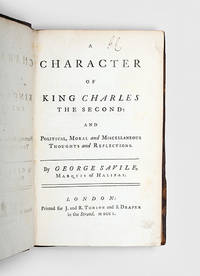
1752268<b>J. & </b><b>R. Tonson and S. Draper 1752. Title page iii-vi 2 9-268 all collated. Full calf. Spine with raised bands. Covers have gold frames. All joints and hinges slightly worn and/or cracked but covers holding well by strings. Some brown stains to edges of endpapers and first and last few leaves. The spine is darkened but a nice uncomplicated copy overall with a refreshed label. </b> J. & R. Tonson hardcover
1752284380London: J. & R. Tonson 1752. First. hardcover. very good. 8vo contemporary calf with leather spine label. London: J. &. R. Tonson and S. Draper 1752. First Edition<br/><br/> The book contains 11 tracts each with a separate title page & date but only one continuous pagination. The subjects include Thoughts on Tar-water Proposal for converting the Savage Americans to Christianity by a College to be erected.in Bermuda Exhortation to the Roman Catholic Clergy of Ireland Discourse to Magistrates etc.<br/><br/> J. & R. Tonson unknown books
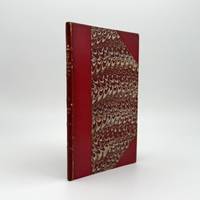
1725371588London: H. Woodfall 1725. 24pp. 8vo. Nineteenth century half red morocco and marbled boards minor wear. Numerical stamp on verso of title bookplate. 24pp. 8vo. Proposes the creation of a college in Bermuda for training young American Indians to serve as missionaries throughout the British colonies. First published the year prior. Scarce. ESTC T14337; Sabin 4878 H. Woodfall unknown
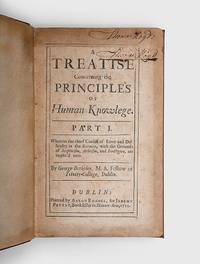
1710171378Dublin: printed by Aaron Rhames for Jeremy Pepyat 1710. A cornerstone of 18th-century philosophy First edition of the author's major work "the classic exposition of Berkeley's philosophy of immaterialism as an antidote to infidelity" ODNB in which he famously puts forward the idea that "no object can exist without a mind to conceive it". Part Two of the work was lost while still in manuscript form. Although Berkeley's works did not initially prompt much reaction they came to have a profound effect on the intellectual life of the later 18th century. The Treatise "set out his idealistic philosophy in detail arguing that the concept of 'material substance' is at once absurd and explanatorily useless. He pointed out that even philosophers who posit the existence of material bodies cannot explain how matter can produce ideas in the mind or how purely mental phenomena like ideas could resemble or correspond to non-mental material substances. Perhaps his most shocking claim in favour of his metaphysics was his oft-repeated contention that his principles were in strict accord with common sense and inimical to skepticism" Grattan-Guinness p. 122. Octavo 205 x 128 mm. Complete with the final blank 2E4. Rebound to style in full panelled calf red morocco spine label raised bands and spine ends ruled and tooled in blind. Ink ownership signature of one Thomas Lloyd on title page and p. i upper margin of the former excised not affecting lettering but shaving the printed rules. Contents browned and occasionally spotted title leaf chipped at lower outer corner a few ink marginal marks crosses lines small tear at upper outer corner of 2B4. Overall a very good copy. Keynes Berkeley 5; Norman 196; Printing and the Mind of Man 176. Ivor Grattan-Guinness Landmark Writings in Western Mathematics 1640-1940 2005. hardcover
17322329641London: Printed for J. Tonson in the Strand 1732. Second Edition. Full-Leather. Good/No Jacket. Second edition. Neatly rebacked with new gilt titles original boards and endsheets retained. Discolored 2 inch declivity on front board boards rubbed with corners exposed first volume lacks leaf A4 ink owner stamps on front endpapers William Harris Mar 1944 light stain to marginal edges of first gathering in volume two front and end matter lightly foxed rear free endpaper of first volume loosening. 1732 Full-Leather. 356; 351 pp. Alciphron is a Christian apologetic in answer to the 'minute philosophers' of Berkeley's day who sought to minimize the the dignity of man. Berkeley is known as an advocate of subjective idealism which he called immaterialism which states that objects do not exist unless they are perceived. "A Treatise Concerning the Principles of Human Knowledge 1710 is the classic exposition of his philosophy of immaterialism as an antidote to infidelity prefaced with an influential essay in the philosophy of language; part two was later lost in manuscript with other papers in Italy." - Oxford Dictionary of National Biography Perhaps his most well-known work is Three Dialogues between Hylas and Philonous in which two characters representing himself and John Locke discuss various philosophical questions. Berkeley was a fellow at Trinity College and in the 1720s turned his attention to the project of opening St. Paul's College in Bermuda though skepticism about the chances of success in this endeavor caused the funding to come into question. "To prevent a threatening decline in private support Berkeley sailed for Newport Rhode Island with a small advance party on 6 September 1728; this included Smibert who painted several well-known portraits of Berkeley and of his party before settling for life in Boston. The journey was hazardous and protracted. They made an unscheduled landfall on the Virginia coast about the turn of the year and were officially received at Williamsburg before reaching Rhode Island on 23 January 1729. By the spring Berkeley had bought a farm of 96 acres at Middletown 'with two fine groves and winding rivulet upon it' Works 8.194 whose produce would support the college. He employed slaves and was apparently indifferent to the institution of slavery provided that it was humane seeing the moral need rather as one of conversion and baptism. He built a new house Whitehall which is now maintained as a historic site although the adjoining farmland has given way to urban development. Berkeley often preached at Newport Rhode Island in the winter and in remoter outposts in the summer. The strongest and longest friendship he established among New England churchmen was with Samuel Johnson 1696 - 1772 of Stratford Connecticut a refugee from Calvinism who later became first president of King's College New York later Columbia University and lent support to Berkeley's philosophy through his Elementa philosophica 1752 and other writings. Throughout his career Berkeley had little time for dissenters although he abhorred the use of violence against them. The religious tolerance characteristic of Rhode Island induced a degree of ecumenicism in his social practice that was not always maintained in the pulpit. Reports of growing infidelity in English society to which he was always liable to give credence were fuelled by the continuing bad faith of the government in failing to lodge the funds he considered legally his. This was a factor in his writing Alciphron a set of dialogues located notionally in England but drawing much of the landscape description from Rhode Island which was to sell well and stimulate controversy after his return. In this theist and immaterialist combine their defences against a medley of intellectual trends derived primarily but not exclusively from Locke Bernard Mandeville and the third earl of Shaftesbury that Berkeley regarded as obstructive to religion. The work includes Berkeley's second foray into moral philosophy." - Oxford Dictionary of National Biography Printed for J. Tonson in the Strand hardcover
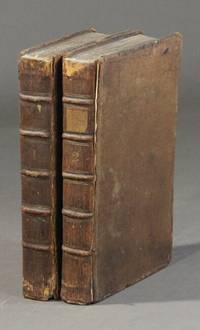
1732369350London: Printed for J. Tonson in the Strand 1732. Hardcover. Fair. Second edition. Two volumes. Octavos. Volume two includes: "An Essay Towards a New Theory of Vision" with a separate title page. Illustrated with engraved title vignettes woodcut headpieces and tailpieces including one signed tailpiece in volume one. Contemporary calf over boards edges stained red. "G: Berkeley" written in ink on front free endpaper of Vol. 1. Ex-library with bookplates and paper shelf label on spines boards are worn and detached the lower right corner of the title page in Vol. 1 is torn away effecting the final two numerals of the letterpress date and the corner of the double-ruled letterpress border; small three-digit number stamp on the bottom margin of the first Contents page in each volume else a good only sound set with scattered foxing. Both text blocks are suitable for rebinding. A classic philosophical work written when Berkeley was resident in America. ESTC T86055. Printed for J. Tonson in the Strand hardcover
1732170650London: Printed by J. Tonson 1732. The idealist philosopher's most substantial work First edition of Berkeley's defence of traditional Anglicanism against the nascent secularism of the early Enlightenment: a major work of 18th-century Christian apologetics. Alciphron is a critical source for Berkeley's wider philosophy of language. Berkeley 1685-1753 defends the Theist position that the world is dependent on an interventionist God providing religious knowledge through miracles and divine revelation. Enlightenment thinkers increasingly argued that a non-interventionist deity had created the universe to operate autonomously on machine-like principles and laws. In such a scenario the miracles and revelations of an interventionist God were of little use as a source of religious knowledge which was possible only through rational reflection. In challenging these ideas Berkeley collectively represents their chief exponents Locke Mandeville and the third Earl of Shaftesbury as the conceited free thinkers Alciphron and Lysicles. Volume II includes a revised edition of Berkeley's An Essay towards a New Theory of Vision first published in 1709 with a new title page and continuous register. In the Advertisement Berkeley notes that his earlier work is included as an addendum to the fourth dialogue which concerns the function of the senses in deriving knowledge of God. 2 vols octavo 194 x 120 mm. Wood engraving to title pages of both vols. Contemporary panelled calf neatly rebacked and recornered spines ruled and lettered in gilt raised bands edges sprinkled red. 18th-century signature of "William McGuire" to title page of vol. II. Light rubbing cosmetic splits to inner hinges minor browning and foxing to endpapers and edges loss to upper outer corner of title page vol. I small hole in F8 vol. I: a very good copy. Jessop 121a; Keynes 15. hardcover
173255973London: J. Tonson. Very Good. 1732. First Edition. Hardcover. Two volume set. Contemporary paneled calf rebacked with new labels repaired corners reinforced hinges new endsheets. Bookplates of Richard Clark Esq. Chamberlain of London. The Chamberlain of the City of London is an ancient office dating back to at least 1237 Wikipedia. . Volume 1 retains original front blank with Richard Clark's signature. Pp. 12 350; 8 358. Volume II also contains "An essay towards a new theory of vision first published in the year MDCCIX" with separate title page pp. 211-358. Engraved title-page vignettes. ; 8vo 8" - 9" tall . J. Tonson hardcover
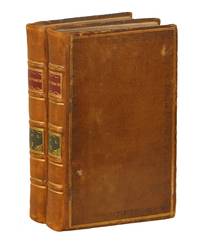
1732000010926London: J. Tonson 1732. First edition. Hardcover. Very Good. 2 vol. 8vo. 13 2-350 2; 9 2-358 2 pp. Full sheep ca. 1800 with twin gold borders on each board spines in six compartments with later red and green morocco labels lettered and bordered in gold on each spine; all edges decoratively sprinkled. Bound with a later edition of Berkeley's Theory of Vision. Illustrated with two small woodcuts on the title pages and several wood-cut initials head and tailpieces. The Theory of Vision contains a few in-text diagrams. Contains one of the mispaginations in volume II but not the other. Honderich 89. Jessop 16a. Keynes 15. Mead 10. Written in colonial America Berkeley's Alciphron is a vigorous defense of Christianity against the atheists deists and skeptics of his day. It elicited several responses from other theologians and would help Berkeley shape his later views concerning philosophy of language. According to Honderich "Berkeley is a most striking and even unique phenomenon in the history of philosophy. There have been many philosophers who have constructed bold and sweeping . metaphysical systems . have been devoted to the clarification and defence of 'common sense' . some have made it their chief concern to defend religious faith and doctrine against their perceived enemies. It is the peculiar achievement of Berkeley that with high virtuosity and skill he contrived to present himself in all these roles at once" Honderich 89. The volumes rebacked in later sheep the reverse of the front flyleaf of volume one has a pre-20th century inscription citing a 1746 publication each title page has a pre-20th century name in its margin. J. Tonson hardcover
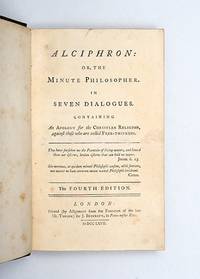
1767158145London: Printed by assignment from the executors of the late Mr. Tonson for J. Beecroft 1767. Stated fourth edition though in fact a re-issue of the third edition sheets of 1752 with a cancel title page. In Alciphron first published in 1732 Berkeley rebuts the insurgent secular intellectual trends of the early Enlightenment. Countering the views of Locke Mandeville and the third Earl of Shaftesbury who collectively manifest as the conceited free thinkers Lysicles and Alciphron Berkeley defends traditional Christianity and his own idealist epistemology. Octavo 206 x 129 mm. Nineteenth-century half calf green calf label marbled sides sprinkled edges. 19th-century bookplate of one Daniel Frazer to front pastedown. A little rubbed small chip at foot of rear joint binding firm scattered light foxing else clean slight paper fault to A8 not affecting text; a very good copy. ESTC N15774; Keynes 25; Jessop 169. unknown
173200008013London: J. Tonson 1732. Second edition. Hardcover. Near Fine. 2 vol. 8vo. 15 2-356 4; 9 2-351 3 pp. Recent half brown calf over marbled paper boards spine in six compartments with gold lettering and gold rules; brown topstain and red speckled fore-edge and bottom edge. Recent endpapers and pastedowns. Volume 1 missing the A4 blank the blank leaf called for between the errata and the contents has been excised otherwise both volumes collate complete. Keynes A17. A handsome set of two of Berkeley's principal works. Bindings are about Fine contents Very Good or better leaves very clean with occasional light wear Volume 1: bottom corner of L1 missing; Volume 2: the first three or so gatherings show minor loss at the front gutter. J. Tonson hardcover
173226337London: J. Tonson 1732. 2 vols. 8vo pp. 14 356; 8 218; engraved vignette title-pp.; bound with as issued An Essay towards a New Theory of Vision pp. 12 215-351; several woodcuts in the text; full contemporary calf double gilt rules on covers unlettered spines in 6 compartments volume designations in 1; some moderate chipping and cracking of the spines but all in all a good and reasonably sound set. Rothschild 372 citing the first edition of the same year: "Alciphron was written in America where Berkeley had gone to await funds which never came for his projected College in the Bermudas. J. Tonson unknown
175515970Dublin: Thomas Watson 1755. Hard Cover. Fair/No Jacket. Thomas Watson1755. Leather binding. Front board missing back board partially detached 1/3 loss on spine. 370 pages 2 pages of advertisement 7 page table of contents. Pages are clean and unmarked moderately foxed throughout. Good reading/research copy. Thomas Watson hardcover
1732WRCLIT35680London: Printed for J. Tonson 1732. 101-350;6358pp. Two volumes. Octavo. Contemporary calf. Engraved title vignettes. Ownership signature "J. Payne Jan. 24 1732/3" in each volume on front pastedown with authorship ascription in same hand in first as well as careful correction of the errata. Hinges cracked one board detached occasional light foxing otherwise a crisp large very nice set. First edition of Berkeley's attempt at the refutation of the current forms of free- thinking composed while he was resident in America and including some important observations relevant to that part of the world. The second volume also includes what is functionally the third edition of his ESSAY TOWARDS A NEW THEORY OF VISION first published in 1709. ROTHSCHILD 374. PRINTING AND THE MIND OF MAN 176n. ESTC T86056. Printed for J. Tonson unknown books
1732WRCLIT65559London: Printed for J. Tonson 1732. 141-356;821812215-351pp. Two volumes. Octavo. Contemporary calf. Engraved title vignettes. Three bookplates in each volume along with a faint old seminary stamp on each title scattered foxing joints a bit worn and cracked but cords sound; a good set. Second London edition of Berkeley's attempt at the refutation of the current forms of free-thinking composed while he was resident in America and including some important observations relevant to that part of the world. The second volume also includes what is functionally the fourth edition of his ESSAY TOWARDS A NEW THEORY OF VISION first published in 1709. KEYNES 17. PRINTING AND THE MIND OF MAN 176n. ESTC T86055. Printed for J. Tonson unknown books
173226337London: J. Tonson 1732. 2 vols. 8vo pp. 14 356; 8 218; engraved vignette title-pp.; bound with as issued An Essay towards a New Theory of Vision pp. 12 215-351; several woodcuts in the text; full contemporary calf double gilt rules on covers unlettered spines in 6 compartments volume designations in 1; some moderate chipping and cracking of the spines but all in all a good and reasonably sound set. Rothschild 372 citing the first edition of the same year: "Alciphron was written in America where Berkeley had gone to await funds which never came for his projected College in the Bermudas." <br/><br/> J. Tonson unknown books
173235809London: J. Tonson 1732. First Edition. 8vo pp. xiv 350; viii 358. Tipped to the front blank is an engraved portrait of the author by Aveline. There is an ownership signature of "Twells" in the right margin of each title-page and the note: "Given by the author" in a contemporary although unknown hand along the top margin of the title-page in volume 1. Engraved scene on each title-page. Ex-Library copy with stamps on the bottom margin of the first two pages of text. Bound in modern calf backed boards. A very good clean set. Rothschild 374. Printing and the Mind of Man 176n. First edition of Berkeley"s attempt at the refutation of the current forms of free-thinking composed while he was resident in America and including some important observations relevant to that part of the world. The second volume also includes what is functionally the third edition of his ESSAY TOWARDS A NEW THEORY OF VISION first published in 1709. Praised by Adam Smith as "one of the finest examples of philosophical analysis that is to be found either in our ownor in any other language" the New theory of vision was accepted in France by Voltaire Condillac and Diderot Keynes pp. 7-8<br/> Bishop Berkeley was an influential Irish philosopher whose primary philosophical achievement is the advancement of what has come to be called subjective idealism summed up in his dictum "Esse est percipi" "To be is to be perceived". The theory states that individuals can only directly know sensations and ideas of objects not abstractions such as "matter J. Tonson unknown books
174638412London: in Paternoster-Row; and C. Davis in Holborn. Near Fine with no dust jacket. 1746. Leather. 88 pages; . .to which are subjoined letters from the author of SIRIS showing the medicinal properties of tar-water and the best manner of making it. A new edition complete." Later binding with calf leather over marbled boards. Fine binding. . in Paternoster-Row; and C. Davis, in Holborn hardcover
17461203210002London : Dublin printed London re-printed for W. Innys C. Hitch and M. Cooper in Paternoster-Row; and C. Davis in Holborn 1746. Hardcover. Very Good. Octavo. 192 pp. Modern brown leather gilt raised bands black leather spine label. Fine binding. Minor toning scattered spotting. <br><br> George Berkeley published Siris Philosophical Reflexions and inquiries concerning the virtues of tar-water and divers other subjects connected together and arising from one another. The early 1740's were a period of famine and epidemic in Ireland and there were no physicians in Berkeley's diocese. Berkeley took it upon himself to do what he could for the sick and settled upon tar-water as the best malady for the various ailments that he treated. Berkeley prepared tar-water by mixing pine tar with water allowing it to settle and then draining off the clear fluid for medicinal use. Siris which starts with a discussion of the virtues of tar-water for curing most diseases was the most popular of his books during his lifetime. It was widely read on the continent and in America and quickly went through several editions. Most of its readers however read it for its medical discussions and ignored the main subject of the book a chain of philosophical reflections that start with tar and end with the Trinity. In Siris Berkeley restated many of the tenets of the immaterialism of his youth but mixed them with even more speculative ideas drawing heavily on classical works. The end result is the most difficult of Berkeley's works to read although one with significant philosophical content. Subject; Hydrotherapy. [London] : Dublin printed, London re-printed, for W. Innys, C. Hitch, and M. Cooper, in Paternoster-Row; and C. Davis, in Holbor hardcover
180025312Philadelphia: Way & Groff 1800. First edition. 34pp. 1 vols. 8vo. Disbound and resewn. Apart from some staining a very good copy. First edition. 34pp. 1 vols. 8vo. The author argues that the class of medicines commonly known as 'sedatives' are actually stimulants.<br /> He considers the likes of digitalis opium nitre and saccharum.<br /> <br /> Scarce: OCLC locates 5 copies. Evans 36942 Way & Groff unknown
180025312Philadelphia: Way & Groff 1800. First edition. 34pp. 1 vols. 8vo. Disbound and resewn. Apart from some staining a very good copy. First edition. 34pp. 1 vols. 8vo. The author argues that the class of medicines commonly known as 'sedatives' are actually stimulants.<br/>He considers the likes of digitalis opium nitre and saccharum.<br/><br/>Scarce: OCLC locates 5 copies. Evans 36942 Way & Groff unknown books
1789919P1London: C. Elliot; T. Kay; C. Elliot 1789. First edition. Leather. Very Good. 8.5" by 5.5". None. A very scarce volume of biographical pieces and edited correspondence by eminent historical figures the first edition of this work by George Monck Berkeley. The first edition of this very scarce work.The 'Literary Relics' of George Monck Berkeley an interesting selection of research and correspondence of royal figures edited and collected here into one volume.Berkeley's work contains his 'Inquiry into the Life of Dean Swift' a biographical work for which he is best known as well as an edited selection of letters from Kings Charles II and James II Elizabeth of Bohemia Jonathan Swift and more.George Monck Berkeley was a playwright an author who only published a few works before his death at the age of 29. Half-title is present.Bookplate of Edward Winnington to the front paste down. Winnington was a baronet and politician an MP Droitwich Worcestershire for almost thirty years. In a full marbled calf binding. Externally generally smart a little rubbed to the leather. Minor bumping to the extremities. A few light marks to the boards. Very small crack to the head of the front joint. Bookplate to the front paste down. Internally firmly bound. Pages are bright and clean with a few scattered spots. Very Good C. Elliot; T. Kay; C. Elliot hardcover
1750JC14358London: Printed for J. Whiston. R. Dodsley. and W. Russel. / W. Innys and C. Hitch. and C. Davis. / W. Innys C. Davis C. Hitch W. Bowyer. / M. Cooper 1750 et al see below. First Edition. Hardcover. Very Good. Contemporary calf handsomely rebacked with gilt-stamped lettering in red leather spine label in second compartment 5 raised bands; four works bound together in one volume 8vo; TIME 1750 First Edition pp. xxvii 1 130 2 ads; SIRIS 1747 London reprint of the Dublin edition pp. 174 1 contents; QUERIST 1750 First Edition pp. 4 83 1; MORALS 1751 First Edition pp. 30. Boards scratched and scuffed. Contemporary handwritten notes on FFEP listing the volume's contents; contermporary ownership signature on title-page of TIME and QUERIST; contemporary marginalia in QUERIST. Otherwise an excellent clean copy nice and tight text block just a bit tanned and brittle along the edges more pronounced on first and last few leaves. <br/><br/> Printed for J. Whiston... R. Dodsley... and W. Russel... / W. Innys, and C. Hitch... and C. Davis... / W. Innys, C. Davis, C. Hi hardcover