4 251 résultats
195641318London: Oxford University Press. Good with no dust jacket. 1956. Reprint. Cloth. A Reprint in Good condition; Abridged and edited by A. S. Pringle-Pattison; 12mo; 380 pages; FSA . Oxford University Press hardcover
199552572Prometheus Books. New. 1995. Paperback. 0879759178 . FREE UPGRADE to Courier/Priority Shipping Upon Request IN STOCK AND IMMEDIATELY AVAILABLE FOR SHIPMENT - Flawless copy brand new pristine never opened - 624 pages -- with a bonus offer-- . Prometheus Books paperback
37639Mineola New York U.S.A.: Dover. As New. 1959. Paperback. 0486205312 . FREE UPGRADE to Courier/Priority Shipping Upon Request IN STOCK AND IMMEDIATELY AVAILABLE FOR SHIPMENT - AS NEW THE TEXT BLOCK IS PRISTINE CLEAN UNMARKED AND IN EXCELLENT CONDITION - -- with a bonus offer-- . Dover paperback
1975DADAX0198243863Clarendon Press 1975-05-22. 1. hardcover. New. 5.50x2.00x8.50. Buy with confidence. Excellent Customer Service & Return policy. Clarendon Press hardcover
1753766861753. LOCKE John. AN ESSAY CONCERNING HUMAN UNDERSTANDING. In Four Books. London S. Birt et al. 1753. Octavo. Two volumes. xxx372; xiv34028pp. Fourteenth edition complete in two volumes. Engraved frontispiece portrait by Vertue after Kneller detached and torn at edges. Portions of flyleaves torn off; a few pages toned but on the whole clean within. Early speckled calf raised bands to spine. Scuffed and worn at extremities; small losses to spine ends. unknown
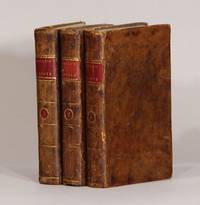
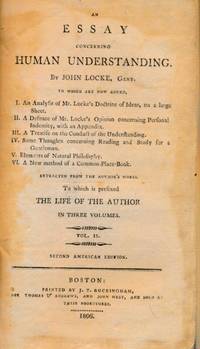
180615175Brattleboro VT: printed by William Fessenden for Thomas and Andrews 1806. Second American edition 3 volumes 12mo full contemporary calf red morocco labels and numbering pieces; slight cracking and rubbing along the joints otherwise very good and sound. Volume 2 bears imprint Boston: printed by J. T. Buckingham for Thomas and Andrews. Odd mix of Shaw & Shoemaker 10742a and 10743 in a uniform contemporary binding. printed by William Fessenden, for Thomas and Andrews unknown
000257Cummings & Hillard. Londons 1813. Orig. leather. Boards scuffedrubbed and moderately scuffed small dampstain. 8vo. 2 vol. Original brown leather bboards rebound to brown morocco spine red labels. A good early 19th century copy. Cummings & Hillard. Londons 1813. hardcover
000258London 1793. 19th edition. full calf. Excellent - bindings lightly rubbed contents clean and bright. 8vo. 2 vol. Full marbled calf black labels with gold lettering and trim with the folded analysis table in volume I. London, 1793. unknown
17155003694London: A & J Churchill 1715. Hardcover. Good-. 12mo. Wear to extremities.Some shrinkage to spine at bands. Some surface loss to spine titles and rear board. Rust marks to rear feps from floral items. <br/> <br/> A & J Churchill hardcover
182525124London: Thomas Tegg 1825. Twenty-Fifth edition. Hardcover. g. Quarto. XVI 568pp. Uncut. Original paper covered boards. Engraved frontispiece portrait of the author. An "Essay Concerning Human Understanding" is one of John Locke's two most famous works the other being his "Second Treatise on Civil Government". First appearing in 1690 the essay concerns the foundation of human knowledge and understanding. He describes the mind at birth as a blank slate tabula rasa although he did not use those actual words filled later through experience. The essay was one of the principal sources of empiricism in modern philosophy and influenced many enlightenment philosophers such as David Hume and Bishop Berkeley. Book II of the Essay sets out Locke's theory of ideas including his distinction between passively acquired simple ideas such as "red" "sweet" "round" etc. and actively built complex ideas such as numbers causes and effects abstract ideas ideas of substances identity and diversity. Locke also distinguishes between the truly existing primary qualities of bodies like shape motion and the arrangement of minute particles and the secondary qualities that are "powers to produce various sensations in us" such as "red" and "sweet." These secondary qualities Locke claims are dependent on the primary qualities. He also offers a theory of personal identity offering a largely psychological criterion. Book III is concerned with language and Book IV with knowledge including intuition mathematics moral philosophy natural philosophy "science" faith and opinion. This work contains a large folding chart being an analysis of Mr Locke's doctrine of ideas in his essay on human understanding. Some age wear on binding with spine missing and age-toning on covers. Previous owner's signature on free front endpaper. Sporadic foxing on endpapers and very first pages. Binding in overall poor interior in near fine condition. Thomas Tegg hardcover
1806g3813Boston: Thomas & Andrews; John West. G : in Good condition. Cover heavily rubbed. Pages darkened. Previous owner inscription to fep. 1806. Second American Edition. Brown hardback leather cover. 180mm x 110mm 7" x 4". xvi 368pp. Volume 2 only from a set of three volumes. . Thomas & Andrews; John West hardcover
181820951RGNew York: E. Duyckinck 1818. 320 pp. Original full-leather covers w/ gilt title on red leather spine label. Binding worn and scuffed. Old tape repair at top of spine. Approx. 1" loss on spine below spine label. Previous owner's name on front blank endpaper and along top edge of "Life of the Author" page. Moderate foxing and toning throughout. Dampstain to first several leaves. Hard Cover. Fair to Good/No Dust Jacket. 8vo - over 7¾" - 9¾" tall. E. Duyckinck Hardcover
1860573PA1Hayes & Zell Philadelphia: 1860. 1860 524 p. Marginal stains and worm hole. Contemporary full roan binding. Nice Civil War era ownership: "David S. Peffer / Bought for his Son Theodore Jerome Peffer in Hanover / York County Pennsylvani a / Wednesday May the 27th 1863." Interesting to note that this book which greatly influenced the founders of the American Republic was issued on the eve of the Civil War - and was given to a soldier on the eve of the Battles of Hanover and GETTYSBURG. PRICE JUST REDUCED! Language: eng. Full Leather. Hardcover. Very Good. Hayes & Zell, Philadelphia: 1860. hardcover
0483051144.Ghardcover. Good. Access codes and supplements are not guaranteed with used items. May be an ex-library book. hardcover
1334907188.Gpaperback. Good. Access codes and supplements are not guaranteed with used items. May be an ex-library book. paperback
1140943200.Gpaperback. Good. Access codes and supplements are not guaranteed with used items. May be an ex-library book. paperback
1379572231.Ghardcover. Good. Access codes and supplements are not guaranteed with used items. May be an ex-library book. hardcover
18283137Printed and sold by J. F. Dove 1828. 1828 8vo. 590 pp. Portrait folding table. Contemporary maroon straight grain goatskin. Boards panelled with a triple line roll. Spine gilt in panels between wide bands. Expertly rebacked some time age. Spine a little darkened and light rubbing on edges and corners. A very attractive copy. Printed and sold by J. F. Dove, hardcover
17686375London Printed for H. Woodfall and 22 others 1768. 1768 8vo. Two volumes. 2 iv 26 372; 16 340 28 p. Contemporary sprinkled calf worn on corners and spine ends. Joints cracked but boards firmly attached. p68-69 in Vol. I have loss of a few words due to sealing wax adhesion otherwise the contents clean and tight. London, Printed for H. Woodfall, [and 22 others], hardcover
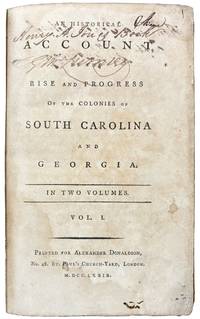
1799068560London: Printed for Alexander Donaldson 1799. First Edition. Hardcover. Very Good. 8vo. respectively. FIRST EDITION 1779. TWO VOLUME COMPLETE SET. The First History of South Carolina. Howes H452. Printed for Alexander Donaldson London 1779. Matching hardcover set. Rebound in black cloth covers are plain. Spines bear orange leather labels stamped in gilt along with the volume numbers. Top edges gilt. Endpapers are gray. Leaves are printed on laid paper. Includes "The first set of the fundamental constitutions of South Carolina / as compiled by Mr. John Locke"/ pages 321-347. Vol. I: xiv 347 pp; Vol II: ix 309 pp. On a shelf this set spans 2.5 inches. <br><br>ABOUT THIS SET: The "earliest history of the region" Howes H452. "Justin Winsor calls this work the 'earliest account of South Carolina cast in a sustained retrospective spirit'. Hewatt an Englishman who at one time lived at Charleston was a keen collector of historical documents". Streeter II 1133. "In Volume I Hewatt gives a sympathetic and balanced account of Indian life and customs based in part on his own observations. He describes the climate soil natural resources fauna snakes and insects; how to make turpentine tar and pitch; and how to cultivate silk cotton and especially rice. In Volume II he describes and criticizes slavery in the colonies and the treatment of slaves; he maintains that slaves should be given some instruction in morals and religion. He discusses diseases in Carolina and describes the cultivation of indigo in some detail. His factual account of the 'present state and condition of the colony' probably refers to the latter 1760s or early 1770s; he quotes some statistics of 1776." Clark I 225. De Renne 217. Turnbull I 223. <br><br>ABOUT THE AUTHOR: Alexander Hewatt came to Charleston in 1763 as minister of the Scots First Presbyterian Church there. Fascinated with the history of South Carolina he soon became a keen collector of historical documents. When the British fleet arrived at Charleston in 1776 Hewatt and other ministers were required to renounce their loyalty to the king. When he refused Hewatt was given sixty days to leave the colony. He sailed for Great Britain where he devoted the next two years to completing his history. In 1780 he was awarded the Doctor of Divinity form the University of Edinburgh an indication of the esteem in which he and his work were held. "Hewatt's account reflects the influence of William Robertson and the Scottish school of historiography. less concerned with a strict chronology of events Hewatt instead focused on the interrelatedness of those events and their various causes and effects. His goal in doing so was to provide moral political and practical instruction to the colonists and to those in England" both of whom he hoped would see the importance of continuing South Carolina's close ties to the Crown" ANB. The work includes detailed descriptions of the climate topography and fauna of South Carolina as well as discussions of slavery there. He warned that the mistreatment of slaves was likely to "fire them with desires of liberty and vengeance." Chapter 5 in the first volume includes a full account of the Yamasee War while chapter 10 is devoted to the war with the Cherokee. <br><br>CONDITION: This set is overall VG with general shelf wear. Removal of bookplate on the front pastedown on both volumes and clipped rectangular front endpaper removed in both volumes. Leaves are in remarkable condition with extremely minimal foxing. Completely free from marginalia or annotation. Bindings are tight. An incredible set. <br><br>Additional photographs available upon request. This set will be delivered with "adult signature required". Full refund if not satisfied. Printed for Alexander Donaldson hardcover
177940925London: Printed for Alexander Donaldson No. 48. St. Paul's Church-Yard London 1779. 8vo. 8 1/4 x 5 inches. First edition. Volume I: a-b4 A-Uu4 Xx2. i-xiv 2 1-347 1. 364 pp. Title Preface Contents Chapters I-VI The First Set of the Fundamental Constitutions of South Carolina as Compiled by Mr. John Locke. Volume II: a4 b1 A-Ss4 x1. i-ix 1 1-329 1. 340 pp. Last page misnumbered 309. Title Contents Chapters VII-XI With inscriptions of "Henry A. Jones" on both volumes unclear if it is the playwright of the same name. Bound to style in 18th-century calf spines with raised bands forming compartments gilt lettered red morocco lettering pieces in second compartments. Restoration to the the last text leaf in volume one<br/> <br/> First edition of the fundamental historical account of South Carolina and Georgia which Howes calls "the earliest history of this region" and Winsor states is the "earliest account of South Carolina cast in a sustained retrospective spirit." Streeter<br/> <br/> Hewatt or Hewat was a Scottish-born Presbyterian minister educated at Edinburgh who presided over the Scots First Presbyterian Church in Charleston when it was Charlestown South Carolina from 1763 to 1777. When the British fleet arrived at Charlestown in 1776 Hewatt and other ministers were forced by Patriots to renounce their loyalty to the king. When he refused Hewatt was given sixty days to leave the colony. His property was seized and he returned to the British Isles and wrote this historical account in London. Considered by Howe to be the earliest and best account of Colonial South Carolina and Georgia the book is bolstered by as Streeter states Hewatt being a "keen collector of historical documents." However his work remains important today because it is also based on his personal observations as a first-hand source from over a decade of lived experience in the region. Hewatt discusses the immigration of British French and other European migrants to the Carolinas due to religious persecution at home. He examines the lives they then created in the New World and the economies they built while doing so. But Hewatt also pays especial detail to the customs and cultures of those people these settlers displaced: the indigenous Native Americans of the region. "Hewatt gives a sympathetic and balanced account of Indian life and customs. He describes the climate soil natural resources fauna snakes and insects; how to make turpentine tar and pitch; and how to cultivate silk cotton and especially rice." De Renne An opponent of slavery as many Presbyterians were he chronicles the introduction of enslaved people from Africa and the ensuing social and economic problems it caused. He criticizes slavery in the colonies and the treatment of enslaved people while maintaining that they should be given instruction in morals and religion. He also warns that to mistreat enslaved people was to "fire them with desires of liberty and vengeance." Also covered in Volume I is the Yamasee War and in Volume II the War with the Cherokee. In 1780 after the publication of this work Hewatt was awarded the Doctor of Divinity from the University of Edinburgh an indication of the success of the present book. "Hewatt's account reflects the influence of William Robertson and the Scottish school of historiography. Less concerned with a chronology of events Hewatt instead focused on the interrelatedness of those events and their various causes and effects. His goal in doing so was to provide moral political and practical instruction to the colonists and to those in England." ANB His work especially his comments on Native Americans and enslaved people were used as the basis for David Ramsay's history though it went uncredited. The first volume includes the "first set of the fundamental constitutions of South Carolina" which have been attributed to the English political philosopher John Locke because he at the time was working as a paid secretary for one of the Province of Carolina's proprietors Anthony Ashley Cooper. The historian David Armitage and the political scientist Vicki Hsueh argue he was a co-author along with Cooper the 1st Earl of Shaftesbury. The constitutions reflect Locke's classical liberalism safeguarding religious freedom while also setting up a reactionary neo-feudal form of government.<br/> <br/> Clark I 255. De Renne 217. Howes H452 b. Sabin 31630. Servies 522. Streeter Sale 1133. Turnbull I 223. Printed for Alexander Donaldson, No. 48. St. Paul's Church-Yard, London unknown
12417643like new. unknown
1024119084.Ghardcover. Good. Access codes and supplements are not guaranteed with used items. May be an ex-library book. hardcover
1354986466.Ghardcover. Good. Access codes and supplements are not guaranteed with used items. May be an ex-library book. hardcover
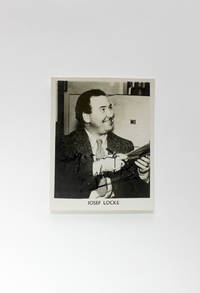
1940024310UK 1940. First Edition . Paper. Good. 16mo - over 5¾ - 6¾" tall. An Original Photograph Signed by Josef Locke. C1940. Joseph McLaughlin 1917-1999 known professionally as Josef Locke was an Irish tenor. He was successful in the United Kingdom and Ireland in the 1940s and 1950s. Size is 90mm x 70mm. Condition is good. Light marking and gum residue to rear. More images can be taken upon request. Ref16869 <br/> <br/> unknown