7 963 résultats
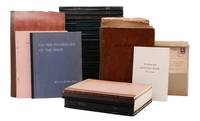
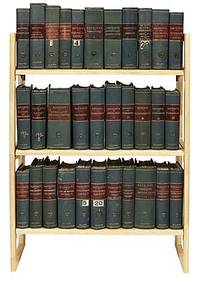
1935398110New York 1935. Hardcover. Good. A large collection of medical offprints and monographs including bound-in and laid-in correspondence and notes assembled by the distinguished American physician author and editor Smith Ely Jelliffe. A practicing neurologist psychiatrist and psychoanalyst based in New York City Jelliffe was a pioneer in the emerging field of psychosomatic medicine and is best known today as the father of psychoanalysis in America. A prolific author and translator he edited the influential Journal of Nervous and Mental Disease from 1902 to 1944 co-founded the non-orthodox Psychoanalytic Review in 1913 and co-founded and edited the Nervous and Mental Disease Monograph Series. He maintained a close personal and professional correspondence with both Sigmund Freud and Carl Jung after their historic break and several other leading figures throughout the world in both Freudian and Jungian circles. Also a book collector Jelliffe built up an important private library of books journals and offprints which he used for his research and the many translations of the serials that he owned and edited.<br/><br/>The collection consists of 380 bound volumes containing several thousand offprints and monographs of European and American works in neuroscience psychiatry and psychoanalysis many of which are inscribed to Jelliffe. Also included throughout the volumes are folded journal articles and shorter articles and clippings mounted on bound-in sheets. The bulk of the papers date from the first quarter of the 20th Century.<br/><br/>The collection includes a 1932 printed letter signed by Freud in ink together with several works by Freud including some with Jelliffe's ownership name. Among the presentation copies are several inscribed by some of Jelliffe's best known colleagues including Carl Jung Melanie Klein Heinz Hartmann and Otto Rank; and several other leading international figures such as John H. Northrop co-winner of the 1946 Nobel Prize in Chemistry the Austrian neurologist Otto Marburg American neurologist Bernard Sachs and the American cultural anthropologist Alfred L. Kroeber. Also included are several papers with warm Inscriptions of gratitude from prominent Brazilian colleagues mentored by Jelliffe: Arthur Ramos an important cultural historian of Brazil's Negro culture Juliano Moreira and Durval Marcondes founders of scientific psychiatry and psychoanalysis in Brazil. Other papers that are further illustrative of the diversity and scope of the collection include Traum und Existenz Inscribed by the distinguished Swiss psychiatrist and phenomenologist Ludwig Binswanger and an Inscribed copy of Alfred Korzybski's influential treatise Time-Binding.<br/><br/>Most of the papers are in German and English followed by others in French Italian Spanish Dutch and several other languages. Among the German papers are many important papers on psychoanalysis homosexuality transvestitism and transsexualism including at least eight papers one inscribed by the great German-Jewish psychiatrist Arthur Kronfeld who studied under Magnus Hirschfeld at the Institute of Sexual Research in Berlin and several early papers by Alfred Adler Wilhelm Reich Felix Boehm and Carl Müller-Braunschweig. Also bound into a few selected volumes are original letters and copies of Jelliffe's accompanying correspondence. These include original letters from two important American physical chemists: Wilder D. Bancroft and Joseph E. Cohn who was responsible for a blood fractionation project that saved thousands of lives in World War Two.<br/><br/>All together the collection roughly divides into the principal subject areas of Jelliffe's professional career: Neurology and the Nervous System; Psychiatry and Neuropsychiatry; Psychoanalysis; Dementia Paranoia Psychoses Schizophrenia; Endocrinology etc. along with several related sub-disciplines. Nearly all have Jelliffe's typed or manuscript table of contents and author indexes laid-down onto the front and back endleaves along with his illustrated bookplate either laid-in or lightly glued on the front pastedowns.<br/><br/>Most volumes are thick quartos and octavos as well as a few large quartos bound in dark green cloth over boards with gilt spines and maroon spine labels. Most of the offprints and monographs are in printed wraps and are signed by Jelliffe on the front wrap or title page. Included are five volumes containing Jelliffe's works and translations bound in half-leather and marbled paper over boards. The five volumes bound in half-leather have detached boards and spine backs about 25 other volumes in cloth have split or partially split hinges with tears to the cloth spine backs else overall most volumes are good or better with scattered scuffing and chipping to the board edges.<br/><br/>This collection from Jelliffe's private library illuminates both his professional career in America and the origins and dramatic rise of psychoanalysis and psychosomatic medicine in Germany the United States and throughout the world before the Second World War. A list of notable works and letters ALS and TLS is available upon request. hardcover books
1961140949003Zurich; New York; et al.: Analytical Psychology Club of New York et al. 1961. Very Good. Large archive of notes from seminars taught by Carl Jung founder of analytical psychology between 1930 and 1945. From the collection of one of his pupils. Together with publications by several other Jungian psychoanalysts including Kristine Mann and Esther Harding. Jung gave most of these lectures in German in Switzerland where they were recorded and typed by several students and checked over by Jung before being translated into English. The New York City and Bailey Island transcripts are in the original English. They were multigraphed for limited distribution to seminar members only and could not be loaned or quoted. The almost verbatim transcripts reveal the development of Jung’s theories and his teaching style; they include interjections from students questions and responses and bursts of laughter. Most have never been published.<br /> <br /> <p>The archive overall Very Good contains:<br /> <br /> <p>- 23 volumes of multigraphed seminar transcripts from Jung’s Zurich lectures translated into English. Printed recto only occasionally illustrated with black and white illustrations some tipped in. Bound in serviceable marble-printed paper-covered boards over black or dark green spine cloth lettered in gilt. Light wear to covers dust-soiling to upper edges of textblocks and light soiling to endpapers. Bindings of several volumes shaken contents moderately toned. Occasional pencil inscriptions and some contemporary ephemera laid in. Includes the following:<br /> <br /> - Dream Analysis Volumes I-4. Volume 5 is included in a binder in this archive. Notes on the Seminar in Analytical Psychology given by Jung in Zurich 1928-1930. New Edition copyright 1938.<br /> <br /> <br> - Interpretation of Visions Volumes 2-11 Volume 1 is included in a binder in this archive. Notes on the Seminar in Analytical Psychology given by Jung in Zurich 1931-1934. New edition copyright 1939.<br /> <br /> <br> - Psychological Analysis of Nietzsche's Zarathustra Volume 10 only. Zurich 1938-1939.<br /> <br /> <br> - Psychological Interpretation of Children's Dreams. Notes on Lectures given at the Eidgenoessische Technische Hochschule. Zurich 1938-39.<br /> <br /> <br> - Modern Psychology 2 Volumes. Notes on Lectures given at the Eidgenoessische Technische Hochschule. Zurich 1933-35.<br /> <br /> <br> - The Process of Individuation. Notes on Lectures given at the Eidgenoessische Technische Hochschule. Zurich 1938-39.<br /> <br /> <br> - The Process of Individuation. Alchemy. 2 Volumes. Notes on Lectures given at the Eidgenoessische Technische Hochschule. Zurich 1940-41.<br /> <br /> <br> - The Kundalini Yoga. Notes on the Seminar given by Professor J.W. Hauer with psychological commentary by Jung. Zurich 1932. New edition copyright 1940.<br /> <br /> <br> - Index to Notes of the English Seminars from 1925 to Winter 1934.<br /> <br /> <p>- Dream Symbols of the Individuation Process 2 volumes. Multigraphed and printed verso and recto. Each bound in plain green paper-covered boards over green spine cloth. Light wear to covers dust-soiling to upper edges of textblocks moderate toning to contents. Mimeographed test questions laid in.<br /> - Volume I: Seminar Held at Bailey Island Maine September 20 through 25 1936. 214 pp.<br /> <br> - Volume II: Seminar Held in New York City October 16 17 18 25 and 26 1937.<br /> <br /> <p>- 5 publications by the Analytical Psychology Club of New York multigraphed and printed recto only. Staple bound in pink wrappers. Light wear and toning penciled number to each front cover tears and staining to front cover of Initiation Rites.<br /> - Initiation Rites by Joseph L. Henderson 1939. 16 pp.<br /> <br> - The Psychological Aspects of the War by Eleanor Bertine Helen G. Henley M. Esther Harding Joseph L. Henderson Hildegard Nagel and Walter Oertly. 1940. 49 pp.<br /> <br> - The Evolution of Woman and Her Responsibility to the World of Today by Beatrice M. Hinkle. 1940. 16 pp.<br /> <br> - Early Concepts of Jahweh by Jane Abbott Pratt. 1939. 22 3 pp.<br /> <br> - The Shadow of Death by Kristine Mann. 1940. 23 pp.<br /> <br /> <p>- On the Psychology of the Spirit: Two Lectures Given at Ascona Switzerland August 1945 by C.G. Jung. Copyright 1948 by the Analytical Psychology Club of New York. 43 pp. Bound in blue wrappers over black spine cloth. Light wear creasing and staining to covers. Moderate toning to contents.<br /> <br /> <p>- The Beginning of Depth Psychology from Mesmer to Freud 1780-1900 by Liliane Frey. No date; circa 1935. 68 pp. printed recto only. Bound in pale green paper wraps over black spine cloth. Light wear and soiling to covers light toning to contents.<br /> <br /> <p>- Introduction to General Clinical Psychopathy by K.W. Bash. 1961; based on lectures delivered in Cairo in 1959. V 107 pp. Printed recto only. Bound in publisher's pale orange wraps over brown spine cloth. Very light wear and soiling to covers light toning to contents.<br /> <br /> <p>- The Figure of Satan in the Old Testament by Dr. Riwkah Schaerf. 60 pp. printed recto only. Bound in brown paper-covered boards over brown spine cloth lettered in gilt. Light wear to covers light toning to covers and contents. Notes on lectures delivered in English in 1946 extracted from Schaerf's unpublished thesis. Zurich 1947. In original mailer sent from Switzerland to Mrs. Richard S. Childs in New York City.<br /> <br /> <p>- 2 prong bound in Accopress binders containing various notes and papers. Moderate wear and soiling to covers one front cover detached. Moderate toning and edgewear to contents some penciled corrections and inscriptions ephemera laid in.<br /> <br /> - First binder: Interpretation of Visions. Vol. I. Notes on the Seminar in Analytical Psychology Given by Dr. C.G. Jung. New Edition 1939. 89 pp. Followed by 81 typed carbon copy pages carbon copies of essays dated April and May 1948 laid in 28 pages typed on legal-sized writing paper "The Mother Archetype and Its Functioning in Life by M. Esther Harding. Papers of the Analytical Psychology Club of NYC 1939." 5 page multigraphed essay "Beauty and the Beast" by Frieda H. Stern and other extracts notes and essays.<br /> <br /> <br> - Second binder: Multigraphed notes from Jung's Zurich lectures. Dream Analyses Vol IV: Notes on the Seminar in Alanytical sic Psychology Given by Dr. C.G. Jung. New Edition 1938. 62 pp. Dream Analyses Vol V New Edition copyright 1939. 71 pp. Psychological Analysis of Nietzsche's Zarathustra. Part 8. Spring 1937. 91 pp.Part 9 penciled date of 10 Dec 1942 65 pp. Part 10 108 pp. Four newspaper clippings relating to mythology and symbolism in the wartime air force gremlins laid in.<br /> <br /> <p>- In Memoriam: Kristine Mann 1873-1945. Staple bound pamphlet 28 pp.<br /> <br /> <p>These papers are from the collection of Grace Childs referred to as Mrs. Richard S. Childs in newspapers of the time a prominent New York society woman and social reformer. She graduated from the School of Social Work in 1913 and joined the Red Cross during the First World War. Childs served as Treasurer of the Women’s Trade Union League during the following two decades famously joining laundry workers on the picket line and did volunteer psychiatric work for the Selective Service system during the Second World War. That last speaks to Childs’ growing interest in psychology: she served as President of the Analytical Psychology Club of New York from 1949 to 1952 and was active in the club from its infancy. In the 1945 In Memoriam included in this archive she writes of the effect Dr. Kristine Mann had on her the first time she saw the doctor speak:<br /> <br /> <p>“I was not one of those fortunate persons who knew Dr. Mann well but I remember the deep impression her face made upon me the first time I saw her. I was sure I had seen her before – her face haunted me. Sometime later I realized her face resembled strikingly one of the Sybils in the ceiling frescoes of ‘The Creation’ in the Vatican by Michael Angelo – frescoes I had studied long ago. The night she read her paper on ‘The Shadow of Death’ a new vista opened for me. I realized for the first time what a creative old age might mean.â€<br /> <br /> <p>Kristine Mann is a key figure in the development of Jungian psychotherapy. She is the anonymous woman described in Jung’s seminal essay “A study in the process of individuation†an American lady who “had varied interests was extremely cultured and possessed a lively turn of mind.†A graduate of Smith College Mann taught English for years before deciding to switch to medicine earning a degree from Cornell Medical School in 1913. Like Grace Childs Mann was drawn to psychology in middle age and traveled to Zurich in 1921 to study under Jung. She returned every few years thereafter and his interpretation of her paintings was the basis for a new theory of psychological development.<br /> <br /> <p>Kristine Mann Eleanor Bertine and Esther Harding formed a powerful trio of pioneering Jungian psychoanalysts in the United States. They cofounded the Analytical Psychology Club of New York in 1936 and invited Jung to give lectures in New York in September 1936 and at Bailey Island in Maine October 1937 the notes from which are included in this archive. The Bailey Island seminar marked Jung’s last visit to the United States. When Mann was dying of cancer in 1945 Jung wrote to her:<br /> <br /> <p>“When you can give up the crazy will to live and when you seemingly fall into a bottomless mist then the truly real life begins with everything which you were meant to be and never reached.â€<br /> <br /> <p>Mann left her books and papers to the Analytical Psychology Club which named its nascent library – now the largest such in the country – in her honor. This treasure trove could be the cornerstone of a new library. Analytical Psychology Club of New York, et al. unknown
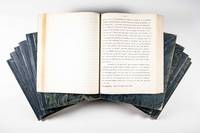
193448061Zurich: Privately printed for the use of members of the seminar 1934. Original document. Quarto 11 x 8 1/2". Each with 1-3 preliminary leaves 283 275 201 163 5 249 230 133 159 178 227 190 leaves 29 plates 1 36 leaves index. All bound in original dark blue half cloth over marbled boards. Foreword to index volume by Carol Sawyer. The photostatic prints are pasted onto heavy paper each numbered in ink by hand underneath the print and loosely inserted into the folder.<br /> <br /> Volume 1 with handwritten dedication "Für Gerhard August 31." Volumes 2–11 with "Gerhard Adler" inked to front free endpapers. This set is from the library of the important figure of Analytic Psychology known for his translations of the "Collected Works" by Carl Jung into English.<br /> <br /> Set of thirteen volumes: eleven with multi graphed typescript copies from notes taken by the professional secretary Mary Foote during Carl Jung seminars held from 1930–1934. Seminars were also recorded by pupils of Carl Jung and edited by him. Volume twelve contains twenty-nine photographs of paintings by Christiana Morgan volume thirteen the index.<br /> <br /> These sets were issued in a very small number for the use of participants of the seminar only. The pupils were not authorized to lend them out quote or publish any of the material without the explicit authorization of Dr. Jung. A small white paper label pasted to inside front covers of volumes 1–4 reading: "This report is strictly for the use of members of the Seminar with the understanding that it is not to be circulated." The other volumes contain this information printed on the "Restricted Usage" page. <br /> <br /> The topic of these seminars was the analysis of dreams and artwork by the American artist Christiana Morgan a patient of Carl Jung and the ultimate "femme inspiratrice" or the manifestation of the perfect feminine as Jung referred to her after their first meeting. Morgan was said to produce artwork in a semi-hypnotic state creating mythic visions. She was also a writer and lay psychoanalyst at Harvard known for co-authoring the Thematic Apperception Test a widely used projective psychological test. Having received a few requests to lecture on Morgan's paintings a vote was taken on Jung's suggestion among the participants of the Vision Seminar to decide whether to continue with the regular series of dream interpretations or lectures about unconscious pictures by Morgan instead. The class voted for the "picture method."<br /> <br /> "I must explain to you that the lectures are about the development one could say of the transcendent function of dreams and the actual representation of those images which ultimately serve in the synthesis of the individual - the reconciliation of the pairs of opposites and the whole process of symbol formation from Jung's opening address to the students in the seminar."<br /> <br /> The seminars have to be seen in the context of Jung's work and research on what he had termed the "collective unconsciousness" in 1916 this being another attempt to gather conclusive evidence for what was to become his "Concept of the Collective Unconscious."<br /> <br /> The term "collective unconsciousness" first appeared in Jung's 1916 essay "The Structure of the Unconscious" distinguishing between the "personal" Freudian and the "collective" unconscious." Jung collected works. In 1929 in "The Significance of Constitution and Heredity in Psychology" Jung wrote: "And the essential thing psychologically is that in dreams fantasies and other exceptional states of mind the most far-fetched mythological motifs and symbols can appear autochthonously at any time often apparently as the result of particular influences traditions and excitations working on the individual but more often without any sign of them. These "primordial images" or "archetypes" as I have called them belong to the basic stock of the unconscious psyche and cannot be explained as personal acquisitions. Together they make up that psychic stratum which has been called the collective unconscious." Jung collected works. And in 1936 he delivered to the Abernethian Society at St. Bartholomew's Hospital in London<br /> entitled "The Concept of the Collective Unconscious."<br /> <br /> Volumes I through XI contain explanatory in-text drawings sketches and diagrams volume VI a full page map of astronomical constellations. All lectures contain brief interactions with participants identified as Mrs. Baynes Mrs. Wickes Mrs. Norris Miss Sergeant Mrs. Sigg Mrs. Jaeger Mrs. Crowley Prof. Eaton Dr. Schlegel Dr. Baynes etc. and verbatim descriptions of dreams of patients with subsequent attempts by Dr. Jung to interpret them. <br /> <br /> Vol. I: Contains lectures from October 15 22 29 November 5 12 19 27 December 3 8 and 9 1930. <br /> <br /> Vol. II: Lectures from January 21 February 4 11 18 25 March 3 11 18 25 1931.<br /> <br /> Vol. III: Lectures from May 6 21 27 June 3 10 24 1931. At rear a lecture of June 15 1931 on "Kundalin Yoga. Notes on the lecture" by Professor Hauer. <br /> <br /> Vol. IV: Lectures from November 11 18 25 December 2 9 16 1931. Includes four page index arranged by Carol Sawyer on Dreams - Autumn 1930.<br /> <br /> Vol. V: Lectures from January 20 27 February 3 10 17 24 March 2 9 16 1932.<br /> <br /> Vol. VI: Lectures from May 4 11 18 June 1 8 with full-page astronomical map June 15 22 29 1932.<br /> <br /> Vol. VII: Lectures from November 2 16 23 30 December 7 1932.<br /> <br /> Vol. VIII: Lectures from January 18 25 February 1 22 March 1 8 1933.<br /> <br /> Vol. IX: Lectures from March 3 10 17 24 31 June 7 14 211933.<br /> <br /> Vol. X: Lectures from October 4 11 18 25 November 8 15 22 29 December 6 13 1933.<br /> <br /> Vol. XI: Lectures from January 24 41 February 7 14 21 28 March 7 14 21 1934<br /> <br /> Vol. XII: Twenty-nine silver prints of paintings three reproductions of classical paintings and twenty-six by Christiana Morgan in different sizes from 2 7/8 x 2 7/8" to 4 7/8 x 3 1/4" and one measuring 1 3/8 x 5 1/8" mounted to stiff gray paper plates. Morgan's paintings have dreamlike and symbolic content reminiscent of expressionism the last two of mandalas. <br /> <br /> Vol. XIII: Index volume consisting "of a chronological list of dreams and visions a list of books mentioned and a word index." Contains explanations of abbreviations used.<br /> <br /> All volumes are in very good condition. Volume II with burn stain on leaves 67 through 74 no loss of text and page 275 of volume 2 with small closed tear due to an imprecise binding and thus torn near the gutter not affecting text. Vol. III with few small brown spots on first pages not loss of text. Vol. IV with some spotting in margins. Volume twelve with partially cracked joints and some light creasing along edges of plates. Photographs fine. The only complete set of Jung's so-called Vision Seminars is held at Yale University in the Beinecke Library in the "Mary Foote Papers / Box 9" including index and the volume with 29 silver-prints of Christiana Morgan's paintings. <br /> <br /> In 1976 Spring Publications in Zurich issued a widely held two volume set of these seminars. <br /> <br /> Reproductions of nine of eleven volumes of the original format in eleven volumes are held by the University of California Library of Congress and Harvard University. The index is held by the Library of Congress and Harvard University. Volumes one and seven by the University of Lüneburg. EROMM-MICROFORM AND DIGITAL MASTERS hold a version of eleven volumes dated 1932 with volumes 1–4 from the 1939 edition stored on a microfilm reel Possibly a cataloging error since the later seminars reach into 1934. Privately printed for the use of members of the seminar unknown
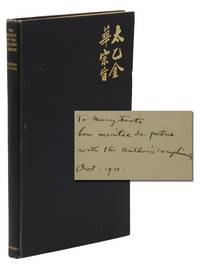
1931140945041London: Kegan Paul Trench Trubner & Co 1931. First Edition. Very Good. First British edition of this important translation. A presentation copy inscribed by Carl Jung in the year of publication to his secretary Mary Foote. "To Mary Foote bene meritae de petrie with the author’s compliments Oct. 1931" though Jung did not sign his name. Foote was an accomplished American painter and producer of notes of Carl Jung’s seminars. She published Jung’s notes in Zurich beginning in 1928 until WWII. Bound in publisher's original dark blue cloth stamped in gilt lacking the dust jacket. Very Good with light wear to cloth at edges moderate scuffing to covers contents tanned.<p>The Secret of the Golden Flower is a Chinese Taoist book on neidan inner alchemy meditation which also mixes Buddhist teachings with some Confucian thoughts which was written in the late 1600s. First translated into German by sinologist Richard Wilhelm a friend of Jung's The Secret of the Golden Flower describes a straightforward and silent meditation method that has been characterized as "Zen with details." Cary F. Baynes translated that it into English and Jung provided commentary. This translation modernly popularized the work among Westerners as a Chinese "religious classic"; it is read in psychological circles for analytical and transpersonal psychology considerations of Taoist meditations although it receives little attention in the East. Kegan Paul, Trench, Trubner & Co unknown
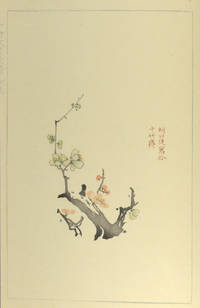
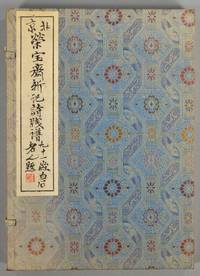
1952902011952. Chinese Woodcuts Peking Jung Pao Chai SHIH CHU CHAI CHIEN P'U Fei An T'i. Peking: Peking Jung Pao Chaiwith the 1952 preface Set of four volumes each 31 x 21.3 cm of the TEN BAMBOO HALL POETRY PAPERS. The TEN BAMBOO HALL POETRY PAPERS of course date back to the late Ming period in the 17th century and is one of the earliest classics of color woodblock printing in the world. It was conceived and created by the same artist Hu Cheng-yen who was responsible for the 16 fascicle TEN BAMBOO HALL PAINTING MANUAL. Each of the four volumes of this facsimile edition is string-bound Chinese style with paper labels. The hundreds 267 of color woodcuts are well printed works of the Peking Jung Pao Chai the finest color printer in China in the 20th century. In the 1972 edition of his book CHINESE POETRY PAPER BY THE MASTER OF THE TEN BAMBOO HALL Jan Tschichold calls the Jung Pao Chai 1952 facsimile edition this edition the first post-Revolution issue of this book the finest issue and one of the most extraordinary jobs of color printing in the 20th century. That being said it is a reprint of the original edition which appeared in the 1930s printed on vintage papers from the collection of the famous author Lu Hsun. That edition is virtually unobtainable and even early post-War copies like this one are quite scarce as well. A remarkable and lovely work very skillfully printed in gauffrage and colors. The original brocade-covered clasped wraparound box is present and near perfect the books themselves are about fine. unknown
1952902011952. Chinese Woodcuts Peking Jung Pao Chai SHIH CHU CHAI CHIEN P'U Fei An T'i. Peking: Peking Jung Pao Chaiwith the 1952 preface Set of four volumes each 31 x 21.3 cm of the TEN BAMBOO HALL POETRY PAPERS. The TEN BAMBOO HALL POETRY PAPERS of course date back to the late Ming period in the 17th century and is one of the earliest classics of color woodblock printing in the world. It was conceived and created by the same artist Hu Cheng-yen who was responsible for the 16 fascicle TEN BAMBOO HALL PAINTING MANUAL. Each of the four volumes of this facsimile edition is string-bound Chinese style with paper labels. The hundreds 267 of color woodcuts are well printed works of the Peking Jung Pao Chai the finest color printer in China in the 20th century. In the 1972 edition of his book CHINESE POETRY PAPER BY THE MASTER OF THE TEN BAMBOO HALL Jan Tschichold calls the Jung Pao Chai 1952 facsimile edition this edition the first post-Revolution issue of this book the finest issue and one of the most extraordinary jobs of color printing in the 20th century. That being said it is a reprint of the original edition which appeared in the 1930s printed on vintage papers from the collection of the famous author Lu Hsun. That edition is virtually unobtainable and even early post-War copies like this one are quite scarce as well. A remarkable and lovely work very skillfully printed in gauffrage and colors. The original brocade-covered clasped wraparound box is present and near perfect the books themselves are about fine. unknown books
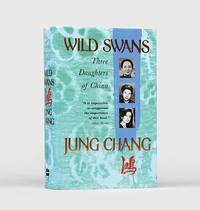
2000160822London: HarperCollins c.2000. With a lengthy inscription by Jung Chang in aid of English PEN A uniquely inscribed copy of this famous memoir with two poignant handwritten reflections by the author on "My Mother & My Family at the Time of Coronavirus" echoing many of the themes of the work including personal liberty resilience in the face of adversity and the importance of family. First published in 1991 Wild Swans remains the most widely read English-language autobiography by a Chinese writer; it is still banned in China. The author's meditations occupy the final five leaves the rear pastedown and a loosely notecard with a printed design after an oil portrait of her mother Xia Dehong. In her first entry dated April 2020 she reflects on the difficulties of securing official leave to visit Xia Dehong in China as well as her mother's resilience during the lockdown in Chengdu. She also speaks of her pride in her nephew an NHS doctor on the front lines of the fight against COVID. "Around this time of the year in the past I was often woken in the middle of the night by a sense of dread anticipating new hurdles turning up in the morning that would threaten my visit to my mother. This year I wake up feeling anxious about whether Joe has adequate personal protective equipment". In the second entry penned on New Year's Eve 2021 Chang writes that "news from China is more and more worrying. The regime seems bent on dragging the country back to the Maoist days and is promoting Mao with draconian measures. I am facing unprecedented danger if I set foot in China. And so it seems my fear of many years that I could not be with my mother in her last moments will be a reality". Chang discussed her inscriptions in this copy at a roundtable in support of English PEN held on 3 July 2022 in London. Overall a unique example of a truly monumental work exemplifying autobiography's potent ability to challenge hegemonic power. Octavo. With 16 half-tone plates double-page map of China. Original green boards spine lettered in gilt with gilt Chinese character "hong" "swan". With illustrated dust jacket. Housed in a dark blue flat-back cloth box by the Chelsea Bindery. Binding bright a little cocked light bumping at spine ends internally clean and bright. A near-fine copy in like dust jacket unclipped with touch of creasing. hardcover
67822Dr. C. G. Jung c. 1928 to 1941. A SET OF ELEVEN NOTEBOOKS. Covers are marbled green with one red cover and one blue cover spines are covered as black canvas with gilt lettering. From the working library of scholar Virginia Case these notebooks are heavily annotated in the scholarÕs handwriting with notes throughout the books and clean ruled lines to important sections of each notebook. Case has extensively handwritten notes on the inside boards and first flyleaf referencing certain passages and page numbers. Also tipped in are various ephemeral decorative cards and notes with personal letters and articles plus Virginia CaseÕs own notes to others and to herself. We have left the paperwork and notes where found in the volumes. This is an extensively drawn archive from the scholarÕs personal library. In many of the notebooks translations were made by Mary Foote often with the kind help of Cornelia Brunner. CONDITIONS of the books are good to near fine. Virginia Case is the author of ÒYour Personality - Introvert or ExtrovertÓ Macmillan 1941 1944 referencing the following : ÒDr. C. G. Jung has read the Case book in manuscript form and has consented to its publication.Ó It is obvious that Virginia Case while researching her book thoroughly ransacked these eleven notebooks for her research. The authorÕs purpose is to correct and to make available to the general public the helpful practical knowledge of Dr. JungÕs information. In these seminars it contains some of JungÕs most psychologically revealing work. As noted in the volumes Òthis report in these notebooks is strictly for the use of the members of the Seminar with the understanding that it shall not be circulated. Dr. Jung expressly asked that it shall not be lent nor may any part quoted for publication without his permission.Ó This is the first edition printing. In the second edition Foote made extensive deletions and additions to the earliest versions of the seminar Also included are five original art work plates on heavy stock paper. The eleven volumes are offered as discovered nothing has been removed and as the author Virginia Case lived with the notebooks herself. Dr. C. G. Jung, c. 1928 to 1941 hardcover
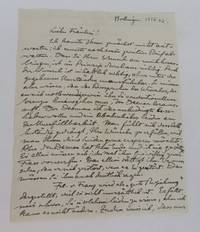
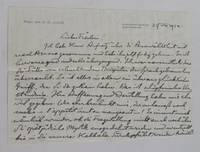
1942173331942. Group of three items: An ALS from Jung to his mentee psychoanalyst Dr. Rivkah Scharf; an ALS from Dr. Sharf to Jung responding to the aforementioned letter; and one envelope with Jung hand-writting the address of Dr. Sharf. The two were working on Jung's "Psychology and Alchemy" at the time of the present correspondence. Jung lettter includes wonderful clinical and relational content; while perhaps under the influence of the book material Jung refers with vigor to the activity of Scharf's "daemon" and it's influence on their collaborative process providing perhaps an informal definition stated with directness and ultimately empathy: ".expressing this wish which in itself necessarily must go beyond the conventional limits will awawken the daemon. The daemon is the absolute wanting-to-have-it-this-way and hideous suffering from the impossibility of fulfillment. Hence since one would like to spare you this suffering one feels under constant pressure to grant your wishes. However the daemon is endless and it is never satisfied. You alone with have to voluntarily throw yourself to him every time. Nothing will satisfy him. He must see that by destroying you he will destroy himself. And you will have to make this plain to him.knowing you are suffering so much is difficult for me but I cannot help it. Besides I know that this amount of suffering is necessary to make you as hard as you need to be in your life." <br /> <br /> Scharf in her reply is thankful for Jung's empathy and also refers to the initial state of emotional reception: "deeply injured and initially almost broken by the inexorable truth contained in your letter." <br /> <br /> Jung letter measures 8 3/4"h x 7"w 2pp expected folds and toning to paper two small unobtrusive stains to letter. Letter is addressed from Bollingen 1942. <br /> <br /> Letter accompanied by Certificate of Authenticity. unknown
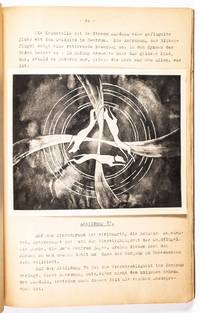
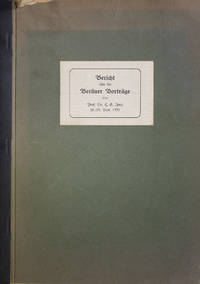
193748062Berlin: Privately Printed 1937. First edition. Softcover. Good to very good condition. Quarto. 1 55 leaves. Original black quarter-cloth library tape over stiff gray wraps with black lettering and frame on white paper label of cover. Scarce unpublished typescript copy prepared by Marianne Starke of the first lecture of Jung's Berlin lectures in September of 1937. Illustrated with forty-seven mounted five printed illustrations and one additional printed map of a river all produced lithographically.<br /> <br /> First lecture with extensive introduction on the "collective unconsciousness" with references to what could be deemed the philosophical forebodings of the term. Jung's historical survey traces back to Leibniz Kant Schelling Hegel C. G. Carus Schopenhauer and Eduard von Hartmann with his "Philosophy of the Unconscious." Jung points to the French School of Nancy Liébeault Charcot and Paul Janet's "Automatisme psychologique" for the unconscious processes of the soul. He introduces the work of Freud and Breuer in relation to the topic and gives an example of one of his patients an experience exemplifying what Albert Dietrich published in the so-called "Zauber-Papyrus Magic-Papyrus" six years later giving directions to see the "origin of the wind." Jung's close friend Prof. Flournoy in Geneva published a series of "unconscious fantasies" in the "Archives de Psychologie" in 1912 and the amount of mythological parallels prompted Jung to consider the possibility of "psychological heredity." Additional work at the Government Hospital for the Insane in Washington in 1913 lead Jung to coin the term of "collective unconsciousness" an idiosyncratic way to produce phenomenon related and maybe identical to mythological motifs. The lecture includes an extensive excurse on the history and symbolism of Mandalas.<br /> <br /> The principal purpose of the second lecture is to introduce part of the evidence that speaks to and demonstrates the existence of the "collective unconsciousness" with visual aids based on drawings by his patients produced over a period of years which depict experiences that are difficult to express in words. The drawings introduced during the lecture are from educated as well as uneducated patients produced spontaneously during therapy sessions. They are presented here with explanatory text.<br /> <br /> Short inscription on front free endpaper: "Leni Brand in pencil übereignet an meinen Enkel Ingo-Eric 25. II. 74" Laid in a page of the newspaper "Neue Westfälische" from January 8 1972 featuring an article on organ building in the northeast part of Westphalia. Text in German. Some wear along edges of wraps light creasing at bottom foredge corners a few light spots on front cover with paper label showing some light foxing. Light water staining and light burn spot on back cover diminishing through page 48 with black tape partially missing at head and tail of spine. Block age-toned with light creasing of first few pages at lower foredge corner. Binding in overall good interior in very good condition. Privately Printed unknown
2107RS685<p>Tradução de Maria Serpa dos Santos. 2.ª Edição. Fundação Calouste Gulbenkian. Lisboa. 1972.</p>_x000d_<p>De 23x16 cm. Com ii 526 ii págs. Brochado com sobrecapa de proteção. Ilustrado no texto com gravuras e fotografias a preto e branco em extratexto com guadros de microorganismos biológicos sobre papel couché.</p> I-172-G-4 unknown
20222-107161004XSpringer Nature 2022. Hardcover. New. 2nd edition. 3720 pages. 10.00x7.01x7.20 inches. Springer Nature hardcover
73399E-002. Very Good. Hardcover. Trade PB. 4to. Ausgearbeitet von Frau Marianne Stark Berlin Germany. 1937. 52 pgs Illustrated with 53 illustrations 6 of them are printed directly onto the page the unnumbered illustration plus illustration #4 17 19 41 & 42. The other 47 are photostatic copies that have been cut and pasted into the text in the appropriate places. Text is in German and single sided one side of the page only First Edition Multigraph Copy. Issued in stapled paper wraps with a cloth spine and paper label present to the front wrapper. Wrappers lightly worn with some light shelf-wear to the extremities present. Previous owner's name present to the FFEP Hede Mann/Anne v. Kraff. Pages lightly toned and faded. Text is clean and free of marks. Binding tight and solid. Unpublished typescript of a lecture concerning the collective unconscious and mandala symbolism delivered in Berlin on 28-29 September 1937. Between 1923 and 1941 Carl Jung delivered and moderated nineteen private seminars some in English and others in German on a variety of different topics. Until 1948 there was no formal Jungian training institute so other than personal analysis with Jung himself participation in these seminars were the primary method for training Jungian analysts during these early years. The attendance at these seminars was strictly limited to small by invitation only groups. A transcription of Jungs comments and his exchanges with the participants was made during the seminar and then privately printed for distribution to the attending group members and to other interested insiders. These privately printed Multigraphed volumes typically carried a stern warning against further distribution the following being a typical example that appeared in the front of each volume of the Psychological Analysis of Nietzsches Zarathustra 1934/39: This report is strictly for the use of members of the Seminar with the understanding that it shall not be circulated. Dr. Jung expressly asks that it shall not be lent nor may any part be quoted for publication without his permission. E-133; 8vo 8" - 9" tall . hardcover
1937315420Berlin: Frau Marianne Stark 1937. SCARCE FIRST EDITION MULTIGRAPH COPY OF ONE OF JUNG'S PRIVATE 'INVITATION ONLY' SEMINARS. 52 tipped-in numbered and 1 unnumbered p. 14 illustrations. Of these 53 illustrations 6 are printed onto the page the unnumbered illustration plus illustration #4 17 19 41 & 42. The remaining are photostatic copies that have been cut and mounted with illustration #34 pasted onto the verso of page 39. 55pp printed recto only. Folio 292 x 205 mm. Black cloth spine and greenish gray wrappers small chip at top of front cover. SCARCE FIRST EDITION MULTIGRAPH COPY OF ONE OF JUNG'S PRIVATE 'INVITATION ONLY' SEMINARS. 52 tipped-in numbered and 1 unnumbered p. 14 illustrations. Of these 53 illustrations 6 are printed onto the page the unnumbered illustration plus illustration #4 17 19 41 & 42. The remaining are photostatic copies that have been cut and mounted with illustration #34 pasted onto the verso of page 39. 55pp printed recto only. Folio 292 x 205 mm. Frau Marianne Stark unknown
1942173341942. Superb handwritten letter written and signed by C. G. Jung. Letter written to his mentee Dr. Rivkah Scharf complimenting her on her work on "chosenness" which Jung brought with him to Ascona. Jung labels Scharf's content as "creative insight" and as in another letter to Scharf seems to warn her against a potential insatiableness inside herself which in this letter he fears might come from his complimenting her accomplishment. While suggesting to Scharf that she elaborate on her ideas Jung then refers to his own writings: "The fact that I have written a great deal scares people so much that they might not read anything." <br /> <br /> Letter measures 5 3/4"h x 8"w 2pp expected folds and toning to paper. Jung's own stationary with his letterhead. unknown
1955886941955. Peking Jung Pao Chai Publishers Ch'i P'ai-shih etal. PEKING JUNG PAO CHAI HSIN CHI SHIH CHIEN P'U. Peking 1955. Folio 2 vols bound chinese-style in purple wraps enclosed in a brocade folding box with ivory clasps. In fine condition. This collection of wood-block reproductions of paintings was published by the famous Peking art publishers in honor of the 91st year of the painter Ch'i P'ai-shih which was celebrated in 1951. There are a total of 80 multicolor prints of which 32 are after designs by Ch'i P'ai-shih himself. Magnificently done they represent the height of the printer's craft in 20th century China. Complete. unknown
1955897791955. Peking Jung Pao Chai Publishers Ch'i P'ai-shih etal. PEKING JUNG PAO CHAI HSIN CHI SHIH CHIEN P'U. Peking 1955. Folio 2 vols bound chinese-style in purple wraps enclosed in a patterned blue brocade folding box with ivory clasps. In fine condition. This collection of wood-block reproductions of paintings was published by the famous Peking art publishers in honor of the 91st year of the painter Ch'i P'ai-shih which was celebrated in 1951. There are a total of 80 multicolor prints of which 32 are after designs by Ch'i P'ai-shih himself. Magnificently done they represent the height of the printer's craft in 20th century China. Complete. unknown books
1955897781955. Peking Jung Pao Chai Publishers Ch'i P'ai-shih etal. PEKING JUNG PAO CHAI HSIN CHI SHIH CHIEN P'U. Peking 1955. Folio 2 vols bound chinese-style in purple wraps enclosed in a patterned tan brocade folding box with ivory clasps. In fine condition. This collection of wood-block reproductions of paintings was published by the famous Peking art publishers in honor of the 91st year of the painter Ch'i P'ai-shih which was celebrated in 1951. There are a total of 80 multicolor prints of which 32 are after designs by Ch'i P'ai-shih himself. Magnificently done they represent the height of the printer's craft in 20th century China. Complete. unknown books
1955886941955. Peking Jung Pao Chai Publishers Ch'i P'ai-shih etal. PEKING JUNG PAO CHAI HSIN CHI SHIH CHIEN P'U. Peking 1955. Folio 2 vols bound chinese-style in purple wraps enclosed in a brocade folding box with ivory clasps. In fine condition. This collection of wood-block reproductions of paintings was published by the famous Peking art publishers in honor of the 91st year of the painter Ch'i P'ai-shih which was celebrated in 1951. There are a total of 80 multicolor prints of which 32 are after designs by Ch'i P'ai-shih himself. Magnificently done they represent the height of the printer's craft in 20th century China. Complete. unknown books
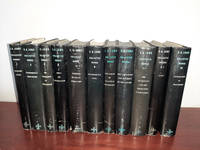
10781<p>Vol 1 - Psychiatric Studies Jacket rub edge wear Vol 2 - Experimental Researches 2nd ed jacket rub edge wear Vol 3 - The Psychogenesis of Mental Disease Jacket rub edge wear short tear Vol 4 - Freud and Psychoanalysis Heavy rub to rear jacket panel edge wear Vol 5 - Symbols of Transformation Jacket rub edge wear Vol 6 - Psychological Types 2nd ed jacket rub edge wear Vol 7 - Two Essays on Analytical Psychology Jacket rub edge wear Vol 8 - The Structure and Dynamics of the Psyche Jacket rub Vol 9i - Archetypes of the Collective Unconscious spine face rub Vol 9ii - Aion jacket rub Vol 10 - Civilization in Transition spine edge rub Vol 11 - Psychology and Religion no jacket 2nd print with corrections 1963 Vol 12 - Psychology and Alchemy rub short tear UK edition publisher is Routledge Vol 13 - Alchemical Studies jacket rub Vol 14 - Mysterium Coniunctionis jacket rub Vol 15 - The Spirit in Man Art and Literature jacket rub Vol 16 - The Practice of Psychotherapy jacket rub Vol 17 - The Development of Personality 2nd ed jacket rub Vol 18 - The Symbolic Life 2nd ed spine edge wear Vol 19 - General Bibliography light wear Vol 20 - General Index corner bump Vol A - The Zofingia Lectures owner sticker on pastedown some writing on rear pastedown Vol B - Psychology of the Unconscious light wear 2nd print</p><p>Most of these volumes appear to be the first edition unless otherwise noted. Published by Pantheon up to Vol 17 with the exception of Vol 12 the later ones are Princeton. No international orders will be accepted.</p> Pantheon hardcover
2020x-9401789045Springer 2020. Hardcover. New. 2767 pages. 10.00x7.01x4.90 inches. Springer hardcover
1909225601909-1913. Leipzig u. Wien Fr.Deuticke 1909-1913 8° ca. 3800 pp. ca. 65 Abbildungen 5 LwdBde. d.Zt. Das erste wissenschaftliche Organ der Psychoanalyse eine wertvolle Fundgrube mit vielen Erstdrucken. Das von Freud gemeinsam mit Bleuler edierte 'Jahrbuch' war das erste wissenschaftliche Organ der Psychoanalyse und ihres engsten Umfeldes - heute zugleich eine reiche Fundgrube von Erstdrucken! Das Autorenalphabet weist von Karl Abraham bis zu M.Weissfeld alles auf was im Kreise von Sigmund Freuds Rang und Namen hatte. Es wurden nur Original-Beiträge publiziert. Von Freud sind mehrere Erstdrucke enthalten darunter Grundlegendes wie die "Analyse der Phobie eines fünfjährigen Knaben Der kleine Hans" und "Bemerkungen über einen Fall von Zwangsneurose Der Rattermann" "Ueber den Gegensinn der Urworte" "Ueber einen besonderen Typus der Objektwahl beim Manne Beiträge zur Psychologie des Liebesleben 1." "Formulierungen über die zwei Prinzipien des psychischen Geschens" "Psychoanalytische Bemerkungen über einen autobiographischen beschriebenen Fall von Paranoia Dementia paranoides" "Nachtrag" "Über die allgemeinste Erniedrigung des Liebesleben Beiträge zur Psychologie des Liebeslebens 2". Von C.G.Jung ist un.a. der große Erstdruck von "Wandlungen und Symbolen der Libido" Garrison & Morton No.4985.2 enthalten ferner viele wichtige Beiträge von Bleuler sowie von Binswanger Stekel Adler Rank Ferenci Jones usw. Mit Abschluß des fünten Bandes 1913 traten Bleuler als Mitherausgeber und Jung als Redakteur zurück. Hier eine Liste der Mitarbeiter dieser somit in sich abgeschlossenen Reihe: Abraham Adler Aptekmann Assaglio Bertschinger Binswanger Bleuler Bjerre Ferenczi Freud Grebelskaja Itten Jones Jung Lang Maeder Marcinowski Mensendieck Neiditsch Nelken Pfenninger Pfister Rank Riklin Robitsek Rosenstein Sachs Sadger Silberer Spielrein Stärcke Stekel Weissfeld. unknown
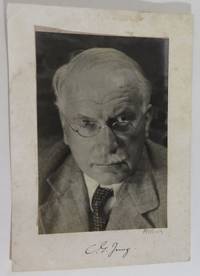
18421No date . Scarce photograph of C. G. Jung signed by Jung the psychoanalyst with perhaps the broadest influence across the humanities and an influence that remains active broad and deep across clinical psychology. Matte silver gelatin photograph signed in black fountain pen by Jung. Photo and matte are a bit bowed foxing and some staining two creases to corners; silvering to photo. Photo measures 6 7/8"h x 4 5/8"w matte measures 9"h x 6 3/8"w. Photograph taken by Eranos Foundation photographer Margarita Margarethe Fellerer circa 1940s also signed in pencil by Fellerer. Photo accompanied by Certificate of Authenticity. unknown
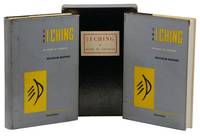
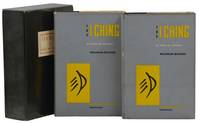
1950140942894New York: Pantheon Books / Princeton University Press 1950. First American Edition. Fine/Very Good. First American edition and first English language translation; first printing. Complete in two volumes bound in publisher's black cloth stamped in gilt Near Fine with light rubbing to cloth. In Near Fine unclipped dust jackets with light rubbing and light wear at the extremities and a tear to each with a tape repair made to the blindside. In publisher's black slipcase with rubbing at edges. A nice set. <p>The very first English-language translation of the Chinese classic text The I Ching attributed to Fu Xi. Baynes' English rendering of Wilhelm's German translation continues to be widely read today. With an introduction by eminent psychiatrist Carl Gustav Jung. Pantheon Books / Princeton University Press unknown
1950140944061New York: Pantheon Books / Princeton University Press 1950. First American Edition. Fine/Near Fine. First American edition and first English language translation; first printing. Complete in two volumes bound in publisher's black cloth stamped in gilt Fine in a Near Fine unclipped dust jackets with light wear and light soiling in Very Good publisher's original black slipcase with light rubbing light wear to the extremities.<p>The very first English-language translation of the Chinese classic text The I Ching attributed to Fu Xi. Baynes' English rendering of Wilhelm's German translation continues to be widely read today. With an introduction by eminent psychiatrist Carl Gustav Jung. Pantheon Books / Princeton University Press unknown