6 319 résultats
1957090877Princeton University Press 1957. Hardcover. Very Good/Very Good. Volumes 1-18. Bollingen Series. Very good clean tight condition. Jackets have light edge wear. Text free of marks. Professional book dealer since 1999. All orders are processed promptly and carefully packaged with tracking. <br/> <br/> Princeton University Press hardcover
1923074884Harcourt Brace & Co. 1923. 1st Edition 1st Printing. Hardcover. Very Good/No Jacket. Very good clean tight condition. Light wear and fraying to upper spine. Text free of marks. Professional book dealer since 1999. All orders are processed promptly and carefully packaged with tracking. <br/> <br/> Harcourt, Brace & Co. hardcover
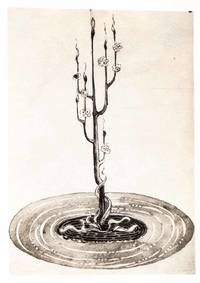
193248492Stuttgart: Self-Published 1932. First edition. Hardcover. g to fine. No. 31. Quarto. 3 153 leaves 37 illustrations on 31 plates. Original blue quarter cloth over blue paper-covered boards with black lettering on cover. Gray endpapers. Compiled by Olga von Koenig – Fachsenfeld with thirty-seven photographs. The report was mimeographed as a manuscript and is provided for the use by participants of the seminar only. Reproduction - including lending out the manuscript - possible only with explicit permission of Dr. Jung.<br /> <br /> The report includes four case studies: 1 personality with inanimate imagination extremely rationall 2 an old-maidish type puritanical 3 snake experience of a sympathetic positive kind 4 Kundalini-experience of a schizophrenic patient. Illustrated with seven in-text drawings and thirty-seven photographs of pictures created by Dr. Jung's patients including six depiction of chakras. The originals are all in possession of Dr. Jung except for number eight. Contains a list of illustrations. Text in German. Some sunning of spine and edges of boards. Vertical fold in middle of front free endpaper. Few minor pencil annotations and markings. Binding in overall good interior in very good photographs in fine condition. Self-Published hardcover
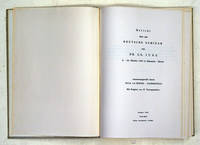
174248837J. D. Jung Frankfurt 1742 1742. Oleder Folio Widmungen und Vorreden 84s. Vollständiges Diarium von der Wahl des römischen Kaysers 306s. Anhang einiger zur Erläuterung des Wahl-Diarium dienlich befundenen Beylagen. 80s-. Fourier-Liste .der im Jahre 1741 mitgebrachten höchst-anselhnlichen Suiten und unter dero Protection genommenen Personen. 38s. Wahl-capitulation des.Herrn Carls des VII. Anhang 96s Vollständiges Register zur Wahl-Capitulation. 8. Kayerliche Wahl Predigt. 28s. Frontispiz 7 gefaltete Tafeln. Einband berieben und bestoßen. sonst in gutem Zustand AZC31. HC J. D. Jung, Frankfurt 1742, unknown
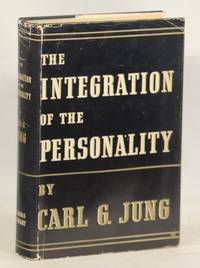
1939000012493New York: Farrar & Rinehart Inc. 1939 1939. First edition. Hardcover. Near Fine/Very Good. 8vo. 8 3-313 1 pp. Black cloth with gold lettering and rules on the front board and spine. Price of $3.00 on the front flap of the dust jacket. Translated by Stanley M. Dell. Illustrated with several plates of black and white photographs. Ress 1939a. A collection of several essays including "The Meaning of Individuation" "Archetypes of the Collective Unconscious" "The Development of the Personality" along with other writings. Difficult to find in the first edition this work features Jung's work on his classic contributions to psychology which include the idea of a collective unconscious personality archetypes and the individual mind versus its own internal biases and upbringing. A cornerstone in the Jung canon. A christmas inscription from 1939 on the free front endpaper a spot of toning on the title page; jacket has traces of edge wear including a small closed tear on the spine panel. Farrar & Rinehart, Inc. [1939] hardcover
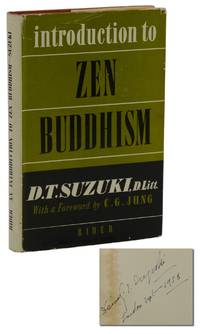
1948140941200London: Rider & Company for The Buddhist Society 1948. First Edition Thus. Near Fine/Very Good. Reprint; first edition thus. Signed by Daisetz Teitaro Suzuki on the front free endpaper and dated 1953. Bound in publisher's brick red cloth with spine lettered in gilt. Near Fine with faint lean to spine light foxing to textblock edge and browning to endsheets. In a Very Good unclipped dust jacket with edge wear and light rubbing. With a forward by C. G. Jung. Rider & Company for The Buddhist Society unknown
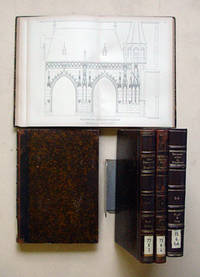
64291Frankfurt Selbstverlag der beiden Vereine 1895-1914. Kl.-4° ca. 1500 S. ca 1500 Abb. HLdr. d. Zeit goldgeprägt Bibliotheksschild a Rücken. Titelbl. m. Stempel u. Sign. ;1 Bd. m. Verlusten a Kapital 3 Bde. stärker berieben ein Aussengelenk angebrochen. Innen sauber - ansonsten gutes Exemplar. Wichtiges Standardwerk zur Architekturgeschichte Frankfurts. Beschreibt die denkwürdigen Bauten der alten Reichsstadt nach ihrer geschichtlichen und künstlerischen Bedeutung vor der Vernichtung im 2. Weltkrieg. 010 Frankfurt, Selbstverlag der beiden Vereine, 1895-1914 unknown
0716798786New. Brand new and still unused unknown
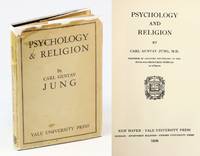
1938511j2149New Haven: Yale University Press. Good in Fair dust jacket. 1938. First Edition. Hardcover. "Jung describes what he regards as the innate religiousness of many people and the possible continuity of religious forms that have appeared and reappeared through the centuries. Dr. Jung's material is based on actual cases he has treated and is in many ways a continuation of theories that have won him an international reputation." - dust jacket. Topics include: The Autonomy of the Unconscious Mind; Dogma and Natural Symbols; The History and Psychology of a Natural Symbol. "Jung 1875-1961 was a Swiss psychiatrist psychotherapist and psychologist who founded the school of analytical psychology. He was a complex and convoluted academic best known for his concept of archetypes. Alongside contemporaries Sigmund Freud and Alfred Adler Jung became one of the most influential psychologists of the early 20th century." - Wikipedia. 6 1-131 p. Footnotes. Prior owner's details upon front free endpaper. Writing upon verso of back free endpaper. Tiny vintage bookseller tag inside back board. Short loss to most of top edge of price-clipped dust jacket now in glossy new archival-grade protection. A sound first edition example. ; The Terry Lectures; 8vo . Yale University Press hardcover
19501163New York: Pantheon Books 1950. First Edition. 2 vols. First edition in English first printing. Foreword by Carl G. Jung. Original cloth near fine in chipped and rubbed dustjackets with a small repair to the spine of volume 1 worn slipcase. From many varieties these jackets have rear flap ads reassuringly dated “1950†and married reprints don’t. The I Ching a masterpiece of Chinese Literature with all you can handle on multiple levels including a fortune telling game for the sleeping uninitiated and a stairway into the mind of Confucius for the conscious and awakened. The origins of I Ching were as a divination text from the 10th-4th century BC. This edition was originally translated into German by Wilhelm in 1924 then into English here by Baynes; considered the first accurate and culturally sympathetic translation. One of the oldest continuous philosophical and divinatory traditions a text that bridges ancient Chinese cosmology with practical wisdom over the course of three millennia. As both an oracle and a philosophical treatise it embodies the fundamental Chinese concept of change as the only constant in existence offering a systematic approach to understanding the dynamic interplay between opposing forces yin and yang that govern all phenomena. Its influence extends far beyond divination into Chinese philosophy literature politics and daily life making it one of the most consulted books in human history and a cornerstone text for understanding Chinese thought from Confucianism to Taoism. Pantheon Books unknown
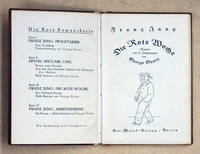
96609Berlin Malik 1921. 8° 66 S. 9 Textillustr. inkl. Titelillustration HPrg. m Rückentitel Kopfgoldschnitt Lesebändchen Deckel min. berieben innen sauber - schönes Exemplar. = Die rote Roman-Serie Bd. III Hermann: 216. Erste Auflage. 010 Berlin, Malik, 1921 unknown
MC01B-00021Verlag von Ambrosius Barth. Collectible - Acceptable. Leipzig: Verlag von Ambrosius Barth 1906-1910. Two volumes in one. Sm 4to hardcover. Red cloth and rebacked black spine with white title. 194pp. German. Illustrations. Fair book. Ex-Library copy with usual markings. Corners edgeworn.Two plates detached Pathological Psychology Psychoanalysis Association Tests Books in German Inquire if you need further information. NOT AVAILABLE FOR SHIPMENT OUTSIDE OF THE UNITED STATES. Verlag von Ambrosius Barth hardcover
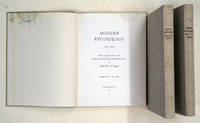
105667Bern Selbstvlg. 1959 1960. 8° 241 264 255 S. einige Abb. OLwd. Bd. I u. II: Wasserändig am Kopf über 122 S; Bd. III u. IV: Wasseränndig am Kopf über 14 S; Bd. V u. VI: Wasserändig am Kopf über 165 S; Dennoch brauchbar nicht verklebt.Vol. I and II: Water stained at the head over 122 pp; Vol. III and IV: Water stained at the head over 14 pp; Vol. V and VI: Water stained at the head over 165 pp; still usable not glued Second Editions. Text: engl.- Between 1933 and 1941 C. G. Jung lectured at the Swiss Federal Institute for Technology ETH. He was appointed a professor there in 1935. This represented a resumption of his university career after a long hiatus as he had resigned his post as a lecturer in the medical faculty at the University of Zürich in 1914. In the intervening period Jung’s teaching activity had principally consisted in series of seminars at the Psychological Club in Zürich which were restricted to a membership consisting of his own students. The lectures at the ETH were open and the audience for the lectures was made up of students at the ETH the general public and Jung’s followers.In 1930 Jung stopped working on his Red Book and turned to the comparative study of the individuation process starting with esoteric Eastern systems such as Kundalini Yoga. In a critical sense he now attempted to present the insights first formulated in The Red Book in the form of what can be called allegorical interpretation. The publication of The Red Book and its public acclaim now presents the ideal timing to look at what Jung turned to next and enable it to be understood in a new light. The key locus for this is the ETH lectures as these lectures are at the centre of Jung’s intellectual activity in the 1930s and furthermore provide the basis of his work in the 1940s and 1950s. Thus these lectures form a critical part of Jung’s oeuvre and one which has yet to be accorded the attention and study which it deserves. They constitute the ‘missing link’ between his work on The Red Book and his next major monograph of 1944 Psychology and Alchemy. 010 Bern, Selbstvlg., 1959, 1960 unknown
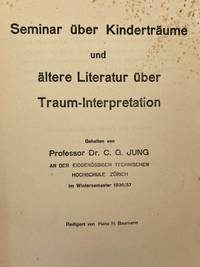
19373606Zurich: Kusnacht 1937. Numbered 219. Typewritten on one sid. In original halfcloth. Foxing. Some tears in the spine. Numbered 219. Typewritten on one sid. In original halfcloth. 115 p. Interesting typescript of seminars given by the Swiss psychiatrist and founder of analytical psychology C. G. Jung. - Rare typed reports originally intended exclusively for seminar participants. . - C. G. Jung studied law medicine and philosophy in Basel. He took up teaching at the Swiss Federal Institute of Technology Zurich in his later years from 1933 and held his seminars on children's dreams 1936-1941 for almost the entire teaching period. Kusnacht unknown
19833459Berkeley : Asian Humanities Press ; Seoul : Po Chin Chai 1983. 1983. Soft cover. Very Good. 135 pp. : chiefly illustrations some in color ; numerous photographs ; 35 cm. ; OCLC: 11766799 ; LC: ND2073.6.Z8 ; a rare collection of action photographs ceramics and calligraphic paintings and lithographs executed by Jung Kwang the Mad Monk ; " The present volume is an attempt to present a partial retrospective of his paintings including the latest work which has expanded into the use of lithographs.In 1980-81 he took an extended trip his first to the U.S. and Europe giving demonstrations of his painting style."--preface ; "Jung Kwang the painter has his artistic roots firmly placed within a style of art that was nourished by the monastic communities of East Asia. Using only the brush and ink monks made their art using rapid and yet disciplined brush strokes. The paintings only took seconds to complete; they could not be retouched or corrected; each was finished when the brush left the paper. As might be imagined this style was particularly favored by the Zen schools. The paintings were used as a test for the state of enlightenment of the painter.Jung Kwang began to separate his art from this traditional school and with that separation came many questions about the value of his work. The controversies of his art continue to the present.Having introduced all sorts of new subjects into his paintings: bulls guardian figures roosters fish and more shocking penises on all the animals and even coming out of the head of Dharma it is little wonder that the traditionalists were horrified."--Introduction ; Jung Kwang's reputation as "The Mad Monk" is here fully represented by the use of color non-traditional brushes and pens even to the shocking photographs of him using his penis as th e brush on a series of paintings! ; he was ordained a monk in the Chongye Buddhist Order at Tong-do Monastery near Pusan in 1962 and practiced meditation under direction of Master Kuha and was later a member of the Chongye National Council as its art consultant but was then expelled in 1983 presumably for his movement away from traditional forms ; nonetheless there are many who would consider the paintings in this book enlightened visual Zen koans of a sublime nature ; SIGNED presentation by Jung Kwang from 1986 on the front ep ; folio bound in color pictorial stiff paper wrappers ; some wear but otherwise VG. Very scarce with only 25 copies known held by libraries worldwide. This online listing contains text in Chinese and Korean fonts <br/> <br/> Berkeley : Asian Humanities Press ; Seoul : Po Chin Chai, 1983. paperback
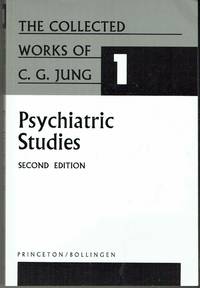
198355438Princeton NJ: Princeton University Press. Very Good. 1983. Softcover. White and grey paper binding lightly rubbed at extremities; some covers creased at corners; a very nice clean set. ; In wraps; twenty volume set. Scarce in a complete set. ; BOLLINGEN SERIES Series; 8vo 8" - 9" tall . Princeton University Press paperback
1906OS15143Leipzig Germany: Johann Ambrosius Barth 1906. First edition. Wraps as issued. Acceptable. Leipzig: Johann Ambrosius Barth 1906 and 1910. First edition in 2 parts. Originally issued separately in wraps. Pagination for Erster Band 1-281; for Zweiter Band 1-222. Disbound. Title page is lightly foxed and chipped at edges. Edges are untrimmed. Else the text is in good condition. Band 2 with wraps chipped around all edges also disbound. Signatures are intact and may be rebound in 1 or 2 volumes. A series of papers on the results of the association method applied to normal and abnormal persons which appeared in the Journal fur Psychologie und Neurologie vols. III-XVI and were afterwards collected into these two volumes. Rare. No expedited shipping. International shipping will require additional charge. Johann Ambrosius Barth paperback
190615143Leipzig Germany: Johann Ambrosius Barth 1906. First edition. Wraps as issued. Acceptable. Leipzig: Johann Ambrosius Barth 1906 and 1910. First edition in 2 parts. Originally issued separately in wraps. Pagination for Erster Band 1-281; for Zweiter Band 1-222. Disbound. Title page is lightly foxed and chipped at edges. Edges are untrimmed. Else the text is in good condition. Band 2 with wraps chipped around all edges also disbound. Signatures are intact and may be rebound in 1 or 2 volumes. A series of papers on the results of the association method applied to normal and abnormal persons which appeared in the Journal fur Psychologie und Neurologie vols. III-XVI and were afterwards collected into these two volumes. Rare. No expedited shipping. International shipping will require additional charge. Johann Ambrosius Barth paperback
2017__3843610398Patmos-Verlag 2017. Paperback. New. German language. 19.69x14.76x7.99 inches. Patmos-Verlag paperback
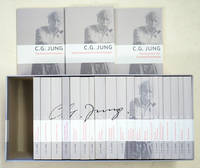
106390Ostfildern Eddition C: G. Jung in Patmos 2011. Gr.8° ca. 15000 S. Broschur in Schuber Min. gebrauchspurig tadell. 3. Auflage. Sonderausgabe. Bd. 7 spätere Auflage.Bände: 1: Psychiatrische Studien; 2: Experimentelle Untersuchungen; 3: Psychogenese; 4: Freud und die Psychoanalyse; 5: Symbole der Wandlung; 6: Bd. 7: Psychologische Typen. Zwei Schriften über Analytische Psychologie; 8: Die Dynamik des Unbewußten; 9/I: Die Archetypen und das kollektive Unbewußte; 9/II: Aion; 10: Zivilisation im Übergang; 11: Zur Psychologie westlicher u. östlicher Religion; 12: Psychologie und Alchemie; 13: Studien über alchemistische Vorstellungen; 14 I-II: Mysterium Coniunctionis; 14 III: Aurora Consurgens; 15: Über das Phänomen des Geistes in Kunst und Wissenschaft; 16: Praxis der Psychotherapie; 17: Über die Entwicklung der Persönlichkeit; 18 I/II: Das symbolische Leben; 19: Bibliographie; 20: Register. 010 Ostfildern, Eddition C: G. Jung in Patmos, 2011 unknown
192515037Edinburgh Scotland: Privately Printed 1925. First English edition. Wraps as issued. Acceptable. Edinburgh: Privately Printed 1925. Wraps as issued 15.5 x 24 cm 28 pp. In red and black with borders and flourishes. This copy with spine taped with black linen tape. 1.5 " at front edge shadowed with tape remnant reinforced on rear of wrap. Light soil to wraps. Text is good. First English edition translated by H. G. Baynes. "The English edition in a translation by Dr. H. G. Baynes was privately printed in 1925 by arrangement with John M. Watkins. Only a very few copies were issued and those were for Dr. Jung's own use." Very faint name written in small sepia ink on inside of front wrap. "The Seven Sermons to the Dead" Septem Sermones ad Mortuos might best be described as the "summary revelation of the Red Book." It is the only portion of the imaginative material contained in the Red Book manuscripts that C.G. Jung shared more or less publicly during his lifetime. With this central work of Jung's now in hand we discover that the Seven Sermons to the Dead actually compose the closing pages of the Red Book draft manuscripts; the version transcribed for the Red Book varies only slightly from the text published in 1916 however the Red Book includes after each of the sermons an additional amplifying homily by Philemon Jung's spirit guide. In the original journal account of the revelation Black Book 6 Jung himself is the voice speaking the Seven Sermons to the Dead. In the version transcribed into the Red Book manuscript Jung gives Philemon as the voice speaking the Sermons. Interestingly a few pages later on the last page of the Red Book manuscript Philemon is identified with the historical Gnostic prophet Simon Magus. When Jung subsequently transcribed the Sermons for printing as an independent text the Sermons were attributed pseudepigraphically to yet another historical second century Gnostic teacher Basilides of Alexandria. Thus Jung Philemon Simon Magus and Basilides are all finally conflated together in the voice of the Gnostic prophet who speaks the Septem Sermones ad Mortuos. ARCHAEUS PROJECT COPY Privately Printed paperback
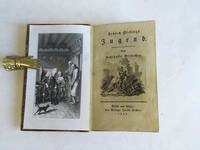
9a813George Jacob Decker Berlin und Leipzig 1777. 168 S. mit gestochenem Frontispiz und gestochener Titelvignette von Chodowiecki original Halbleder mit Rückenvergoldung und rotem Rückentitel etwas fleckig/Frontispiz in Kopie/Name auf Vorsatz. - Erste Ausgabe. Wilpert/Gühring 6416 ; Goedecke IV; 16894. - unknown
34733Stuttgart Privatdruck 1932. 8° 153 S. 37 Abb. a. Tafeln. OLwd. Namenszug a. Vorsatz sonst tadell Zweite unveränderte Auflage. Zusammengestellt durch Olga von Koenig-Fachsenfeld. Sämtl. Photographien sind Wiedergaben von Bildern die sich im Besitz v. Dr. C. G. Jung in Küsnacht befinden. «Dieser Bericht wurde als Manuskript vervielfältigt und ist ausschliesslich für den Handgebrauch der Seminarteilnehmer bestimmt.» - «Einleitend möchte ich zum Technischen bemerken dass wir im Gegensatz zum vergangenen Jahr in dem gegenwärtigen Seminar nicht nur einen einzelnen Fall sondern verschiedene Fälle untersuchen werden; solche von Spontan-Phantasien solche von Träumen die zu Phantasien führten und solche von Träumen die sowohl zu Bildern als auch zu Phantasien führten . Carl Gustav Jung» 010 Stuttgart, Privatdruck, 1932 unknown
1966316185Band 1: Rascher Verlag Zürich. Alle anderen Bände: Walter-Verlag Olten 1966. Hardcover Leinen 1x ohne und 22x mit Schutzumschlag Und aus den Jahren 1981 1984-1991 und 1994. Zustand: Band 1: ohne Schutzumschlag. Keine Beschädigungen keine Eintragungen das Leinen ist dezent fleckig und am Rücken lichtrandig. Rücken Ecken und Kanten sind gut. Band 2 3 4 12 13 14/III 20: Keine Beschädigungen keine Eintragungen. Rücken Ecken und Kanten sind gut bis sehr gut. Der Schutzumschlag ist lichtrandig dezent fleckig und leicht lädiert. Band 5: Keine Beschädigungen Eintrag im Vorsatz. Rücken Ecken und Kanten sind gut bis sehr gut. Der Schutzumschlag ist lichtrandig dezent fleckig und leicht lädiert. Band 6: mit Anstreichungen und Vermerken der Schnitt ist leicht fleckig. Der Einband hat vier kleine Löcher im unteren Bereich - ansonsten sind Rücken und Ecken gut bis sehr gut. Der Schutzumschlag ist lichtrandig und lädiert. Band 7 8 10 16 18/I: Keine Beschädigungen mit Anstreichungen und Vermerken bei Band 8 auch auf dem Schutzumschlag. Rücken Ecken und Kanten sind gut bis sehr gut. Der Schutzumschlag ist lichtrandig und leicht lädiert. Band 9/I: Keine Beschädigungen mit Anstreichungen und Vermerken. Auf Seite 16 ist ein Klebestreifen als Merker angebracht. Der Schnitt ist dezent bestoßen. Rücken Ecken und Kanten sind gut bis sehr gut. Der Schutzumschlag ist lichtrandig mit kleinem Fleck und leicht lädiert. Band 11 14/1: Keine Beschädigungen mit einzelnen Anstreichungen und Vermerken. Bei Band 11 hat das Leinen am Rücken einen Fleck. Rücken Ecken und Kanten sind gut bis sehr gut. Der Schutzumschlag ist lichtrandig und leicht lädiert. Band 14/II: Keine Beschädigungen keine Eintragungen der Schnitt ist dezent fleckig. Der Einband ist lichtrandig und hat leichte Gebrauchsspuren. Band 15: Keine Beschädigungen mit Vermerken und Anstreichungen. Rücken Ecken und Kanten sind dezent bestoßen. Der Schutzumschlag ist lichtrandig und leicht lädiert. Band 17: mit Anstreichungen und Vermerken. Zwei Ecken sind dezent bestoßen - ansonsten sind Ecken und Kanten sehr gut. Am Rücken ist ein kleines Loch. Der Schutzumschlag ist lichtrandig und lädiert. Band 18/II: Keine Beschädigungen keine Eintragungen. Rücken und eine Ecke sind leicht bestoßen. Das Leinen ist im unteren Bereich etwas fleckig. Der Schutzumschlag ist lichtrandig und am Rand leicht lädiert. -> Es fehlen Band 9/II: Aion Beiträge zur Symbolik des Selbst und Band 19: Bibliographie! // Inkl. Teilbände werden 22 Bände geliefert. // Band 1: Rascher Verlag, Zürich. Alle anderen Bände: Walter-Verlag, Olten, hardcover
2000BN29506Walter-Verlag 2000. 2000. Hardcover. 248 x 166 x 136 cm. Herausgegeben kommentiert zum Teil aus dem Englischen und Französischen übersetzt von Aniela Jaffé Carl Gustav Jung wurde am 26. Juli 1875 in Kesswil in der Schweiz geboren. Er studierte Medizin und arbeitete von 1900 bis 1909 an der psychiatrischen Klinik der Universität Zürich Burghölzli. 1905 bis 1913 war er Dozent an der Universität Zürich 1933 bis 1942 Titularprofessor an der ETH und 1943 Ordentlicher Professor für Psychologie in Basel. Jung gehört mit Sigmund Freud und Alfred Adler zu den drei Wegbereitern der modernen Tiefenpsychologie. Er entwickelte nach der Trennung von Sigmund Freud 1913 die eigene Schule der Analytischen Psychologie. C. G. Jung starb am 6. Juni 1961 in Küsnacht. - Herausgegeben kommentiert zum Teil aus dem Englischen und Französischen übersetzt von Aniela Jaffé. Literatur Biografien Erfahrungsberichte Analytische Psychologie Jung Carl G. Briefe Mediziner Briefe Jung Carl G Psychoanalytiker Briefe Jung Carl G. ISBN-10 3-530-40698-8 / 3530406988 ISBN-13 978-3-530-40698-6 / 9783530406986 Gesammelte Werke Briefe Drei Bände Leinen 3 Bde. und 3 Suppl.-Bde. in 30 Tl.-Bdn. Briefe 3 Bde. Gebundene Ausgabe C G Jung Autor Aniela Jaffé Aniela Jaffe Walter-Verlag Literatur Biografien Erfahrungsberichte Analytische Psychologie Jung Carl G. Briefe Mediziner Briefe Jung Carl G Psychoanalytiker Briefe Jung Carl G. <br/><br/>Literatur Biografien Erfahrungsberichte Analytische Psychologie Jung Carl G. Briefe Mediziner Briefe Jung Carl G Psychoanalytiker Briefe Jung Carl G.Herausgegeben kommentiert zum Teil aus dem Englischen und Französischen übersetzt von Aniela Jaffé Carl Gustav Jung wurde am 26. Juli 1875 in Kesswil in der Schweiz geboren. Er studierte Medizin und arbeitete von 1900 bis 1909 an der psychiatrischen Klinik der Universität Zürich Burghölzli. 1905 bis 1913 war er Dozent an der Universität Zürich 1933 bis 1942 Titularprofessor an der ETH und 1943 Ordentlicher Professor für Psychologie in Basel. Jung gehört mit Sigmund Freud und Alfred Adler zu den drei Wegbereitern der modernen Tiefenpsychologie. Er entwickelte nach der Trennung von Sigmund Freud 1913 die eigene Schule der Analytischen Psychologie. C. G. Jung starb am 6. Juni 1961 in Küsnacht. - Herausgegeben kommentiert zum Teil aus dem Englischen und Französischen übersetzt von Aniela Jaffé. Literatur Biografien Erfahrungsberichte Analytische Psychologie Jung Carl G. Briefe Mediziner Briefe Jung Carl G Psychoanalytiker Briefe Jung Carl G. ISBN-10 3-530-40698-8 / 3530406988 ISBN-13 978-3-530-40698-6 / 9783530406986 Gesammelte Werke Briefe Drei Bände Leinen 3 Bde. und 3 Suppl.-Bde. in 30 Tl.-Bdn. Briefe 3 Bde. Gebundene Ausgabe C G Jung Autor Aniela Jaffé Aniela Jaffe Walter-Verlag Walter-Verlag hardcover