PlatoBiblio.com
6 869 résultats
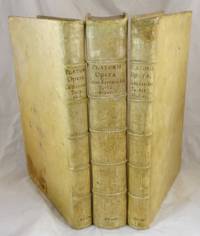
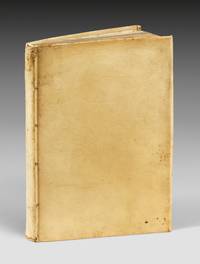
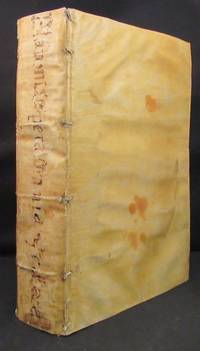
151332134Venice: Aldus Manutius and Andreas Torresanus September 1513. The Editio Princeps the First Edition of the Works of Plato in Greek. Folio 312 x 194mm beautifully bound in its contemporary limp vellum binding with hand calligraphy to the spine panel yapp edges. 15 unnumbered leaves without leaf 16 blank; 502 pages without the final blank; 439 pages. Aldine anchor device Fletcher f4 to title-page and verso of the last leaf. A superb copy in excellent condition. Very rare thus in its original binding some leaves with very sophisticated very sympathetic expert re-margining at the bottom outside corners where loss occurred at some time. The restoration has been brilliantly accomplished and is nearly imperceptible. VERY RARE AND IMPORTANT. THE FIRST ALDINE EDITION OF PLATO. THE EDITIO PRINCEPS AND A UNIQUE AND IMPORTANT COPY. As Marsilio Ficino dedicated his Latin translation of Plato to Lorenzo de’ Medici so Manutius dedicates his Greek edition to the son of Lorenzo Giovanni who became Pope Leone X in march. Aldus places his hopes for the foundation of his Academy in the new pope as he says in the dedicatory epistle of his edition of Greek Orators published in the same year: “may you watch over us and take care of our mission which deserves the help and favours of the highest statesmen indeed may you Supreme Pontiff found this Academy as perpetual good for mankind in the city of Rome.†The Platonic Dialogues are preceded by the “Life†of Plato by Diogenes Laertius and followed by a Greek hymn by Marco Musuro publisher of the edition together with Manutius. <br> In 1513 Manutius printed the Editio Princeps of Plato which he dedicated to Pope Leo X in a preface eloquently and earnestly comparing the miseries of warfare and the woes of Italy with the sublime and tranquil objects of the student's life.The printings of Plato done through the years 1484-1485 were issued in parts and the printing of 1491 was printed in book form please see mention in next paragraph. These editions were published and printed in the Latin language rather than in the Greek see the next paragraph for information on the printing and translation of Plato out of the original Greek manuscripts. <br> In 1462 by order and gift of Cosimo de Medici and with support of the Academy the manuscript translations of Plato's philosophical writings.his Dialogues.were begun. They were concluded under the beneficence of Lorenzo the Magnificent. The translation which was completed in the 1470's contributed in great measure to the rediscovery of critical thinking and of the disciplines of Greek scholarship. Marcello Ficino had begun his translation under the patronage of Cosimo de Medici in 1463. The work was completed five years later and circulated in manuscript for several years before finally being printed in parts beginning in 1484. It wasn't until 1491 that an edition brought together for the first time the fundamental text of Plato with Ficino's PLATONICA THEOLOGIA the most important Renaissance interpretation of the great philosopher. In this groundbreaking work Ficino sets out to prove that a harmony can be found between Christian theology and Platonism. The conversion of these two modes of thought the classic and the medieval was instrumental in the formation of the modern European identity. The importance Ficino placed on this work even extended to the printing and he was not pleased with the first edition which contained 7 pages of corrigenda. In contrast Ficino was very pleased with the typographical correctness of the later 1491 edition and this printing in large measure comes with the most important of the textual corrections and emendations and changes.<br> So it was not until 1513 when Aldus undertook the project that the "Works"or "Opera" of Plato the Omnia Platonis Opera was published in the original Greek language of its author. This printing by Aldus was the true first printing of the original writings of Plato in their original tongue. The printing of the Editio Princeps was one of the most important projects ever undertaken by Aldus and represents along with his printing of Aristotle's works the consummate offering of the greatest philosophers of all time. The importance of Aldo's success in bringing the original language of Plato to the reader is one of the most significant accomplishments of the Aldine Press. The leading publisher and printer of the Venetian High Renaissance Aldus set up a definite scheme of book design produced the first italic type introduced small and handy pocket editions of the classics and applied several innovations in binding technique and design for use on a broad scheme. The use of the Greek fonts used in the printing of the text by Aldus is appreciated as one of the singular greatest accomplishments in all of printing history.<br> It was Manutius' ambition to secure the literature of Greece from further loss by committing its chief masterpieces to type. The preface to his editions were written in Greek. Greeks from Crete collated manuscripts read proofs and gave models of calligraphy for casts of Greek type. Not counting the craftsmen employed in purely manual labour Manutius entertained as many as thirty of these Greek assistants in his family. <br> "The entire western philosophical tradition has been described as a footnote to Plato but his importance was particularly felt in the Renaissance where his newly-rediscovered ideas percolated across intellectual communities and laid the groundwork for both the empiricism of the Enlightenment as well as a robust esoteric tradition. Only the Phaedo Meno and a paraphrase of the Timaeus were available to the Latin West for much of the Middle Ages until the groundbreaking Latin translation of the complete works by Marsilio Ficino. For this first Greek edition the great Cretan scholar Marcus Musurus edited the text working from high quality manuscripts belonging to Cardinal Bessarion. In the dedication Aldus sets out a vision for classical studies and the foundation of a Greek academy on Plato’s model; his letter is “one of the most comprehensive statements of the humanist position to be found outside Erasmus†Lowry. This edition also includes the Hellenistic paraphrase of the Timaeus and Diogenes Laertius’s life of Plato. <br><br>Ahmanson-Murphy 114; Clemons and Fletcher 17; Renouard Alde 62:4; see Lowry The World of Aldus Manutius p.205; Wilson From Byzantium to Italy pp.151-2." Christies 12/2018<br><br>Firmin-Didot p. 342; Doniscotti-Orlandi n LXXVIII Laurenziana n 116; Marciana n 130; Legrand I 39; Adams P 1436; UCLA 97 - 1 97-2 Aldus Manutius and Andreas Torresanus hardcover
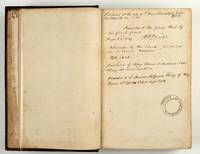
1513106311513. Aldine anchor device to title & verso of last leaf. 32 502 2 439 1 p. complete with blanks 24 & ii4. Two parts in one vol. Folio 18th-cent. mottled calf hinges rubbed & spine a trifle worn at head & foot early shelf label to spine. Venice: Aldus Manutius 1513.<br /> <br> <br> Editio princeps of Plato’s works in the original Greek one of the greatest Aldine publications with a fine and appealing early American provenance. This book printed for the first time manuscripts of Plato’s works newly discovered by Lascaris at Mount Athos in 1492 under the patronage of Lorenzo de Medici. It also features a remarkable preface by Aldus in which he dedicates the book to Pope Leo X. He refers to the numerous expeditions to the Americas Asia and Africa undertaken in recent years.<br /> <br> <br> This copy was once in the library of Thomas Jefferson’s son-in-law Thomas Mann Randolph 1768-1828 the 21st governor of Virginia. Randolph married Martha Jefferson and moved into Monticello where they were permanent residents. Manuscript annotations on the second flyleaf indicate that “W. Brand†purchased it at the sale of Randolph’s library in Charlottesville in 1830; in 1841 Henry Bowers donated it to the American Antiquarian Society. At some point the Society deaccessioned the book recorded with “Sold by AAS†stamp beneath the original “AAS†stamp which eventually entered the collection of Arthur and Charlotte Vershbow.<br /> <br> <br> A handwritten note — “ii†— to the foot of leaf 14 has been attributed to Aldus himself. There are contemporary annotations to the title-page and occasionally in the text and a possible mark of ownership to the final leaf. Despite the slight dampstaining to the last 15 leaves or so this is an exceptional copy with the distinguished provenance of American collectors. unknown
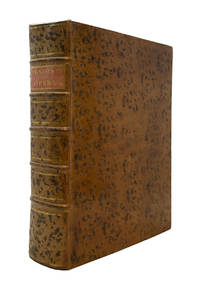
149168663Venice: Vernardinus de Choris de Cremona and Simon de Luere for Andreas Torresanus 1491. Venice: Bernardinus de Choris and Simon de Luere for Andreas Torresanus August 13 1491. And: FICINO Marsilio. Platonica theologia de immortalitate animorum. Venice: 13 August 1491.<br> <br> Second edition of the works of Plato. Folio 11 7/8 x 8 inches; 301 x 206 mm. 4 444 leaves. Printed in Gothic type in double columns. With beautifully illuminated initials and border to the first text leaf. Numerous illuminated 7 8 9 and 10-line initials heightened in gilt with blue red and green backgrounds. The initial letter will extend beyond the letter with illumination 5-7 lines both up and down. Additional 3 4 5 and 7-line initials in red blue or gold. The first leaf of text a1 with two large illuminated initials and a full illuminated border with red green blue and gilt scrolls floral motifs and a shield surrounded by a wreath.<br> <br> This is the first edition to include Ficino's great work Platonica Theologia which was not included in the 1484 edition as Ficino first published his work in 1482. Marsilio Ficino's Latin translation.<br> <br> Second editions of Ficino's translation of Plato's work first published 1484 as well as his chief philosophical work the Platonica theologia in which he attempts to illustrate the harmony between Platonism and Christian theology first published 1482 and this edition is the first to collect both works together in one. With only one complete copy of the 1484 first edition at auction since the the copy that came up in the 1940s. This copy sold in 2021 for $1026000. This present edition is realistically the first obtainable edition of Plato's works.<br> <br> 18th-century acid treated calf. Spine with orange morocco spine label lettered in gilt. All edges dyed yellow and speckled red. Newer endpapers. A small amount of old ink neat marginalia. A small repaired hole to the title-page not affecting text just the top edge of some illumination on verso. A very clean and beautiful copy with lovely illumination. Overall a very good copy of the second edition and first obtainable edition of Plato's Opera.<br> <br> Plato was the first of the ancient philosophers to appear in print and for nearly thirty years Ficino's translation was the only published version available until the appearance of the Greek 'editio princeps' in 1513. Ficino's translation took twenty years to complete and during this time he was assisted by members of the Platonic Academy founded by his patron Cosimo de Medici whose ambition was to revive the study of Platonic philosophy.<br> <br> "Amidst a great diversity both of subject and treatment the dialogues are pervaded by two dominant impulses: a love of truth and a passion for human improvement. While nowhere is a definite system laid down it has been truly said that the germs of all ideas can be found in Plato." "Printing and the Mind of Man" # 27 for 1484 edition.<br> <br> BMC V 465 IB. 23432; IGI 7861; PolainB 3190; Goff P-772; PMM 27.<br> <br> HBS 68663.<br> <br> $75000. Vernardinus de Choris, de Cremona, and Simon de Luere, for Andreas Torresanus unknown
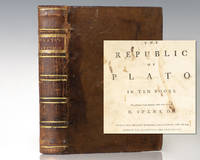
1763138322Glasgow: Printed by Robert and Andrew Foulis 1763. First edition in English of Plato's Republic marking the first appearance in the English language of Plato's profoundly influential dialogue concerning the nature of justice. Quarto bound in full polished calf with raised gilt bands to the spine morocco spine label lettered in gilt all edges speckled red. Harry Spens was a minister at the parish of Wemyss in Fife and respected classicist. In his introduction he professes his intent in his translation is: "To give the English Reader a view of Plato's sentiments and manner of writing and to stir up the youth to the study of the Ancients." Richard Garnett in his own introduction of the Everyman's Library reprint of this translation laments the relative lack of critical attention paid to it writing: "On the whole Spens's version should not be lightly esteemed. It is clearly the work of a scholar and a man of considerable literary ability." The brothers Robert and Andrew Foulis were renowned printers of classical works in their time sometimes referred to as 'the Elzevirs of Britain.' Their works mostly intended for scholars were "much sought after as admirable specimens of typography and are noticeable for their severely plain elegance" DNB 7: 514. In very good condition. Rare and desirable. "Its setting and its characters are full of political meaning. Its arguments are tantalizing and its fables fascinating… Plato's utopia is alarming and his metaphysics are intoxicating" Levi 348. The Republic "has reinforced dedication awakened vocations to leadership and strengthened the morale of those modest and competent souls who are always in reality the guardians of society" Rexroth 79. Printed by Robert and Andrew Foulis unknown
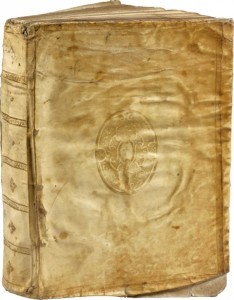
1578620Geneva: Henr. Stephani 1578. First Edition. vellum. Very good. The STEPHANUS Plato <br />The Book That Established the UNIVERSAL REFERENCE System for Platos Writings <br /><br />PLATO. Platonis opera quae extant omnia. The Complete Works of Plato Title also in Greek Henr. Stephani Geneva 1578. First Greek/Latin Edition. <br />Volume 1: TP 16 unnumbered leaves handwritten replacement preliminaries circa 18th c = Dedication to Queen Elizabeth Studioso Lectori Platone Epigrammata Catalogus Dialogorum half title with first page of text - unnumbered - on the verso 1 469 471 471 542. <br /><br />Volume 2: Half-title blank leaf lettered AA.i. 3 unnumbered leaves printed replacement preliminaries circa 18th c. = Dedication to King James the Sixth of Scotland later James the First of England Two Poems 3-701 672 673 704 992. <br /><br />Volume 3: Half-title 3 unnumbered leaves handwritten replacement preliminaries circa 18th c. = Dedication to the Republic of Bern Poem AAAA.i. = Contents Page 3-374 375 368 377-416 1-139; Folio. <br /><br />Three vols. 10.25 x 15.5 in. text block sheets are 10 x 15 in. Folio. <br /><br />"A great Renaissance author and scholar as well as a member of one of Europe's most illustrious families of printers Henri Estienne II himself edited his grand Plato for which he commissioned a new Latin translation by Jean de Serres. Together with his monumental 1572 Thesaurus graecae linguae the lavish Plato was responsible according to Schreiber for securing both Estienne's scholarly reputation and his financial ruin" Garden Ltd. #40. <br />First Greek/Latin edition printed in parallel text with translation and commentary by Jean de Serres noted French historian and advisor to King Henry IV during the reformation. The famous Stephanus edition which has served as the universal reference system for all other editions of Plato's writing since its publication. In every translation of Plato there are small numbers in the margin which refer to the pagination in this edition affording scholars the opportunity to cross-reference each other's work in any language - they are called the "Stephanus numbers." For example Socrates major speech in the Symposium completes at 212c. <br /><br />Some preliminary pages dedication poems etc. are not original but rather were printed and inserted sometime in the 18th century. Because the preliminary pages included dedications to Queen Elizabeth copies of the Stephanus Plato circulating in countries hostile to the throne at the time of publication 1578 often had these pages removed. Some copies of the Stephanus Plato have appeared at auction lacking preliminaries altogether. In 2008 Sokol Books Ltd. catalogued the missing prelims: their absence is the works most common defect. Others like this copy had the preliminaries replacedsometimes by hand other times by a local printeronce relations with England had improved. This is one of those rare copies with replacements. Thus not only is this an important and rare antiquarian book The Stephanus Plato! but also an important historical artifact given its unique history and provenance. <br /><br />CONDITION: Very Good in uniformly bound contemporary possibly early 17th c. vellum with manuscript lettering to spines. Minor repairs to vellum on head and heel of spine mostly on volume 3. Expert old paper repairs to title page of volume I and half-titles of vols. II & III with bookplates on all three pastedowns: Inter Libros Josephi Mariae Parascandolo Antecessoris Regii A.L.N. of Naples. Woodcut-engraved printers vignette on title woodcut-engraved decorated initials head-pieces & tail-pieces. Large paper 15 x 10. Handwritten and printed preliminaries replaced sometime in the 18th c. A tightly bound historically important copy of one of the most important books in the history of philosophy. Henr. Stephani hardcover
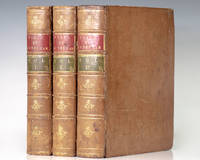
1767140464London: W. Sandby 1767-1779. First edition set contains all eleven parts although without all the individual dated titles. Part one is signed on the dedication page by the translator Floyer Sydenham as usual and includes a sheet laid in with manuscript instructions to the binder. Quarto three volumes bound in contemporary full calf armorial bookplate. Dated title pages in volumes one and two each of eleven parts with undated flytitle and dedication leaf Lesser Hippias and Dissertation both with additional dated part title ad leaves at beginning of volume one and after The Banquet as well "proposal" leaf errata slip in volume three a few poorly inked lines written over nearly in manuscript. Folding diagram in Philebilus engraved plate in Meno. Rare first editions of this important work are scarce. "That Plato should be the first of all the ancient philosophers to be translated and broadcast by the printing press was inevitable. Plato’s central conception of a universe of ideas Perfect Types of which material objects are imperfect forms and his ethical code based on action according to human nature developed by education which represents the authority of the State fitted in as well with the philosophical religious and political thought of western Europe in the 15th century striving to free itself from the shackles of scholasticism as it did with those of the Byzantine Greeks by whom Plato was repopularized in the western world The dialogues are pervaded by two dominant impulses: a love of truth and a passion for human improvement" PMM 27. W. Sandby unknown
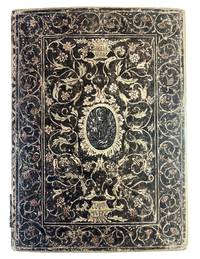
15204422Cologne: Quentel heirs 1520. 4to 194 x 140 mm. Collation: A-B4. 15 pages. Woodcut initial on title the latter in two sizes of large gothic types text in small gothic types leaded epigram on title and text heading in roman. Small stain in top of gutter margins small inkstain on A1v f. B3 corner clipped. Bound in early 18th-century South German pasteboards completely overpainted in imitation of a Renaissance binding: both covers painted in watercolor and gouache on a brown ground with outer panel of scrolling tendrils with red flowers and leaves central panel with arabesque foliate decor two vases at top and bottom and central cartouche containing a winged lion holding a book painted in silver on a black ground; flat spine with portion of a different painted decor endleaves of gold on green Bronzefirnispapier bronze varnish paper probably from Augsburg with interlacing tendrils and birds foxes rabbits dogs an angel’s head and a putto emerging from a bud thick paper flyleaves small tear to backstrip edges slightly rubbed small marginal repair to lower flyleaf. Provenance: contemporary inscription on title:  Plus que moins que me d’amour or quie en amour et or est qui la scait servir; Maurice Burrus 1882-1959 bookplate and acquisition label dated September 1937 identifying Arthur Lauria as the seller. <br /> <br /> First separate edition previously unknown of Cicero’s translation of part of Plato’s Timaeus. Cicero's fragmentary translation of sections 27d-47b was highly influential in late antiquity. In either Cicero’s version or Calcidius’s more extensive translation of sections 17a–53c the Timaeus was often the only text of Plato found in medieval monastic scriptoria and libraries. The first separate edition of Calcidius’s translation was also published in 1520 by Josse Bade. <br /> <br /> This edition was intended as a schoolbook with its moderately leaded lines. The title page includes an epigram by one Ioannis Sartae Leodiensis Jean de Sarthe of Liège. I locate one mention of another copy in a 1902 catalogue of the library of the Gymnasium of Emmerich bound with two other Cicero Quentel imprints from 1518 and 1517 J. Wattendorff Katalog der Lehrerbibliothek Part IV Emmerich 1904 p. 21 shelfmark O 35. That volume was evidently destroyed in 1944 when 90% of the town was bombed. <br /> <br /> The most remarkable feature of this unusual book is the binding carefully painted on inexpensive pasteboards by an unknown early 18th-century amateur to resemble a 16th-century gold-tooled and paneled binding. The artist indulged in a certain amalgamation of styles viz. the central silver medallion containing a representation of the lion of Venice holding the Gospel of Mark. <br /> <br /> The lovely “bronze varnish†or gold varnish endpapers with their swirling tendrils among which are hidden animals and birds are typical of papers produced in Augsburg in the first two decades of the 18th century cf. Haemmerle pp. 72-73. These especially resemble examples produced by Georg Christoph Stoy. I have not found an exact match in the printed and online literature. <br /> <br /> Not in VD16 KVK OCLC ISTC Hoffmann etc. My thanks to Irene Malfatto for her help with the inscription. Quentel heirs unknown
29408Paris: Venundantur ab Ioanne Parvo & Iodoco Badio colophon: impressa sunt solertiore cura Ascensianis Anno domini MDXVIII 1518 Quinto Kalendas Iuanias. Deo Gratiae. Very Rare and Extremely Early Printing. THE FIRST PARISIAN PRINTING AND THE FIRST PRINTING OUTSIDE OF ITALY. It includes certain pseudo-Platonic dialogues never before printed is only the second printing of the 16th century and the fourth of all printings. Truly rare no copy is in the British Museum and it is mentioned only in Adams. Dedicated by Ficino to Lorenzo de’ Medici this printing was reproduced from the Venetian incunable edition of B. de Choris 1491. A COPY WITH FINE PROVENANCE. Four ownership signatures are noted on the title-page suggesting that the book traveled throughout Europe during its first 250 years of existence. One of the signatures most probably signifies ownership of the book by Sir John Cobham who had been raised to the peerage by King Charles I in 1645. Very finely engraved and illustrated title-page with superb Renaissance decorative borders incorporating allegorical figures and a scribe at work; at the center a very beautiful engraving of the printers at work at the press very fine and ornate capital letters throughout in black with ornate xilographic decorations occasional manuscript emendations in the margins in a contemporary Renaissance hand and with contemporary ownership inscription on the title. Folio 330 x 223 in eights full antique calf incorporating double blind fillet borders on the covers enclosing roll tooled inner borders in blind with a large central panel incorporating decorated corner tools and inner rolled borders all in blind the spine with wide raised bands brown morocco lettering label gilt. cc. num. CCCLXXXIX 389 folio leaves A very large handsome crisp and clean copy with expert and insignificant repair to a closed tear on one leaf. A copy with very wide and ample margins. The binding is in quite excellent condition with very little wear of evidence of use. A sympathetic restoration of the spine panel accomplished at some time. VERY RARE. THE FIRST PRINTING OUTSIDE OF ITALY AND THE FIRST PARISIAN PRINTING. A very beautiful and important production of Ficino's great Latin translation of Plato—"still the best translation of that author Italy can boast" Britannica. This printing also includes certain pseudo-Platonic dialogues never before printed. Ficino began his translation in 1466 from a manuscript supplied by his patron Cosimo de'Medici and by Amerigo Benci. During its progress Ficino submitted sections for review to the greatest scholars of the age: Angelo Poliziano Cristofor Landino Demetrios Chalchondylas and others which served to refine the work. Marcilio Ficino is perhaps the most important of all scholarly Renaissance thinkers and his influence on philosophical humanistic and cultural thought remains unsurpassed. Through the beneficence of the Medici family Renaissance Platonism emanated from him and his work and studies caused the vast expansion of the ideas inherent in Platonic thought. Some have argued that Ficino's direct effect on the Renaissance is without equal by any other scholar. His Latin translation of Plato allowed for all of Plato's dialogues to be available to Western readers for the first time.<br> 'This first edition produced by Jean Petit and Jodocus Badius in Paris became the standard Plato-edition of the time with numerous editions following it. It remained for many years perhaps the most influential of all Renaissance readings of Plato and is considered to this day one of the most important and refined of all early printings of the great philospher's writings. Bade and Petit important in their own right were highly important contemporaries of Erasmus. They are responsible for many of the finest and most widely used editions of classical texts printed during the century. <br> Jean Petit printer publisher and bookseller in Paris is known to have printed from 1493 to 1530 about one tenth of all publications in Paris more than ten thousand volumes. He was one of the four major booksellers at the University of Paris and greatly contributed to the spread of early Renaissance Humanism in Paris. He published a large number of original editions. Among his collaborators were Robert Estienne and Josse Bade. Bade Jodocus Badius 1462-1535 an associate of Erasmus is also considered one of the greatest printers of the period. A scholar of considerable repute and a renowned grammarian he studied in Brussels and Ferrara and taught Greek in Lyon from 1492 to 1498. In Lyon he worked as a proofreader and editor for the printer Jean Trechsel. On his arrival in Paris Jean Petit - one of the "grand libraires" and the most important bookseller and publisher of the era - helped Bade establish his own printing house in 1503. The business flourished and turned into one of the most prolific and important presses of the 16th century. It took on the name "Prelum Ascensianum" and specialized in classical texts in Latin often with his own familiare commentum. For the 2nd-century BC Roman playwright Terence Badius printed a Praenotamenta in 1502. This introduced the subject of Roman comedy through a lengthy treatment of general theories of poetry and thorough discussion of its origins development and classifications. He also published the works by contemporary humanist writers who frequented the printing house from where much Renaissance thought was disseminated. With 775 editions Bade's press served as one of the most active publishers during the first three decades of the 16th century. His frequent work with or for Johannes Parvus Jean Petit created an alliance with the era's most important bookseller and publisher.<br> THE KING OF PHILOSOPHERS. ONE OF THE SUPREME TEXTS OF THE RENAISSANCE. Plato’s reintroduction into European thought has had a total and sweeping effect in the realms of philosophy science and religion. This work reprints the whole text in one endeavour of the first edition Florence 1484-85 issued over many months in a series of parts. The first edition in parts of Plato’s OPERA is of the most extreme rarity probably now absolutely unobtainable so this is one of the very earliest printings one could hope to secure in its complete state and an especially interesting issuance of the OPERA from one of the finest European printers. Venundantur ab Ioanne Parvo & Iodoco Badio hardcover
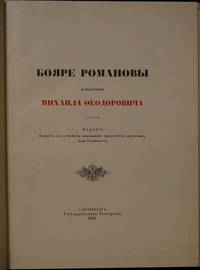
alb47e5a843890c9b6eVasenko, P.G. Boyare Romanovs and the Emperor of Mikhail Fedorovich. In Russian /Vasenko, P.G. Boyare Romanovy i votsarenie Mikhaila Fedorovicha. St. Petersburg: State Printing House, 1913. 224, XII, 2 p., 22 l., 1913. We have thousands of titles and often several copies of each title may be available. Please feel free to contact us for a detailed description of the copies available. SKUalb47e5a843890c9b6e.
ABAA7<p>Paris chez Sebastien Nyuelle libraire demeurant à l'enseigne des Cicognes rue Sainct Iacques. </p><p>Avec privilège du Roy pour dix ans 1553.</p><p>4to 219 x 153 mm of 4 ll. 350 pp. and 1 l. of privilege. Overlapping vellum flat spine. <em>Seventeenth century binding.</em></p><p>First edition in French of the <em>Phaedo</em> an essential work by Plato setting out the main points of his doctrine.</p><p>It is here translated from Greek into French by Louis Le Roy 1510-1577 <em>'the greatest French Hellenist'</em>.</p><p>Brunet IV 701 ; Graesse V 324.</p><p>Louis Le Roy is one of the most unknown figures of a group of 'second generation humanists'. Le Roy known as Regius had a difficult existence so materially miserable that it led him to make pleas to the great ones in the form of unoriginal circumstantial works. This bland character who seems to have lived on the edge of fame especially in his relations with Du Bellay and the Pléiade happens to be in retrospect the greatest French Hellenist and as the one who made the political works of Antiquity known to a wide public. An excellent translator in many ways superior to modern translators he chose essentially the intermediate field between morality Isocrates and his speeches to the young princes philosophy Plato: <em>Timaeus Phaedo Banquet</em> and politics Demosthenes Plato and Aristotle.</p><p>In this work the main characters taking part in the dialogue are: Socrates Phaedo Simmias and Cebes. Here they are in the cell where Socrates victim of the reaction of the sophists he was fighting and condemned to death as a corrupter of youth is waiting for his jailer to bring him the hemlock. His disciples and friends crowd around him.</p><p>After having made it clear that a true philosopher cannot be afraid of death Socrates raises the question of the survival of the soul and what will become of it when it is 'gathered into itself and upon itself after having rid itself of its evils'. Socrates is immediately invited by his friends to demonstrate the immortality of the soul and this serious problem will occupy most of the dialogue.</p><p>Giving a marvelous and symbolic vision of our world placed in the whole Universe Socrates indulges in brilliant cosmological hypotheses in which the physical and metaphysical constitution of our globe tends towards a harmonious unity. Our planet is according to Socrates an enormous sphere placed at the centre of the Cosmos which is much larger than it appears to us.</p><p>But the time is short: Socrates retires to another room to take his bath then calls the jailer who brings him the hemlock. Having drunk it with perfect serenity Socrates lies down on his bed: but before dying he says to Crito: "We owe a cock to Asclepius: pay him don't forget!" These were his last words. Socrates who had promised to sacrifice a cock to Asclepius Aesculapius if he recovered from a disease he was suffering from was obliged to fulfil his promise since death brought him freedom from his disease with rest.</p><p>This first edition in French of the <em>Phaedo</em>is the work of Louis Le Roy considered "as a highly figure of the humanism of the Renaissance". His teacher was Guillaume Budé of whom he was to write a biography. </p><p><em>"A lively and curious mind he was one of the most enthusiastic Hellenists of his time".</em></p><p>A friend of Joachim Du Bellay the poet gave him the title of "<em>French Plato</em>".</p><p>A precious and rare copy pure with wide margins preserved in its seventeenth century overlappingvellum binding.</p><p><strong>French</strong><br /></p><p>A Paris chez Sebastien Nyuelle libraire demeurant à l'enseigne des Cicognes rue Sainct Iacques. </p><p>Avec privilège du Roy pour dix ans 1553.</p><p>In-4 de 4 ff. 350 pp. et 1 f. de privilège. Plein vélin à recouvrement dos lisse. <em>Reliure du XVIIe siècle. </em></p><p>219 x 153 mm.</p><p>Edition originale de langue française du Phédon œuvre essentielle de Platon exposant les principaux points de sa doctrine. </p><p>Elle est ici traduite du Grec en français par Louis Le Roy 1510-1577 " <em>le plus grand helléniste français</em> ".</p><p>Brunet IV 701 ; Graesse V 324.</p><p>Louis Le Roy est l'un des personnages les plus méconnus d'un groupe d' " humanistes de la seconde génération ". Le Roy dit Regius traîne une existence difficile matériellement si misérable qu'elle l'amène à adresser des suppliques aux grands sous forme d'œuvres de circonstances sans originalité. Ce personnage falot qui semble avoir vécu sur les bords de la célébrité en particulier dans ses relations avec Du Bellay et la Pléiade apparaît rétrospectivement comme le plus grand helléniste français et comme celui qui a fait connaître auprès d'un large public les œuvres politiques de l'Antiquité. Excellent traducteur à bien des égards supérieur aux traducteurs modernes il a choisi essentiellement le domaine intermédiaire entre la morale Isocrate et ses discours aux jeunes princes la philosophie Platon : <em>Timée Phédon Banquet</em> et la politique Démosthène Platon et Aristote.</p><p>Dans cette œuvre les principaux personnages prenant part au dialogue sont : Socrate Phédon Simmias et Cébès. Les voici dans la cellule où Socrate victime de la réaction des sophistes qu'il combattait et condamné à mort comme corrupteur de la jeunesse attend que son geôlier lui apporte la ciguë. Autour de lui se pressent ses disciples et ses amis… </p><p>Après avoir fait admettre qu'un véritable philosophe ne saurait avoir peur de la mort Socrate soulève la question de la survivance de l'âme et de son devenir lorsqu'elle sera " ramassée en elle-même et sur elle-même après s'être débarrassée de ses maux ". Socrate est aussitôt invité par ses amis à démontrer l'immortalité de l'âme et ce grave problème occupera la plus grande partie du dialogue.</p><p>Donnant de notre monde replacé dans l'ensemble de l'Univers une vision merveilleuse et symbolique Socrate se livre à de brillantes hypothèses cosmologiques dans lesquelles la constitution physique et métaphysique de notre globe tend vers une harmonieuse unité. Notre planète est selon Socrate une énorme sphère placée au centre du Cosmos lequel est beaucoup plus grand qu'il ne nous apparaît.</p><p>Mais l'heure presse : Socrate se retire dans une autre pièce pour prendre son bain puis fait appeler le geôlier qui lui apporte la ciguë. L'ayant bue avec une parfaite sérénité Socrate s'allonge sur sa couche : mais avant de mourir il dit encore à Criton : " Nous devons un coq à Asclépios : payez‑le ne l'oubliez pas ! ". Telles furent ses dernières paroles. Socrate qui avait promis de sacrifier un coq à Asclépios Esculape s'il guérissait d'une maladie dont il était affligé se devait d'exécuter sa promesse la mort lui apportant avec le repos la libération de sa maladie. </p><p>Cette première édition de langue française du <em>Phédon</em> est l'œuvre de Louis Le Roy considéré " comme une haute figure de l'humanisme de la Renaissance ". Il eut pour maître Guillaume Budé dont il devait écrire une biographie.</p><p>" <em>Esprit vif et curieux il compte parmi les hellénistes les plus enthousiastes de son temps</em> ".</p><p>Lié d'amitié avec Joachim Du Bellay le poète le pare du titre de " <em>Platon Français</em> ".</p><p>Précieux et rare exemplaire pur et à belles marges conservé dans sa reliure en vélin à recouvrement du XVIIe siècle.</p> hardcover
LCS-13867Exemplaire très pur conservé dans sa reliure en vélin souple de l’époque. PLATON. Le Timée de Platon, traittant de la nature du monde, & de l’homme, & de ce qui concerne universellement tant l’ame, que le corps des deux: translaté de Grec en Fraçois, avec l’exposition des lieux plus obscurs & & difficiles. Par Loys le Roy dit Regius. Plutarque de la creation de l’ame, que Platon descrit en son Timee. (Achevé d’imprimer le 23 mars 1581). Paris, Abel l’Angelier, 1581. [Relié avec:] [DU BELLAY, Joachim] / LE ROY, Louis. Le Sympose de Platon, ou de l’amour et de beauté, traduit de Grec en François, avec trois livres de commentaires, extraicts de toute Philosophie & recueillis des meilleurs autheurs tant Grecs que Latins, & autres, par Loys le Roy, dit Regius. Plusieurs passages des meilleurs Poëtes Grecs & Latins, citez aux Commentaires, mis en vers François, par I. du Bellay Angevin. Paris, Abel l’Angelier, 1581. Soit 2 ouvrages reliés en 1 volume in-4 de: I/ ff. 1 à 8, (4) ff. de table, ff. 9 à 159, (1) f. de privilège; II/ (4) ff., 192 ff. avec de nombreuses erreurs de pagination. Quelques figures techniques dans le texte du Timée. Quelques mouillures ou taches dans le premier texte. Relié en plein vélin souple de l’époque, médaillon central frappé or sur les plats, dos lisse orné de roulettes et fleurons dorés, tranches dorées. Reliure de l’époque légèrement fatiguée. 219 x 166 mm.
155119411Basel: Froben 1551 colophon: Basileae Apud Hier. Frobenium et Nic. Episcopium An. MDLI Mense Martio. A highly important edition with the commentary of Simon Grynaeus the celebrated Swiss astronomer and geographer. Replete with large historiated and figurative capital letters throughout. Folio in a very handsome binding of antique calf over boards. 12 952 48 index. A handsome copy in pleasing condition well preserved fresh and unpressed internally. A FINE AND HANDSOME COPY. Cited ‘for the elegance of the impression’ by Froeben. THE KING OF PHILOSOPHERS. ONE OF THE SUPREME TEXTS OF THE RENAISSANCE. Preceded with the dedication of the great curator S. Grynaeus the proem dedication to Lorenzo de Medici and the important Life of Plato written by Ficino the original translator of the manuscripts into Latin; index at the end; 36 of the Platonic dialogues and worksthe Dialogues 10 books of the Republic 12 books of the Laws and 12 of the Letters edited and with the commentary of Marsilio Ficino. A highly important edition of the Opera of Plato with the translation of Marsilio Ficino the first and most important of the modern epoch in itself one of the primary movers of the humanism of the Renaissance. In 1462 by order and gift of Cosimo de Medici and with support of the Academy the manuscript translations were begun. They were concluded under the beneficence of Lorenzo the Magnificent. The translation which was completed in the 1470's contributed in great measure to the rediscovery of critical thinking and of the disciplines of Greek scholarship. Ficino had began his translation under the patronage of Cosimo de Medici in 1463. The work was completed five years later and circulated in manuscript for several years before finally being printed in parts beginning in 1484. It wasn't until 1491 that and edition brought together for the first time the fundamental text of Plato with Ficino’s PLATONICA THEOLOGIA the most important Renaissance interpretation of the great philosopher. In this groundbreaking work Ficino sets out to prove that a harmony can be found between Christian theology and Platonism. The conversion of these two modes of thought the classic and the medieval was instrumental in the formation of the modern European identity.<br> The importance Ficino placed on this work even extended to the printing and he was not pleased with the first edition which contained 7 pages of corrigenda. In contrast Ficino was very pleased with the typographical correctness of the later 1491 edition and this printing in large measure comes with the most important of the textual corrections and emendations and changes. The editio princeps from the Greek texts was provided by Aldus in 1513. This edition was with the rich and important corrections of Grynaeus from one of the early Greek manuscripts. A beautiful and very pleasing example in a rarely encountered period binding with early ownership note on the title. There is no copy noted in either the British Museum catalogue or in Adams. A rare book and very important in the history of Greek and philosophical scholarship. Froben hardcover
3801204Short description: In Russian. Vasenko Platon Grigorievich. Boyare Romanovs and the Emperor of Mikhail Fedorovich. St. Petersburg: Edition of the Committee for the Organization of the Celebration of the Three Centenary of the Reign of the House of Romanov 1913: The State Type. The image is provided for reference only. It may reflect condition of one of the available copies or only help in identifying the edition. Please feel free to contact us for a detailed description of the copies available. SKU3801204 unknown
3801204Short description: In Russian. Vasenko, Platon Grigorievich. Boyare Romanovs and the Emperor of Mikhail Fedorovich. St. Petersburg: Edition of the Committee for the Organization of the Celebration of the Three Centenary of the Reign of the House of Romanov, 1913: The State Type. You are welcome to reach out to us for a detailed description of the copies currently available. Delivery of this book may take longer than usual including extended processing and pre-shipping time, no expedited shipping is available. Please advise us if you have a set date or a deadline to receive your order.SKU3801204
168129415London. Very Good. 1681. Full-Leather. Very Good full leather edition has a name and date of 1743 on the back of the front endpaper. The leather has wear to the spine ends and corner tips and the hinge areas have some scuffs. Binding is tight and the text is clean. ; 16mo 6" - 7" tall; 271 pages . hardcover
albf7eb4b19c138bc05Vasenko P. G Boyare Romanovs and the Emperor of Mikhail Fedorovich. In Russian /Vasenko P. G Boyare Romanovy i votsarenie Mikhaila Fedorovicha. Publishing House of the Committee for the organization of the celebration of the 300th anniversary of the reign of the House of Romanov. St. Petersburg State Printing House. 1912. 240 p. We have thousands of titles and often several copies of each title may be available. Please feel free to contact us for a detailed description of the copies available. SKUalbf7eb4b19c138bc05.
189253851Oxford: Clarendon Press 1892. Near fine. Handsome set of Jowett's Plato in beautifully preserved Rivière & Son half morocco bindings. Plato's dialogues form much of the philosophical foundation of Western civilization. In the APOLOGY EUTHYPHRO CRITO PHAEDO and more Socrates leads his interlocutors through a series of questions that concern morality and faith censorship and education political justice and injustice and the immortality of the soul. A stellar copy and a requirement for any library on the history of thought. Five volumes 9'' x 5.75'' each. Contemporary half maroon morocco by Rivière & Son marbled boards raised bands gilt-ornamented spines. Top edges gilt marbled endpapers. Third edition. Text in English. 594; 576; 544; 646; 542 pages. Evidence of bookplate removal to front endpapers a few small dings to vol. IV else exceptionally sharp. Clarendon Press unknown
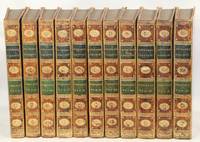
1787000012234Zweibrücken / Biponti: Ex Typographia Societatis Studiis Societatis Bipontinae Deux Ponts Press 1787. Later edition. Hardcover. Very Good or better. 11 vol. 6 iii-c 2 3-267 15; 2 3-368 14 2 pages of publisher's advertisements; 4 3-370 4 i-vii 5; 4 3-390 vii 3 i-vi; 8 i-viii 2 3-359 3; 2 1-380 2; 3 2-424 2; 3 ii-vi 2 1-442 2; 2 1-437 6; 4 3-390 2 i-viii 2; 2 i-xii 2 3-483 1 pp. Contemporary tree calf with the spines in six compartments each spine with a green and a black morocco label lettered in gold gold tooling and decorations on the spines; all edges sprinkled. Each volume's title page with an in-text woodcut of a bust of various ancient persons: Plato Aristippus Diogenes Pericles Alcibiades among others. Text in ancient Greek with the notes and commentary in Latin. With Henry Stephanus' commentary and editing. Also with notes and analysis by Marsilius Ficinius with additional various notes. Brunet 761. Dibdin 299. Moss 426-427. This set was published in twelve volumes. The twelfth volume was published in 1788 and contains only a summary of Plato's philosophy in Latin and an essay by M. Thiedman. It would appear that this final volume is rare: as of 11/23/2022 this cataloger could not locate the twelfth volume of this set in OCLC or in active commerce. All of Plato's philosophy which was published in this set is present in the first eleven volumes. Plato remains a foundational figure in Western philosophy with his dialogues touching on metaphysics love justice civic duty and countless other ancient themes and motifs which remain relevant today. Plato is the reason we are able to construct a picture of Socrates' life: his work provides a good deal of historical information on the Golden Age of Athens. This is a very attractive set of Plato's works edited by two seminal classical scholars. Minor wear to the extremities: overall the bindings are quite sharp except for the front joint of volume nine which is starting. Each volume's front pastedown has an armorial bookplate and an early nineteenth-century name. Volumes six nine and ten each have a small unobtrusive dampspot to a part of their textblocks. Ex Typographia Societatis [Studiis Societatis Bipontinae] [Deux Ponts Press] hardcover
26961Bâle, Johann Froben et Hieronymus Episcopius, 1551. 1 vol. in-folio, peau de truie estampée à froid sur ais de bois biseautés, dos à nerfs soulignés de filets à froid, titre écrit à la plume en tête, triple encadrement de roulettes à froid sur les plats, la première à décor de rinceaux et fleurettes, la seconde à décor continu de palmettes, la troisième comportant des représentations allégoriques des sept vertus cardinales, plaque estampée à froid au centre du plat sup. avec une représentation allégorique de la Trinité accompagnée d'un verset de l'évangile de saint Jean ("sic Deus dilexit mundum ut Filium suum unigenitum daret") et d'une plaque centrale à froid au plat inférieur représentant une crucifixion, tranches rouges, fermoir en bronze ciselé. Reliure de l'époque, manque un fermoir, usures aux coins et à la coiffe sup., tache d'humidité en tête du plat sup. et quelques rayures. Cachet humide violet de la bibliothèque du lycée de Stralsund (Allemagne). (6) ff., 952 pp., (24)ff. d'index. Signatures : alpha6 [a-z]6 [A-Z]6 [Aa-Zz]6 [AA-II]6 HH8 [LL-OO]6. Un trou de ver traverse le volume.
1781YRG-246In-8, 12 tomes dont Dialogorum Platonis Argumenta Exposita et Illustrata, a Diet Tiedman Grec et Latin. demi-cuir havane, dos à cinq nerfs, pièces de titres, titres dorés, frottements aux plats avec manque de papier, intérieur frais sur vergé, gravure a la cuve par Weis,quelque pages jaunie. Société Typographique de Bâle. Très bel exemplaire, complet et rare. Photos sur demande. En l'état.Hors frais d’envoi.
15573087Venice: Comin da Trino 1557. Graesse V.325 giving 1558 imprint; a second issue; the Italian Union Catalogue Catalogo Unico lists only 5 copies in Italian libraries. Rare first Italian-language edition of this Platonic dialogue somewhat anomalous in the Platonic corpus because of its extended treatment of the nature of physical matter and cosmology and a favorite among Renaissance readers for its myth of Atlantis which influenced other Renaissance utopias. The 1550s or thereabouts saw the first Italian translation of the most popular Platonic dialogues whether directly from Greek as here or via Ficinos Latin translation; the prestige of Ficinos Latin translation and wider readership for the original Greek probably explains why this Italian edition came so relatively late. The edition was translated by the littérateur Sebastiano Erizzo 1525-1585 a prolific writer of poetry fiction and belles lettres who provides some commentary in the way of printed marginal annotations; he would later translate a further selection of dialogues into Italian in which the Timaeus was reprinted 1574. NUC lists UNC and OCLC adds Duke. Comin da Trino
Q-0672601818The Bobbs-Merrill Company 1952-06-01. Paperback. New. In shrink wrap. Looks like an interesting title! The Bobbs-Merrill Company paperback
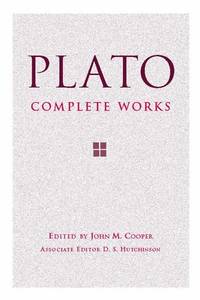
199714765Indianapolis Indiana U.S.A.: Hackett Pub Co Inc. New. 1997. Hardcover. 0872203492 . FREE UPGRADE to Courier/Priority Shipping Upon Request - IN STOCK AND IMMEDIATELY AVAILABLE FOR SHIPMENT - Flawless -- with a bonus offer . Hackett Pub Co Inc hardcover
9112955Short description: In Russian. Kerzhentsev Platon Mikhailovich. Principles of Organization. Leningrad; Moscow: State Publishing House 1925. The image is provided for reference only. It may reflect condition of one of the available copies or only help in identifying the edition. Please feel free to contact us for a detailed description of the copies available. SKU9112955 unknown
9112955"Short description: In Russian. Kerzhentsev, Platon Mikhailovich. Principles of Organization. Leningrad; Moscow: State Publishing House, 1925. You are welcome to reach out to us for a detailed description of the copies currently available. Delivery of this book may take longer than usual including extended processing and pre-shipping time, no expedited shipping is available. Please advise us if you have a set date or a deadline to receive your order.SKU9112955"