Bradley, RichardBiblio.com

50 résultats
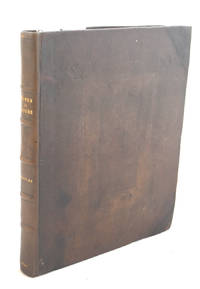
1727AR27BRN02ALondon: Woodman and Lyon 1727. Hardbacks full-calf. Complete 3 volume set. viii 460pp; 487pp; 398pp. 1727 edition. Joints cracking front board detached from volume 1. Previous owner's bookplates to front pastedown and blank opposite title page with name to front free end-paper. A goodreading set. A heavy set additional postage may be required for orders outside the UK. ar27. Hard Cover. Fair. Woodman and Lyon Hardcover
172775215xi 372 pages 4 title page printed in black and red illustrated with 4 folding plates Published by James Woodman and David Lyon hardcover
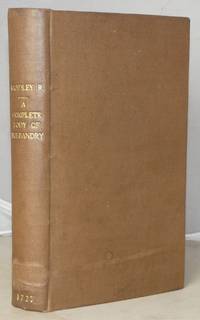
1727BS113GLTBRWNLondon: James Woodman and David Lyon 1727. Hardback rebound in brown cloth gilt title to spine. 20.5cm x 13.5cm. Pp. 4 xi 372 4. Complete with 4 folding plates. 1st edition 1727. Library stamp to verso of title page and to lower margin of final leaf only. Previous owners' bookplates to front end-papers. A rather pleasing copy. bs113 . 1st Edition. Hard Cover. Good. James Woodman and David Lyon Hardcover
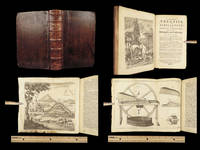
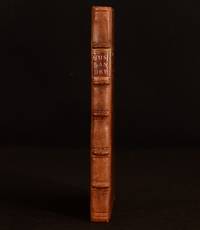
1727001253London: James Woodman and David Lyon 1727. FIRST EDITION. Late 18th century full calf leather binding professionally rebacked the original boards are panelled. Gilt rolled edges of boards have heavy wear as you would expect of books of this age. Title page in red and black four foldout plates. Overall a VERY GOOD book. Full title reads: A Complete Body of Husbandry; collected From the Practice and Experience of the most considerable Farmers in Britain particularly setting forth The Various Ways of Improving Land by Hollow Ditching Dreining Double Plowing Grasing Enclosing Watering and Manureing. With Particular DIRECTIONS for Fertilising of Broom-Ground Heath-Ground Furze Bushey and Chilturn-Ground: Also the METHOD of Improvement by assorting proper Plants to Lands and of shifting of Crops. To which is added Several Particulars relating to the Preservation of the GAME; and stated accounts of the Experience and Profits of Arable Pasture Meadow and Wood Lands. Adorn'd with Cuts. Richard Bradley was a botanist and a British naturalist born in 1688 and died on November 5 1732 in Cambridge. Bradley became a professor of botany at the University of Cambridge in 1724 and then taught courses in the medical sphere in 1727. Fellow of the Royal Society in 1712 he became interested in the generation of plants and plant anatomy. He published over twenty publications between 1716 to 1730 mainly devoted to agriculture and the horticulture: A Treatise on Succulent Plants 1710; New Improvements of Planting and Gardening both Philosophical and Practical 1717 reissued several times until 1731; The History of Succulent Plants 1717; A General Husbandry and Treatise on Gardening 1723; A survey of Ancient Husbandry and Gardening Collected from the Greeks and Romans 1725; The Riches of a Hop Garden Explained 1729; A Dictionary of Plants Their Description and Use 1747. . First Edition. Full Calf Leather. Very Good. Illus. by Adorn'd with Cuts. . 12mo - over 6¾" - 7¾" tall. Hardcover. James Woodman and David Lyon Hardcover
1757523036London: W.Johnston 1757. Hardcover full leather first edition in very good condition for age. Presented in clear acetate jacket for protection. Includes charts diagrams and fold-outs. Spine has 5 raised bands and is quite scuffed and worn with chipping to to spine head. Board edges are worn with a tear to leather at rear near spine edges scores and light marks to front and rear. Corners are bumped. Bookplate at rear pastedown and hinge breaks at both endpapers. Some light foxing throughout and a few page corners are creased. Front pastedown inscribed in pen with a kitchen garden planting design for a family of 7 dated 1757. Text is free from marks and clear throughout. AD. First Edition. leather. Very Good. Used. W.Johnston Hardcover
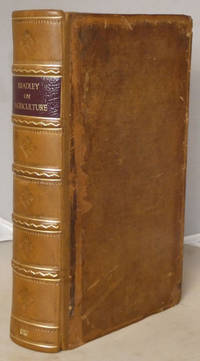
1757H12GTBR21X22Hardback. Full-calf original boards recent replacement spine with gilt title to spine label. 20.5 x 13.5cm. viii 503pp 18. Complete with frontis and 20 plates some of which are folding. Small stamp from previous owner on free front end-paper. Contents clean and unmarked. A very good copy. hall12 W. Johnston et al hardcover
1757r7351bLondon: W Johnston; R Baldwin; J Fuller; &c. G : in good condition. Cover rubbed. Slight foxing. 1757. First Edition. Brown hardback leather cover. 210mm x 130mm 8" x 5". viii 503pp xvii plates. 21 b/w plates 8 fold-out. . W Johnston; R Baldwin; J Fuller; &c hardcover
17246689112 monthly editions April to March in 2 volumes Volume I: xii 358 pages; Volume II: 372 pages 14 including Indices; 11 woodcut plates with titles including 6 folding ornately engraved initials friezes and tailpiece to each monthly edition 3 double-sided weather-recording tables to Volume I title page to Volume I including title and dedicatory page to each monthly edition armorial bookplate with coronet to upper pastedown of each volume Printed for T Woodward and J Peele hardcover
17575746London: W. Johnston Et Al. Very Good- with no dust jacket; No marks or writing clean tight binding; . original full calf leather raised bands gilt spine label; edges rubbed . and some leather on spine edges chipped; old family crest bookplate; back . endsheet has large brown spot but no where else;. 1757. First Edition Thus. Hardcover. Revised edition; full page drawings and some are foldouts of English farm implements animals and plants from the mid 18th century; Board member of FLA ABA; ; 425 pages . W. Johnston Et Al hardcover
172470216xii 1-358 8 pages contains 3 black and white plates and 3 folding black and white plates decorative head and tailpieces and capitals 6 issues of A General Treatise of Husbandry and Gardening from April 1721 to September 1721 bound in one volume. Printed for T. Woodward and J. Peele hardcover
175729504<p>Richard Bradley's A General Treatise of Agriculture London: W. Johnston et al. 1757 is the first edition of an eighteenth-century English agricultural and horticultural text. The work unites philosophical study and field practice presenting instruction in farming soil care plant growth and garden construction. Part I addresses husbandry focusing on the nature of soil air and environmental factors suited to vegetation. Part II concerns gardening covering the circulation of sap propagation and garden layout. Plates depict plows irrigation systems heating devices and garden designs. Bradley Professor of Botany at Cambridge was a leading figure in early agricultural science. Collation: viii 503 15 pp. Illustrations: 21 engraved plates including frontispiece final plate incomplete. Edition: First edition 1757. Format: Octavo 8vo single volume. Binding: Full leather with modern spine and hinges original boards preserved. Condition: Good; corners rubbed; binding firm; pages toned with mild foxing; plates largely clean; final plate incomplete. #29504 PHOTOS AVAILABLE UPON REQUEST.</p> for W. Johnston, et al. hardcover
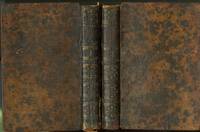
1724193858937552T. Woodward 1724. First Edition. Hardcover. Very Good. THIS COMPLETE THREE VOLUME SET IS IN VERY GOOD CONDITION BEAUTIFULLY REBACKED RETAINING ORIGINAL COVERS WITH BRIGHT GILT RULE TO BOARDS SIX COMPARTMENTS AND FIVE RAISED BANDS TO SPINES WITH BRIGHT GILT DETAILS AND TITLE. SOME RUBBING TO LEATHER BOARD EDGES. BINDING AND HINGES ARE VERY GOOD NO LOOSE OR MISSING PAGES PAGES ARE WITHOUT MARKS AND LIGHT TO MILD SPORADIC FOXING. PROFUSELY ILLUSTRATED WITH COPPER PLATES - NUMEROUS FOLD OUTS BOOKS MEASURE 7.75"x5". FIRST EDITION 297 YEARS OLD. A NICE EXAMPLE IN GREAT CONDITION. T. Woodward hardcover
1721BB2754London: printed for P. Vaillant in the Strand and W. Mears and F. Clay without Temple-Bar 1721. Half-Calf. Fine. First Edition in English of the "first treatise on cuttings and graftings." Hunt Demy 4to 276 x 214mm: 243004pp with 31 i.e. 33: in the numbering of plates XXIII and XXVIII are repeated engraved plates inserted on 22 sheets some folding; head- and tail-pieces and historiated initials. Recent half calf over marbled boards spine in sic compartments divided by gilt-ruled raised bands small gilt ornaments red morocco lettering piece gilt title page printed in red and black end papers renewed. An excellent example beautifully bound to period style generally fresh and bright occasional light spotting and dust-soiling with excellent impressions of the plates. Henrey II 443-46 and III 411. Hunt II 452. First published in two volumes in German "High-Dutch" in 1716 as Neu-und nie erhörter doch in der Natur und Vernunfft wohlgegründeter Versuch der Universal- Vermehrung aller Bäume Stauden und Blumen-Gewächse and soon afterward translated into French 1720 Dutch 1719 and this English edition. A key gardening text in which Agricola announced a new method of propagating plants by grafting twigs to roots of the same species and sealing the graft with a turpentine and pitch plaster he called "vegetable mummy." His text also explains "many Useful Secrets in Nature for helping the Vegetation of Trees and Plants and for fertilizing the most Stubborn Soils." The plates reproduced from first German edition illustrate Agricola's procedures which were used by fruit growers for years. Richard Bradley 1688-1732 was appointed first professor of botany at Cambridge in 1724. N. B. With few exceptions always identified we only stock books in exceptional condition. All orders are packaged with care and posted promptly. Satisfaction guaranteed. Fine Editions Ltd is a member of the Independent Online Booksellers Association and we subscribe to its codes of ethics. printed for P. Vaillant in the Strand, and W. Mears and F. Clay without Temple-Bar unknown
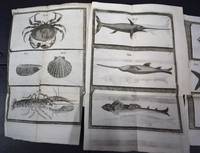
1721AL7GLTBLK22ALondon: W. Mears 1721. Hardback recently rebound in full-calf gilt titles to spine labels. 29.5cm x 22.5cm. 20 194pp. 28 hand-coloured engraved plates 1 of which is folding. 1st edition. Title in red and black with L. E. Newton Library ink stamp to lower margin. Subscribers list present. Some occasional toning/spotting and light offsetting. A splendid copy. A heavy book additional postage may be required for orders outside the UK. al7. 1st Edition. Hard Cover. Very Good. W. Mears Hardcover
1721r7351London: Printed for W Mears. G : in good condition. Later rebind with new eps. Pages 171 - 174 replaced in facsimile. Foxing browning and occasional tears. Plate xxvii coloured in with pencil. 1721. First Edition. Half leather hardback with marbled boards. 290mm x 230mm 11" x 9". xiv 194pp ad. 28 of 28 engraved plates. . Printed for W Mears hardcover
1721032919London: Printed for W Mears at the Lamb without Temple-Bar 1721 A very good copy in largely contemporary pannelled calf with 28 hand coloured plates. Richard Bradley 1668-1732 was elected to the Royal Society on the basis of his work and ideas on the balance of nature and productivity although he lacked a university education. He became Chair of Botany at Cambridge an unsalaried position in 1724 and attempted to make a living through writing. He was known to a number of eminent and influential people including Hans Sloane and a 2012 post from the Sloane Letters Project reveals a man constantly seeking funds but then failing to use them properly - the post is headed up 'Richard Bradley An Eighteenth Century Rogue'! This work is Bradley's attempt to provide an overview of the plant and animal kingdoms and the subscribers' list shows a number of eminent customers including Isaac Newton 6 copies and Hans Sloane. The calf binding has a blind-stamped pannelled design to the boards. The spine is newer with raised bands and gilt titles and date. The board corners have been repaired. Internally an old catalogue entry for the book has been pasted to the front pastedown endpaper. Contents: title in red and black; dedication to the Earl of Orrery 2pp; subscribers' list 8pp with hand written note that this amounted to 514 copies; contents list 3pp; directions to binder 1p with remains of old bookmark; introduction 3pp; text pp 1-194 with 28 plates - of which 1 is folding; advert for 3 works by Bradley 1p. Text with decorative head and tailpieces and initial capitals. The contents are in very good clean condition with some toning to the margins particularly at the top. There is a stain to the bottom margin of plates XIV and XV and a stain to one page of the subscribers' list. There is a note pasted at the rear pastedown endpaper about the receipt of the book in 1770. Printed for W Mears, at the Lamb, without Temple-Bar hardcover
1725015584At the Middle Temple Gate Fleet Street: B. Motte 1725. First and only edition. Octavo pp 14 373 11 with two engraved folding plates a little age-toning and slight marking rear endpaper a little marked and with a contemporary signature - R. Taylor 1771. The front endpaper has an ink diagram see our illustration and the hinge at the title page is cracked but sound. An early signature has been carefully cut from the top of the title page - the engraved surface is not affected. Contemporary panelled calf a little marked and worn the spine more worn the upper joint cracking at the top and bottom. Blanche Henrey 709. Little is known about Bradley's childhood aside from an early interest in gardening and the fact that he lived in the vicinity of London a city at the time with many amateur naturalists. Though Bradley lacked a university education his first publication Treatise of Succulent Plants gained him traction with influential patrons like James Petiver and later Hans Sloane. With their support he was proposed and elected a Fellow of the Royal Society in 1712 at the age of 24. Two years later Bradley visited the Netherlands and took an interest in horticulture. He spent the next decade back in England writing treatises on topics related to this central interest like weather fertiliser productivity and plant hybridisation. In recognition of his work in the field and with the thereafter unfulfilled promise that he would found and fund a university botanical garden the University of Cambridge named Bradley its first professor of botany in 1724 a position he would hold until his death. As Bradley was not a wealthy man in his later life and as this was an unsalaried position the newly minted academic continued to focus most of his efforts on making a living through publishing. According to his rival and successor John Martyn as well as his successor son Thomas Martyn Bradley did this at the expense of his students whom he reportedly neglected to even lecture to. Bradley made notable innovations and discoveries across a wide array of disciplines. For example this work included directions for the making and use of a rudimentary kaleidoscope to aid in formal garden design and layout. He also wrote about cooking and was the first to publish recipes in the English language using the then-exotic pineapple as the main ingredient. His History of Succulent plants was the seminal treatise on the topic and his studies of tulips and auriculas helped further accurate theories of plant reproduction. Bradley was also a pioneer in the examining of fungal spore germination and the pollination of plants by insects. His publications additionally contained information on how to build and use greenhouses early theories regarding agricultural productivity and pond ecology. First Edition. Full-Leather. Good. B. Motte Hardcover
1724663P21Edinburgh: Robert Fleming and Company 1724. First edition. Leather. Very Good Indeed. 7.5" by 5". Not Stated. A very pleasing copy of this uncommon first edition of this treatise on agriculture and linen manufacture in Scotland during the beginning of the eighteenth century. The first edition of this work. An uncommon work. Illustrated with five folding plates and two plates. This work is an octavo with the signatures running as A-K8 L7. A fascinating work discussing various aspects of agriculture focussing on fallowing ground raising grass-seeds and training lint and hemp. The advice is focussed on Scotland the soils that can be found in Scotland intending to provide the materials to stimulate the linen trade. The work also goes into detail of the production of linen illustrated further by the plates. Linen manufacture was the primary industry in Scotland in the eighteenth century and help light the spark of the industrial revolution in Scotland eventually leading onto the cotton jute and woollen industries. Chapters 5-8 incorporate Lewis Crommelin's essay towards improving the manufacturing of hempen and flaxen in Ireland. Crommelin was the director of an Irish linen business following his exile from France. Following the 1696 parliament act admitting all products of hemp and flax to be duty free from Ireland to England he ordered looms from Flanders and Holland. He was intrinsic to the introduction of Huguenot weavers to Ireland. His writings which are cited in this work was one of the earliest Irish books on Irish industry. Published by the Honourable Society for Improving in the Knowledge of Agriculture. This was the first agricultural society in Europe forming in June 1723. The work has been variously attributed to both William Macintosh and Richard Bradley though it is also thought that large portions of the work was written by Sir Thomas Hope. Sir Thomas Hope was the first president of the Honourable Society for Improving in the Knowledge of Agriculture. Robert Maxwell was the secretary of the Honourable Society for Improving in the Knowledge of Agriculture and wrote 'The Practical Husbandman' and 'The Practical Beemaster'. Prior owner's ink inscription to the title page 'William Tomlinson'. Rebacked full calf with the original boards retained. Externally generally smart. Light rubbing and marking to the boards. A little discolouration to the spine. A small amount of loss of leather to the rear board. Internally firmly bound. Pages are light age-toned and generally clean with the odd spot. Leaf A2 is lifting to the tail. Closed tear to the margin of page 3/4. Small loss to the gutter and bottom edge of page 33/34 not affecting text with a closed tear to the following page in the same corner. Very Good Indeed Robert Fleming and Company hardcover
179912534Paris: Du Pont 1799. Three engraved maps 465 by 420 mm 550 by 340 mm and 530 by 350 mm respectively with fine contemporary hand-colour in full old folds. These maps from the library of the Rochambeau family were published in the first edition of Rochefoucauld-Liancourt's travels in the United States 'Voyage Dans les États-Unis D'Amérique Fait en 1795 1796 et 1797 " Paris 1799 annotated in an early 19th-century hand after Abraham Bradley Junior's 1796 map 'A Map of the United States. Exhibiting Post Roads & Distances'. They are reduced copies of the 1796 first edition of Bradley's map and are therefore the first French edition of these maps. The Comte de Rochambeau 1725-1807 was a battle-hardened French general chosen by King Louis XVI in 1780 to command the expeditionary corps in the United States under the orders of General George Washington. Their combined success at the Siege of Yorktown on the 19th of October 1781 ended the Revolutionary War and secured American independence. 1."Carte générale des États-Unis de l'Amérique Septentrionale divisée en ses 17 provinces" annotated in an early 19th-century hand numbering each of 16 states giving the location of Native American tribes providing a key showing the major post roads from Main to South Carolina all after Abraham Bradley's map of 1796 acknowledged by the inscriber who has replaced the imprint with "par Abraham Bradley Jun.r" This map of the East Coast extends from Quebec south to include part of East and West Florida; the western boundary of Georgia extends to the Mississippi River; a strip of land extending westward between Georgia and Tennessee is designated "United States Territory" having been ceded back to the United States in 1787 from South Carolina; another strip between Georgia and West Florida is "Land claimed by the united states" referring to the ongoing dispute between the United States and Spain; all the land to the west which would become the Louisiana Purchase is "Spanish Territory Louisiana." English captions and French title. Manuscript ink annotations in French indicating the names of the 17 states and the position of the Indian tribes. Ink manuscript inscription to verso "IK 403" shelfmark of Rochambeau family library and as "Etats-Unis en 17 provinces." 2. The "Carte des États-Unis Provinces méridionales" shows Kentucky Virginia Tennessee North and South Carolina Georgia a strip of land between Tennessee and Georgia as "United States Territory" and to the south of Georgia "Land claimed by the united states". 3. The "Carte des États-Unis provinces Septentrionales" shows the states from Main sic to Maryland and Delaware. François Alexandre Frédéric duc de La Rochefoucauld-Liancourt 1747-1827 was a French writer and courtier. A social and scientific reformer he was elected to the Estates-General and pushed for changes to the absolute monarchy of France. Rochefoucauld-Liancourt was the first to warn Louis XVI of the fall of the Bastille; when the king called it a revolt Rochefoucauld Liancourt replied "No sire it is a revolution". Despite being sympathetic to the original aims of the Revolution and serving as the first president of the Constituent Assembly he opposed republicanism and secretly tried to arrange for the escape of the king. Following the storming of the royal palace in August 1792 and the beginning of the September Massacres later that same year precipitated his flight from France and he went into self-imposed exile in America. From London in September 1794 Angelica Schuyler Church wrote to her brother-in-law Alexander Hamilton with a glowing introduction. Liancourt made his was to Philadelphia in November and travelled extensively from "le Haute-Canada" above Lake Ontario to Charleston South Carolina taking notes on everything from the economy to slavery to agriculture. After returning to France in 1799 when Napoleon took power he published his analysis as an eight-volume work in which these maps were published. Related Letters and Historic Background Angelica Church to Alexander Hamilton September 19 1794: "My dear Brother I have very particular and very good motives to ask your kindness for the Duke de Liancourt. he loved Liberty with good sence and moderation; and he meant so well towards his country as to introduce into France a better system of Agriculture and to soften the situation of the Lower class of people there: Virtue has not found its reward for in the many scenes of distress that has afflicted his unfortunate country he like many more good men has been obliged to leave his possessions and seek an Asylum in this country. He goes to America and goes there without a friend unless my dear Brother who is always so good will extend to Monsieur de Liancourt his ease. besides many good Qualities this gentleman is the friend of the Marquis de La Fayette. Angelica Church." On April 10 1795 Liancourt wrote to Hamilton in a letter docketed by the recipient and then later by his widow Elizabeth Schuyler Hamilton. Rough translation from French: "You have allowed me to count on your interest Monsieur and this without complaint a hope for which I am flattered. I am herewith asking you to prove it which I hope will be one for you interest since it seems to me not being a stranger to you. I am at the point of leaving for a voyage that will take me as far as Canada. I will enter the United States through the province of Maine from there for another voyage in the east There are introduction letters to principle places that I am due to visit that I would be more pleased to get from you rather than anyone else. If you agree as I think you will to give them to me would you please send them to General Knox in the province of Maine where I will be until the end of July. I flatter myself that you will excuse my importunity!." Although France and the United States had been allies since 1778 political developments in both countries damaged the relationship. The French Revolution was viewed by Federalists like Alexander Hamilton as a dangerous precedent; and the ensuing wars between Britain and France placed the neutral United States in a precarious position. Relations deteriorated further on the signing of Jay's Treaty 1794 with Great Britain. France ordered the seizure of American ships carrying British goods and in 1796 the French refused to admit American diplomats. This impasse led to the XYZ Affair which provoked Congress in turn to suspend commercial relations with France and to authorize American warships to seize armed French vessels. This undeclared naval war lasted for three years with the United States capturing about eighty-five French vessels Du Pont, unknown
1728048298London: T. Woodward 1728. First Edition. Hardcover Full Leather. Very Good Condition. Contemporary acid calf quite worn hinges cracked but held by cords front blank in vol 1 detached spine ends chipped. Quite clean internally light scattered browning with a nice folding plate in volume one. Bradley though with no formal education in the field was an accomplished botanist and member of the Royal Society. This is one of his less frequently seen works. WIth the bookplates of Richard Warner 1713--1775 an important botanist of the subsequent generation. He had an opportunity to have the Gardenia - which he had raised in a hothouse - named after him but passed. A very nice association of 18th century English botanists.<br /> <br /> Provenance: Richard Warner bookplate and signature dated 1748. Size: Octavo 8vo. 2-volume set complete. Quantity Available: 1. Shipped Weight: 1-2 kilos. Category: Gardening; Botany; Science & Technology. Inventory No: 048298. T. Woodward hardcover
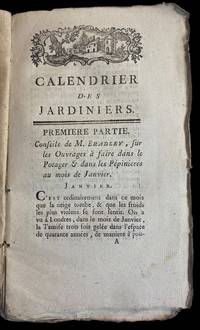
175552273xxx 279 pages plus index translation from the Sixth English edition text in French farmers tasks arranged from January to December errata and privilege of the King at the back Published by Briasson unknown
17834555Paris: Chez Lamy 1783. New edition. This appears to be a "cheap edition" of a 1750 edition. Soft paper covers with a blue lined pattern pasted onto an old sheet of printed paper. The paper is darkened and is chipped to the edges. There is also splitting along the paper spine. The binding is still holding. To the inside front cover is a pasted label of the Nancy Library of Vincenot. The book itself is in good condition but with a little edgewear and some chipping tp the edges. The work is in two major parts a calendar dealing with the work required month by month for a vegetable garden. There is then a second monthly account for "Foreign plants" and flower gardens / greenhouses. Two shorter parts include the cultivation of pineapples and that of asparagus. Although the title states "with figures" these would seem to be the decorations of chapter headings. There are no plates missing and none called for by the OCLC listing. 183 pages. 190 by 110mm 7½ by 4¼ inches. Conforms to FirstSearch / Worldcat OCLC: 258623413. Scarce. . Nouvelle édition. Il s'agit apparemment d'une "édition bon marché" d'une édition de 1750. Couvertures en papier souple avec un motif ligné bleu collé sur une ancienne feuille de papier imprimé. Le papier est noirci et ébréché sur les bords. Le dos en papier est également fendu. La reliure tient toujours. A l'intérieur de la couverture se trouve une étiquette collée de la Bibliothèque de Nancy de Vincenot. Le livre lui-même est en bon état mais avec un peu d'usure et d'écaillage sur les bords. L'ouvrage est composé de deux parties principales un calendrier qui traite du travail requis mois par mois pour un jardin potager. Il y a ensuite un deuxième compte-rendu mensuel pour les "plantes étrangères" et les jardins de fleurs / serres. Deux parties plus courtes traitent de la culture des ananas et de celle des asperges. Bien que le titre indique "avec figures" celles-ci semblent être les décorations des têtes de chapitres. Il ne manque aucune planche et aucune n'est mentionnée dans la liste de l'OCLC. 183 pages. 190 x 110 mm 7½ x 4¼ pouces. Conforme à FirstSearch / Worldcat OCLC : 258623413. Rare. Chez Lamy unknown
17834555Paris Chez Lamy 1783 Nouvelle édition. Il s'agit apparemment d'une "édition bon marché" d'une édition de 1750. Couvertures en papier souple avec un motif ligné bleu (collé sur une ancienne feuille de papier imprimé). Le papier est noirci et ébréché sur les bords. Le dos en papier est également fendu. La reliure tient toujours. A l'intérieur de la couverture se trouve une étiquette collée de la Bibliothèque de Nancy de Vincenot. Le livre lui-même est en bon état, mais avec un peu d'usure et d'écaillage sur les bords. L'ouvrage est composé de deux parties principales, un calendrier qui traite du travail requis mois par mois pour un jardin potager. Il y a ensuite un deuxième compte-rendu mensuel pour les "plantes étrangères" et les jardins de fleurs / serres. Deux parties plus courtes traitent de la culture des ananas et de celle des asperges. Bien que le titre indique "avec figures", celles-ci semblent être les décorations des têtes de chapitres. Il ne manque aucune planche et aucune n'est mentionnée dans la liste de l'OCLC. 183 pages. 190 x 110 mm (7œ x 4Œ pouces). Conforme à FirstSearch / Worldcat OCLC : 258623413. Rare.
1748133622<p>London England: The Royal Society 1748; 8vo. disbound all edges uncut; 48 pages. Book # 133622</p><p>DNB IOI 1074-9. First printing of Bradley's "great discovery" of the oscillation of the earth's axis due to the gravitational pull of the moon. Bradley 1693-1762 held the title of Astronomer Royal. In 1748 he presented his findings in a long letter to his patron the Earl of Macclesfield which was read at a meeting of the Royal Society on February 14 1747. Also includes a letter to Martin Folkes from James Parsons with observations on shell fish read at the Society's meeting January 21 1747. Disbound from Philosophical Transactions XLV 1. Tanning and light soiling at edges of text.</p> (The Royal Society)
1748133622London England: The Royal Society 1748. disbound all edges uncut. 8vo. disbound all edges uncut. 48 pages. DNB IOI 1074-9. First printing of Bradley's "great discovery" of the oscillation of the earth's axis due to the gravitational pull of the moon. Bradley 1693-1762 held the title of Astronomer Royal. In 1748 he presented his findings in a long letter to his patron the Earl of Macclesfield which was read at a meeting of the Royal Society on February 14 1747. Also includes a letter to Martin Folkes from James Parsons with observations on shell fish read at the Society's meeting January 21 1747. Disbound from Philosophical Transactions XLV 1. Tanning and light soiling at edges of text. The Royal Society unknown books