50 résultats
179000212072Dublin Ireland: P. Byrne J.Moore Grueber and M'Allister and W.Jones. Originally bound in brown full leather but now lacking front board this dated 1790 hardcover First Edition is Good. X1V/V111/352/74pp final 74page section is Appendix with convicts listed by name and sentence Sections of bookheaded as follows: Anecdotes of Governor Phillips Visit of Hope to Sydney-Cove Review of the Fleet and Establishment sent out with Governor Phillip Officers ShipsConvicts etc. Ships listed were: Alexander Scarborough Friendship Charlotte Prince of Wales and Lady Penrhyn Numbers of Marines with Officers Names assigned to individual ships Contents 22 Chapters Contents of Appendix: Routes of Individual Ships in 9 Tables List of 7 full page engraved Plates Frontis Head of Governor Phillips is missing and Plate 7 listed as Plan of Port Jackson is in fact View of New South Wales.They are all free of foxing. Complete list of convicts by name sent to NSW in 1787 appears in Appendix. Back boardcorners and spine worn spine has split running top to bottom spine title legible but indistinct single front endpaper stained title page follows with Frontis missing. Requires attention of binder. All text present and 6 out of 7 Plates: condition Good. . Good. Leather. First Edition. 1790. P. Byrne, J.Moore, Grueber and M'Allister and W.Jones hardcover
1727015648London: Thomas Corbet at Addison's Head without Temple-Bar 1727. First and only edition. Small octavo pp 8 131 pages slightly waved as this is an unpressed copy occasional slight creases or marks a slim marginal worm-hoile affects the lower margin of a few leaves but overall a very clean copy internally endpapers a little stained a small contemporary signature label on the front endpaper contemporary mottled calf a simple single marginal gilt line rather worn at the edges the lower cover scuffed rebacked at a later stage with a simple calf spine raised bands and a black title label. The covers slightly bowed. RARE. Little is known about Bradley's childhood aside from an early interest in gardening and the fact that he lived in the vicinity of London a city at the time with many amateur naturalists. Though Bradley lacked a university education his first publication Treatise of Succulent Plants gained him traction with influential patrons like James Petiver and later Hans Sloane. With their support he was proposed and elected a Fellow of the Royal Society in 1712 at the age of 24. Two years later Bradley visited the Netherlands and took an interest in horticulture. He spent the next decade back in England writing treatises on topics related to this central interest like weather fertiliser productivity and plant hybridisation. In recognition of his work in the field and with the thereafter unfulfilled promise that he would found and fund a university botanical garden the University of Cambridge named Bradley its first professor of botany in 1724 a position he would hold until his death. As Bradley was not a wealthy man in his later life and as this was an unsalaried position the newly minted academic continued to focus most of his efforts on making a living through publishing. According to his rival and successor John Martyn as well as his successor son Thomas Martyn Bradley did this at the expense of his students whom he reportedly neglected to even lecture to. Bradley made notable innovations and discoveries across a wide array of disciplines. For example this work included directions for the making and use of a rudimentary kaleidoscope to aid in formal garden design and layout. He also wrote about cooking and was the first to publish recipes in the English language using the then-exotic pineapple as the main ingredient. His History of Succulent plants was the seminal treatise on the topic and his studies of tulips and auriculas helped further accurate theories of plant reproduction. Bradley was also a pioneer in the examining of fungal spore germination and the pollination of plants by insects. His publications additionally contained information on how to build and use greenhouses early theories regarding agricultural productivity and pond ecology. First Edition. Full-Leather. Very Good. Thomas Corbet, at Addison's Head without Temple-Bar Hardcover
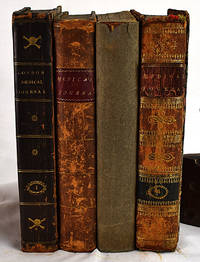
17992510270031R. Phillips London 1799. Hardcover. Acceptable. Interesting provenance previously owned by Henry Barton Jacobs then later by noted medical scholar Owen Hannaway. 4 volume mixed set printed 1799-1800. Hardcover. Shelf wear. One board detached. Volume 3 bound in grey wraps. Edges chipped. Sold with all faults. Bookplate of Jacobs on verso. This is an oversized or heavy book which requires additional postage for international delivery outside the US. <br> Henry Barton Jacobs was an educator and physician from Maryland. Jacobs came to Baltimore to become the private physician for Robert Garrett who was then president of the Baltimore and Ohio Railroad. After Garrett's death in 1896 Jacobs joined the faculty of the Johns Hopkins University School of Medicine retiring in 1905. He actively participated in organizations directed toward the treatment and eradication of tuberculosis. In 1911 Jacobs was elected a trustee of The Johns Hopkins Hospital a position he held until his death. William Osler was considered a universal friend by physicians of his era but as with most people his intimate friends were few. Henry Barton Jacobs became a close friend as one of the 'latchkeyers' who lived next door to the Oslers in Baltimore and the friendship intensified after Jacobs married Mary Sloan Frick Garrett the fabulously wealthy widow of a former patient. The couples stayed close after the Oslers moved to Oxford vacationing together and corresponding frequently. The couple friendship between the Oslers and the Jacobses benefited American medicine in specific ways including the care of patients with tuberculosis and the care of children. <br> From the library Dr. Owen Hannaway. Hannaway was director of the Center for the History and Philosophy of Science at Johns Hopkins University. He authored numerous books and served as an editor of academic magazines in the history of science. Partial list of publications: Chemists and the Word: The Didactic Origins of Chemistry 1975; Observation Experiment and Hypothesis in Modern Physical Science 1985; The Evolution of Technology 1989; Science and the Practice of Medicine in the Nineteenth Century 1994; and The Foundations of Modern Science in the Middle Ages: Their Religious Institutional and Intellectual Contexts 1996. <br> The Medical and Physical Journal was a British medical periodical edited for many years by Dr. Thomas Bradley. It was published from the late 18th century into the early 19th century and included content on medical observations diseases and other physical and natural sciences. While Bradley was the primary editor other figures such as R. Batty and A. A. Noehden also contributed to editing. R. Phillips, London hardcover
17625037London & York: W. Bristow and C. Etherington 1762. Hardcover. Good. 6 of 8 352 pages; possibly lacking a half-title otherwise complete. 12mo contemporary sheep rebacked top of spine damaged endpapers renewed. Very scarce. First published in 1727. ESTC locates only the Bodleian Library copy of this edition. <br/><br/> London & York: W. Bristow and C. Etherington hardcover books
17625037London & York: W. Bristow and C. Etherington 1762. Hardcover. Good. 6 of 8 352 pages; possibly lacking a half-title otherwise complete. 12mo contemporary sheep rebacked top of spine damaged endpapers renewed. Very scarce. First published in 1727. ESTC locates only the Bodleian Library copy of this edition. <br/><br/> London & York: W. Bristow and C. Etherington hardcover
1732EXP3-C-10London: D. Browne and T. Woodman 1732. First edition. Leather. Very Good. 8" by 5". None. The scarce first edition of the second volume of Bradley's fantastic instructional guide from the farmer's wife. Part II only published here for the first time as part I was in its sixth edition by this point. There are no recorded copies seen of the first edition of part one and any edition prior to 1760 are very scarce indeed. 'Including a great variety of the most curious receipts for dressing all the sorts of flesh fish fowl fruit and herbs which are the productions of a farm or from any foreign parts. Contained in letters and takne from the performances of the most polite proficients in most parts of Europe. Now published for the good of the publick by R. Bradley professor of Botany in the University of Cambridge'. 'To which is added from a poulterer in St. James-Market the manner of trussing all sorts of poultry. Adron'd with cuts: shewing how ever fowl wild or tame ought to be prepared for the spit; and likewise any kind of game'. With twelve illustrations in the text to the rear detailing the trussing of animals. Decorative head and tail pieces and capitals. Rebound in decorative full crushed morocco. Externally very good and sound just a trifle rubbed. Internally firmly bound. Bright but with scattered spotting and handling and dust marks a couple of spill burns. Very Good D. Browne and T. Woodman hardcover
1760008890London: printed for S. Crowder and H. Woodgate at the Golden Ball in Paternoster Row no date but circa 1760. 1760. Volume 1 only.Collation engraved frontis 752 pages plus 7 engraved plates. Apparently volume 1 was only issued with an engraved frontis the additional 7 plates appear to be from volume 2. Book measures 8 1/2 x 5 1/4 inches.Weight 1.2kg.Bound in modern full calf raised bands red leather title label. Binding in excellent condition.Internally no loose pages month inscription in early hand on top margin of Jan/Fed/March some occasional light staining a few sections have been cleaned small chip from margin of frontis. Pages in good clean condition.A very nice clean well bound copy.F. First Edition. Full Calf. Very Good. 8vo. printed for S. Crowder and H. Woodgate, at the Golden Ball in Paternoster Row, no date but circa [1760?]. Hardcover
1756048096London: S. Crowder and H. Woodgate 1756. First Edition. Hardcover Full Leather. Good Condition. Two volumes one in tattered and torn original leather and the other in early acid calf boards crudely reattached. Some wear to page edges volume two with periodic light stains in pink and teal early on and a few light dampstains in margins not obscuring any text. Modest age toning generally uniform. Plates worn in a few cases frontis adhered to partially adhered to endpaper. A married set in slightly different sizes and different bindings. One bound with six of seven of the plates bound at the beginning and the other withfour of the plates the one missing from volume one and three repeats bound at the end. One the whole a well used and worn but complete copy. Undated but Cagle dates it as 1756 based on an ad for its serial publication in Scots Magazine dated January 1756 announcing its publication; the full book is thought to have been offered for sale shortly after the parts version. <br /> <br /> 752pp; 469 33pp. With the seven plates of place settings and three repeated. Vicaire 111 Bitting 54 Cagle 574 Oxford 104 Simon 236<br /> <br /> Scarce with both volumes volume 1 often showing up alone. The engraved menu plates are extremely well executed. Collects household management gardening and cookery recipes. Remarkable for it's detailed start to finish explanations giving origins of ingredients and preparations. It is unlike most 18th century English cookbooks aimed at women other than Raffald's in 1769 a decidedly practical and middle class cookbook aimed at the housewife not a gentlewoman. Learn to make calve brain paaties pitchcock eels grow pineapples cure the pimple evil in sheep or hysterick fits in your neighbors. Filled with eels puddings creams and pies - a work of delightful completeness. Size: Octavo 8vo. 2-volume set complete. Quantity Available: 1. Shipped Weight: Under 1 kilo. Category: Cooking Wine & Dining; Inventory No: 048096. S. Crowder and H. Woodgate hardcover
17602256<p>Boards detached see image; title page shaved close at head. Five raised bands. Remnants of gilt ruled morocco label. Bookplate of Claudia Q. Murphy who was a published cook book author herself in the early 20th century. <br />5 x 8.25 in</p> S . Crowder and H. Woodgate hardcover
175629163606481756, Paulus du Mesnil, Nyon, Siméon Prosper, in-12 plein cuir de 358 pages, titrage et fers dorés sur dos à 5 nerfs, tranches rouges, Nouvelles observations physiques et pratiques sur le jardinage et l'art de planter avec le calendrier des jardiniers, traduit de l'anglais, enrichi de figures en taille-douce | Etat : Bon état, couverture légèrement usée par le temps, coiffe supérieure abimée avec manque, coins frottés (Ref.: ref86133)
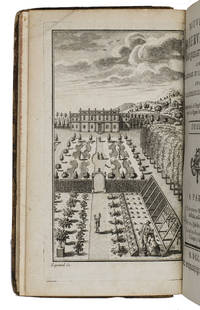
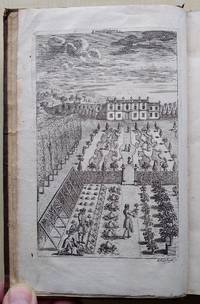
17568C7AI5UKANV9Paris 1756. 12mo. Pierre-Aug. Paulus du Mesnil Jean-Luc Nyon & Siméon-Prosper Hardy colophons: printing offices of Moreau vol. II and Aug. Mart. Lottin vol. III Contemporary mottled tanned sheepskin sewn on 4 cords anchored in the boards but with 5 raised bands on the gold-tooled spine the 3rd false each volume with a red morocco label in the 2nd compartment and the volume number in the 3rd each of the others with a thisle and several floral and other stamps gold-tooled board edges red edges. Engraved frontispiece depicting the gardens of a country estate and 12 numbered folding engraved plates by Pierre-François Legrand showing all kinds of flowers garden lay-outs insects etc. including 3 very interesting plates of a greenhouse plan interior and exterior views in vol. 3 3 volumes. frontispiece plus XXXVI 358 2: 4 blank 5 X-XVI 510 2 blank; 2 12 "442"=440 pp. First and only edition of the French translation of two horticultural and botanical works by the English botanist Richard Bradley 1688-1732 the first professor of botany at Cambridge University 1724. He was elected a Fellow of the Royal Society in 1712. Bradley "deserves pre-eminent notice as one of the most voluminous writers upon agriculture and gardening" McDonald Agricultural writers pp. 170-171.This French translation made by Philippe-Florent de Puissieux 1713-1772 is based on Bradley's New improvements of planting and gardening both philosophical and practical London 1717; sixth edition: London 1731 and on his Gentleman and gardeners calendar London 1718.The translation is adapted to French circumstances and conditions especially regarding the proper dates for planting cropping etc. the various plants and trees. Spines damaged mostly at the heads and feet but with the loss of the headbands hinges and board edges worn; some minor foxing and with a crease in the half-title of vol. III but still in good condition.l Oxford companion to gardens p. 70; Pritzel 1076; cf. Hünersdorff Coffee: a bibliography pp. 174-175. hardcover
17202131London: Printed for W. Mears at the Lamb without Temple Bar 1720. Three volumes bound as one. Thick octavos 71 136 290 2 pages. Third editions corrected. & 2 xv 124 pages. 2 leaves of plates. Illustrated in all with 11 engraved plates. Third edition corrected. New Improvements and the Kalendar were often found bound together as such. Bradley ca. 1688-1732 was an English botanist and gardener appointed to be the first Professor of Botany at Cambridge University a Fellow of the Royal Society and the first to publish a pineapple recipe in English. Fussell Old English Farming Books provides Bradley an entire chapter but only on the grounds that Bradley was the most prolific author of the period 1700-1730. Very good with all plates present rebound in modern half-calf with raised bands and ornamented compartments. Fussell page 108. Printed for W. Mears at the Lamb without Temple Bar hardcover books
1726248433London: Printed for W. Mears 1726. Fifth edition with an Appendix. Frontispiece 12 plates many folding. xvi 608 pp. 8vo. Bound in contemporary calf some wear to covers neatly rebacked. Fifth edition with an Appendix. Frontispiece 12 plates many folding. xvi 608 pp. 8vo. Printed for W. Mears unknown books
17240000801London: W. Mears 1724. Contemporary calf. Very good. 4th Edition. 8vo 18.2 x 11.6 cm. Contemporary paneled calf with some wear; raised bands on later spine; gilt label; small patches to lower cover repaired; two ink spots on fore edge of text block; edges speckled red. Collation: xvi 63 64 viii 65-435 1-Bl ii 1-104 ii 36 7-Index 1-Corrigenda 2-Addenda 1-Errata 5-Cat. pp. 11 copper engraved plates. 8 folding. Text has light browning at head. <br />The organization of this series of tracts has continuous pagination with separate title pages printed in red and black. There is a fourth part The Gentleman and Gardener’s Kalendar where it is noted on the title page that this tract includes several “Acts of Parliament to encourage the Planting of Timber-trees Fruit-Trees and other Trees for Ornament Shelter or profit…” The last tract of this publication contains for the first time a copy of John Beale’s Herefordshire-Orchards A Pattern for all England. Written in and Epistolary Address to Samuel Hatlib Esq. “John Beale was a clergyman and writer on agriculture and natural philosophy. Beale began a weekly correspondence with Samuel Hartlib in 1656 two of his early letters being published as Herefordshire Orchards a Pattern for All England 1657. Nichols Lit. anecdotes 1.447.”ODNB. <br /> <br/><br/>Provenance: Engraved bookplate of Patrick Hume Earl of Marchmont on front paste down. He was a politician born at Redbares Berwichshire who served several English monarchs and Queen Anne. His coat of arms occupies the bookplate with motto “True to the King” along with description of his position as Viscount Blasonberrie and Lord Polwarth of Polwarth and Lord High Chancelor of Scotland. There is also a loose bookplate from Rachel McMasters Miller Hunt library tipped in. <br />This work contains the three different tracts that Bradley wrote on botany gardening and vegetable physiology from 1717 to 1718. In this 1724 fourth edition of the New improvements of planting and gardening there is addition of John Beale’s treatise on Herefordshire-Orchards. Henrey p. 437. Bradley was a Fellow of the Royal Society and in 1724 was elected Professor of Botany at Cambridge. ODNB <br /> W. Mears unknown books
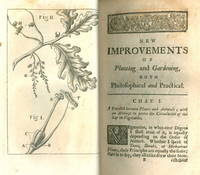
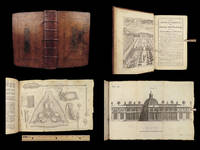
173126514<p><strong>1731 Planting Gardening Bradley BOTANY Kaleidoscope Illustrated GARDENS Orchard</strong></p><p>Richard Bradley was an early 18th-century English botanist known for his studies in ecology and natural history. In his book "<em>New Improvements of Planting and Gardening</em>" Bradley describes formal gardening designs stocking gardens tending to vines growing herbs managing forests and so much more. One curious section includes the use of kaleidoscopes to help design gardens! The folding engravings in this edition make it a highly desirable and collectable edition. </p><p>Item number: #26514</p><p>Price: $599</p><p>BRADLEY Richard </p><p><strong><em>New improvements of planting and gardening : both philosophical and pratical</em></strong></p><p>London: Printed for J. and J. Knapton A. Bettesworth and C. Hitch 1731.</p><p><u>Details</u>: </p><p><!-- if !supportLists-->· <!--endif-->Collation: Complete with all pages </p><p><!-- if !supportLists-->o <!--endif-->Part I – 16 56</p><p><!-- if !supportLists-->o <!--endif-->Part II – 4 61-172</p><p><!-- if !supportLists-->o <!--endif-->Part III – 2 175-497 1</p><p><!-- if !supportLists-->o <!--endif-->Herefordshire Orchards – 2 501-535 1</p><p><!-- if !supportLists-->o <!--endif-->Appendix – 4 541-608 24</p><p><!-- if !supportLists-->o <!--endif-->Each section with separate title page</p><p><!-- if !supportLists-->o <!--endif-->14 copper engravings</p><p><!-- if !supportLists-->· <!--endif-->Provenance: Handwritten – <em>Margaret Holblack 1748</em></p><p><!-- if !supportLists-->· <!--endif-->Language: English</p><p><!-- if !supportLists-->· <!--endif-->Binding: Leather; secure</p><p><!-- if !supportLists-->· <!--endif-->Size: ~8in X 5.25in 20.5cm x 13cm</p><p>Our Guarantee:</p><p>Very Fast. Very Safe. Free Shipping Worldwide.</p><p>Customer satisfaction is our priority! Notify us with 7 days of receiving and we will offer a full refund without reservation!</p><p>26514</p><p>Photos available upon request. </p> for J. and J. Knapton, A. Bettesworth and C. Hitch hardcover
171821973London: W. Mears 1718. Good/Fine Slipcase. <br /> A cornerstone of early 18th-century horticultural literature this volume represents Richard Bradley's pioneering effort to treat gardening and agriculture as rigorous sciences rather than mere trades. <br /> <br /> Comprising the first three parts of 'New Improvements' including first editions of volumes II and III and the 'Kalendar' the work explores the motion of sap and plant generation marking a significant shift toward botanical philosophy. This copy features the 'New Invention' for garden design and is adorned with numerous copper plates.<br /> <br /> KEY FEATURES<br /> Visuals: Total of 12 copper-engraved plates inclusive of both works including several folding plates depicting greenhouse designs and botanical structures. <br /> Binding: Contemporary calf gilt-ruled; professionally rebacked with spine titled in gilt. Housed in a modern brown cloth slipcase. <br /> Content: Comprehensive technical guides on forest trees kitchen gardens and the 'New Invention' for parterre design. Includes the third edition of the 'Kalendar' 1720. <br /> Specs: Octavo; 7 5/8 x 4 3/4 inches; complex pagination. <br /> Provenance: Older ownership signature on front paste-down with manuscript notations on front endpapers. <br /> Manuscript: Occasional contemporary manuscript annotations throughout the text.<br /> <br /> CONDITION<br /> Overall Grade: Good / Sophisticated. The bindings are tight and square following a professional rebacking that reinforced the hinges. The contemporary calf boards show expected wear rubbing to the corners and a pulled top spine band. Internally the text block exhibits light to moderate toning and spotting consistent with early 18th-century paper. Occasional edge tears dog-ears and evidence of historic dampstaining are present but the text remains entirely legible and the folding plates are structurally sound. The modern slipcase is fine.<br /> <br /> SCHOLARLY FEATURES<br /> Scholarship: Bradley was the first Professor of Botany at Cambridge; this work is a primary record of his efforts to introduce the 'motion of the sapp' and sexual generation of plants to a general audience.<br /> Historical Impact: Represents the transition from traditional 'almanac' gardening to scientific horticulture utilizing the 'Philosophical' approach championed by the Royal Society.<br /> Design: Features Bradley's 'New Invention'-an early mirrored device a precursor to the kaleidoscope used to generate infinite geometric designs for garden parterres. HISTORICAL SIGNIFICANCE -<br /> Richard Bradley 1688-1732 was a prolific English botanist and the first to treat gardening as a science. Despite a controversial tenure at Cambridge his influence on the development of British horticulture was immense. He was a pioneer in studying plant productivity and was among the first to describe the role of insects in pollination.<br /> <br /> This specific assembly of 'New Improvements' and the 'Kalendar' is the definitive contemporary reference for the period. As noted by bibliographer Blanche Henrey these works were frequently bound together by owners to create a comprehensive horticultural manual. The inclusion of the 'Kalendar' provided the practical monthly instruction to balance Bradley's 'Philosophical' theories.<br /> <br /> The work is a landmark in the history of the English landscape. It arrived at the precise moment when the formal gardens of the late 17th century were evolving into the more complex botanical collections of the 18th century. It remains a vital primary source for the study of the history of science and the evolution of the British garden.<br /> <br /> SUBJECTS: Richard Bradley Botany 18th Century Gardening Horticulture Royal Society Landscape Design History of Science British Literature Science & Technology Pre-1800 Imprint.<br /> <br /> BIBLIOGRAPHIC REFERENCE: Henrey 488; ESTC T39873; ESTC T40723; Hunt 447 for related editions. W. Mears unknown
1718800431718. BRADLEY Richard. New Improvements of Planting and Gardening Both Philosophical and Practical; Explaining the Motion of the Sapp and Generation of Plants. London: Printed for W. Mears 1718. 2nd ed. corrected. In three parts. 14701 advertisement title page for Part II14136 title page for Part III102902advertismentspp. with BRADLEY Richard. The Gentleman and Gardeners Kalendar Directing What Is Necessary To Be Done Every Month . London: Printed for W. Mears 1718. Xii1162 advertisementspp. Illus. 10 plates 8 folding. Orig. gilt-bordered calf rebacked with matching period-style spine gilt-ruled raised spine bands compartments gilt red morocco spine label upper free corner of page 95/96 of Part Two torn not affecting text inset damage to upper free corner of final leaves professionally repaired else very good. Henrey 488. New Improvements and the Kalendar were often found bound together as such. Bradley ca. 1688-1732 was an English botanist and gardener appointed to be the first Professor of Botany at Cambridge University a Fellow of the Royal Society and the first to publish a pineapple recipe in English. Fussell Old English Farming Books p. 108 provides Bradley an entire chapter but only on the grounds that Bradley was the most prolific author of the period 1700-1730. unknown
1731800611731. BRADLEY Richard. New Improvements of Planting and Gardening Both Philosophical and Practical. In Three Parts. London: J. and J. Knapton . A. Betteworth and C. Hitch.J. Pemberton. and D. Browne 1731. 6th ed. with an Appendix treating of several matters omitted in the former impressions. xiv 60923 indexpp. Frontis.13 copper-engraved plates some folding. Contemporary double gilt-ruled calf rebacked in matching leather raised spine bands red morocco spine label. Some wear to corners some light scattered foxing lacks rear free endpaper several of the folding plates repaired Plate II of Appendix missing part of plate else very good. New Improvements Parts II and III the section on Herefordshire Orchards and the Appendix have separate title pages all dated 1730 apart from the appendix which is dated 1731. Bradley ca. 1688-1732 was an English botanist and gardener appointed to be the first Professor of Botany at Cambridge University a Fellow of the Royal Society and the first to publish a pineapple recipe in English. Fussell Old English Farming Books p. 108 provides Bradley an entire chapter but only on the grounds that Bradley was the most prolific author of the period 1700-1730. unknown
1731018259Paternoster Row & St Paul's Churchyard London: J & J Knapton; A Bettesworth & C. Hitch; J. Pemberton & D. Browne 1731. Sixth edition. The title pages to parts II and III are dated 1730 as is Hereforshire Orchards;the title page to the appendix is 1731. Thick octavo pp xiv 608 25 with an engraved frontispiece and thirteen engraved plates of which eight are folding several plates are folded awkwardly and several have frayed margins but only one has very slight loss of the engraved surface and it is this one which protrudes slightly from the fore-edge some age-toning occasional small splash marks a little wear throughout light early manuscript notes on the front endpapers contemporary full calf a bit worn and marked but perfectly sound lacking tiny pieces at head and tail of the spine the remains of a contemporary manuscript label on the spine. A reasonably good copy of one of the most influential of eighteenth century gardening books. Blanche Henrey 503. Little is known about Bradley's childhood aside from an early interest in gardening and the fact that he lived in the vicinity of London a city at the time with many amateur naturalists. Though Bradley lacked a university education his first publication Treatise of Succulent Plants gained him traction with influential patrons like James Petiver and later Hans Sloane. With their support he was proposed and elected a Fellow of the Royal Society in 1712 at the age of 24. Two years later Bradley visited the Netherlands and took an interest in horticulture. He spent the next decade back in England writing treatises on topics related to this central interest like weather fertiliser productivity and plant hybridisation. In recognition of his work in the field and with the thereafter unfulfilled promise that he would found and fund a university botanical garden the University of Cambridge named Bradley its first professor of botany in 1724 a position he would hold until his death. As Bradley was not a wealthy man in his later life and as this was an unsalaried position the newly minted academic continued to focus most of his efforts on making a living through publishing. According to his rival and successor John Martyn as well as his successor son Thomas Martyn Bradley did this at the expense of his students whom he reportedly neglected to even lecture to. Bradley made notable innovations and discoveries across a wide array of disciplines. For example this work included directions for the making and use of a rudimentary kaleidoscope to aid in formal garden design and layout. He also wrote about cooking and was the first to publish recipes in the English language using the then-exotic pineapple as the main ingredient. His History of Succulent plants was the seminal treatise on the topic and his studies of tulips and auriculas helped further accurate theories of plant reproduction. Bradley was also a pioneer in the examining of fungal spore germination and the pollination of plants by insects. His publications additionally contained information on how to build and use greenhouses early theories regarding agricultural productivity and pond ecology. . Sixth edition. Half-Leather. Fair. J & J Knapton; A Bettesworth & C. Hitch; J. Pemberton & D. Browne Hardcover
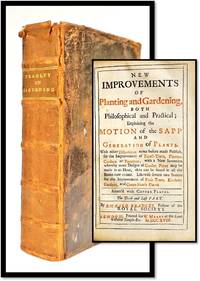
171816498London: W. Mears 1718. Full leather in a slipcase. Fair in a Fine Slipcase. New Improvements of Planting and Gardening Both Philosophical and Practical. London: W. Mears 1718 1717 1718.<br /> Three volumes bound in one second edition of volume I first editions of volumes II and III. Pp.184 192 misnumbered 684 202;<br /> Volume I: 16 70 2 pp. with 1 engraved plate;<br /> Volume II: 16 136 pp. with 1 engraved plates and 2 folding engraved plates;<br /> Volume III: 12 290 2 pp. with 3 folding engraved plates;<br /> <br /> The Gentleman and Gardner's Kalendar.<br /> London: W. Mears 1720. Third edition. xv 1 124 4 pp. with 1 engraved plate and 3 folding engraved plates. Followed by 4-page publisher's advert.<br /> <br /> Ref: Henrey 488 "New Improvements and the Kalendar were often found bound together as such"; ESTC number: T39873; Kalendar; T40723.<br /> <br /> Contemporary calf gilt ruled rebacked spine titled in gilt. 8vo; 7 5/8 x 4 3/4 inches 19.25 x 12 cm; Wear to boards and rebacked spine top spine band pulled; corners bumped and rubbed hinges reinforced text with toning spotting and occasional edge tears dog ears dampstaining and manuscript annotations. Older ownership on front paste-down notations on front endpages. Title page in red. Modern brown cloth slipcase. Full Title: New improvements of planting and gardening both philosophical and practical; explaining the motion of the sapp and generation of plants. With other Discoveries never before made Publick for the Improvement of Forest-Trees Flower-Gardens or Parterres; with a New Invention whereby more Designs of Garden Plates may be made in an Hour than can be found in all the Books now extant. Likewise several rare Secrets for the Improvement of Fruit-Trees Kitchen-Gardens and Green House Plants. Adorn'd with Copper Plates. The third and last part. By Richard Bradley Fellow of the Royal Society<br /> <br /> Background Information:<br /> Bradley an English botanist and gardener was one of the most voluminous writers upon agriculture and gardening. Johnson author of History of Gardening 1829 states that Bradley was "one of the first to treat gardening and agriculture as sciences." <br /> <br /> His name was attached to more than 20 publications between 1716 and 1730. His works show a well-informed and comprehensive mind. He was a Fellow of the Royal Society and in 1724 was elected Professor of Botany at Cambridge. However he was considered unfitted for the office due to his ignorance of foreign languages and other reasons. <br /> <br /> His work ran through many editions and although the contents were culled from earlier writers they indicated the trends of the times in agriculture and horticulture. Ohio State/Plant Facts W. Mears unknown
171895214London: Mears W. 1718. 19.5 x 11.5 cm. Pp. xvii 70 2 xvi 136 xii 290 2 xii 116. 4. Lacking all plates except frontis to Kalendar. Contemporary panelled calf with later spine and label. Boards rubbed Bookplate of RAS on front pastedown writing on front free end paper first blank detached some dampmarks on last few leaves. Henrey 498. 2nd Ed. Hardcover. Fair/No Jacket. Mears, W. Hardcover
1726248433London: Printed for W. Mears 1726. Fifth edition with an Appendix. Frontispiece 12 plates many folding. xvi 608 pp. 8vo. Bound in contemporary calf some wear to covers neatly rebacked. Fifth edition with an Appendix. Frontispiece 12 plates many folding. xvi 608 pp. 8vo. Printed for W. Mears unknown
1724mon0004112976London: W. Mears 1724. Hardcover. Very Good. . 2 volumes bound together both 4th editions 1724 by Bradley printed by Mears. Rebacked spine with raised bands gilt ruling title label in red contemporary speckled calf in compartments with decorative tooling. Cover shows minor wear rubbing bumped corners. Red and black titles engraved head- and tailpieces fold-out plates. Pages lightly tanned with minor scattered foxing. London: W. Mears hardcover
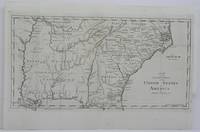
1797M4824USA 1797. Very Good. Size : 210x400 mm 8.25x15.75 Inches Coloring: Black & White Category: Maps United States East Carolinas; Maps United States South States; unknown
17977225Boston:: S. Hall 1797. First Edition. Near Fine. Near Fine. With folds as issued faint offset from folded image. Darkened along folds. Professionally cleaned with small edge tear repairs. Laid down on cotton. A very nice solid copy of an early desirable map. Copperplate engraving on laid paper. Sheet size: 40 x 21 cm. A fine example of Early American Mapmaking by Abraham Bradley Jr engraved by S. Hill prior to the Louisiana Purchase showing the Southern Parts of the United States from the coast of Virginia at Norfolk down to St. Augustine across the Gulf to the Mississippi River and up through to the Ohio River in Kentucky. Highly detailed with mountain ranges water tributaries dozens of native territories and United States claim line divided by Western Georgia and Chactaws Territory. Alexander Bradley Conn. 1767-1838 lawyer then judge in Pennsylvania who became assistant postmaster general and supervised the move of the general post office from Philadelphia to Washington DC. Known for his excellence in detailed mapmaking as well as his knowledge of postal routes he created to the first official map used by the US Postal Department which became the standard by 1825. In 1803 Thomas Jefferson wrote to Bradley requesting an early copy of one such map. Howes 839; Ristow 70-1; Sabin 50923 https://founders.archives.gov/documents/Jefferson/01-41-02-0206 single sheet S. Hall, unknown