41 résultats
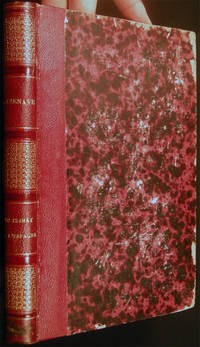
183311493Paris: Bechet Jeune 1833. Second edition Revised and Augmented. Hard Cover. Bound in 1/2 leather amd marbled boards. LIGHT WEAR AT TOP OF SPINE SLIGHT WEAR AT CORNERS AND BOARD EDGES. LIGHT SCATTERD FOXING IN OTHERWISE CLEAN TIGHT TEXT. BINDING AND HINGES TIGHT. NO WRITING OR MARKS. OVERALL VERY GOOD. A NICE TIGHT COPY. Bechet Jeune unknown
1828675741828. Paris Chez Béchet Jeune 1828 8° XL 526 pp. 1 Errata-Blatt Halbledereinband der Zeit mit Rückenvergoldung; feines Expl. First Edition! This important book codified and published the lectures doctrines and observations of Laurent Biett 1781-1840 the leading clinical teacher in dermatology of the early 19th century who published very little himself. Piere Louis Alphée Cazenave 1795-1877 was a pupil and successor of Biett. He wrote this textbook with Henry Edouard Schedel 1804-1856 on behalf of his teacher. They describe the skin diseases according to Willan's system with numerous improvements and extensions. They did not follow the system of Alibert. Cazenave was a master clinician who founded the first scientific periodical devoted exclusively to dermatology. The Abrégé improves upon Bateman especially in the section on the cutaneous manifestions of syphilis. "Continually revised and translated into all important languages of the Western World the Abrégé became the most influential text of the time and remained so for 30 years." Crissey & Parish Garrison & Morton No. 3990 unknown
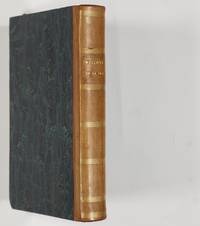
1833308361833. Seconde Édition revue et augmentée. - Paris Béchet Jeune 1833 8° XLVIII 535 1 pp. feiner Halbledereinband der Zeit; etwas fleckig ohne die Tafel. This book codified and published the lectures doctrines and observations of Laurent Biett 1781-1840 the leading clinical teacher in dermatology of the early 19th century who published very little himself. Cazenave was a master clinician who founded the first scientific periodical devoted exclusively to dermatology. The Abrégé improves upon Bateman especially in the section on the cutaneous manifestions of syphilis." "Continually revised and translated into all important languages of the Western World the Abrégé became the most influential text of the time and remained so for 30 years." Crissey & Parish Garrison & Morton No. 3990 1st. Ed. 1828 ed. unknown
184736907HB1847. Quatrième édition revue et considérablement augmentée. Paris Labé 1847. 10 kolorierte Tafeln 1 mehrfach gefaltet XII 644 S. Halblederband der Zeit mit Rückentitel und -vergoldung minimal bestoßen. Hirsch/H. V 56 u. I 859; Garrison/Morton 3990; Waller 1835; Wellcome II 317; Heirs of Hippocrates 1532 Originalausgabe. - Schedel und Cazenave veröffentlichen authorisiert in diesem noch Jahrzehnte über sein Erscheinen hinaus einflußreichsten dermatologischen Werk systematisch die Lehren und Erkenntnisse Laurent-Théodore Bietts 1781-1877 bei dem sie studierten. Inhaltlich auf Willan und Bateman zurückgreifend werden deren Schriften dabei besonders bezüglich der syphilitischen Symptomatik weit überschritten vgl. Crissey/Parish S. 56 und ein erheblicher Beitrag auf dem Weg zur Klassifizierung der Hautkrankheiten geleistet. - Leicht braunfleckiges gut erhaltenes Exemplar. unknown
1847387602Paris: Labé Libraire De La Faculté De Médecine 1847. Hardcover. Very Good. Fourth edition. 644pp. Ten hand-colored plates one folding has tear without loss. Text in French. Contemporary black quarter leather and marbled boards gilt spine title. Pages clean and bright with minor foxing here and there extremities worn still a very good copy. One of the first books of skin diseases on an anatomical basis. Labé, Libraire De La Faculté De Médecine hardcover
1838159411838 Paris, Béchet Jeune, 1838, fort in 8° relié demi-basane, LXXII-592 pages ; 10 planches hors-texte en couleurs, l'une dépliante ; rousseurs, tache angulaire marron en tête des 20 premières pages ; le dos de la reliure manque. Exemplaire de travail.
1838R320140546Béchet Jeune. 1838. In-8. Relié demi-cuir. Etat d'usage, Plats abîmés, Dos satisfaisant, Intérieur frais. LXXII + 595 pages - plats et contre plats jaspés - tranches rosées - auteur, titre, filets et fleurons dorés sur le dos - coins, tranches et plats très frottés - quelques planches en couleurs hors texte dont une dépliante - 4 photos disponibles.. . . . Classification Dewey : 616.5-Dermatologie
182828423BBParis, Béchet jeuene 1828. 8°: 3 n.n. Bl., XL S., 1 w. Bl., 526 S., 1 S. Errata. Halbleinwandband der Zeit mit geprägtem Rückentitel.
1837258631837. Froriep Chir. Taf. 375. - Chir. KupferTaf. hrsg. v. R. Froriep Heft Nr. 74. - Weimar Landes-Industrie-Comptoir 1837 4° Kupferstichtafel mit 10 Abbildungen und 4 Seiten Tafelerklärungen. Nach Cazenave : Fragmens d'un traité compl. des Maladies des voies urinaires. Paris. 1836. unknown
1848R240104133J.-B. BAILLIERE - CHEZ L'AUTEUR. 1848. In-8. Broché. Etat d'usage, Couv. défraîchie, Dos abîmé, Mouillures. 83 pages - moisissures à l'intérieur de l'ouvrage sans réelle conséquence sur la lecture - dos manquant - tampon sur le 1er plat.. . . . Classification Dewey : 616.6-Maladies génito-urinaires
184813724Paris: Baillliere 1848. First Edition. unbound. very good. 83 pages. Slim 8vo modern patterned wrappers. Paris et Bordeaux: Balliere 1848. Very good.<br/><br/> Clinical observations on coryza various illnesses of the urinary tract and on lithotrity.<br/><br/> Baillliere unknown books
1839152511839 1 volume comprenant 2 tomes reliés ensemble (1 volume composed of 2 books linked together), cartonné in-octavo (hard-back in-octavo), dos muet gris (grey spine without title), papier vert aux plats (green paper on the covers), coupes frottées (rubbed cuts), toutes tranches peignées (all painting edges), manque la page de garde qui est en regard de la page de titre (it misses the endpaper in facing the title page), sans illustration (no illustration), rousseurs (redness marks), petites cicatrices de mouillures en début d'ouvrage en marge de queue (small scars of waterstains at the beginning of the work on the margin of bottom), LVI+XVI+535 pages et 1 feuillet (1 leaf) + 218 pages + 1 feuillet de catalogue de Béchet (1 leaf of Béchet's catalog), 1839 à à Paris Béchet Jeune Libraire de la Faculté de Médecine de Paris - 4 place de-l'Ecole-de-Médecine - 1841 à Paris Béchet Jeune et Labé Libraires de la Faculté de Médecine de Paris - 4 place de-l'Ecole-de-Médecine,
1860R320068926LABE. 1860. In-12. Broché. Etat d'usage, Couv. défraîchie, Dos abîmé, Quelques rousseurs. 91 pages. Dos partiellement manquant. . . . Classification Dewey : 610-Sciences médicales. Médecine
186700866Paris: Paul Daffis 1867 Book. Very Good. Hardcover. withdrawn from the Medical Society of the County of Kings library donated by Dr. Samuel Sherwell. rebound in black cloth still in fine condition. Paul Daffis hardcover
180926239Paris: Imprimerie Impériale 1809. Fine. Imprimerie Impériale Paris 1809-1829 53.50 x 71 cm une feuille Original unshaved full-page etching from the Imperial edition of the Description de l'Égypte or Recueil des observations et recherches faites en Égypte pendant l'expédition française publié par les ordres de Sa Majesté l'Empereur Napoléon le Grand A Collection of the observations and research carried out in Egypt during the French expedition published on the orders of his Majesty the Emperor Napoleon the Great'.Produced between February 1802 and 1830 on the orders of Naopleon Bonaparte and published between 1809 and 1828 1000 copies were printed and distributed to institutions on vergé paper with an 'Égypte ancienne et moderne' watermark visible when held up to the light. Light marginal spotting not touching image otherwise in very fresh fine condition. An engraving from the Description de l'Egypte one of the masterpieces of French printing and the birth of a new field: Egyptology. A gigantic survey of Egypt at the time of Bonaparte's conquests in 1798 and 1799 the work is divided into 13 volumes of engravings making up 892 plates of which 72 colored as well as presenting the splendors of the Egypt of the Pharaohs in 9 volumes. The other volumes discuss natural history and present a fascinating portrait of Coptic and Islamic Egypt as it was seen by Bonaparte's Eastern Armies. The Egyptian campaign' militarily a disaster demonstrates through the engravings of the Description d'Egypte the scientific success it nonetheless became thanks to the 167 expert members of the Commission of the Sciences and Arts of the Institut d'Egypte Egyptian Institute who followed Napoleon's army. The Institut gathered together in Egypt the mathematician Monge the chemist Berthollet the naturalist Geoffroy Saint-Hilaire as well as numerous artists engineers architects and doctors. They were tasked with re-discovering modern and ancient Egypt and displaying its natural treasures as well as the know-how of its inhabitants.This edition the so-called Imperial edition of the plates for the Description de l'Egypte was printed in four large formats two of which were specially created for it and christened Moyen-Egypte and Grand-Egypte. A special press was built to print it the process extending over 20 years from 1809 to 1829. The Imperial edition proved so popular that a second edition this time in black and white and without the Egypte ancienne et moderne watermark known as the Royal Edition was published during the Restoration by the printing house of C.-L.-F. Panckoucke Paris.The engravings of the Description d'Egypte owe a great deal to Baron Dominique-Vivant Denon illustrator diplomat collector and later Director of the Musée Napoléon the Louvre. His exploration of the South of Egypt gave Bonaparte the idea of sending the experts of the Institut there thus creating a faithful and complete portrait of the area. This was the research gathered together from 1802 in the mammoth Description de L'Egypte.Denon embarked on this story of archeological exploration at the age of 51 reaching first Alexandria and then Cairo before exploring Upper Egypt. Along with the members of the Institut d'Egypte the Natural History Museum's painter H.J. Redouté brother of Pierre-Joseph Redouté author of Roses the mineralogist Dolomiue and the draughtsman Joly Denon then explored the Nile Delta and Lower Egypt. When however he joined the 21st Light Infantry Regiment as it marched across Upper Egypt in pursuit of the retreating Mameluks in November 1798 he found himself the only civilian. In the very midst of the battle itself he reeled off sketches of the works of art that peppered his path right up to the threshold of the Sudan. He said that he had crossed a country that is apart from its name entirely unknown to Europeans and therefore everything was worth describing Voyages dans la Basse et la Haute Egypte pendant les campagnes Imprimerie Impériale unknown
180926381Paris: Imprimerie Impériale 1809. Fine. Imprimerie Impériale Paris 1809-1829 71 x 53.50 cm une feuille Original unshaved full-page etching from the Imperial edition of the Description de l'Égypte or Recueil des observations et recherches faites en Égypte pendant l'expédition française publié par les ordres de Sa Majesté l'Empereur Napoléon le Grand A Collection of the observations and research carried out in Egypt during the French expedition published on the orders of his Majesty the Emperor Napoleon the Great'.Produced between February 1802 and 1830 on the orders of Naopleon Bonaparte and published between 1809 and 1828 1000 copies were printed and distributed to institutions on vergé paper with an 'Égypte ancienne et moderne' watermark visible when held up to the light. Light marginal spotting not touching image otherwise in very fresh fine condition. An engraving from the Description de l'Egypte one of the masterpieces of French printing and the birth of a new field: Egyptology. A gigantic survey of Egypt at the time of Bonaparte's conquests in 1798 and 1799 the work is divided into 13 volumes of engravings making up 892 plates of which 72 colored as well as presenting the splendors of the Egypt of the Pharaohs in 9 volumes. The other volumes discuss natural history and present a fascinating portrait of Coptic and Islamic Egypt as it was seen by Bonaparte's Eastern Armies. The Egyptian campaign' militarily a disaster demonstrates through the engravings of the Description d'Egypte the scientific success it nonetheless became thanks to the 167 expert members of the Commission of the Sciences and Arts of the Institut d'Egypte Egyptian Institute who followed Napoleon's army. The Institut gathered together in Egypt the mathematician Monge the chemist Berthollet the naturalist Geoffroy Saint-Hilaire as well as numerous artists engineers architects and doctors. They were tasked with re-discovering modern and ancient Egypt and displaying its natural treasures as well as the know-how of its inhabitants.This edition the so-called Imperial edition of the plates for the Description de l'Egypte was printed in four large formats two of which were specially created for it and christened Moyen-Egypte and Grand-Egypte. A special press was built to print it the process extending over 20 years from 1809 to 1829. The Imperial edition proved so popular that a second edition this time in black and white and without the Egypte ancienne et moderne watermark known as the Royal Edition was published during the Restoration by the printing house of C.-L.-F. Panckoucke Paris.The engravings of the Description d'Egypte owe a great deal to Baron Dominique-Vivant Denon illustrator diplomat collector and later Director of the Musée Napoléon the Louvre. His exploration of the South of Egypt gave Bonaparte the idea of sending the experts of the Institut there thus creating a faithful and complete portrait of the area. This was the research gathered together from 1802 in the mammoth Description de L'Egypte.Denon embarked on this story of archeological exploration at the age of 51 reaching first Alexandria and then Cairo before exploring Upper Egypt. Along with the members of the Institut d'Egypte the Natural History Museum's painter H.J. Redouté brother of Pierre-Joseph Redouté author of Roses the mineralogist Dolomiue and the draughtsman Joly Denon then explored the Nile Delta and Lower Egypt. When however he joined the 21st Light Infantry Regiment as it marched across Upper Egypt in pursuit of the retreating Mameluks in November 1798 he found himself the only civilian. In the very midst of the battle itself he reeled off sketches of the works of art that peppered his path right up to the threshold of the Sudan. He said that he had crossed a country that is apart from its name entirely unknown to Europeans and therefore everything was worth describing Voyages dans la Basse et la Haute Egypte pendant les campagnes Imprimerie Impériale unknown
180926239Imprimerie Impériale | Paris 1809-1829 | 53.50 x 71 cm | une feuille
180926381Imprimerie Impériale | Paris 1809-1829 | 71 x 53.50 cm | une feuille
187025945Paris Imprimerie Nationale 1870 -in-4- demi-basane un volume, reliure demi-basane marron (half binding sheepskin) in-quarto (22,7 x 27,7 cm), dos long (spine without raised band) décoré "or" (gilt decoration), Auteur et Titre frappés "or" avec 3 filets "or" de part et d'autre, trois filets "or" en place des nerfs et en tête et en pied, papier marbré noir et gris aux plats, toutes tranches lisses, BON A TIRER AVEC LES CORRECTIONS MANUSCRITES EN MARGE DE L'AUTEUR AU CRAYON ET A L'ENCRE BRUNE : EXEMPLAIRE DE L'AUTEUR, sans illustration (no illustration) excepté une vignette marque de l'Editeur en bas de la page de titre gravée en noir, Rousseurs claires éparses et traces de mouillure claire en marge du coin droit des 40 premières pages, XLVIII + 317 pages, 1870 Paris Imprimerie Nationale Editeur,
1847251601847. Frei nach dem Französischen deutsch bearbeitet von W. Walther & C. Streubel. - Leipzig Verlag von Gebhardt & Reisland 1847 8° XII 348 pp. Halbledereinband der Zeit; Papier fleckig. Titelauflage der zuerst 1844 mit Atlas erschienen Übersetzung. Textband zu dem bekannten Atlas von P.L.A. Cazenave 1795-1877. Proksch I 63 unknown
186327168Paris France.: Henri Plon Imprimeur-Editeur 1863. 2 278 pages. French text; historical information on the climatology of Spain and of various regions cities coastal areas and a chapter on the mineral waters of the country. Title page with the small previous owner name-stamp of collector George R. Brush M.D. U.S. Navy; in service as a surgeon & medical inspector from 1861-1894. Volume approx. 5 1/2" x 8 5/8" size; bound in marbled paper covered boards red leather spine gilt spine titles ornamental decorations & simple line rules marbled endpapers. Some edge tips wear & rubbing to the binding bottom of spine scraped; text generally very clean and fresh; in very good condition. First Edition. Leather. Very Good. Henri Plon, Imprimeur-Editeur books
180527922Amsterdam J. ALLART 1805 Une gravure Originale à l'eau-forte et au burin en noir : Format : 26,5 de haut par 21,5 centimètres de large, sur papier crème, Inscriptions / marques - Lettre dans la cuvette au centre : "Heldenmoed van eene vrouw, te St. Mithier, tegen de oproerige Vendeeers in 1794 [Une femme se défend courageusement contre les soldats à Saint-Mithier pendant la guerre de Vendée.]" et à droite : R. Vinkeles & D. Vrydag sculp., en bas à gauche Cazenave, J.-Frédéric, 1805 Amsterdam J. ALLART Editeur,
18412972Paris, Baillière, 1841, in-8, 12pp, broché, Quelques défauts mineurs sinon bel exemplaire 12pp
187527425Paris: J.-B. Baillière & fils 1875. Fine. J.-B. Baillière & fils Paris 1875 13.50 x 22 cm relié First edition. Binding in flexible red cardboard smooth spine blind-ruled frame on covers mouse-colored endpapers and pastedowns. Copy complete with its lithographed folding plate illustrated with figures at the end two pale dampstains at foot of the plate with slight damage without consequence to one figure. Private library stamps serving as bookplates. Rare. J.-B. Baillière & fils unknown
187527425J.-B. Baillière & fils | Paris 1875 | 13.50 x 22 cm | relié