47 résultats
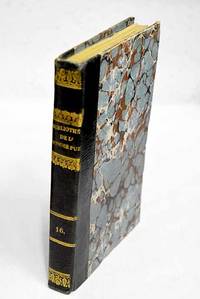
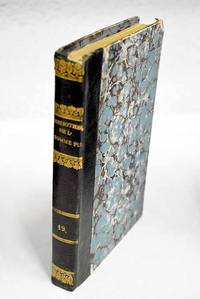
178486383Kehl Baden: Imprimerie de la Société Littéraire-Typographique 1784. Leather Bound. Very Good. L 8vo 7.75 - 9.75'' tall. Leather Bound. Condition: Very Good. Imprimerie de la Société Littéraire-Typographique Kehl Baden 1784. In French. Famous first posthumous collected edition of Voltaire's 1694-1778 works known as the 'Kehl Voltaire' produced by Beaumarchais who created a print foundry at Kehl to carry out this great work. Set contains 69 of the 70 Volume 8vo edition smaller 12mo 90 volume edition was also produced. Volume 23 Histoire de Charles XII missing. Volumes 10 and 27 printed 1784 summary volume 70 printed 1789 all other volumes printed 1785. Uniform 18th century calf full brown leather. Spines decorated in gold floral designs titles volume numbers within 6 boxed compartments. Boards have a natural brown mottled leather finish slanted gold lines on the narrow board edges. All page ends stained a very light yellow finely bespeckled with green. Green silk reading ribbons. Moderate wear of leather at spine tops light stress wear along exterior leather hinges some boards show minor leather loss at edges. All interior hinges firm untorn. Volume 20 upper rear board tip charred. Otherwise no volume damaged or repaired uniform light general wear. Only endpapers show browned bands along margins from pasted endpaper glue chemistry. Volumes 1 to 69 containing all the works and massive correspondences of Voltaire. Volume 70 contains Condorcet's Life of Voltaire and Condorcet's 'Memoires' of Voltaire index and 'Additions et Corrections' to the 70 volumes. Volume 1 frontispiece engraving of Voltaire by Moreau.; Volume 10 frontispiece engraving of Henry IV; Volume 16 frontispiece portrait of Voltaire; Volume 24 frontispiece engraving military map camp plan; Volume 31 14 engraved plates of scientific diagrams. Provenance: Each volume has the small ink stamp 'William H. Floyd Collection No.' on the rear of the title page. Floyd was a late 19th century American antiquarian collector. The numbering sequence 5098-5166 shows that volume 23 was missing even when cataloged by Floyd. Size: L 8vo 7.75 - 9.75'' tall. A major cultural event of the last decade of the ancien regime a beautiful monument to Voltaire the greatest man that literature had produced. Pierre-Augustin Caron de Beaumarchais led a controversial life. Playwright The Marriage of Figaro politician publisher entrepreneur spy supplier of munitions for the American Revolution and an early champion of the rights of artists and intellectual property. Shortly after the death of Voltaire in 1778 Beaumarchais set out to publish Voltaire's complete works many of which were banned in France and vehemently condemned by the Church. Royal letters would be censored by Frederick II of Germany Catharine II of Russia and others. He bought the rights to most of Voltaire's many manuscripts from publisher Charles-Joseph Panckoucke in 1779. To evade censorship printing presses were set up in the small neutral independant state of Baden at Kehl. Beaumarchais bought with exclusivity the complete foundry of the famous English type designer John Baskerville for the Societe Litteraire Typographique an organization he established to produce editions in which he was interested. Three paper mills were purchased. Seventy volumes were published between 1783 to 1790. While the venture proved a financial failure Beaumarchais was instrumental in preserving many of Voltaire's later works which otherwise might have been lost. The Kehl edition was banned on French territory until 1789. Baskerville font was revived by Americans in the 20th century. Voltaire Kehl Condorcet Pierre Beaumarchais Charles-Joseph Panckoucke RBR4 RBR4 Imprimerie de la Société Littéraire-Typographique hardcover
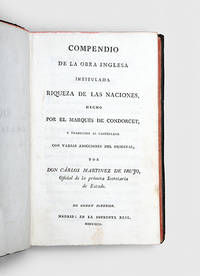
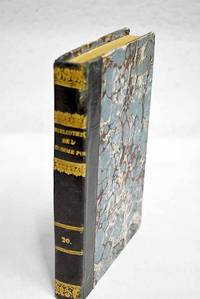
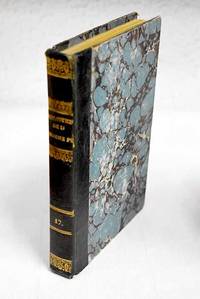
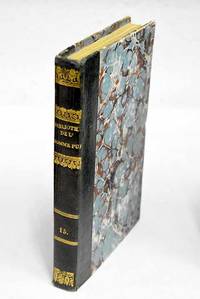
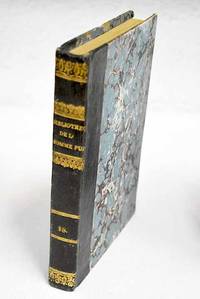
1792164946Madrid: en la Imprenta Real 1792. THE FIRST APPEARANCE OF ADAM SMITH IN SPANISH First Spanish translation of Condorcet's summary of Smith's Wealth of Nations the first appearance of any of his work in Spanish prior to the complete translation by J. A. Ortiz in 1794. The translator of the present summary is the young marqués de Casa Carlos Martinez de Yrujo y Tacón 1763-1824. "This is a translation of the Roucher/Blavet condensation of Wealth of Nations in the Bibliothèque de l'homme publique. to which Condorcet lent his name. The translator restores to the text a summary of Smith's Digression on the Bank of Amsterdam WN IV iii. b 479-88 a five-line qualification of the argument for free trade. The criticism of Catholic clergy is omitted." Tribe. Octavo 174 x 108 mm. Contemporary tree sheep flat spine ruled and decorated in gilt red morocco label marbled endpapers red edges. 19th-century ownership inscription to front free blank leaf extremities lightly rubbed one corner slightly worn; a crisp clean copy in fine condition. Palau 59126; Tribe 47. This edition not listed in Goldsmiths' Kress or Vanderblue. unknown
1778263011Paris: Not Identified 1778. hardcover. near fine. Title with ornamental borders; title vignette and ornamental head/tail pieces throughout. Illustrated with a portrait of Pascal engraved by L. Demeuse. XII 316 pages. 8vo handsomely bound in full contemporary mottled calf with gilt decorated spine and marbled page edges. Paris i.e. Geneva: Publisher Not Identified Grasset 1778. Nouvelle edition. Scarce.<br/> <br/> According to BN the imprint is false; this edition was printed in Geneva by Grasset. A reprint of Condorcet's selection from the Pensees. he added to his own notes a selection from the "Remarques sur les Pensees de Pascal" by Voltaire who's notes are signed "Note du present editeur." -- Bengescu 1910; BN 5391. Page 163 is misnumbered 139; page 193 is misnumbered 391.<br/> <br/> Not Identified unknown
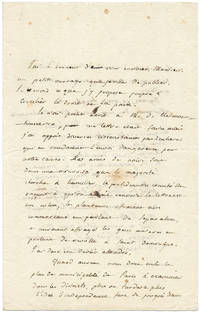
1789Condorcet2<p><strong>CONDORCET de Nicolas 1743-1794</strong></p><p>Autograph letter to Jacques Pierre Brissot<br />N.p.n.d. 25 June 1789 2 p. in-12° on laid bi-folio<br />Watermark cropped: Cornet à courroie double sur écu coiffé d'une couronne / pendentif petite fleur de lis renversée / "D & C BLAUW"<br />An ink blot on the first page evidence of a fold by Condorcet while the ink was still wet.<br />Five redactions and an interlinear insertion in his hand with very browning</p><p><strong>Nice letter on his fight against slavery in the early days of the Revolution</strong></p><p><em>" J'ai l'honneur de vous envoier Monsieur <strong>un petit ouvrage que je viens de publier</strong></em> <em>Sur l'admission des députés des planteurs de Saint Domingue dans l'Assemblée nationale</em>. <strong><em>Je</em></strong><em> <strong>crois ce que j'y propose propre á concilier le droit et la paix</strong>. Je n'ai point ecrit a M. de Clermont-Tonnerre ma lettre etait faite mais j'ai appris diverses circonstances particulieres qui en rendaient l'envoi dangereux pour notre cause. <strong>Les amis des noirs sont dans une minorité que la majorité cherche à humilier</strong> le president du comité rapport à qui on aurait renvoie la lettre est un colon les planteurs effraient nos commercans en parlant de separation et auraient effrayé les gens moderés en parlant de revolte á Saint Domingue. J'ai donc cru devoir attendre.</em><br /><em>Quand aurons-nous donc enfin le plan de municipalité de Paris á examiner dans les districts plus on tardera plus l'idée d'independance fera de progrès dans les districts. <strong>On prend aisement l'habitude de gouverner et on a peine à le quitter.</strong></em><br /><strong><em>Agreez je vous supplie les assurances de mon inviolable attachement.</em></strong><br /><em>Comme je vais à Versailles et que j'y reste quelques jours je vous prie de vouloir bien vous charger de ces deux billets pour M. de Gramagnac en le priant de passer chez M. Mazzei chargé d'affaires du Roi de Pologne hotel des colonies rue des Prouvaires afin de terminer avec lui. Il manque encore un nom mais comme le Roi connait M. l'abbé Piatoli qui demeure dans le même hotel que M. Mazzei je crois qu'il faut preferer sa signature á une autre "</em></p><p>Condorcet and Brissot jointly carried out during the Revolution a decisive action against slavery within the <em>Société des Amis des Noirs</em>. The parliamentary debate crystallized in June 1789 around the question of admitting a deputation of colonists from Saint-Domingue to the <em>Assemblée nationale constituante</em>. By sending Brissot <em>" un petit ouvrage "</em> of his own writing on this subject <em>Sur l'admission des députés des planteurs de Saint Domingue dans l'Assemblée nationale</em> Condorcet nevertheless explains that he had to give up sending a memorandum in the name of the <em>Société des Amis des Noirs</em> to Deputy Clermont-Tonnerre who was then presiding over the Assembly to oppose this admission. As the majority of the Assembly was in favor he rightly considered that such a claim would be <em>à contre-emploi</em>.<br />Later he also asks Brissot for news of the <em>" plan de municipalité "</em> then under discussion which aimed to allow the <em>" patriote "</em> municipality—created on June 25 1789 and in which Brissot sat—not to remain hostage to the sixty Parisian districts which were showing <em>" indépendance "</em> tendencies that Condorcet deemed harmful.<br />Finally Condorcet asks his correspondent to deliver <em>" deux billets "</em> to M. de Gramagnac secretary of the <em>Société des Amis des Noirs</em>. He recommends that Gramagnac visit the Florentine merchant Filippo Mazzei 1730–1816 also a fervent abolitionist and member of the <em>Société des Amis des Noirs</em> to obtain the <em>" signature "</em> of Abbé Scipione Piattoli 1749–1809. Piattoli's membership in the <em>Société des Amis des Noirs</em> was all the more valuable because he was <em>" connu "</em> to the king for having been a member of the court of the King of Poland Stanislas-Auguste Poniatowski for whom Mazzei was then acting as agent in Paris.</p><p><u>Provenance:</u><br />Drouot 2 Apr. 2003 n°19<br />M.L.M. N°40234<br />Bertrand Loevenbruck's estate</p><p><u>Reference:</u><br /><em>Inventaire Condorcet</em> dir. Nicolas Rieucau n°1661</p>
1789102441Sans lieu : Imprimerie de la SociÂŽtÂŽ LittÂŽraire-Typographique 1789. 205x125mm. reliure veau marbrÂŽ de lՎpoque. PiÂce de titre dorÂŽ ornementations et fleurons dorÂŽ au dos. Encadrements dorÂŽs sur les deux plats. Bordures fleuries. Bel exemplaire. 421 Imprimerie de la Socit Littraire-Typographique unknown
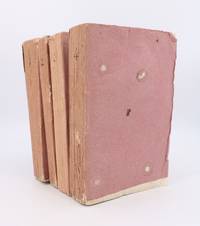
178889325Paris Colle: Froullé 1788. Fine. Froullé Paris Colle 1788 13.5 x 21 cm 4 volumes Brochés First edition cf. Sabin 47206. Leclerc 952.Some joints cracked at head and tail minor marginal losses of no consequence to the temporary wrappers.The author Italian by birth emigrated to America before the Revolution and settled in Virginia near Monticello.His book written in collaboration with Condorcet is of particular interest with regard to the history of independence and the government of the United States cf. Fay pages 24-25: ""Compilation très exacte qui réfute les théories de Mably et de Raynal et constitue un répertoire précieux de renseignements de tous ordres sur les États-Unis.""Rare and appealing copy preserved in its original stitching and in plain pink temporary wrappers. Froullé unknown
179651690Philadelphia: M. Carey-et al. 1796. Hardcover. Good. 1796 printing. Lacking frontispiece. Original full brown leather binding shows wear and rubbing to the spine edges and corners with the corners rubbed through an slightly bumped. The binding is tight. The text shows scattered foxing and there is a spill stained to some the pages near the end of the book affecting the upper right corners.; 293 pages . M. Carey-et al hardcover
179655398Philadelphia:: Printed by Lang and Ustick 1796. old full sheep. Some scattered inoffensive foxing; light use to binding; tight and sound. 12mo. Engraved frontispiece portrait. Being a Posthumous Work of the Late M. de Condorcet. Translated from the French. Printed by Lang and Ustick, unknown
1787x08156<p>A. Padoue 1787. Three volumes. Two volumes of text with plates in the third. 4to. lxxvi 728: 4 979: Complete with 108 plates numbered from 1 to 118 with 10 folding plates receiving a number for each side. Publication dates 1787 1789 1790 respectively. Good. Spines chipped and cracked although hinges still sound. Some dealer prices inked to front endpapers. Hardcover. Good.</p> A. Padoue hardcover
1777SZEPEBKS007360IParis: Claude-Antoine Jombert 1777. First edition . Hardcover. Good. 12mo. - 4232 pp. plus plates. - Jombert Paris 1777. - Recent full dark-blue cloth with title stamped in gilt on spine. - Ex-library university with small bookplate embossed stamp and with stamped release; else fine no markings on the plates. - First Edition. - Bibliotheca mechanica p. 9. - With 5 fine quadruple-folding plates with altogether 4612 engraved illustrations as well as with engraved title- page vignette head and tail pieces. - These pioneering fluid mechanics experiments on the resistance of various solid bodies to flow were sponsored by the government of France in connection with inland navigation. - Detailed description of the experimental apparatus of the preparations for the experiments and of the experiments themselves. Tabulated are the data of altogether 293 experiments followed by mathematical modeling and analysis. <br/> <br/> Claude-Antoine Jombert hardcover
17913304771Paris.: Buisson. 1791. Hardcover. Cubierta deslucida. Good. 19 cm. 280 p. Encuadernación en tapa dura artesanal lomo en piel. Idioma francés . Cubierta deslucida. Buisson. hardcover
17913304768Paris.: Buisson. 1791. Hardcover. Cubierta deslucida. Good. 19 cm. 260 p. Encuadernación en tapa dura artesanal lomo en piel. Idioma francés . Cubierta deslucida. Buisson. hardcover
17913304766Paris.: Buisson. 1791. Hardcover. Cubierta deslucida. Good. 19 cm. 262 p. Encuadernación en tapa dura artesanal lomo en piel. Idioma francés . Cubierta deslucida. Buisson. hardcover
17913304769Paris.: Buisson. 1791. Hardcover. Cubierta deslucida. Good. 19 cm. 268 p. Encuadernación en tapa dura artesanal lomo en piel. Idioma francés . Cubierta deslucida. Buisson. hardcover
17913304767Paris.: Buisson. 1791. Hardcover. Cubierta deslucida. Good. 19 cm. 264 p. Encuadernación en tapa dura artesanal lomo en piel. Idioma francés . Cubierta deslucida. Buisson. hardcover
17913304770Paris.: Buisson. 1791. Hardcover. Cubierta deslucida. Good. 19 cm. 270 p. Encuadernación en tapa dura artesanal lomo en piel. Idioma francés . Cubierta deslucida. Buisson. hardcover
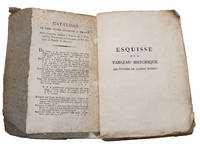
17982060<p>8vo pp. viii 389 1 blank; occasional spotting and marking but never heavy; the odd tear to foot with slight paper loss but never affecting text; final leaf stuck to wrapper but verso blank so with no loss of text; uncut in interim wrappers; wrappers worn but sound spine chipped at head and foot with light dampstain to head and old manuscript paper label.</p><p>First Milan printing uncommon of Condorcet's monumental survey of the history of human endeavour first published posthumously in 1795.</p><p>An 'ouvrage d'un utilité générale et durable' the <em>Esquisse</em> represents a summation of Concordet's thoughts on the notion of human progress and thus can in some ways be seen as a definitive encapsulation of the enlightenment project or at least of one view of it. Condorcet divides his work into ten <em>époques</em> tracing human history from the initial formation of societies through the development of agriculture the invention of writing the intellectual and scientific achievements of classical Greece the progress not uninterrupted of the sciences the invention of printing and the tense relationship between scientific progress and 'the yoke of authority'. Closing with two chapters on the period from Descartes until the French Revolution and on his expectations for future human progress Condorcet demonstrates his optimism: 'Our hopes for the future state of the human species can be reduced to these three important points: the destruction of inequality between nations; the progress of equality within nations; and finally the real perfection of humanity. Are not all nations bound one day to approach the state of civilisation reached by the most enlightened freest least prejudiced of peoples such as the French and the Anglo-Americans' p.328</p><p>Concorcet's work was instantly popular with 1795 printings in Paris and Zürich; it was swiftly translated into English printed in both London and Philadephia and German Tübingen before Zatta in Venice published an Italian translation by Luigi Bossi in 1797. The present edition is the first to be printed in French in Italy.</p><p>Outside Continental Europe OCLC records copies at Connecticut the College of the Holy Cross in Massachusetts and Durham.</p> De l’Imprimerie Italienne et Française à S. Zeno
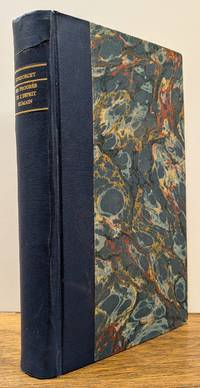
1795161166Paris: chez Agasse l'an III de la République 1795. History as progress First edition of the finest and most durable expression of the ultimate perfectibility of man perhaps the clearest and boldest statement of the enlightenment belief in progress demonstrating "man's progressive emancipation first from the arbitrary domination of his physical environment and then from the historical bondage of his own making" Encyclopedia of Philosophy II 184. Condorcet wrote the work in 1794 while in hiding from Robespierre's agents having voted against the execution of the king. Captured by the state he was found dead the next day presumed to have taken his own life to escape the guillotine. His manuscript was published the next year. "In the Esquisse. Condorcet traces the history of man through epochs the first three covering his progress from savagery to pastoral community and thence to the agricultural state. The next five span the growth of civilizations and knowledge down to Descartes and the ninth describes the revolution of Condorcet's own lifetime from Newton to Rousseau. The prophetic view of the tenth epoch shows Condorcet at his most original. He forecasts the destruction of inequality between nations and classes and the improvement intellectual moral and physical of human nature" PMM. Octavo 193 x 119 mm. Early 19th-century blue quarter roan smooth spine lettered and tooled in gilt blue mottled sides brown speckled edges. Front pastedown with early 20th-century bookseller's label of Emile Nourry of Paris and bookplate of Caroli Michel. Light rubbing to binding corners worn spotting to contents marginal loss to foot of G2 not affecting text a few peripheral nicks very good. Printing and the Mind of Man 246; En français dans le texte 196; Martin & Walter 1 8083; Quérard II p. 269. unknown
179542119Paris Agasse l'an III de la République une et indivisible 1795. 8vo. Bound in a very nice newer pastiche-binding in full mottled calf. Five raised bands and gilt title-label to spine. A very nice clean fresh and attractive copy. VIII 389 pp. <br/><br/><em>The rare first edition of Condorcet's main work "the most fully developed exposition of the progress of man" Printing and the Mind of Man p. 149 and a main work of the Enlightenment as well as of historical thought in general. The author was the creator of what came to found the basis for the modern French system. The great French philosopher political thinker and mathematician M.J.A. Condorcet 1743 - 1794 played a seminal role in 18th century France. He was friends with the likes of d'Alembert Voltaire Turgot etc. and he greatly contributed to the social and political debates of politically turbulent France. As one of the few he advocated a liberal economy equality in public education as well as in gender and race etc. He preached constitutionalism and his thoughts that are still influential today embody those of the Enlightenment and rationalism."A belief in the ultimate perfectibility of man lies at the root of all progressive thinking about the human condition. The "philosophes" and Godwin had familiarized the reading public with this notion; it was left to Condorcet to give it its finest and most durable expression. It was the gospel of nineteenth century that mankind is destined for indefinite future progress. Condorcet looking back and then forward saw proof of this in the growing equality between classes and nations the intellectual physical and moral improvement of man; and he prophesied that popular education on correct principles would strengthen and assure this progress." PMM 246.During the French Revolution Condorcet came to play a dominating role advocating a rationalist reconstruction of society and he championed many liberal causes. In 1791 he became secretary of the Legislation Assembly and the institution adopted his scheme for comprehensive state education which later became the basis of the modern French system. In the struggle between the two political parties the Girondists and the Montagnards Condorcet occupied an independent role but when he opposed the death penalty under the trial of King Louis XVI still supporting the actual trial and the radical Montagnards gained more power Condorcet was branded a traitor and in October 1793 a warrant was issued for his arrest. He now went into hiding for several months almost a year and it is during these months that he writes the work that was to become his most important the main work "Esquisse." "Sketch for a Historical Picture of the Progress of the Human Mind" which was published posthumously the year after his death. In 1794 Condorcet was arrested and two days later he was found dead in his cell -it is unknown whether he committed suicide or was murdered because of fear of fierce reactions that would definitely have occurred had the beloved man been officially sentenced to the death penalty."In the Esquisse" published after his death Condorcet traces the history of man through epochs the first three covering his progress from savagery to pastoral community and thence to the agricultural state. The next five span the growth of civilizations and knowledge down to Descartes and the ninth describes the revolution of Condorcet's own lifetime from Newton to Rousseau. The prophetic view of the tenth epoch shows Condorcet at his most original. He forecasts the destruction of inequality between nation and classes and the improvement intellectual moral and physical of human nature. it exercised considerable influence on Comte. But it is as the most fully developed exposition of the progress of man that Condorcet's work is now remembered and it is this which has given it its lasting appeal." PMM 246. </em> hardcover
1795Biblio239THE PERFECTIBILITY OF MAN. 8vo. Early half red morocco. Near fine. FIRST EDITION. A distinguished mathematician and friend of Voltaire d'Alembert and Turgot Condorcet played a major role in promoting the Revolution's democratic principles. In the Esquisse An Historical Outline of the Progress of the Human Mind he traces the history of man through ten epochs moving from savagery through the development of civilization and knowledge up to Descartes in the eighth epoch. The ninth epoch spans the Enlightenment from Descartes to the Revolution. For the tenth epoch Condorcet predicts that equality of opportunity will prevail among all classes and nations and that man will improve intellectually morally and physically. "A belief in the ultimate perfectibility of man lies at the root of all progressive thinking about the human condition. The philosophes and Godwin had familiarized the reading public with this notion but it was left to Condorcet to give it its finest and most durable expression. . . . Unlike Godwin he does not preach absolute equality but equality of opportunity" Printing and the Mind of Man 246. A'gasse, L'An III hardcover
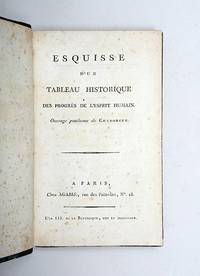
179565358Paris: Chez Agasse 1795. Can Man Become Perfect"<br> <br> CONDORCET Marie Jean Antoine Nicolas Caritat Marquis de. Esquisse d'un tableau historique des progrès de l'esprit humain. Ouvrage posthume de Condorcet. Paris: Chez Agasse L'an III. de la République 1795.<br> <br> First edition of Condorcet's philosophical masterpiece. Octavo 7 7/8 x 4 13/16 inches; 201 x 123 mm. viii 389 1 blank pp.<br> <br> Contemporary quarter calf over dark blue paste-paper boards spine gilt with dotted bands and ornaments gilt red morocco lettering piece. Old owner's signature on half-title. A quarter-inch marginal tear at the bottom of leaf M42 that does not affect the text. Light foxing throughout. A blue ink stain on top edge from signature Z to the end. Overall a clean and attractive copy.<br> <br> "It was the gospel of the nineteenth century that mankind is destined for indefinite future progress. Condorcet 1743-1794 looking back and then forward saw proof of this in the growing equality between classes and nations the intellectual physical and moral improvement of man; and he prophesied that popular education on correct principles would strengthen and assure this progress.In the Esquisse 'An Historical Outline of the Progress of the Human Mind' published after his death Condorcet traces the history of man through epochs the first three covering his progress from savagery to pastoral community and thence to the agricultural state. The next five span the growth of civilizations and knowledge down to Descartes and the ninth describes the revolution of Condorcet's own lifetime from Newton to Rousseau. The prophetic view of the tenth epoch shows Condorcet at his most original. He forecasts the destruction of inequality between nations and classes and the improvement intellectual moral and physical of human nature.it is as the most fully developed exposition of the progress of man that Condorcet's work is now remembered and it is this which has given its lasting appeal" Printing and the Mind of Man.<br> <br> Printing and the Mind of Man 246.<br> <br> HBS 65358.<br> <br> $2000. Chez Agasse unknown
1795168984Paris: Chez Agasse 1795. Second. hardcover. very good. 389pp. 4pp. of advertisments 8vo untrimmed rebound in cloth-backed marbled boards spine neatly repaired. Paris: Chez Agasse L'An III 1795. Second Edition. Very good .<br/> <br/> Printing and the Mind of Man 246; Robinet 382. Considered to be Condorcet's most original and most important work. Considered to be Condorcet's most original and most important work. In it he divided history into ten epochs the first nine dealing with history upto the time in which he himself lived whereas the tenth is his prophetic view of the future. It is the most original part of the book in which Condorcet forecasts among others the future moral intellectual and physical improvement of man. '. PMM<br/> <br/> Chez Agasse unknown
178566958Paris: De k'Imprimerie Royale 1785. The First Large-Scale Attempt to Apply Mathematics to Knowledge of Human Phenomena"<br> <br> CONDORCET Marie Jean Antoine Nicolas Caritat Marquis de. Essai sur l'application de l'analyse à la probabilité des décisions rendues à la pluralité des voix. Paris: De l'Imprimerie Royale 1785.<br> <br> First edition. Quarto. 2 cxci 1 blank 304 pp. Decorative woodcut head- and tail-pieces.<br> <br> Contemporary French mottled calf spine decorated in gilt with five raised bands. Marbled endpapers all edges red. First and last few pages browned at edges . gathering K is browned a Q and 2G is toned. Otherwise very good and very scarce.<br> <br> "Condorcet's most significant and fruitful endeavor was in a field entirely new at the time. The subject was one that departed from the natural sciences and mathematics but nevertheless showed the way toward a scientific comprehension of human phenomena taking the empirical approach of natural science as its inspiration and employing mathematics as its tool. Condorcet called this new science 'social mathematics.' It was apparently intended to comprise.a statistical description of society a theory of political economy inspired by the Physiocrats and a combinatorial theory of intellectual processes. The great work on the voting process published in 1785 is related to the latter. Condorcet there sought to construct a scheme for an electoral body the purpose of which would be to determine the truth about a given subject by the process of voting and in which each elector would have the same chance of voicing the truth.No doubt the results obtained in the Essai d'application de l'analyse were modest ones. 'In almost all cases' Condorcet said 'the results are in conformity with what simple reason would have dictated; but it is so easy to obscure reason by sophistry and vain subtleties that I should feel rewarded if I had only founded a single useful truth on a mathematical demonstration' Essai p. ii. One must nevertheless recognize in this work.the first large-scale attempt to apply mathematics to knowledge of human phenomena" D.S.B.<br> <br> Brunet VI col. 472.<br> <br> HBS 66958.<br> <br> $7500. De k'Imprimerie Royale unknown