2 061 résultats
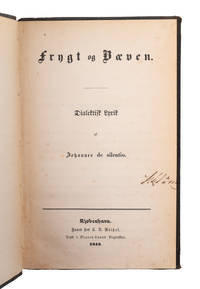
Kjøbenhavn, 1849. 8vo. A magnificent black half calf in perfect pastiche-style with richly gilt spine. Some brownspotting, but a very good copy. 51pp. Old owner's names to title-page. The book is housed in the original bubble-wrap envelope stating ""Kierkegaard Book"" and a code, in which it was kept during its travel into space. The Certficate of Authenticity (blue background with white and red) measures 21x29,5 cm. It states that ""This item was flown with Andreas Mogensen during his ESA iriss mission in September 2015 in board the International Space Station"", carries the logos os ESA (European Space Agency) and iriss and is signed by both Andreas Mogensen, ESA astronaut, and Andreas Schoen, Head of the Columbus Operations Dvision. The book and the certificate are housed together in an absolutely splendid custom-made box of grey stone veneer with a ""moon-like"" stone-surface and silver lettering (KIERKEGAARD IN SPACE) to the spine. The certficate is kept in the ""lid"" of the box, under plastic ""frame"", framed with a thin like of stone veneer with magnetic edges, so that it can be easily removed but is still safely and elegantly kept in place. The book, still in the original bubble-wrap-envelope, is kept in the other part of the box, in a hollow lined with thick structured silk.
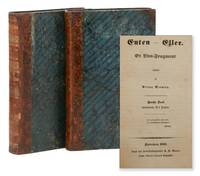
1843140946922Copenhagen: C. A. Reitzel 1843. First Edition. Very Good. First edition of Soren Kierkegaard's best-known work Either/Or. Octavo. Two volumes bound in contemporary half-calf over marbled boards; bound without the half-titles. Text in Danish. Very Good rubbing and wear to bindings neatly rebacked with old spines preserved. Former owner names to preliminary blacks and owner's rubber stamp to title pages. Contents tanned sporadically foxed and occasionally lightly stained. A lovely set. <p>Either/Or Danish philosopher Søren Aabye Kierkegaard's groundbreaking first published work. Only 525 copies of this edition were published in 1843 under an editorial pseudonym "Victor Emerita" at the author's own expense. It was mostly written during his stay in Berlin where he took notes on Schelling's Philosophy of Revelation. It includes essays of literary and music criticism and a set of romantic-like-aphorisms as part of his larger theme of examining the reflective and philosophical structure of faith. He is widely considered to be the first existentialist philosopher. "As a thinker Kierkegaard had to wait for the twentieth century to find his audience; he is now generally considered to be however eccentric one of the most important Christian philosophers" write Carter and Muir in Printing and the Mind of Man. C. A. Reitzel unknown
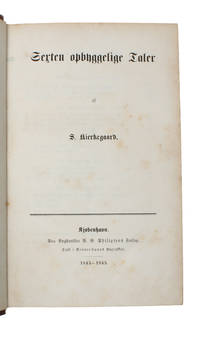
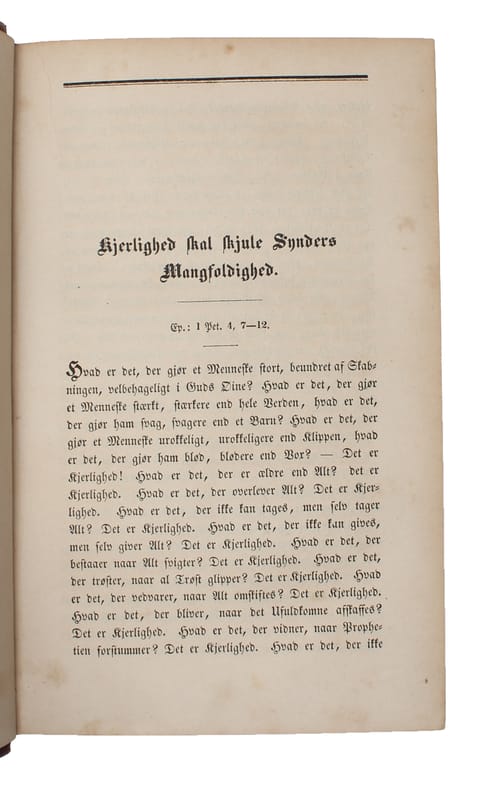
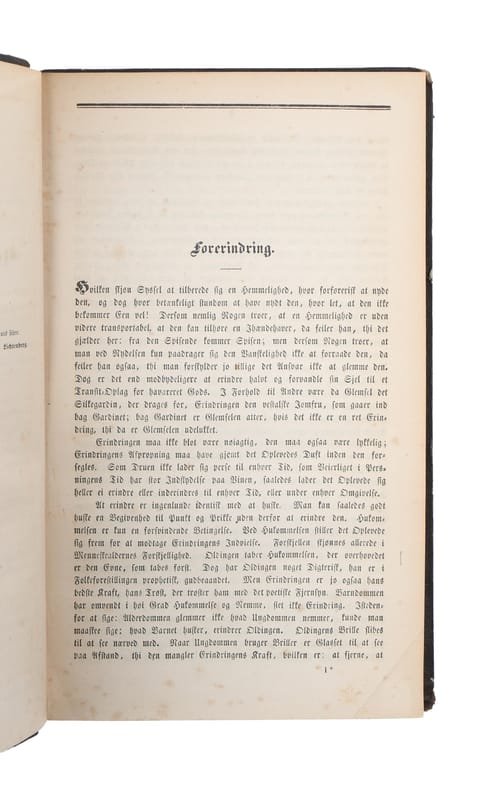
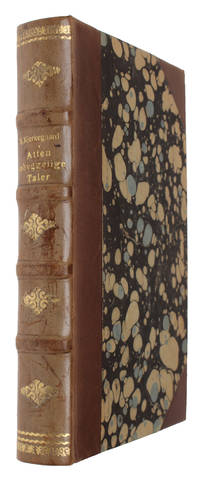
184361020Kjøbenhavn P.G. Philipsens Forlag 1843 - 45. 8vo. Nice contemporary half calf with gilding to spine. Slight wear to capitals and corners and spine a little spotted. Overall very nice. Some leaves with brownspotting but also internally nicer and fresher than usual. Contemporary owner's inscription to front free end-paper dated 1854. A very nice copy. 4 62; 84; 59 including the blank leaf between the title-page and the preface; 70 2 - i.e. 1 blank f.; 111 pp. <br/><br/><em>Very rare first edition of this Kierkegaard-title which is without doubt the most difficult to get hold of. "Sixteen Upbuilding Discourses" consists of the popular Two Three and Four Upbuilding Discourses. The unsold copies of these "Opbyggelige Taler" "Upbuilding Discourses" were initially collected under the title "Atten opbyggelige Taler" Eighteen Upbuilding Discourses and published with a collected title-page; when "To opbyggelige Taler" "Two Upbuilding Discourses" from 1843 was sold out the remaining sixteen upbuilding discourses were published with the title-page "Sexten opbyggelige Taler". The number of copies of this scarce title is said to be well under 100 and is thus by far the rarest of all of Kierkegaard's books. </em> unknown
184361020Kjøbenhavn, P.G. Philipsens Forlag, 1843 - 45. 8vo. Nice contemporary half calf with gilding to spine. Slight wear to capitals and corners and spine a little spotted. Overall very nice. Some leaves with brownspotting, but also internally nicer and fresher than usual. Contemporary owner's inscription to front free end-paper, dated 1854. A very nice copy. (4), 6284 59 (including the blank leaf between the title-page and the preface) 70, (2, - i.e. 1 blank f.)" 111 pp.
Kjøbenhavn [i.e. Copenhagen], 1836. Large 4to. I: Loose, as issued, unbound. With a horizontal and a vertical crease down the middle. 4 pp. II: Loose, as issued, unbound, but inserted into a simple paper folder (small 8vo). With a horizontal and a vertical crease down the middle. 4 pp. + 4 pp. III: Loose, as issued, unbound, but inserted into a simple paper folder (small 8vo). With a horizontal and a vertical crease down the middle. 4 pp.
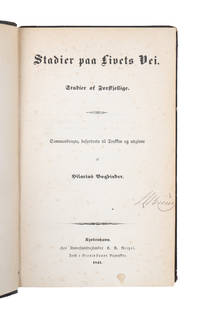
184562096Kjøbenhavn [Copenhagen], 1845. Lex8vo. Nice contemporary brown half cloth with gilt title to spine. Capitals worn and wear along upper front hinge. Corners worn. In spite of the wear, an attractive and tight copy. First and last leaves with a bit of brownspotting, otherwise only light occasional spotting. Old owner's signature to title-page. VIII, 383 pp.
184562096Kjøbenhavn Copenhagen 1845. Lex8vo. Nice contemporary brown half cloth with gilt title to spine. Capitals worn and wear along upper front hinge. Corners worn. In spite of the wear an attractive and tight copy. First and last leaves with a bit of brownspotting otherwise only light occasional spotting. Old owner's signature to title-page. VIII 383 pp. <br/><br/><em>First edition of one of Kierkegaard's main works "Stages on Life's Way" his pivotal sequal to his main work "Either-Or" in which he had presented the first two stages the aesthetic and the ethical. In "Stages on Life's Way" he continues his work on these stages and moves on to present also the religious stage which takes up ab. two thirds of the work. The religious stage is that in which man attains a personal relationship with God and that in which man only truly begins to exist as the aesthetic and ethical stages are inadequate. It is in this foundational work in the religious stage that Kierkegaard first properly describes what is now known as the "Leap of Faith" in fact a "leap to faith" namely the leap that involves willing and belief in stead of reason and knowledge the leap that you make in order to connect to God and which requires that which he calls "the suspension of the ethical". Stages on Life’s Way is one of Kierkegaard’s most important works. Not only does it sum up and explain some of the most important themes of Kierkegaard’s previous works utilizing the characters and pseudonymous authors of the earlier works to do so; it goes beyond these foundational themes introduces the religious stage and points to the further development of the central themes in Kierkegaard’s philosophy most of which are only fully developed in Concluding Unscientific Postscript. </em> hardcover
1843140939870Copenhagen Denmark: C.A. Reitzel 1843. First Edition. Very Good. First edition. iii-xx 2 470; viii 368 pp. Two volumes bound in quarter calf with raised bands gilt tooling and marbled paper boards plain endpapers. Lacking half-title of first volume but second volume's is present. Text in Danish. Very Good with slightly sunned spines former owner's name on titles tears to half-title and title in second volume have been skillfully repaired light marginal dampstaining to top centre of both volumes occasional light foxing. A pleasant set with bright gilt. Either/Or Danish philosopher Søren Aabye Kierkegaard's groundbreaking first published work. Only 525 copies of this edition were published in 1843 under an editorial pseudonym "Victor Emerita" at the author's own expense. It was mostly written during his stay in Berlin where he took notes on Schelling's Philosophy of Revelation. It includes essays of literary and music criticism and a set of romantic-like-aphorisms as part of his larger theme of examining the reflective and philosophical structure of faith. He is widely considered to be the first existentialist philosopher. "As a thinker Kierkegaard had to wait for the twentieth century to find his audience; he is now generally considered to be however eccentric one of the most important Christian philosophers" write Carter and Muir in Printing and the Mind of Man. C.A. Reitzel unknown books
184362092Kjøbenhavn 1843. 8vo. Contemporary dark brown half cloth with gilt lettering to spine. Capitals and a bit of the front hinge worn but overall very nice and tight. Internally a bit of brownspotting as always due to the quality of the paper but less than usual. Old owner's signature to title-page. VIII 135 pp. <br/><br/><em>First edition of one of Kierkegaard's most important and sought-after works Fear and Trembling which is rather more difficult to find than most of his other works. Fear and Trembling is one of Kierkegaard’s most important works. And it is also one of his most difficult. It deals – in forceful brevity – with the relationship between reason and faith and provides us with Kierkegaard’s most thorough exposition of the religious stage which he considered the most meaningful form of existence. It is here that Kierkegaard introduces the “tragic hero†and contrasts it to the “Knight of Faith†who both ignore their own wishes for a higher good. These two essential figures epitomize the ethical and the religious and pave the way for the understanding of these stages in Kierkegaard’s philosophy. It is arguably also here that the idea of the essential leap of faith is introduced for the first time. The Knight of Faith sacrifices his son at the command of God and thus sets aside an ethical demand in in order to attain a higher goal that exists beyond the ethical. This teleological suspension of the ethical requires a leap of faith that is only possible through faith in virtue of the absurd. Himmelstrup 48. </em> hardcover
184362092Kjøbenhavn, 1843. 8vo. Contemporary dark brown half cloth with gilt lettering to spine. Capitals and a bit of the front hinge worn, but overall very nice and tight. Internally a bit of brownspotting (as always due to the quality of the paper), but less than usual. Old owner's signature to title-page. VIII, 135 pp.
(Copenhagen), 1841-1846. Lex 8vo. Bound in three contemporary uniform black full cloth bindings with gilt lettering and numbering to spines. Extremities a bit worn and hinges a bit weak. Some brownspotting. Overall a pretty good set. Richly illustrated throughout, both in the text and with plates.
18452305827Kjobenhavn Copenhagen: C.A. Reitzels Bo og Arvinger 1845. Half-Leather. Very Good/No Jacket. First editions Sickness unto Death Unchangeableness of God Three Discourses on Imagined Occasions An Edifying Discourse My Activity as a Writer second The Concept of Dread Lilies of the Field & Birds of the Air The High Priest The Publican The Woman That Was a Sinner. - Three Discourses Two Discourses at Communion on Fridays and third Self-Examination editions bound together in one volume. Corners exposed spine lightly soiled ink name on verso of front endpaper minimal ink marginalia in first work only minimal pencil notes a few other places. 1845 Half-Leather. We have more books available by this author!. 8 172; 8 136; 6 92; 22; 100; 52; 22; 42; 32; 20 pp. 8vo. Contemporary brown leather spine and corners over black cloth gilt titles and decorations. A collection of ten works 1845-1857 in the original Danish by the philosophical and religious thinker Soren Kierkegaard whose thought was influential in the understanding of Christianity and in the school of Existentialism. Includes: Begrebet Angest The Concept of Dread; Sygdommen til Doden Sickness unto Death; Til Selvprovelse Self-Examination; Auds Uforanderlighed Unchangeableness of God; Tre Taler ved taenkte Leiligheder Three Discourses on Imagined Occasions; Lilien paa Marken og Fuglen under Himlen Lilies of the Field & Birds of the Air; En opbyggelig Tale An Edifying Discourse; Ypperstepraesten -- Tolderen -- Synderinden tre Taler ved Altergangen om Fredagen The High Priest The Publican The Woman That Was a Sinner. Three Discourses; To Taler ved Altergangen om Fredagen Two Discourses at Communion on Fridays; Om min Forfatter-Virksomhed My Activity as a Writer. Soren Kierkegaard is widely regarded as the first existential philosopher and though much of his work was not translated into major European languages until the turn of the 20th century once this happened his work on the philosophy of religion and the nature of morality quickly became very influential. Karl Barth's theology the fiction of Franz Kafka and J.D. Salinger and the psychological theories of Viktor Frankl Carl Rogers and Erich Fromm all draw from pieces of Kierkegaard's writings. C.A. Reitzels Bo og Arvinger hardcover books
184353093Kjøbenhavn [Copenhagen], 1843-1845. 8vo. Near contemporary half calf with richly gilt spine. Binding with very light wear. Front free end-paper with the ownership-inscription of Michael Bentzon and his acquisition date of 1855 (the same year that Kierkegaard died). Some brownspotting here and there and the first couple of leaves of ""To opbyggelige Taler, 1844"" with a damp stain. Neat underlinings in the text as well as several marginalia, mostly in pencil. A very good copy indeed. (IV), 52, 62, 84, 59, 70, 111pp. Complete with all the half-titles and the joint title-page (without the blank leaf after the preface of ""To opbyggelige Taler, 1844"" - which is not called for and hardly ever present).
184353093Kjøbenhavn Copenhagen 1843-1845. 8vo. Near contemporary half calf with richly gilt spine. Binding with very light wear. Front free end-paper with the ownership-inscription of Michael Bentzon and his acquisition date of 1855 the same year that Kierkegaard died. Some brownspotting here and there and the first couple of leaves of "To opbyggelige Taler 1844" with a damp stain. Neat underlinings in the text as well as several marginalia mostly in pencil. A very good copy indeed. IV 52 62 84 59 70 111pp. Complete with all the half-titles and the joint title-page without the blank leaf after the preface of "To opbyggelige Taler 1844" - which is not called for and hardly ever present. <br/><br/><em>First edition of Kierkegaard's important Eighteen Upbuilding Discourses which comprise his two three and four upbuilding discourses from the years 1843-45 with the joint title-page of all eighteen. The work constitutes Kierkegaard's religious works which supplement his theological and philosophical ones.The first upbuilding discourses were published the same year as Either-Or and it is interesting to note that in opposition to his major philosophical works the religious upbuilding discourses actually bear the name of the author on the title-page -a fact that was by no means incidental. While the pseudonymous works could make one doubt the religiousness of the author the parallelly written religious discourses stress the fact that we are dealing with an author who was religious from the very beginning -a fact that Kierkegaard also wished to underline himself; in his journals he clearly states that the religious discourses bear as much significance for his work as a whole as do the larger pseudonymous works "I began with "Either-Or" and two upbuilding discourses." he says and explains that he intended the upbuilding the religious to advance and that he wanted to show "that the writer was not an esthetic author who in the course of time grew older and for that reason became religious" Journals IX A 227.The importance of the upbuilding discourses and the close relationship they have with the major works and Kierkegaard's philosophical development is also stressed by the fact that every pseudonymous work was accompanied by a little collection of "upbuilding discourses" until "Concluding Postscript" appeared.Himmelstrup 85. </em> unknown
184313904K., 1843-1845. 8vo. Smukt lidt senere hldrbd.m. rig rygforgyldn., ophøjet ""bind"", dannet af heftesnoren. 2. blad (indhold) repareret. Pp 1-50 m. svagt skjold for neden, ellers pæn. (Iv)+52+62+84+59+70+111pp.
13904K. 1843-1845. 8vo. Smukt lidt senere hldrbd.m. rig rygforgyldn. ophøjet "bind" dannet af heftesnoren. 2. blad indhold repareret. Pp 1-50 m. svagt skjold for neden ellers pæn. Iv5262845970111pp. <br/><br/><em>Originaludgave. Himmelstrup 85.First edition of Kierkegaard's important eighteen upbuilding discourses which comprise his two three and four upbuilding discourses from the years 1843-45 with the joint title-page of all eighteen. The work constitutes Kierkegaard's religious works which supplement his theological and philosophical ones.The first upbuilding discourses were published the same year as Either-Or and it is interesting to note that in opposition to his major philosophical works the religious upbuilding discourses actually bear the name of the author on the title-page -a fact that was by no means incidental. While the pseudonymous works could make one doubt the religiousness of the author the parallelly written religious discourses stress the fact that we are dealing with an author who was religious from the very beginning -a fact that Kierkegaard also wished to establish himself; in his journals he clearly states that the religious discourses bear as much significance for his work as a whole as do the larger pseudonymous works "I began with "Either-Or" and two upbuilding discourses." he says and explains that he intended the upbuilding the religious to advance and that he wanted to show "that the writer was not an aesthetic author who in the course of time grew older and for that reason became religious" Journals IX A 227.The importance of the upbuilding discourses and the close relationship they have with the major works and Kierkegaard's philosophical development also becomes evident with the fact that every pseudonymous work was accompanied by a little collection of "upbuilding discourses" until "Concluding Postscript" appeared. </em> unknown
K., 1843-1845. 8vo. Smukt lidt senere hldrbd.m. rig rygforgyldn., ophøjet ""bind"", dannet af heftesnoren. 2. blad (indhold) repareret. Pp 1-50 m. svagt skjold for neden, ellers pæn. (Iv)+52+62+84+59+70+111pp.
10833Collection complète, du n° 1 (été 1924) au n° 29 (printemps 1932). Nous joignons l'Index des années 1924-1928, paru sous forme de tiré-à-part joint au n° 22 (Hiver 1929). TOUS LES NUMEROS FONT PARTIE DU TIRAGE SUR VELIN PUR FIL LAFUMA (2e papier dont le nombre d'exemplaires est compris entre 150 et 300) et sont tous en bon ou très bon état. // Le n° 1 porte la mention manuscrite " Exemplaire sur Lafuma ", apposée par Auguste Morel qui a également signé cet exemplaire de ses initiales ; ce détail fait de cet exemplaire une belle pièce joycienne puisque dans ce premier numéro de " Commerce " paraît la première traduction en français d'un extrait d'ULYSSE de Joyce - traduction justement due au même Auguste Morel et à Valery Larbaud. // Rare et belle collection sur grand papier.
1840915Kjøbenhavn: Corsaren 1840. First Edition. Hardcover. Very good. KIERKEGAARD Soren & GOLDSCHMIDT Meir Aaron ed. Corsaren. DANISH SATIRE - CARICATURING KIERKEGAARD complete Corsaren Affair Kjøbenhavn Vol I: 1840 - 41 Vol II: 1843 Vol III: 1846. Octavo. First Edition. <br />$ 2500 <br /> <br />The complete Corsaren Affair all issues related to Soren Kierkegaards conflict with Aaron Goldschmidt editor of the famous Danish satirical journal Corsaren with the iconic caricatures of Kierkegaard that now stand as the most famous "portraits" of the founder of existentialism. <br /> <br />This satirical weekly typically was issued with 8 pages with numbered columns 2-per page. Filled with short polemics and dozens of caricatures of various public figures in Denmark. A wonderful snapshot of literary and political life in mid-19th century Denmark often the target of political and police censure due to its scathing depictions of powerful figures. <br /> <br />Mention and review of Kierkegaards Concept of Irony in issues 49 & 51; <br />Review of Either-Or in issue 129 <br />Polemics against Kierkegaard began in issues 276 & 277 <br />Continued polemical ridicule and caricatures in issues 278 279 & 280 <br />Review of Concluding Unscientific Postscript in issue 284 <br />Famous depiction of Kierkegaard as center of the world in issue 285 <br />Further devastating polemicizing in issues 297 299 300 & 304 <br /> <br />CONDITION: Good 3 matching volumes in contemporary quarter leather with marbled boards. Leather along front hinge slightly starting. Staining and moderate wear to leather with light to moderate foxing to pages. <br /> <br/><br/> Corsaren hardcover
1841269Kjøbenhavn: P.G. Philipsens Forlag 1841. First printing. Hardcover. Very Good . The Rare First Edition First Issue of Kierkegaards Second Book KIERKEGAARD Soren. Om Begrebet Ironi med stadigt Hensyn til Socrates On the Concept of Irony with Constant References to Socrates P.G. Philipsens Forlag Kjøbenhavn 1841. TP with note regarding Kierkegaard's candidacy for Master of the Arts and the date above Sibbern's name on the verso of TP second TP in Latin with hand written date in Roman numerals i-ii = Theses in Latin iii = Indhold half-title 3-350 small Octavo. First Edition First Issue Himmelstrup 8. The rare early issue with the second title page in Latin. "Kierkegaard's second book his dissertation in theology presented at the University of Copenhagen. In this work Kierkegaard invidiously contrasts the irony of Socrates with the comparatively palliated and world-weary irony of the romantics. Irony constitutes the first in that series of multivalent existential categories the exception the Extraordinary the incommensurate Angst the leap faith the absurd the 'offense' the moment deployed against the Hegelian System. Indeed irony and the figure of the ironist are central to Kierkegaard's entire 'aesthetic' corpus. Socrates was a figure to whom Kierkegaard would regularly return as an antidote to the 'speculative disease' in philosophy." Wronoski p. 9 CONDITION: Very good in contemporary boards rebacked though not recently most likely early 20th c. Pages browned as usual. <br/><br/>CONDITION: Very good in contemporary boards rebacked though not recently most likely early 20th c. Pages browned as usual. PHOTOS AVAILABLE UPON REQUEST P.G. Philipsens Forlag hardcover
184357279Kjøbenhavn [Copenhagen], P. G. Philipsens Forlag, 1843-1845. 8vo. Bound uncut in a recent pastiche cardboardbinding, imitating the original brown cardboard binding, in which it was issued. Printed pastice paper label to spine. Some brownspotting as always, due to the paper quality. (4), 52, 62, 84, 59 (recte 57 pp., i.e. without the blank leaf between the title-page and the preface), 70, 111 pp. Complete with all the titles and the joint title-page (without the blank leaf after the preface of ""To opbyggelige Taler, 1844"" - which is not called for and hardly ever present).
184357279Kjøbenhavn Copenhagen P. G. Philipsens Forlag 1843-1845. 8vo. Bound uncut in a recent pastiche cardboardbinding imitating the original brown cardboard binding in which it was issued. Printed pastice paper label to spine. Some brownspotting as always due to the paper quality. 4 52 62 84 59 recte 57 pp. i.e. without the blank leaf between the title-page and the preface 70 111 pp. Complete with all the titles and the joint title-page without the blank leaf after the preface of "To opbyggelige Taler 1844" - which is not called for and hardly ever present. <br/><br/><em>First edition of Kierkegaard's important eighteen upbuilding discourses which comprise his two three and four upbuilding discourses from the years 1843-45 with the joint title-page of all eighteen. The work constitutes Kierkegaard's religious works which supplement his theological and philosophical ones.The first upbuilding discourses were published the same year as Either-Or and it is interesting to note that in opposition to his major philosophical works the religious upbuilding discourses actually bear the name of the author on the title-page a fact that was by no means incidental. While the pseudonymous works could make one doubt the religiousness of the author the parallelly written religious discourses stress the fact that we are dealing with an author who was religious from the very beginning a fact that Kierkegaard also wished to establish himself; in his journals he clearly states that the religious discourses bear as much significance for his work as a whole as do the larger pseudonymous works "I began with "Either-Or" and two upbuilding discourses." he says and explains that he intended the upbuilding the religious to advance and that he wanted to show "that the writer was not an esthetic author who in the course of time grew older and for that reason became religious" Journals IX A 227.The importance of the upbuilding discourses and the close relationship they have with the major works and Kierkegaard's philosophical development also becomes evident with the fact that every pseudonymous work was accompanied by a little collection of "upbuilding discourses" until "Concluding Postscript" appeared.Himmelstrup 85. </em> unknown
Kjøbenhavn [Copenhagen], P. G. Philipsens Forlag, 1843-1845. 8vo. Bound uncut in a recent pastiche cardboardbinding, imitating the original brown cardboard binding, in which it was issued. Printed pastice paper label to spine. Some brownspotting as always, due to the paper quality. (4), 52, 62, 84, 59 (recte 57 pp., i.e. without the blank leaf between the title-page and the preface), 70, 111 pp. Complete with all the titles and the joint title-page (without the blank leaf after the preface of ""To opbyggelige Taler, 1844"" - which is not called for and hardly ever present).
13902K. 1843-1845. Lidt senere sort hldrbd. Nedre kapitæl lidt stødt. Gennemgående vandskjold. IV5262845970111pp. <br/><br/><em>Originaludgave. Himmelstrup 85. </em> unknown
184313902K., 1843-1845. Lidt senere sort hldrbd. Nedre kapitæl lidt stødt. Gennemgående vandskjold. (IV)+52+62+84+59+70+111pp.