Renard, John,Biblio.com
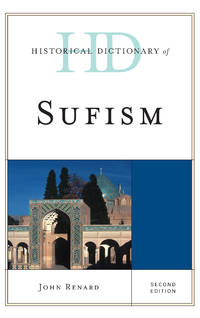
Historical Dictionary Of Sufism
23975070like new. unknown
GreatBookPrices · États-Unis218,39 $US≈ 184,78 €
3 702 résultats
2021BN221442DUNOD 2021. 2021. Softcover. Éléments de géologie - 17e édition du "Pomerol": 17e édition du "Pomerol" <br/><br/>Éléments de géologie - 17e édition du "Pomerol": 17e édition du "Pomerol" Renard Maurice; Lagabrielle Yves; Martin Erwan; Rafélis Marc de; Collectif DUNOD paperback
60426P., Ollendorff, 1899, in 8° broché, 47 pages ; couverture illustrée.
23975070like new. unknown
1997DADAX0415155711Routledge 1997-03-20. 1. hardcover. New. 7.87x5.51x1.57. Buy with confidence. Excellent Customer Service & Return policy. Routledge hardcover
35601416, Paris, Textes et Prétextes, 1939; grand in-8 carré, demi-chagrin rouge, dos lisse, titre dor., couv. ill. et dos en vélin parcheminé conservés, tête dor. (Reliure de l'époque). "PREMIER TIRAGE. 50 bois originaux tirés en camaïeu d'après les compositions de J.G. Daragnès. "" L'émotion, Daragnès la fait sentir, palpiter dans tout ce qu'il interprète. N'en est-il pas de plus cruellement déchirante que celle qui se dégage…de Poil de Carotte? Daragnès nous montre la chétive silhouette du pauvre enfant à la tailler malingre, au visage souffreteux, comme buté dans un silence morne et craintif"". (Mornand, Artistes du Livre 1948). Exemplaire numéroté sur papier Lafuma."
1960LIQ-539P. La Belle Edition 1960. In-8° broché, sous couverture en couleurs rempliée, étui.
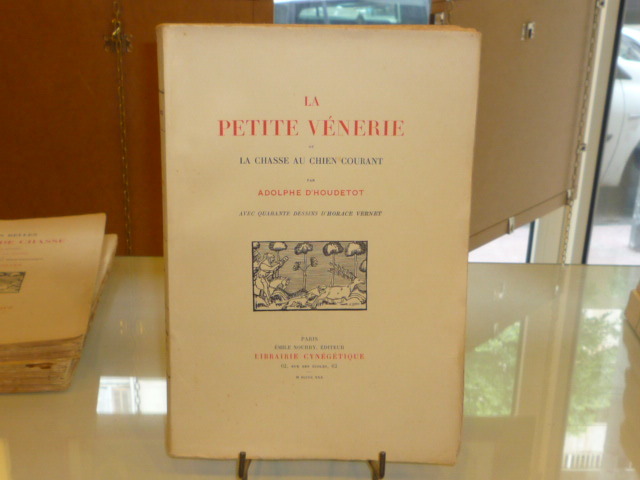
86139Emile Nourry, Librairie Cynégétique Paris 1930 Grand in-8 ( 290 X 200 mm ) de VIII-280 pages, broché sous couverture illustrée imprimée comme la page de titre en rouge et noir. Bel ouvrage illustré de quarante dessins de V. ADAM et non de Horace VERNET ( comme annoncé par erreur ). Les chiens. Loup, lièvre, cerf, daim, chevreuil, sanglier, renard, blaireau, lapin, loutre, écureuil, martre, fouine, putois, belette. In-fine un "petit Vocabulaire des Termes de chasse". Un des 1000 exemplaires numérotés à la presse sur Alfa Satiné. Quelques rousseurs sur les gardes, bel exemplaire.
184750858Bruxelles: J. J. Stienon 1847. Half leather hardcover gilt. xlvi5962 pp.; 2 plates and large folding map 'Europe Centrale' in rear.; 24.5x16.5 cm. Tipped-in in front of title page hand-written letter dated 1846 and signed 'B. Renard' Text in French / Français. - slightly browned Although very good see picture J. J. Stienon hardcover
A9781032035741Hardback. New. hardcover
84940like new. unknown
65171Paris, G. Cr s, 1923 20.5 x 15.5 cm., 104 pages, illustrations de Joseph H mard. Relie par Laurent Peeters - Anvers.
ING9781474475006Edinburgh University Press. New. Special order direct from the distributor Edinburgh University Press unknown
189076117Paris: Librairie polytechnique Baudry & Cie 1890. Fine. Librairie polytechnique Baudry & Cie Paris 1890 15.50 x 25 cm broché First edition. Half brown shagreen binding spine with five raised bands set with gilt garlands and decorated with gilt floral motifs minor rubbing traces on the spine blind fillets on brown cardboard boards four scratches on the front board marbled endpapers and pastedowns contemporary binding. Some foxing particularly affecting the edges. Work illustrated with 225 figures in the text. Rare. Librairie polytechnique Baudry & Cie hardcover
191036095Paris: Les cahiers nivernais et du Centre 1910. Fine. Les cahiers nivernais et du Centre Paris 1910 14.50 x 19 cm broché First edition one of the rare copies printed on Holland paper the only deluxe copies. With frontispiece portrait of the author by Paul-Emile Colin. Handsome copy. Les cahiers nivernais et du Centre unknown
201390595Fribourg : Academic Press 2013. 225x150mm. LVII- reliure d'diteur. Exemplaire l'tat de neuf. 2625 Academic Press unknown
19273636A Paris, Typo. François Bernouard, 1927-1928. 5 vol. br. in-8 de 1299 p. (pag. continue pour les 4 premiers vol. : 360 + 333 + 308 + 298 pages) + 430 pages.Couverture blanche, premier plat orné d’une rose.
194966511949 Paris: Floury, 1949. 1 vol.: broché: 22 x 31 cm, non paginé. Edition fac-similé de l'édition originale de 1899. Tirage limité à 1350 exemplaires. Celui-ci, un des 1250 exemplaires sur vélin de Renage (n° 785). Couverture illustrée. Très propre. État: excellent.
189631103BBParis, Simonis Empis, 1896. In-8°. 221 p. 28 vignettes sur bois de Félix Vallotton dans le texte. Broché. 1er plat de la couverture illustré d'une gravure sur bois.
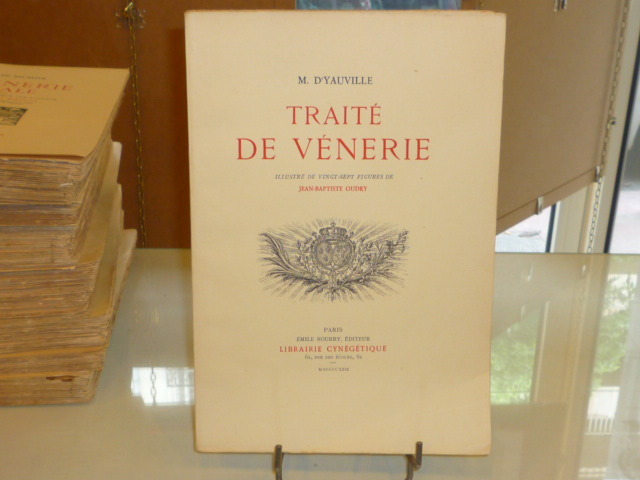
261632Emile Nourry, Librairie Cynégétique Paris 1929 Grand in-8 ( 290 X 200 mm ) de 296 pages, broché sous couverture illustrée imprimée comme la page de titre en rouge et noir. 3è édition d'un ouvrage sur la chasse au cerf et le dressage des chiens et les meutes publié en 1788 ( Imprimerie Royale ) par M. D'YAUVILLE, premier veneur et commandant de la Vénerie du roi. Bel ouvrage illustré avec 27 illustrations de Jean-Baptiste OUDRY, bandeaux, culs-de-lampe et 7 planches en rotogravure hors texte dont 1 double page, et reproduction en fac-similé des 41 pages de fanfares gravées de l'édition originale, contenant entre autres toutes celles du marquis de Dampierre. Glossaire des termes usités à la chasse aux cerfs in fine ( regroupant les 2 parus séparément dans les éditions précédentes ). Un des 1000 exemplaires numérotés à la presse sur Alfa Satiné. Quelques rousseurs, bel exemplaire.
1960112685Harvard College Library 1960. Hardcover. Very good/No jacket. #121/600cc signed by artist Walter Stein and translator Philip Hofer. Included are an extra set of original lithographs by Stein each signed by him. In a worn clamshell case. Harvard College Library hardcover
1923159253New York: The Macaulay Company 1923. Original American Edition. Hardcover. NF contents; VG covers; Good DJ with some fading to spine a bump to upper outer front corner and small tears to head/tail of spine. Moss green cloth/boards; black lettering. Moss green dj with black lettering including an excerpt from the dedication to H.G. Wells. All edges painted green. 308 pages with no illustrations. A scarce copy of the American English edition of Renard's early sci-fi novel originally published in France as Le Docteur Lerne. "The publication of Renard's first sf novel in 1908 Le Docteur Lerne Doctor Lerne gained him rave reviews and launched him into the limelight of Parisian literary circles. Although strongly derivative of Wells' The Island of Dr Moreau 1896-an influence openly acknowledged by Renard in his dedication-Le Docteur Lerne extrapolates the notion of biological engineering much further than Wells all the way into the fantastic. After years of experimentation in grafting animal parts to plants and vice-versa producing at times some quite amazing results Dr. Lerne begins interchanging brains between animals between humans and even between animals and humans. As a result of these experiments he ultimately learns how to project his own mind and spirit into other animate and not-so-animate objects like people trees and even an automobile. The narrative itself is recounted in the first person by Dr. Lerne's visiting nephew Nicolas: he gradually in detective-like fashion uncovers the truth of his uncle's experiments and his reactions to them range from morbid curiosity to outright horror. Part of the originality of the tale however is not in the sometimes outlandish plot sequences but in the manner in which they are told. The originality of this novel is two-fold: in its sf eroticism and in how it portrays the mind-body split through narrative point of view. One example: Nicolas is forced to have his brain exchanged with that of a bull. Following the surgery the young man must now struggle to acclimate himself to the alien: not only to his new bovine body and instincts but also to seeing his old self as the "other"-especially when the latter makes overtly sexual advances toward "his" mistress. Another example: later in the text after receiving his own brain back again the narrator is in the throes of a steamy sexual interlude with his aforementioned mistress when he suddenly feels the presence of another person's identity intruding into his mind and taking over his body: it is Dr. Lerne who gazing through a peephole nearby decides to become a more-than-first-hand observer to the proceedings. Such risqué subject matter and offbeat points of view in Le Docteur Lerne-continually oscillating as it does between the vicarious and voyeuristic-make it a quite original sf text and one that foreshadows other erotic science-fiction works by writers like Philip José Farmer Robert Silverberg and Kate Wilhelm published over a half century later. Of course if one were to judge Renard's Le Docteur Lerne from its only-available English translation New Bodies for Old one would never have the opportunity to read such passages. They are not there. In fact this translation seems to aptly exemplify the marketplace strategy known as "bait-and-switch." On its intentionally provocative dust jacket after the title "Maurice Renard's Startling Novel New Bodies for Old or The Strange Experiments of Dr. Lerne" the publisher chooses to quote the most enticingly suggestive portions of the author's dedication to Wells: "When Fortune.allowed me to discover the subject of this allegorical novel I felt bound not to set it aside because of a few audacities which a faithful rendering involved. Far from desiring to arouse.instinct in my reader and amuse him with scandalous descriptions my work is addressed to the philosopher." But when one then reads the actual narrative one discovers that all such "audacities" and "scandalous descriptions"-i.e. all passages of sexuality like those I have discussed-have been thoroughly and meticulously excised. Despite its cover's subtle promises of titillation the content of Renard's book has been truncated so as not to offend its anglophone audience's supposed sense of moral propriety." - by Arthur B. Evans from depauw.edu. The Macaulay Company hardcover books
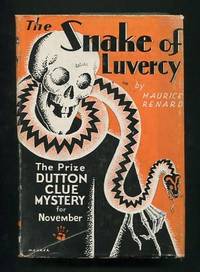
193019557New York: E.P. Dutton & Co. Inc. Near Fine in Very Good dj. 1930. 3rd printing. Hardcover. minor wear at spine ends top corner slightly bumped vintage price sticker from The White House San Francisco department store on rear pastedown; jacket a bit edgeworn short closed tear and associated diagonal crease at bottom of front panel light soiling to rear panel. Dutton Clue Mystery Series Mystery tale with a Parisian setting about "a young Frenchman of good family whose engagement to Gilberta Laval a lovely exquisite girl is poisonously opposed by Madame De Prasse and her idolized and gay son Lionel." By the author of "The Hands of Orlac" and "New Bodies for Old." Not a book you'll see every day of the week or maybe even once a year especially in such decent condition. . E.P. Dutton & Co., Inc. hardcover books
1923159253New York: The Macaulay Company 1923. Original American Edition. Hardcover. NF contents; VG covers; Good DJ with some fading to spine a bump to upper outer front corner and small tears to head/tail of spine. Moss green cloth/boards; black lettering. Moss green dj with black lettering including an excerpt from the dedication to H.G. Wells. All edges painted green. 308 pages with no illustrations. A scarce copy of the American English edition of Renard's early sci-fi novel originally published in France as Le Docteur Lerne. "The publication of Renard’s first sf novel in 1908 Le Docteur Lerne Doctor Lerne gained him rave reviews and launched him into the limelight of Parisian literary circles. Although strongly derivative of Wells’ The Island of Dr Moreau 1896—an influence openly acknowledged by Renard in his dedication—Le Docteur Lerne extrapolates the notion of biological engineering much further than Wells all the way into the fantastic. After years of experimentation in grafting animal parts to plants and vice-versa producing at times some quite amazing results Dr. Lerne begins interchanging brains between animals between humans and even between animals and humans. As a result of these experiments he ultimately learns how to project his own mind and spirit into other animate and not-so-animate objects like people trees and even an automobile. The narrative itself is recounted in the first person by Dr. Lerne’s visiting nephew Nicolas: he gradually in detective-like fashion uncovers the truth of his uncle’s experiments and his reactions to them range from morbid curiosity to outright horror. Part of the originality of the tale however is not in the sometimes outlandish plot sequences but in the manner in which they are told. The originality of this novel is two-fold: in its sf eroticism and in how it portrays the mind-body split through narrative point of view. One example: Nicolas is forced to have his brain exchanged with that of a bull. Following the surgery the young man must now struggle to acclimate himself to the alien: not only to his new bovine body and instincts but also to seeing his old self as the "other"—especially when the latter makes overtly sexual advances toward "his" mistress. Another example: later in the text after receiving his own brain back again the narrator is in the throes of a steamy sexual interlude with his aforementioned mistress when he suddenly feels the presence of another person’s identity intruding into his mind and taking over his body: it is Dr. Lerne who gazing through a peephole nearby decides to become a more-than-first-hand observer to the proceedings. Such risqué subject matter and offbeat points of view in Le Docteur Lerne—continually oscillating as it does between the vicarious and voyeuristic—make it a quite original sf text and one that foreshadows other erotic science-fiction works by writers like Philip José Farmer Robert Silverberg and Kate Wilhelm published over a half century later. Of course if one were to judge Renard’s Le Docteur Lerne from its only-available English translation New Bodies for Old one would never have the opportunity to read such passages. They are not there. In fact this translation seems to aptly exemplify the marketplace strategy known as "bait-and-switch." On its intentionally provocative dust jacket after the title "Maurice Renard’s Startling Novel New Bodies for Old or The Strange Experiments of Dr. Lerne" the publisher chooses to quote the most enticingly suggestive portions of the author’s dedication to Wells: "When Fortune.allowed me to discover the subject of this allegorical novel I felt bound not to set it aside because of a few audacities which a faithful rendering involved. Far from desiring to arouse.instinct in my reader and amuse him with scandalous descriptions my work is addressed to the philosopher." But when one then reads the actual narrative one discovers that all such "audacities" and "scandalous descriptions"—i.e. all passages of sexuality like those I have discussed—have been thoroughly and meticulously excised. Despite its cover’s subtle promises of titillation the content of Renard’s book has been truncated so as not to offend its anglophone audience’s supposed sense of moral propriety." - by Arthur B. Evans. The Macaulay Company hardcover