3 946 résultats
Z36172BROCHE UN NOM EN PREMIERE PAGE
38737In-12 (171 x 105 mm), cuir pleine peau, dos lisse orné de filets dorés, titre doré, sous jaquette et rhodoïd (reliure éditeur), 1224 et (2) p. Paris, Gallimard, NrF, Bibliothèque de la Pléiade, 1978.
197331934Paris, Gallimard, Bibliothèque de la Pléiade, 1973. Trois volumes in-12, 1003-1224 et 1324 pp. Reliure éditeur, bien complet de sa jaquette, rhodoïd et étui.
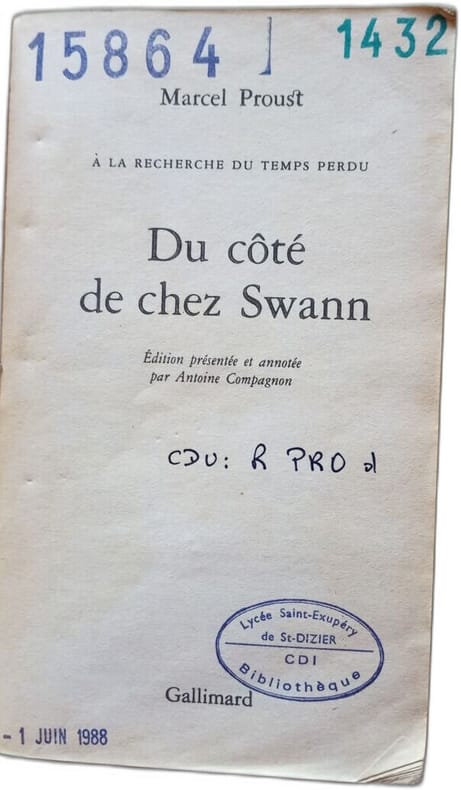
1988500235629Folio 1988 15x21x2cm. 1988. Broché. Exemplaire de bibliothèque déclassé
19294573Paris, Gallimard, 1929, 14 X 19 cm., relié, 301 pages. 121ème édition. Demi-chagrin à dos long et décor géométrique dans le style de l'époque, tête dorée. Petites épidermures, un coin légèrement émoussé. Intérieur propre.
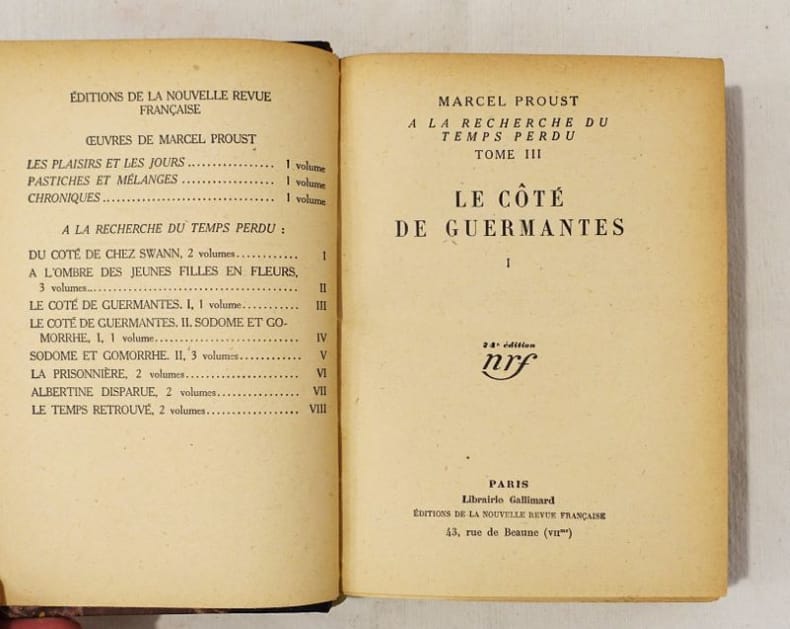
19294574Paris, Gallimard, 1929, 14 X 19 cm., relié, 252 pages. 74ème édition. Demi-chagrin à dos long et décor géométrique dans le style de l'époque, tête dorée. Petites épidermures, intérieur propre.
lc_91130Gallimard 1963
19576095Paris Fasquelle, coll. "Libelles" 1957 1 vol. Broché in-16, broché, 109 pp. Edition originale de cet excellent pastiche de Proust. Un des 60 exemplaires numérotés sur vélin alfa, seul grand papier. En parfait état.
195766507Paris Fasquelle, coll. "Libelles" 1957 1 vol. broché in-16, broché, 109 pp. Edition originale de cet excellent pastiche de Proust. Couverture un peu passée, avec une petite salissure en 4e de couverture. Intérieur frais.
194657321AB15 volumes cplt. Paris, Gallimard, 1946-1947. 18x12 cm. Cartonnage de la nrf d'après la maquette de Mario Prassinos.
46887529like new. unknown
1019684992.Ghardcover. Good. Access codes and supplements are not guaranteed with used items. May be an ex-library book. hardcover
849759729X.Gmass_market. Good. Access codes and supplements are not guaranteed with used items. May be an ex-library book. unknown
8496867234.Ghardcover. Good. Access codes and supplements are not guaranteed with used items. May be an ex-library book. hardcover
2003RO60094788Debolsillo. 2003. In-8. Broché. Bon état, Couv. convenable, Dos satisfaisant, Intérieur frais. 542 pages.. . . . Classification Dewey : 460-Langues espagnole et portugaise
feb59403Used. For more details please contact me unknown
feb72114Used. For more details please contact me unknown
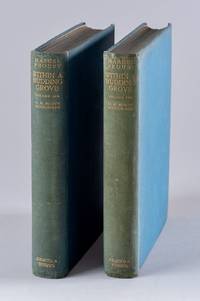
1924BB1749London: Chatto & Windus 1924. Hardcover. Near Fine. Part Two complete in two volumes of this masterpiece of modernity "a milestone in the study of human consciousness and a revolution in the history of prose writing." Literary Encyclopedia Translated from the original French by C. K. Scott Moncrieff. Crown 8vos 188 x 128mm: viii396; vi356pp. Publisher's slate blue cloth spines lettered in gilt top edges stained blue fore- and bottom edges rough-trimmed; book plates to paste-downs. Awarded the Prix Goncourt in 1919. Spines a shade darkened first volume a little knocked at corners but excellent examples tightly bound and clean throughout. Scarce especially volume one in the first printing. Modern Movement 23. First Printings in English not to be confused with the more common Phoenix Library edition published by Chatto & Windus in 1929. "Written over more than a decade and considerably altered by the outbreak of World War I and its author’s tragic experience of love and loss À la recherché du temps perdu is a work of formidable complexity both in its radically new conception of time and narrative and in its penetrating analysis of history man and society. . . . The novel’s seven volumes narrate the Narrator’s long gestation of a novel whose undertaking he continuously defers for the sake of more pressing preoccupations until threatened by old age and death he will eventually heed his calling. . . . In the course of this journey which the Narrator follows from childhood to mature age there emerges one of the most extraordinary portraits of French society from the Third Republic to the early 1920s and an exploration of the human mind whose perceptiveness subtlety and disturbing honesty remain unmatched to the present day." Literary Encyclopedia "Proust's great novel À la recherché du temps perdu is something that happens once in a hundred years . . . He combined tragic poetical insight with the gift of creating comic characters in the round like Shakespeare." Modern Movement Or as per Joseph Conrad "I don't think there has ever been in the whole of literature such an example of the power of analysis." N. B. With few exceptions always identified we only stock books in exceptional condition carefully preserved in archival removable polypropylene sleeves. All orders are packaged with care and posted promptly. Satisfaction guaranteed. Fine Editions Ltd is a member of the Independent Online Booksellers Association and we subscribe to its codes of ethics. Chatto & Windus hardcover
73661Folio 1985, format poche n° 86, couverture de Londinsky-Pasternak; très bon état
1927LITT114M103e édition. Edité par Editions de la Nouvelle Revue Française, Paris, 1927. Les 3 tomes sont reliés en cuir demi-dos à coins. 14x19cm. 242 + 229 + 259 pp. Bon état.
2016x-331925863XSpringer 2016. Hardcover. New. 356 pages. 9.50x6.50x1.00 inches. Springer hardcover
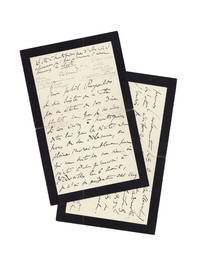
1907Proust15<p><strong>PROUST Marcel 1971-1922</strong></p><p>Autograph letter signed " Marcel " to Reynaldo Hahn<br />N.p.n.d " Monday " 7th January 1907 8 p. in-8° in black in on mourning paper two bi-folios watermark " L. T. & C° "<br />Small annotation in pencil in the upper margin of the first page period fold marks<br />Slight discharges of ink on the first bi-folio testifying to a folding by Proust when the ink was not yet dry.</p><p><strong>A precious letter to Reynaldo Hahn his "Bunchnibuls" about his relationship with Robert de Montesquiou and the latter's late lover Gabriel de Yturri the one who inspired Proust for the character of Jupien in <em>The Search</em></strong></p><p><em>" Mon petit Reynaldo</em><br /><em>Je suis triste de n'être pas en état de vous dire plutôt ce que je vous écris. <strong>Si vous écrivez à Montesquiou dites-lui que la vérité est hors de son dilemme en pleine invraisemblance pour qui ne sait pas ma vie</strong>. La vérité c'est qu'arrivé à Versailles le 6 Août je n'ai pas pendant ces cinq mois été une seule fois capable de sortir. <strong>Je n'ai pas été une seule fois au Château pas une seule fois à Trianon</strong> mais du reste vous savez bien tout cela pas une seule fois au cimetière des Gonards. Si je n'avais eu qu'un seul jour de bon je serais allé plutôt qu'au Château et à Trianon aux Gonards <strong>surtout M. de Montesquiou n'étant pas à Versailles ne pouvant pas y aller j'aurais eu un sentiment très doux en me disant que je le remplaçais</strong></em> <strong><em>que je venais de sa part auprès du pauvre Yturri comme lui si souvent vint de la part de M. de Montesquiou auprès de moi</em></strong><em>. Et puis je savais par vous par d'autres que c'était une tombe unique d'émotion et de beauté2. Et comme je ne pense plus guères qu'aux tombeaux j'aurais bien voulu voir ce que Montesquiou avait fait là et comment son goût avait réussi à donner plus de noblesse encore à sa douleur. <strong>Quand il sera revenu à Paris ou à Versailles je me soignerai pour tâcher de le voir un soir mais outre que c'est impossible pour tout le monde avec lui la difficulté avec lui</strong>3 <strong>grandit encore car c'est la personne du monde avec qui je me gêne le plus dans le mauvais sens du mot</strong>. Et même s'il se prête pour une fois à mes heures la possibilité d'une crise intempestive m'empêchera d'oser lui donner un rendez-vous que j'aimerais mieux mourir que rompre tandis que d'autres comprendraient. <strong>Vous pouvez lui dire que j'ai eu une grande joie à recevoir les Hortensias bleus que je n'avais jamais tant aimés</strong>4. Les pièces du début m'ont paru plus exquises qu'autrefois. Quant à l'Ancilla dont je vous ai appliqué ce fragment dernièrement5 c'est une chose admirable un magnifique pendant de La servante au grand cœur6. Il me semble mais je n'en suis pas sûr que la pièce à Yturri a été retouchée et peut'être pas améliorée. Elle reste peut'être ce qu'il a jamais écrit de mieux mais je ne me rappelle pas que la couronne fût verte la première fois et je ne sais pas si c'est mieux ainsi7. <strong>Inutile de lui dire cela d'abord parce qu'il s'en ficherait complètement</strong> ensuite parce que c'est un doute très vague et que je ne suis pas du tout sûr d'avoir raison.</em><br /><em>Avez-vous été interrogé par les Lettres au sujet de Shakespeare Tolstoï8. Je suis trop souffrant pour répondre je ne peux pas vous dire ce que rien qu'une lettre comme celle-ci m'épuise. Plusieurs personnes notamment Me G. de Caillavet m'ont écrit que votre Noël était adorable9. <strong>J'aurais bien voulu l'entendre Bunchnibuls et suis triste de n'avoir pas pu</strong>. Dites à M. de Montesquiou que je n'ai même pas pu aller à l'enterrement de mon pauvre oncle10.</em><br /><em>Tendrement à vous</em><br /><em>Marcel.</em><br /><em>Vous pouvez dire à M. de Montesquiou que je n'ai pas été une seule fois assez bien pour voir Miss Deacon qui habitait le même hôtel11.</em><br /><em>Dites à Montesquiou que d'ailleurs cela n'intéressera pas que je commence à aimer beaucoup les objets12. "</em></p><p>1- Letter dated "Monday"; must date either from Monday 31 December 1906 or from Monday 7 January 1907: allusion to the news that Proust had of a performance of the recipient's Christmas see infra note n°9</p><p>2- In a letter to Montesquiou dated November 18 1905 Proust apologized for not having been able to attend the inauguration of the monument in honor of Gabriel de Yturri: " I would have liked my strength to allow me to unite with the little group… ". Robert de Montesquiou died on 11 December 1921 and was buried in the same vault as his companion.</p><p>3- By slip Proust repeats "with him"</p><p>4- <em>Les Hortensias bleus</em>. Definitive edition with portrait of the author after a painting by Laszlo. Paris 1906. It is the first volume of the poet's definitive work published in December 1906 by Georges Richard 7 rue Cadet. The first edition of the work had appeared in 1896.</p><p>5- In a letter to the same recipient dated December 13 1906 Proust quoted some verses from Montesquiou that he had slightly modified.</p><p>6- Baudelaire<em> Les Fleurs du Mal</em> <em>Tableaux parisiens</em> vol. 1 ed. Claude Pichois Pléiade p. 100:<br /><em>La servante au grand cœur dont vous étiez jalouse </em><br /><em>Et qui dort son sommeil sous une humble pelouse</em><br /><em>Nous devrions pourtant lui porter quelques fleurs.</em> …</p><p>7- An allusion to the sonnet In Memoriam which Montesquiou placed after the preface to the collection in question a piece entitled In Memory of Gabriel de Yturri. It begins:<br /><em>Mes sentiments pour Vous sont fiers d'être éternels; </em><br /><em>Ils ont assez duré pour avoir fait leur preuve </em><br /><em>Sérieux dans la joie et sereins sous l'épreuve</em><br /><em>Et sans jamais mentir aux pactes fraternels.</em><br /><em>Chacun de nous eut droit à sa verte couronne: </em><br /><em>La mienne je l'espère et l'attends sans émoi; </em><br /><em>La vôtre si d'avance ici je vous la donne </em><br /><em>Recevez-la sans trouble en la tenant de moi.</em></p><p>8- The magazine <em>Les Lettres</em> had asked some French writers and artists for their opinion on this judgment of Tolstoy reported by Georges Bourdon in his book <em>Listening to Tolstoy</em> 1904</p><p>9- Allusion to the performance given at the home of Mrs. Madeleine Lemaire on New Year's Eve. It is apparently the <em>Pastorale de Noël</em> a mystery in one act by Arnous Grevan adapted by Leonel de La Tourasse and Taurines with piano accompaniment by Reynaldo Hahn.</p><p>10- This is Georges Denis Weil brother of Jeanne Weil-Proust. The funeral took place on August 27 1906. It was Robert Proust Marcel's brother who went there to lead the mourning.</p><p>11- Gladys-Mary Deacon daughter of Edward Parker Deacon and Florence Baldwin</p><p>12- A play on words it seems alluding to both trinkets and Montesquiou's poem entitled <em>Objets</em>. Cf. <em>Les Hortensias bleus</em> LXXVI of the 1896 edition; LXXII of the definitive edition of 1906.</p><p>We know Hahn's letter to Montesquiou now in the Montesquiou collection at the BnF sent the next day or the day after in which he forwards Proust's request:<br />"Dear Sir I have communicated your letter to Marcel. I am sending you his reply this letter. I haven't seen him for several days. It is alas all too true that not once did he go out at Versailles … "</p><p>It was at Madeleine Lemaire's house on April 13 1893 that Marcel Proust met Robert de Montesquiou. The latter portrayed as the Baron de Charlus in <em>The Search</em> a character of irascible character and sharp verve made a completely different impression on Proust during this first meeting. A dandy with a pure profile a fascinating look… Proust fell under the admiration of Montesquiou and a current of sympathy was established between them. . This admiration was followed by a friendship that lasted until the last days of the dandy-poet in 1921.<br />Montesquiou is known to have had only one affair: that with his much-loved and mourned secretary Gabriel de Yturri. He died of diabetes on July 6 1905.</p><p>This is a remarkable testimony of intersecting relationships each of the people mentioned here inspiring Proust for major figures in <em>The Search</em>.</p><p><u>Provenance:</u><br /><em>Autographes littéraires et historiques Lettres de Marcel Proust</em> Marie Nordlinger Drouot 15th – 17th December 1958 lot 188.<br />After Reynaldo Hahn his cousin Marie Nordlinger who had helped Marcel Proust in his translation of Ruskin inherited it.</p><p><u>Bibliographie :</u><br /><em>Correspondance</em> t. VII Kolb Plon n°5<br /><em>Lettres à Reynaldo Hahn</em> éd. Philip Kolb Gallimard LXXVIII</p><p><u>Source :</u><br /><em>Marcel Proust I</em> – Biographie Jean-Yves Tadié Folio pp. 283-295</p>
198482196ABLondon, Weidenfeld and Nicolson (ca. 1984). 4°. 128 S. mit zahlr. Abb., OLwd. mit Goldpr. u. illustr. OUmschl. (eine geringe Knickspur). Sonst tadelloses Exemplar. Erste Ausgabe in England. OLwd. mit Goldpr. u. illustr. OUmschl. (eine geringe Knickspur). Sonst tadelloses Exemplar. Erste Ausgabe in England.