Jean Le Rond d' Alembert, Pierre Mouchon, Denis Diderot; Voltaire, Rousseau, Montesquieu, MarmontelBiblio.com
4 956 résultats
17512605210193Chez Briasson David Le Breton Durand A Paris; Amsterdam 1751 - 1777 1751. First Edition. Hardcover. Very Good. 0x0x0. The Organization of Enlightenment Thought: The Revolution in Ideas. A first edition of this foundational encyclopedia of 18th century knowledge. A massive thirty-five volume set. Large folios volumes 39.5 x 25 cm. Bound in 18th-century French calf. Spines gilt with raised bands. One volume non-uniformly bound in light calf. <br> The set includes: Encyclopedie Paris: 1751-57 & Neuchatel 1765. 17 volumes; Recueil de planches. Paris: 1762-72. 11 volumes 1 2 part I 2 Part II 3 5 6 7 8 9 10 11; Supplement a l'Encyclopedie. Paris & Amsterdam: 1776-77. 5 volumes including the Suite de recueil de planches; Table Analytique. Paris: 1780. <br> Profusely illustrated with engraved plates. <br> Diderot's famous Encyclopedie was initially a modest translation of Chambers's Cyclopaedia. It grew as a project into a massive project which attempted to collect human knowledge from a rationalistic perspective instead of by nature or theology. In organizing knowledge from a position where human reason was paramount the supremacy of the Church was imperiled. As a result the Encyclopedie was widely controversial and placed on the Index Librorum Prohibitorum by the Catholic Church. In discussing fundamental philosophical issues such as on political authority and natural rights articles in the Encyclopedie shifted the basis of governmental authority from the divine right of Kings to radical concepts popular consent was the basis of legitimacy and the ideals of a social contract. The work was banned by the King of France. It spread the foundational ideas of the French Revolution and enlightenment thinkers. "No encyclopaedia perhaps has been of such political importance or has occupied so conspicuous a place in the civil and literary history of its century. It sought not only to give information but to guide opinion." "It was a war machine; as it progressed its attacks on both the church and still more on despotic government as well as Christianity itself became bolder and more undistinguished and it was met with persecution and opposition unparalleled in the the history of encyclopedias." - Encyclopedia Britannica 11th ed p. 1483. "A monument in the history of European thought; the acme of the age of reason; a prime motive force in undermining the ancien regime and in heralding the French Revolution" Printing in the Mind of Man 200. Refs: Grolier/Horblit 25b; Norman 637; PMM 200. <br> Includes: 17 v. : ill. ; 41 cm. supplement 4 volumes plates 11 volumes plates supplement 1 volume. Table Analytique 1 volume. This is an oversized or heavy book which requires additional postage for international delivery outside the US. Chez Briasson, David, Le Breton, Durand, A Paris; Amsterdam (1751 - 1777) hardcover
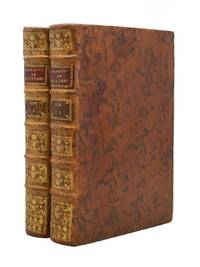
1764148170London: Printed for T. Becket and P.A. De Hondt in the Strand 1764. First edition in English of Jean-Jacques Rousseau's magnum opus; a seminal treatise on political philosophy and precursor of the French revolution. Twelvemo bound in full contemporary calf with gilt titles and tooling to the spine in six compartments within raised gilt bands morocco spine labels lettered in gilt triple gilt ruling to the front and rear panels gilt turn-ins and inner dentelles all edges gilt marbled endpapers 3pp. advertisements at end. In near fine condition. Exceedingly rare with only a handful of copies traced in auction records exceptionally rare and desirable. "The Contrat Social remains Rousseau's greatest work. Rousseau believed passionately in what he wrote and when in 1789 a similar emotion was released on a national scale the Contract Social came into its own as the bible of the revolutionaries in building their ideal state. Still in print translated into every language in cheap editions and paperbacks it remains a crucial document of egalitarian government" Printing and the Mind of Man 270 discussing the 1762 first edition. Written in 1762 Rousseau's seminal work provided a philosophical justification for revolutionary change by promoting the principles of popular sovereignty the general will equality liberty and political participation. Rousseau argued that legitimate political authority comes from the consent of the governed rather than from divine right or hereditary monarchy. This idea inspired French revolutionaries to demand a government that represented the will of the people. Upon publication the distribution of The Social Contract in France was prohibited and Rousseau fled the country to avoid imprisonment. It was primarily Rousseau's chapter on civil religion rather than his ideas on liberty and sovereignty that caused the controversy. Immanuel Kant one of the most influential moral philosophers in Western philosophy acknowledged his debt to Rousseau's work in political philosophy of which The Social Contract is perhaps the closest to a complete statement. Kant wrote “I myself am a researcher by inclination. I feel the entire thirst for cognition and the eager restlessness to proceed further in it as well as the satisfaction at every acquisition. There was a time when I believed this alone could constitute the honour of humankind and I despised the rabble who knows nothing. Rousseau has set me right. This blinding prejudice vanishes I learn to honour human beings and I would feel by far less useful than the common labourer if I did not believe that this consideration could impart a value to all others in order to establish the rights of humanity†Refl. 20:44. Printed for T. Becket and P.A. De Hondt, in the Strand paperback
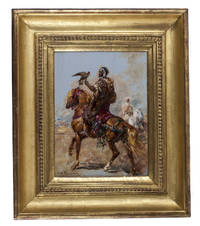
1920J3LEQD63X359Morocco 1920. Contemporary gilded wooden frame 33 x 28 cm. Oil on wooden panel 21 x 16 cm signed at the lower left "Henri Rousseau". Colourful panel painting by the leading orientalist painter Henri-Émilien Rousseau of a mounted Bedouin falconer one of Rousseau's favourite subjects. While the sport of falconry was an important status symbol in the Middle East and Europe generally for the Bedouins it was a means of survival.Rousseau 1875-1933 was a Cairo-born French painter who divided his childhood between North Africa and France where he studied at the École des Beaux-Arts under the great Orientalist painter Jean-Léon Gérôme. He broke from the style of his master however and started to paint in a more impressionistic style. Between 1920 and 1930 he travelled extensively through the Rif and Atlas mountains of Morocco where he befriended the chiefs of several nomad tribes. It was probably here that Rousseau fell under the spell of the Bedouin horsemen which came to characterize his compositions. In 1927 more than 80 of his works from this period were displayed at the gallery of the influential Parisian art dealer Georges Petit. This was followed by an exhibition at the Exposition Universelle of 1931.The panel is cracked in the length leading to a 4 cm crack in the paint to the right of the rider's head a 1 cm crack below the horse's left hind hoof and a 7 cm crack from the top left to the horse's head but these cracks are only noticeable on close inspection and no paint has been lost. Some minor craquelure in the dark red patch connecting the rider and the saddle. Otherwise a well-executed and clean painting.l For the artist: Thieme & Becker XXIX p. 113. ABE CAT Falconry & Hunting unknown
374Alkmaar Zeglis 8 - No 374: Marc-Michel Rey Amsterdam. Good Een echte eerste druk !. Vraag bij intressen meerdere foto's aan Trefwoorden: Rousseau Jean Jac Antiquarisch Marc-Michel Rey, Amsterdam unknown
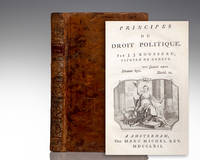
1762187978Amsterdam: Marc Michel Rey 1762. Developing the social contract First edition of the definitive version of Rousseau's greatest work a potent influence on liberal republican and French revolutionary thinking. Where Rousseau's Second Discourse 1755 explained how people had lost their liberty in the past the Principes considered how they might recover it in the future. The work develops the model of a government made legitimate by following the general will of its subjects. In so doing it tackles the problem of securing political co-operation among people with separate wills. The concept of the general will followed as an artificially constructed pledge to dissolve individual natural rights. Shortly after the printing had begun Rousseau requested that the title page vignette of Justice be replaced by one of Liberty and that the 24-line note on civil marriage on page 324 be excised completely for fear of French censors. He also judged the title page too crowded hence the transposition of the first part of the title "Du Contract Social" to a separate half-title. Bound after Rousseau's work is the Profession de foi du vicaire Chrétien Berlin: Chez Jean Neaulme 1764 by Johann Heinrich Samuel Formey 1711-1797 a key figure in the German Enlightenment and a committed opponent of Rousseau 2 works bound in 1 vol. octavo 199 x 119 mm pp. iv viii 324; pp. viii 144 14. Engraved title vignette of Liberty by Boily after Bolomey in Principes engraved initials head- and tailpieces. Profession bound without ten engraved plates. Contemporary calf spine ruled and decorated in gilt and with red morocco label marbled endpapers edges red red silk book marker. Light rubbing several marks to boards minor foxing to outer leaves contents crisp and clean small loss to lower outer corner of final leaf of Profession: a very good copy indeed. Dufour 133; En français dans le texte 162; Printing and the Mind of Man 207; Tchemerzine V p. 543. hardcover
1762149605Amsterdam: Marc Michel Rey 1762. Rare first edition type B of Rousseau's greatest work. Octavo bound in full contemporary sheepskin gilt tooling to the spine in eight compartments within raised bands burgundy morocco spine label lettered in gilt stamped turn-ins marbled endpapers engraved vignette of Liberty to the title page by Boily after Bolomey all edges red ribbon bound in. Provenance: Perrotin-Grandville notary in Le Mans ownership inscription to the title page. In very good condition with scuffing to the boards splitting to the rear lower hinge. Exceptionally rare in a contemporary binding. "The Contrat Social remains Rousseau's greatest work. Rousseau believed passionately in what he wrote and when in 1789 a similar emotion was released on a national scale the Contract Social came into its own as the bible of the revolutionaries in building their ideal state. Still in print translated into every language in cheap editions and paperbacks it remains a crucial document of egalitarian government" Printing and the Mind of Man 270 discussing the 1762 first edition. Written in 1762 Rousseau's seminal work provided a philosophical justification for revolutionary change by promoting the principles of popular sovereignty the general will equality liberty and political participation. Rousseau argued that legitimate political authority comes from the consent of the governed rather than from divine right or hereditary monarchy. This idea inspired French revolutionaries to demand a government that represented the will of the people. Upon publication the distribution of The Social Contract in France was prohibited and Rousseau fled the country to avoid imprisonment. It was primarily Rousseau's chapter on civil religion rather than his ideas on liberty and sovereignty that caused the controversy. Immanuel Kant one of the most influential moral philosophers in Western philosophy acknowledged his debt to Rousseau's work in political philosophy of which The Social Contract is perhaps the closest to a complete statement. Kant wrote “I myself am a researcher by inclination. I feel the entire thirst for cognition and the eager restlessness to proceed further in it as well as the satisfaction at every acquisition. There was a time when I believed this alone could constitute the honour of humankind and I despised the rabble who knows nothing. Rousseau has set me right. This blinding prejudice vanishes I learn to honour human beings and I would feel by far less useful than the common labourer if I did not believe that this consideration could impart a value to all others in order to establish the rights of humanity†Refl. 20:44. Marc Michel Rey paperback
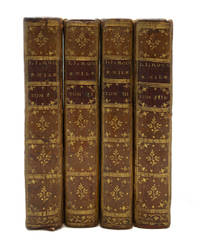
176254730A la Haye Chez Jean Néaulme Recte: Paris Duchesne 1762. 8vo. Bound in four beautiful uniform contemporary full mottled calf bindings with gilt title-and tome-lables to richly gilt spines. Gilt line-border to edges of bords. Lovely patterned edges. Spines and some corners lightly and expertly restored barely noteable. Occasional very light brownspotting or dusting but overall very nice and clean. Printed on good heavy paper with wide margins. An excellent copy. 2 VIII 2 466 6 pp. 4 407 1 pp. 4 384 pp.; 4 455 1 pp. 5 engraved plates used as frontispieces and facing p. 141 of vol. 1 respectively. The first plate "Thétis" in the variant state without title as described in MacEachern. Fully complete exactly as described in MacEachern. With all the misprints: Vol. 1: 88 as S8 443 as 433 465 as 46; vol. 2: 356 as 256 357 as 257; vol. 3: 383 as 363; vol. 4: 336 with first 3 broken according to McEachern this is just the case in some copies. With the usual cancelled leaves: Vol 1: Av B4; vol. 2: H3 N6 called I6. The final leaf ends with "FIN" and has no grapes MacEachern: "The grapes appear in three different forms.". <br/><br/><em>The very scarce actual first edition being the rarer more sought-after nicer 8vo-edition as opposed to the much more common 12mo edition which was printed about simultaneously but which seems to have appeared later the 8vo format also being the one preferred by Rousseau himself and the format in which he wanted his great work to appear.This magnificent work constitutes the climax of Rousseau's genius as well as the most important work on education since Plato. In Émile Rousseau poses an entirely new approach to education and the upbringing of children. His thoughts were exceedingly controversial the work was burnt by the executioner immediately after its first appearance and Rousseau had to flee the country due to a warrant for his arrest. The printing history of "Émile" is extremely complicated and has been a matter of intense dispute for many decades. Until Maceachern's bibliography from 1989 the edition that has now been established as the "Second Paris octavo" MacEachern 4A was generally considered the first printing of the work but there is no longer any dispute about the fact that the present edition is in fact the actual first 1A. The first edition appeared in both 8vo1A and 12mo1B and it seems to be generally accepted that the 8vo-edition was distributed first but that parts of the 12mo-edition may have been in printing a bit earlier. Rousseau himself seems to have preferred the 8vo-edition and wished for his great work to appear as this form first "The question of the format gave rise to some dissension for while Rousseau felt that the work was more suited to the octavo format Duchesne preferred to print a duodecimo and only a limited number of the more expensive octavo. Rousseau finally agreed to Duchesne's plan with reluctance declaring that in his opinion Duchesne was committing an error of judgment and that the octavo would certainly be the more sought after of the two formats." - MacEachern pp. 18-19. Rousseau himself was more involved in the coming-to-be of "Émile" than perhaps any other author has been in any other book. Throughout the entire process there were a large number of misunderstandings between himself and Duchene which more than once endangered the printing and publishing of this seminal work and which has contributed greatly to the extremely complicated bibliographical data of it. In fact up until very late in the process Rousseau did not believe that the work was actually going to be finished and it took several instances of mediation between the two to keep the work on tracks. Finally however the work was a reality and with it one of the greatest works of Western culture had been born.Rousseau's "Émile" constitutes the most significant modern treatise on the education of man surpassed only by Plato's "Republic". The comparison with Plato is all the more apt seeing that both works grow out of and are meant to remedy lacunae in the political philosophy of their authors.The conclusion to Rousseau's work on the social contract also written during Rousseau's stay in Montmorency had pointed to a predicament of political thought: that only if man were himself naturally inclined to freedom could he make use of political freedom. "Émile" is the analysis of the conditions under which a child can develop into a free human being. As such it presents the conclusion to Rousseau's earlier works on inequality political freedom and servitude.The paradox of Émile is that while the development of human nature must be natural if the child is to develop into a free human being steering that development in the right - that is free - direction requires constant intervention which moreover must be hidden from the child. Rousseau details this intervention in his analysis of the five stages in the education of the child covering the period from birth to the age of 25.Being one of the most influential thinkers of the 18th century Rousseau is considered one of the indirect causes of the French Revolution. In Rousseau one certainly finds one of the most influential spokesmen for 18th century thought and it is primarily the thoughts of him and Voltaire that are put into action with the Revolution."The first and last of these i.e. Héloise and Émile with their sentimental expression of deism gave much offence and Rousseau like Voltaire was forced to flee to Prussia. Restless and locally unpopular he fled again to England where he had a great welcome. Hume who had offered him asylum looked after him patiently." PMM 207 Printing and the Mind of Man.The totalitarian tendency of Rousseau's philosophy of education has been noted by a number of philosophers in recent times most famously Karl Popper.McEachern: 1A </em> unknown
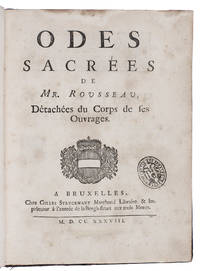
173821797Brussels 1738. 4to. Gilles Stryckwant Contemporary mottled calf sewn on 6 cords richly gold-tooled spine gold-tooled board edges red sprinkled edges Dutch-marbled endpapers front straight-combed in red blue yellow green and white; back matching except swirled green ribbon marker. With a woodcut coat of arms of Austria on title-page woodcut headpieces tailpieces initials 2 series and factotums and decorations built up from typographic ornaments. 6 109 1 blank pp. First edition of a collection of sacred songs in verse selected from his own works by Jean Baptiste Rousseau 1671-1741 most of them based on psalms and a few on other biblical texts. Born in Paris Rousseau published his Cantates françoises around 1705 and established a good reputation for his lyrics. His lampoons and some obscene verses supposedly written by him occasionally got him into trouble but he had a promising career ahead of him when he published his Oeuvres in 1712. In that year however a dispute over offensive verses supposedly written by him forced him into exile in Brussels. He lived there and elsewhere abroad for the rest of his life sometimes publishing selections of his work such as the present one and returning to Paris only for a clandestine visit around the time he published the present collection. Although his poetry appears to have sold fairly well and his lyrics continued in demand with musicians he remained in financial straits his exile perhaps making it difficult to gain the patronage essential to success in that day. Rousseau gained greater fame posthumously especially as the creator of the "French cantate" and is still considered the best French lyricist of the period. With the author's signed autograph presentation inscription to l'Abbé Cochard on an endleaf and a couple corrections in the text also in his hand. With one quire slightly browned and further occasional minor foxing or a small marginal stain but otherwise in very good condition and with generous margins. The chemicals used to mottle the leather have eaten away its surface in places and the spine has been repaired at the head foot and hinges but the binding is now structurally sound.l H.A. Grubbs Jean-Baptiste Rousseau: his life and works p. 226; not in Cioranescu; Tchemerzine. hardcover
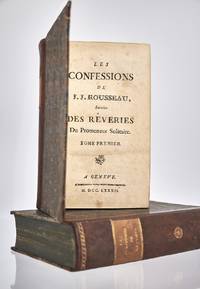
17831289301783. First Edition. ROUSSEAU Jean-Jacques. The Confessions of J.J. Rousseau: With the Reveries of the Solitary Walker. London: J. Bew 1783. 12mo period-style full paneled brown calf gilt red morocco spine labels. $8800.Rare first edition in English of Rousseaus magnificent Confessions and Reveries its sequel and complement considered among Rousseaus finest works.""Confessions was published only posthumously; it was some time before Rousseau's ideas seeped into the drinking water. In his own day he was provocative but also outlandish. As Leo Damrosch put it Rousseau was after all understood to be 'describing a state of nature that never existed a political system that never could exist and an educational scheme that never should exist.' Social inequality the will of the people inalienable rights were meaningless concepts when Rousseau began ranting about them. Imagination was out of fashion; he was tiptoeing around the as-yet-undiscovered unconscious. He advocated idleness in the age of Adam Smith. If he suffered for being so much out of step with his own century he can too easily be overlooked in ours. Without founding a schoolit would have been inappropriateRousseau stands squarely if unsystematically at the root of democracy autobiography Romanticism child-centered education even psychoanalysis"" Stacy Schiff.Rousseau's ""devastatingly intimate"" self-portrait has become one of ""the landmarks of the literature of personal revelation and reminiscence"" and the model for modern autobiography Brereton 107; Drabble 851. His Confessions is filled with candid and critical personal descriptions of himself and others; he did not intend for it to be published until the end of the century but it was published within four years of his death. ""The publication of the Confessions in 1782 only reinforced the intensely personal bond that Rousseau's countless disciples felt with him nothing could shake their faith in his essential moral purity. The breathtaking candor of his admissions of vice as well as virtue strengthened their view that he was the greatest honnete homme of their century"" Schama Citizens 160. First published in French in Geneva in 1782. As is usually the case these two volumes contain the first half of the Confessions; the second half was not published until 1789 in French with the English translation appearing in 1790. Owner signature of ""Mary Bisshopp 1795"" to title page of Volume I with her small bookplate to versos of both title pages. Small engraved armorial bookplate tipped to final leaf of text. Bookplates of leading British book collector Eric Quayle with his note on the first one: ""This is the first English edition and is very rare. E.Q."" Quayle published large-format and well-illustrated guides to book collecting based on his own collection which still act as signposts for new collectors and important references for the experienced.Interior fresh. Very handsomely bound. unknown
112680London James Asperne 1805. . Second edition; 8vo 175 x 115 mm; printed in English and Farsi considerable near-contemporary manuscript notes to margins and spaces in first and last few leaves as well as intermittent in text title page a little frayed with small marginal repair inner hinges strengthened; contemporary calf rebacked and recornered gilt lettering piece to spine well annotated otherwise a very good restored copy; lxiv 13-267pp.<br /> One of the earliest attempts to produce a compendium and dictionary of legal terms used in India by one of the pioneers in Arabic printing in Europe. One of the earliest texts printed in England with nastaliq script which Samuel Russeau had initially commissioned for The Flowers of Persian Literature 1801. <br /><br />Samuel Russeau 17631820 established the Arabic Press in London published some of the first English translations of several important Arabic and Persian works and compiled some of the earliest Arabic-English and Persian-English language texts of which this is one. His works contributed significantly to early study in Persian texts and his dictionaries were vital to the East India Company and their officers acting in India.<br /><br />This volume was evidently in the hands of an English traveller in India to be used as a working dictionary for their time spent there. It is adorned throughout in near-contemporary annotations which pertain to the use of certain words in context or alternative meanings as well as notes for their personal use relating to the East India Company.<br /> London, James Asperne, 1805. unknown
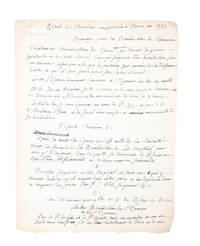
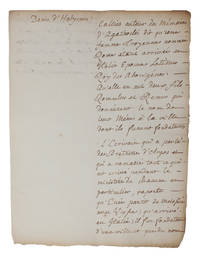
174660957Unsigned and no date but penned between 1746 and 1751. 1 leaf 4to 255 x 19 cm off-white paper in fine condition. Fully penned on both recto 24 lines and verso 5 lines. <br/><br/><em>This magnificent manuscript leaf in Rousseau's hand constitutes notes on marriage rituals taken from "Rituel des Chartres" which was printed in Paris in 1531. This manuscript leaf is part of a grandiose project that Rousseau was working on with his employer Madame Dupin during his years as her secretary. The project was that of writing the history of womankind. With its focus on gender equality the work is nothing less than pioneering and would no doubt have been a work of seminal importance in the history of feminism and women's rights had it ever been published. The manuscript ended up comprising more than 2.000 pages but was never printed. Louise Marie Madeline Fontaine Dupin 1706-1799 was one of the most famous salonnieres of the 18th century renowned for the beauty as well as her intelligence. Rousseu met her in 1743 and took an instant liking to her. In 1745 she offered him the position as her private secretary and tutor to her son. During his six years in her employment he spent most of the time working on the grandiose project of the history of women until it was abandoned in 1751. "In the years between 1745 and 1749 Jean Jacques Rousseau was employed by Louise Marie Madeline Dupin as a research assistant on her ambitious project to delineate in print the history of women. After years of labor by Rousseau and Madame Dupin her "Ouvrage sur les Femmes" was shelved unfinished. The research notes drafts and fair copies written by Rousseau and his employer were stored at the chateau of Chenonceaux essentially forgotten until their sale at a series of auctions held between 1951 and 1958." Harry Ranson Center University of Texas </em> unknown
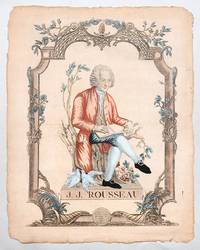
1789138603Paris: Basset c. 1789. Rousseau as revolutionary icon A striking full-length portrait of the philosopher seated on a tree stump and hard at work on the Contrat Social. At his feet two doves presumably evicted from their stump discuss matters. The print is by the Parisian firm of Basset which was a leading source of popular prints during the Revolution. Rousseau was claimed as a foundational influence by many revolutionary leaders and in 1794 they arranged for his remains to be transferred to the Panthéon in Paris. Hand-coloured copperplate engraving. Image size: 70 x 52 cm. Framed size: 85 x 66.5 cm. Presented in a handmade gilt frame with conservation acrylic glazing. Light toning and chipping to extremities not touching impression: in very good condition. Bachelin 185; Girardin p. 35. unknown
17772308270001Geneva: Pellet 1777-79; Neuchatel: La Societe Typographique 1777. troisieme. Hardcover. Very Good. The Organization of Enlightenment Thought: The Revolution in Ideas 41 of 45 volumes. Quartos 25 x 19.5 cm. Bound in handsome catspaw calf. All edges red. Good bindings and covers. Clean unmarked pages. Includes Vol. 1-36 of the Encyclopedie important note: lacks 3 text volumes 23 30 31; Vol. 37-38: Recueil de planches pour la nouvelle edition du dictionnaire raisonne des sciences des arts et des metiers; lacks the final plate volume v.39 Vol. 40-45 Table Analytique Et Raisonnee Des Matieres. <br> Diderot's famous Encyclopedie was initially a modest translation of Chambers's Cyclopaedia. It grew as a project into a massive project which attempted to collect human knowledge from a rationalistic perspective instead of by nature or theology. In organizing knowledge from a position where human reason was paramount the supremacy of the Church was imperiled. As a result the Encyclopedie was widely controversial and placed on the Index Librorum Prohibitorum by the Catholic Church. In discussing fundamental philosophical issues such as on political authority and natural rights articles in the Encyclopedie shifted the basis of governmental authority from the divine right of Kings to radical concepts popular consent was the basis of legitimacy and the ideals of a social contract. The work was banned by the King of France. It spread the foundational ideas of the French Revolution and enlightenment thinkers. "No encyclopaedia perhaps has been of such political importance or has occupied so conspicuous a place in the civil and literary history of its century. It sought not only to give information but to guide opinion." "It was a war machine; as it progressed its attacks on both the church and still more on despotic government as well as Christianity itself became bolder and more undistinguished and it was met with persecution and opposition unparalleled in the the history of encyclopedias." - Encyclopedia Britannica 11th ed p. 1483. Geneva: Pellet, 1777-79; Neuchatel: La Societe Typographique hardcover
174660377Unsigned and no date but penned between 1746 and 1751. 1 leaf 4to 255 x 19 cm off-white paper in fine condition. Penned on both recto 21 lines and verso 6 lines in columns taking up half the pages. <br/><br/><em>This magnificent manuscript leaf in Rousseau's hand constitutes notes taken from the seminal work of Dionysos Halicarnassos on the foundation of Rome more particularly on the story of Rome herself the alleged mother of Romulus and Remus and how they named the city after their mother. This manuscript leaf is part of a grandiose project that Rousseau was working on with his employer Madame Dupin during his years as her secretary. The project was that of writing the history of womankind. With its focus on gender equality the work is nothing less than pioneering and would no doubt have been a work of seminal importance in the history of feminism and women's rights had it ever been published. The manuscript ended up comprising more than 2.000 pages but was never printed. Louise Marie Madeline Fontaine Dupin 1706-1799 was one of the most famous salonnieres of the 18th century renowned for the beauty as well as her intelligence. Rousseu met her in 1743 and took an instant liking to her. In 1745 she offered him the position as her private secretary and tutor to her son. During his six years in her employment he spent most of the time working on the grandiose project of the history of women until it was abandoned in 1751. "In the years between 1745 and 1749 Jean Jacques Rousseau was employed by Louise Marie Madeline Dupin as a research assistant on her ambitious project to delineate in print the history of women. After years of labor by Rousseau and Madame Dupin her "Ouvrage sur les Femmes" was shelved unfinished. The research notes drafts and fair copies written by Rousseau and his employer were stored at the chateau of Chenonceaux essentially forgotten until their sale at a series of auctions held between 1951 and 1958." Harry Ranson Center University of Texas </em> unknown
178275964à Genève Geneva: S. n. 1782. Fine. S. n. à Genève Geneva 1782 12 x 19 cm 2 volumes reliés Rare and genuine posthumous first edition of the first six books of the Confessions the remaining volumes not appearing until 1789. Several other editions were issued shortly thereafter but the evidence provided by the commentary published in the June 1782 issue of the Journal Helvétique clearly establishes that this separately printed edition known as the ""large type"" issue is indeed the very first F. Michaux ""L'Édition originale de la première partie des 'Confessions' de J.-J. Rousseau"" in Revue d'Histoire littéraire de la France 35th Year No. 2 1928 pp. 250-253. Contemporary half calf bindings flat spines tooled with gilt fillets and decorated with beige morocco title and volume labels marbled paper boards all edges blue. A handsome copy of this seminal text of the autobiographical genre preserved in a contemporary binding. S. n. hardcover
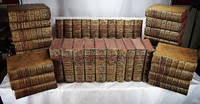
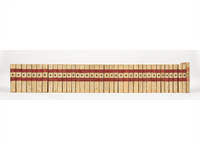
1788000382<p><strong>A significant edition of the philosopher's collected works. Complete set in rare amber-coloured bindings with the hand-coloured botanical plates twice bound in volume 38 and also in volumes 5 and 6.</strong></p><p><strong>Description:</strong> 39 vols. in 38 contemp. buff calf; gilt palmette borders to boards gilt meander roll to turn-ins; spine decorated with paired gilt fillets guilloches and dotted lines enclosing a gilt stylised sun symbol; with two contrasting red morocco lettering pieces and an escutcheon bearing the number of vols.; marbled endpapers. Octavo: 21 × 13 cm; pp.: vol. 1–4 <em>La Nouvelle Héloïse</em> 488; 468; 488; 484 vol. 5–6 <em>Lettres élémentaires sur la bontanique</em> 393 22 ll.; 286 16 ll. 287–507 6 ll. vol. 7–9 <em>Politique</em> 479; 485; 459 vol. 10–14 <em>Émile</em> 413; 361; 450; 384 vol. 15–17 <em>Sciences arts et belles-lettres</em> 485; 476; 538 vol. 18 <em>Théatre</em> 444 vol. 19–22 <em>Musique</em> 456; 460; 459; 397 vol. 23–26 <em>Confessions</em> 472; 406 2; 414; 478 vol. 27–28 <em>Pièces diverses</em> 434; 408 vol. 29–30 <em>Philosophie</em> 463; 515 vol. 31–35 <em>Lettres sur divers sujets</em> 480; 428; 433; 434; 534 vol. 36 <em>Pensées et maximes</em> 480 vol. 37 vols. xxxvii-xxxviii <em>Recueil des oeuvres de musique</em> 319 vi vol. 38 <em>Recueil de plantes coloriées</em> 45 ll. title-page and plate descriptions. With 41 frontispieces 144 plates of which are: 43 full-page plates 13 fold-out plates with sheet music 44 hand-coloured botanical plates double-bound in volumes 5 6 and in volume 38 and numerous illustrations in the text. Blue silk bookmarks. All edges gilt.</p><p><strong>Ref.:</strong> Brunet iv 1422; Cohen/R. 910–11; Dufour ii 33; Stewart 2012 p. 128–42</p><p><strong>Condition:</strong> Bindings occasionally somewhat stained and show light wear to the extremities. Endpapers occasionally lightly browned partly up to the first few pages and around the plates. Textblock occasionally stained more in some parts hardly any in others. A few coloured plates with slight offsetting to versos. Cohen/R. lists 3 frontispieces for volume 37 whereas there are only 2 in this copy. However Cohen/R. contradicts himself by listing a total of 42 frontispieces but only mentioning 40 in the descriptive text. On the whole a very well preserved copy despite occasional minor blemishes.</p><p><strong>Notes:</strong> The primary editor Louis-Sébastien Mercier 1740–1814 was a great admirer of Rousseau. His motivation for publishing the <em>Oeuvres complètes</em> stemmed from his deep admiration for Rousseau whose ideas on the social contract and popular sovereignty deeply influenced revolutionary thought. After Rousseau's death in 1778 Mercier wanted to create a monument to Rousseau "that would be worthy of him and would last longer than marble and bronze" Stewart 2012 p. 128. As primary editor working with notable figures such as Abbé Gabriel Brizard François de L'Aulnaye and Pierre Le Tourneur Mercier organised Rousseau's writings thematically into a complete work. This edition is based on the Geneva edition of 1780–82 but includes revisions and additions some of which are based on Rousseau's own preparations. Among many other previously unpublished texts Rousseau's <em>Confessions</em> appear in full for the first time in this edition.</p><p>This ambitious project was undertaken at a time of intense political and social upheaval. In order to finance the publication the volumes were sold by subscription. As a result it is not uncommon for volume 38 with its hand-coloured botanical plates to be missing from the complete edition. Hand-coloured plates were very expensive to produce. They were an expensive and luxurious addition and were often sold separately. It is likely that volume 38 was added to our copy at a later date. This is supported by the slightly different binding and the fact that the 44 botanical plates already appear in volumes 5 and 6.</p> [Poinçot] hardcover
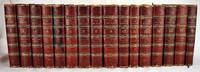
1767274London: T. Becket and P. A. de Hondt 1767. Mixed Editions. Riviere Fine Full Polished Calf. VERY GOOD to NEAR FINE. A beautifully preserved curated collection of Rousseau's works bound in uniform fine polished full calf by the prestigious Riviere and Son.<br /> <br /> Condition: VG to NF. Exterior and binding - FINE. All volumes collated and complete including half-titles plates as called for and publisher ads.<br /> <br /> BOOK INFO<br /> <br /> A 17-volume set put together from various editions published between 1767 - 1819. Mixed editions. Text in English. Duodecimos 12mo 6 5/8" x 4 1/4". Collated and complete. Uniformly bound by Riviere circa late 19th to early 20th century in exceptionally preserved fine binding: polished full calf with double fillet gilt paneling with corner fleurons; spine with gilt-lettered black and burgundy morocco spine labels and compartments richly tooled and ruled in gilt; all cover edges with gilt rolls; gilt dentelles; marbled endpapers; all page edges stained yellow. Verso of FFEP in each volume stamped "Bound by Riviere and Son". A gorgeous set!<br /> <br /> Emilius and Sophia Or A New System of Education four volumes published by T. Becket and P.A. de Hondt in London in 1767. First published in English in 1762-1763 this is an early edition. Six copperplate engravings. Ads at back of volume IV.<br /> <br /> Miscellaneous Works five volumes published by T. Becket and P.A. de Hondt in London in 1767. First collected edition of Rousseau's essays letters and miscellaneous works in English. Includes famous essays such as "Dissertation on the Effects of Cultivating the Arts and Sciences" "A Dissertation on the Origin and Foundation of the Inequality of Mankind" and letters to contemporaries and vocal critics such as Voltaire. Ads at back of volume IV.<br /> <br /> Eloisa: Or a Series of Original Letters four volumes published by T. Becket and P.A. de Hondt in London in 1769. Fourth edition in English. Frontispiece in each volume. Ads at back of volume IV.<br /> <br /> Confessions of J.J. Rousseau with Reveries of a Solitary Walker added four volumes published by Longman Hurst Rees Orme and Browne in 1819. New edition. Ads at back of volume II.<br /> <br /> CONDITION REPORT<br /> <br /> Exterior and binding: FINE. Firmly bound tight pages sharp corners. Minimal rubbing or wear. Leather is colorful bright and supple. A few of the volumes' exteriors could be considered Near Fine if being picky due to some shallow scratches on the boards. Exceptional overall for a 19th century full calf fine binding. <br /> <br /> Interior: VG to VG Offsetting from gilt scroll turn-ins in each volume per usual. Pages with varying degrees of toning by set with the Confessions of Rousseau more heavily toned to light browning due to the poor paper quality used by the printer. Foxing varies from light and scattered to more moderate and frequent the latter in Confessions in particular. Confessions of Rousseau has multiple areas of marginal insect nibbling. A few pages of insect nibble or marginal wear in the other titles' volumes. Professionally closed tear on page 105 of volume 3 in Miscellaneous Works. Other usual signs of handling over the centuries - some stray marks thumbing small ink blots or infrequent smudge or crease. No writing ex libris marks or bookplates.<br /> <br /> All in all a beautiful uniformly bound collection of mixed edition sets of Rousseau's most important works with bindings in a superior state of preservation.<br /> <br /> ABOUT THE AUTHOR & HIS INFLUENCE<br /> <br /> Jean-Jacques Rousseau 1712 – 1778 was a Genevan philosopher philosophe writer and composer. His political philosophy influenced the progress of the Age of Enlightenment throughout Europe as well as aspects of the French Revolution and the development of modern political economic and educational thought.<br /> <br /> Rousseau's Discourse on Inequality which argues that private property is the source of inequality and The Social Contract which outlines the basis for a legitimate political order are cornerstones in modern political and social thought. Rousseau's sentimental novel Julie or the New Heloise 1761 was important to the development of preromanticism and romanticism in fiction. His Émile or On Education 1762 is an educational treatise on the place of the individual in society. Rousseau's autobiographical writings—the posthumously published Confessions completed in 1770 which initiated the modern autobiography and the unfinished Reveries of the Solitary Walker composed 1776–1778—exemplified the late 18th-century "Age of Sensibility" and featured an increased focus on subjectivity and introspection that later characterized modern writing. T. Becket and P. A. de Hondt unknown
176268672Amsterdam: Chez Jean Néaulme 1762. Aamsterdam i.e. Paris: Chez Jean Néaulme 1762.<br> <br> First edition twelvemo issue priority between this and the octavo is still subject to discussion. Four twelvemo volumes 6 1/2 x 3 7/8 inches; 164 x 100 mm. 2 viii 2 466; 4 407 1 blank; 4 357 1 blank 361-384; 4 455 1 blank 4 "Privilegie" pp. Bound with no the half-title in Volume I as usual but with them present in Vols. II-IV as called for. Blank leaf P12 excised in Volume III as usual. Leaf H4 misbound between H8 and H9 in volume II. Five engraved plates including frontispiece in each volume by De Longueil Louis le Grand and J.J. Pasquier after Ch. Eisen. Titles printed in red and black.<br> <br> Contemporary calf. Boards triple-ruled in gilt with floral corner devices. Spines stamped in gilt and each volume with two red morocco spine labels lettered in gilt. Gilt board edges. Marbled endpapers. All edges dyed red. Some rubbing to boards and edges. Spines with some flaking. Boards with some soiling mainly volume IV. Some chipping to heads and tails of spines and some light repair to head and tail of spines of volumes I and IV. A marginal tear to leaves N9 and N10 of volume II tear just barely touching text on N9 and not touching text on N10. Overall a very good and crisp copy.<br> <br> The publication history of the book is complicated. According to McEachern "In November 1761 publisher Nicolas-Bonaventure Duchesne signed an agreement with Jean Néaulme a Dutch publisher chosen. to undertake an edition parallel to Duchesne's for distribution outside France. Duchesne's first edition appeared in two formats: a duodecimo with the false imprint 'A Amsterdam Chez Jean Neaulme' and an octavo with the false imprint 'A La Haye Chez Jean Néaulme.' The sheets of the duodecimo edition were printed first and the pages then re-imposed for printing in octavo." Although it is suggested that the twelvemo edition was printed first but the octavo edition may have been issued first McEachern goes on to say "the question of the order of printing has not yet been resolved to everyone's satisfaction." McEachern Bibliography of the Writings of Jean-Jacques Rousseau 16-17<br> <br> A first edition of Jean-Jacques Rousseau's 1712-1778 seminal work on education. While Jean Néaulme of Amsterdam is given as the printer it was in actuality printed by Parisian printer and publisher Nicolas Bonaventure Duchesne. When this work was published in the spring of 1762 it was banned by the Paris parliament and burned in public in Rousseau's home town of Geneva and in Paris forcing Rousseau to flee. This title was referred to by Goethe as "the natural gospel of education" and had great influence on Rousseau's European contemporaries especially educators. Despite the controversy Émile contributed mightily to the Romantics appreciation of nature and to the notion of the "noble savage."<br> <br> "To be good is to exist in accordance with the intrinsic potentialities of one's nature and Émile seeks to trace the natural development of a human being brought up in the country away from the nefarious influence of contemporary social life. From this point of view the work is not just a manual of education but as Rousseau himself points out a philosophical treatise on the goodness of human nature. It is less concerned with laying down the practical details of a specific pedagogic method than with describing the fundamental principles which underlie the whole of man's development from infancy to maturity. Rousseau's ultimate object is to teach the art of living for man's first duty he says is to be human" The Encyclopedia of Philosophy.<br> <br> McEachern 1b. Dufour 187. Printing and the Mind of Man 207 note entry for the Du contract social.<br> <br> HBS 68672.<br> <br> $5000. Chez Jean Néaulme unknown
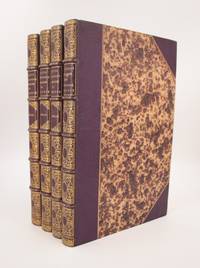
184388630Paris: H.L. DelloyeLécrivain et Toubon 1843. Fine. Fine copy in a superb binding by Dunezat H.L. Delloye Lécrivain et Toubon Paris 1843-1860 17.5 x 27.5 cm 4 volumes reliés For the first three volumes first edition complete with all 84 parts published between February 1842 and October 1843 of this ""admirable publication printed on thick vellum paper . one of the finest of the 19th century justly esteemed and comparable to the beautifully illustrated books of the 18th century"" Carteret see Carteret III 143153; Vicaire II 234248.The first three volumes are bound in full violet morocco spines with five raised bands bordered with gilt pointillé tooling compartments richly gilt with double gilt frames gilt rolls on caps covers framed with quintuple gilt fillets gilt monogram MG at the corners comb-marbled endpapers and pastedowns framed in gilt dentelle double gilt fillets on board edges all edges gilt. Splendid bindings signed by Dunezat active between 1870 and 1895.Illustrated by Charles François Daubigny Ernest Meissonier Anthelme Trimolet Adolphe Steinheil Gustave Staal Emy Louis-Léopold Boilly Charles Edouard de Beaumont among others.Texts by Marc-Antoine Desaugiers Fabre d'Églantine Pierre-Jean Béranger André Chénier Florian Sedaine Constance de Salm Jean-Joseph Vadé etc. set to music by various composers including André Grétry Jean-Jacques Rousseau Étienne Nicolas Méhul and François-Adrien Boieldieu.The complete collation is as follows: 1 5 preliminary leaves half-title engraved title-frontispiece list of songs introduction by Delloye and 28 parts of 4 unnumbered leaves each 28 songs each including a 2-page note 4 pages of text with illustrations and 2 pages of musici.e. 4 unnumbered leaves per song; 2 5 preliminary leaves and 27 parts of 4 unnumbered leaves each except for La Parodie de la Vestale which includes 10 unnumbered leaves; 3 5 preliminary leaves and 28 parts; 4 2 unnumbered leaves engraved frontispiece xxiv and 224 pages.The general series wrappers were not bound in this copy which shows several first-issue points.Enclosed: bound in violet half morocco with corners Chansons populaires des provinces de France. Notices by Champfleury. Piano accompaniment by J. B. Wekerlin. Paris Lécrivain et Toubon booksellers 1860 2 unnumbered leaves engraved frontispiece xxiv and 224 pp.Binding in violet half morocco with corners spine with five raised bands bordered with gilt pointillé tooling richly gilt compartments framed in double gilt fillets marbled paper-covered boards comb-marbled endpapers and pastedowns a few scuffs to board edges and extremities all edges gilt an elegant unsigned binding likely attributable to Dunezat active between 1870 and 1895.A very handsome set perfectly bound. H.L. DelloyeLécrivain et Toubon hardcover
178269349Geneva: N.p. 1782. Full Description:<br> <br> ROUSSEAU Jean-Jacques. Les Confessions de J.J. Rousseau suivies des Rêveries du promeneur solitaire. Geneva: no publisher 1782.<br> <br> First edition of the first six books of the Confessions and first edition of all of the Reveries of a Solitary Walker. Two works in two octavo volumes 7 1/2 x 5 inches; 190 x 126 mm. 4 471 1 blank; 4 279 1 blank 300 pp. Woodcut head-pieces. Bound with both half-titles.<br> <br> Contemporary full marbled calf. Boards single-ruled in blind. Both spines tooled in gilt and with red morocco spines labels lettered in gilt. All edges red. Some very minor rubbing to edges. Volume II with some very minor worming to the first few signatures not affecting text. A paper flaw to outer corner of A4 not affecting text and a few instances of minor marginal dampstaining. Otherwise internally very clean. An exceptionally clean and bright copy in an absolutely exquisite contemporary binding.<br> <br> These first six books of the Confessions were the first part of the eagerly anticipated work to appear in print; they were rushed to the press as soon as available though the final six books appeared only in 1789 in a collected edition of Rousseau's works. Although the identification of the first edition has long been a contended question Tchémerzine argued that it is "probable" that this edition is "the first separate edition" but R.A. Leigh following J. Calemard in 1927 has conclusively proven that the present edition is in fact the true first. Formerly it was generally supposed that the first edition consisted of Volumes 19 and 20 of the posthumous collected works published in Geneva in 1782. However the work of Leigh and Calemar shows that the edition at hand is the first appearance in print of any part of this work that this edition was the first on the market and that it preceded the subscriber's copies of the Oeuvres posthumes. The latest research is close to that of Dufour the standard Rousseau bibliographer who assigns this edition a number prior to that of collected works but does not take a definite stand on priority. This edition was on sale by the end of April 1782 and was rapidly pirated.<br> <br> Tchmerzine X p. 63 b. Dufour 1.238 nos. 340 and 350. Senelier 1.898. See R.A. Leigh Unsolved Problems in the Bibliography of J.-J. Rousseau Cambridge: 1990 pp. 133-140 and figs. 62-64.<br> <br> HBS 69349.<br> <br> $4500. N.p. unknown
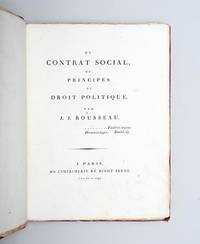
1795155072Paris: Didot jeune 1795. Uncut in boards First Didot edition the grandest edition of Rousseau's treatise noted for its size and elegant typography. First published in 1762 "The Contract Social remains Rousseau's greatest work. With no particular learning no gift for logic and a total lack of practical experience he yet contrived to write a work of compelling eloquence. His work had the most profound influence on the political thinking of the generation following its publication. It was after all the first great emotional plea for the equality of all men" PMM. Folio pp. viii 237 3. Uncut in contemporary pink paste paper boards spine lettered in pencil. Spine a little sunned and soiled very minor edge wear closed tear to front cover and to pp. 133/4 neatly repaired contents fresh. An excellent copy. Dufour 158. Printing and the Mind of Man 207 first edition. hardcover
17822405280035Geneva: Societe Typographique 1782. Hardcover. Very Good. Handsome Set in a Fine Binding 16 volume set. 4to Quartos 26 cm. Bound in fine crimson straight grain morocco. Gilt ruled spines and covers. All edges gilt. Gilt turn downs. Blue silk moire fabric end papers. Minor shelf wear. Bindings sound. Generally clean pages. Numerous illustrated plates frontispieces musical notation. Vols. 3 5 have dark stains on the outer covers. Contents: T.1. Ouvrages de politique; t.2. Julie; ou La nouvelle Heloise; t.3. La nouvelle Heloise cont. Les Amours de Mylord Edouard Bornston; t.4. Emile; t.5. Emile cont. Emile et Sophie; t.6-7. Melanges; t.8. Theatre poesie et musique; t.9. Dictionnaire de musique; t.10. Confessions. Reveries du promeneur solitaire; t.11. Rousseau juge de Jean-Jacques; t.12. Pieces sur diverssujets & un recueil de lettres; t. 13-15. Supplement a la collection des oeuvres de J.J. Rousseau. t. 16 Second supplement Les confessions. <br> This is an oversized or heavy book which requires additional postage for international delivery outside the US. Geneva: Societe Typographique hardcover
199729972France: Editions De L'Amateur. New. 1997. 2909225135 . FREE UPGRADE to Courier/Priority Shipping Upon Request - IN STOCK AND IMMEDIATELY AVAILABLE FOR SHIPMENT - FLAWLESS COPY BRAND NEW PRISTINE NEVER OPENED - Text in French. c 1997. Barbizon 19th Century French Art Nineteenth Catalogue Raisonné Raisonne Catalog Raisonnee Complete Works Editions De L'Amateur unknown
175561043Amsterdam Marc Michel Rey 1755. 8vo. A spendid recent pastiche-binding in perfect contemporary style. Marbled half caf with five raised bands to richly gilt spine. Marbled paper over boards. Occasional very light brownspotting and a very light marginal dam stain to ca 15 leaves. A splendid copy with good margins and printed on good paper. Old ex libris to inside of front board. Title-page printed in red and black engraved title-vignette the engraved frontispiece by Eisen engraved by Sornique bound at the end. 1 large engraved vignette and a few woodcut vignettes. Frontispiece LXX 2 262 2 -errata & avis pour le relieur pp. <br/><br/><em>First edition first issue of one of Rousseau's main works and one of the most important works of political thought in general. The "Discourse on the Origins of Inequality" is considered Rousseau's first important work and the work that lays the foundation for his later thought.The present copy is with all the first issue pointers e.g. the erroneous spelling of "Jaques" the accent aigu in "conformé" added by hand by M.M. Rey on p. 11 and the three cancels pp. LXVII-LXVIII 111-112 and 139-140. According to Tchemerzine there were copies on thick heavy paper "Il existe des ex. en papier fort" of which this is presumably one. At least the dedication LXX pp. in the present copy is printed on very thick paper whereas the paper of the remaining leaves is a bit less heavy. The present copy has nice wide margins. According to Dufour there are five counterfeit-editions bearing the same date they are easily distinguishable from the first issue. Like his "Discourse on the Sciences and Arts " from 1750 the "Discourse on the Origins of Inequality" was written as a response to an essay competition from the Academy of Dijon. This work is thus often referred to as the "Second Discourse". Unlike the first this did not win him a prize even though it is was also then considered a far more accomplished work and now counts as one of his three main works together with the "Contract Social" and "Émile". It is in the present work that Rousseau begins to develop his theories of human social development and moral psychology and it is furthermore this work that for the first time clearly divides him from the Encyclopédiste mainstream of the French Enlightenment. The work is famous for Rousseau's portrayal of a multi-stage evolution of humanity from the most primitive condition to something like a modern complex society which has gone down in history as one of the most important portrayals of man and society. Furthermore the work is famous for its long preface.When Rousseau had converted to Catholicism he also lost his rights to the status of Citizen of Geneva. This right was regained in 1754 though when he reconverted to Calvinism and a large part of his "Discourse on the Origins of Inequality" consists in a dedication to the state of Geneva. This preface is probably one of the most famous prefaces in the history of modern thought as it constitutes not only a highly ironical and satirical praise of his birthplace but also a masterpiece of utopian political thought. Geneva is praised as the good republic worthy of admiration for the stability of its laws and institutions the common spirit of its inhabitants the well behaved women that inhabit it and the good relations with neighbouring states. Not only is it this piece of political fiction that provides us with an imminent insight into how a state should ideally be according to Rousseau an ironical description of what Geneva was not it was also a fierce attack on Paris. Tchemerzine X:32; Dufour:55. </em> hardcover
1762906P5Paris; Amsterdam: Neuchatel; Marc Michel Rey; Jean Neaulme 1762-64. First edition. Leather. Good. 8" by 5". Not Stated. The collected works of Jean-Jacques Rousseau an illustrated set which includes the first edition of 'Emile'. Sixteen volumes of the collected works of Jean-Jacques Rousseau including the first edition of 'Emile'.In the original French.This set contains Volumes I to VI of 'Oeuvres' of a total of IX volumes four volumes complete each of 'Emile' and 'Heloise' and one volume each of 'Lettres' and 'Esprit'. Rousseau was an important eighteenth century philosophers writer and composer known for influencing the progress of the Enlightenment with his political philosophy in the lead up to the French Revolution.This set includes his two influential novels 'Julie or the New Heloise' and 'Emile'.'Heloise' is a sentimental epistolary novel following the love affair between an aristocratic Swiss maiden and her tutor. The novel is inspired by the affair of Heloise d'Argenteuil and Peter Abelard.'Emile' is a fictionalised treatise on education this work is considered by Rousseau to have been his best and most important. Though it was banned in Paris and Geneva when first published the novel went on to serve as inspiration for the new system of education in France after the French Revolution.'Emile' Volume I is illustrated with a frontispiece and one plate Volumes II III and IV are illustrated with a frontispiece. Half-title is present to Volumes II III and IV as issued. Blank leaf P12 excised in Volume III as usual. This is the octavo issue including the false imprint 'A La Haye' priority between this octavo edition and the duodecimo edition are still subject to discussion due to the complicated publication history of this work. Collated complete.'Heloise' Volume I is illustrated with a frontispiece and two plates Volume II with four plates Volume III with three plates Volume IV with three plates. Half-title is present to Volumes II III and IV as issued. Collated complete.'Oeuvres de Rousseau de Geneve' Volume I is illustrated with a frontispiece and one plate Volumes II III IV and V are each illustrated with a frontispiece.'Lettres Ecrites de la Montagne' Volume I only of a total of II volumes.'Esprit Maximes et Principles' a counterfeit edition illustrated with a frontispiece - this work collects Rousseau's main philosophical ideas an interesting exploration into his theology. Bookplate of the Reverend F. Hutcheson to the front paste downs. In a full calf binding. Externally a little worn and rubbed with bumping to the head and tail of the spines and to the extremities resulting in a small amount of loss to the head and tail of the spines. Small chips to the joints. Small chip to the spine label of 'Esprit'. Surface cracks to the spines. Heavier loss to the tail of the front joint of 'Emile' Volume III. Spine labels of 'Heloise' Volume II and 'Esprit' are lifting. Bookplate to the front paste downs. Internally firmly bound. Pages are bright and clean. Prior owner's ink inscription to the title pages. Tidemark to the first few pages of 'Emile' Volumes I and II to the final few pages of 'Heloise' Volume I. Good Neuchatel; Marc Michel Rey; Jean Neaulme hardcover