Restif de la Bretonne, Nicolas EdmeBiblio.com
144 résultats
195779566Bruxelles: J.-L. Kellinckx 19571958. 28 x 20 cm 4 volumes in illustrated soft covers with additional transparent wrappers loose quires and plates in illustrated card folders and slipcases complete text in French slightly discolored very good condition. See pictures. Première édition bibliophile illustrée tirée à 1000 exemplaires numérotés sur papier vélin bouffant chaque volume portant un numéro différent. 187 216 688 & 429. 6 planches en couleur par Siaens Tome I Dalvimare Tome II L. Sebregts Tome III Jacques van Melkebeke Tome IV ornements et illustrations par D. Acket. J.-L. Kellinckx paperback
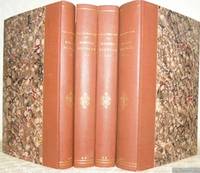
1959236106Paris: Jean-Jacques Pauvert 1959. hardcover. fine. Illustrated with engravings and facsimilies. 6 volumes 8vo blue cloth. Paris: Jean-Jacques Pauvert 1959. Fine.<br/> <br/> Jean-Jacques Pauvert unknown
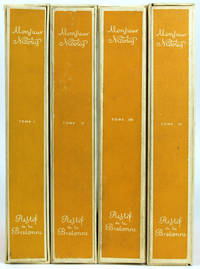
1956216904Paris: Editions du Cent Cinquantenaire 1956. La Présente Édition de "Monsieur Nicolas" complète en quatre volumes a ete imprimee a paris en 1956 et 1957 par Priester Freres pour la typographie et par Mourlot Freres pour la lithographie. Le Tome IV ayant ete termine en Septembre 1957. Cet ouvrage a ete tire a 492 exemplaires touts sur papier Velin du Marais. 410 exemplaires portant les numeros 82 a 492. Exemplaire 274. avec des lithographies originales de Suzanne Ballivet. 4 vols. 4to. Original Wrappers. Fine in fine orange pictorial chemises & slipcases. Bailivet Suzanne. "La Présente Édition de "Monsieur Nicolas" complète en quatre volumes a ete imprimee a paris en 1956 et 1957 par Priester Freres pour la typographie et par Mourlot Freres pour la lithographie. Le Tome IV ayant ete termine en Septembre 1957. Cet ouvrage a ete tire a 492 exemplaires touts sur papier Velin du Marais. 410 exemplaires portant les numeros 82 a 492. Exemplaire 274" avec des lithographies originales de Suzanne Ballivet. 4 vols. 4to. Restif de la Bretonne sometimes known as the "Rousseau of the gutter" wrote some 250 novels mostly based on his own rather libertine lifestyle and characterized by detailed realism. His novels licentious though they may be depict the lives misfortunes and manners of the peasant classes and thus provide valuable information about the social and economic life of the French people during the years before the French Revolution. At the same time his work has moral or didactic pretensions. As such Restif's work can be seen as a precursor of the realistic novels of the nineteenth century. Editions du Cent Cinquantenaire unknown
192488557Paris : Henri JonquiÂre 1924-1925. 250x160mm. demi-percaline. Auteur titre et ornementations dorÂŽs au dos plats papier marbrÂŽ couvertures conservÂŽes. Bel exemplaire. 4014 Henri JonquiÂre unknown
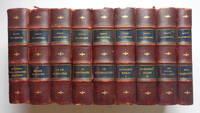
1930034437<p>Paris: Trianon 1930-32. Nove volumi 15x20.5 cm di 396 489 450 512 498 483 486 427 e 295 pagine con incisioni in nero e policrome a piena pagina fuori testo. Tiratura numerata su velin Marais 1200. Composizione dei nove volumi: 1 Les Nuits de Paris cuivres originaux de Gérard Cochet. 2 Les Contemporaines. Suivies de Les Françaises les Parisiennes le Palais-Royal l'Année des dames nationales. Cuivres originaux de Gaston Goor. 3 Le Pornographe. Suivi de Ma Mimographe les Gynographes le Thersmographe le Nouvel Abeilard le Nouvel Emile Philosophie de Monsieur Nicolas les Posthumes. Cuivres originaux de Georges Ripart. 4 La Vie de mon père. Suivie de Lucile Le Pied de Fanchette La Fille naturelle Adèle de C. Cuivres originaux de Gaston Nick. 5 Le Ménage parisien. Suivi de La Femme infidèle Ingénue Saxancour. Cuivres originaux de Carlo Farneti. 6 Le Paysan et la Paysanne pervertis. Cuivres originaux de Pierre Gandon. 7 e 8 Monsieur Nicolas. Cuivres originaux de P Dubreuil et P. Noel. 9 Mon calandrier suivi de Morale religion politique Mes ouvrage. Frontispice de Perre Gandon. Legature coeve in mezza pelle bordeaux dorso a nervi con doppio tassello e fregi dorati piatti con carta marmorizzata. Brossura originale conservata all'interno di ogni volume. Qualche usura alle cerniere e alle cuffie di alcuni volumi a volte fragili o fessurate peraltro condizioni molto buone. Peso: 9000 gr.</p> Trianon
194785397BB1947 . 2 Bände als Losebogenwerk in Schutzhülle. Paris: Editions du Moustié 1947. Gr.-8°. 129 109 4 S. Je 1 Frontispiz. 11 8 Farbholzschnitte. Farbiges Titelblatt in weiss/rosa. Schmuckmajuskeln. Engl. broschiert. Lose Bogen in Papphülle und Schuber leicht angestaubt; Rücken der Schutzhülle etwas gebleicht; Ecken minim bestossen; Schuber gebleicht und etwas unfrisch Vorliegend No. 935 von 1600. Restif de la Bretonne 1734-1806 Stammte aus einer wohlhabenden französischen Bauernfamilie. Gelernter Drucker. Verfasste Sittenromane und Sozialutopien. unknown
20975London: 1930. Limited edition of 825 sets. 4to. 6 volumes bound in parchment-backed cloth. Top edge gilt. Binding designed by Paul Nash. Limited edition of 825 sets. Illustrated. A near fine set. London: 1930. hardcover
193180716Paris : Georges Briffaut 1931. 230x170mm. broch couverture remplie. Complet de toutes les planches. Exemplaire sur papier vlin dÕArches numrot n.¡ 302 / 612. Sous emboitage bon tat. 851 Georges Briffaut unknown
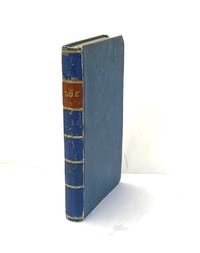
117678Paris chez Leroux/ de l’imprimeire de Digeon an VI =1797. 12mo. Engr. front 119 pp.; engr. front 118 pp. Worn contemporary blue paper boards gilt spine with red label and with extra blue colour added rubbed. Cohen De Ricci p. 672 â€Ce livre serait un plagiat de Restif dit Monselet à moins que ce ne fut une spéculation du mémeâ€. hardcover
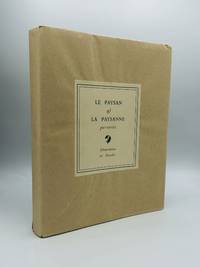
194871744Paris: Les Editions du Mouflon 1948. Wraps. Very good/Very good. Limited Edition one of 15 suites on Verge Diarches paper with two suites of plates by Jacques Touchet one in color and the other in black and white. This is exemplaire 19. The original drawing is not present. Extraordinarily prolific Restif 1734-1806 was a rival of the Marquis de Sade and is perhaps best known for the term named after him: retifism or shoe fetishism. In 1775 he published Le Paysan perverti an erotic novel with a moral purpose which was quite successful causing him to follow it with La Paysanne Pervertie 1784. Tall octavo: 189 p. The gatherings are bound together in the folded dust jacket over paper wrappers. A few short closed tears; otherwise very good. Les Editions du Mouflon unknown
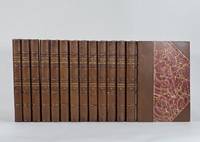
188310189Paris: Isidore Liseux 1883. Half Leather. Very Good binding. Octavos. Originally issued in wrappers this set in marbled paper over boards backed in morocco with corners; all edge gilt; ribbon markers. Original wrappers are not bound in. Only light rubbing to the binding aside from scuff to the top corner of the front boards of Vol. 1; half a dozen of the volumes show some minor spotting to the spine still an attractive set; light and even toning throughout the text; title pages bear an early and small inked "1287"; a few penciled notes otherwise clean. Vols. 2-12 have had a bookplate removed; a different bookplate on the front pastedown of Vol. 1 identifies this set as from the library of Maine bookseller and bibliophile Francis Massey O'Brien. A significant figure he was awarded an honorary doctorate from Bowdoin in 1990. An interesting association copy of a nice edition beautifully bound of this autobiography of the 18th century French novelist who reputedly coined the term "pornographer." Additionally his name became synonymous with foot fetish--retifism. Isidore Liseux unknown
187551479Paris: Auguste Fontaine 1875. First edition. No. 8 of 50 copies on Whatman Paper. Frontispiece portrait in two states. 4 xv xvi blank 510 2 table 8 Extrait du Catalogue Auguste Fontaine. 1 vols. 8vo. Original printed wrappers all edges uncut. Some browning to wrappers partial split at spine of front wrapper two small chips from margins of front wrapper else very fine unopened copy. First edition. No. 8 of 50 copies on Whatman Paper. Frontispiece portrait in two states. 4 xv xvi blank 510 2 table 8 Extrait du Catalogue Auguste Fontaine. 1 vols. 8vo. Printer's apprentice turned prolific author Restif de la Bretonne 1734-1806 was one of the distinctive literary voices of late eighteenth-century France whose works chronicle the excesses of the ancien régime and the tumults of the Revolution.<br /> Exceedingly scarce édition de tête of this bibliography which remains important and has been reprinted on several occasions. Auguste Fontaine unknown
192971108Ile Saint Louis. Paris Uten Ã¥r. 1929. 4to. Originalt typografisk omslag trykt i rødt og svart. UbeskÃ¥ret. 243 s. Gjennomillustrert med 12 erotiske farveplansjer utenom pagineringen. L’Imprimerie de Monsieur Nicolas Fransk. <br/><br/><em>Nr. 180 av 350 nummererte eksemplarer. “Ce volume non mis dans le commerce a été tiré à 350 exemplaires sur papier alfax numerotés à la presse de 1 à 350. No. 180â€. </em> unknown
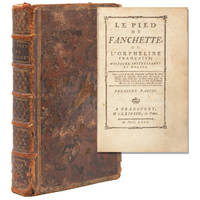
1769339018a Francfort & à Leipsig 1769. Counterfeit edition after the First edition prob. printed in Switzerland at Neuchâtel. 190 2; 172 2pp. 12mo. Contemporary mottled calf gilt spine. Counterfeit edition after the First edition prob. printed in Switzerland at Neuchâtel. 190 2; 172 2pp. 12mo. Restif's third book and first popular title. "Paul Lacroix Bibliographie et iconographie de tous les ouvrages de Restif de la Bretonne p. 89 n ̊ 2 unknown
177026858Jean Nourse/Gosse et Pinet London/The Hague 1770. Second Edition. Hardcover. Very Good/No Dust Jacket. The imprint is thought to be false and this edition was probably published in Paris in 1775/6. Very good sound copy neatly rebound. Slight foxing / soiling to first few leaves and one or two other leaves but text block generally clean. Margin of page 49 has a section torn from the right hand margin - not affecting the text. Contemporary calf boards with a matching new morocco spine and label. 2 388 88 8 pages index. Approx. size 8" by 5.5". Text is in French. Quantity Available: 1. Category: Sexuality & Gender; French Language; Pictures of this item not already displayed here available upon request. Inventory No: 26858. . Jean Nourse/Gosse et Pinet hardcover
17872873A delightful and vivid portrayal of the salons and artistic haunts of Paris society. Presented in a series of short chapters with plentiful dialogue short anecdotes and lively descriptions the subjects covered include a music lesson a scene in a café an evening at the Tuilleries the opera a ball a visit to the doctor a supper party dreams rebels springtime and 'the real pleasures' of life. The dedication is addressed 'O Vous Sexe charmant qui savez tout embellier malheureusement même jusqu'au vice . Les femmes sont chez nous les véritables précepteurs des hommes: elles aiment les sciences les arts les talens & les encouragent; elles veulent les trouver dans le cercle qui les entoure'.<p>Authorship of this work has been hotly contested over the years. Paul Lacroix in his bibliography of Restif not only attributed the work to Restif but claimed it to be among his best writings: 'Ce sont les plus agréables pages que Restif ait écrites et tout ce que nous avons lu dans ce joli ouvrage est bien du Restif de l'excellent Restif' Lacroix p. 334. Rives Child on the other hand states that the <i>Tableaux</i>are the work of the Prince de Ligne and adds 'Je ne vois absolument rien de Restif là-dedans. A mon avis cet ouvrage fut écrit par quelqu'un qui a passé pas mal de temps au Pays-Bas peut-être un diplomate français' Rives Child <i>Restif de la Bretonne Témoignages et Jugements. </i><i>Bibliographie</i> 1949 p. 312. In Cohen-de Ricci it is listed under Restif but with the proviso that all the chapters were not written by Restif. It has more recently been attributed to Stanislas Jean de Boufflers.</p><p>First published earlier in the same year the work was originally intended to accompany a suite of plates by Moreau. These were reused in a number of later editions but were not included in the present edition which has been entirely reset and which unlike other editions has no mention of plates on the title-page. The chapters of later editions also vary but in this edition they are the same as listed by Lacroix for the first edition and all appear in the same order.</p><i>vo 197 x 112 mm pp. ii 3-198; ii 3-176 tear on E2 pp. 67-8 through the page number but with no loss </i> <i>in contemporary mottled calf rubbed at extremities spine gilt in compartments brown morocco label lettered in gilt head and foot of spine chipped marbled endpapers red edges.</i><p>MMF 87:19; Jacob <i>Bibliographie et Iconographie de tous les ouvrages de Restif de la Bretonne</i> pp. 333-334; see Cohen-de Ricci 879 under Restif.</p><p>OCLC lists this edition at the BN and Biblioteca Nacional de Espana. </p> Tous les Marchands de Nouveautés
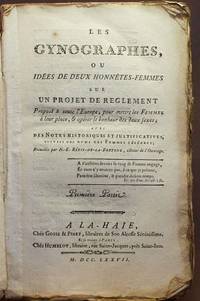
17776329The Hague but Paris: Gosse et Pinet; Humblot 1777. First edition. Fine. 2 volumes octavo 22; viii 238; 239- 567 1 pages. Unbound untrimmed unmarked and completely unsophisticated copy in original publisher's marbled paper wraps. Pages not bright. Some dampstains and occasional spots. References: Courbin "Rétif et son oeuvre" #14595; Rives Childs XVI p. 245; Jacob XVII p. 143. <br /><br />The collected works of Restif de la Bretonne would probably fill an entire wall case. He wrote tirelessly producing some 250 books--a considerable physical task if not the intellectual achievement of some of his contemporaries in the French siècle des Lumières. Restif was a libertine and he wrote quite a lot about sex. He also bravely ignored standard literary forms forging his own way into autobiography polemic essay pornography and fiction leaving trails that are yet to be explored. The volumes offered here in their completely original unsophisticated state form a part of an ambitious series of books that appeared over two decades under the umbrella title "Idées singulières" Modest Proposals an extensive compendium of rules and regulations for the creation of a utopia. Each title in the series proposes a reform project for a particular aspect of society. In the case of Les gynographes that aspect is the status of women in society. While not entirely a 21st-century feminist disappointingly he is unable to exceed received patriarchal attitudes Restif makes some presciently modern arguments including that gender inequality is a social construct and is not biologically determined and that education is the key to gender equality. Indeed the text betrays a disconcerting mix of statements that can be interpreted as misogynistic alongside truly revolutionary ideas about the condition of women in society. Even the 19th-century bibliographer P.L. Jacob notes that "some very singular and very original ideas" occur juxtaposed against "severe and unjust comments" about women. Gosse et Pinet; Humblot paperback
1767elala1483Paris: Widow Duchesne 1767. 1767. 4 Volumes. 12mo. pp. xxxvi with half-titles. woodcut ornaments & initials. 251; 288; 300; 299 13table. Uncut in original wrs. portions of spines defective & wrs. partly split along joints significant worming to pp. 119-244 with some loss of text missing words supplied in pen pp 139-40 in Vol. II with no loss tears to inner blank margin of first half-title. First and Only Edition of the authors first published work; 2000 copies were printed. Restif was a remarkably prolific author whose works are to a great degree autobiographical in nature. "Historiographer of the Parisian streets and their public during the Revolution and obsessive chronicler of his own private sexual fantasies Restif is a writer unique and innovatory in his perspective and style. He cuts across all the categories of the classical canon and closes the gap between the psychological novel of the 18th century and the social realism of the 19th." New Oxford Companion to Literature in French His literary admirers included Benjamin Constant Schiller Gérard de Nerval and the surrealists. "Much of Restif's work is libertine and was long excluded from serious studies of literature as cynical vulgar and tasteless. However his genius in recounting his experiences cannot be denied. His depiction of the country the city women though often idealized and nostalgic contains a realism that comes only from intimate knowledge. He insisted that his novels were true. He wrote about the lower classes and simple uneducated peasants whose habits and dialects he knew and captured on paper. . His love of the countryside and admiration for J.-J. Rousseau which earned him the dubious title "Le Rousseau des ruisseaux-The Rousseau of the gutters" fostered his dream of a virtuous and egalitarian republic. Restif de la Bretonne represents a curious amalgam of the idealist and the realist the moralist and the libertine the philosopher and the lover. Gerard de Nerval hailed him as his ''spiritual tutor." His vast imagination his gift of observation and his energy ally him with the likes of Balzac and Zola." Dolbow The Dictionary of Modern French Literature: From the Age of Reason through Realism p. 367 Rives Childs I. Lacroix I. Cioranescu 52652. Gay III 267. Martin 67.43. Quérard VII 545. Paris: Widow Duchesne, 1767. unknown
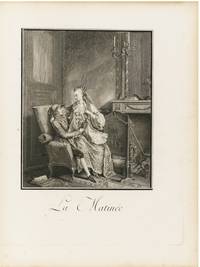
CA46<p>A Neuwied sur le Rhin 1789.</p><p>Large folio 580 x 425 mm 1 l. 37 pages and 26 etchings. Contemporary half-roan.</p><p><b>First edition of Restif de La Bretonne's text</b> who composed these anecdotes on behalf of an editor wishing to use Moreau's plates.</p><p><b>It is illustrated with 24 prints by Moreau and 2 prints by Freudeberg.</b><br /></p><p>It is the 3rd issue of Moreau's engravings published in 1775 and 1776 under the title <i>Suite d'Estampes pour servir à l'Histoire des Mœurs et du Costume des Français du XVIIIème siècle.</i></p><p><i>Le Monument du Costume</i> includes 26 plates because to the 24 plates of Moreau composing the second and third suites of engravings two plates from Freudeberg formerly separately published as prints were added.</p><p><b>This work a combination of pictures intended to reproduce at the same time as the tone of bel air the newest modes of costumes and adjustments the latest forms of furnishing</b><b> </b>had been undertaken by its parent the publisher Prault who had initially commissioned Freudeberg a conscientious but cold and stiff draftsman to carry out a first series. The Bernese artist having expressed the desire to return to his country Prault was happy to find Moreau willing to continue them.</p><p><b>The idea was to represent in a first series of twelve subjects the life of a young worldly woman in the middle of her pleasures and maternity care:</b><br /></p><p><i>the preoccupations of pregnancy the visits of friends to the interesting young woman the announcement to the young father of the birth of a son the departure of the little godfathers for baptism; and then the intimate concert the Opera evening the walk in the woods the toilet in the salons of Versailles where we believe to see the portrait of the Princess of Lamballe etc. Moreau rendered these different scenes whose models were before his eyes these elegant figures costumes and interiors with a talent that has not been matched. We believe we are reliving the time when they were drawn so much is the illusion and the art completed.</i></p><p><b>In the second series called by the petit-maître he represents the life of a fashionable young lord</b><b><i>: </i></b><i>his rising in the midst of his people his town costume and his court dress his walk to the races his compliments to the famous dancer and the supper that follows them the resistance of a beautiful lady whose defeat is near allusion they say to a faithful adventure attached to the truth of the furnishing of the environment conscientious observer of the reality specialty and so to speak topicality of objects and things; it not only gives the scene but what frames it the physiognomy and the character of the place where it takes place.</i></p><p><b>His furniture is of the exact year his fashion is of the day. from this emerges this precious illusion these inappreciable information from his plates.</b> <i>He invents neither a cabinet nor a living room . while the other engravers indulge in the whims of their imagination the ornamentation which comes to the end of their fingers Moreau studies copies takes his models; he has a shepherdess or a marquetry table installed. it is through this patient scrupulous applied study pushed to the last limit of observation and precision that Moreau is a historian."</i></p><p><b>Very wide-margin copy preserved in its pure contemporary condition.</b></p><br /><br /><b><u>Français</u></b><p>Grand in-folio 1 feuillet non chiffré 37 pages et 26 estampes. Demi-basane de l'époque.</p><p>580 x 425 mm.</p><p><b>Edition originale du texte de Restif de la Bretonne </b>qui composa ces historiettes pour le compte d'un éditeur désireux d'utiliser les planches de Moreau.</p><p><b>Elle est ornée de 24 estampes de Moreau et de 2 estampes de Freudeberg.</b></p><p>C'est le 3ème tirage des gravures de Moreau parues en 1775 et 1776 sous le titre de <i>Suite d'Estampes pour servir à l'Histoire des Mœurs et du Costume des Français du XVIIIème siècle</i>.</p><p><i>Le Monument du Costume</i> comprend 26 planches parce qu'aux 24 planches de Moreau formant la deuxième et troisième suite d'estampes on a joint deux planches d'après Freudeberg qui avaient été publiées séparément comme estampes.</p><p><b>Cet ouvrage réunion de tableaux destinés à reproduire en même temps que le ton du bel air les modes les plus nouvelles des costumes et des ajustements les plus récentes formes de l'ameublement</b><b></b><i>avait été entrepris par son parent l'éditeur Prault qui avait d'abord chargé Freudeberg dessinateur consciencieux mais froid et compassé d'en exécuter une première série. L'artiste bernois ayant témoigné le désir de retourner dans son pays Prault fut heureux de trouver Moreau disposé à les continuer.</i></p><p><b>Il s'agissait de représenter dans une première série de douze sujets la vie d'une jeune femme mondaine au milieu de ses plaisirs et des soins de la maternité :</b></p><p><i>les préoccupations de la grossesse les visites des amies à l'intéressante jeune femme l'annonce au jeune père de la naissance d'un fils le départ des petits parrains pour le baptême ; et puis le concert intime la soirée d'Opéra la promenade au bois la toilette des salons de Versailles où l'on croit voir le portrait de la princesse de Lamballe etc. Moreau a rendu ces différentes scènes dont les modèles étaient sous ses yeux ces personnages ces costumes et ces intérieurs élégants avec un talent qui n'a pas été égalé. On croit revivre à l'époque où elles ont été dessinées tant l'illusion en est vive et l'art achevé.</i></p><p><b>Dans la seconde série appelée du</b><i><b>Petit-Maître</b></i><b> il représente la vie d'un jeune seigneur a la mode :</b> <i>son lever au milieu de ses gens son costume de ville et sa toilette de cour sa promenade aux courses ses compliments à la danseuse en renom et le souper qui les suit la résistance d'une belle dame dont la défaite est proche allusion dit-on à une aventure fidèle attaché au vrai de l'ameublement du milieu consciencieux observateur de la réalité de la spécialité et pour ainsi dire de l'actualité des objets et des choses ; il ne donne pas seulement la scène mais ce qui l'encadre la physionomie et le caractère du lieu où elle se passe.</i></p><p><b>Ses meubles sont de l'année même ses modes sont du jour. de là cette précieuse illusion ces inappréciables renseignements de ses planches</b>. <i>Il</i><i> n'invente ni un cabinet ni un salon. tandis que les autres vignettistes se laissent aller à la fantaisie de leur imagination à l'ornementation qui vient au bout de leurs doigts Moreau étudie copie prend ses modèles ; il fait poser une bergère ou une table de marqueterie. C'est par cette étude patiente scrupuleuse appliquée poussée à la dernière limite de l'observation et de la précision que Moreau est un historien.</i> "</p><p><b>Exemplaire très grand de marges en pure condition de l'époque.</b></p> hardcover