3 212 résultats
193417197JLondon: London Films 1934-1936. Present in the archive is the extremely rare privately printed original screenplay written by H.G. Wells for the film Things To Come entitled at this working stage - Whither Mankind Most films scripts of the period are simple mimeographed pieces. Wells went and had his script typeset by a printer and printed like a book in a tiny quantity: “This is the property of Mr. H.G. Wells.PRIVATE AND CONFIDENTIAL.FOR PRIVATE CIRCULATION ONLY.†Bound in plain green wrappers. Laid in is an Autograph Letter Signed from H.G. Wells to the film director of Things To Come William Cameron Menzies in which he tries to take Menzies to account and assert his control over the film: “Private and Confidential. Oct. 9. 34. Dear Menzies. This is all wrong. Get it in full perspective. This is an HG WELLS film!!!! And your highest and best is needed for the complete realization of MY treatment. Bless you. The very casting of ‘machines to the design of Mr. Menzies’ will be a casting out. Again bless you H.G.†Accompanied by a remarkable detailed pencil quarto size Autograph Letter Signed H.G. Wells written to actor Raymond Massey the lead star of Things To Come. Wells's obsession with exerting his desires are well shown in the letter where Wells takes Massey to task on aspects of his performance in a key scene with Ralph Richardson telling him that it should be re-shot and Wells has drawn 4 pencil sketches showing how he thinks the scene should be filmed. This letter was then given by Massey to director Menzies. Additionally present is a typed carbon copy of a letter to H.G. Wells from actor Ralph Richardson who played the role of The Boss in the film. Apparently Wells was unhappy with Richardson's performance as well and Richardson in the letter suggests it can be improved by reshooting and that Wells should speak to Menzies as director. This carbon was sent on to Menzies to give him a heads up. And there are four original black and white still photographs from the film including a terrific image of H.G. Wells on the set with actors Raymond Massey and Ann Pearl Argyle in their futurist costumes. All the material is in very good to fine condition enclosed in a custom morocco and cloth clamshell box. Things To Come was the first great science fiction picture in the sound film era and its treatment approach and stunning design has influenced generations of motion pictures. London Films hardcover
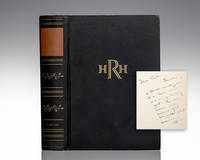
1931148697New York: W. W. Norton & Company Inc 1931. First collected edition of this foundational work in Australian literature. Octavo original publisher's cloth with gilt titles to the spine and gilt author's initials to the front panel. Association copy inscribed by Ernest Hemingway to his cousin on the front free endpaper "Dear Ruth: This one or three really since it is three novels - is or are pretty very good. The same woman wrote Maurice Guest - very good about musicians - EH." The recipient Ruth White Lowry 1884-1974 was Hemingway's cousin and Kansas City native. Hemingway was known to have frequented Bennett Schneider's bookshop in Kansas City where he likely acquired this book for his cousin who he was staying with at the time. In near fine condition. Bookseller's ticket to the rear pastedown of Bennett Schneider Book Seller Kansas City. Henry Handel Richardson the pen name of Ethel Florence Lindesay Richardson is widely regarded as one of Australia's most important early novelists known for her psychologically nuanced and stylistically refined fiction. Educated in both Australia and Europe Richardson drew heavily on her own life experiences to explore themes of identity exile and the tensions between individual aspiration and social expectation. 'The Fortunes of Richard Mahony' is a landmark work in Australian literature notable for its psychological depth and portrayal of colonial life. Published as a trilogy between 1917 and 1929 the novel chronicles the rise and fall of Richard Mahony an English-born doctor whose pursuit of social status and intellectual fulfillment is gradually undone by mental illness and cultural alienation. Drawing on Richardson’s own family history the narrative presents a compelling critique of the colonial experience exposing the tensions between personal ambition and the harsh realities of life in nineteenth-century Australia. W. W. Norton & Company, Inc hardcover
1901138225New York: Croscup & Sterling Company 1901. Handsome set of the Edition de Bibliophile The Edition de Bibliophile set one of 20 limited edition subscription copies only printed on handmade Japanese vellum and published ad hominem. Each volume is signed by the publishers on the limitation page and several of the hand-coloured plates are signed by the colourists. Volume 1 features an original dry-point etching by Jean Paleologue a Romanian poster artist painter and illustrator. A remarkable set. 20 vols octavo 234 x 153 mm. Hand-coloured frontispieces in two states black and white engraved titles hand-coloured plates by various artists in three states with tissue guards printed in red to each vol. Finely bound by Stikeman in contemporary green crushed morocco titles to spines gilt in compartments 3 gilt rose designs inlaid with red morocco raised bands decorated with frieze of tulips in gilt boards elaborately blocked in gilt floral border with red morocco onlays surrounding a central panel of gilt tulips green morocco doublures with author's initials stamped in gilt to a red morocco central panel framed by elaborate gilt tooling white watered silk moiré patterned free endpapers top edges gilt others untrimmed red bookmarker handmade Japanese vellum sheets. Spines sunned to brown or pale green some tips rubbed sides bright and clean internally. A very good set. hardcover
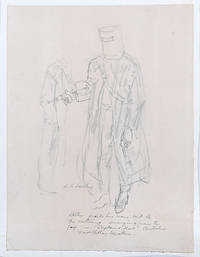
19691724461969. Tell 'em I died game An absorbing collection of accomplished portraits and location sketches by the Australian artist George Crossley 1919-1973 executed during the making of Tony Richardson's Ned Kelly 1970 which "appeared at the beginning of what is considered a renaissance in Australian cinema" and at a moment when Kelly was the cynosure of "related constructions of the Australian past and identity" Basu p. 131. The film starred Mick Jagger as the iconic bushranger and he is pictured in two drawings: "Mick Jagger as 'Ned Kelly' addressing the Jury Braidwood Courthouse 27th Aug '69. Ned Kelly Location Rehearsals" and "Mick Jagger in the courtroom Braidwood Ned Kelly location. Aug '66". Approximately 54 drawings are finely executed close up portraits of cast members extras and crew including Jagger's stuntman Bill Peter caught during breaks from filming each meticulously captioned giving the sitter's identity and the location. A group of half a dozen feature members of the folk band the Wild Colonial Boys some of whom appear in the film and are pictured in performance. Kelly's final gun fight is recorded in an action sequence of looser pencil drawings: "Rehearsals for the Ambush of Kelly" "Kelly fights his way out of the cutting emerging from the fog" and finally "Kelly overcome with loss of blood weakens and collapses". A single pencil drawing depicts Kelly's famous bulletproof armour. Richardson himself makes an appearance in "Kelly's collapse when wounded and identification - by Inspector Nicholson - Glenrowan location. Tony Richardson directing". Crossley was born in Perth and studied at the Melbourne National Gallery School under the renowned portraitist William Dargie. Afterwards he worked as a television artist for the BBC in London. He held exhibitions in Europe the Middle East and Australia. His work is represented in a number of Australian institutions. Ned Kelly was filmed entirely in Australia largely around Braidwood New South Wales. The supporting cast of mainly Australians actors included Frank Thring as the colonial judge Sir Redmond Barry who sentenced Kelly to hang. Thring remains best known for his unforgettable high camp performances in a string of Hollywood blockbusters: Ben-Hur King of Kings and El Cid. Ian McKellen was originally considered for the role of Kelly but the studio wanted a bankable "big personality" and it was offered to Mick Jagger. The film "garnered a lot of attention for the bushranger both at home and abroad as well as causing a fracas for having as lead and director not only non-Australians but Britons Although none of the producers of Kelly products from this period was directly associated with the New Left it is clear that through Kelly they were intervening in related constructions of the Australian past and identity. They situated their past firmly within the structural inequalities necessitated by colonialism at a time when British colonies in Africa and the Caribbean were rapidly gaining independence and affirmed a national identity not only separate from 'Britishness' but in opposition to it" Basu p. 122-25. "Ned Kelly was transformed with the help of the telegraph wire and the early mass media from a regional folk hero into a romanticised media celebrity He has progressed from outlaw to national hero. to international icon. The still-enigmatic slightly saturnine and ever-ambivalent bushranger is the undisputed if not universally admired national symbol of Australia" Seal pp. 99-100. As the Australian Dictionary of Biography concludes "The legend still persists and seemingly has a compelling quality that appeals to something deeply rooted in the character of the 'average' Australian". Together 99 drawings most of them signed by the artist as "G. S. Crossley" the majority executed in black ink on paper some with pencil under drawing and occasional watercolour wash various sizes from 370 x 500 mm to 240 x 310 mm; all laid down on card and with detailed captioning often with a first version jotted down in situ when the drawing were created and a second more formal caption. With a small quantity of research material compiled by a previous owner. Occasional marks but overall in very good condition. Laura Basu Ned Kelly as Memory Dispositif: Media Time Power and the Development of Australian Identities 2012; Graham Seal Outlaw Heroes in Myth and History 2011. unknown
1919408155Atlantic City 1919. Softcover. Good. Octavo. Measuring 7" x 9". String-tied decorative paper wrappers. Contains 48 black and white or sepia toned gelatin silver photographs measuring 3.5" x 5.5" with captions. Additionally included is a certificate issued to Richardson and signed by one of Stinson's daredevil pilots attesting to his taking a 33-minute flight with a newspaper article written by Richardson about the flight laid in. The album is good only with considerable edgewear lacking the back cover with near fine photographs.<br /> <br /> A photo album compiled by William H. Richardson a journalist and amateur historian who published a number of monographs about New Jersey. The photographs document Richardson's arrival at the barnstorming event with his friend W.C. Cobb. The photos show the men in flight jackets and leather helmets as well as Eddie Stinson and his pilots and crew. The album features Stinson's seaplanes and ground aircraft and many in-flight scenes and bird's-eye views of Atlantic City. The newspaper article and album label note that Richardson was the first civilian from Jersey City to take aerial photographs.<br /> <br /> Stinson was an early Wright-trained aviator and served as a flight instructor for the U.S. Army during World War I. Following the war he started a barnstorming troupe and during one year earned over $100000 as a stunt pilot. He set a world endurance record for flight in 1921 and eventually founded the Stinson Aircraft Company of Dayton and Detroit which produced a number of very popular aircraft. Stinson accumulated more than 16000 hours of flight time - the most of any pilot in his lifetime - but he died in a 1932 airplane crash at Chicago.<br /> <br /> A very pleasing collection of early aviation stunt pilots and aerial photos of New Jersey. unknown
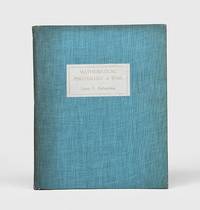
1919162531Oxford: Wm. Hunt 1919. With presentation letter First edition first impression of Richardson's first and pioneering paper on the subject; presentation copy with an autograph letter from the author loosely inserted. The letter is addressed to "Mr Bartlett" probably Frederic Bartlett one of the forerunners of cognitive psychology written on the author's home stationery and dated 20 September 1928. "You may like a copy of 'The Mathematical Psychology of War' if I have not already sent you one. If so you can pass it on. L. F. Richardson". In a postscript Richardson notes that this is his only published work but soon there may be two papers by him in the Journal of General Psychiatry. In the work the mathematician and pacifist Lewis Fry Richardson 1881-1953 developed a mathematical model for describing the change in animosity between two opposing sides during a war and "postulated that the rate of increase of the warlike activity of one nation depended on the current activity of the opposing nation" ODNB. It was published at the author's own expense costing him £35 for 300 copies in total. It contains Bertrand Russell's 20-line contribution "Problem: To Produce in Two Nations a Mutual Will to War" pp. 15-16. "Russell had been impressed with the manuscript which Stanley Unwin had forwarded him although he thought that Richardson's subject required a more extended treatment and that he should 'eliminate dogmatic statements of his metaphysical opinions where they are irrelevant'. But otherwise 'Mr. Richardson's main ideas appear to me true original and important' 29 December 1918. Russell's 'Problem' was enclosed with this letter to Unwin with instructions that it be passed on to the author 'for his amusement'" Rempel & Haslam p. 405. Quarto. Roneo typescript pp. 3 50. Original blue cloth printed paper label to front cover. Slight sunning to spine contents a little toned. A very good copy. Blackwell & Ruja B9. Richard A. Rempel & Beryl Haslam "Appendix I" in their critical edition of Russell's Uncertain Paths to Freedom 2000. hardcover
1901030407new york: Croscup & Sterling 1901. Book. Illus. by Walter McCall. Near Fine. Hardcover. 8vo - over 7¾ - 9¾" tall. Twenty 20 volumes in gilt lettered half blue morocco leather over marbled boards with matching endpapers.Top edge gilt. Edition limited to56 copies of the autograph edition of which this is copy #28. THe first volume is also signed by William Lyon Phelps who has written the introduction and a life of the author. Each Volume has a hand coloured frontis several of which are signed by the artist. All of the above on Holland hand made paper. The set consists of 3 long novels Pamela Sir Charles Grandison and Clarissa Harlowe. A beautiful set in wonderful condition with just a little edgewear. Croscup & Sterling Hardcover
1901249757New York: Croscup & Sterling 1901. Limited. hardcover. very good. Life of the Author and Introductions by by William Lyon Phelps. 20 volumes. Illustrated. Handsomely bound in full green morocco spines faded to brown elaborated stamped in gilt with red inlays & inlaid leather doublures by Stikeman. silk moire flyleaves t.e.g. New York: Croscup & Sterling 1901. Limited Edition.<br/> <br/> Edition de Bibliophile limited to 20 named copies on hand-made Japan paper exclusively for American subscribers and the type distributed. Thhis is the "Aaron Hill" copy<br/> <br/> Croscup & Sterling unknown
1901249757New York: Croscup & Sterling 1901. Limited. hardcover. very good. Life of the Author and Introductions by by William Lyon Phelps. 20 volumes. Illustrated. Handsomely bound in full green morocco spines faded to brown elaborated stamped in gilt with red inlays & inlaid leather doublures by Stikeman. silk moire flyleaves t.e.g. New York: Croscup & Sterling 1901. Limited Edition.<br/><br/> Edition de Bibliophile limited to 20 named copies on hand-made Japan paper exclusively for American subscribers and the type distributed. Thhis is the "Aaron Hill" copy<br/><br/> Croscup & Sterling unknown books
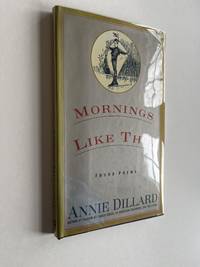
1995ABE-1593565789213Harpercollins 1995. 1st Edition. Hardcover. Very Good/Very Good. The inscription reads: "For Bob the love and light of my life Annie." The relationship between Annie Dillard and her husband Robert D. Richardson is a remarkable and well-known story. Both were married to different people when Dillard sent Richardson a fan letter out of the blue prompted by a book he wrote Henry Thoreau: A Life of the Mind. Dillard wrote her Master's thesis at Hollins College on Walden and Henry and the transcendentalists of course have majorly influenced her work starting with Pilgrim at Tinker Creek. Richardson is one of our foremost literary biographers having written also about Emerson and William James the latter book earned him the Bancroft Prize. As Dillard described it she and Richardson had "two lunches and three hand shakes" and then both got divorces so they could get married in 1988. The next book she wrote The Writing Life is fittingly dedicated "For Bob" and they remain one of America's foremost literary and transcendental couples. Richardson has even gone on to write the biography of Dillard a short one. As for condition: the book is very good because of some light foxing to upper and outer edges of the text block and some extremely minor sunning or soiling to the upper and lower edges of the boards; the jacket is very good because of some moderate sunning to the spine. Dillard left a second signature her public more-perfunctory style above her name on the title page. All in all the book presents extremely well and its association is the ultimate knot. A copy inscribed to a life partner is always de facto a dedication copy and when it comes to having "mornings like this" Richardson would know better than anyone. Please inquire for photos. Harpercollins hardcover
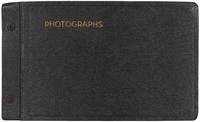
19205360171920. Hardcover. Near Fine. Oblong octavo 8 ½" x 5". Contemporary screw-bound black pebbled cloth covers. Contains 132 gelatin silver prints 3" x 4" including some gold toned neatly mounted on the rectos and versos of black paper leaves. Without captions or dates. Slight silvering at the edges of some prints else fine. A remarkable album of female nudes photographed by H.R. Cremer as goddesses and sprites. His images feature one two or three nude women in various subtle or striking poses taken outdoors in various gardens and wooded areas including lakes on open fields and hilltops and along an ocean coast. Among the models are several images of an Asian woman. Also included are six early studio portraits of individual female nudes.<br /> <br /> A third generation photographer based in Philadelphia and New York Cremer studied at the Pennsylvania Academy of Fine Arts and first exhibited his photographs in 1924. Inspired by the Art Deco aesthetic Cremer incorporated Native American motifs Aztec and Maya as well as Greek and Roman mythology in his photographs of women.<br /> <br /> A beautiful well-preserved album in fine condition featuring Cremer's best work from the 1920s-30s. hardcover
1964131051Beverly Hills CA: Metro-Goldwyn-Mayer MGM 1964. Draft script for the 1965 film based on the 1948 novel by Evelyn Waugh legendarily co-written by Terry Southern and Christopher Isherwood. Deluxe working script belonging to uncredited crew member William Todd Mason with his name and phone number in manuscript ink on the title page and some brief penciled annotations on three pages. Laid in is a corner stapled three-page Staff and Crew list with two name additions in manuscript red ink on the second page. <br /> <br /> Included is a vintage studio still photograph from the film. <br /> <br /> An early draft issued nearly two years prior to the film's October 1965 release with substantial differences from the finished film. <br /> <br /> The sister film to "Dr. Strangelove" and in the eyes of many just as much a masterpiece of exquisitely wrought black humor. Made in the US but in a dense British-American style. Ostensibly a satire on the funeral business in which a young British poet winds up in a Hollywood cemetery as part of an inheritance arrangement-but in reality a satire of Hollywood itself as well as the Western malaise of the mid 1960s. <br /> <br /> Script: Self wrappers presumably as this draft was issued. Title page present rubber stamped copy No. 70 dated July 21 1964 with credits for screenwriters Southern and Isherwood. 158 leaves mimeograph duplication with blue revision pages throughout dated 7-22-64. Pages Fine wrapper Fine bound with two gold brads. <br /> <br /> Staff and Crew listing: two leaves slightly worn with annotations on the second page. Metro-Goldwyn-Mayer [MGM] unknown
1964131051Beverly Hills CA: Metro-Goldwyn-Mayer MGM 1964. Draft script for the 1965 film based on the 1948 novel by Evelyn Waugh legendarily co-written by Terry Southern and Christopher Isherwood. Deluxe working script belonging to uncredited crew member William Todd Mason with his name and phone number in holograph ink on the title page and some brief penciled annotations on three pages. Laid in is a corner stapled three page Staff and Crew list with two name additions in holograph red ink on the second page. <br/><br/>Included is a vintage studio still photograph from the film. <br/><br/>An early draft issued nearly two years prior to the film's October 1965 release with substantial differences from the finished film. <br/><br/>The sister film to "Dr. Strangelove" and in the eyes of many just as much a masterpiece of exquisitely wrought black humor. Made in the US but in a dense British-American style. Ostensibly a satire on the funeral business in which a young British poet winds up in a Hollywood cemetery as part of an inheritance arrangement-but in reality a satire of Hollywood itself as well as the Western malaise of the mid 1960s. <br/><br/>Script: Self wrappers presumably as this draft was issued. Title page present rubber stamped copy No. 70 dated July 21 1964 with credits for screenwriters Southern and Isherwood. 158 leaves mimeograph duplication with blue revision pages throughout dated 7-22-64. Pages Fine wrapper Fine bound with two gold brads. <br/><br/>Staff and Crew listing: two leaves slightly worn with annotations on the second page. Metro-Goldwyn-Mayer [MGM] unknown books
1968147232Paris: Les Films Marceau 1968. Three Draft scripts for the 1969 film by three different screenwriters. <br/><br/>From the estate of film producer Elliott Kastner whose best known credits include "The Long Goodbye" Robert Altman 1973 "The Missouri Breaks" Arthur Penn 1976 and "Heat" Michael Mann 1996.<br/><br/>The first script is an undated draft script by screenwriter George Bluestone who previously adapted Winston Graham's 1967 novel "The Walking Stick" for the 1968 Eric Till film with copied annotations throughout striking adding and adjusting dialogue.<br/><br/>The second is a Second draft script dated 1st April 1968 by novelist playwright and screenwriter Derek Marlow with copied annotations striking scenes or pages on nearly every page. Marlow said in an interview that he was asked by director Tony Richardson which book he'd like to adapt for a screenplay and Marlow suggested Nabakov's "Laughter in the Dark." Two or three months afterward Marlow received a call from Richardson asking him to write the adaptation. <br/><br/>At the time Richard Burton was to star alongside Marianne Faithfull. Marlow then went to the U.S. to promote his 1968 novel "Memoirs of a Venus Lackey" and upon his return to the UK found out a new screenplay by Edward Bond had been written and Burton and Faithfull had been replaced.<br/><br/>The third is a draft script dated 24th June 1968 by Edward Bond. IMDB shows the filming date as starting June 1968 thus likely a draft used early in the production. The first half of the script to page 66 is on pink paper with the remainder on green paper with no revision date change.<br/><br/>Based on the 1932 novel by Vladimir Nabokov updating the original 1930s Berlin setting to 1960s swinging London about a wealthy art dealer who is seduced and swindled out of his fortune by a young woman and her lover.<br/><br/>Set in London and the Riviera shot on location in Spain France and the United Kingdom. <br/><br/>George Bluestone script:<br/><br/>Wrapper integral with title page with credits for screenwriter George Bluestone and author Vladimir Nabokov. 114 leaves with last page of text numbered 109. Xerographic duplication rectos only. Pages Near Fine bound with two gold brads.<br/><br/>Derek Marlowe script:<br/><br/>Black wrappers with die-cut title window in the British style. Title page present dated 1st April 1968 obscured but visible through Winkast sticker noted as Second Draft with credits for screenwriter Derek Marlowe and author Vladimir Nabokov. 137 leaves with last page of text numbered 136. Xerographic duplication rectos only. Pages Near Fine wrapper Near Fine bound internally with two flat metal brads<br/><br/>Edward Bond script:<br/><br/>Black wrappers with die-cut title window in the British style. Title page present dated 24th June 1968 with credits for screenwriter Edward Bond and author Vladimir Nabokov. 110 leaves with last page of text numbered 108. Mimeographed rectos only. Pages Near Fine wrapper Near Fine bound internally with two flat metal brads. Les Films Marceau unknown books
1919135563Oxford: Wm. Hunt 1919. Mr. Richardson's main ideas appear to me true original and important" Russell First edition of Richardson's first and pioneering paper on the subject containing Russell's 20-line contribution "Problem: To Produce in Two Nations a Mutual Will to War" pp. 15-16. It was published at the author's own expense costing him £35 for 300 copies total. In this fifty-page essay the mathematician and pacifist Lewis Fry Richardson 1881-1953 developed a mathematical model for describing the change in animosity between two opposing sides during a war and "postulated that the rate of increase of the warlike activity of one nation depended on the current activity of the opposing nation" ODNB. "Russell had been impressed with the manuscript which Stanley Unwin had forwarded him although he thought that Richardson's subject required a more extended treatment and that he should 'eliminate dogmatic statements of his metaphysical opinions where they are irrelevant'. But otherwise 'Mr. Richardson's main ideas appear to me true original and important' 29 December 1918. Russell's 'Problem' was enclosed with this letter to Unwin with instructions that it be passed on to the author 'for his amusement'" Rempel & Haslam p. 405. Loosely inserted is a clipping from The Friend of April 7 1961 reviewing the posthumous publication of two volumes of Richardson's works; Arms and Insecurity and Statistics of deadly Quarrels. Quarto. Roneo typescript pp. 3 50. Original dark blue cloth-backed blue buckram boards printed paper label to front board. Ownership inscription dated 1919 to front pastedown with a typed letter signed loosely inserted returning the book to him. Spine ends worn and corners lightly rubbed Blackwell & Ruja B9. See Richard A. Rempel & Beryl Haslam's critical edition of Russell's Uncertain Paths to Freedom: Russia and China 1919-22 Routledge 2000 Appendix I. hardcover
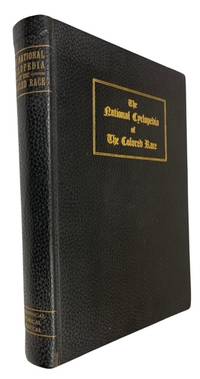
191993907Montgomery Alabama: National Publishing Company 1919. 1st and only edition. Hardcover. Near Fine. Full page frontis portrait of Booker T. Washington photos index 617 3p. Original black cloth. 31 cm. Minor spotting on back cover. One text leaf has a chip in right margin. No jacket did it have one. An appealing copy of this scarce and rather lavish production -- probably the fanciest of the African American Who's Who volumes. National Publishing Company hardcover
1968147232Paris: Les Films Marceau 1968. Three Draft scripts for the 1969 film by three different screenwriters. <br /> <br /> From the estate of film producer Elliott Kastner whose best known credits include "The Long Goodbye" Robert Altman 1973 "The Missouri Breaks" Arthur Penn 1976 and "Heat" Michael Mann 1996.<br /> <br /> The first script is an undated draft script by screenwriter George Bluestone who previously adapted Winston Graham's 1967 novel "The Walking Stick" for the 1968 Eric Till film with copied annotations throughout striking adding and adjusting dialogue.<br /> <br /> The second is a Second draft script dated 1st April 1968 by novelist playwright and screenwriter Derek Marlow with copied annotations striking scenes or pages on nearly every page. Marlow said in an interview that he was asked by director Tony Richardson which book he'd like to adapt for a screenplay and Marlow suggested Nabakov's "Laughter in the Dark." Two or three months afterward Marlow received a call from Richardson asking him to write the adaptation. <br /> <br /> At the time Richard Burton was to star alongside Marianne Faithfull. Marlow then went to the US to promote his 1968 novel "Memoirs of a Venus Lackey" and upon his return to the UK found out a new screenplay by Edward Bond had been written and Burton and Faithfull had been replaced.<br /> <br /> The third is a draft script dated 24th June 1968 by Edward Bond. IMDB shows the filming date as starting June 1968 thus likely a draft used early in the production. The first half of the script to page 66 is on pink paper with the remainder on green paper with no revision date change.<br /> <br /> Based on the 1932 novel by Vladimir Nabokov updating the original 1930s Berlin setting to 1960s swinging London about a wealthy art dealer who is seduced and swindled out of his fortune by a young woman and her lover.<br /> <br /> Set in London and the Riviera shot on location in Spain France and the United Kingdom. <br /> <br /> George Bluestone script:<br /> <br /> Wrapper integral with title page with credits for screenwriter George Bluestone and author Vladimir Nabokov. 114 leaves with last page of text numbered 109. Xerographic duplication rectos only. Pages Near Fine bound with two gold brads.<br /> <br /> Derek Marlowe script:<br /> <br /> Black wrappers with die-cut title window in the British style. Title page present dated 1st April 1968 obscured but visible through Winkast sticker noted as Second Draft with credits for screenwriter Derek Marlowe and author Vladimir Nabokov. 137 leaves with last page of text numbered 136. Xerographic duplication rectos only. Pages Near Fine wrapper Near Fine bound internally with two flat metal brads<br /> <br /> Edward Bond script:<br /> <br /> Black wrappers with die-cut title window in the British style. Title page present dated 24th June 1968 with credits for screenwriter Edward Bond and author Vladimir Nabokov. 110 leaves with last page of text numbered 108. Mimeograph duplication rectos only. Pages Near Fine wrapper Near Fine bound internally with two flat metal brads. Les Films Marceau unknown
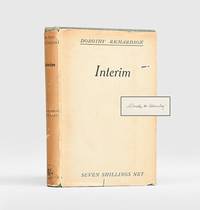
1919190803London: Duckworth & Co. 1919. The tide of life had swept away leaving an undisturbed stillness a space swept clear First edition signed by the author of the the fifth instalment in Richardson's semi-autobiographical Pilgrimage series the first literary work to which the phrase "stream of consciousness" was applied. The phrase "stream of consciousness" was previously only used in psychological contexts. The writer and suffragist May Sinclair in a review of the first three Pilgrimage books appropriated it in her praise of the impressionistic style: "In identifying herself with this life which is Miriam's stream of consciousness Miss Richardson produces her effect of being the first of getting closer to reality than any of our novelists who are trying so desperately to get close" p. 58. Many other contemporary authors also expressed their admiration of Pilgrimage such as Virginia Woolf who claimed that Richardson invented "the psychological sentence of the feminine gender" p. 81. The series ran to 13 books in total. Octavo. Original blue cloth spine and front cover lettered and ruled in dark blue. With dust jacket publisher's cancel price sticker to spine. Spine sunned a little wear to head; jacket unclipped spine and panels toned small puncture to front panel occasional short closed tears and shallow loss to edges rear flap folds split at ends but holding: a very good copy in like jacket. May Sinclair "The Novels of Dorothy Richardson" The Egoist vol. 5 no. 4 Apr. 1918; Virginia Woolf "The Tunnel" The Times Literary Supplement 13 Feb. 1919. hardcover
191686362New York: Alfred A. Knopf 1916. First edition. Hardcover. Mild toning to margins but overall a very good copy in very good dust-jacket benefitting from some skilful restoration mostly to spine ends and folds. Very good. First US edition first printing. 8vo. Original blue cloth with printed title label to spine. Dust-jacket. The first US edition of the first book in the author's 'Pilgrimage' series including an introduction by J.D. Beresford. The author was an important innovator in the use of "stream-of-consciousness" and is increasingly viewed now as a key figure in literary modernism. Scarce in the jacket. Alfred A. Knopf hardcover
1919515820New York: Alfred A. Knopf 1919. Hardcover. Fair. First American edition. Introduction by May Sinclair. Octavo. 285pp. Maroon cloth with publisher's printed paper spine label. Small bookstore label front pastedown spine a bit frayed at extremities label is nicked and browned a fair copy. Grace Hegger Lewis' copy with her contemporary ink inscription on front flyleaf: "Grace Hegger Lewis. Bluemont Virginia. June 1920." Lewis was a published author and the first wife of Sinclair Lewis. The first volume of the author's 'Pilgrimage' series of thirteen novels. Alfred A. Knopf hardcover
193941578San Francisco Shanghai / Macao / Hong Kong: The Trans-Pacific Chinese Junk Expedition Inc 1939. Letters are dated: Nov 20 1938; Jan 18th 1939; Jan 27th 1939; and Feb 16th 1939. Though typewritten and mimeographed all four are personally signed by Halliburton. Letters typewritten to buff paper envelopes with blue seal of the "Sea Dragon" with illustration printed to front. Modest wear to paper some light age-toning and rubbing to papers. Envelopes rubbed and worn. Withal a VG lot. Pages within the letters: 5 3 4 3 Total of 16 typewritten pages. Two black and white Kodak photographs are included printed in 1957 presumably from a negative of Robert Pullen's famous shots of the "Sea Dragon" taken just before its doomed maiden voyage. Letters: 14" x 8-1/2". Photographs:. <br/><br/>Who took the first aerial picture of Mount Everest after receiving express permission by stunning the Majarajah of Nepal with bi-plane aerobatics Richard Halliburton was a legendary American travel writer and adventurer. Reading stories of his feats and antics seem surreal - after all who flies an airplane upside down over the Taj Mahal Halliburton was born in January of 1900 in Brownsville Tennessee. Deciding at an early age not to settle down and grow old with a wife and family as the rest of his family and friends seemed to be doing. After graduating from Princeton Halliburton traveled on as many adventures as possible and published his first novel The Royal Road to Romance in 1925 at the tender age of 25. His first novel became a bestseller and was followed by more published adventures in 1927 and 1929. He enjoyed fame and adventures for a little over a decade before deciding in 1938 that his next grand feat would be to cross the Pacific ocean from Hong Kong to the San Francisco International Exposition in a Chinese Junk ship made expressly for his purposes. It is on this voyage that Halliburton and the entire crew of the Junk the "Sea Dragon" were lost at sea having gotten caught in a typhoon. In 1945 a 150-foot ship outline with Chinese lettering washed ashore in California this thought to possibly be some of the wreckage of the "Sea Dragon." Letter I: Halliburton describes the arrival in China and purpose of the expedition as well as his interest in junks stemming from a 1 ft. scale model he sailed as a child. He explains that he chose to use a junk for his journey because of their stability and notes that it is possible it will not be the smoothest ride. He quips: "If the junk should be small the storms violent and the voyage long - all the better. For if there is no hazard no battle where is the sport" He introduces the "friends" of the expedition to his crew of Captain John Welch Henry von Fehren "Bru" Potter among others. Halliburton also spends a significant amount of time discussing the war with China and Japan and the Japanese belief systems. Letter 2: The second letter discusses the search for an appropriate junk and the ultimate decision to build their own that could be modified for the journey. Working with the man said to be the best ship-builder in Hong Kong Mr. Fat Kau and the appropriation of a few more crew members a chef and a radio operator. Letter 3: The third letter posted from Canton desribes their taking the Sea Dragon out for a "shake down" cruise with Mr. Fat Kau as his guest who though a builder of ships had never sailed on one and with high seas nearly everyone aboard became seasick. Halliburton notes the dry deck despite the high waves and believes he was right about the Sea Dragon's sea-worthiness. Much of the rest of the letter is spent discussing Canton the disputes between the Chinese and Japanese the destruction the looters and other conditions in the city. Letter 4: After setting out on their voyage the Sea Dragon needed to return after only 2 days due to sickness on the boat. Though Halliburton seems only a trifle annoyed at the delay of their voyage he is excited enough to try again and leaves his readers with this: "In about another week we plan to leave again to slip away as quietly as possible and head east once more around the southern tip of Formosa - and straight on to Midway. If all goes well the next letter the fifth will carry an American stamp for Midway Island is American. When this the fourth letter reaches you we'll be a thousand miles along the way - I hope. Many thanks again for your interest and good will. Faithfully Richard Halliburton" The Trans-Pacific Chinese Junk Expedition, Inc unknown books
196247056NY: Public Education Association 1962. Paperback. Very good. Pages heavily tanned wraps edgeworn and darkened with a crease to the rear else a good example. Signed and dated by Picasso in grease crayon with a small drawing of a head on the title page. Two one centimeter spots of damage to signature where the verso of the front free endpaper stuck but still all there and priced commensuarte with the issue. <br/><br/> Public Education Association paperback books
199961549Gallery. New. 1999. Paperback. 1872911951 . FREE UPGRADE to Courier/Priority Shipping Upon Request IN STOCK AND IMMEDIATELY AVAILABLE FOR SHIPMENT - Flawless copy brand new pristine never opened -- 96 pp. With 114 ills. 27 x 20 cm. -- with a bonus offer-- . Gallery paperback
199237685Harrisonburg Virginia: Old Fort Press. New. 1992. Spiral Bound. FREE UPGRADE to Courier/Priority Shipping Upon Request IN STOCK AND IMMEDIATELY AVAILABLE FOR SHIPMENT - FLAWLESS COPY BRAND NEW PRISTINE NEVER OPENED -- with a bonus offer-- . Old Fort Press unknown
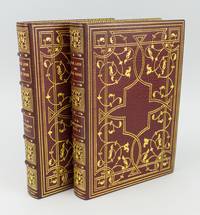
1923ST13162New York: E. P. Dutton & Company 1923. FIRST EDITION. 235 x 157 mm. 9 1/4 x 6 1/4". Two volumes. <br/> PLEASING CRIMSON CRUSHED MOROCCO ELABORATELY GILT BY STIKEMAN & CO. stamp-signed on rear turn-in covers gilt in a Grolieresque design raised bands spines gilt in compartments with a stylized azured floral spray. With 16 photogravure portrait plates. ◆Light wear to joints occasional minor foxing otherwise a fine set internally clean and bright and in lustrous bindings.<br/> <br/> Offered in very attractive bindings by an eminent bindery this is an historical work of some interest by an underappreciated Australian novelist. Ethel Florence Richardson using the pen name of Henry Handel Richardson 1870-1946 wrote novels short stories and journals but her writing did not attract notice until she was in her 60s. At that time she gained considerable acclaim being nominated for the Nobel Prize for Literature in 1932. The present set is an historical account of the dukes of the great Howard family the first volume being titled "Norfolk Line 957-1646" and the second "Suffolk Line 1603-1917."During the period from the retirement of William Matthews to the establishment of the Club Bindery there was no better binder in America than Henry Stikeman who exhibited "extraordinary skill . . . in design inlaying and tooling." Maser Collection Stikeman's firm did high-end publisher's bindings as "bread and butter" work and luxurious gilt-tooled bindings for collectors. E. P. Dutton & Company unknown