102 résultats
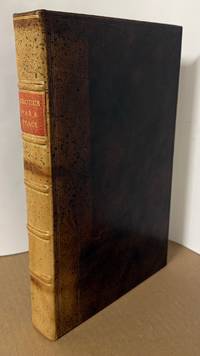
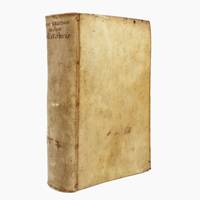
165178321651 Amstelodami: Apud Joannem Janssonium, 1651. In-8: 13 x 19.5 cm, 16 ff. n. chiff. de pièces lim., 570 pp., 18 ff. n. chiff. de tables. Nouvelle édition de ce fameux ouvrage juridique dHugo Grotius (1583-1645), Le Droit de la guerre et de la paix paru pour la première fois en 1625. Reliure de lépoque en basane, richement fleurdelisée et aux armes de la ville de Reims. Dos à cinq nerfs avec titre en capitales dorées et caissons ornés de fleurs-de-lys. Roulette en encadrement des plats habillés dun semé fleur-de-lysé et frappés aux armes de la ville de Reims. Toutes tranches dorées. Le De Jure Belli ac Pacis est divisé en trois livres. Dabord, il est question de lorigine du droit, des raisons de la guerre et des différences entre guerres publiques et privées. Ensuite, ce sont les causes des guerres qui sont exposées. Cest dans ce deuxième livre que Grotius traite de la propriété, des règles des successions sur les trônes, des pactes et contrats, des serments et des alliances. Enfin, le dernier livre aborde la délicate question de ce qui est permis durant une guerre. Magnifique exemplaire.
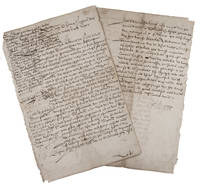
1609A7TEZG01U79ONetherlands 1609. Letter on 2 half-sheets 31 x 20.5 cm. In Dutch. Letter by Hugo de Groot supporting the impoldering of the Wijckermeer a lake situated between Beverwijk and Assendelft north of the IJ: now a polder of ca. 700 hectares. Grotius writes in his capacity as public prosecutor of Holland on behalf of Gerrit VIII van Assendelft. Gerrit's father Cornelis van Assendeft begun constructing the "Assendelftse dijk" ca. 1590 to secure the alluvial lands that had recently silted up. The city of Haarlem and others had protested and the Court had pronounced judgment on 6 April 1591. A later annotation suggests the Supreme Court on 15 December 1609 dismissed the appeal and put off judgement until the future.The original double-leaf separated into two leaves a bit browned and marginal waterstains. Reasonable condition. unknown
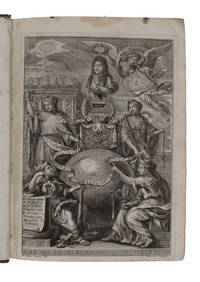
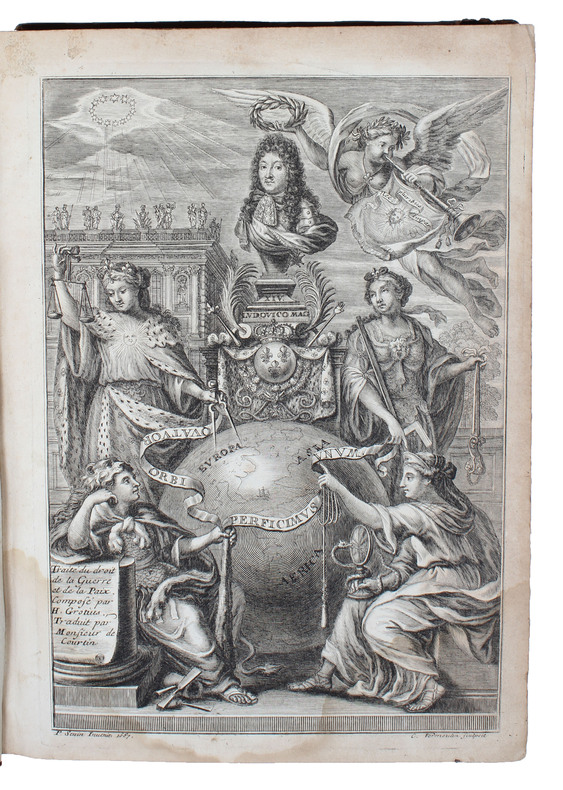
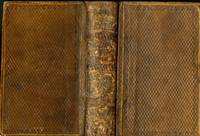
168760297Paris, Arnould Seneuze, 1687. 4to. Two contemporary uniform full calf bindings with five raised bands to richly gilt spines. Capitals and upper front hinge of volume one worn and boards with a few scrapes. Internally very nice and clean with just the occasional light brownspotting. Engraved frontispiece in vol. 1, engraved title-vignettes, large engraved vignette to verso of title-page of vol. 1, engraved portrait in vol. 1, woodcut vignettes and initials. Printed on good paper and with wide margins. (48), 621, (3) pp. + frontispiece and portrait" (4), 197, (3) pp.
168760297Paris Arnould Seneuze 1687. 4to. Two contemporary uniform full calf bindings with five raised bands to richly gilt spines. Capitals and upper front hinge of volume one worn and boards with a few scrapes. Internally very nice and clean with just the occasional light brownspotting. Engraved frontispiece in vol. 1 engraved title-vignettes large engraved vignette to verso of title-page of vol. 1 engraved portrait in vol. 1 woodcut vignettes and initials. Printed on good paper and with wide margins. 48 621 3 pp. frontispiece and portrait; 4 197 3 pp. <br/><br/><em>The very rare first edition of the first French translation of Grotius' groundbreaking magnum opus "De Jure Belli ac Pacis" the founding work of international law. The profoundly influential masterpiece - written during the Thirty Years' War in the hope that rational human beings might be able to agree to legal limits on war's destruction - "made him famous throughout Europe. the questions which he put forward have come to be the basis of the ultimate view of land and society. This was the first attempt to lay down a principle of right and a basis for society and government outside Church or Scripture. Grotius's principle of an immutable law which God can no more alter than a mathematical axiom was the first expression of the "droit naturel" the natural law which exercised the great political theorists of the eighteenth century and is the foundation of modern international law." PMM 125. This magnum opus of legal philosophy played a tremendous role in French law and politics and in the entire development of international law in general. "It is on the DIB De Iure Bellis that the bulk of Grotius' reputation rests. It consists of an introduction and three books totaling more than 900 pages in translation. As with DIP the introduction or "Prolegomena" holds the greatest interest for philosophers for it is here that Grotius articulates and defends the philosophical foundations of the DIB. While philosophers are naturally attracted to the "Prolegomena" the body of the DIB is also redolent with themes of philosophical interest. Book One defines the concept of war argues for the legitimacy of war and identifies who may legitimately wage war. Book Two deals with the causes of war the origins of property the transfer of rights and more while Book Three is dedicated primarily to the rightful conduct of belligerents in war. After the initial publication in 1625 Grotius ushered several more editions to press during his life each time adding more references without substantially changing the arguments." SEP.Living in the times of the Eighty Years' War between Spain and the Netherlands and the Thirty Years' War between Catholic and Protestant European nations Catholic France being in the otherwise Protestant camp Grotius was deeply concerned with matters of conflicts between nations and religions. His magnum opus was a monumental effort to restrain such conflicts on the basis of a broad moral consensus. It was begun in prison and published during his exile in Paris. "In the dedication of his great work "De Jure Belli ac Pacis" to Louis XIII of France Grotius addresses the king as "everywhere known by the name Just no less than that of Louis . Just when you call back to life laws that are on the verge of burial and with all your strength set yourself against the trend of an age which is rushing headlong to destruction; . when you offer no violence to souls that hold views different from your own in matter of religion; . when by the exercise of your authority you lighten the burden of oppressed peoples."When writing this dedication and the Prolegomena to "De Jure Belli ac Pacis" originally published in Paris in 1625 Grotius was living in exile. Europe was war-torn and depression and suffering from hunger and cold prevailed in many regions justifying Grotius' description of international law as such: "in our day as in former times there is no lack of men who view this branch of law with contempt as having no reality outside of an empty name." The treaty of peace embodying many of the universal and permanent principles which Grotius abstracted "from every particular fact" in those dark days of the early part of the Thirty Years' War was not concluded till 23 years later. The year 1624 was in the negotiation of the treaty assumed to be the norm year for restoration of the "Status quo".The more than three centuries since Grotius wrote his magnum opus seem to bear witness to his views upon war peace in spite of the fact that many a state has not yet realized that the state is "Truly fortunate which has justice for its own boundary line." In 1625 Grotius famously stated: "there is no state so powerful that it may not sometime need the help of others outside itself either for the purposes of trade or even ward off the forces of many foreign nations united against it."Grotius's paramount influence upon international law is widely acknowledged worldwide. For instance since 1999 the American Society of International Law holds an annual series of Grotius Lectures. Because of his theological underpinning of free trade he is also considered an "economic theologist"."To those desirous of understanding the fundamental principles which have motivated some of the greatest statesmen of modern time and the bases upon which a state which is to remain essentially sound must rest a reading of Grotius' Prolegomena to the "Law of War and Peace" is commended." George Grafton Wilson: "Grotius: Law of War and Peace." p. 1. In: The American Journal of International Law vol. 35 nr. 2 1941. </em> hardcover
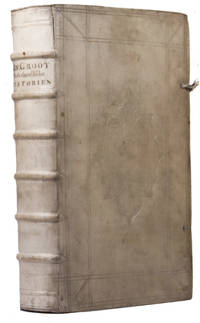
1681ABC_48018Amsterdam: the widow of Joannes van Someren Abraham Wolfgangk and Hendrik & Dirk Boom 1681. Contemporary blind-tooled vellum with the manuscript author and title on the spine a large ornament in the centre of both boards surrounded by two double fillet frames leather closing ties. Folio. With an engraved allegorical frontispiece by Abraham Bloteling after Zacharias Webber I 20 full-page engraved portraits and 27 double-page plates views and plans by Jan Luiken Coenraet Decker and Gilliam van der Gouwen a title page printed in red and black decorated woodcut initials and woodcut head- and tailpieces. 3 parts in 1 volume. First and only Dutch edition as well as the only illustrated edition of the main historical works by the famous Dutch jurist philosopher theologian and diplomat Hugo de Groot Hugo Grotius 1583-1645 also known as the "infant prodigy from Delft". Divided in three parts it covers the history of the Northern Low Countries from 1555 to 1609. Most important are the Annales et historiae de rebus Belgicis in the first part translated as Nederlandtsche jaerboeken en historien . as a contemporary history of the Dutch Revolt or the Eighty Years' War till the Truce in 1609. The work is copiously illustrated with beautiful large portraits of the most important political figures of the time as well as views and plans of important events and towns.Grotius began writing the work when he was just 18 on request of the States of Holland who asked him to compose a history of the revolutionary first years of the Dutch War of Independence. He wrote the Annales covering the years 1555-1588 in the years 1601-1612 using a language clearly inspired by the Latin historian Tacitus. The Historiae covering the years 1588-1609 here also included in the first part followed soon. His text however contained many stories and details which were considered controversial by the States of Holland so the Annales were not published before 1657. The work then became quite popular and was soon translated to French 1662 English 1665 and Dutch 1681. The present Dutch translation was made by Joan Goris dates unknown.The other two parts of the present work include translations of three other works by Grotius namely: 1 the first edition of Grollae obsidio 1629 the history of the siege of the fortified town "Grol" Groenlo by Prince Frederick Henry in 1627; 2 Liber de antiquitate Reipublicae Batavicae 1610 of which a Dutch translation had been published in the same year under the title Tractaet vande oudtheyt vande Batavische nu Hollandsche Republique and 3 perhaps - apart from De iure belli ac pacis 1625 - Grotius most famous work: Mare liberum The freedom of the seas 1609 of which a Dutch translation had appeared in 1614. On the basis of these last two books Grotius is considered as one of the founders of international and natural law. The Mare liberum includes reports and commentary on the Dutch East and West India trade companies as well as a 17th-century perspective on trade in the Americas from 1591-1609.With the armorial bookplate of the Dutch lawyer Wilhelm Cornelis Baert de Waarde 1864-1951 mounted on the recto of the first free flyleaf. The front joint is weakened at the head and tail lacking the bottom pair of closing ties. Otherwise in very good condition.l Klaversma/ Hannema 585 and 586; Sabin no. 28956; cf. Haitsma Mulier E.O.G. Grotius Hooft and the writing of history in the Dutch Republic in: A.C. Duke C.A. Tamse eds. Clios mirror. Historiography in Britain and the Netherlands VIII 1985 pp. 55-72; Heesakkers C.L. Grotius als geschiedschrijver in: Het Delfts orakel Hugo de Groot 1983 pp. 103-110. the widow of Joannes van Someren, Abraham Wolfgangk and Hendrik & Dirk Boom, hardcover
168751671Paris, Arnould Seneuze, 1687. 4to. Two contemporary uniform full calf bindings with five raised bands to richly gilt spines. All edges of boards gilt. Hinges and capitals worn, with some loss, but still tight. A damp stain to first and last leaves of both volumes (affecting about 17 leaves in all, mostly marginal). Otherwise a nice and clean copy with just the occassional brownspotting. Engraved frontispiece in vol. 1, engraved title-vignettes, large engraved vignette to verso of title-page of vol. 1, engraved portrait in vol. 1, woodcut vignettes and initials. Printed on good paper and with wide margins. (48), 621, (3) pp. + frontispiece and portrait" (4), 197, (3) pp.
168751671Paris Arnould Seneuze 1687. 4to. Two contemporary uniform full calf bindings with five raised bands to richly gilt spines. All edges of boards gilt. Hinges and capitals worn with some loss but still tight. A damp stain to first and last leaves of both volumes affecting about 17 leaves in all mostly marginal. Otherwise a nice and clean copy with just the occassional brownspotting. Engraved frontispiece in vol. 1 engraved title-vignettes large engraved vignette to verso of title-page of vol. 1 engraved portrait in vol. 1 woodcut vignettes and initials. Printed on good paper and with wide margins. 48 621 3 pp. frontispiece and portrait; 4 197 3 pp. <br/><br/><em>The very rare first edition of the first French translation of Grotius' groundbreaking magnum opus "De Jure Belli ac Pacis" the founding work of international law. The profoundly influential masterpiece - written during the Thirty Years' War in the hope that rational human beings might be able to agree to legal limits on war's destruction - "made him famous throughout Europe. the questions which he put forward have come to be the basis of the ultimate view of land and society. This was the first attempt to lay down a principle of right and a basis for society and government outside Church or Scripture. Grotius's principle of an immutable law which God can no more alter than a mathematical axiom was the first expression of the "droit naturel" the natural law which exercised the great political theorists of the eighteenth century and is the foundation of modern international law." PMM 125. This magnum opus of legal philosophy played a tremendous role in French law and politics and in the entire development of international law in general. "It is on the DIB De Iure Bellis that the bulk of Grotius' reputation rests. It consists of an introduction and three books totaling more than 900 pages in translation. As with DIP the introduction or "Prolegomena" holds the greatest interest for philosophers for it is here that Grotius articulates and defends the philosophical foundations of the DIB. While philosophers are naturally attracted to the "Prolegomena" the body of the DIB is also redolent with themes of philosophical interest. Book One defines the concept of war argues for the legitimacy of war and identifies who may legitimately wage war. Book Two deals with the causes of war the origins of property the transfer of rights and more while Book Three is dedicated primarily to the rightful conduct of belligerents in war. After the initial publication in 1625 Grotius ushered several more editions to press during his life each time adding more references without substantially changing the arguments." SEP.Living in the times of the Eighty Years' War between Spain and the Netherlands and the Thirty Years' War between Catholic and Protestant European nations Catholic France being in the otherwise Protestant camp Grotius was deeply concerned with matters of conflicts between nations and religions. His magnum opus was a monumental effort to restrain such conflicts on the basis of a broad moral consensus. It was begun in prison and published during his exile in Paris. "In the dedication of his great work "De Jure Belli ac Pacis" to Louis XIII of France Grotius addresses the king as "everywhere known by the name Just no less than that of Louis . Just when you call back to life laws that are on the verge of burial and with all your strength set yourself against the trend of an age which is rushing headlong to destruction; . when you offer no violence to souls that hold views different from your own in matter of religion; . when by the exercise of your authority you lighten the burden of oppressed peoples."When writing this dedication and the Prolegomena to "De Jure Belli ac Pacis" originally published in Paris in 1625 Grotius was living in exile. Europe was war-torn and depression and suffering from hunger and cold prevailed in many regions justifying Grotius' description of international law as such: "in our day as in former times there is no lack of men who view this branch of law with contempt as having no reality outside of an empty name." The treaty of peace embodying many of the universal and permanent principles which Grotius abstracted "from every particular fact" in those dark days of the early part of the Thirty Years' War was not concluded till 23 years later. The year 1624 was in the negotiation of the treaty assumed to be the norm year for restoration of the "Status quo".The more than three centuries since Grotius wrote his magnum opus seem to bear witness to his views upon war peace in spite of the fact that many a state has not yet realized that the state is "Truly fortunate which has justice for its own boundary line." In 1625 Grotius famously stated: "there is no state so powerful that it may not sometime need the help of others outside itself either for the purposes of trade or even ward off the forces of many foreign nations united against it."Grotius's paramount influence upon international law is widely acknowledged worldwide. For instance since 1999 the American Society of International Law holds an annual series of Grotius Lectures. Because of his theological underpinning of free trade he is also considered an "economic theologist"."To those desirous of understanding the fundamental principles which have motivated some of the greatest statesmen of modern time and the bases upon which a state which is to remain essentially sound must rest a reading of Grotius' Prolegomena to the "Law of War and Peace" is commended." George Grafton Wilson: "Grotius: Law of War and Peace." p. 1. In: The American Journal of International Law vol. 35 nr. 2 1941. </em> hardcover
16791402270066Joannis Blaeu 1679-01-01. First Edition. Hardcover. Good. 3 volumes in 4. Thick folios. Contemporary mottled calf boards rebacked with modern spines. 6 raised bands red and gold spine labels. A handsome set. Engraved title in red and black. Text in double column. Latin and Greek. Seminary bookplates and stamps. Brunet II p. 1765; Wing G2081. Ter Meulen 920. tom. 1. Annotationes ad vetus testamentum -- Joannis Blaeu hardcover
1682332144London: Thomas Basset 1682. First. hardcover. near fine. Translated into English by William Evats. Rubricated title and with beautiful extra engraved title as frontispiece. 4 xxi 5 573 29 index pages. Folio bound in period-style brown polished calf with red leather label spine un-evenly faded to tan. London: Printed by M.W. for Thomas Basset & Ralph Smith 1682. First edition of this translation of "De Jure Belli ac Pacis" -- being the third printing in English. Some minor uniform toning to pages and with one red ink stamp at foot of title still a near fine copy with all pages rather clean.<br/> <br/> Grotius' Rights of War and Peace is a classic of modern public international law which lays the foundation for a universal code of law and which strongly defends the rights of individual agents - states as well as private persons - to use their power to secure themselves and their property. --Butler XII<br/> <br/> Thomas Basset unknown
1682335238London: Thomas Basset 1682. hardcover. Translated into English by William Evats. Rubricated title and with beautiful extra engraved title as frontispiece. 4 xxi 5 573 29 index pages. Folio bound in period-style brown polished calf with red leather label spine un-evenly faded to tan. London: Printed by M.W. for Thomas Basset & Ralph Smith 1682. First edition of this translation of "De Jure Belli ac Pacis" -- being the third printing in English. Some minor uniform toning to pages and with one red ink stamp at foot of title still a near fine copy with all pages rather clean.<br/> <br/> Grotius' Rights of War and Peace is a classic of modern public international law which lays the foundation for a universal code of law and which strongly defends the rights of individual agents - states as well as private persons - to use their power to secure themselves and their property. --Butler XII<br/> <br/> Thomas Basset unknown
1624244193Antwerp: Vulguait Boëtius a Bolswert Typis Henrici Aertssenii 1624. First edition. Engraved allegorical title page engraved coat of arms of Pope Urban VIiI initial introductory enblem and 45 leaves of engraved emblematic plates by Boëce van Bolswert; 32 412 3. 1 vols. 8vo. Contemporary vellum slightly soiled. Preliminary leaves misbound. First edition. Engraved allegorical title page engraved coat of arms of Pope Urban VIiI initial introductory enblem and 45 leaves of engraved emblematic plates by Boëce van Bolswert; 32 412 3. 1 vols. 8vo. First edition of the most popular spiritual love emblem book which made the genre popular throughout Europe in the 17th century and beyond. By the end of the 18th century the Pia Desideria had been reprinted nearly 40 times in Latin French German Spanish Dutch Polish English Danish and Italian. This emblem book mixes tender messages of care with dire warnings to sinners and while it is written in Latin demanding a well-educated reader it proved to be wildly popular. One of the keys of the popularity of this work are the emblematic designs of Boetius Adamsz. van Bolswert ca. 1580-1633 each of which is accompanied by an explanatory caption. Born in Bolsward Friesland Boetius was a pupil of Abraham Bloemaert at Utrecht and went to Antwerp around 1618 joining the painter's guild in 1620. Boetius also worked in Brussels where he met and was inspired by Pieter Paul Rubens. Herman Hugo 1588-1629 a Brussels Jesuit was teacher at the Jesuit College in Antwerp and confessor of the Duke of Aerschot with whom he went to Spain where he was appointed army chaplain to Spinola. This book was used as a rhetorical example for students of Rhetoric at the Jesuit College at Brussels. Landwehr Emblem & Fable Books 345 Vulguait Boëtius a Bolswert, Typis Henrici Aertssenii unknown
1624244193Antwerp: Vulguait Boëtius a Bolswert Typis Henrici Aertssenii 1624. First edition. Engraved allegorical title page engraved coat of arms of Pope Urban VIiI initial introductory enblem and 45 leaves of engraved emblematic plates by Boëce van Bolswert; 32 412 3. 1 vols. 8vo. Contemporary vellum slightly soiled. Preliminary leaves misbound. First edition. Engraved allegorical title page engraved coat of arms of Pope Urban VIiI initial introductory enblem and 45 leaves of engraved emblematic plates by Boëce van Bolswert; 32 412 3. 1 vols. 8vo. First edition of the most popular spiritual love emblem book which made the genre popular throughout Europe in the 17th century and beyond. By the end of the 18th century the Pia Desideria had been reprinted nearly 40 times in Latin French German Spanish Dutch Polish English Danish and Italian. This emblem book mixes tender messages of care with dire warnings to sinners and while it is written in Latin demanding a well-educated reader it proved to be wildly popular. One of the keys of the popularity of this work are the emblematic designs of Boetius Adamsz. van Bolswert ca. 1580-1633 each of which is accompanied by an explanatory caption. Born in Bolsward Friesland Boetius was a pupil of Abraham Bloemaert at Utrecht and went to Antwerp around 1618 joining the painter's guild in 1620. Boetius also worked in Brussels where he met and was inspired by Pieter Paul Rubens. Herman Hugo 1588-1629 a Brussels Jesuit was teacher at the Jesuit College in Antwerp and confessor of the Duke of Aerschot with whom he went to Spain where he was appointed army chaplain to Spinola. This book was used as a rhetorical example for students of Rhetoric at the Jesuit College at Brussels. Landwehr Emblem & Fable Books 345 Vulguait Boëtius a Bolswert, Typis Henrici Aertssenii unknown books
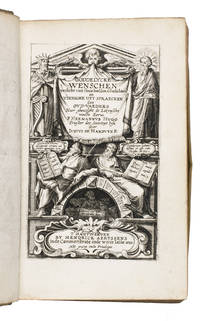
1629ABC_50464Colophon: Antwerp: Hendrick Aertssens 1629. Contemporary overlapping vellum sewn on 4 supports laced through the joints with the manuscript title and author on the spine red sprinkled edges. 8vo. With an engraved title page a full-page engraved coat of arms a full-page ornamental woodcut 45 full-page engraved emblematical plates by Boëtius à Bolswert and a woodcut printer's device on the final page. First edition of the first translation and adaptation of the most popular religious emblem book of the 17th century Hermann Hugos Pia desideria 1624. The Goddelycke wenschen was intended for a Dutch audience that did not know Latin. De Harduwijn meant to stimulate the individual practise of faith and hoped his work would help pious souls to meditate and pray familiarising this audience with the newly popular mystical work by Hugo. The present copy comes from the collection of Susanna Verbruggen ca.1684-1752 one of the few female publishers and engravers of devotional prints from the early modern period.The Jesuit Hugos spiritual emblem book Pia desideria had become very popular from the moment it was published in 1624 by Hendrick Aertssens in Antwerp. It went through 42 editions in Latin. Aertssens had engaged the well-known engraver Boëtius à Bolswert to illustrate the emblem book with 45 plates. He ordered Justus de Harduwijn to make a translation of the Pia desideria making good use of the copperplates he already owned. By using the same plates in the Goddelycke wenschen De Harduwijn stayed close to the original. The mottoes and references to texts by the Church fathers in the prose part of the "subscriptio" also stayed the same. However De Harduwijn made quite a few changes in the poetry parts of the Pia desideria including the different rhyme schemes and stanzas. This poetic part can only be found in the present first edition. The following three editions dating from 1632 1645 and 1648 have been reduced to the parts in prose.Justus de Harduwijn 1582-1636 was born in Ghent in a Catholic family and he studied humanities and law at the Jesuit College in his native town. Afterwards he was educated as a priest and he became a priest in Oudegem and Mespelaere. In 1613 he anonymously published a collection of love poems: De weerliicke liefden tot Roose-mond.Susanna Verbruggen was a "klop" or spiritual daughter in Antwerp a Catholic lay woman who took a vow of chastity and devoted her life to piety and charity but without entering a convent. As such spiritual daughters had to supply their own livelihood which Verbruggen did very successfully. She became a member of the Guild of Saint Luke the guild for painters engravers and booksellers in 1710 when she was just 26. Initially only registered as a seller of prints she soon became a publisher and engraver acquiring a house and an extensive collection of copperplates including works from the most famous engravers of the period. She specialised primarily in devotional prints a genre that circulated widely among all layers of society and became a pivotal figure in her field. As a spiritual daughter she primarily employed women and bequeathed her business and most of her collection to several of her maids after her death. The present work which she acquired several years before the establishment of her company offers a rare glimpse into the formative phase of her career.With the ownerships entry of publisher Susanna Verbrugghen ca.1684-1752 dated 1703 in the printer's device on the final page. The vellum is slightly soiled. Internally very clean with only some browning on the final few leaves and an occasional stain. Otherwise in very good condition.l Landwehr Emblem & Fable books 357; Nijhoff Cat. 677 1946 no. 670 very fine copy; price f. 75!; STCV 3136615; De Vries no. 129; cf. O. Dambre Justus de Harduyn. Een biografische en letterkundige studie 1926; id. Nabeschouwingen over Pia Desideria en Godeelycke wenschen in: Spiegel der Letteren 2 1958 pp. 59-65; Insolera La spiritualité en images aux Pays-Bas Méridionaux dans les livres des 16e et 17e s. 1996 pp. 170-176. Hendrick Aertssens, hardcover
1617020490Lugduni Batavorum Leiden Netherlands: Excudit Ioannes Patius 1617. Book. Very good- condition. Hardcover. 2nd Edition. Octavo 8vo. viii 183 pages of text. Vellum spine and corners with paper-covered boards. Boards are worn and soiled remaining intact. Small tear to spine without loss. Text is moderately browned with the title page the most affected. Stamp of "F.H. Foster" on title page which is that of prominent American theologian Frank Hugh Foster 1851-1935. Several instances of old ink underlining and marginalia in the text and on the endpapers. Grotius wrote the book to refute the teachings of Faustus Socinus who denied that Christ's death was a payment for humanity's sins. This is the second edition printed the same year as the first and by the same printer. . Excudit Ioannes Patius Hardcover
1679019926Amsterdam: Blaeu. Volumes 2 3 and 4 of 4 volumes. Folio. Full leather with raised bands title and volume slips and gilt designs in the compartments. 2 668; 4 671-1238 174; 2 755 63 pp. Volume 2: Binding solid mostly separated along spine edges with some loss along spine edges and at head and foot of spine margin dampstain on a few leaves. Volume 3: Binding solid some separation along the spine edges one small chip at a spine edge some edge wear. Volume 4: Binding solid separation all along one spine edge and slightly along the other edge wear. Internals of all volumes nice although one page with pencil margin lines and another with an 1850 pencil notation. In ink on title page of all volumes: "Monasterii Sancti Benigni Divionensis cat. inscript. 1739". First edition of one of two issues published simultaneously in Amsterdam and London. The Amsterdam edition is much rarer than the London edition. Although Grotius is known as the father of the modern science of international law he was also important in theology philosophy political theory and other fields. He was a liberal theologian interested in harmonizing religious factions. His religious stands led him to be arrested by orthodox Calvinists and sentenced to life imprisonment. He escaped by placing himself in a large trunk supposedly filled with his books and shipping it out of prison. Part of an important set by a towering seventeenth-century presence. These large and heavy volumes will require extra postage. . Good. Hardcover. 1st Edition. 1679. Blaeu hardcover
16824700xxi 573 p. 27. Slight foxing at beginning and end of book. Spine nicely re-backed in calf with original mottled calf covers; gilt particulars to spine; five raised bands. Occasional light moisture stains on top edge not affecting text. Includes "Treating of the Rights of War & Peace" with annotations digested into the body of every chapter an Epistle to the Reader and Preface. This copy lacks the additional engraved frontispiece. Translated into English by William Evats. First complete English translation of Grotius' seminal De Jure Belli ac Pacis. M.W. for Thomas Basset and Ralph Smith hardcover
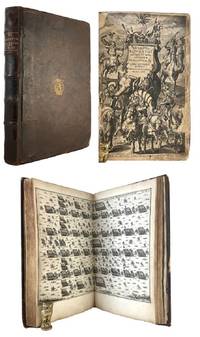
1630173574Antwerp: Ex officina Plantiniana 1630. Text in Latin. Pp. 34410index privilege and printer's device engraved pictorial title page 6 plates 2 folding the others double page numerous text illustrations decorative head & tailpieces and initials; f'cap. folio in fours; contemporary calf boards with double blind rule borders and small winged horse device in gilt at centre neatly rebacked with later calf spine decorated in blind compartments between raised bands with gilt lettered and ruled red leather title label the boards lightly worn edges chipped at a few points; edges sprinkled red; book label of David Levine Sydney on upper pastedown upper hinge cracking the engraved title page is chipped and split at edges mainly the fore-edge and has at some time been laid onto a backing sheet the dedication page also slightly chipped at fore-edge occasional light soiling and browning; Balthasaris Moreti Ex officina Plantiniana Antwerp 1630. First edition. STCV 6607570; USTC 1003298; Cockle 733. Born in Brussels Hermann Hugo 1588-1629 was a Jesuit priest who studied philosophy and theology at the University of Louvain. He died of the plague in September 1629. In this volume he extols the nobility of the mounted soldier from ancient to modern times. The printer Balthasar Moretus 1574-1641 was a grandson of Christopher Plantin. The engraved title page a battle scene featuring riders on horses a camel an elephant and a centaur is by Cornelius Galle the elder. Appropriately the dedication to King Philip IV of Spain begins with an ornamental capital T incorporating two soldiers and two rearing horses. Ex officina Plantiniana unknown
1650WRCLIT65626Amsterdam: Johann Blaeu 1650. 2461845pp. Contemporary vellum over boards manuscript spine title. Bookplate of Arthur Houghton on front pastedown 19th century academic ownership inscription on front pastedown a few scattered early annotations and underscores moderate scattered foxing tanning and occasional spotting bound without binder's endsheets otherwise a very good copy. A corrected edition of Grotius's masterwork of legal theory begun by him in 1604 and completed after his escape to Paris in 1621. The first edition was published there in 1625 his reputation was soon established throughout Europe and this work was reprinted frequently and translated thereafter. Blaeu first published this text with Grotius's final corrections annotations and enhancements in 1642. "This was the first attempt to lay down a principle of right and a basis for society and government outside of Church or Scripture . Grotius's principle of an immutable law which God can no more alter than a mathematical axiom was the first expression of the 'droit naturel' .and is the foundation of modern international law" - PMM. MEULEN/DIERMANSE 574. PRINTING AND THE MIND OF MAN 125. Johann Blaeu hardcover books
1650254468Amsterdam: Apud Johannem Blaeu 1650. Editio Nova Corrected edition first published by Blaeu in 1642. 24 618 45 pp. 1 vols. 32mo. Contemporary vellum over boards manuscript spine title. Bookplate of Arthur Houghton on front pastedown 19th century academic ownership inscription on front pastedown a few scattered early annotations and underscores moderate scattered foxing tanning and occasional spotting bound without binder's endsheets otherwise a very good copy. Editio Nova Corrected edition first published by Blaeu in 1642. 24 618 45 pp. 1 vols. 32mo. A corrected edition of Grotius's masterwork of legal theory begun by him in 1604 and completed after his escape to Paris in 1621. The first edition was published there in 1625 his reputation was soon established throughout Europe and this work was reprinted frequently and translated thereafter. Blaeu first published this text with Grotius' final corrections annotations and enhancements in 1642. "This was the first attempt to lay down a principle of right and a basis for society and government outside of Church or Scripture . Grotius's principle of an immutable law which God can no more alter than a mathematical axiom was the first expression of the 'droit naturel' . and is the foundation of modern international law" PMM. Meulen/Diermanse 574; Printing and the Mind of Man 125 Apud Johannem Blaeu unknown
168730293Amstelodami Amsterdam: Ex typographia P. & I. Blaeu . apud Wolfgang Waasberge Boom à Someren & Goethals 1687. Folio 37.5 cm 14.76". 4 ff. 977 2 pp. <br><br>First complete edition of Grotius's correspondence comprising 2510 letters written by the Dutch philosopher between April 1599 and July 1645 to an international milieu of famous correspondents including the Swedish statesman Axel Oxenstierna the Dutch theologian Gerardus Joannes Vossius and the German politician Ludwig Camerarius not to mention Queen Cristina.<br>Â Â Â Â According to the Stanford Encyclopedia of Philosophy online "Hugo Grotius 15831645 Hugo Huigh or Hugeianus de Groot was a towering figure in philosophy political theory law and associated fields during the seventeenth century and for hundreds of years afterwards. His work ranged over a wide array of topics though he is best known to philosophers today for his contributions to the natural law theories of normativity which emerged in the later medieval and early modern periods."<br>Â Â Â Â The text is printed in Latin double-column with a handful of large woodcut initials a few tail ornaments and one letterpress diagram. The title-page printed in red and black features Blaeu's large device of an astrolabe flanked by Time and Hercules. An index on the final two pages lists Grotius's correspondents and the corresponding letters which are arranged chronologically in the text. <br>Â Â Â Â <br>Â Â Â Â Meulen Grotius 1210; Brunet II 1766; Graesse III 163. Contemporary northern-European style vellum over boards ruled in blind panels with blind-stamped central cartouches spine with seven raised bands and remnants of later paper labels red speckled edges; vellum soiled and lightly rubbed at extremities with corners bumped. Ex-library with bookplate on front pastedown and later library marking in pen on second leaf; light foxing a light waterstain across the lower outer corner of perhaps a dozen leaves and scattered darker stains with a few leaves browned; small tear in outer margin of title-leaf and another margin small hole from natural flaw in outer margin of one leaf and small bit of paper torn away from lower corner of another. Very mild worming in middle of two leaves and final leaf the latter repaired; additional very minor "slim" worming mostly to margins at rear. => A solid handsome important book. Ex typographia P. & I. Blaeu ... apud Wolfgang, Waasberge, Boom, à Someren & Goethals hardcover books
161739025Antwerp : Ex Officina Plantiniana. 1617. First Edition. Hardcover. Very Good. Experience the pleasure of reading and appreciating this actual printed item. It has its own physical history that imbues it with a character lacking in ephemeral electronic renderings.; 8vo 8" - 9" tall; 227 pages; Secure in later patterned-paper covered boards. First edition of this first history of writing and the work of the scribe -- bound with two other contemporary tracts. OCLC: 17838634 Herman Hugo 1588 – 1629 was a Jesuit priest writer and military chaplain. In addition to this primary work on the history of writing and scribes he wrote a spiritual emblem book which was extremely popular. . Ex Officina Plantiniana hardcover
1682702961682. 1st Ed. of the 1st Complete English Translation. 1st Ed. of the 1st Complete English Translation. First Edition of the First Complete English Translation Grotius Hugo 1535-1645. Evats William c.1606-1677 Translator. The Most Excellent Hugo Grotius His Three Books Treating of the Rights of War & Peace. In the First is Handled Whether any War be Just. In the Second is Shewed The Causes of War Both just and Uujust sic. In the Third is Declared What in War is Lawful; That is Unpunishable. With the Annotations Digested Into the Body of Every Chapter. Translated into English by William Evats B.D. London: Printed by Margaret White for Thomas Basset 1682. ii xxi 7 220 361-572 32 pp. Pagination irregular. Text complete. Lacking copperplate pictorial added title page. Folio 12-1/4" x 7-1/2". Old calf boards rebacked lettering pieces to spine marbled edges corners mended endpapers renewed. Moderate rubbing and a few minor scuffs to boards to front board and extremities heavier rubbing to rear board corners bumped some wear to board edges hinges starting. Title printed in red and black. Light toning to text later notes and underlining to p. 95 light soiling and owner signature F.W. Wardy 1790 to title page lower corner lacking from title page and following leaf with no loss to text. $1500. First edition of the first complete translation in English. First published in Paris in 1625 The Rights of War and Peace established the system of modern public international law based on the concept of "droit naturel" a morality-based law that superseded the personalities of individuals or nations. Grotius describes the situations in which war is a valid tool of law enforcement and outlines the principles of armed combat. Though based on Christian natural law Grotius advanced the novel argument that his system would still be valid if it lacked a divine basis. In this regard he pointed to the future by moving international law in a secular direction. The first English edition an abridged translation by Clement Barksdale was published in London in 1654. It was reissued twice in 1655. This translation by Evats which includes original notes followed in 1682. These early English translations both by Oxford-based theologians mark an important phase in the reception history of this book. These projects were undertaken due to the author's reputation as. unknown books
1624048521Antwerp: Henrici Aertssenii 1624. First Edition. Hardcover Full Leather. Very Good Condition. Boetius à Bolswert; Christophorus a Sichem et al. 18th century diced Russia spine dry but binding sound. Wear at corners. marbled endpapers. Scattered light browning age toning a few finger marks and later pencil marks but generally clean internally. Old sketch of a king in redpencil to verso of an early engraving trimmed a little close touching the running title at the end. The first edition of the popular emblem book with the iconic engravings of Bolswert. 30 406 6pp. Engraved title arms of Pope Urbain VIII and 46 engravings numbered 0-45. Size: duodecimo 12mo. Illustrator: Boetius à Bolswert; Christophorus a Sichem et al. Quantity Available: 1. Shipped Weight: Under 1 kilo. Category: Religion & Theology; Antiquarian & Rare. Inventory No: 048521. Henrici Aertssenii hardcover
16311711240004Antverpiae : Officina Plantiniana 1631. Acceptable. Folio. 7 double page engraving 6 single page plates 2 in text gravings. Lacking engraved title piece. 163 pp 15. Lacking final leaf. Contemporary limp vellum. Vellum soiled. Damp staining to margins scattered spotting. This is the French translation made on the original Latin Hugo Obsidio Bredana 1626 . See Maurice Cockle 110 for the English edition and 817 for several other editions. Cockle acknowledges that this is the best contribution made in the 17th century to the seat of Breda both militarily and politically. The siege of Breda lasted 11 months and cost the lives of 5000 inhabitants of the city. The capitulation of the city on June 2 1625 was immortalized by the painting of Velasquez "Las Lanzas o The rendition of Breda". Antverpiae : Officina Plantiniana hardcover
1679099741Amstelædami: Amstelaedami : Apud heredes Joannis Blaeu 1679 1679. Books measure 40 x 26 cm. 3 volumes bound in 4. Collation 24800pp 67pp index 4668-1238pp 173pp index 2775pp 62pp index titles printed in red and black 1 full page portrait. Each volume has bookplate of Sir John Holt and inscribed '' Bequeathed by Canon William Munane '' each title page inscribed '' exlibris Munane ''. Sir John Hort 1731-1807 English consul-general at Lisbon in 1767. Canon William Murnane Catholic priest in London attended Roger Casement on the weeks before his death when he converted to Roman Catholicism.Bound in full period vellum panelled boards blind stamped center piece to each board raised bands. Boards bumped on corners hinge joints cracked one joints more substantial cracked with slighly lifting of vellum boards sprung light dust/dirt marking. Generally bindings in good condition. Internally pages clean. A nice set in attractive period bindings. . Full Vellum. Near Very Good. Folio - over 12" - 15" tall. Amstelaedami : Apud heredes Joannis Blaeu 1679 Hardcover