6 515 résultats
190612796AB1906. Vienna Schroll 1906. 245 : 18 cm. IX 250 pages 2 leaves With 13 partly coloured plates and 692 illustrations in the text. Original cloth with coloured illustrations. First edition of this richly illustrated book on Japanese seals rare. hardcover
1965918Germany - Israel 1965. Original half-cloth binding with marbled paper panels and ornamented printed endpapers. Pages are handmade Zanders paper. Binding slightly rubbed corners bumped some pages loose. Rear endpaper restored at the joint. Inside clean. Overall in very good condition. The guestbook contains 17 full-page artworks paintings and drawings in ink crayon and pencil many signed and dated 1920–1921 in Berlin some with short dedications. Additionally there are 12 pages of handwritten greetings dated 1955&n. The guestbook contains 17 full-page artworks paintings and drawings in ink crayon and pencil many signed and dated 1920–1921 in Berlin some with short dedications. Additionally there are 12 pages of handwritten greetings dated 1955&n. Original half-cloth binding with marbled paper panels and ornamented printed endpapers. Pages are handmade Zanders paper. . 38 leaves including 17 with full-page artworks graphics and paintings and 12 pages of handwritten greetings. Page size: 22 × 28 cm. <p><br /> Illustrated guestbook of Hugo Graetz art dealer and managing director of the Novembergruppe a collective of German Expressionist artists.<br /> <p><p><br /> This guestbook belonged to Hugo Graetz an art dealer and the managing director of the Novembergruppe a prominent collective of German Expressionist artists. The volume includes:<br /> <p><br /> Two drawings by Friedrich Feigl 1884–1965 Czech Expressionist painter.<br /> <p><p><br /> An ink drawing by Jakob Steinhardt 1887–1968 a German-born Israeli painter member of the Berlin Secession founder of the Pathetiker Group and later associated with the Bezalel school group.<br /> <p><p><br /> Three images by Willy Robert Huth 1890–1977 a founding member of the “Jung-Erfurt†artist group and two collaborative works with Martel Schwichtenberg 1896–1945 who also contributed an individual pencil drawing. Schwichtenberg was a member of the Deutschen Werkbund and the Novembergruppe.<br /> <p><p><br /> A portrait of Hugo Graetz playing the cello by Wilhelm Schmid 1892–1971 a founding member of the Novembergruppe.<br /> <p><p><br /> A gouache by Otto Beyer 1885–1962 member of the Berlin Secession.<br /> <p><p><br /> A signed crayon drawing and an unsigned painting by Franz Winninger 1893–1960.<br /> <p><p><br /> Four works by unidentified artists.<br /> <p><p><br /> The greetings written during the Graetz family’s later years in Israel provide a personal and historical complement to the artworks.<br /> <p><p><br /> The Novembergruppe was founded in 1918 by Max Pechstein and César Klein to promote Expressionist art and its connection to social and cultural transformation. Hugo Graetz became its managing director in 1919 a position he held until Hitler’s rise to power in 1933. After emigrating to Palestine with his wife Trude Graetz left the art business settling in Safed and working as a meteorologist and weatherman on Mount Canaan where he lived for the rest of his life.<br /> <p>. unknown
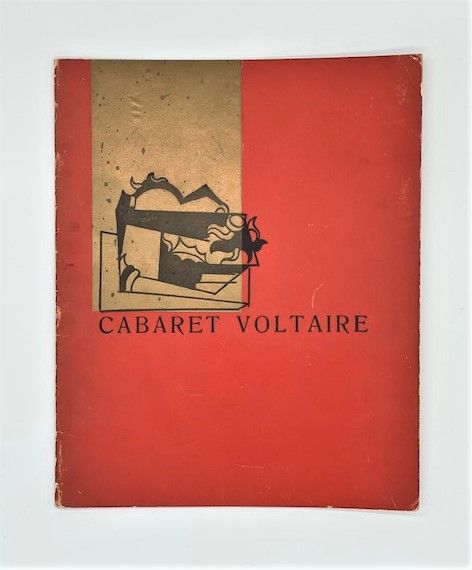
191665214Zürich, (Buchdruckerei Jul. Heuberger für) Meierei, Spiegelgasse 1, (1916). 4°. Mit einem mitpag. Orig.-Holzschnitt von M. Slodki u. 12 (7 ganzs.) Textabbildungen. 31 (1) S., Roter OKart.-Bd. m. Goldfolien-Collage von Hans Arp am Vorderdeckel.
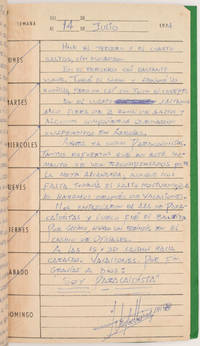
19741811Venezuela 1974. In custom made paper cover. Saddle-stitched. Paper-taped spine. In fine condition. In custom made paper cover. Saddle-stitched. Paper-taped spine. 21 leaves. 22 pages of handwritten text in blue ink signed on the last page. <p><br /> Unique signed manuscript diary of the former Venezuelan president Hugo Chavez written during his parachute course at the Venezuelan Academy of Military Sciences in Caracas between June 24 and July 14 1974.<br /> <p><p><br /> With detailed daily entries about his political ideas military training and his private life as a young cadet the “diary reveals the evolution of his political aspirations and his incipient vision of himself as someone predestined a man with a historical missionâ€. Marcano Tyszka 2007. p. 39<br /> <p><p><br /> 1974 was the 19-year-old Chavez’s last year at the military academy and according to Richard Gott author of the first book about Chávez in English also the year “Chávez was first politicizedâ€. As a cadet “with a growing admiration for Simón BolÃvar†Chávez was chosen for a special trip to Peru in the same year to celebrate the 150th anniversary of Peruvian independence from Spain which “provided his first direct exposure to a social experiment launched by a progressive although dictatorial military man Juan Velasco Alvaradoâ€. By the time Chávez graduated from the academy “he had begun to think about the need for the military to have a role in running the countryâ€. <br /> <p><p><br /> In his present 1974 diary Chávez takes notes about his ideas and quotes both BolÃvar “who abandons all to be useful to his country loses nothing but gains all he consecrates†as well as Che Guevara "The present is a time for struggle; the future is ours.†He also gives an account of his paratrooper training from his arrival to the military base to his first jump which he describes as “one of the greatest experiences in my life. Perhaps the most exciting in my twentiesâ€. In his last entry on July 14 1974 which he also signed Chávez says “Thanks to God I am a paratrooper!†His military education and being a paratrooper played an important role in Chávez’s career. He led the MBR-200 coup attempt in February 1992 as commanding officer of a parachute regiment which he took over in Maracay in 1991 and the red beret of his parachute regiment remained his signature throughout his life. Besides his political ideas and the training process Chávez confesses about personal issues of his private life feelings and relationships and also writes about less intimate affairs such as movies he watched like Spinout with Elvis Presley or The Exorcist.
<br /> <p><p><br /> This original manuscript covers a full chapter of Chávez’s diary from the period between March and September 1974 which was published as a four-chapter-book in 2018 under the title Diario del cadete Hugo Chávez Diary of the Cadet Hugo Chávez based on the typescript of the handwritten diary.<br /> <p><p><br /> Literature: Bart J.: Hugo! The Hugo Chavez Story from Mud Hut to Perpetual Revolution. Hanover: Steerforth Press 2007.; Chávez Hugo FrÃas: Diario del cadete Hugo Chávez. Fundación Comandante Eterno Hugo Chávez 2018.; Gott R.: In the Shadow of the Liberator: Hugo Chávez and the Transformation of Venezuela. London New York: Verso 2000.; Levin J.: Hugo Chavez. New York: Infobase Publishing 2007. p. 56.; Marcano C.; Tyszka A. B.: Hugo Chavez: The Definitive Biography of Venezuela's Controversial President. New York: Random House 2007.<br /> <p>. unknown
195048738Paris.: By the artists / COBRA-bibliotheek. 1950 December. Original publisher's tan photocopy card portfolio with flap title after Claus' manuscript to front cover with illustration by Appel across covers and spine coloured by the artist by hand. 4to. 276 x 228 mm. Leaf with title with small vignette frontispiece by Appel verso following leaves with verse by Claus and full-page illustrations all composed as spreads with Appel's illustration at left and Claus' verse at right final leaf with justification verso; photocopy text and illustration throughout all of Appel's illustrations are signed in the plate and feature colouring by the artist by hand. Sheet size: 270 x 210 mm. A very rare presentation copy of Karel Appel and Hugo Claus' photocopy artist book with the illustration with additional colour by Appel by hand.From the edition limited to 200 numbered copies signed by Appel and Claus in blue ink to the title; Appel's presentation is in blue ink to the same leaf: 'VOOR / ALDO. / 25-12-'50'.The first and only number of this very rare early CoBrA publication produced while the Belgian poet Claus and the Dutch painter Appel lived in Paris. Claus and Appel attempted to solicit subscriptions for what was to be a series of publications each issue would be available for three guilders however only three copies were in fact subscribed for and the project was abandoned after this sole number. Produced in its entirety using a prototype photocopy method 'een Foto-copy systeem' the illustrations were coloured individually by Appel by hand using vibrant primary colours.Many copies also include the original subscription announcement a single sheet with text and a single illustration and the fact it is not present here combined with the number of the present example - '3' - and the date of the presentation '25-12-'50' and the date of publication 'December 1950' suggest that this is one of those three copies that were in fact subscribed for.'De Blijde En Onvoorziene Week' The Happy and Unforeseen Week features a poem by Claus for each day - it begins with Sunday 'Zondag' and ends with Saturday 'Zaterdag' - combined with Appel's characteristic illustrations. Appel created his illustrations spontaneously while Claus' poems were written using matches dipped in ink. The pair anticipated that each issue of the 'Hand-Reeks' would require a single afternoon to produce however the dearth of orders ensured that no further numbers were produced and the project was abandoned.'De blijde en onvoorziene week valt op door de ongepolijste directheid van het materiaal de tegelijk speelse en agressieve toon de associatieve techniek en de grensvervaging tussen mens en wereld. De tekeningen zijn door Appel in primaire kleuren met de hand ingekleurd de gedichten zijn met in inkt gedoopte lucifers geschreven. Tussen tekst en tekening bestaat geen dwingend verband. Ze staan naast elkaar: de tekeningen zijn niet bedoeld als illustratie van de gedichten de teksten zijn geen bijschriften bij de tekeningen.' Erfgoedbibliotheek Hendrik Conscience.Aldo van Eyck 1918 - 1999 was an influential Dutch architect of international repute with intimate connections to the pre- and post-war avant garde. In the 1940s Aldo and his wife Hannie also an architect of major repute lived in Zurich where through Siegfried Giedion and Carola Giedion-Welcker they met a number of the artists and poets connected to dada: Arp Tzara Ernst Brancusi and others. Connected too to the Dutch Experimental Group and to CoBrA and of course through the architecture they held in common Constant Constant and Aldo van Eyck produced the 1953 book 'Voor Eeen Spatiaal Colorisme' the van Eycks had an important collection of art and artist books related to CoBrA and the wider European avant garde.'De Blijde En Onvoorziene Week' is scarce in institutions: OCLC reports examples in the Netherlands 3 copies at the Stedelijk the Koninklijke Bibliotheek and Leiden Spain a single copy at the Biblioteca del Museo Reina Sofia France a single copy at the Bibliothèque Nationale with the note 'Tiré à 200 ex. numérotés sans doute moins avec les dessins coloriés à la main.' Switzerland a single copy at the Schweiz Institut für Kunstwissenschaft and Belgium at the Vlaamse Erfgoedbibliotheek in Europe and the US 2 examples at the NYPL and Texas Christian University with a final example in South Africa at Unisa Muckleneuk. Copies of the 1979 facsimile reproducing copy number one are held at the BL and Cambridge in the UK; we trace no copies of this original edition.see the catalogue of the Erfgoedbibliotheek Hendrik Conscience. By the artists / COBRA-bibliotheek. unknown
193042995League of Nations 1930-01-01. Paperback. Acceptable. There are three signatures in the front of this rare book. One i.e. Charles Lindbergh's looks like a facsimile signature but ITALO BALBO'S and HUGO ECKENER'S signatures look to be genuine. I cannot gurantee the authenticity of these signatures but I believe that they are indeed authentic. They both are written at the bottom of the front page of a small essay. On the back of each essay is a translation in English the author's name and the word "signed." Paper front cover detached heavy chipping to front cover and spine.; Ex-Library League of Nations paperback
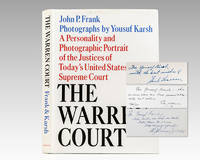
1964151959New York: The Macmillan Company 1964. First edition of this glimpse into the personalities of the justices of the Warren Court. Quarto original publisher's cloth illustrated with two intimate portraits of each justice by Yousuf Karsh. Association copy inscribed by the author on the front free endpaper to celebrated portrait photographer Yousuf Karsh "To Yousuf Karsh with good wishes John P. Frank." With a note laid in from Frank "Dear Yousuf - You will find an autograph in here for you from each of the Justices. Regards JPF." Additionally signed by each Justice and inscribed to Karsh beside their portraits in order of appearance: Earl Warren Hugo L. Black William O. Douglas Tom C. Clark John Marshall Harlan William Brennan Potter Stewart Bryan R. White and Arthur J. Goldberg. The recipient Yousuf Karsh is recognized as one of the leading photographers of the twentieth century. Arriving in Canada in 1924 as an Armenian refugee Karsh eventually settled in Ottawa. Over six decades he mastered the art of portraiture and created a unique chronicle of his time through images of celebrated legends. Some of his most notable subjects include Winston Churchill Audrey Hepburn Martin Luther King Jr. John F. Kennedy and Ernest Hemingway among others. A celebrity in his own right he was an elegant and charming public figure captivating audiences with compelling stories told in images and words. Karsh sought to capture as he put it the “elusive moment of truth†revealing the essential nature of his subjects as reflected in their eyes hands and attitudes. From the collection of Yousuf Karsh with his estate label to the front pastedown. Held by the Estate of Yousuf & Estrellita Karsh; after Yousuf’s death in 2002 passing to Estrellita Karsh; after Estrellita’s death in March 2025 passing to Katherine Getchell. Near fine in a very good dust jacket with rubbing and a small closed tear to the crown of the spine. Accompanied by a certificate of authenticity from the Estrellita Karsh Estate. A unique piece of history. The Warren Court during the period from October 1967 to May 1969 represented the culmination of the Court’s liberal constitutional revolution. This lineup presided over several landmark decisions that reinforced civil liberties and the rights of the accused. In Katz v. United States 1967 the Court expanded Fourth Amendment protections to include electronic surveillance holding that the Constitution protects people not just physical places. In Epperson v. Arkansas 1968 the justices struck down a state ban on teaching evolution strengthening the Establishment Clause. Moreover the Court advanced principles of racial equality and free expression setting precedents that shaped American law well beyond Warren’s retirement in 1969. The Macmillan Company hardcover
19644512Amsterdam: n.p. 1964 1964. Paper scroll 2760x430mm with a facsimile translated into English of Huges's manifesto written while in prison for an expanded consciousness achieved through the control of blood to the brain. which gives the work its alternative name: The Mechanism of BrainBloodVolume BBV. The original manuscript of Homo Sapiens Correctus was written in Dutch in 1962. In 1964 a facsimile was issued in both Dutch and in an English translation. The text which is organised in nine sections with titles such as "Chemical" "Osmotical" "Brain Metabolism" is arranged around ten coloured diagrams showing how blood is distributed between the brain and the heart. Apart from the occasional chip and a few closed tears this copy is in very good condition with the illustrations especially clean and fresh. At the foot of the scroll is written: "Amsterdam Bart Huges. Made in prison. Copy rights fl.100.000-". Institutionally rare OCLC records only four cop ies of the version in English. And of those sold at auction in the last twenty years all but one have been in Dutch and it seems that the English version is considerably more scarce. Huges is probably the most celebrated enthusiast for trepanation a procedure which he performed on himself on 6th January 1965 using a dentist's drill. Huges's auto-surgery was a long time in the planning. As a medical student in the late 1950s and early 1960s he developed the idea that as humans walk upright blood drains out of the brain. Furthermore as we move from childhood to adulthood our cranial sutures close cutting down the flow of blood to the brain. Huges started to work on ways of recovering our childlike state. Drugs were a significant part of his method - he was an enthusiastic user of marijuana his daughter was called Maria Juana and LSD - and it was while on mescaline that he first understood how trepanation might work to reduce the volume of cerebrospinal fluid in the brain thus increasing the volume of brainblood. Homo Sapiens Correctus explores a number of alternatives to drilling a hole in his head "Physical" "Brain Metabolism" "Psychovitamins" which is just as well as it is a spectacularly gruesome procedure. But there is no doubt that Huges's principal contribution to the expansion of consciousness and the returning of our minds to their childlike states lies in his evangelical adoption of trepanation. Huges who was still a medical student at the time has said that he wrote this scroll to educate doctors about the benefits of the procedure. "I visited about twenty professors of psychiatry anthropology neuro-anatomy etc. and their reactions were without exception negative". So not a success medically but this extraordinary scroll has secured its place as a key work of the 1960s counterculture. Amsterdam: n.p. [1964] unknown
1925140945709Boston: The Stratford Company 1925. First Edition. Near Fine/Near Fine. First edition first printing. Bound in publisher's original blue cloth with upper board ruled in blind and gilt lettering to the upper board and spine. Near Fine with darkening to the cloth at the joints and contents tanned but a very sharp copy. In a Near Fine unclipped dust jacket with light edge wear and light soiling slight tanning to the spine panel. A lovely example of a dust jacket that usually turns up much worse for wear. The Stratford Company unknown
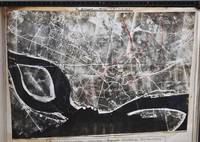
1918B045<p>A large photo album of 52 leaves with dipped in photos on each side. There is a total of ca. 394 pictures; 189 original photos 9 aerial photos 168 official buy photos and postcards 27 collotypes from a paper.</p><p>The size of the album is 32 x 41.5 cm.</p><p>The photos in this album are unique documents showing the unvarnished truth of war. An album that should have its place in a museum.</p><p>The album was collated by a young German soldier named Hans Hugo who was born in Roth a small Bavarian town near Nuremberg Germany. Later he opened a photo studio in Roth that existed until the 1960ies. Hans Hugo was at war from October 1916 until the end of WWI in 1918.</p><p>The photos are from Belgium France and the Baltics. There are some exciting outstandingly rare large original air reconnaissance serial Photos. The largest of them showing a battle field near Riga measures 25 x 47.8 cm. These photos are original contact prints that were used in the general staff for the planning of battels. They have an extremely fine resolution so that under a magnification glass small details on the ground can be identified. Only a few original prints like this one have survived and today they are the pride of museum archives.</p><p>There are photos from battle fields downed aircrafts destroyed tanks and so on. Some of them are of excessive cruelty showing killed soldiers. Such photos were absolutely illegal as they were not in line with the official propaganda.</p><p>Furthermore there are photos from parades for high ranking persons: Generals princes and last not least the emperor Kaiser Wilhem II himself. These are original private photos by Hugo or one of his friends. These are not official photos. They are unique.</p><p>At the last pages there are a number of photos showing Hans Hugo or his comrades. Some of them have very macabre comments naming the date and place where they were killed.</p> hardcover
1926249499New York: Ernest Gee 1926. Large Paper One of 28 unnumbered copies. Engraved portrait by Gordon Ross titlepage engraving. vi 24 2 pp. 1 vols. 8vo 9.25 x 6.25 inches. Green paper boards white cloth spine paper label on front cover. Ross Gordon. Large Paper One of 28 unnumbered copies. Engraved portrait by Gordon Ross titlepage engraving. vi 24 2 pp. 1 vols. 8vo 9.25 x 6.25 inches. INSCRIBED LARGE PAPER. The original edition of this book was so rare that Mr. Gee the great sporting bookseller reprinted it for his friends.<br/>Frazier writes: "the book and its design paper binding and style are so obviously Derrydale in spirit and influence that one only to put it side by side with Connett's AMERICAN TROUT STREAMS by Henry Ingraham produced the following year to see how this book and the books of the Press came together. The question would be whether Ernest Gee had more influence on Connett in 1926 or whether Connett had more influence on Gee in this important year when together they formed the group that formed the press." Siegel clearly felt this was not a Derrydale because in the early days of the Press Connett used J.N. Johnston for the printing of the Press books and no connection can be established with August Becker who printed this work. <br/>In Ernest Gee's catalogue No. 10 printed around 1928 he lists this title in two areas. In one instance he states "A small privately printed edition." and in the other mention he declares "Edition limited to 330 copies" with no mention of a Deluxe state.<br/><br/>Inscribed on the front flyleaf "Mrs. Jackson A. Dykman/ With the best wishes from/ Ernest R. Gee/ New York. Dec 1926." Siegel p. 182; Frazier M-6-D; Biscotti Six Centuries of Foxhunting pp. 176-8 Ernest Gee unknown books
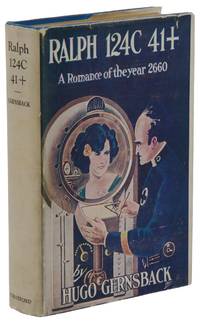
1925108026Boston: The Stratford Company 1925. First edition of "arguably the first major work of American science fiction" The Economist. Octavo original cloth. Signed by the author on the front free endpaper "With the compliments of the author H Gernsback 1925." Near fine in a very good dust jacket. Bookplate on the front pastedown. "In 1908 Gernsberg established 'Modern Electrics' a radio catalog that rapidly became a monthly magazine; one of its editorials was instrumental in establishing the Wireless Act of 1912. In April 1911 'Modern Electrics' began serializing Gernsback's Ralph 124C 41 written to exemplify his contention that fiction could serve to teach science. Thoroughly deficient as fiction the story nevertheless predicts radar microfilm and microfiche tape recorders television wireless transmission of power planet hormones and weather control" American National Biography. The Stratford Company hardcover books
1925108026Boston: The Stratford Company 1925. First edition of "arguably the first major work of American science fiction" The Economist. Octavo original cloth. Signed by the author on the front free endpaper "With the compliments of the author H Gernsback 1925." Near fine in a very good dust jacket. Bookplate on the front pastedown. In 1908 Gernsberg established 'Modern Electrics' a radio catalog that rapidly became a monthly magazine; one of its editorials was instrumental in establishing the Wireless Act of 1912. In April 1911 'Modern Electrics' began serializing Gernsback's Ralph 124C 41 written to exemplify his contention that fiction could serve to teach science. Thoroughly deficient as fiction the story nevertheless predicts radar microfilm and microfiche tape recorders television wireless transmission of power planet hormones and weather control" American National Biography. The Stratford Company hardcover
1926251066n.p.: Privately Printed for Ernest R. Gee at the Press of August Becker Brooklyn 1926. Large Paper. One of 28 copies on Large Paper. Frontispiece portrait by Gordon Ross. Title-page vignette of a foxhound. vi 24 2 pp. 1 vols. 8vo. Original cloth-backed boards printed paper label on front cover. An immaculate copy in its original glassine dust jacket spine of which is partially gone. Bookplate. In custom quarter crimson and cloth slipcase with leather label on upper cover. Large Paper. One of 28 copies on Large Paper. Frontispiece portrait by Gordon Ross. Title-page vignette of a foxhound. vi 24 2 pp. 1 vols. 8vo. ONE OF 28 COPIES. Inscribed by Gee "To Mr. Wilson S. Mills / with the compliments of / Ernest R. Gee / New York / April 1945." <br/>While there is disagreement as to whether this volume is one of the Derrydale Press works Frazier states: "But the book and its design paper binding and style are so obviously Derrydale in spirit and influence that one has only to put itside by side with Connett's American Trout Streams.produced the same year 1926 or Connett's own Magic Hours produced the following year to see how this book and the books of the Press came together. The only question would be whether Ernest Gee had more influence on Connett in 1926 or whether Connett had more influence on Gee in this important year when together they formed the group that formed the press." Frazier<br/><br/>In Ernest Gee's catalogue No. 10 printed around 1928 he lists this title in two areas. In one instance he states "A small privately printed edition." and in the other mention he declares "Edition limited to 330 copies" with no mention of a Deluxe state. Frazier M-6-D; Siegel p. 182 note; Biscotti Six Centuries of Foxhunting pp. 176-8 Privately Printed for Ernest R. Gee [at the Press of August Becker, Brooklyn] unknown books
19571839Louis Broder, Paris 1957. Collection "Miroir du poète" n° VI. Un volume in-12 carré (167 x 136 mm), en feuilles, 42 pages, sous couverture de papier japon à rabats titrée en rouge sur le premier plat. Chemise et étui de l'éditeur noir et gris titré en rouge sur le dos. Édition originale de ce recueil de 7 poèmes de Robert Desnos inédits en volume. 4 GRAVURES ORIGINALES À L'EAU-FORTE ET AQUATINTE EN COULEURS (150 x 120 mm). La typographie est dûe à l'imprimerie Union et le tirage de la gravure à Robert Dutrou. Édition : 120 exemplaires numérotés sur vélin de Rives BFK. Celui-ci, l'exemplaire n°2 est signé par André Masson au colophon. Il comporte UNE SUITE COMPLÈTE DES GRAVURES ET DE LA DÉCOMPOSITION DES COULEURS : chaque épreuve de l'état final est justifiée 5/7 et signée au crayon par l'artiste, chaque épreuve de la décomposition des couleurs est justifiée 5/7 et monogrammée au crayon par l'artiste. 16 planches signées au total. Sixième volume de la collection "Miroir du poète" qui en comporte 7. Un huitième volume prévu n'a jamais vu le jour, mais la maquette existe. Le volume en parfait état, l'emboîtage de même (Saphire-Cramer 42). ENGLISH : André Masson - Robert Desnos, : Mines de Rien, Collection Miroir du Poète VI, Louis Broder, Paris, 1957. 4 aquatints printed in colours, 1957, on BFK Rives, title, text, list of contents, justification and the set of four, the justification signed in pencil by André Masson. copy numbered on vélin de Rives paper, from the total edition of 130. This one, copy no. 2, includes A COMPLETE SUITE OF THE ENGRAVINGS AND DECOMPOSITION OF COLORS: each proof of the final state is justified 5/7 and signed in pencil by the artist, each proof of the decomposition of colors is justified 5/7 and monogrammed in pencil by the artist. There is 16 signed plates in total. The set is in mint++ condition in its original slipcase, perfect. overall S. 177 x 153mm. (Cramer 42).
1967045010Boston: National Geographic Society 1967. 1st Edition 1st Printing. Hardcover. Near Fine/Very Good. 9 1/4" High. 204 Pp. Green Cloth Stamped In Black And Gilt. First Printing No Isbn. Signed By Jane Goodall And Hugo Van Lawick On The Preliminary Illustrated Page. Book Near Fine Trace Of Rubbing At Corners. Dj With Light Wear A Few Short Tears At Edges. <br/> <br/> National Geographic Society hardcover
1915239530Philadelphia: Barrie 1915. hardcover. fine. 10 volumes 8vo handsomely rebound in 3/4 brown morocco over marbled boards; gilt-ruled and lettered spine with raised bands. all edges gilt. Philadelphia: Barrie 1893.<br/><br/> Part of the Complete and Unabridged Novels. Edition de Bibliophile limited to 250 sets on Japanese vellum. Containing 519 etchings in two printings one in black and one in bistre and 75 double page etchings in black all on Japanese vellum.<br/><br/> Barrie unknown books
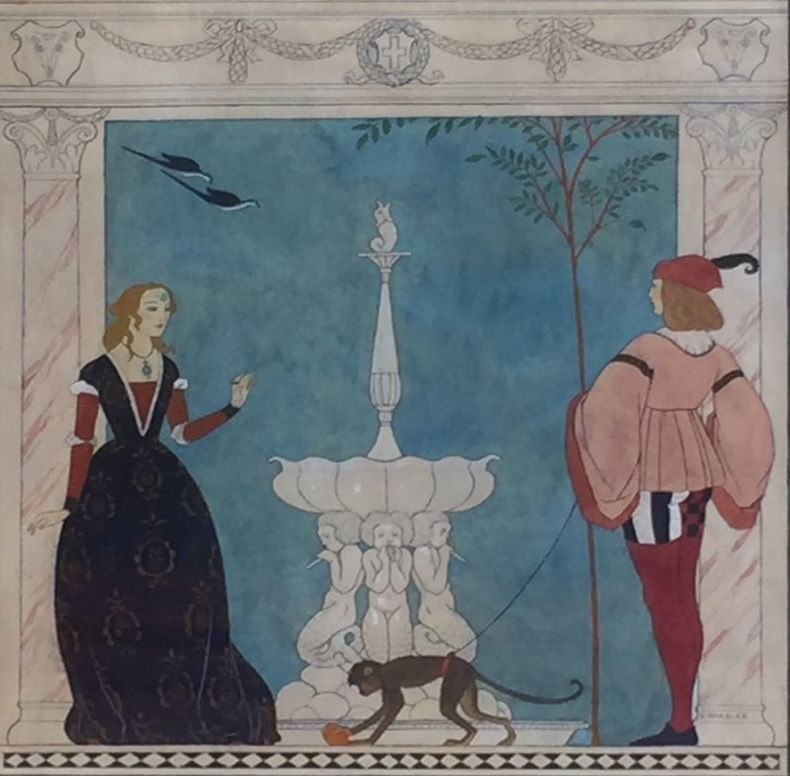
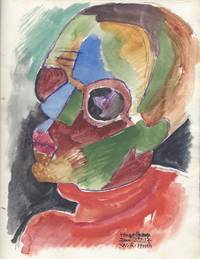
1912217381912 Aquarelle sur papier greige signée en bas à droite, (1912), 32 x 29.5 cm., encadrée.
194877759Sous coffret en moire vert pâle. Reliure plein maroquin grenat. Belle composition courant sur les plats et le dos de motifs géométriques mosaïqués en veau, box et maroquin vert, tilleul, turquoise, rouge, saumon, jaune, vert émeraude, sertis de filets à froid et de filets dorés. Dos lisse avec auteur et illustrateur en lettres dorées. Gardes en agneau velours grenat et vert émeraude avec listels de veau vert et orange. Toutes tranches dorées. Couverture et dos conservés. Reliure signée Nicole FOURNIER, médaille d'Or des Métiers de France, dorure par Pierre Marseleix. Illustré de 113 gouaches de Jean HUGO gravées sur bois en couleurs.
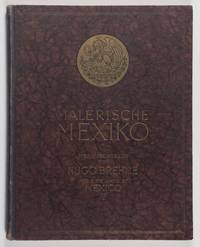
192354555Mexico City: Hugo Brehme Fotografia Artistica 1923. First edition & Original Photographs. Hardcover Photographs. Very good. Small Folio. xxvii pp. 197 plates. Original brown quarter leather over textured brown paper-covered boards with gilt emblem lettering and ruling on cover gilt lettering on spine. Brown endpapers. Title page with b/w emblem and black triple ruling. Foreword and text by Hugo Brehme. <br /> <br /> With descriptive table of photogravure plates published in the book following the text including photographic series on the capitol the capitol's surroundings volcanos the inner part of the country archaeology and the various ethnicities of Mexico. An attempt to enrich the vast number of publications on "the land of promise" as it was perceived in the early part of the century with a photographic survey presenting the beauty and cultural richness of Mexico its abundance and variety of settings ranging from tropic areas along its coasts to the regions of perpetual snow. This extraordinary collection of photographs is accompanied by an introductory text on Mexico. The photographs are taken from the vast collection of the editor and were available separately as art prints. Cover design by Max Krause Berlin. <br /> <br /> WITH<br /> <br /> 10 original photographs; eight signed and titled in negative one is stamped and titled on verso one just titled on verso. Three of them No. 1 2. and 3a below are reproduced in the publication in.<br /> <br /> 1. "285 El Pico de Orizaba" 10 3/4 x 13 3/4". Title and "H. Brehme Mexico Prop." manuscript annotations in lower left corner of print. Published. Small chips at three corners and slight creasing upper left and lower right corners.<br /> <br /> 2. Two photographs<br /> <br /> a "No. 5950. Mexico D.F. Parque de Chapultepec Hugo Brehme Mexico- Es propiedad" printed to lower right corner of photo. 11 3/4 x 9 1/2". Published. Minor wear along white frame and very light waving at left and right edges.<br /> <br /> b "No. 5832 Lago de Chapala Hugo Brehme Mexico- Es propiedad" as above 9 1/2 x 11 3/4". This spectacular photograph depicts a sail boat on Lake Chapala; not published. Very light wear in white edges photograph near fine.<br /> <br /> 3. Five Photographs 7 3/4 x 9 7/8". Photos b through d stamped Hugo Brehme Mexico D.F. with company address and copyright remark on upper left corner of versos. Photo described under a is blank on verso.<br /> <br /> a "1273 Los Volcanes desde el San Miguel" and Hugo Brehme company detail stamped to lower left and right corner. Published.<br /> <br /> b "220 La Piramide Del Sol San Juan Teotihuacan" printed to left "HBrehme Prop." to right lower corner. Showing a variant of the published photograph. Small light smudge at center of upper edge.<br /> <br /> c "No. 1897 El Desierto De Los Leones printed to left lower corner.<br /> <br /> d "17926 Cholula La Piramide" printed to lower left corner.<br /> <br /> e "252 El Pico de Orizaba" printed to lower left Brehme's company detail to right.<br /> <br /> 4. Two photos 5 x 7" without descriptors on image.<br /> <br /> a Orizaba volcano "74. Desde el San Miguel" in pencil at top left of verso Brehme company stamp in blue at lower left corner.<br /> <br /> b Mexican farmer crossing river on a mule carrying large basket with fruit. Penciled to verso the number 2359 and Oaxaca. Hugo Brehme 1882-1954 emigrated to Mexico in 1908. He established his photo studio "Fotografia Artistica Hugo Brehme" in 1912. He was successful for some forty years with photographs depicting rural Mexico scenic landscapes modern monuments and archeological sites. Brehme's photos were published in tourist guides magazines and on postcards. He was a mentor of noted Mexican photographer Manuel Alvarez Bravo. Hugo Brehme Fotografia Artistica hardcover
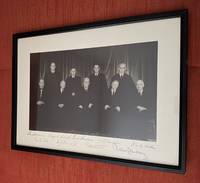
1962020458Washington D.C.: Ackad photographer 1962. Autograph. Very good condition. Unbound. Signed by Authors. First Edition. 4to - over 9¾ - 12" tall. Large black and white photograph 16.75" x 12" of the Warren Court signed by all nine justices below their portrait. Seated are Tom C. Clark Hugo L. Black Earl Warren William O. Douglas and John M. Harlan. Standing are Byron P. White William J. Brennan Jr. Potter Stewart and Arthur J. Goldberg. From 1962-1965 this highly active court decided: GRISWOLD v. CONNECTICUT preventing states from making the use of contraception by married couples illegal; KATZENBACH v. McCLUNG clarifying the power of Congress in the field of interstate commerce; NEW YORK TIMES CO. v. SULLIVAN ruling that a state cannot award damages to a public official for defamatory falsehood related to their official conduct unless they prove actual malice; HEART OF ATLANTA HOTEL INC. v. U.S. prohibiting racial discrimination in places of public accommodation affecting commerce is a valid exercise of Congress' power under the Commerce Clause as applied to a place of public accommodation serving interstate travelers; WESBERRY v. SANDERS enacting the constitutional requirement that representatives be chosen "by the people of the several states" means that as nearly as is practicable one person's vote in a congressional election must be worth as much as another person's vote; REYNOLDS v. SIMS establishing the Equal Protection Clause which requires substantially equal legislative representation for all citizens in a state regardless of where they reside. Legislators represent people rather than areas and weighting votes differently according to where citizens happen to reside is discriminatory; SHERBERT v. VERNER establishing that substantial infringement of an individual's right to religious freedom must be justified by a compelling state interest; ABINGTON SCHOOL DISTRICT v. SCHEMPP ruling that no state law or school board may require that passages from the Bible be read or that the Lord's Prayer be recited in public schools even if students may be excused from attending or participating upon written request of their parents; GIDEON v. WAINWRIGHT establishing the right of an indigent defendant in a criminal trial to have the assistance of counsel is a fundamental right essential to a fair trial; BAKER v. CARR ruling that prominent on the surface of any case held to involve a political question is found a textually demonstrable constitutional commitment of the issue to a coordinate political department a lack of judicially discoverable and manageable standards for resolving it the impossibility of deciding without an initial policy determination of a kind clearly for non-judicial discretion the impossibility of a court's undertaking independent resolution without expressing lack of the respect due coordinate branches of government an unusual need for unquestioning adherence to a political decision already made or the potentiality of embarrassment from multifarious pronouncements by various departments on one question. More specifically an equal protection challenge to a legislative apportionment is not a non-justiciable political question; ENGEL v. VITALE establishing that state officials may not compose an official state prayer and require that it be recited in public schools even if the prayer is denominationally neutral and even if students may remain silent or be excused. Housed in a simple black frame. Ackad [photographer] Paperback
1985bj1611Faksimile Verlag Luzern Reliure 1985 Magnifique fac-similé du manuscrit de La Grande Chronique bourguignonne de Schilling Le Vieux (de Berne), conservé à la Bibliothèque Centrale de Zürich (Nr. A 5), qui, réalisé vers 1480 est le 3ème et dernier tome de l'Histoire Officielle de la ville de Berne et représente la plus importante source d'informations sur les guerres de Bourgogne. Les miniatures, particulièrement belles et intéressantes, décrivent des scènes très détaillées de sièges, de combats et de la vie de camp. La reliure plein-cuir (25 * 39 cm.) cousue main correspond exactement à l'original, avec ses empressages à froid et ses deux fermoirs en métal, les cahiers ont été coupés puis cousus ensemble à la main, tout comme pour l'original. Le tirage de cette édition a été limité à 980 exemplaires, celui-ci portant le numéro 529. On retrouve l'habituel volume de commentaire, co-écrit par plusieurs spécialistes ; le texte est en allemand et fait 306 pages, il est relié en demi-cuir et toile d'éditeur. Très bel exemplaire. Livraison a domicile (La Poste) ou en Mondial Relay sur simple demande.
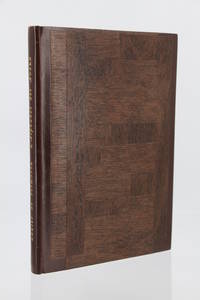
195486056Paris: Gallimard 1954. Fine. Gallimard Paris 1954 15.50 x 21.30 cm relié sous étui First edition one of 48 copies on pur fil the only deluxe copies. Work decorated with illustrations by Jean Hugo. Light rubbing to extremities of the slipcase. Superb binding in dark exotic wood marquetry signed Pierre-Lucien Martin dated 1962. Binding in chocolate brown box leather with bands smooth spine gilt title lengthwise first cover formed of a mosaic arrangement of dark wood pieces with grain arranged in opposite directions bearing the title engraved vertically and the author's name revealed in acrostic second cover formed of a large panel of the same wood with unfolded grain bordered in chocolate box leather endpapers and pastedowns of chocolate paper top edge gilt over deckled edges covers and spine preserved slipcase of chocolate paper bordered in chocolate box leather interior lined with brown felt elegant ensemble signed Pierre-Lucien Martin and dated on the rear pastedown 1962. ""Maintaining to the end the rigor of the practitioner he is guided by an uncompromising love of the craft as much as by a profound taste for the search for forms. Martin despite his modesty is a great creator. He binds contemporary literature that attracts him as well as books where word and image blend. He aims for sobriety even purity. Geometry inhabits him. He plays admirably with materials and colors."" Yves Peyré Gallimard hardcover
1968260881968. Black and white photograph from the late 1960s of the Warren Court mounted to board signed by each member. The justices are John Marshall Harlan Hugo Black Earl Warren William O. Douglas William J. Brennan Jr. Potter Stewart Abe Fortas Potter Stewart Byron R. White and Thurgood Marshall. Light wear and crease to the bottom left corner. Matted and framed. The entire piece measures 15.5 inches by 18.5 inches. Rare and desirable. The Warren Court is best known for its landmark decisions which outlawed segregation in public schools and transformed many areas of American law especially regarding the rights of the accused ending public school-sponsored prayers and requiring "one man-one vote" rules of apportionment of election districts. He made the Supreme Court a power center on a more even basis with Congress and the Presidency especially through four landmark decisions: Brown v. Board of Education 1954 Gideon v. Wainwright 1963 Reynolds v. Sims 1964 and Miranda v. Arizona 1966. unknown books
195486056Gallimard | Paris 1954 | 15.50 x 21.30 cm | relié sous étui