Richard HugoBiblio.com
20 673 résultats
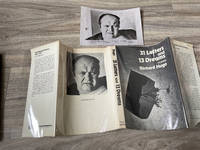
1977215<p><strong>Richard Hugo – <em>31 Letters and 13 Dreams</em> 1977 First Edition W. W. Norton</strong><br />Includes portrait photograph of Richard Hugo by Thomas Victor.</p><p>First edition hardcover poetry collection the sixth book by acclaimed American poet Richard Hugo. <em>31 Letters and 13 Dreams</em> is structured in two sections—"Letters" and "Dreams"—blending grounded regional observation with lyrical interior landscapes.</p><p>The "Letters" sequence moves through memory place and personal reflection often rooted in the American Northwest while the "Dreams" section shifts into more surreal associative territory. Together the collection explores themes of identity geography and imagination balancing realism with dreamlike intensity.</p><p><strong>Condition:</strong> Very Good</p><ul><li>Dust jacket present clipped and in Very Good condition with Mylar cover</li><li>Interior clean: no markings or highlighting</li><li>Binding solid</li><li>Includes photograph of Richard Hugo by Thomas Victor</li><li>Please see photos for details</li></ul><p>A strong collectible first edition of a major 20th-century American poetry collection.</p> W. W. Norton hardcover
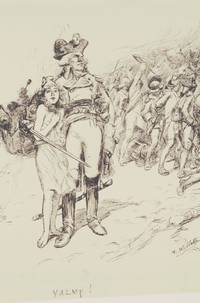
200689579Paris Musees. New. 2006. Paperback. 2879008867 . FREE UPGRADE to Courier/Priority Shipping Upon Request - IN STOCK AND IMMEDIATELY AVAILABLE FOR SHIPMENT - Flawless copy brand new pristine never opened -- Text in French. 136 pp. ; 151 ills. -- with a bonus offer-- . Paris Musees paperback
193462779Springfield Mass:: Continental Publications March 1934. First edition. publisher's wrappers illustrated in color. Some edgewear to the wrappers; otherwise very nice. Small folio. Continental Publications, unknown
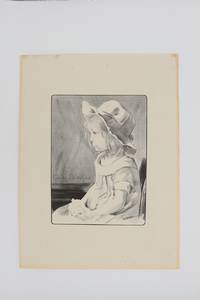
189874591Paris: Imprimerie Champenoispour CH. MassonH. Piazza 1898. Fine. Imprimerie Champenois pour CH. Masson H. Piazza Paris Octobre 1898 24 x 33 cm une feuille Rare original lithograph executed by Louise Breslau for L'Estampe Moderne series number 18 published in October 1898. One of 50 deluxe proofs printed on China paper with wide margins artist's signature in the plate publisher's dry stamp representing a child's profile in lower margin mounted on a sheet of laid paper with the numbered stamp of the deluxe issue on verso pale marginal foxing. Lithograph inspired by three stanzas of a poem by Victor Hugo. Magnificent French monthly publication edited between May 1897 and April 1899 L'Estampe moderne consists of original chromolithographs which unlike other reviews such as Les Maîtres de l'Affiche and as stipulated on the tissue guards were created specifically by each artist for the review. Thus 100 prints appeared in total covering the major artistic movements of the late 19th century: Symbolism Art Nouveau Pre-Raphaelites Orientalists and Belle Époque. Each delivery of four prints was issued in 2000 copies sold for 3.50F and 100 on Japan paper offered at 10F. Henri Piazza also planned a confidential deluxe issue: 50 copies on Japan paper with wide margins and 50 in black on China paper at the considerable price of 30F. This print in a beautiful format is superbly printed on one of the most prestigious papers: China paper. ""Despite all its qualities China paper too inconsistent owes its reputation not to its own beauty but rather to its particular affinities with printing ink. Its texture smooth and soft at the same time is more apt than any other to receive a beautiful printing. This property makes China paper sought after for printing engravings."" Anatole France. French collectors' interest in artistic posters grew in the early 1890s. Octave Uzanne to qualify this fever invented the term ""affichomanie."" The poster originally popular and pasted in the streets of the capital then became an art object and its ephemeral medium became precious and destined for preservation. Piazza decided to remove the poster from its advertising purpose and elevate it to the rank of a complete work of art on the same level as the illustrated deluxe book. He thus composed a prestigious collection of entirely original works by the most prominent European artists of the moment: Georges de Feure Eugène Grasset Henri Detouche Emile Berchmans Louis Rhead Gaston de Latenay Lucien Lévy-Dhurmer Gustave-Max Stevens Charles Doudelet Hans Christiansen Henri Fantin-Latour Steinlen Ibels Engels Willette Henri Meunier Evenepoël Bellery-Desfontaines Charles Léandre etc. Fine copy. Imprimerie Champenoispour CH. MassonH. Piazza unknown
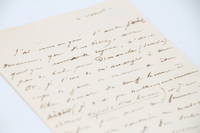
183087775Paris 1830. Fine. Paris s. d. ca 1830 12 x 18.50 cm 1 page Autograph letter signed by Victor Hugo to his friend H. de Cambier 20 lines written in black ink on a bifolium autograph address on the verso of the final leaf. Splendid and likely unpublished letter from Victor Hugo inviting his correspondent to the famed Romantic 'Cénacle' gatherings at the Bibliothèque de l'Arsenal a veritable literary institution in the 1830's. ""This Saturday the 6th I noticed the other evening Sir that you expressed with some regret not having a ball to attend on Sunday tomorrow. Now I have managed to arrange my guard duty so as to be free tomorrow from nine o'clock to midnight alas I could not obtain more than six hours and I am taking advantage of it to take my wife to a small masquerade party at Nodier's. If you would like to come with us we would be delighted and Nodier too. To do so you would need to be at my home at nine o'clock the hour I myself will return. Answer me this morning and believe in all my friendship. Vr Hugo."" ""In the drawing room of the Arsenal library where he had been head librarian since 1824 Charles Nodier hosted every Sunday evening the entire Romantic literary and artistic elite during the final years of the Restoration and the early years of the July Monarchy. In addition to Hugo one of the most regular attendees and later Musset Dumas and Balzac the salon gathered ""representatives of all the book professions from conception to illustration publication and criticism . in a friendly and convivial atmosphere"" Marta Sukiennicka. Hugo invites his correspondent to a masked ball held on one of those celebrated Sundays. Far from being a mere social occasion the 'Cénacle of the Arsenal' salon was one of the most vibrant centers of the Romantic movement. Having succeeded in excusing himself from his National Guard duties he was a sub-lieutenant in 1830 Hugo had likely arranged for a replacement to take his watch that evening; even the most illustrious of writers were not exempt from such military service. A few years later Balzac dodged his National Guard shifts and was imprisoned twice in 1836 and 1839. unknown
185670986Hauteville House Hauteville House 1856. Fine. Hauteville House Hauteville House 11 et 13 mai 1856 14 x 21.50 cm une feuille Autograph letter signed by Victor Hugo dated 13 May 1856 following an unpublished letter from Madame Victor Hugo to Madame David d'Angers dated 11 May. 4 pages on a folded sheet with watermark ""Barbet Smith Street Guernesey"". Published in Correspondance de Victor Hugo Paris year 1856 p. 246 In this letter imbued with the apparitions and specters that haunt the recently published Contemplations Victor Hugo addresses the widow of his great friend the sculptor David d'Angers fervent republican and artist particularly admired by the Romantics. In the midst of a mystical crisis Hugo speaks to the shadow of the sculptor to whom he dedicated sublime poems in Les feuilles d'automne as well as Les rayons et les ombres and requests from his widow his favorite portrait a marble bust once sculpted by David d'Angers. After the expulsion of the exiles from the island of Jersey Victor Hugo purchased Hauteville House thanks to the success of Contemplations and sadly learned of the death of a dear friend. He writes to the sculptor's widow on the same sheet as his wife Adèle also connected with the family of David d'Angers creator of a medallion in her likeness: ""You are the widow of our great David d'Angers and you are his worthy widow as you were his worthy wife"". The renowned sculptor had already formed bonds at Nodier's first romantic salon at the Arsenal and visited Hugo almost daily in the late 1820s in the Bonapartist and good-natured atmosphere of rue Notre-Dame des Champs in the company of the Devéria brothers Sainte-Beuve Balzac Nanteuil and Delacroix. In 1828 the writer had happily posed in David d'Angers' studio on rue de Fleurus for a medallion then a bust which had been followed by two sublime poems celebrating the sculptor's talent in Les Feuilles d'Automne and Les rayons et les ombres. Of all his numerous portraits he cherished above all others his marble bust signed David d'Angers and does not hesitate to request it from his widow: ""Before long perhaps madame my family will ask you to return this bust which is my figure which is little but which is a masterpiece by David which is everything. It is him even more than me and that is why we want to have it among us"". From these posing sessions with the sculptor arose fruitful aesthetic and political conversations where their common aversion to the death penalty was affirmed. They witnessed the chaining of galley slaves who were joining Toulon from Paris described by Hugo in two chapters of Dernier jour d'un condamné. A victim of exile like Hugo David d'Angers had returned to Paris before joining the world of the dead: ""My exile is like neighbor to his tomb and I see distinctly his great soul outside this world as I see his great life in the stern history of our time"". The ""great life"" of David d'Angers was devoted to shaping the effigies of illustrious men through a subtle balance of resemblance and idealization. The sculptor finally takes his place in Victor Hugo's personal pantheon he who had adorned the pediment of the true Pantheon of great men where the writer rests today: ""David is today a figure of memory a renown of marble an inhabitant of the pedestal after having been its craftsman. Today death has consecrated the man and the sculptor is statue. The shadow he casts upon you madame gives your life the form of glory"". It was indeed in the shadow of great men that Hugo lived his exile in Jersey far from the tumult of the capital and in the silence punctuated by sea spray striking the windowpanes. Hugo had plunged into the occult and spoke to the departed: ""David is one of the shadows to whom I speak most often shadow myself"" he declares recalling the final poem of Contemplations ""Ce que dit la bouche d'ombre"" dictated to the poet through the spiritualist process of ""turning tables"". Then at the height of their popularity the tables were practice unknown
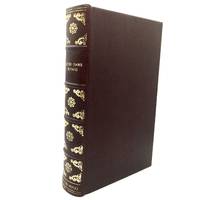
1836HNCHBCK1836<p>"Notre-Dame de Paris" by Victor Hugo Eugene Renduel 1836. 8th edition; very early illustrated edition. Modern rebind in burgundy leather with gilt spine titling and tooling. New gilt on page edges and new marbled cream endpapers & FFE. Half title engraved title and typographical title pages all present 631 pps 11 full page illustrations. Significant foxing small tear in tissue preceding engraved title. Otherwise condition is Very Good- due to rebind.</p><p>Rebound by Arno Werner Bookbinders of Maine per the binder's ticket in the back. From the binder:</p><p>Hand Bound Books and Restorations are handcrafted by a Master Bookbinder Arno Werner Bookbinders from the highest quality skins available and heavy weight full cotton rag paper Linen threads and cords marble paper or silk end papers hand sewn silk head bands gold tooled or blind tooled. All restoration work is done with appropriate materials to match the original state of the period and binding style to the best of our ability. All the books are created with 100% acid free presentation grade materials "Red Label" binders board linen thread linen cords linen ribbons silk threads and ribbons.</p> Eugene Renduel hardcover
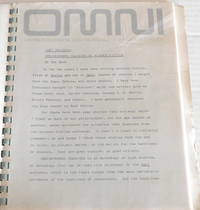
198297359New York: Omni Publications International Ltd. circa 1982. 1982. Good. - Quarto 11 inches high by 9-1/4 inches wide. Softcover spiral bound silver wraps titled in blind and white on the front cover. The front edges of the covers are slightly chipped and the front cover is heavily creased. 52 pages each printed on one side only consisting of 3 pages printed on light gray stock with the first being on Omni letterhead and with Omni embossed in silver at top left of the next 2 pages. These first 3 pages of the prospectus introduce the concept behind the idea together with the "Marketing Advantages Which Omni Will Provide". These are followed by 49 pages mechanically reproduced from the periodicals in which they were originally published of the stories which Bova hopes to include in the book. These pages include reproductions of the illustrations which accompanied the stories. There is some light creasing to the first page else an internally bright and near fine prospectus in good covers. <p>In his introduction to the prospectus Ben Bova writes: "In the ten years I have been editing science fiction first at Analog and now at Omni dozens of stories I bought have won Hugo Nebula and other awards. I have been fortunate enought sic to 'discover' many major new writers such as Orson Scott Card Spider Robinson George R. R. Martin Robert Forward and others. Yet there have been some stories and writers which I liked as much as any prize-winner yet for some reason or another never attracted the attention they deserved from the science fiction audience."<p>The prospectus includes excerpts from Walter Tevis' "Rent Control" Alfred Bester's "MS Found in a Coconut" James Gunn's "Fault" Paul J. Nahin's "The Reunion" John Morressy's "The Last Jerry Fagin Show" etc. New York: Omni Publications International, Ltd., circa [1982]. paperback
3656954291.Gpaperback. Good. Access codes and supplements are not guaranteed with used items. May be an ex-library book. paperback
193162780Springfield Mass:: Continental Publications January 1931. First edition. publisher's wrappers illustrated in color. Some edgewear to the front wrapper; otherwise very nice. Small folio. Continental Publications, unknown
189974842Paris: Imprimerie Champenoispour CH. MassonH. Piazza 1899. Fine. Imprimerie Champenois pour CH. Masson H. Piazza Paris Avril 1899 23.50 x 30 cm une feuille et une serpente Rare original lithograph executed by Adolphe Willette for L'Estampe Moderne after the drawing exhibited at the Luxembourg Museum series number 24 published in April 1899. One of 50 deluxe proofs printed on Japan paper with wide margins laid paper mounted on Japan paper artist's signature in the plate publisher's dry stamp representing a child's profile in the lower margin numbered stamp of the deluxe printing on verso; engraving preceded by a tissue guard captioned with the artist's name title and text. Lithograph inspired by a poem extracted from the collection Chatîments by Victor Hugo reproduced on the print's tissue guard. Magnificent French monthly publication edited between May 1897 and April 1899 L'Estampe moderne consists of original chromolithographs which unlike other magazines such as Les Maîtres de l'Affiche and as stipulated on the tissue guards were created specially by each artist for the magazine. A total of 100 prints were thus published covering the major artistic movements of the late 19th century: Symbolism Art Nouveau Pre-Raphaelites Orientalists and Belle Époque. Each issue of four prints was printed in 2000 copies sold for 3.50F and 100 on Japan paper offered at 10F. Henri Piazza also planned a confidential deluxe printing: 50 copies on Japan paper with wide margins and 50 in black on China paper at the considerable price of 30F. This beautifully formatted print is superbly printed on the most prestigious of papers: Japan paper. Thick silky satiny and pearlescent it contributes to making each page a work in its own right. Its ink absorption quality and its affinity with colours also make it the ideal support for these very beautiful lithographs. French collectors' interest in artistic posters intensified in the early 1890s. Octave Uzanne to describe this fever invented the term ""affichomanie"". The poster originally popular and pasted on the streets of the capital then became an art object and its ephemeral medium became precious and destined for preservation. Piazza decided to remove the poster from its advertising purpose and elevate it to the rank of a work of art in its own right on the same level as the illustrated luxury book. He thus composed a prestigious collection of entirely original works by the most prominent European artists of the moment: Georges de Feure Eugène Grasset Henri Detouche Emile Berchmans Louis Rhead Gaston de Latenay Lucien Lévy-Dhurmer Gustave-Max Stevens Charles Doudelet Hans Christiansen Henri Fantin-Latour Steinlen Ibels Engels Willette Henri Meunier Evenepoël Bellery-Desfontaines Charles Léandre etc. Handsome copy. Imprimerie Champenoispour CH. MassonH. Piazza unknown
0428900364.Ghardcover. Good. Access codes and supplements are not guaranteed with used items. May be an ex-library book. hardcover
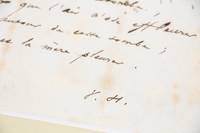
1840878291840. Fine. ""Spare still the mother vainly weepingO'er baby lost not long a-sleeping."" s.d. 21 janvier 1840 21.20 x 26.70 cm un feuillet sous cadre Autograph poem by Victor Hugo signed V. H. four stanzas written black ink on a leaf. Blind stamp of the city of Bath in the lower left-hand corner. Some folds small traces of foxing along the folds a few pale stains to the lower right margin not affecting the text. A few very small dark spots in the lower right margin one affecting a single letter of the word retombe. Original manuscript and earlier version of Victor Hugo's poem published as Écrit sur le tombeau d'un petit enfant au bord de la mer Baby's seaside grave in Les Rayons et les Ombres XXXVIII Paris Delloye 1840. Hugo wrote this magnificent eulogy in memory of his great friend Auguste Vacquerie's young nephew who died at the age of four years and ten months. The poet had promised a poetic epitaph and personally addressed this manuscript to Vacquerie: Take these verses if you still want them for the tomb of this dear little one Letter to Vacquerie January 21 1840. As Joseph Petrus Christiaan de Boer pointed out There is no sorrow Hugo understood and expressed more delicately than the immense grief that fills the hearts of parents upon the death of a child Victor Hugo et l'enfant 1933 p. 48-49. This poem is the first of a sublime macabre series composed on the occasion of the numerous tragedies suffered by the families of both Victor Hugo and his friend Auguste Vacquerie. The most famous will be Demain dès l'aube. written after the untimely death of Hugo's beloved daughter Léopoldine who drowned alongside Auguste Vacquerie's brother Charles on September 4 1843 shortly after their marriage. Hugo wrote these verses for Charles-Emile Lefèvre the young child of Vacquerie's sister who had succumbed to sudden illness on November 6 1839. On January 21 1840 Hugo sent this manuscript to Vacquerie which includes a variation from the final version published by Delloye on May 16 of the same year: « Vieux lierre frais gazon herbe roseaux corolles ; Église où l'esprit voit le Dieu qu'il rêve ailleurs ; mouches qui murmurez d'ineffables paroles A l'oreille du pâtre assoupi dans les fleurs ; Vents flots hymne orageux chur sans fin voix sans nombre ; Bois qui faites songer le passant sérieux ; fruits qui tombez de l'arbre impénétrable et sombre ; Étoiles qui tombez du ciel mystérieux ; oiseaux aux cris joyeux vague aux rumeurs ' plaintes' in the published version profondes ; froid lézard des vieux murs dans les pierres tapi ; plaines qui répandez vos souffles sur les ondes ; Mer où la perle éclot terre où germe l'épi ; Nature d'où tout sort nature où tout retombe feuilles nids doux rameaux que l'air n'ose effleurer Ne faites pas de bruit autour de cette tombe ; Laissez l'enfant dormir et la mère pleurer. » ' Brown ivy old green herbage new; Soft seaweed stealing up the shingle; An ancient chapel where a crew Ere sailing in the prayer commingle. A far-off forest's darkling frown Which makes the prudent start and tremble Whilst rotten nuts are rattling down And clouds in demon hordes assemble. Land birds which twit the mews that scream Round walls where lolls the languid lizard; Brine-bubbling brooks where fishes stream Past caves fit for an ocean wizard. Alow aloft no lullall life But far aside its whirls are keeping As wishfully to let its strife Spare still the mother vainly weeping O'er baby lost not long a-sleeping.' tr. Nelson Rich Tyerman Hugo sent the manuscript with a touching letter: Here at last my poet is what I have kept you waiting for so stupidly long. . Take these verses if you still want them for the tomb of this dear little one . For my part I do not feel that I have repaid my debt to this angel with so little. I have begun something longer for him that I will one day lay at the feet of his poor mo unknown
2024__3103974558FISCHER S. 2024. New. 1835 pages. German language. 6.22x2.90x8.70 inches. FISCHER, S. unknown
49344011like new. unknown
49344011-nnew. unknown
093786661X.Gmass_market. Good. Access codes and supplements are not guaranteed with used items. May be an ex-library book. unknown
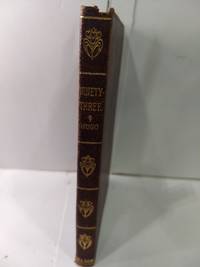
1900P1515Used; Good. 31-G-19 Thomas Nelson and Sons no date given but circa 1900 Hardcover. leatherbound. Page edges have some yellow spotting but text is clean and unmarked. No dust jacket as issued. Covers have wear at top of spine and along the back cover edge. Book Condition; Good . 1900. HARDCOVER. hardcover
H2952Wien 1912. 8vo. 3 S. gutes Exemplar. Text: deutsch. Landes-Obstbau-Verein Wien. unknown
H2908Wien 1902. 8vo. 1 S. gutes Exemplar. Text: deutsch. An. R.v.Gerold. Pauli: Buchhandlung am Stephansplatz in Wien. unknown
H2822ca.1900 . 8vo. 1 Visitenkarte mit hs.Widmung. gutes Exemplar. Text: deutsch. unknown
H2435Stockholm 1894. 8vo. 1 S. auf Schwedisch gutes Exemplar. unknown
Q-0745325211Pluto Press. Paperback. New. New. In shrink wrap. Looks like an interesting title! Pluto Press paperback
61775919Pluto Press pp. 264 . Papeback. New. Pluto Press unknown
074532522X.Ghardcover. Good. Access codes and supplements are not guaranteed with used items. May be an ex-library book. hardcover